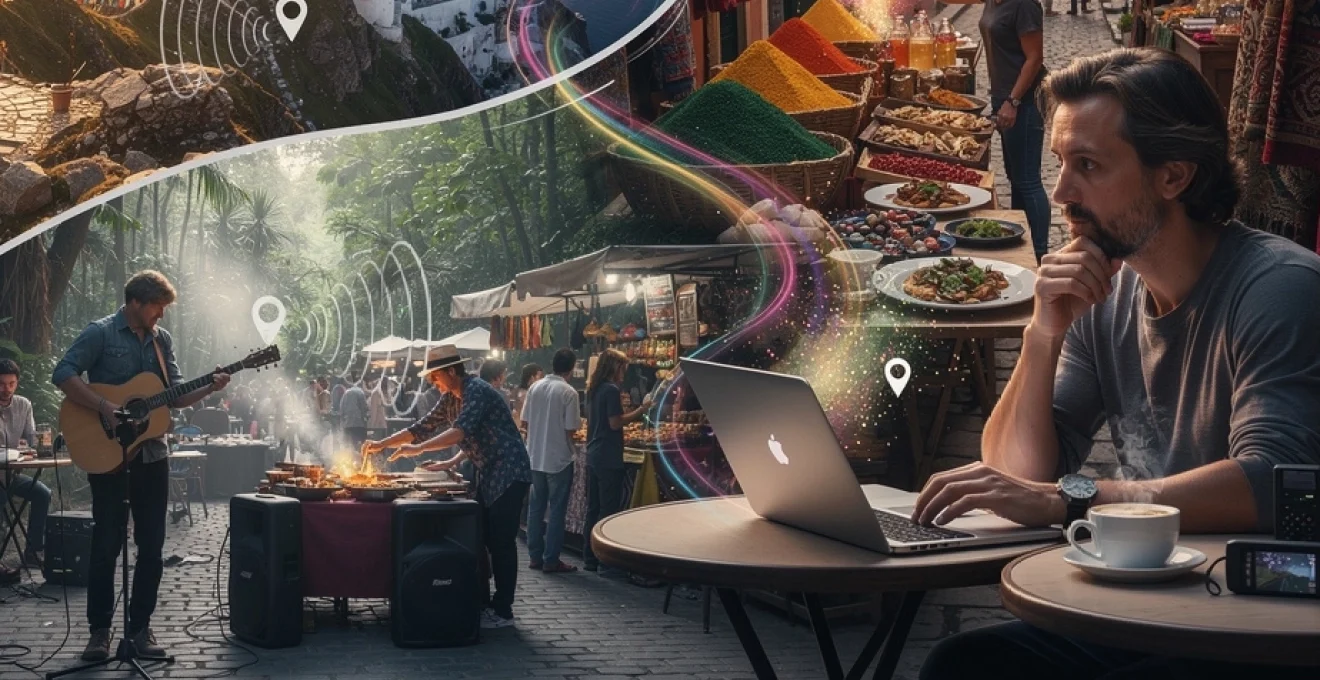
Travel writing transforms mere observations into immersive experiences that transport readers across continents without leaving their armchairs. The most compelling travel narratives achieve this magic through meticulous attention to sensory details, weaving together visual landscapes with the symphony of sounds, textures, aromas, and tastes that define each destination. Professional travel writers understand that capturing vivid imagery requires far more than simply describing what you see – it demands a systematic approach to documenting the complete sensory environment.
The difference between forgettable travel content and memorable storytelling lies in the writer’s ability to create multisensory immersion. When readers can almost hear the bustling chaos of a Bangkok street market or feel the cool mist from Niagara Falls on their skin, the writing has achieved its ultimate purpose. This comprehensive approach to sensory documentation transforms travel experiences into lasting literary works that resonate long after the journey ends.
Sensory mapping techniques for immersive travel narratives
Successful travel writing begins with systematic sensory mapping – a methodical approach to documenting the complete environmental experience of each location. This technique involves creating detailed sensory inventories that capture not just what you observe, but how each sense contributes to the overall atmosphere of a place. Professional writers develop personalised protocols for recording these sensory experiences, ensuring nothing crucial escapes their attention during the often overwhelming rush of travel.
The foundation of effective sensory mapping lies in deliberate observation rather than passive experience. This means allocating specific time periods to focus intensively on individual senses, creating detailed mental and written catalogues of each environmental element. Many successful travel writers carry specialised recording tools – from digital voice recorders for capturing ambient sounds to notebooks specifically designed for quick sensory notes that can be expanded later into full descriptions.
Multi-sensory observation protocols during golden hour photography
Golden hour presents unique opportunities for comprehensive sensory documentation, as the changing light conditions create dynamic environments perfect for layered observation. During these magical periods just after sunrise or before sunset, the interplay between visual elements and other sensory experiences becomes particularly pronounced. The warm, angled light doesn’t just create stunning photographic opportunities – it transforms textures, enhances colours, and often coincides with increased activity from both wildlife and local communities.
Professional travel photographers and writers have developed specific protocols for maximising these golden hour sessions. The key involves positioning yourself in strategic locations fifteen minutes before optimal lighting conditions begin, allowing time to settle into the environment and begin detailed sensory cataloguing. This preparation period enables you to notice subtle changes as the light shifts, documenting how shadows lengthen, colours intensify, and the entire atmosphere transforms minute by minute.
Acoustic landscape documentation methods in urban markets
Urban markets represent some of the richest acoustic environments for travel writers, offering complex soundscapes that layer human voices, mechanical sounds, and environmental elements into intricate auditory tapestries. Documenting these acoustic landscapes requires strategic positioning and systematic listening protocols that separate individual sound elements whilst appreciating their collective impact. The challenge lies in capturing both the overwhelming cacophony and the subtle individual sounds that create authentic market atmospheres.
Effective acoustic documentation begins with identifying the sound layers present in any given market environment. The base layer typically consists of constant background sounds – traffic, air conditioning units, or distant music. Middle layers include intermittent sounds like vendor calls, customer conversations, and food preparation noises. The top layer features sudden, attention-grabbing sounds such as motorbike horns, dropped objects, or children’s laughter. Recording notes about each layer creates comprehensive acoustic profiles that can later be woven into vivid narrative descriptions.
Olfactory memory anchoring strategies for spice bazaars and street food venues
Scent memories possess extraordinary staying power, often triggering vivid recollections years after initial encounters. Travel writers who master olfactory documentation create some of the most evocative destination descriptions, as readers can almost smell the environments being described. Spice markets and street food venues offer particularly rich olfactory experiences, with complex scent profiles that change throughout the day as different vendors begin cooking and various spices are ground, mixed, and prepared.
Professional olfactory documentation requires developing a vocabulary for describing
Professional olfactory documentation requires developing a vocabulary for describing complex scent combinations and then linking those descriptions to strong mental images. Instead of defaulting to vague adjectives like “fragrant” or “pungent,” break aromas into identifiable components: is that cumin smoky or earthy, does the frying dough smell buttery or oily, does the chili sting the nose or warm it? Many travel writers maintain a dedicated “scent log,” where they pair each smell with a brief visual cue (“cardamom: like pine and citrus in a warm cupboard”) to make recall easier months later.
One effective anchoring strategy is to connect each key aroma to a specific scene and emotion. For example, note how the sweet, milky steam from chai rising above a cart at dusk mingles with diesel fumes and cool evening air, and how that mix makes you feel – comforted, overwhelmed, nostalgic. By tying smell to place, time of day, and mood, you create layered triggers you can access when drafting. Think of these anchors as bookmarks for the nose: when you reread them, the entire spice bazaar or street food alley comes rushing back in high definition.
Tactile environment recording through fabric markets and ancient stone structures
Touch is often the most overlooked sense in travel writing, yet it can instantly ground readers in a place. Fabric markets and ancient stone structures are ideal laboratories for tactile observation, offering textures that range from slick and synthetic to rough and weathered. Rather than simply noting that a cloth is “soft” or a wall is “old,” train yourself to catalogue textures in comparative terms: is the linen as coarse as unpolished wood, does the marble feel like chilled glass, do the carved steps crumble like dry cake at the edges?
To build a usable tactile record, spend several minutes moving your hands slowly across different surfaces and record short, specific impressions. You might note how a bolt of silk clings to your fingers with a faint static crackle, or how centuries of footsteps have hollowed a shallow groove into stone, smooth in the center but gritty at the broken edge. Where direct touch is not appropriate or permitted, observe how locals interact with the material – the way a vendor snaps fabric to show its weight, or how visitors trail their fingertips along a temple wall – and use those gestures as tactile proxies in your narrative.
Gustatory experience cataloguing in local culinary establishments
Gustatory detail can easily become a list of adjectives – “delicious,” “spicy,” “rich” – that tell readers little about what a dish actually tasted like. A more systematic approach to food documentation treats each meal as a small tasting study. Begin by identifying basic flavour elements (sweet, salty, sour, bitter, umami) and then note how they appear over time: what do you taste first, what lingers, what changes as the food cools? Recording the sequence is crucial when you later want to describe that “slow-blooming heat” of a curry or the “sharp citrus hit that fades into smoky char.”
In addition to flavour, document texture, temperature, and context. Is the street-side soup thin and peppery, scalding your lips as scooters roar past, or is the café dessert dense and cool against the backdrop of low jazz and clinking cups? A simple framework is to jot down three quick notes for every dish: one about taste, one about feel (creamy, grainy, chewy, crisp), and one about the setting in which you ate it. This kind of gustatory mapping not only enriches your travel writing with vivid food scenes but also helps you avoid generic restaurant reviews in favour of sensory-rich culinary storytelling.
Advanced descriptive writing frameworks for geographic locations
Once you have thorough sensory notes, the next challenge is shaping them into coherent, compelling descriptions of geographic locations. Advanced descriptive frameworks help you organise those raw impressions so that readers never feel lost in a blur of details. Instead of throwing every observation onto the page, you build layered travel narratives that move from broad geographic context to intimate moments, guiding the reader through space and time with deliberate structure.
Think of these frameworks as architectural plans for your travel stories: they determine where to place wide-angle landscape descriptions, when to zoom into a single footprint in the dust, and how to braid cultural context into the physical scene. By working with clear descriptive patterns tailored to specific environments – mountain ranges, island sunsets, dense rainforests, historic medinas – you can capture sights and sounds vividly without overwhelming your audience.
Layered description architecture for himalayan trek narratives
Himalayan trek narratives benefit from a layered description architecture that mirrors the verticality and progression of the journey itself. A useful approach is to structure your writing in three concentric layers: macro, meso, and micro. At the macro level, you establish the vast scale – ridgelines dissolving into cloud, the long sweep of valleys, village clusters like scattered stones. At the meso level, you focus on specific segments of the trail, such as a steep ascent through rhododendron forest or a wind-carved pass. At the micro level, you zoom in on individual details: the crunch of frost under your boots, the flutter of prayer flags, the rasp of yak bells.
Practically, you might open a section with a broad geographic anchor (“Above 3,000 meters, the trees thinned and the world turned to rock and sky”), then drop the reader step by step into the moment (“Each breath felt like sipping air through a straw, while the distant clang of bells echoed off the slope”). This layered architecture lets you alternate between panoramic description and intimate sensation, much like switching between wide and prime lenses on a camera. By consciously moving up and down these descriptive layers, you maintain narrative momentum while still doing justice to the enormity and subtlety of the Himalayan landscape.
Temporal progression mapping in santorini sunset chronicles
Sunset writing often collapses into a single, static image: “The sky turned pink and orange over the sea.” To capture a Santorini sunset vividly, you need a temporal progression map – a way of tracking how light, colour, sound, and human activity evolve minute by minute. Imagine your narrative as a time-lapse: you begin with the harsh, late-afternoon light bouncing off whitewashed walls, then move through the softening hues, the first glasses clinking on terraces, the collective hush as the sun nears the horizon, and finally the blue hour when lights flick on like scattered embers.
One effective method is to divide your notes into short time stamps, even if you do not show them to the reader. For example: “-30 minutes: heat still radiates from the stones; shops call out last daylight customers. -10 minutes: balconies crowd; a guitarist starts playing near the church. 0 minutes: the sun slips behind the caldera’s lip; someone applauds.” When you later weave these observations into prose, the underlying temporal structure creates a sense of unfolding drama. Instead of a single sentence about “a beautiful sunset,” you deliver a small story with a clear arc, allowing your audience to experience the slow, collective exhale of the island alongside you.
Atmospheric density techniques for amazon rainforest documentation
Writing about the Amazon rainforest requires more than listing species and noting humidity; you need to convey atmospheric density – the sense that the air itself is alive, saturated, and layered. One useful technique is the “three planes” model: describe what is happening above you, at eye level, and at ground level in the same moment. Above, perhaps, macaws carve bright lines across a patch of sky no larger than a postcard. At eye level, lianas twist around trunks and insects draw invisible circuits. Below, leaf litter steams, and tiny frogs vanish at the slightest vibration.
To avoid overwhelming readers with an endless catalogue, prioritise interconnections rather than isolated facts. How does sound travel in that heavy air – muffled, distant, or startlingly close? How do smells change after a brief shower, when the forest exhales damp earth and crushed leaves? By repeatedly returning to how the environment presses on the skin, fogs lenses, dampens clothing, and alters movement, you build a sense of thickness that a single adjective like “humid” can never achieve. The goal is for your readers to feel that simply walking a few meters in your Amazon narrative demands effort, attention, and respect.
Cultural context weaving in marrakech medina explorations
The Marrakech medina offers an intense sensory field – bright textiles, echoing calls to prayer, the clang of metalworkers – but without cultural context your descriptions risk becoming shallow spectacle. Cultural context weaving means integrating small explanations, histories, and social cues directly into your sensory narrative, rather than tacking them on as dry asides. As you describe the gleam of brass lamps, you might briefly note the tradition of local metalwork, or while evoking the smell of orange blossom water, you can mention its role in both hospitality and ritual.
Think of cultural context as a fine thread running through your scene, not a separate block of exposition. When you follow a boy pushing a cart through a maze of alleys, a single sentence can hint at how family-run stalls pass from one generation to the next. When you note how shopkeepers greet each other between customers, you subtly reveal community rhythms that exist beneath tourist traffic. This approach respects the medina as a living neighbourhood rather than a backdrop and invites readers to understand not just what the place looks and sounds like, but why it functions the way it does.
Professional audio-visual integration methods for digital travel content
In digital travel writing, vivid description is only one part of the experience; the most engaging creators pair strong prose with carefully chosen audio-visual elements. Rather than treating photos, video, and ambient sound as decorative extras, professionals integrate them as structural components of the narrative. Done well, this approach creates multi-layered travel content where images confirm, expand, or contrast with what you describe, and soundscapes carry emotional weight that words alone might struggle to sustain.
Start by deciding the narrative role of each medium. A slow pan video of a misty valley, for instance, might be embedded at the point where your text shifts from cramped city streets to open space, reinforcing that sense of release. A short audio clip of a call to prayer or a train station announcement can act as a transitional device between scenes, much like a chapter break in a book. Think of yourself as a director and editor as well as a writer: you are orchestrating a reader–viewer–listener journey where each element earns its place.
Literary device implementation for enhanced geographical storytelling
Even the most precise sensory notes can fall flat without the right narrative tools to bring them together. Literary devices – metaphor, simile, personification, repetition, and controlled contrast – act like lenses that sharpen your geographic storytelling. The key is to use them sparingly and purposefully, so they amplify your travel narratives rather than drawing attention away from the destination itself. Ask yourself with each device: does this comparison clarify the scene for the reader, or is it just clever for its own sake?
Metaphors and similes are especially helpful when you need to explain an unfamiliar environment through familiar experiences. Describing a monsoon downpour as “like a city standing under a broken showerhead” immediately gives readers a visceral sense of intensity and direction. Personification works well for landscapes – a glacier “swallowing the valley in slow, grinding breaths,” or an alley “hoarding the day’s last scraps of shade” – because it captures how places can feel alive without pretending they literally are. By choosing one or two strong devices per scene and building your paragraph around them, you maintain clarity while giving your prose a memorable edge.
Real-time documentation systems for authentic travel experiences
Many travel writers rely on memory alone, only to discover weeks later that the sounds, smells, and textures of a place have blurred into general impressions. Real-time documentation systems solve this problem by giving you simple, repeatable habits for capturing detail as it unfolds. These systems do not have to be complex; the best ones are light enough to use on a crowded bus yet structured enough to be searchable when you are back at your desk. The goal is to reduce the gap between experience and record so that your eventual narratives feel immediate and authentic.
A practical approach is to combine three tools: a pocket notebook or notes app for quick text, a voice recorder for ambient sound and immediate impressions, and a simple tagging method. For instance, after leaving a market, you might record a 60-second voice note describing the overall mood, then jot three bullet points labelled “S” (sound), “Sm” (smell), and “V” (visual) with the most striking details. Later, you can search or flip through entries tagged “Bangkok–Market–Night” and reconstruct the scene with confidence. By turning documentation into a small ritual – a two-minute pause after each major experience – you build a durable archive of sights and sounds that keeps your travel writing grounded in lived reality rather than guesswork.