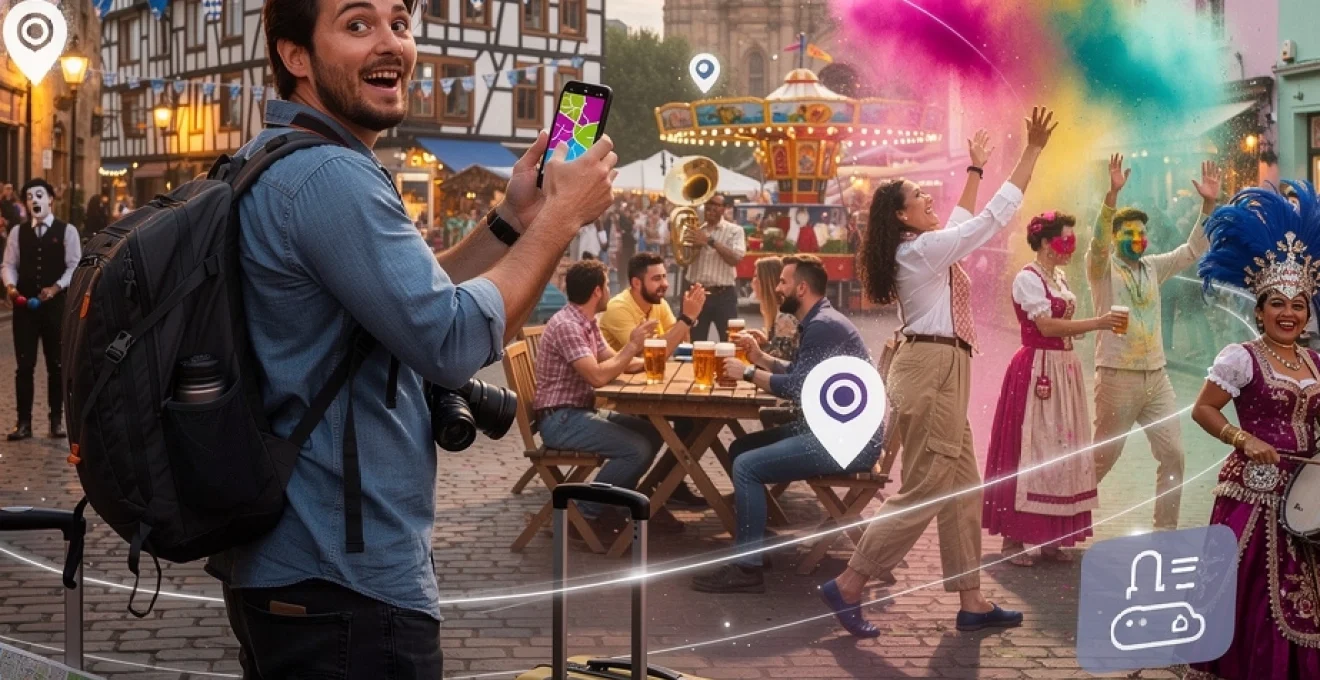
Travel has an extraordinary way of surprising us when we least expect it. The most memorable experiences often emerge not from meticulously planned itineraries, but from those spontaneous moments when you stumble upon a vibrant local celebration that transforms your understanding of a place. These unplanned festival encounters possess a unique magic that planned events rarely match, offering authentic cultural immersion that guidebooks simply cannot prepare you for.
The art of discovering spontaneous festivals requires a different mindset from traditional tourism. Rather than following predetermined paths, it demands flexibility, curiosity, and an openness to the unexpected. When you encounter an impromptu celebration, you witness culture in its most natural state – unfiltered by commercial tourism and performed primarily for local communities rather than visitors.
Modern technology has revolutionised how travellers can identify and participate in these serendipitous cultural moments. Digital tools now provide real-time intelligence about local events, whilst accommodation platforms offer immediate solutions for extending stays. The challenge lies not in finding these celebrations, but in adapting quickly enough to fully embrace them.
Spontaneous festival discovery through serendipitous travel encounters
The most rewarding festival discoveries often happen when you’re simply wandering through unfamiliar streets with no particular destination in mind. These chance encounters create stories that become the highlight of any travel experience, precisely because they weren’t anticipated or orchestrated.
Spontaneous festival encounters offer the purest form of cultural exchange, where visitors become participants rather than mere observers in authentic community celebrations.
Edinburgh festival fringe overspill events in royal mile side streets
Edinburgh’s Festival Fringe officially runs throughout August, but the city’s creative energy spills far beyond registered venues. Street performers, impromptu theatrical displays, and pop-up artistic collaborations emerge in unexpected corners of the Old Town. The narrow wynds and closes off the Royal Mile become stages for performers seeking audiences outside the official programme structure.
These unofficial performances often showcase the most innovative and experimental work, as artists test new material or express themselves without venue constraints. Walking through Grassmarket or Cowgate during festival season, you might encounter anything from spoken word poetry performed on doorsteps to elaborate costume parades organised entirely through social media.
The atmosphere in these side streets captures Edinburgh’s festival spirit more authentically than many ticketed events. Local residents open their homes for impromptu gatherings, whilst temporary art installations appear overnight in previously empty spaces. This organic festival expansion demonstrates how cultural celebrations naturally evolve beyond their formal boundaries.
Oktoberfest satellite celebrations in bavaria’s smaller market towns
While Munich’s Oktoberfest attracts millions of visitors, Bavaria’s smaller communities host their own volksfests throughout September and October. These local celebrations maintain traditional elements often lost in Munich’s commercialised version, offering more intimate experiences with authentic Bavarian culture.
Towns like Rosenheim, Straubing, and Erlangen organise festivals that prioritise community participation over tourist accommodation. Local breweries showcase seasonal beers, traditional bands perform folk music, and families gather in decorated beer gardens that have served their communities for generations. The atmosphere remains genuinely celebratory rather than performative.
Discovering these satellite celebrations requires venturing beyond major tourist routes. Regional train connections make it possible to explore multiple small-town festivals within a single trip, each offering distinct local variations on Oktoberfest traditions. Many feature locally-produced foods, traditional crafts demonstrations, and folk dancing that reflects specific regional heritage.
Holi festival celebrations in mathura and vrindavan beyond planned itineraries
Mathura and Vrindavan, the legendary birthplace and childhood home of Lord Krishna, host some of India’s most spiritually significant Holi celebrations. Beyond the organised events that attract tourists, these sacred cities experience weeks of spontaneous colour festivals leading up to the main celebration.
Local temples initiate their own Holi observances at different times, creating multiple opportunities for participation. Neighbourhood groups organise impromptu colour fights in narrow galis, whilst ashrams welcome visitors to join their devotional celebrations. These smaller gatherings often provide more meaningful spiritual experiences than
the crowded, highly publicised events. You might share sweets with local families on temple steps, join devotional singing in courtyards fragrant with incense, or be invited into a small procession that never appears on any official itinerary. By arriving a few days before or staying after the main Holi date, you create space for these unplanned encounters that reveal the deep spiritual roots behind the festival’s colourful surface.
For travellers, the key is to move slowly through Mathura and Vrindavan’s neighbourhoods, rather than jumping from one famous temple to another. Ask shopkeepers where smaller celebrations are happening, follow the sounds of drums and chanting down side streets, and be prepared to adjust your schedule when you sense a gathering forming. These modest, hyperlocal Holi festivals often offer more genuine interaction, as locals are celebrating with each other rather than performing for tour groups.
Carnival de barranquilla street performances in colombian neighbourhoods
Carnival de Barranquilla is one of Colombia’s largest and most famous celebrations, but its true personality emerges away from the main parade routes. In working-class neighbourhoods throughout the city, verbenas – informal street parties – spring up without the fanfare of official programming. Residents move speakers into the street, set up makeshift bars with crates and coolers, and invite neighbours and passers-by to join in the dancing.
Stumbling upon one of these local Carnival celebrations offers a radically different experience from the grandstands and ticketed events. You might see traditional cumbia and mapalé dances performed on cracked pavements, with costumes that have been passed down through generations. Children weave between dancers, street food vendors work late into the night, and conversations easily flow between locals and curious visitors who show genuine interest and respect.
To increase your chances of discovering these neighbourhood performances, stay in residential areas rather than exclusively in tourist-focused districts. During Carnival season, follow the distant echo of drums or brass bands, and do not be afraid to ask taxi drivers or shop owners where community parties are taking place. As long as you behave respectfully and remain aware of your surroundings, these spontaneous street festivals can become some of your most memorable Colombian travel stories.
Digital navigation tools for real-time festival intelligence gathering
Whilst serendipity plays a crucial role in discovering unplanned festivals, digital tools now act as powerful allies in real-time cultural event detection. Instead of relying solely on luck, you can actively scan your surroundings for local celebrations using social platforms, mapping services, and dedicated tourism apps. Think of these tools as a radar system, constantly sweeping for signals of nearby cultural activity.
Used strategically, these digital platforms help you move beyond the obvious headline festivals and into smaller, more authentic community events. You can spot a street parade forming on the other side of town, identify a temple ceremony about to begin, or learn that a neighbourhood market has transformed into a music-filled fair. By combining your own curiosity with technology’s reach, you dramatically increase your chances of encountering unforgettable local festivals you never originally planned to see.
Facebook events location-based algorithm exploitation techniques
Facebook Events remains one of the richest sources of real-time information about local gatherings, from small neighbourhood concerts to multi-day cultural festivals. Many municipalities, cultural groups, and informal collectives use the platform as their primary event calendar, often posting updates far more frequently than official websites. If you learn how to manipulate Facebook’s location filters, you can turn your News Feed into a dynamic festival discovery dashboard.
Start by changing your location settings to your current city and narrowing the search radius to a few kilometres. Then, switch between “Today,” “This Week,” and “This Month” to catch both spontaneous and upcoming events. Pay attention to events listed in local languages, as these often represent the most authentic community celebrations rather than those marketed primarily to international visitors.
You can also exploit Facebook’s algorithms by interacting with events that match your cultural interests. When you mark yourself as “Interested” or “Going” to local festivals, the platform begins to recommend similar activities, effectively training the algorithm to surface hyperlocal celebrations. Join city-specific community groups where residents share information about neighbourhood parades, religious observances, and pop-up cultural nights that rarely appear in mainstream travel guides.
Instagram stories geotag mining for live cultural event detection
Instagram Stories, with their short lifespan and location tags, function almost like a live cultural seismograph for any city you visit. When people share a story from a parade, concert, or festival, they often attach a geotag that you can search and explore in real time. By tapping on a city or neighbourhood tag and viewing active stories, you gain an immediate window into what is happening on the streets at that very moment.
This technique is especially effective for spontaneous festivals, as locals tend to document informal gatherings long before they appear on official channels. You might notice several stories showing dancers in similar costumes in a particular park, or repeated clips of fireworks from a specific plaza. These visual clues indicate that something interesting is unfolding nearby, even if you cannot yet identify the festival by name.
To use Instagram as a serious festival intelligence tool, search by broader city tags first, then drill down into smaller districts or popular landmarks. Explore hashtags in the local language – not just English – to uncover deeper layers of community culture. In many destinations, Instagram acts like a real-time rumour mill; with a little pattern recognition, you can follow its digital breadcrumbs straight into the heart of a celebration you otherwise would have missed.
Local tourism board mobile applications with push notification systems
Many modern tourism boards now maintain dedicated mobile applications, designed to showcase events, exhibitions, and festivals beyond traditional sightseeing attractions. These apps often include push notification systems that alert users to upcoming or in-progress activities near their current GPS location. For travellers seeking spontaneous festival encounters, this becomes a valuable, low-effort discovery channel.
Once you arrive in a new city, search app stores for official tourism or city guide apps, paying attention to those operated by municipal or regional authorities. After installation, enable location services and notification permissions so the app can nudge you when a street performance, market festival, or cultural parade is about to begin. Some platforms even categorise events by theme, such as music, food, or religious celebrations, allowing you to tailor alerts to your interests.
These digital tools rarely replace the thrill of simply wandering, but they provide a helpful safety net for days when you might otherwise miss what is unfolding a few streets away. Combined with more informal channels like social media, official tourism apps round out your real-time festival discovery toolkit, offering structured information to complement the organic, unpredictable nature of local celebrations.
Airbnb host insider knowledge networks for hyperlocal event discovery
Your accommodation host, whether on Airbnb or another homestay platform, often holds decades of lived experience in the neighbourhood you are visiting. Whilst algorithms can highlight popular festivals, hosts understand the hidden calendar of small-scale religious processions, annual school parades, or weekend ferias that rarely appear online. Building a relationship with your host effectively grants you access to a private, hyperlocal knowledge network.
Instead of limiting your interaction to key handover and check-out, take a few minutes to ask targeted questions about upcoming community events. You might say, “Are there any neighbourhood festivals or special celebrations happening this week?” or “Is there a particular time of year when your street becomes very lively?” Such open-ended questions encourage stories and tips that no search engine would surface.
Some hosts even participate directly in local cultural organisations and can invite you along as a guest or volunteer. You may find yourself helping decorate a festival float, learning to cook a traditional dish for a communal feast, or joining a rehearsal for a dance performance. By approaching your host as a cultural bridge rather than just a service provider, you significantly expand your chances of encountering unplanned festivals that feel genuinely local rather than curated for tourists.
Accommodation pivot strategies during unplanned festival encounters
Discovering that a major local festival is about to begin on your last planned night in town can be both thrilling and logistically challenging. Suddenly, accommodation that seemed abundant yesterday is fully booked, and prices for remaining rooms have surged. To transform this situation from stressful to exciting, you need clear strategies for pivoting your accommodation plan at short notice.
First, recognise that flexibility is your strongest asset. Rather than insisting on staying in the same neighbourhood or room type, widen your search radius and consider alternative lodging styles, from guesthouses and hostels to short-term room rentals. In many cities, moving just two or three metro stops away from the festival epicentre can dramatically increase availability whilst still keeping you within easy reach of the celebrations.
Second, use multiple booking platforms simultaneously and be ready to act quickly. Check large aggregators, local booking sites, and direct hotel websites, as each may display different availability. If you are already staying somewhere, ask the front desk or host whether they know of sister properties or nearby apartments with spare capacity; hospitality networks often share internal information during busy festival periods.
Finally, be prepared to compromise on amenities in exchange for location and cultural access. During festivals, a simple, clean room a short walk from the action is often more valuable than a luxury property far from the festivities. Carry a small “comfort kit” – including earplugs, a sleep mask, and a portable lock – so that you can accept last-minute rooms near noisy streets or in older buildings whilst still sleeping safely and comfortably between long days of celebration.
Cultural immersion protocols for spontaneous festival participation
When you unexpectedly step into the middle of a local festival, the temptation is to start photographing and joining in immediately. Yet meaningful cultural immersion requires a more deliberate, respectful approach. Just as you would not walk onto a theatre stage uninvited, entering a community celebration calls for observation, adaptation, and sensitivity to local norms.
Developing simple protocols for spontaneous festival participation helps you navigate unfamiliar environments with confidence. These guidelines act like a shared language of respect, signalling to locals that you have come to learn rather than to treat their traditions as a backdrop for your holiday photos. By dressing appropriately, using basic festival-specific vocabulary, and understanding religious etiquette, you transform from an outsider looking in to a welcomed guest.
Traditional dress acquisition from local market vendors
Wearing elements of traditional dress during a festival can deepen your sense of belonging and signal respect for local customs, provided it is done thoughtfully. Rather than ordering costumes online before your trip, purchase garments or accessories directly from market vendors in the place you are visiting. This allows you to ask questions about how items are worn and whether they are appropriate for outsiders to use during the celebration.
For example, in India during Holi, simple white cotton garments from local markets are both practical and culturally fitting, as they highlight the colour powders and are easy to wash or discard. In Bavaria, buying a modest checked shirt or simple dirndl-style apron from a regional shop feels more authentic than wearing a caricature costume imported from another country. Vendors often take pride in explaining the symbolism of colours, patterns, and accessories, giving you rich stories to wear along with the clothes.
Always avoid sacred garments or items reserved for specific roles, such as priestly shawls, ceremonial crowns, or religious insignia. If you are unsure, ask directly whether something is suitable for a visitor to wear in public festivities. By approaching traditional dress as a form of cultural appreciation – not as fancy dress – you strengthen your connection to the festival community rather than inadvertently causing offence.
Language barrier navigation using festival-specific terminology
Even when you cannot speak the local language fluently, learning a handful of festival-specific terms can dramatically improve your experience. Knowing how to say “Happy Holi,” “Good Carnival,” or “Thank you for the food” creates small moments of connection that transcend grammar. People are often delighted when visitors use local greetings tied to their most cherished celebrations.
Before or during the festival, note down key phrases related to greetings, gratitude, and basic logistics such as “Where is the parade route?” or “What time does the performance start?” You can store these in your phone, on a small card, or in a translation app ready for offline use. Many modern tools also allow you to download language packs so that you are not dependent on unstable festival-time mobile data.
Think of these phrases as cultural keys; with just a few words, you unlock more detailed explanations, invitations, and insider tips. When locals see you making the effort, they are more likely to point you towards lesser-known events, explain symbolic gestures, or even invite you to join family gatherings that tourists rarely access.
Religious etiquette compliance in sacred festival environments
Some of the most powerful festivals you will encounter are deeply religious in nature, taking place in temples, mosques, churches, or shrines with strict behavioural expectations. Entering these spaces without understanding basic etiquette can lead to unintentional disrespect. To avoid this, pause at the edge of any sacred site and observe how locals are behaving before you step inside.
Common practices include removing shoes, covering shoulders and knees, speaking softly, and refraining from public displays of affection. In some contexts, photography, eating, or sitting in certain areas is prohibited for non-adherents. If you are unsure, ask a guardian, priest, or organiser for guidance with a polite, open attitude; most will appreciate your desire to participate respectfully and provide clear instructions.
Remember that festivals often blend joyous celebration with solemn ritual. Just because music is loud in the courtyard does not mean the inner sanctuary is equally relaxed. Adopting a “follow the locals” strategy – mirroring seating postures, queueing patterns, and gestures of respect – helps you navigate complex environments with minimal risk of offence, while still allowing for deep, meaningful participation.
Photography permission protocols for indigenous cultural celebrations
In an age where every moment can become content, photographing indigenous or minority communities during their festivals requires particular care. These celebrations often carry histories of marginalisation, and community members may be sensitive to outsiders documenting intimate rituals. As a visitor, it is your responsibility to prioritise dignity over dramatic images.
Whenever possible, ask for explicit permission before taking close-up portraits or capturing sacred ceremonies. A simple gesture towards your camera followed by a questioning look can communicate your intent even when language is a barrier. If someone shakes their head, turns away, or appears uncomfortable, respect their wishes and put your camera down.
Consider focusing on wider scenes, costume details, or your own reflections rather than individuals’ faces. If you plan to share images publicly, reflect on how they might be perceived by people who were not present: do they reinforce stereotypes, expose vulnerable moments, or reveal sensitive locations? Applying these photography protocols not only protects the communities you visit but also pushes you to engage with festivals as lived experiences, not merely visual trophies.
Budget recalibration methods for unexpected festival expenditures
Unplanned festivals can disrupt even the most carefully constructed travel budgets. Extended accommodation, special meals, costume purchases, and last-minute transport all add up quickly. Instead of viewing these costs as financial emergencies, approach them as calculated reallocations, shifting money from lower-priority activities towards once-in-a-lifetime experiences.
Begin by creating a flexible “festival buffer” within your overall travel budget, perhaps 10–15% reserved specifically for spontaneous cultural opportunities. When a major celebration appears on your path, you can tap into this buffer without guilt, knowing that you have pre-authorised yourself to invest in meaningful experiences. If you did not plan such a buffer in advance, identify non-essential expenses you can reduce, such as high-end restaurant meals, shopping, or paid attractions you can replace with free alternatives.
On the ground, track festival-related spending daily, either in a simple notebook or using a budgeting app, so that enthusiasm does not quietly slide into overspending. Look for low-cost ways to participate fully: share costume items with other travellers, buy street food instead of sit-down meals, and use public transport or walking to reach festival sites. By treating budget recalibration as a strategic exercise rather than a sacrifice, you maintain financial control while still embracing the magic of unplanned celebrations.
Documentation and memory preservation techniques for unplanned cultural experiences
Spontaneous festival encounters often become the stories you retell for years, yet their unplanned nature means you might not have your camera ready or your journal in hand. To preserve these rich cultural memories without constantly viewing them through a lens, adopt a balanced approach to documentation. Think of yourself as both participant and archivist, alternating between full immersion and brief moments of reflection.
After each festival day, take ten minutes to capture key details whilst they are still vivid: the sounds of specific instruments, the smell of street food, fragments of songs, or particular gestures of hospitality you received. These sensory notes, whether written in a notebook or typed into a phone, will bring your memories back to life more effectively than hundreds of near-identical photos. Recording short voice memos can be especially useful when you are too tired to write after hours of celebration.
When you do take photos or videos, focus on storytelling rather than volume. A handful of images showing different stages of the festival – preparation, procession, climax, and aftermath – can later help you reconstruct the narrative of your experience. You might also keep tickets, flyers, or small non-sacred objects that symbolise your participation, integrating them into a digital or physical travel scrapbook.
Finally, consider sharing your festival experiences in ways that give back to the communities that hosted you. This could mean writing an online review that highlights respectful behaviour, contributing images to local organisers if they request them, or simply telling future travellers how to approach the celebration with sensitivity. In doing so, you transform your personal memories into a resource that supports sustainable, culturally aware festival tourism around the world.