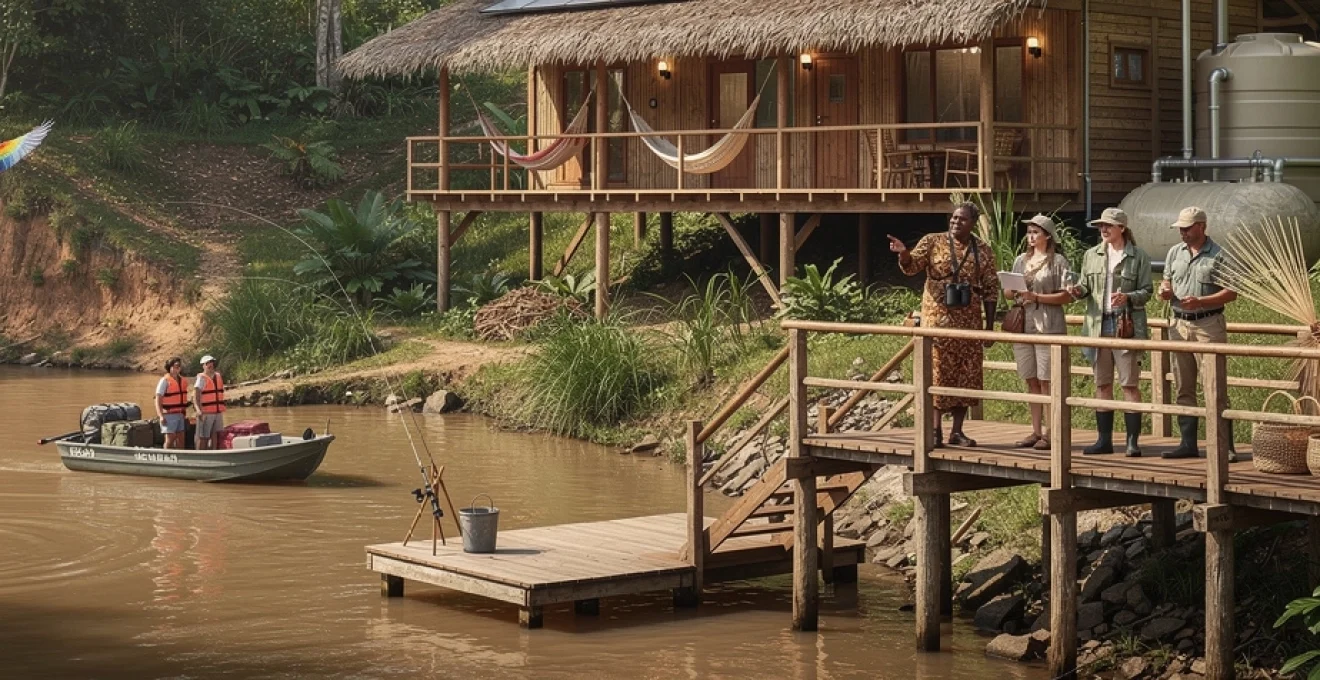
The Amazon rainforest, spanning over 5.5 million square kilometres across nine countries, represents Earth’s most biodiverse terrestrial ecosystem. Within this vast green cathedral, a new generation of eco-lodges has emerged, offering travellers unprecedented access to pristine wilderness whilst championing conservation and sustainable tourism practices. These establishments have revolutionised how visitors experience the jungle, transforming what was once arduous expedition into accessible yet deeply authentic encounters with one of the planet’s most critical ecosystems. From the tributaries of the Rio Negro to the remote reaches of Yasuní National Park, these lodges provide sanctuary for both wildlife and those seeking genuine connection with nature.
Sustainable architecture and Off-Grid infrastructure in amazonian Eco-Lodges
The architectural philosophy underpinning contemporary Amazon eco-lodges represents a fascinating synthesis of indigenous building traditions and modern sustainable technologies. These structures must withstand extreme humidity, torrential rainfall, and intense heat whilst minimising environmental impact on their surroundings. The result is a distinctive architectural language that feels both timeless and innovative, blending seamlessly into the forest canopy rather than dominating it.
Rainwater harvesting systems and greywater recycling technologies
Given the Amazon’s substantial annual rainfall—averaging between 2,000 and 3,000 millimetres in most regions—rainwater harvesting has become the cornerstone of water management at leading eco-lodges. Sophisticated collection systems channel rainfall from expansive thatched roofs into storage tanks, where it undergoes multi-stage filtration before use. Some establishments, such as those in the Anavilhanas Archipelago, can operate entirely on harvested rainwater for six to eight months annually. This approach dramatically reduces the need for well-drilling, which can disrupt underground aquifers and local ecosystems.
Greywater recycling technologies complement rainwater systems by treating wastewater from showers, sinks, and kitchens through constructed wetlands and biofilters. These natural treatment systems use native aquatic plants and beneficial bacteria to purify water, which can then irrigate ornamental gardens or be safely returned to the environment. The most advanced lodges achieve water recycling rates exceeding 70%, a remarkable achievement in remote jungle locations where conventional infrastructure would be prohibitively expensive and environmentally damaging.
Solar panel arrays and Micro-Hydro generators for remote locations
Energy independence represents one of the greatest challenges for Amazon eco-lodges, as grid connections are typically impossible and diesel generators create noise pollution whilst releasing greenhouse gases. Solar photovoltaic systems have become the preferred solution, with panel arrays discreetly positioned on roofs or in small forest clearings. Battery banks store surplus energy for nocturnal use, ensuring guests enjoy consistent lighting and essential amenities without compromising the jungle’s natural soundscape.
In regions with suitable topography and year-round water flow, micro-hydro generators provide supplementary power. These compact turbines harness the kinetic energy of small streams or rivers, generating electricity with minimal environmental disruption. When combined with solar arrays, hybrid systems can provide 24-hour power whilst maintaining complete fossil fuel independence. This dual approach has proven particularly effective at lodges near the Andean foothills, where elevation changes create ideal conditions for hydroelectric generation.
Locally-sourced timber construction and palafitte design principles
Sustainable timber sourcing forms the ethical foundation of eco-lodge construction throughout Amazonia. Responsible operators work exclusively with certified forestry cooperatives that practice selective logging, ensuring forest regeneration and biodiversity preservation. Species such as ironwood, cumaru, and shihuahuaco—chosen for their natural resistance to humidity and insects—provide structural integrity without chemical treatment. This approach creates employment for indigenous communities whilst incentivising forest conservation over destructive cattle ranching or industrial agriculture.
The palafitte architectural style, elevating structures on stilts, represents an ingenious adaptation to the Amazon’s dramatic seasonal flooding cycles. During the wet season, water levels can rise by 10 to 15 metres in some regions, transforming forests into aquatic labyrinths. Raised construction protects buildings from flood damage whilst allowing natural water flow beneath structures, preventing erosion and maintaining ecosystem connectivity. Additionally, elevation improves ventilation and reduces exposure to ground
Additionally, elevation improves ventilation and reduces exposure to ground-dwelling insects, whilst offering guests elevated views over the forest or surrounding waterways. Many Amazon rainforest eco-lodges integrate wide verandas and screened windows to maximise airflow, reducing reliance on energy-intensive air conditioning. Interiors remain deliberately minimalist, with natural materials and handwoven textiles replacing plastics and heavy concrete finishes. This design language not only lowers the carbon footprint of construction, it also creates a tangible sense of place—you feel, quite literally, suspended within the rainforest rather than sealed off from it.
Composting toilets and biodigester waste management solutions
Human waste management in remote jungle environments demands solutions that protect fragile waterways from contamination. Modern eco-lodges increasingly rely on composting toilets, which use aerobic decomposition to transform waste into stable, non-pathogenic compost over time. Properly designed systems are odourless, require minimal water, and drastically reduce the load on septic tanks or treatment plants. For guests, the user experience is often indistinguishable from a conventional toilet, demonstrating how sustainable infrastructure can be both discreet and effective.
Complementing dry composting systems, many Amazon eco-lodges employ biodigesters to process organic waste from kitchens and staff quarters. These anaerobic digesters break down food scraps and blackwater, producing biogas that can supplement cooking fuel or water heating. The residual slurry, once stabilised, becomes a nutrient-rich fertiliser used in lodge gardens or reforestation nurseries. By turning waste streams into resources, biodigester technology closes the loop in lodge operations and significantly reduces pollution risks in sensitive aquatic ecosystems.
Premier Eco-Lodge destinations across amazonian bioregions
Given the Amazon rainforest spans such a vast area, each bioregion offers its own character, wildlife assemblages, and cultural context. From the blackwater rivers of the Rio Negro to the clay-rich soils of Peru’s Madre de Dios, choosing where to stay in the Amazon rainforest can feel overwhelming. The following flagship eco-lodges illustrate how different regions have developed distinctive approaches to hospitality, conservation, and community partnerships. Whether you prioritise birdwatching, big cat tracking, or cultural immersion, there is an Amazon eco-lodge tailored to your interests.
Inkaterra reserva amazónica in madre de dios, peru
Located on the banks of the Madre de Dios River, Inkaterra Reserva Amazónica is often cited as one of the best eco-lodges in the Amazon rainforest for travellers who value both comfort and conservation. Its 35 wooden cabanas are inspired by Ese’Eja architecture, with palm-thatched roofs, open-air verandas, and mosquito-netted beds that allow guests to fall asleep to the forest’s nocturnal chorus. Over 540 bird species have been recorded within the property’s concession, making it a premier destination for birders and photographers seeking an immersive nature experience without forgoing hot showers and plush linens.
One of the lodge’s signature features is the Inkaterra Canopy Walkway, a network of suspension bridges rising 30 metres above the forest floor. From this vantage point, you can watch mixed-species bird flocks sweep through the treetops, observe monkeys travelling between feeding trees, and witness sunrise slowly ignite the upper canopy. Guided excursions to Lake Sandoval, night walks in search of caimans and frogs, and visits to nearby Ese’Eja farms round out a programme that balances wildlife observation with cultural learning. As a National Geographic Traveler “Top 25 Eco-Lodge”, Inkaterra also invests heavily in long-term biodiversity monitoring and habitat restoration.
Cristalino lodge in the southern amazon, mato grosso, brazil
Cristalino Lodge, set within an 11,399-hectare private forest reserve in Mato Grosso, showcases the southern Amazon’s remarkable resilience in a region otherwise impacted by agriculture and ranching. Accessed via boat along the clear-water Cristalino River, the lodge feels like a secluded research station and boutique hotel in one. Accommodation ranges from comfortable standard rooms to spacious bungalows, all constructed from certified timber and designed to blend into the surrounding forest. Ceiling fans, large screened windows, and shaded decks prioritise passive cooling and natural light over heavy mechanical systems.
The reserve protects habitat for around 600 bird species, including harpy eagles, macaws, and antbirds, as well as a wealth of butterflies, primates, and occasional jaguar sightings. Two canopy towers offer exceptional vantage points above the forest, ideal for sunrise birdwatching and landscape photography. Expert local guides lead small-group hikes, river excursions by canoe, and night walks that reveal the Amazon’s lesser-known denizens—think bioluminescent fungi, arboreal frogs, and nocturnal mammals. For travellers keen on conservation-focused Amazon tours, Cristalino’s ongoing research partnerships and environmental education initiatives make your stay part of a wider protection strategy.
Napo wildlife center in yasuní national park, ecuador
Deep within Ecuador’s Yasuní National Park, a UNESCO Biosphere Reserve and one of the most biodiverse places on Earth, Napo Wildlife Center stands as a benchmark for community-owned eco-tourism. Operated by the Añangu Kichwa community, the lodge sits beside a blackwater oxbow lake, its thatched cabanas linked by raised walkways to minimise habitat disturbance. Electricity is generated primarily from solar arrays and energy-efficient systems, while strict guidelines govern noise, lighting, and boat traffic to keep wildlife encounters as natural as possible.
Staying here, you’ll have access to some of the Amazon’s most spectacular wildlife viewing opportunities. A towering canopy platform offers views over the emergent trees, where toucans, aracaris, and monkeys patrol the fruiting branches. Nearby clay licks attract hundreds of parrots and macaws, creating a riot of colour and sound that is among the most iconic sights in the Amazon rainforest. The lodge’s dual-guide system—pairing a bilingual naturalist with an indigenous Kichwa tracker—ensures both scientific accuracy and deep local knowledge, enriching every walk, canoe trip, and night excursion.
Anavilhanas jungle lodge in rio negro archipelago, brazil
Overlooking the Rio Negro and the labyrinthine Anavilhanas Archipelago in Brazil, Anavilhanas Jungle Lodge offers an ideal balance between wilderness immersion and refined comfort. The blackwater Rio Negro is naturally low in sediments and insects, which means fewer mosquitoes and excellent conditions for swimming and boat-based exploration. The lodge’s bungalows and suites, many with panoramic river views and private balconies, are built on stilts or rocky outcrops to accommodate fluctuating water levels and preserve shoreline vegetation.
Guests can alternate between leisurely moments in infinity pools overlooking the river and excursions into the surrounding river islands and flooded forests. Activities include pink river dolphin watching, canoe explorations of igarapés (narrow forest channels), nocturnal caiman spotting, and visits to local riverside communities. The on-site restaurant highlights Amazonian cuisine with regional fish, seasonal fruits, and manioc-based dishes, while also catering to a variety of dietary preferences. For travellers seeking a relatively accessible Amazon eco-lodge from Manaus, Anavilhanas combines ease of access with a genuine sense of remoteness.
Refugio amazonas and tambopata research center, peru
In Peru’s Tambopata region, Refugio Amazonas and the more remote Tambopata Research Center (TRC) form a complementary pair of lodges that cater to different levels of adventure. Refugio Amazonas, closer to Puerto Maldonado, is ideal for families and first-time visitors to the Amazon rainforest. Its programmes include kid-friendly trail walks, citizen science activities, and night safaris that gently introduce younger travellers to the wonders of tropical ecology. Open-sided rooms with mosquito screens and thatched roofs keep you in contact with the forest’s sounds and breezes, while still offering comfortable beds and hot showers.
For travellers willing to venture further upriver, Tambopata Research Center provides one of the most immersive rainforest experiences in South America. Situated near the world’s largest known macaw clay lick, TRC is a prime site for observing these charismatic parrots at close range. The lodge doubles as a base for long-term research on macaw ecology and forest dynamics, and guests are often invited to learn about ongoing scientific studies. Night walks, river trips, and extended hikes offer good chances of spotting tapirs, monkeys, and, with luck, elusive big cats—a reminder that you are at the edge of one of the Amazon’s least disturbed forest blocks.
Biodiversity conservation programmes and wildlife monitoring protocols
Behind the comfortable rooms and scenic viewpoints of most reputable Amazon eco-lodges lies a quieter world of data sheets, camera traps, and field notebooks. Because these properties occupy critical habitats, they are uniquely positioned to support long-term biodiversity conservation programmes. Many collaborate with universities, NGOs, and government agencies to implement rigorous wildlife monitoring protocols that go far beyond casual wildlife viewing. As a guest, your stay can help fund these efforts, turning your Amazon rainforest trip into a tangible contribution to conservation outcomes.
Camera trap networks for jaguar and tapir population studies
Camera traps—motion-activated devices that photograph passing animals—have revolutionised our understanding of elusive species like jaguars and tapirs. Eco-lodges located in intact forest corridors frequently host extensive camera trap grids, sometimes covering hundreds of square kilometres. By analysing coat patterns and movement frequencies, researchers can estimate population densities, identify individual animals, and track changes over time. This information is vital for designing protected areas, creating wildlife corridors, and evaluating the impact of tourism or nearby land-use changes.
Some lodges offer guests behind-the-scenes access to this research, inviting you to join guides on camera trap checks or to review recent images in the field station. It is not unusual to see jaguars, pumas, ocelots, and giant armadillos appear on screen—animals you may never spot in person, yet whose presence confirms the ecological integrity of the area. For wildlife enthusiasts considering where to stay in the Amazon rainforest, such transparency and scientific engagement are strong indicators of a lodge’s conservation credibility.
Canopy tower observation points for ornithological research
Canopy towers and walkways, now signature features at many Amazon eco-lodges, are more than scenic lookouts; they are practical research platforms. Rising 30–40 metres above the forest floor, these structures grant scientists and birders direct access to the canopy layer, where many species spend almost their entire lives. Long-term bird monitoring projects use standardised point counts and mist-netting protocols from these vantage points to track population trends, breeding activity, and seasonal movements.
For travellers, joining an early-morning birdwatching session atop a canopy tower can feel like entering a secret world. Mixed flocks of tanagers and flycatchers sweep through, macaws pass overhead, and howler monkeys roar from distant ridges. Guides frequently record observations on tablets or notebooks, feeding data into broader ornithological databases. If you’ve ever wondered how we know that some Amazon regions host more than 500 bird species, the answer often lies in the patient work carried out from these elevated field stations.
Indigenous-led anti-poaching patrols and forest guardian initiatives
Poaching and illegal logging remain persistent threats across much of the Amazon basin. In response, several community-partnered eco-lodges support indigenous-led anti-poaching patrols and “forest guardian” programmes. Local men and women—often from communities with deep ancestral ties to the land—patrol trails, rivers, and boundaries, documenting infractions and working with authorities to deter illegal activity. Their intimate knowledge of the terrain makes them highly effective at detecting subtle signs of human presence in the vast forest.
Guests may occasionally meet these guardians during cultural talks or evening presentations, gaining insight into the complex realities of protecting the Amazon rainforest. These programmes also create dignified employment opportunities that reward conservation rather than forest clearing. When choosing an Amazon eco-lodge, asking about their involvement in such initiatives is a practical way to ensure your travel dollars reinforce, rather than undermine, local stewardship.
Reforestation projects with native species propagation
Deforestation and forest degradation have left scars across the Amazon, from abandoned pastures to logged-over areas. Many eco-lodges now maintain on-site nurseries dedicated to propagating native tree and understory species, which are then planted in degraded zones. These reforestation efforts focus not just on tree cover, but on restoring ecological complexity—mixing pioneer species with slow-growing hardwoods and fruit-bearing trees that support wildlife. Over time, these patches can reconnect forest fragments, creating corridors for mammals, birds, and pollinators.
Visitors frequently have the opportunity to participate in tree-planting activities, adding a hands-on element to their immersive nature experience. Planting a sapling may feel like a small act, but multiplied across thousands of guests and multiple lodges, it becomes a meaningful contribution to Amazon restoration. Some operations even track the survival of guest-planted trees, sharing updates via newsletters—a powerful reminder that your Amazon rainforest journey can continue to make a difference long after you return home.
Immersive naturalist activities and Expert-Guided expeditions
Whilst sustainable infrastructure keeps eco-lodges running, it is the daily activities—canoe trips, forest walks, and night safaris—that truly bring the rainforest to life. The best eco-lodges in the Amazon rainforest design their programmes to be small-scale, flexible, and guided by experienced naturalists, often paired with indigenous trackers. This dual-guiding approach ensures both scientific accuracy and cultural context, turning each outing into an opportunity to learn as well as to marvel. What kinds of experiences can you expect when you step beyond the lodge’s boardwalks?
Nocturnal caiman spotting excursions along oxbow lakes
After sunset, many lodges launch motorised canoes or paddled boats onto nearby oxbow lakes and river channels in search of caimans and other nocturnal wildlife. Guides sweep the water’s surface with red-filtered headlamps, looking for the tell-tale ruby reflection of caiman eyes. As you glide silently across the black water, the forest’s soundscape transforms: frogs call, nightjars fly overhead, and sometimes the splash of a fish or river otter breaks the stillness. For many guests, this first night excursion is the moment the Amazon feels truly wild.
Beyond the thrill, caiman-spotting trips often double as informal citizen science opportunities. Guides may record the number, size, and location of animals seen, contributing to long-term monitoring of local populations. Safety briefings emphasise keeping limbs inside the boat and avoiding flash photography at close range, minimising stress to the animals. If you are nervous about night activities, starting with a calm lake excursion is a gentle way to build confidence while still enjoying an immersive nature experience.
Ethnobotanical walks with indigenous shamans and traditional medicine
Few aspects of Amazon travel are as eye-opening as an ethnobotanical walk led by a local healer or elder. As you move along narrow forest trails, seemingly ordinary plants become living chapters of a vast pharmacopoeia. Leaves that treat fevers, vines used to ease stomach ailments, and resins applied to wounds—each is explained not only in biochemical terms, but also in relation to stories, rituals, and community practices. It is like walking through an open-air pharmacy where every “shelf” is a tree or shrub.
Many eco-lodges collaborate with indigenous shamans to share elements of traditional medicine in a respectful, educational format. You may learn how certain barks are prepared as teas, or how aromatic leaves are used in cleansing rituals. Importantly, responsible lodges emphasise that these experiences are not an invitation to self-medicate, but a way to appreciate the depth of forest knowledge held by local communities. For travellers curious about sustainable, culturally sensitive tourism, these walks offer a powerful reminder that biodiversity and cultural diversity are intimately linked.
Canopy walkway systems and emergent layer tree climbing
Canopy walkways—suspension bridges linking tall trees—are now iconic features at several Amazon eco-lodges, including Inkaterra Reserva Amazónica and Sacha Lodge in Ecuador. These structures allow you to move through the upper forest layers where bromeliads, orchids, and epiphytes thrive, and where many birds and mammals spend their lives. Crossing a narrow bridge 30 metres above the ground can feel daunting at first, but safety harnesses, handrails, and professional oversight keep the experience controlled. Within minutes, the fear often gives way to awe as you realise you are eye-level with toucans and squirrel monkeys.
In some locations, more adventurous guests can try controlled tree climbing, ascending an emergent giant via ropes and harnesses under expert supervision. Reaching the crown of a towering kapok tree is akin to standing on a small island in a sea of green, with views stretching to the horizon. These activities do carry stricter age and fitness requirements, and lodges carefully regulate group sizes to protect both trees and participants. If you have ever dreamt of exploring the rainforest from a bird’s perspective, canopy systems offer one of the most unforgettable ways to do so.
Clay lick observation for macaw and parrot aggregations
One of the Amazon’s most dramatic wildlife spectacles unfolds at clay licks—steep riverbanks or exposed cliffs where parrots and macaws gather to feed on mineral-rich soils. At lodges in Peru’s Tambopata region and Ecuador’s Yasuní, early-morning boat trips bring guests to concealed viewing blinds opposite these licks. As dawn breaks, the sky begins to fill with flocks of green, blue, yellow, and red, their calls building into a cacophony that can be heard kilometres away. It is a sensory experience that no documentary fully captures.
Researchers believe the birds consume clay to neutralise toxins in their fruit-heavy diets and to supplement essential minerals. Lodges follow strict codes of conduct at these sites, maintaining distance to prevent disturbance and limiting visitor numbers. For photographers, clay lick excursions require patience and long lenses, but the payoff—hundreds of macaws in a single frame—is often a trip highlight. If close-range parrot viewing is a priority for your Amazon rainforest itinerary, choosing a lodge with reliable access to clay licks is highly recommended.
Piranha fishing and river dolphin encounter safaris
Piranha fishing excursions, offered in many parts of the Amazon, blend light-hearted fun with ecological education. Using simple hand lines and small pieces of bait, guests try their luck catching these infamous fish in calm backwaters or flooded forests. Guides explain that piranhas are not the indiscriminate man-eaters of popular myth, but important scavengers and predators within the aquatic food web. Many lodges operate a catch-and-release policy, or, where regulations allow, a small portion of the catch may be prepared as part of a meal, giving you a literal taste of the river.
In blackwater rivers like the Rio Negro and certain stretches of the Amazon mainstem, boat trips may also focus on spotting pink and grey river dolphins. These highly intelligent cetaceans often approach boats out of curiosity, surfacing in arcs of pale rose or silver-grey. Responsible dolphin-watching tours maintain respectful distances, avoid feeding or touching the animals, and limit engine noise and time spent in close proximity. When combined with piranha fishing, these safaris showcase the rich aquatic life that makes Amazon river ecosystems so unique.
Indigenous community partnerships and cultural immersion experiences
Authentic Amazon eco-lodges recognise that protecting the rainforest is inseparable from supporting the rights and livelihoods of the peoples who call it home. Rather than treating nearby communities as mere attractions, leading operators build long-term partnerships based on shared governance, revenue-sharing, and mutual respect. For travellers, this opens the door to cultural immersion experiences that go far beyond staged performances. You gain insight into how indigenous groups navigate modern pressures while maintaining ancestral connections to the forest.
Quechua, shipibo, and huaorani village homestay programmes
In parts of Peru and Ecuador, eco-lodges collaborate with Quechua, Shipibo, and Huaorani communities to organise structured village visits and, in some cases, overnight homestays. Guests may travel by canoe or on foot to reach small settlements where families welcome them into traditional-style homes. Daily activities can include helping to prepare meals, learning to harvest manioc or plantains, and observing community meetings or school lessons. Rather than feeling like a “human zoo”, well-designed programmes emphasise mutual exchange—you are encouraged to share aspects of your own culture while listening carefully to theirs.
Homestays are not suitable for every traveller, as conditions can be simple, and hosts’ privacy must always be respected. However, for those willing to embrace a degree of discomfort, spending a night under a thatched roof, listening to conversations in an indigenous language and waking to the sounds of village life can be transformative. When evaluating Amazon rainforest tours that include village visits, look for clear guidelines on consent, fair compensation, and limits on group sizes—these are key indicators of ethical practice.
Traditional craft workshops: chambira palm weaving and natural dye techniques
Craft workshops offer a more structured way to engage with indigenous knowledge while directly supporting local artisans. In many Amazonian communities, women specialise in weaving baskets, bags, and bracelets from chambira palm fibres, which they dye using pigments extracted from seeds, bark, and leaves. Sitting in a shaded communal space, you might be invited to try spinning fibres, tying basic knots, or applying natural dyes while the artisans explain the cultural meanings of specific patterns and colours.
These sessions help preserve traditional crafts that might otherwise decline under the pressure of cheap, mass-produced goods. Purchasing directly from artisans ensures a far greater share of the value remains in the community than through intermediaries. As you watch a simple coil of palm fibre transform into a beautifully patterned basket, you begin to see material culture as another expression of the forest’s biodiversity—each colour and texture rooted in specific plants and landscapes.
Ayahuasca ceremonies and ancestral spiritual practices
Ayahuasca, a psychoactive brew made from Amazonian vines and plants, has drawn increasing international attention in recent years. Some eco-lodges, particularly in Peru and Ecuador, partner with licensed centres or local healers to offer optional ceremonies. These are serious spiritual rituals, traditionally used for healing, divination, and community guidance—not casual recreational experiences. Responsible operators require medical screening, detailed preparation guidelines, and integration support before and after ceremonies.
For travellers curious about Amazonian spiritual traditions, it is crucial to approach ayahuasca and related practices with humility and caution. Not every visitor needs or should participate in such ceremonies; simply attending non-psychoactive rituals, listening to icaros (sacred songs), or learning about cosmology in a daytime talk can be equally meaningful. If you are considering this path, research extensively, seek independent reviews, and prioritise centres with clear ethical frameworks and robust safety protocols. Above all, remember that these traditions are living, sacred practices, not commodities to be consumed.
Accessibility logistics and seasonal considerations for amazon travel
Planning an Amazon rainforest trip involves more than choosing an eco-lodge; logistics and timing can significantly shape your experience. Distances are vast, weather patterns vary between regions, and health considerations require forethought. When you understand how to reach your chosen Amazon eco-lodge and what to expect from different seasons, you can align your visit with your interests—be that photography, birdwatching, cultural immersion, or simply a quiet escape into nature.
Motorised canoe transfers from iquitos and puerto maldonado gateways
Most Amazon eco-lodges are accessible only by river, with motorised canoe transfers forming an integral part of the journey. In Peru, common gateways include Iquitos—reachable only by air or river—and Puerto Maldonado, which has regular domestic flights. From there, lodge representatives typically escort guests by road to a port, followed by one to four hours of travel by motorised canoe along major rivers and tributaries. This transition from urban hub to remote waterway is often when you first feel the sheer scale of the rainforest.
In Brazil, Manaus serves as the primary gateway, with lodges along the Rio Negro or in the Anavilhanas Archipelago reached via combination of road and boat transfers. Ecuadorian lodges near the Napo River generally use a short domestic flight from Quito followed by a two- to three-hour canoe trip. While transfer times can seem long on paper, they are rarely dull—dolphins, river birds, and riverbank communities provide constant points of interest. Pack essentials like sunscreen, a rain jacket, and insect repellent in a small day bag so that your main luggage can be stowed safely aboard.
Dry season versus wet season wildlife viewing opportunities
The Amazon rainforest has distinct wet and dry seasons, though the exact timing varies by region. Generally, the wet season runs from roughly December to May, when rivers rise and vast tracts of forest become seasonally flooded. This is an excellent time for canoeing through igapó (flooded forest), observing aquatic life, and photographing mirror-like reflections on blackwater lakes. Afternoon showers are frequent but often short-lived, and temperatures remain warm and humid.
The dry season, roughly June to November, sees lower water levels, exposing more riverbanks and making some trails more accessible for hiking. Many mammals concentrate around remaining water sources, which can improve chances of spotting tapirs, peccaries, and certain primates. Bird activity remains high year-round, though fruiting and flowering peaks can differ by locality. If you prioritise a specific activity—such as piranha fishing, clay lick visits, or long forest treks—ask your chosen eco-lodge which months best suit your goals. Either way, packing lightweight waterproof gear and quick-drying clothing will serve you well.
Vaccination requirements and prophylactic antimalarial medications
Health preparation is a crucial aspect of planning travel to the Amazon rainforest. Many countries in the region—and some airlines—recommend or require proof of yellow fever vaccination for entry into certain areas, especially if you are arriving from or transiting through other endemic countries. Because guidelines can change, consult your national travel health authority or a specialist clinic at least six to eight weeks before departure. Routine vaccinations such as tetanus, hepatitis A, and measles should also be up to date.
Malaria risk varies significantly across the Amazon basin, with some high-rainfall, low-altitude regions carrying higher transmission potential. Depending on your destination, length of stay, and planned activities, a travel health professional may recommend prophylactic antimalarial medication. Even where malaria risk is moderate, mosquito bite prevention remains your first line of defence: long sleeves and trousers at dawn and dusk, insect repellent containing DEET or picaridin, and sleeping under bed nets where provided. Eco-lodges typically offer guidance on region-specific risks, but the ultimate responsibility lies with you to make informed, up-to-date decisions about your health.