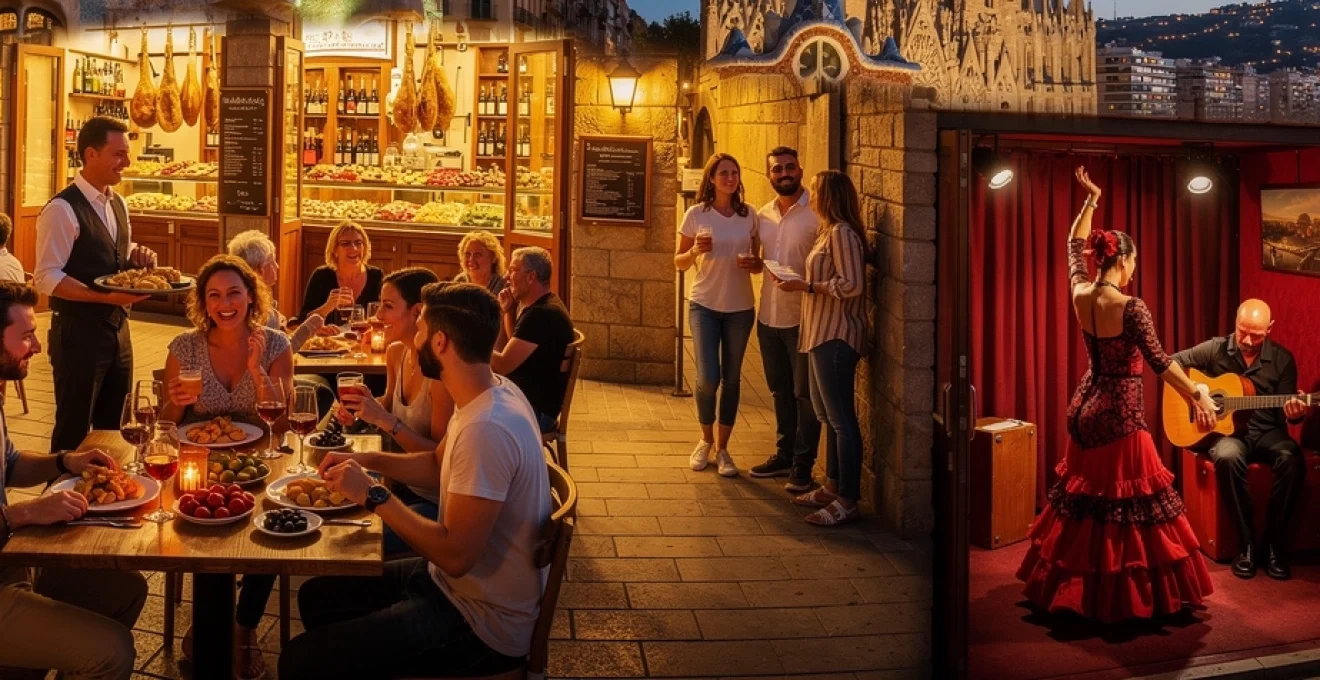
When twilight descends upon Barcelona, the city transforms into a vibrant tapestry of culinary delights, architectural splendour, and cultural traditions that have been perfected over centuries. The evening hours reveal a Barcelona that locals cherish—a time when the Mediterranean warmth lingers, streets fill with animated conversation, and the ancient ritual of sharing small plates becomes a social institution. Barcelona’s nocturnal identity is distinctly Catalan, blending modernist heritage with time-honoured gastronomic customs that turn every evening into an opportunity for discovery.
The Catalan concept of sobretaula—the leisurely time spent at the table after eating—perfectly encapsulates Barcelona’s evening philosophy. This isn’t merely about consumption; it’s about connection, tradition, and savouring life’s pleasures at a deliberately unhurried pace. From the narrow medieval lanes of the Gothic Quarter to the sun-soaked terraces of Barceloneta, each neighbourhood offers its own interpretation of the perfect Barcelona evening, combining exceptional food, architectural beauty, and cultural authenticity in ways that continue to captivate both visitors and residents alike.
Culinary cartography: navigating barcelona’s tapas districts after sunset
Barcelona’s tapas culture represents far more than casual dining—it’s a sophisticated social ritual that defines evening life across the city’s diverse neighbourhoods. The practice of moving from bar to bar, sampling distinctive small plates at each establishment, creates a culinary journey that’s as much about exploration as it is about gastronomy. Each district maintains its own tapas identity, with venues ranging from century-old establishments preserving traditional recipes to contemporary spaces reimagining Catalan classics with modern techniques.
The traditional tapas route typically begins around 8 PM, when locals start their evening promenade through their favourite haunts. Unlike the rushed meals common in many metropolitan areas, Barcelona’s tapas culture encourages you to linger, to engage with bartenders who possess encyclopaedic knowledge of regional wines, and to strike up conversations with fellow patrons who treat their neighbourhood bars as extended living rooms. This communal aspect transforms dining into a participatory cultural experience rather than a transactional exchange.
El born’s authentic tapas trail: cal pep to bar del pla
El Born district stands as Barcelona’s tapas epicentre, where medieval architecture provides an atmospheric backdrop for some of the city’s most celebrated culinary establishments. The neighbourhood’s narrow cobblestone streets house a remarkable concentration of authentic tapas bars, many occupying premises that have served food for generations. Cal Pep, perhaps the district’s most iconic venue, maintains a standing-room-only counter where chefs prepare seafood tapas with theatrical flair just inches from diners. The restaurant’s refusal to take reservations preserves its democratic character—everyone queues together, regardless of status or wealth.
Walking through El Born after dark reveals the neighbourhood’s unique evening rhythm. The Passeig del Born, once a medieval jousting ground, now functions as a social thoroughfare lined with tapas establishments that spill onto outdoor terraces. Bar del Pla exemplifies the district’s sophisticated approach to traditional cuisine, offering carefully curated wine selections alongside inventive tapas that respect Catalan culinary heritage whilst introducing unexpected flavour combinations. The establishment’s intimate setting, with exposed brick walls and candlelit tables, creates an ambiance that feels simultaneously contemporary and timeless.
Poble sec’s carrer de blai: the pintxos crawl phenomenon
Poble Sec’s Carrer de Blai has emerged as Barcelona’s answer to San Sebastián’s famed pintxos bars, transforming a single street into a concentrated gastronomic corridor where you can sample dozens of variations on the classic mounted tapa. Unlike traditional tapas that are ordered from menus, pintxos are displayed on bar counters, allowing you to point and select based on visual appeal. Each establishment along this pedestrianised street specialises in particular preparations, creating friendly competition that drives continuous culinary innovation.
The Carrer de Blai experience follows an unwritten protocol familiar to locals: enter a bar, survey the pintxos selection, choose two or three pieces, enjoy them with a small beer or wine, pay, and
then move on to the next doorway a few metres down. Toothpicks or coloured sticks often serve as your informal bill, counted at the end to determine how many bites you have enjoyed. Prices remain relatively modest compared to more central districts, making Carrer de Blai a favourite for students, young professionals and travellers seeking an authentic yet affordable Barcelona tapas tour. To avoid the heaviest crowds, consider starting around 7 PM, when families and locals still dominate the scene before the later-night rush.
Beyond the sheer variety of pintxos on offer, what distinguishes Poble Sec in the evening is its neighbourhood atmosphere. Street musicians often perform between terraces, and conversations spill across tables as people migrate from bar to bar. While you will find classic combinations like tortilla skewers and chorizo with peppers, many venues experiment with international flavours, topping small slices of bread with everything from marinated salmon to vegetarian concoctions. If you are interested in sustainable dining, look for blackboard menus highlighting seasonal ingredients sourced from Catalan producers, a growing trend in Barcelona’s food scene.
Gothic quarter’s hidden vermuteries: traditional aperitif culture
Step into the Gothic Quarter after dark and you enter a labyrinth where medieval stone walls hide some of Barcelona’s most atmospheric vermuteries. These traditional bars specialise in vermut de la casa—house vermouth served on tap, often infused with secret blends of herbs and spices. Historically, vermouth was enjoyed as an aperitif before Sunday lunch, but in contemporary Barcelona it has been reclaimed as an evening ritual, particularly on weekends. Sipping a small glass of this aromatic fortified wine, usually garnished with an orange slice and an olive, is one of the most evocative ways to experience Catalan nightlife.
Many of these Gothic Quarter vermouth cellars retain their original barrels, tiled floors and wooden counters, creating an almost cinematic backdrop for your aperitif. You might find yourself standing shoulder to shoulder with locals at a marble-topped bar, balancing a simple plate of anchovies, olives and crisps—the classic vermouth accompaniments. Unlike more formal wine bars, the etiquette here is relaxed: you order, pay, and linger as long as you like, often moving on after a single drink to discover the next hidden spot. For a deeper dive into traditional Catalan aperitif culture, ask the bartender about the difference between red and white vermouth, or about local labels produced in Reus, historically the heartland of vermouth production in Catalonia.
These vermuteries also offer a window into how Barcelona blends history with contemporary trends. Many younger bartenders are reviving forgotten recipes, creating small-batch vermouths with organic botanicals and experimenting with low-alcohol cocktails. This movement mirrors a broader European shift towards mindful drinking, where the emphasis is on flavour and social interaction rather than quantity. If you are sensitive to crowds, consider visiting slightly earlier in the evening, around 6:30 or 7 PM, when you can still appreciate the atmospheric interiors without the later rush of night owls and tour groups.
Gràcia’s plaça del sol: neighbourhood tapas rituals and local haunts
North of the city centre, the Gràcia district offers a more village-like interpretation of the Barcelona evening, centred around lively squares such as Plaça del Sol. Once an independent town, Gràcia retains a strong local identity, and this is most evident after sunset when residents of all ages converge on the plazas to talk, snack and watch the world go by. Around Plaça del Sol, small tapas bars and bodegas open their doors onto the square, offering everything from classic bombes (potato and meat croquettes) to refined seasonal dishes that showcase Catalan produce.
Unlike the high-traffic areas near La Rambla, Gràcia’s tapas culture feels resolutely neighbourhood-focused. You will see groups of friends sharing patates braves, couples splitting a plate of grilled squid, and families passing around earthenware dishes of escalivada (roasted vegetables). Many venues here emphasise natural wines and craft beers, reflecting the district’s bohemian spirit and interest in artisanal production. If you enjoy people-watching, ordering a drink and a single tapa, then lingering on a terrace in Plaça del Sol, can be as rewarding as any formal food tour.
Gràcia also exemplifies the Catalan habit of extending the evening beyond dinner. After a round of tapas, locals may move to another bar for a gin-tonic or a glass of ratafia, a traditional Catalan herbal liqueur often enjoyed as a digestif. Think of the neighbourhood as an open-air living room, where the line between public and private life blurs in the best possible way. To integrate respectfully into this scene, keep noise levels reasonable after midnight and follow the unspoken rule of giving way to passers-by in the narrow streets. In doing so, you will not just taste Barcelona—you will temporarily inhabit its everyday rhythm.
Flamenco tablao culture: live performance venues and authentic shows
While flamenco originates from Andalusia, Barcelona has developed a rich tablao culture of its own, hosting nightly performances that range from intimate recitals to full-stage productions. For many visitors, an evening flamenco show becomes a highlight of their Barcelona nightlife, pairing dramatic music and dance with local gastronomy. Authentic tablaos prioritise live musicians, traditional palmas (hand clapping) and emotionally charged choreography over tourist spectacle, offering an introduction to an art form recognised by UNESCO as Intangible Cultural Heritage.
Navigating flamenco venues can feel like choosing between theatres in a festival programme: each space has its own atmosphere, history and style. Some combine performances with multi-course dinners, while others focus purely on the show, encouraging patrons to arrive early for a drink and stay on afterwards to discuss what they have seen. If you are wondering how to distinguish an authentic flamenco experience from a generic one, look for venues that highlight their cuadro flamenco—the ensemble of dancers, singers and guitarists—rather than just advertising costumes and décor. Reviews that mention rotating line-ups of respected artists are another good sign.
Tablao cordobés on las ramblas: historic stage and cuadro flamenco
Located directly on La Rambla, Tablao Cordobés has been hosting flamenco performances since 1970 and remains one of Barcelona’s most renowned venues. Stepping inside feels like entering a different world: the Moorish-inspired arches, intricate tilework and low ceiling create an intimate setting that focuses attention squarely on the stage. Here, the cuadro flamenco typically includes multiple dancers, a singer, a guitarist and sometimes a percussionist, allowing you to experience the full range of flamenco’s emotional vocabulary—from sorrowful soleá to celebratory bulerías.
Many visitors opt for the combined dinner-and-show formula, which features a buffet of Spanish and Catalan dishes, including tapas, paella and regional desserts. If you are more interested in the performance itself, you can book show-only tickets and enjoy a drink while you watch. Performances tend to last around an hour, with several sessions each evening, so you can fit a tablao visit around your broader Barcelona night itinerary. To secure good seats in this popular venue, advance booking is highly recommended, especially during peak months when occupancy rates across the city’s cultural attractions can exceed 80%.
From a cultural perspective, Tablao Cordobés embodies how Barcelona has integrated flamenco into its wider artistic landscape. Many of the performers are award-winning artists who alternate between tablao seasons and international tours, ensuring a high standard of artistry even in such a central, tourist-friendly location. If you are sitting close to the stage, notice the interplay between dancer and musician: the improvisational dialogue between footwork, guitar and voice is at the heart of authentic flamenco. In that sense, a night here is less like watching a fixed choreography and more like witnessing a live conversation conducted through rhythm.
Palau de la música catalana: architectural modernisme meets flamenco fusion
The Palau de la Música Catalana is best known as a cathedral of Catalan Modernisme, but its evening programming often includes flamenco and flamenco-fusion concerts that offer a very different kind of tablao experience. Instead of the intimate, low-lit atmosphere of a traditional flamenco bar, you find yourself under a spectacular stained-glass skylight, surrounded by mosaics, sculpted muses and elaborate ironwork. Attending a performance here is as much about the setting as the music; it is one of the few places where you can combine Barcelona’s architectural splendour with live flamenco on the same night.
Flamenco events at the Palau typically present larger ensembles, sometimes fusing traditional rhythms with orchestral arrangements, jazz influences or contemporary dance. This makes the venue ideal if you are curious about how flamenco is evolving in the 21st century, beyond its more traditional forms. Ticket prices and seating categories vary, but the excellent acoustics mean that even upper-level seats offer a rewarding experience. Because the Palau is a listed UNESCO World Heritage Site, simply entering the hall for an evening performance gives you access to areas normally reserved for daytime tours, making your cultural itinerary more efficient.
Planning an evening here requires a bit more foresight than dropping into a typical tablao. Performances are scheduled in advance as part of seasonal programmes, and popular shows often sell out. If your goal is to balance a Barcelona tapas tour with a concert at the Palau, consider an early dinner in nearby El Born before walking to the venue. As with many cultural institutions across Europe, there has been a post-pandemic shift towards digital ticketing and dynamic pricing, so booking online and in advance will usually secure both better availability and more favourable rates.
Los tarantos in plaça reial: intimate tablao experience
Tucked into the arcades of Plaça Reial, Los Tarantos offers one of the city’s most accessible flamenco experiences, with short, intense shows that run several times each night. The venue is compact, with simple décor that directs your focus towards the performers rather than the surroundings. For travellers who may be unsure if a full-length flamenco performance will suit them, Los Tarantos functions as a kind of introduction: 30-minute sets deliver concentrated bursts of energy, making it easy to incorporate a show into a broader evening plan that might also include tapas in the Gothic Quarter or a stroll along the waterfront.
Because of its central location, this tablao tends to attract a mixed audience of locals, visitors and late-night wanderers drawn in from Plaça Reial. The programming often rotates between different line-ups of dancers and musicians, which helps keep the atmosphere fresh for repeat visitors. If you are sensitive to crowds or prefer to sit closer to the stage, aim for earlier sessions, which are generally less packed than the final shows of the night. Think of Los Tarantos as the flamenco equivalent of a jazz club set: compact, intense and well-suited to those who want to sample the art form before deciding whether to seek out a more extended performance elsewhere.
Modernist evening architecture: gaudí’s nocturnal masterpieces illuminated
As night falls over Barcelona, the city’s Modernist architecture undergoes a transformation. Iconic works by Antoni Gaudí and his contemporaries shift from daytime landmarks to atmospheric evening monuments, lit by carefully designed illumination that highlights their surreal forms. Exploring these buildings after dark offers a different perspective from daytime tours: instead of crowds and bright sun, you encounter reflections, shadows and a more contemplative mood. For architecture enthusiasts, planning a Barcelona evening around Gaudí’s illuminated façades can be as compelling as any tapas route.
Municipal investment in night-time lighting has increased over the past decade, both to enhance safety and to showcase architectural heritage. According to city tourism data, more than 60% of visitors now engage in at least one evening cultural activity beyond dining and nightlife, with Gaudí’s monuments among the most popular choices. Whether you opt for a guided night tour or simply admire these masterpieces from the street, you will discover how Modernisme’s sculptural lines and colourful mosaics interact with the urban nightscape in surprising ways. It is a reminder that Barcelona’s architectural identity is not confined to daylight hours.
Casa batlló’s night-time light projections and trencadís mosaics
Casa Batlló, on Passeig de Gràcia, is one of the most striking examples of Gaudí’s ability to turn a façade into a story. At night, sophisticated lighting design brings the building’s trencadís—the broken-ceramic mosaic technique—to life, causing its scaled roof and bone-like balconies to glow in subtle gradients of colour. Special evening events sometimes incorporate light projections or mapping shows that further animate the façade, turning it into a dynamic canvas that seems to breathe with the city. If you have only seen Casa Batlló by day, returning after dark can feel like revisiting the same narrative in a different medium.
Inside, the house occasionally offers after-hours visits and themed events, allowing a more intimate encounter with Gaudí’s organic interiors. These programmes often include live music on the rooftop, where you can admire the chimneys and dragon-back roofline against the night sky. Because evening entry numbers are usually capped, the overall experience can feel less crowded than daytime visits, albeit at a slightly higher ticket price. To make the most of your time, consider consulting the building’s online event calendar before your trip; pairing an evening Casa Batlló visit with a pre- or post-tour drink on nearby Rambla de Catalunya creates a well-rounded night out in the Eixample.
La pedrera’s rooftop terrace: evening tours of warrior chimneys
A short walk up Passeig de Gràcia brings you to La Pedrera – Casa Milà, another of Gaudí’s masterpieces that takes on a different character after dark. The building’s undulating stone façade, already sculptural by day, gains a new depth under targeted lighting that accentuates its curves and wrought-iron balconies. The real magic, however, lies on the rooftop terrace, where the so-called “warrior chimneys” stand like sentinels above the city. Evening tours, often branded as “night experiences,” combine guided visits through selected interior spaces with audiovisual projections on the rooftop, culminating in views across Barcelona’s illuminated grid.
Participating in a La Pedrera night tour is akin to stepping into an architectural theatre. The choreography of light, music and narration guides your attention from structural details to panoramic vistas, making complex design concepts accessible even if you have no formal background in architecture. Group sizes tend to be smaller than during daytime hours, which allows for more questions and closer observation of details such as the catenary arches and ventilation towers. As with many popular attractions, booking ahead is essential, especially in high season when evening time slots are limited and in high demand among visitors seeking cooler temperatures and softer light.
Sagrada família’s illuminated façades: nativity portal after dark
No exploration of Barcelona’s nocturnal architecture would be complete without mentioning the Sagrada Família, Gaudí’s still-unfinished basilica that dominates the city skyline. While most interior visits take place during the day, the exteriors become particularly compelling after sunset, when strategic lighting highlights the intricate sculptures on the Nativity and Passion façades. The Nativity façade, with its dense, almost baroque carvings, takes on a sculpted depth in the evening, each figure and vegetal motif casting pronounced shadows. Standing in the adjacent square at night, you can appreciate the complexity of the stonework without the distraction of intense midday sun or larger tour groups.
For photographers, Sagrada Família at night offers unique opportunities: reflections in nearby ponds, light trails from passing traffic, and the contrast between the basilica’s warm illumination and the cooler tones of the surrounding neighbourhood. Even if you have toured the interior earlier in the day, returning after dark for a quieter, more reflective look at the façades can be worthwhile. As construction continues towards its projected completion, night-time lighting schemes are periodically adjusted, meaning that repeat visitors often notice subtle changes from one year to the next. In a sense, watching Sagrada Família evolve by night is like following a long-running architectural series, each visit revealing a new episode.
Park güell’s serpentine bench: sunset views over barcelona’s skyline
Perched on a hillside above the city, Park Güell offers one of Barcelona’s most iconic sunset and early-evening viewpoints. The famous serpentine bench that curves around the main terrace, covered in colourful trencadís mosaics, becomes a natural gathering point as the sun descends behind the Collserola hills. From here, you can watch the city gradually light up, with landmarks like Sagrada Família and the Mediterranean coastline emerging from the dusk. The effect is a reminder that Barcelona’s urban fabric is as much a part of its evening appeal as any individual building.
Access to the Monumental Zone, where most of Gaudí’s architectural elements are concentrated, is ticketed and subject to time slots that usually end before full darkness for safety reasons. However, planning a late-afternoon visit that extends into twilight allows you to witness the transition from day to night. Think of it as a slow fade rather than a hard cut: colours soften, temperatures drop, and the city below begins to sparkle. If you prefer a quieter experience, aim for weekdays outside peak summer months, when crowd levels at sunset are more manageable. Bringing a light jacket or scarf is advisable, as the hilltop location can feel noticeably cooler after dark compared to the city centre.
Traditional catalan festivals: evening celebrations and seasonal events
Beyond daily rituals of tapas and architectural sightseeing, Barcelona’s evenings are shaped by a calendar of traditional Catalan festivals that frequently reach their climax after sunset. These events fuse music, dance, pyrotechnics and communal gatherings in ways that may feel both exhilarating and unfamiliar to newcomers. Participating, even as an observer, provides insight into the collective identity that underpins Barcelona’s more everyday pleasures. From late-summer street parades to midsummer beach bonfires, the festival year offers numerous opportunities to see how tradition animates the city at night.
Many of these celebrations involve elements that require a bit of preparation from visitors—comfortable footwear, awareness of fire safety, and openness to dense crowds and loud noise. However, they also reward that effort with experiences you are unlikely to find elsewhere. If you have ever wondered what it feels like when an entire metropolis decides to treat the streets as its living room, Catalan festivals will provide the answer. In planning your trip, checking Barcelona’s official events calendar can help align your stay with specific festivities, turning an ordinary evening itinerary into a once-in-a-lifetime cultural encounter.
La mercè festival: correfoc fire runs and castellers human towers
Held each September in honour of the city’s patron saint, La Mercè is Barcelona’s largest annual festival, with a programme that extends over several days and nights. Among its most dramatic evening events is the correfoc, or “fire run,” in which groups dressed as devils parade through the streets waving pitchforks laden with fireworks. Sparks rain down in controlled chaos as drummers set a relentless rhythm, and brave participants—often wearing hats and long sleeves for protection—dance beneath the showers of light. For onlookers, the spectacle can feel like standing inside a moving constellation; it is both exhilarating and, for the unprepared, potentially overwhelming.
Another emblematic component of La Mercè is the castellers, the builders of human towers that can reach heights of up to ten levels. While many castell performances happen during the day, evening exhibitions, sometimes illuminated by spotlights, add a theatrical quality to the already nerve-tingling displays. The silence that falls as a child climber—known as the enxaneta—ascends to the top, followed by the roar of the crowd when the tower is completed, creates a sense of shared tension and release that transcends language barriers. If you are attending, keep a respectful distance from the base of the towers unless invited closer, as precision and safety are paramount in this centuries-old tradition.
Because La Mercè attracts hundreds of thousands of participants and visitors, logistical planning becomes crucial. Public transport runs later and more frequently during key nights, but trains and metro lines can still be crowded. If you want to combine festival events with a more relaxed Barcelona evening, consider choosing one or two highlights—such as a correfoc or a major castellers performance—and balancing them with quieter moments in nearby neighbourhoods. Remember that while the atmosphere is festive, respecting local customs and following safety instructions from organisers and volunteers is essential to ensuring that everyone can enjoy the celebrations.
Sant joan’s eve: beach bonfires and fireworks along barceloneta
Revetlla de Sant Joan, celebrated on the night of 23 June, marks the unofficial start of summer in Catalonia and is one of Barcelona’s most atmospheric nocturnal events. Centred around fire and light, the festival sees the city’s beaches—especially Barceloneta—transform into vast open-air gathering spaces with bonfires, fireworks and impromptu picnics. Locals and visitors alike head to the shoreline armed with blankets, drinks and bags of traditional pastries like coca de Sant Joan, prepared with candied fruit or cream. The resulting scene is part seaside party, part age-old solstice ritual.
As midnight approaches, amateur fireworks displays intensify, turning the coastline into a flickering ribbon of light. For some, the night continues until dawn, with music playing from portable speakers and conversations carrying on long after the bonfires have dwindled. If you choose to join, it is wise to wear closed shoes, as spent firework casings and hot sand can pose minor hazards. Bringing your own refreshments is common, but remember that glass is discouraged or banned in many areas for safety reasons—opt for reusable or recyclable containers instead. In recent years, municipal campaigns have emphasised responsible celebration, including waste reduction and noise considerations for nearby residents.
From a cultural standpoint, Sant Joan’s Eve offers a vivid contrast to more structured festival events like La Mercè. There are fewer formal stages or parades; instead, the celebration emerges organically from thousands of small gatherings across the city. Think of it as Barcelona at its most spontaneous, where the boundary between public and private celebration dissolves almost entirely. To balance the intensity of the night, you might plan a quieter schedule for the following morning, as public transport and services can run on modified timetables and many locals treat the day after Sant Joan as a time for rest.
Verbenas de barrio: neighbourhood sardana dancing traditions
Alongside major citywide festivals, Barcelona’s evening culture is punctuated by smaller-scale verbenas de barrio—neighbourhood fêtes that often coincide with local saints’ days or summer weekends. These events typically centre on a square or street decorated with hanging garlands and illuminated bulbs, creating a nostalgic atmosphere reminiscent of mid-20th-century Europe. Stages host live bands or DJs, while food stalls and makeshift bars serve simple tapas, grilled meats and drinks at accessible prices. For many residents, these verbenas represent the heart of community life, where neighbours who might only exchange brief greetings during the week come together to dance, talk and celebrate.
One of the most emblematic traditions you may encounter during such evenings is the sardana, Catalonia’s national dance. Participants join hands in a circle, following intricate yet gentle steps to the music of a cobla band. Watching a sardana from the sidelines can be fascinating, but you may also be invited to join; do not worry if you do not know the steps, as locals are usually happy to guide newcomers. The dance itself becomes a living analogy for Catalan society: individual movements coordinated within a collective circle, where each person’s contribution supports the whole. It is a powerful, if understated, expression of cultural continuity.
Because verbenas are decentralised and often organised at the district level, information about them may not always appear in mainstream tourist listings. Keeping an eye out for posters in neighbourhoods like Gràcia, Sants or Poblenou, or asking staff at your accommodation, can reveal opportunities to experience these gatherings. If you do attend, remember that you are stepping into a space primarily designed for locals rather than visitors; small gestures of respect—such as supporting local vendors, keeping public spaces clean and being mindful of noise late at night—help ensure that these traditions can continue to thrive.
Waterfront promenade culture: port vell to barceloneta evening rituals
As temperatures soften in the evening, Barcelona’s waterfront becomes one of the city’s most inviting spaces for a leisurely stroll. The promenade stretching from Port Vell to Barceloneta and beyond offers a continuous sequence of marinas, public artworks, piers and beaches. Here, the rhythms of urban life intersect with the Mediterranean in a way that feels distinct from inland neighbourhoods. Joggers, families, street performers and couples all share the same broad pavements, creating an atmosphere that is active yet unhurried—an ideal setting if you prefer your Barcelona nights with more sea breeze than street noise.
Starting at Port Vell, the historic harbour, you can walk along the wooden boardwalk of the Moll de la Fusta and across the floating bridge to the modern shopping and cinema complex at Maremagnum. As darkness falls, the reflections of boats and masts in the water create a constantly shifting play of light, while nearby terraces fill with people enjoying seafood tapas and glasses of chilled cava. Continuing towards Barceloneta, the vibe gradually becomes more beach-oriented, with chiringuitos (beach bars) offering cocktails, simple dishes and live DJs or acoustic sets, particularly in the warmer months. If you are looking for a relaxed way to end an evening after a busy day of sightseeing, a slow walk along this stretch, punctuated by a drink or two, can be an excellent choice.
Barceloneta itself, the former fishermen’s quarter, blends maritime heritage with contemporary leisure culture. In the early evening, you will see locals walking their dogs along the sand, volleyball games winding down and paddle boarders returning to shore. Later, the focus shifts to nightlife, with bars and clubs along the seafront drawing younger crowds. If you prefer a quieter experience, aim for shoulder seasons like late spring or early autumn, when sunset arrives earlier and the promenade is lively without being overcrowded. As always in popular coastal areas worldwide, basic precautions—such as keeping an eye on your belongings and avoiding leaving valuables unattended on the beach—will help ensure that your evening by the water remains memorable for the right reasons.
Historic evening markets: la boqueria’s closing hours and mercat de sant antoni
Barcelona’s markets are traditionally associated with bustling morning and midday activity, but visiting them towards closing time offers a different, often more intimate, perspective. As stalls wind down for the day, the atmosphere shifts from frenetic to reflective; vendors have more time to chat, and the visual spectacle of piled produce gives way to the quieter rhythms of cleanup and preparation for tomorrow. For travellers who prefer to avoid peak crowds, planning a late-afternoon or early-evening visit to major markets like La Boqueria or Mercat de Sant Antoni can be a strategic choice.
Located just off La Rambla, La Boqueria is perhaps Barcelona’s most famous market, known for its colourful displays of fruit, cured meats, seafood and confectionery. During peak hours it can be almost overwhelming, but as closing time approaches—typically around 8 PM for many stalls—the pace slows. Some bars within the market remain open a bit later, allowing you to enjoy a final tapa or a glass of wine amidst the gradually emptying aisles. You might even benefit from end-of-day discounts on certain perishable goods, though this is never guaranteed and varies by vendor. Observing the shutters come down one by one provides a behind-the-scenes glimpse into the daily life that sustains Barcelona’s celebrated food culture.
Further inland, Mercat de Sant Antoni offers a contrasting, more local-oriented experience, especially in the early evening. Housed in a striking 19th-century iron structure recently renovated, the market serves as a community hub for the surrounding Eixample neighbourhood. While the fresh food stalls operate mainly during daytime, some perimeter cafés and bars remain open into the evening, and on specific days the area hosts book and collectibles markets that extend later. Walking around Sant Antoni at dusk, you will notice how the market’s illuminated interior becomes a kind of lantern for the district, anchoring an ecosystem of tapas bars, bakeries and vermouth spots on the surrounding streets.
In both markets, visiting later in the day encourages a more conversational, less transactional form of interaction. You might ask a vendor about the difference between various types of local sausage, or request tips on where to taste a particular cheese or wine nearby. This exchange of knowledge is at the core of Barcelona’s gastronomic identity, where markets, restaurants and bars form a mutually reinforcing network. If you think of the city as an enormous dining room, then its markets—especially in their quieter evening moments—represent the kitchen, where ingredients, stories and traditions all begin their journey towards the table.