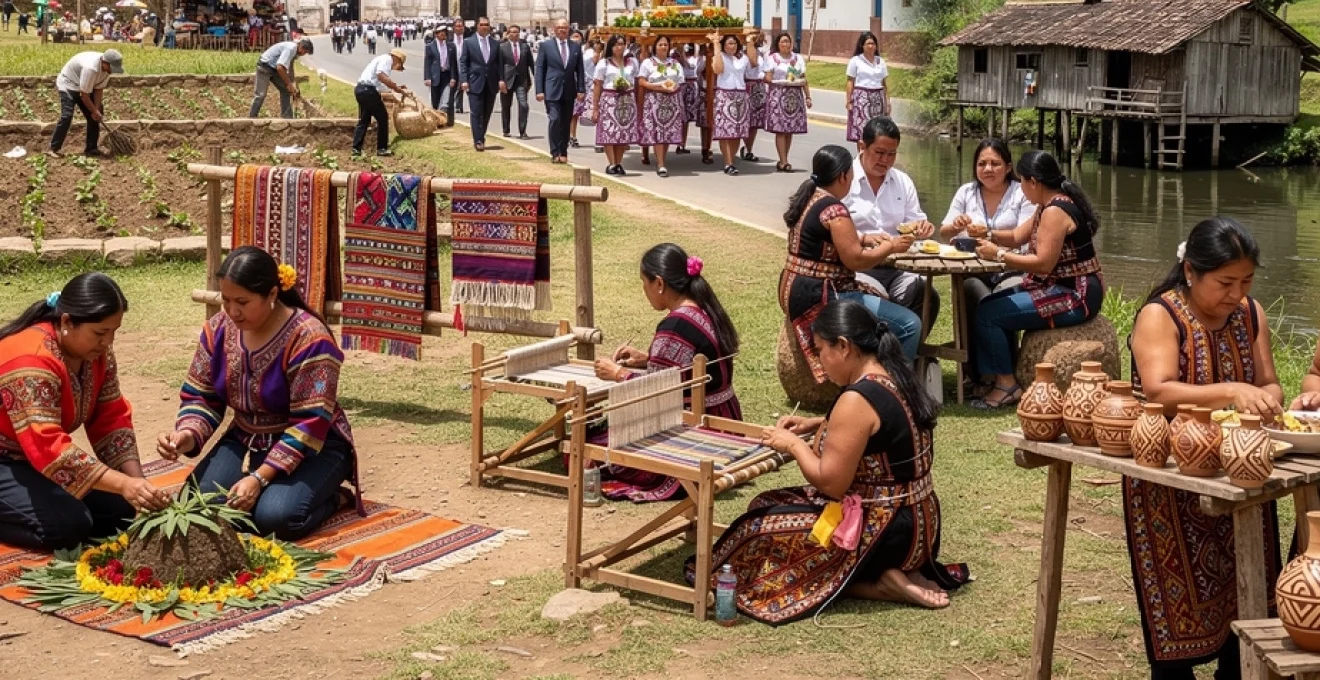
Peru stands as one of Latin America’s most culturally diverse nations, where ancient traditions continue to weave themselves into the fabric of modern society. From the snow-capped peaks of the Andes to the dense canopy of the Amazon rainforest, traditional practices that have endured for centuries still govern how communities organise themselves, make decisions, and maintain their cultural identity. These living traditions represent far more than mere folklore; they constitute active social systems that address contemporary challenges whilst preserving invaluable cultural heritage.
The persistence of these traditional systems reflects Peru’s unique position as a nation where indigenous wisdom coexists with colonial legacy and modern democratic institutions. Whether through the reciprocal labour systems of Andean communities or the territorial protection protocols of Amazonian tribes, traditional governance mechanisms continue to provide practical solutions for resource management, social cohesion, and economic development in ways that formal state institutions often cannot match.
Indigenous quechua and aymara cultural practices in contemporary andean communities
The highlands of Peru remain home to some of the continent’s most vibrant indigenous communities, where Quechua and Aymara cultural practices continue to shape daily life in profound ways. These communities have maintained their traditional social structures whilst adapting to modern economic and political realities, creating hybrid systems that draw strength from both ancient wisdom and contemporary knowledge.
Pachamama earth mother ceremonies and agricultural rituals in sacred valley villages
Throughout the Sacred Valley, agricultural communities still organise their farming cycles around ceremonies honouring Pachamama, the Earth Mother. These rituals, performed at crucial moments in the agricultural calendar, serve both spiritual and practical functions that modern agricultural science increasingly recognises as valuable. Villages coordinate planting seasons through communal ceremonies that determine optimal timing based on traditional astronomical observations and weather patterns that have been refined over millennia.
The integration of these ancient practices with modern farming techniques has proven remarkably effective. Communities that maintain traditional crop rotation systems, guided by ceremonial calendars, often demonstrate higher soil fertility and crop diversity than areas using purely industrial methods. Local shamans, known as altomisayoqs, continue to read natural signs and coordinate with agricultural engineers to optimise planting strategies that honour both traditional knowledge and scientific innovation.
Ayni reciprocal labour exchange systems in modern cusco province cooperatives
The ancient principle of ayni, or reciprocal labour exchange, remains a cornerstone of community organisation throughout Cusco Province. This system, which predates the Inca Empire, has evolved to address contemporary economic challenges whilst maintaining its fundamental emphasis on mutual aid and community solidarity. Modern cooperatives frequently incorporate ayni principles into their operational structures, creating innovative models that balance traditional reciprocity with market economics.
These cooperatives demonstrate remarkable resilience during economic downturns, as the ayni system provides a safety net that formal employment structures cannot match. During harvest seasons, families contribute labour to collective projects with the understanding that assistance will be reciprocated when needed. This system extends beyond agriculture to include house construction, road maintenance, and even childcare arrangements, creating comprehensive community support networks that reduce dependence on external resources.
Traditional weavers’ guild networks preserving textile heritage in pisac markets
The bustling markets of Pisac showcase how traditional craft networks have adapted to global tourism whilst preserving authentic cultural practices. Weaving guilds, organised along traditional kinship and community lines, maintain quality standards and protect ancient techniques that might otherwise disappear under commercial pressure. These networks represent sophisticated economic systems that balance cultural preservation with modern market demands.
Master weavers continue to pass down complex patterns and techniques through apprenticeship systems that mirror pre-Columbian educational structures. The guilds establish pricing standards, ensure fair distribution of tourist revenues, and coordinate training programmes that keep traditional knowledge alive. Young people who might otherwise migrate to urban areas find economic opportunities within these networks, helping maintain community continuity whilst engaging with global markets.
Curanderismo healing practices integration with modern healthcare in lima suburbs
Traditional healing practices, known as curanderismo, continue to play significant roles in healthcare delivery, particularly in Lima’s sprawling suburban communities where access to formal medical services
is often limited or overburdened. Many residents still consult curanderos and curanderas for ailments ranging from stress and insomnia to chronic pain and spiritual imbalance. Rather than existing in opposition to biomedical care, these practitioners increasingly collaborate with clinics and health posts, creating hybrid care pathways that reflect how people actually navigate illness and healing in daily life.
In several Lima districts, public health campaigns now include workshops with traditional healers to address mental health, maternal care, and addiction. Patients may visit a health centre for diagnostic tests and prescribed medicine, then turn to curanderismo rituals—such as limpias (spiritual cleanses) or herbal baths—to address the emotional and spiritual dimensions of their condition. This layered approach can improve treatment adherence, because people feel their cultural beliefs are respected rather than dismissed. At the same time, regulatory frameworks and training programmes help reduce the risk of harmful interactions between herbal remedies and pharmaceuticals, illustrating how old and new medical systems can be carefully aligned.
Colonial spanish heritage manifestations in urban social hierarchies
While indigenous traditions powerfully shape community life, colonial Spanish heritage still structures many aspects of urban society in Peru. In cities such as Lima, Arequipa, and Trujillo, social hierarchies, property relations, and religious organisations often reflect patterns established during the colonial era. These legacies are visible not only in architecture and city planning but also in how neighbourhoods are organised, how local elites exert influence, and how civic festivities are managed.
Understanding these colonial continuities helps explain why certain families or institutions retain disproportionate power in municipal politics and business networks. At the same time, many communities are reinterpreting and democratising these inherited structures, blending them with contemporary values of equality and participation. The result is a complex social landscape where colonial-era forms coexist with modern rights-based discourses, shaping how Peruvians negotiate authority and belonging in everyday urban life.
Cofradía religious brotherhood governance structures in arequipa cathedral districts
In the historic centre of Arequipa, traditional religious brotherhoods, or cofradías, continue to organise much of the ceremonial life around the cathedral and nearby parishes. These lay associations, introduced during the colonial period, were originally tools of both devotion and social control. Today, they still manage processions, maintain religious images, and coordinate charitable activities, functioning as semi-formal governance bodies within the cathedral districts.
Membership in a cofradía often confers social prestige and influence, particularly among merchants and professionals who sponsor festivities and restoration works. Decisions about procession routes, use of public spaces, and scheduling of religious events involve negotiation between cofradía leaders, municipal authorities, and local businesses. In this way, brotherhoods act as intermediaries between the Church, the state, and neighbourhood residents, shaping community life through a blend of devotion, patronage, and civic management that echoes their colonial origins.
Hacienda land tenure legacy impact on contemporary rural property rights
The legacy of the colonial and republican hacienda system still weighs heavily on rural property rights across Peru. Large estates once controlled vast tracts of land, with indigenous peasants working under semi-feudal conditions. Although agrarian reforms in the 1960s and 1970s dismantled many haciendas, patterns of land concentration and overlapping claims continue to affect how rural communities access and manage territory today.
In regions like the northern coast and parts of the southern highlands, former hacienda lands were converted into cooperatives or distributed to peasant communities, but titling processes have often been incomplete or contested. This has led to legal disputes, uncertainty over pasture and irrigation rights, and conflicts with agro-export companies seeking to expand large-scale plantations. At the community level, people still recall the old estate boundaries and social hierarchies, which subtly influence who is considered a legitimate landholder or community leader. Efforts to regularise property titles and recognise communal ownership, therefore, must grapple with both formal law and deep-rooted historical memory.
Mestizaje cultural blending patterns in middle-class family traditions
The concept of mestizaje—the blending of indigenous, European, and, to a lesser extent, African and Asian heritages—remains central to Peruvian identity. Nowhere is this more evident than in the everyday traditions of urban middle-class families. In cities from Cusco to Chiclayo, we see households that celebrate Andean agricultural rituals, Catholic sacraments, and modern consumer holidays side by side, weaving a complex tapestry of practices into their social lives.
Family events such as baptisms, weddings, and quinceañeras often combine Spanish-influenced formal ceremonies with Quechua or Aymara music, food, and symbolic gestures. A middle-class family in Lima, for example, might hire a priest for the religious service, a DJ for international music, and a folk group to perform huaynos or marinera during the reception. These blended celebrations reinforce a shared sense of national identity while allowing individuals to honour specific regional or ancestral roots. Over time, such patterns of mestizaje help soften rigid social boundaries, even as economic and racial inequalities persist.
Catholic feast day processions and municipal authority coordination in ayacucho
Ayacucho, renowned for its Holy Week celebrations, offers a vivid example of how Catholic feast day processions continue to structure community life and local governance. Each year, thousands of residents and visitors participate in elaborate processions that require months of planning. Neighbourhood committees, parish councils, and artisan guilds coordinate with municipal authorities on logistics such as crowd control, street closures, lighting, and sanitation.
This collaborative planning process effectively creates a parallel governance space where religious leaders, local officials, and citizen groups negotiate responsibilities and budgets. Decisions about which routes to prioritise or which neighbourhoods will host key images carry social and political significance, influencing perceptions of inclusion and recognition. For many residents, the way a municipality manages these processions serves as a practical measure of its responsiveness and respect for local tradition, demonstrating how colonial-era religious practices still act as a barometer for modern civic leadership.
Amazonian indigenous community autonomy and resource management systems
In the Peruvian Amazon, indigenous communities have developed sophisticated systems for managing territory, resources, and internal governance that long predate the modern state. As pressures from logging, oil extraction, mining, and industrial agriculture intensify, these communities increasingly rely on traditional norms and emerging legal tools to defend their autonomy. Their practices offer crucial insights into sustainable resource management and climate resilience at a time when global attention is focused on Amazon conservation.
Many Amazonian peoples view their territories not merely as economic assets but as living entities composed of rivers, forests, animals, and spirits. This worldview shapes how they design hunting rules, fishing seasons, and forest use norms that keep ecosystems in balance. When we compare these community-based systems to top-down management plans, it becomes clear that local traditions often provide more flexible and adaptive frameworks for dealing with environmental change.
Shipibo-konibo artistic traditions commercial integration in pucallpa tourism markets
The Shipibo-Konibo people of the Ucayali region are internationally recognised for their intricate geometric designs, which encode cosmological and medicinal knowledge. In Pucallpa, these artistic traditions have become central to the tourism economy, with Shipibo artisans selling textiles, ceramics, and body painting services to visitors. Far from being mere souvenirs, these objects carry stories about the rainforest, healing songs, and ancestral journeys, allowing communities to translate cultural capital into economic income.
However, commercial integration also brings challenges, including design appropriation and unequal profit distribution. To address this, some Shipibo organisations have formed cooperatives that set minimum prices, certify authentic work, and negotiate directly with fair-trade shops and ethical tour operators. By doing so, they aim to ensure that the benefits of cultural tourism support community education, healthcare, and territorial defence, rather than flowing primarily to intermediaries. This balancing act between preservation and innovation demonstrates how Amazonian traditions continue to shape community development strategies.
Ashuar territory protection protocols against mining concession encroachment
The Ashuar (often spelled Achuar or Asháninka in different contexts and groups) and other Amazonian peoples have developed detailed protocols to defend their territories from mining and oil concessions. These protocols combine ancestral practices—such as collective assemblies, spiritual consultations, and river boundary markers—with modern tools like GPS mapping, legal training, and alliances with NGOs. When companies attempt to enter their lands, communities can respond with a coordinated strategy that is both culturally grounded and legally savvy.
Community monitoring systems, sometimes called forest guardians or vigilance committees, patrol rivers and access roads to detect unauthorised activity. When incursions are identified, leaders convene assemblies where elders, women, and youth discuss possible responses, ranging from formal complaints to peaceful blockades. By insisting on prior consultation and free, informed consent, these communities use national and international law to reinforce their traditional governance. The result is a set of protection protocols that function as a shield against encroachment while reaffirming collective authority over ancestral lands.
Traditional ecological knowledge applications in sustainable forestry programmes
Traditional ecological knowledge in the Amazon is not an abstract concept; it is applied daily in hunting, fishing, agriculture, and forest management. In recent years, state agencies and NGOs have increasingly recognised that sustainable forestry programmes are more effective when they integrate indigenous zoning systems and species knowledge. Communities often distinguish between sacred groves, hunting areas, timber stands, and fallow gardens with a precision that scientific maps alone cannot capture.
Joint projects now train community members in forest inventory techniques, carbon measurement, and value-added processing, while technicians learn from elders about indicator species, seasonal patterns, and spiritual taboos that protect biodiversity. For example, certain large trees associated with powerful spirits may never be cut, effectively serving as seed banks and wildlife habitat. When these cultural rules are incorporated into forest management plans and payment-for-ecosystem-services schemes, they create models of sustainable use that respect both ecological limits and cultural rights. You might say that the forest becomes a co-managed library, where satellite data and ancestral stories are equally important sources of information.
Indigenous language preservation initiatives through community radio networks
Language is a core pillar of cultural continuity in Amazonian communities, and radio has emerged as a powerful tool for its preservation. Community radio stations broadcasting in Asháninka, Shipibo-Konibo, Awajún, and other indigenous languages provide news, music, storytelling, and educational content tailored to local realities. Because radio waves travel where roads often do not, they help maintain connections between dispersed settlements and reinforce a shared linguistic identity.
Many programmes feature elders recounting myths, young people hosting talk shows, and teachers delivering bilingual lessons that complement school curricula. These initiatives also give communities a platform to discuss territorial conflicts, health advice, and climate-related changes, all in their own languages. In effect, community radio acts like a modern ayllu assembly transmitted through the air, where collective decisions and cultural teachings are shared widely. As digital tools become more accessible, some of these stations are experimenting with podcasts and online streaming, extending the reach of Amazonian voices beyond the forest.
Regional festival cycles and municipal economic development strategies
Across Peru, annual festival cycles remain key drivers of community cohesion and local economies. From the Fiesta de la Candelaria in Puno to the Inti Raymi in Cusco and countless patron saint celebrations in smaller towns, these events structure the social calendar and attract significant flows of domestic and international tourism. Municipal governments have increasingly integrated festival planning into their economic development strategies, viewing cultural heritage as an engine for job creation and urban improvement.
Local authorities invest in infrastructure such as plazas, lighting, and transport to accommodate visitors, while businesses prepare months in advance with expanded inventories and seasonal hiring. At the same time, committees of residents, dance troupes, and religious organisations negotiate how commercialisation should be balanced with authenticity. Should a traditional dance be shortened to fit a tourist timetable? How much should ticketed seating be allowed along procession routes that were historically open to all? These debates show that festival management is not just about spectacle but about who benefits, who decides, and how tradition evolves under market pressure.
Traditional governance mechanisms integration with modern democratic institutions
In many parts of Peru, especially rural and indigenous areas, traditional governance mechanisms exist alongside elected municipal and regional authorities. Rather than a simple clash between old and new, we often find a complex web of coordination, competition, and mutual adaptation. Community assemblies, rondas campesinas (peasant patrols), and customary justice systems fill gaps left by distant state institutions, particularly in matters of conflict resolution, public security, and resource allocation.
Over the past two decades, legal reforms have gradually recognised some of these practices, granting communities greater autonomy to manage internal affairs according to customary law, as long as basic human rights are respected. In practice, a village might rely on the asamblea comunal to decide on water use rules or sanction minor offences, while turning to formal courts for more serious crimes. Municipal councillors often attend traditional meetings to explain policies and seek approval, knowing that without community backing their projects may fail. Like two intertwined rivers, customary and democratic institutions shape each other’s course, influencing how Peruvians experience citizenship at the local level.
Culinary heritage preservation through mercado central vendor networks and restaurant innovation
Peruvian cuisine has gained global prestige, yet its foundations remain deeply rooted in everyday practices at local markets and family kitchens. Mercados centrales in cities like Lima, Arequipa, and Piura function as living museums of culinary heritage, where vendors pass down recipes, ingredient knowledge, and sourcing relationships through generations. Stallholders know which potato varieties are best for causa, which ají for regional stews, and which fish to buy according to the moon and tides.
At the same time, contemporary restaurants—ranging from high-end establishments to humble huariques—draw on these market networks to innovate while staying anchored in tradition. Chefs collaborate with producers to recover heirloom ingredients and forgotten dishes, then reinterpret them for new audiences. When you taste a modern ceviche made with native limes and wild herbs, you are experiencing a dialogue between small-scale fishers, market vendors, and culinary creatives. This ecosystem ensures that innovation does not sever its ties to community life but instead reinforces them, generating pride, employment, and a stronger sense of shared identity around the table.
Yet culinary success also raises questions: how can rising demand for certain ingredients avoid overfishing or monoculture? How can street vendors and market cooks—often women from low-income backgrounds—benefit fairly from the global fame of Peruvian food? Initiatives such as cooperative branding, training in food safety, and direct partnerships between markets and restaurants are emerging to address these issues. In this way, Peru’s culinary heritage continues to shape community life not only through flavours and rituals, but also through the search for more inclusive and sustainable food systems.