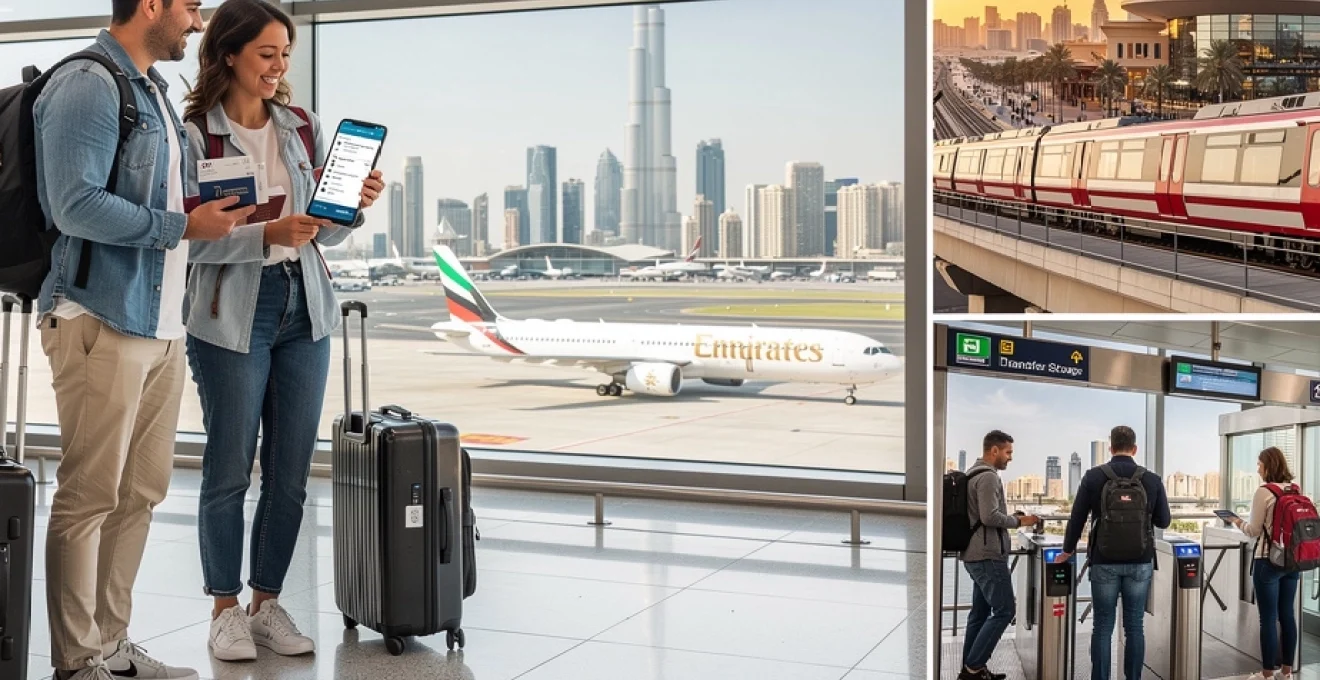
Dubai International Airport stands as one of the world’s busiest aviation hubs, welcoming over 86 million passengers annually through its gleaming terminals. For countless travellers, what begins as a simple transit stop often transforms into an unexpected adventure in one of the Middle East’s most dynamic cities. A layover in Dubai presents a unique opportunity to experience luxury shopping, cultural heritage, architectural marvels, and desert adventures—all within the span of a few hours or days.
The strategic location of Dubai as a connecting point between East and West means that extended layovers have become increasingly common. Whether you’re travelling from London to Sydney, New York to Mumbai, or anywhere in between, the chances are high that your journey will include a stop in the gleaming metropolis of Dubai. Rather than spending precious hours confined to airport lounges, savvy travellers are discovering that even a 6-hour layover can yield remarkable experiences in this desert oasis.
Understanding how to navigate visa requirements, manage luggage efficiently, and access the city’s highlights within tight timeframes can transform a mundane transit experience into the most memorable portion of your journey. The key lies in strategic planning, knowing which attractions are accessible within specific timeframes, and understanding the practical logistics that make short-term Dubai exploration both feasible and rewarding.
Dubai international airport transit visa requirements and processing procedures
Navigating Dubai’s visa landscape requires understanding the various options available to transit passengers, each designed to accommodate different nationalities, layover durations, and travel circumstances. The United Arab Emirates has streamlined its visa processes significantly, recognising the economic benefits of encouraging transit tourism through Dubai International Airport.
UAE transit visa application process through emirates and flydubai
Emirates and flydubai offer comprehensive transit visa services directly integrated with flight bookings, making the application process remarkably straightforward for eligible passengers. The Dubai Connect service, available for passengers with layovers between 6 and 26 hours, provides complimentary accommodation, meals, and visa processing for qualifying travellers. This service proves particularly valuable during peak travel seasons when hotel availability becomes scarce.
The application process begins online through the airline’s booking platform, where passengers can add the Dubai Connect service during reservation or up to 12 hours before arrival. Required documentation includes a valid passport with at least six months’ validity, confirmed onward travel arrangements, and completion of the UAE entry form. Processing typically occurs within 24-48 hours, though passengers should allow additional time during busy periods.
96-hour tourist visa eligibility criteria for extended layovers
For passengers planning extended stays, the 96-hour tourist visa opens doors to comprehensive Dubai exploration without the restrictions of shorter transit arrangements. This visa category specifically targets travellers with layovers exceeding 8 hours who wish to venture beyond airport boundaries and experience Dubai’s attractions, dining, and accommodation options.
Eligibility requirements include holding a confirmed onward ticket within 96 hours, possessing a passport from an approved nation list, and maintaining adequate financial resources for the duration of stay. The visa fee varies by nationality, ranging from complimentary access for certain Western passport holders to modest charges for other eligible countries. Airlines typically facilitate the application process, though direct application through UAE immigration services remains an option for self-arranged travel.
Visa-free transit regulations for specific passport holders
Citizens from over 70 countries enjoy visa-free transit privileges in Dubai, significantly simplifying the layover experience for qualifying passengers. These arrangements reflect Dubai’s commitment to promoting tourism and establishing itself as a premier global transit hub. British, American, Canadian, Australian, and most European Union passport holders can enter Dubai without prior visa arrangements for stays up to 30 days.
The visa-free system operates through automated immigration gates at Dubai International Airport, reducing processing times and eliminating bureaucratic delays. Passengers simply present their passports at immigration checkpoints, receive entry stamps, and gain immediate access to Dubai’s transportation network and attractions. This streamlined approach has contributed significantly to Dubai’s success as a stopover destination.
Airport immigration clearance timeframes and documentation
Understanding immigration processing timeframes enables more accurate planning for layover activities and helps prevent missed connections due
to downstream delays. During regular daytime operations, immigration clearance at Dubai International Airport usually takes 20–45 minutes for most travellers, but this can extend beyond an hour during peak banked arrivals late at night and early morning. You should factor in walking time from the gate (often 10–15 minutes in larger concourses), possible queues at e-gates or manual counters, and additional screening if you are selected for secondary checks.
To streamline your passage, keep your passport, boarding pass, and any transit or hotel vouchers easily accessible in your hand luggage. Ensure your onward boarding pass is either printed or downloaded offline, as airport Wi‑Fi can be intermittent during very busy periods. If you are relying on a pre-arranged UAE transit visa or the Dubai Connect service, print confirmations as backup. As a rule of thumb, if your layover is under 6 hours, it is usually safer to remain airside; for layovers of 8 hours or more, exiting the airport becomes more realistic as long as you allow generous buffers for immigration and security on both ends of your journey.
Strategic luggage management and airport transit logistics
Effective luggage management can make or break your long layover in Dubai. If you plan to explore the city, the goal is simple: travel as light as possible once you exit the airport. Understanding through-check baggage rules, terminal transfer procedures, storage options, and transit hotel policies will help you avoid dragging heavy suitcases through metro stations or crowded malls. Think of this stage as optimising your “operational load” so you can focus on enjoying Dubai rather than worrying about your bags.
Through-check baggage policies for multi-carrier itineraries
On a single-ticket itinerary with Emirates or flydubai, checked bags are almost always tagged through to your final destination, even if you have a long layover. Problems arise when you combine separate tickets or mix different alliances—your luggage may only be checked to Dubai, forcing you to collect it and re-check before your onward flight. This is particularly important for budget-conscious travellers who piece together multi-carrier routes to save money.
Before you fly, confirm with your initial airline whether they have an interline agreement with Emirates or your onward carrier. If they do, request that your baggage be checked through; if not, build in at least 3–4 hours between flights to collect your bags, clear immigration, re-check, and pass security again. When planning a long layover in Dubai specifically for sightseeing, booking a single through-ticket (even if it costs slightly more) often pays off in reduced hassle and more time in the city.
Dubai international terminal transfer procedures between concourses
Dubai International Airport spans three main terminals and multiple concourses, but airside transfers are well organised and clearly signposted. Most long-haul Emirates flights operate from Terminal 3 (Concourses A, B, and C), while many other international carriers use Terminal 1. Terminal 2 handles a mix of regional and low-cost operations, including some flydubai services. If your layover involves changing terminals, you will generally follow purple “Connections” signage, pass through a security checkpoint, and then board a dedicated airside shuttle where needed.
Within Terminal 3, moving between concourses is straightforward; automated trains and walkways connect A, B, and C, though walking times can still reach 15–20 minutes in the busiest parts. For transfers between Terminals 1 and 3, you remain airside and use the internal connection routes—no immigration is required unless you are intentionally leaving the airport. Always check your onward boarding pass and flight information screens early in your layover so you know exactly which concourse you need, and allow extra time if you are travelling with children or mobility constraints.
Secure luggage storage facilities at terminal 1, 2, and 3
If your bags are not checked through or you prefer to keep only a light daypack with you, Dubai International offers secure baggage storage in Terminals 1 and 3. These facilities typically operate 24/7 and charge per bag for a fixed time window (for example, up to 12 hours and up to 24 hours), with separate rates for standard and oversized luggage. Prices change occasionally, but you can expect to pay the equivalent of around USD 7–15 per bag for a short layover period.
You will find luggage storage landside in the arrivals areas, so you will need to clear immigration before dropping your bags. This setup works well if you plan to spend most of your layover in the city centre and return to the airport only shortly before departure. Keep your storage receipt safe and take a photo of it as a backup. Unfortunately, Terminal 2 has more limited storage options, so if you are transiting through T2, it is worth confirming current facilities in advance or planning to travel with minimal cabin luggage only.
Transit hotel check-in protocols for carry-on only passengers
For travellers remaining airside and travelling with cabin baggage only, transit hotels within the airport offer a convenient way to rest and freshen up during a long layover in Dubai. Properties like the Dubai International Hotel (located airside in Terminal 3) work on flexible blocks—often 6, 8, or 12 hours—rather than fixed overnight stays. You can book in advance or walk up, though advance reservations are advisable during peak travel seasons and major events.
Check-in for transit hotels usually requires your passport and boarding pass for your next flight. Because you are not formally entering the UAE, no visa is needed if you stay airside. Most hotels have bell staff who can securely store your carry-on if you prefer not to bring it into the room immediately, but you should still keep valuables like passports, electronics, and cash in your sight or in a room safe. If your layover overlaps with normal hotel checkout times, clarify your exact block period to avoid additional charges, and set alarms so you have ample time to walk back to your departure gate.
Premium airport accommodation options within DXB
For those who value comfort and privacy, premium accommodation within Dubai International Airport can turn a tiring layover into a restorative mini-break. The flagship option is the Dubai International Hotel in Terminal 3, with locations in Concourses A, B, and C. Rooms are soundproofed, equipped with comfortable beds, workspaces, and powerful showers—exactly what you need after a long-haul flight. Many travellers compare the experience to a compact city hotel dropped into the middle of an airport, with the added benefit of being just minutes from your gate.
In addition to full-service rooms, DXB offers sleep pods and “micro-hotel” concepts in selected concourses, aimed at passengers who want a quiet, private place to nap without paying for a full room. These are typically rented by the hour and can be ideal if you have a 4–6 hour layover overnight and prefer to sleep rather than explore. Premium lounges operated by airlines and independent providers (such as Marhaba) can also function as semi-accommodation for shorter daytime layovers, offering reclining chairs, showers, and buffets. If your goal is to maximise rest before continuing your journey, allocating part of your budget to a transit hotel or premium lounge can be more rewarding than a rushed dash into the city.
Dubai metro red line access and city centre navigation
The Dubai Metro Red Line is one of the most efficient ways to reach the city centre during a long layover, especially when road traffic is heavy. Clean, air-conditioned, and frequent, the metro connects Dubai International Airport directly with key districts such as Deira, Bur Dubai, Sheikh Zayed Road, and Downtown Dubai near the Burj Khalifa. Using the metro also helps you avoid haggling over taxi fares and gives you a quick orientation to the city’s linear layout along the coast.
Airport city metro station connection from terminal 3
Terminals 1 and 3 both have dedicated metro stations on the Red Line, connected to the terminal buildings via clearly marked walkways. From Terminal 3, you follow the “Metro” signs after leaving the arrivals area, passing through a climate-controlled corridor that leads directly to the station concourse. Trains usually run every 5–8 minutes during the day, with slightly longer intervals late at night.
Travel time from Dubai Airport Terminal 3 station to key stops like Union, BurJuman, and Burj Khalifa/Dubai Mall typically ranges from 15 to 30 minutes. Trains have separate carriages for women and children, as well as a Gold Class cabin for premium ticket holders. If you are carrying large suitcases, try to avoid peak commuter times (roughly 7–9 am and 5–7 pm on weekdays), when carriages can be packed and moving with big bags becomes uncomfortable for you and other passengers.
Nol card purchase and top-up procedures for transit passengers
To use the Dubai Metro, trams, and many buses, you will need a Nol card, the city’s contactless transport smart card. For short layovers, the most practical options are either a single-use paper ticket or a basic Silver Nol card, which can be loaded with credit and used across multiple journeys. You can purchase these at ticket machines or staffed counters in the airport metro stations, paying by cash or major credit cards.
Loading credit onto your Nol card is straightforward: you select the top-up amount at the machine, tap your card, and confirm the transaction. For a modest city exploration—say, an out-and-back journey from the airport to Downtown plus a hop into Old Dubai—topping up the equivalent of around USD 7–10 usually suffices. Remember that Nol cards are reusable on future trips, so if you transit through Dubai regularly, keeping the card in your passport wallet can save time on your next visit. Think of the Nol card as your key to the city’s transport grid; once it is loaded, you can move around flexibly without worrying about individual ticket purchases.
Union square and burj khalifa metro station strategic stops
For many layover travellers, two Red Line stations stand out as particularly strategic: Union and Burj Khalifa/Dubai Mall. Union sits near Deira and Old Dubai, making it an excellent starting point for visiting the Gold Souk, Spice Souk, and traditional abra crossings on Dubai Creek. From Union, you can transfer to the Green Line or take a short taxi ride to the historic districts and markets, minimising walking in the heat.
Burj Khalifa/Dubai Mall station, on the other hand, places you within walking distance (via an enclosed, air-conditioned walkway) of the world’s tallest building, one of the largest malls on the planet, and the famous Dubai Fountain. This makes it ideal if your goal is a quick taste of modern Dubai’s skyline and shopping scene during an 8–12 hour layover. Planning your metro route around these two hubs lets you experience both the historic and futuristic faces of Dubai without criss-crossing the city inefficiently.
Return journey timing calculations for international departures
One of the most common questions during a Dubai layover is, “When should I head back to the airport?” As a conservative rule, you should aim to be back at Dubai International at least 3 hours before your long-haul departure, or 2 hours for shorter regional flights. From Downtown Dubai by metro, allow 45–60 minutes to account for walking to the station, ticketing, the train ride, and potential short waits between services.
If you plan to use taxis instead, factor in possible traffic congestion, especially on Sheikh Zayed Road during evening rush hours or weekends. In practical terms, if your flight leaves at midnight and you are at Dubai Mall, you would want to start the journey back no later than 8:30–9:00 pm to build in a generous buffer. Treat your return timing like a reverse countdown: work backward from your scheduled departure, subtract your required airport arrival time, then subtract at least another 45–60 minutes for transport and security variables. This way, your Dubai layover remains exciting rather than stressful.
Iconic dubai attractions accessible during 8-12 hour layovers
With an 8–12 hour layover in Dubai, you can move beyond the airport and gain a genuine snapshot of the city’s highlights. The key is to focus on a compact cluster of iconic attractions that minimise transit time while maximising impact. For many travellers, this means combining Downtown Dubai—home to the Burj Khalifa, Dubai Mall, and the Dubai Fountain—with a quick visit to the historic area around Dubai Creek.
In Downtown Dubai, pre-booking tickets for the Burj Khalifa At The Top observation decks can save valuable minutes in ticket queues and ensure you secure a convenient time slot. Pair your visit with a stroll around the Dubai Mall’s indoor waterfall, aquarium viewing panel, and high-end boutiques, then step outside in the early evening to watch the choreographed fountain shows at Burj Lake. If your layover falls overnight, a dinner or coffee at one of the promenade restaurants overlooking the fountains turns your transit stop into a memorable evening out.
If you prefer something more laid-back, you can dedicate your layover to beachside relaxation at Jumeirah Beach Residence (JBR) or La Mer. A quick taxi ride from the airport brings you to soft sand, warm Gulf waters, and seaside cafes perfect for a leisurely meal. You will see Dubai’s skyline from a different angle, with the Arabian Gulf stretching out behind it like a vast mirror. Alternatively, adventure-seekers may opt for a short desert excursion or a high-speed boat ride around Dubai Marina—though these options are best for layovers closer to 12 hours and require careful coordination with tour operators and your flight schedule.
Cultural immersion experiences in old dubai and deira districts
While Dubai is renowned for glass towers and megamalls, a long layover is also an ideal opportunity to explore its older, atmospheric quarters along Dubai Creek. Old Dubai and Deira offer a window into the city’s trading past and its ongoing role as a bridge between cultures. Here, modern skyscrapers give way to wind towers, traditional wooden abras, and bustling souks scented with spices and oud.
Because these districts are relatively close to the airport—often just 15–25 minutes by metro or taxi—they fit perfectly into a layover itinerary, especially when combined with Downtown Dubai. You can spend a few hours wandering through narrow lanes, crossing the creek by boat, and sampling local snacks before heading back to DXB. If you are asking yourself whether you can experience “real” Dubai in just one day, Old Dubai and Deira are where that feeling is most accessible.
Dubai creek abra water taxi traditional crossing experience
One of the simplest yet most memorable experiences during a Dubai layover is a ride on a traditional abra across Dubai Creek. These small wooden boats have served as water taxis for decades, shuttling locals and visitors between Deira and Bur Dubai. The crossing itself takes only a few minutes, but it offers a postcard-perfect view of old trading dhows, minarets, and the contrast between historic buildings and modern architecture in the distance.
Abra rides are inexpensive, typically costing just a few dirhams paid in cash directly to the boat operator. Services run continuously throughout the day, so you rarely wait more than a few minutes to board. Standing on the open deck as the warm breeze blows across the water, you get a tangible sense of Dubai’s maritime heritage, far removed from the polished interiors of airport lounges. For many travellers, this simple crossing becomes a highlight of their entire stopover.
Gold souk and spice souk authentic market exploration
On the Deira side of Dubai Creek, the famous Gold Souk and Spice Souk offer a sensory-rich introduction to Middle Eastern marketplace culture. The Gold Souk is lined with window displays that glitter with elaborate necklaces, bangles, and bridal sets, some of the largest in the world. Even if you have no intention of buying, strolling under the wooden canopies and admiring the craftsmanship is an experience in itself.
Just a short walk away, the Spice Souk greets you with towering sacks of saffron, cardamom, cinnamon, and dried limes. Vendors are used to curious visitors and will often offer small samples or explanations of how different spices are used in Emirati and regional cuisine. If you are cautious about your luggage allowance, focus on lightweight purchases like saffron or spice mixes, which also make excellent gifts. Remember that bargaining is part of the culture here; approach it with a smile and a sense of fun rather than a hard-nosed attitude.
Al fahidi historical neighbourhood walking tours
Across the creek in Bur Dubai lies the Al Fahidi Historical Neighbourhood (also known as Al Bastakiya), one of the city’s oldest preserved districts. With its narrow lanes, traditional courtyard houses, and wind towers designed for natural cooling, Al Fahidi feels almost like an open-air museum. Walking here during a layover is like stepping into a different century, offering a stark contrast to the steel and glass of modern Dubai.
You can explore Al Fahidi on your own or join a guided walking tour that explains the architectural features, social history, and evolution of the area. Many of the restored buildings now house art galleries, small museums, and cultural centres where you can learn about Emirati customs, coffee traditions, and calligraphy. Because the neighbourhood is compact, you can see a lot in under two hours, making it a smart cultural stop even on a tight schedule.
Dubai museum cultural heritage deep-dive sessions
Within walking distance of Al Fahidi’s lanes stands the Dubai Museum in the Al Fahidi Fort, one of the city’s oldest surviving structures. Although the museum is currently under redevelopment and may be partially closed at times, when open it provides a concise yet engaging overview of Dubai’s transformation from a small fishing and pearling village to a global metropolis. Exhibits typically include reconstructed dioramas, archaeological artefacts, and multimedia displays that bring the pre-oil era to life.
For layover travellers, the museum functions like a compressed history lesson, allowing you to understand the context behind the skyscrapers you see on the drive back to the airport. If the main museum is closed during your visit, check for alternative heritage exhibitions or temporary displays in the area—Dubai often hosts pop-up cultural experiences that serve a similar purpose. Either way, combining Dubai Museum or a heritage centre with an abra ride and a stroll through the souks will give you a surprisingly deep cultural immersion, even in the space of a single extended layover.