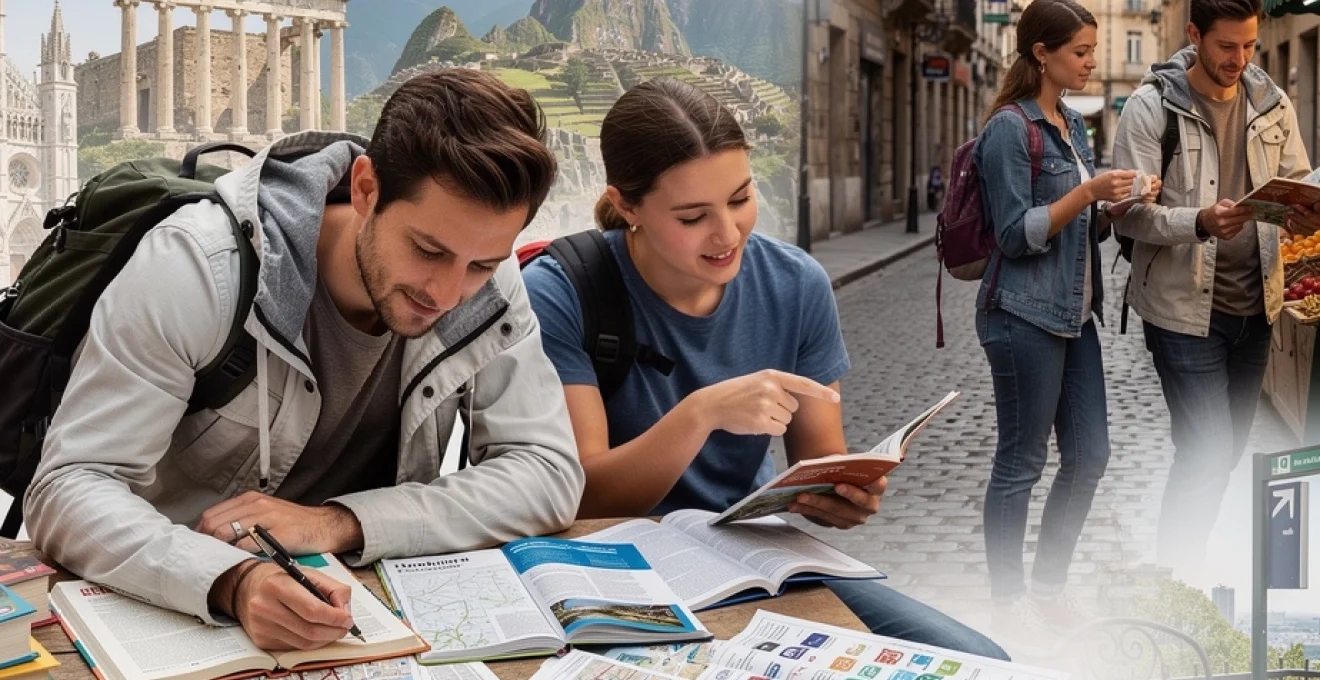
In an era where smartphones dominate travel planning and navigation, the enduring value of physical travel books might seem questionable. Yet seasoned travellers and industry experts consistently report that traditional guidebooks and travel literature offer dimensions of depth, reliability, and engagement that digital alternatives struggle to match. Whether you’re exploring the cobblestone streets of Barcelona, navigating Tokyo’s intricate metro system, or decoding the historical layers of Angkor Wat, well-crafted travel books provide contextual richness that transforms superficial sightseeing into meaningful cultural encounters.
The tactile experience of flipping through pages marked with your own annotations, the reassurance of offline access when connectivity fails, and the curated expertise of writers who’ve spent years understanding destinations create a foundation for travel that algorithms cannot replicate. Travel books serve multiple functions simultaneously: they’re research tools during planning phases, navigation aids during exploration, and educational companions that deepen your understanding of history, culture, and local customs. This multifaceted utility explains why experienced travellers consistently pack at least one comprehensive guidebook alongside their digital devices.
Pre-trip planning: how guidebooks transform destination research and itinerary development
The research phase determines whether you’ll follow tourist masses or discover authentic experiences that align with your personal interests. Quality travel books excel at presenting layered destination intelligence that helps you craft itineraries reflecting your priorities rather than generic popularity rankings. Unlike algorithm-driven platforms that prioritize commercial partnerships or viral content, established guidebook publishers employ writers who spend months researching destinations, testing recommendations, and verifying practical information.
Travel books offer structured frameworks for understanding destinations systematically. You can assess accommodation options across different neighbourhoods, compare regional specialties, and identify seasonal considerations that digital searches might overlook. The comprehensive nature of printed guides encourages broader exploration—when researching Rome’s Trastevere district, you’ll simultaneously discover nearby hidden churches, local markets, and evening cultural events that separate apps might fragment across different interfaces.
Leveraging lonely planet and rough guides for Off-the-Beaten-Path discovery
Lonely Planet and Rough Guides have built reputations on directing travellers beyond obvious attractions toward experiences that reveal destinations’ authentic character. These publishers maintain extensive networks of local writers who live in or frequently visit their assigned regions, providing insider perspectives that casual visitors cannot easily obtain. Their recommendations for lesser-known villages in Provence, undiscovered beaches in Vietnam, or neighbourhood restaurants in Mexico City often represent years of accumulated local knowledge.
The structured presentation in these guides helps you balance popular attractions with alternative experiences. Rather than overwhelming you with endless options, editors curate selections representing diverse interests—from budget backpackers to luxury travellers, from adventure seekers to cultural enthusiasts. This editorial judgement proves invaluable when you’re unfamiliar with a destination and need trustworthy guidance on allocating limited time and resources.
Utilising rick steves’ regional expertise for european cultural immersion
Rick Steves’ guides have become synonymous with thoughtful European travel that emphasizes cultural understanding over superficial tourism. His books distinguish themselves through detailed explanations of historical context, practical advice for respectful cultural engagement, and meticulously researched walking tours that reveal architectural and social history embedded in streetscapes. When you follow a Steves walking tour through Prague or Florence, you’re accessing decades of refined expertise distilled into accessible narratives.
These guides particularly excel at explaining cultural nuances that help visitors navigate social situations appropriately. You’ll learn not just where to find the best paella in Valencia, but also when locals eat, how to order respectfully, and what cultural significance the dish holds. This depth transforms meals from simple sustenance into meaningful cultural exchanges that enrich your understanding and create lasting memories.
DK eyewitness visual mapping techniques for architectural and museum navigation
DK Eyewitness guides revolutionized travel publishing by integrating detailed illustrations, cutaway diagrams, and visual floor plans that help you understand complex sites before visiting. When approaching the Louvre, British Museum, or Uffizi Gallery, these visual guides prevent the overwhelming confusion that plagues many museum visitors. You can identify must-see pieces, understand collection organization, and plan efficient routes that match your interests and energy levels.
Beyond famous museums, DK’s 3D drawings of cathedrals, archaeological sites, and city centres allow you to visualise how spaces fit together before you step inside. This visual-first approach is especially helpful for travellers who struggle with dense text or who are planning multi-generational trips where not everyone enjoys reading long explanations. By combining these visual mapping techniques with more narrative-driven travel books, you create a robust planning system that supports different learning styles and maximises what you actually see and understand on the ground.
Cross-referencing multiple publisher perspectives for comprehensive destination intelligence
No single travel book can capture every angle of a destination. Each publisher has its own editorial bias—some favour budget options, others lean toward art history, food, or classic sightseeing. By cross-referencing multiple guidebooks, you gain a more balanced, comprehensive view of where you are going. You can, for instance, compare how Lonely Planet, Rough Guides, and Fodor’s treat the same city and quickly see which neighbourhoods keep resurfacing as worthwhile, which attractions divide opinion, and where local writers disagree.
This cross-checking is particularly valuable when planning complex itineraries or long trips. You can use one book for big-picture strategy—when to visit, how long to stay in each region—and another for in-depth coverage of museums, hikes, or gastronomy. Treat it like consulting several experts before making a major decision: patterns reveal themselves, hype gets filtered out, and you end up with an itinerary grounded in multiple informed voices rather than a single algorithmic ranking.
On-the-ground navigation: physical travel literature as offline wayfinding tools
Digital maps are powerful, but they depend on battery life, data, and signal strength—three variables that often fail at the worst possible moment. Physical travel books provide an offline safety net for wayfinding, especially in older city centres where GPS can be imprecise or in remote areas with weak connectivity. Their maps are designed for human reading at a glance rather than for machine optimisation, helping you understand how districts connect, where main transit lines run, and which landmarks can orient you if you get disoriented.
Using travel books for tourists as navigation tools also changes your mental map of a place. Instead of jumping from point A to point B following a blue dot, you begin to see how the river, main avenues, and side streets knit neighbourhoods together. This broader spatial understanding not only reduces stress when you are lost but also encourages spontaneous discoveries along the way—those unplanned cafés, side streets, and viewpoints that rarely appear in search results.
Detailed cartography and street-level maps in fodor’s and michelin guides
Fodor’s and Michelin guides are particularly respected for their detailed cartography. Their street-level maps often show not just major roads but also smaller lanes, tram stops, viewpoints, and walking routes that many apps gloss over. The scale is chosen so that a compact historic centre fits on a single page, making it easier to grasp how key sites relate to one another without constant zooming in and out.
Michelin’s long history in mapping, originally for motorists, translates into city and regional maps that are highly legible and reliable. You might use Google Maps for turn-by-turn directions, but a Michelin or Fodor’s map helps you pick the most scenic or interesting route instead of the fastest. When you combine digital navigation with analogue cartography, you move from merely reaching your destination to actually understanding the terrain and context you are travelling through.
Public transport systems decoded through printed schedules and route diagrams
Many comprehensive guidebooks devote entire sections to public transport, including simplified route diagrams, fare explanations, and sample journeys. For visitors tackling systems like Tokyo’s JR lines, London’s Underground, or the tram networks of Lisbon and Melbourne, these printed overviews act like translators. They strip away some of the clutter and jargon, showing you in plain language how to choose tickets, where to change lines, and what to expect at stations.
Because these travel books are written with first-time visitors in mind, they identify the most common points of confusion and address them directly: rush-hour etiquette, where to stand on platforms, and how early you should arrive for intercity trains. Having this information on paper is invaluable when you are standing in a crowded station with patchy Wi-Fi and limited time to make a decision. Instead of endlessly refreshing your screen, you can flip to a clear diagram and move forward with confidence.
Neighbourhood-by-neighbourhood breakdown for urban exploration in cities like barcelona and tokyo
Large cities can feel overwhelming when viewed only as a single map with thousands of pins. One of the most useful features of many guidebooks is their neighbourhood-by-neighbourhood breakdown, which turns megacities into manageable, walkable zones. In Barcelona, this might mean dividing your time between the Gothic Quarter, Eixample, Gràcia, and the waterfront, each with its own map, highlights, and suggested walking routes. In Tokyo, districts like Shibuya, Asakusa, and Shimokitazawa are presented as distinct micro-worlds with different atmospheres and specialties.
This structure encourages deeper exploration rather than frantic box-ticking. You can dedicate half a day to one area, using the guide’s walking tour and local recommendations, then move on to another with fresh energy and understanding. Over a week, the city becomes a mosaic of lived experiences instead of a blur of metro transfers. For travellers who want to move beyond “top 10” lists, this neighbourhood focus is one of the most powerful ways travel books enhance your trip.
Cultural context and historical depth: enriching experiences through narrative-driven content
Beyond logistics and navigation, the greatest strength of travel books lies in their ability to turn places into stories. When you understand the historical events, cultural values, and social tensions that shaped a destination, every plaza, temple, or street corner takes on new meaning. Narrative-driven content weaves facts into readable tales so you are not just memorising dates but following human dramas and long arcs of change.
This deeper context is difficult to capture in short-form digital content, which often focuses on quick lists and photo-friendly moments. Well-researched guidebooks and travel histories, by contrast, have the space to explain why a monument was controversial, how a neighbourhood evolved, or what local myths say about a mountain or river. As you read on trains, flights, or café breaks, the city around you becomes a living text you can decode in real time.
Archaeological site interpretation using blue guide historical commentary
Specialist series like the Blue Guides excel at unpacking complex archaeological sites that can otherwise feel like piles of stones. At locations such as Pompeii, Delphi, or the Roman Forum, these books provide detailed site plans, chronological timelines, and clear explanations of architectural features. Instead of wandering aimlessly, you can follow suggested routes that align with the unfolding story of the site—how it was built, used, abandoned, and rediscovered.
Because Blue Guide authors are usually historians, archaeologists, or art historians, their commentary goes well beyond basic descriptions. They connect what you are seeing to broader regional and historical contexts: trade routes, religious changes, or technological innovations. Reading these sections while sitting on an ancient step or under a temple colonnade can be transformative; you realise you are not simply “visiting ruins” but walking through spaces where specific events and lives once unfolded.
Local customs and etiquette protocols for markets, temples, and sacred spaces
Misunderstanding local customs can quickly turn a promising encounter into an awkward or even offensive moment. Many travel books include clear, practical sections on etiquette for visiting markets, temples, mosques, and other sacred or community spaces. These guidelines might cover dress codes, photography rules, how to make offerings, and what behaviours are considered disrespectful, from pointing your feet at a Buddha statue to touching someone’s head.
By absorbing this information before you arrive, you signal respect and reduce anxiety about “doing the wrong thing.” You are more likely to be welcomed, helped, and invited into deeper interactions because locals can see you are trying to engage thoughtfully rather than just collecting photos. In this way, travel books for tourists act almost like cultural interpreters, standing quietly in the background and coaching you through unfamiliar situations so you can participate with confidence and humility.
Gastronomic heritage explained through regional cuisine chapters in taste of travel series
Food is one of the most immediate ways to connect with a place, yet many travellers stop at a surface-level checklist of famous dishes. Series devoted to culinary travel, such as Taste of Travel or similar regional food guides, dig much deeper. They explain how geography, climate, trade routes, and migration patterns shaped local cuisine, why certain ingredients are prized, and how traditional recipes evolved over centuries.
Armed with this knowledge, you don’t just order “whatever is recommended”; you understand why a coastal town specialises in a particular seafood stew or why mountain villages rely on preserved meats and cheeses. These books often include glossaries, market guides, and etiquette tips for ordering or sharing meals, which are particularly useful in places where menus are not translated. Reading even a few pages before dinner can turn an ordinary restaurant visit into a mini-lesson in history, agriculture, and community identity.
Understanding colonial history at sites like angkor wat and machu picchu through contextual writing
Many of the world’s most-visited sites sit at the intersection of ancient civilisations and more recent colonial or national histories. Travel books that take this complexity seriously help you avoid a simplified or romanticised view. At Angkor Wat, for example, good guidebooks address not only Khmer architecture and religion, but also how French explorers, conservation efforts, and modern tourism have reshaped the site. At Machu Picchu, they go beyond Inca engineering to explore Spanish conquest, 20th-century “discovery,” and contemporary debates about preservation and access.
This broader perspective encourages more ethical, reflective tourism. Instead of seeing these places as isolated wonders, you begin to understand them as part of ongoing political, social, and environmental stories. When you recognise that ruined temples or fortresses may be symbols of loss as well as pride, your behaviour as a visitor changes—you may be more cautious about where you walk, what you photograph, and how you speak about what you are seeing.
Practical logistics: accommodation, transport, and budget management via guidebook resources
While narrative travel books add depth, classic guidebooks remain invaluable for the nuts and bolts of a trip: where to sleep, how to get from A to B, and how much to budget. Unlike many online listings that are pay-to-play or unverified, established publishers still rely on on-the-ground inspections and editorial standards. Even when specific prices change, the relative cost levels, neighbourhood overviews, and transport summaries remain useful for years.
Accommodation sections typically explain not just individual hotels or guesthouses, but also what different areas feel like at night, how long it takes to reach major sites, and what kind of traveller each place suits. Transport chapters distil complex options—buses, trains, ferries, domestic flights—into clear pros and cons, complete with typical journey times and sample itineraries. For budgeting, many travel books include daily cost estimates for different styles of travel (budget, mid-range, high-end), helping you avoid both underfunding your trip and overpaying for basics.
Curated recommendations: expert-vetted restaurants, hotels, and attractions versus algorithm-driven suggestions
Online review platforms and map apps are useful, but they also suffer from rating inflation, fake reviews, and the tendency to reward places that are good at digital marketing rather than those that offer authentic value. Travel books for tourists counterbalance this by presenting curated recommendations chosen by named authors with reputations at stake. These experts physically visit locations, compare them with alternatives, and update entries over time, dropping those that decline.
This curation means you spend less time scrolling and more time experiencing. Instead of sifting through hundreds of similar café listings, you might choose from five carefully selected options, each with a clear explanation of why it stands out—perhaps for a view, a specialty dish, or a particularly welcoming owner. For attractions, guidebooks often highlight under-the-radar sites that algorithms overlook because they don’t generate high search volumes, yet which can end up being the most memorable parts of your trip.
Of course, you don’t have to choose between expert curation and digital convenience. A practical approach is to use travel books as your primary filter, then cross-check a shortlist online for up-to-date opening hours or seasonal changes. In this way, you harness the strengths of both systems: human judgement and lived experience on one side, real-time information and user feedback on the other.
Sustainable and responsible tourism: how travel books promote ethical travel practices and community engagement
As tourism numbers have grown—reaching over one billion international arrivals annually before the pandemic—questions about sustainability and impact have become central. Increasingly, guidebooks address these issues head-on, offering concrete advice on how to reduce your footprint, respect local communities, and support conservation efforts. Unlike quick online tips, these chapters usually provide context: why over-tourism affects certain neighbourhoods, how short-term rentals can distort housing markets, or what happens when wildlife encounters are poorly managed.
Many modern travel books now highlight community-based tourism initiatives, locally owned accommodation, and projects that reinvest a portion of profits into environmental or social programs. They may also flag problematic activities, such as unethical animal tourism or visits to orphanages, and suggest more responsible alternatives. By following these recommendations, you effectively cast a “vote” with your spending, directing money toward businesses and organisations that benefit residents rather than exploit them.
Ethical guidance also extends to everyday behaviour: how to manage waste in fragile ecosystems, why you should avoid certain single-use plastics, or how to engage respectfully in communities facing economic or political challenges. When you see your trip not just as a personal escape but as part of a larger global system, decisions about tours, souvenirs, and even photo-taking look different. In this sense, travel books do more than enhance your experience—they help ensure that the places you love remain vibrant and viable for the people who call them home, and for future travellers who will follow in your footsteps.