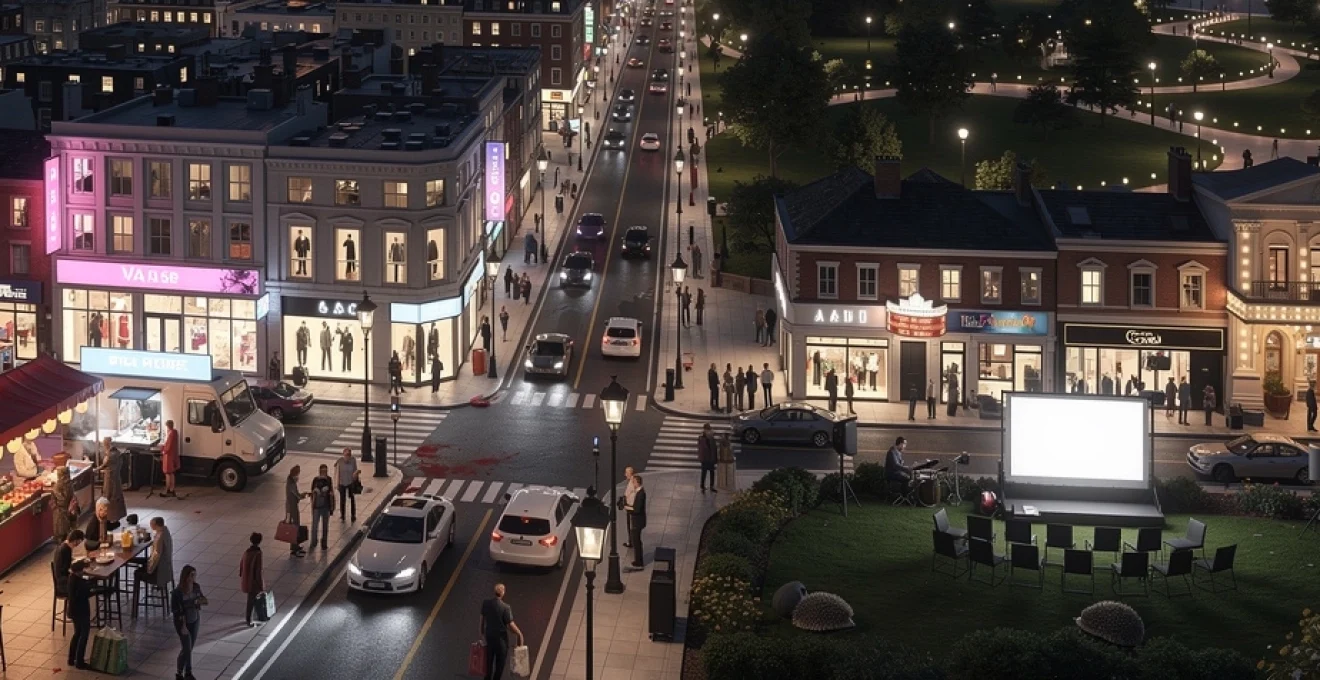
When the sun dips below the horizon, cities don’t simply fall asleep—they transform into entirely different organisms. The urban landscape after dark represents a fascinating metamorphosis where infrastructure, commerce, culture, and nature converge in unexpected ways. From the illumination of architectural landmarks to the emergence of nocturnal wildlife in unexpected places, the period between 6 PM and 6 AM reveals dimensions of city life that remain invisible during daylight hours. This transformation isn’t merely aesthetic; it encompasses fundamental shifts in how urban spaces function, who uses them, and what purposes they serve. Understanding this nocturnal metamorphosis has become increasingly important for city planners, businesses, and residents alike, particularly as urbanisation continues to accelerate and the night-time economy gains recognition as a critical driver of sustainable development.
Urban illumination infrastructure: street lighting systems and architectural floodlighting
The foundation of any thriving nocturnal cityscape rests upon sophisticated lighting infrastructure that balances functionality, safety, aesthetics, and sustainability. Modern urban illumination has evolved far beyond simple street lamps, incorporating intelligent systems that respond dynamically to environmental conditions and usage patterns. The quality and design of night-time lighting fundamentally shapes how you experience urban spaces after dark, influencing everything from perceived safety to energy consumption.
LED smart street lighting networks in metropolitan areas
Cities worldwide are transitioning from traditional sodium-vapour lamps to LED smart street lighting systems that offer remarkable versatility and efficiency. These networks can reduce energy consumption by up to 50-70% compared to conventional lighting whilst simultaneously improving visibility. Smart systems equipped with sensors adjust brightness levels based on pedestrian and vehicle traffic, dimming during quiet periods and brightening when activity increases. Copenhagen’s implementation of adaptive street lighting has demonstrated annual energy savings exceeding €600,000, whilst Barcelona’s deployment of 1,100 smart streetlights has cut energy costs by approximately 30%. These systems often integrate with broader urban data platforms, providing valuable insights into traffic patterns, air quality, and even detecting unusual activity that might require emergency response.
Historic building façade lighting: the eiffel tower and tower bridge exemplars
Architectural floodlighting transforms iconic structures into beacons that define city skylines after sunset. The Eiffel Tower’s golden illumination system, featuring 20,000 bulbs that have lit the Parisian landmark since 1985, consumes roughly 7.8 megawatt-hours daily—equivalent to the electricity usage of approximately eight households for an entire year. London’s Tower Bridge employs a sophisticated lighting scheme that accentuates the Victorian Gothic Revival architecture whilst allowing for special commemorative colour displays. These installations serve multiple purposes: they reinforce civic identity, attract tourism, and create memorable visual anchors in the urban landscape. However, they also represent significant energy commitments, prompting many cities to retrofit historic lighting with more efficient LED alternatives that maintain aesthetic quality whilst reducing environmental impact.
Dynamic Colour-Changing systems on skyscrapers: burj khalifa and empire state building
Contemporary skyscrapers have become vertical canvases for dynamic light displays that communicate cultural events, celebrations, and brand messaging. Dubai’s Burj Khalifa boasts one of the world’s most spectacular LED façade systems, capable of displaying intricate patterns across its 828-metre height using over 1.2 million LED lights. The Empire State Building’s tower lights, visible from up to 80 miles away, have evolved from simple floodlights to a computerised LED system with 16 million colour possibilities, controlled through a sophisticated digital interface. These installations have transformed tall buildings from static architectural statements into responsive urban communication tools. You might observe the Burj Khalifa displaying the UAE flag colours on National Day, or the Empire State Building illuminated in rainbow hues for Pride celebrations, demonstrating how vertical surfaces become participatory elements in civic life.
Solar-powered pathway illumination in public parks and promenades
As sustainability concerns intensify, solar-powered lighting solutions are gaining prominence in parks, pedestrian pathways, and recreational spaces. These systems eliminate trenching costs for electrical cables whilst providing reliable illumination without ongoing energy expenses. Singapore’s Gardens by the Bay incorporates extensive solar pathway lighting that charges during the day and automatically activates at dusk, creating safe pedestrian routes without grid connection. Modern solar
modules can store enough charge to power low-level bollard lights and motion-activated lamp posts throughout the night, even in cloudy climates. In many European cities, including Amsterdam and Copenhagen, solar studs embedded directly into pathways delineate cycle lanes and pedestrian routes, subtly guiding movement without contributing to excessive light pollution. The combination of solar power and low-glare optics helps preserve darker zones for urban wildlife while still offering safe navigation for joggers, cyclists and late-night commuters. For city planners, solar-powered pathway illumination is also a flexible tool: units can be repositioned, expanded or trialled in temporary installations before committing to permanent infrastructure.
Nocturnal economic ecosystems: night markets, late-night retail, and 24-hour trading hubs
Once the working day ends, a different layer of the urban economy switches on. The night-time economy weaves together hospitality, logistics, entertainment, healthcare and essential services into a complex ecosystem that can account for 6–10% of a city’s GDP. Rather than being limited to bars and clubs, thriving after-dark economies include night markets, extended retail, food trucks, and 24-hour pharmacies that support workers and residents with diverse schedules. When managed well, these nocturnal economic ecosystems create jobs, support cultural expression and keep city centres active and perceived as safer long into the night.
Asian night market culture: shilin night market taipei and temple street hong kong
Asian night markets are among the clearest examples of how cities transform after dark into social and economic hubs. In Taipei, Shilin Night Market hosts hundreds of stalls offering street food, fashion, electronics and games, attracting tens of thousands of visitors on peak evenings. Temple Street in Hong Kong plays a similar role, with fortune tellers, open-air restaurants and vendors packed into dense blocks that would feel almost dormant by day. These markets do more than generate income; they act as informal community centres where families, tourists and shift workers converge, blurring class and age boundaries in a shared public space.
Urban planners increasingly study these markets as living laboratories for flexible street use and temporary public realm design. Streets that carry vehicular traffic by day become pedestrian-only night corridors through simple, repeatable interventions like bollards, mobile stalls and overhead lighting. If you are considering how to build a vibrant night-time economy in your own city, closely observing the operational rhythms of Shilin or Temple Street—set-up times, crowd flow, waste management, and noise mitigation—offers a practical blueprint. Crucially, both markets illustrate that clear governance, licensing and community involvement are essential to prevent overcrowding, nuisance and informal activities sliding into exploitation.
24-hour shopping districts: oxford street london and shinjuku tokyo after midnight
In global capitals, late-night and 24-hour retail districts provide a continuous flow of economic activity well beyond standard trading hours. Oxford Street in London, traditionally closing in the early evening, has experimented with extended opening hours around major holidays and events, drawing in night-time shoppers who combine retail with theatre visits, dining or night bus connections. In Tokyo’s Shinjuku district, convenience stores, electronics outlets, arcades and entertainment venues form a layered night economy where very few shutters come down before dawn. These areas exemplify how extended trading can support service workers, tourists and residents who operate on non-traditional schedules.
However, unrestricted late-night trading can generate tensions around noise, crowding and worker well-being. Forward-thinking cities use planning tools, zoning and licensing to shape a balanced 24-hour shopping experience that still allows neighbouring residents to sleep. Measures might include staggered closing times, limits on late-night alcohol sales, and incentives for diverse business types beyond bars and fast-food outlets. By designing Oxford Street or Shinjuku-style districts with integrated public transport, clear lighting, and strong waste and security management, cities can avoid the “one-dimensional party strip” and instead cultivate mixed-use, people-friendly corridors after dark.
Late-night food truck congregations and pop-up vendor zones
Food trucks and pop-up vendor zones have become a hallmark of contemporary night-time economies, particularly in North American and European cities. After dark, underused car parks, vacant lots and waterfront promenades can transform into bustling food courts, with independent operators offering cuisine that traditional bricks-and-mortar restaurants may not provide. These mobile vendors often cluster around entertainment districts, university campuses or transport hubs, serving theatre-goers, bar patrons and night-shift workers alike. The result is a flexible night-time dining scene that can adapt to seasonal trends and changing neighbourhood demographics.
Yet without proper coordination, informal food truck gatherings risk creating congestion, waste and noise, particularly in residential districts. Many municipalities now designate official food truck zones, with set operating hours, on-site waste facilities and noise guidelines. For operators, digital tools such as location-based apps and social media alerts help build a loyal late-night customer base, turning what might once have been a precarious livelihood into a structured part of the local night-time economy. The most successful pop-up zones function like curated night markets, offering diverse menus, seating areas and subtle lighting that encourage people to linger rather than simply grab-and-go.
Round-the-clock pharmacy and convenience store networks
While nightlife headlines often focus on entertainment, 24-hour pharmacies and convenience stores quietly underpin a safe and resilient night-time city. These outlets provide essential goods—medication, baby supplies, food staples and hygiene products—to residents who cannot rely on standard opening hours, including shift workers, carers and people facing emergencies. In many European and Asian cities, strategic planning ensures that at least one late-night or 24-hour pharmacy is accessible within a reasonable travel time for each dense neighbourhood. This creates a safety net that reduces pressure on hospital emergency departments by giving people alternative access to over-the-counter care after dark.
From an urban design perspective, round-the-clock stores act as “eyes on the street,” contributing to passive surveillance and deterrence of anti-social behaviour in otherwise quiet areas. However, they also raise questions about labour conditions and the sustainability of permanent night shifts. Progressive operators address these challenges by rotating staff, enhancing security measures, and providing safe travel options for employees finishing late-night shifts. When you see a lighted pharmacy sign or convenience store at 3 AM, you are witnessing a critical link in the nocturnal infrastructure that lets cities function as truly 24-hour environments.
After-dark cultural programming: theatre districts, live music venues, and performance spaces
Culture is one of the primary engines driving people into city centres after sunset. Theatre districts, music venues, cinemas and galleries shape the nightly rhythm of urban life, and their programming decisions can shift crowd flows by the hour. Far from being static, after-dark cultural programming has become more experimental and inclusive, with institutions testing new time slots, hybrid events and extended opening hours. For many cities, investing in night-time cultural life is also a strategic way to support local creatives, boost tourism and strengthen the urban brand.
West end london and broadway new york: evening show scheduling patterns
In both London’s West End and New York’s Broadway, the standard evening curtain time of 7:30–8:00 PM creates a well-established nocturnal pattern. Crowds begin to gather in nearby restaurants and bars from late afternoon, peak during pre-show dining around 6:00–7:00 PM, then flood the streets again for interval and post-show activities. This tightly choreographed schedule supports a dense ecosystem of ancillary businesses—from taxi drivers and ride-hailing services to florists and late-opening cafés. Theatres themselves often experiment with earlier Sunday performances or weekday matinees to cater to families, tourists and older audiences who may be less comfortable travelling late at night.
These scheduling patterns highlight how even minor adjustments can reshape the urban evening. A shift of 30 minutes in curtain time can relieve pressure on public transport, alter restaurant seating waves, and reduce congestion around key junctions. If your city is nurturing its own theatre district, analysing footfall data around the West End or Broadway offers clues about how to stagger shows, coordinate marketing and time public transport provision. Theatres increasingly coordinate with local authorities on issues like street lighting, wayfinding and night-time security to ensure that the journey to and from a performance feels as welcoming as the show itself.
Jazz club circuits: ronnie scott’s and blue note performance timings
Jazz clubs such as Ronnie Scott’s in London and the Blue Note in New York operate on a different nocturnal rhythm from mainstream theatres. These venues typically run multiple sets each night, often starting around 7:00–8:00 PM and continuing with late shows that begin after 10:00 PM. This staggered programming supports a rolling audience flow of dedicated jazz fans, casual visitors and hospitality workers finishing shifts elsewhere. It also allows musicians to experiment with longer improvisations and more intimate, late-night atmospheres that would feel out of place in larger theatres.
From a city’s perspective, jazz club circuits create micro-clusters of cultural activity that animate side streets and basements which might otherwise remain dark. Yet they also face particular challenges, including noise complaints, high rents and pressure from nearby residential development. Initiatives such as “agent of change” planning policies—which require new residential projects to mitigate the impact of existing venues rather than the other way around—can help protect the fragile night-time music ecosystem. When we map performance timings at Ronnie Scott’s or the Blue Note against transport and lighting patterns, we see how vital coordinated night-time planning is for keeping live music accessible and sustainable.
Open-air cinema installations in urban parks during summer months
Open-air cinemas exemplify how cities can reimagine parks and plazas as safe, communal night-time spaces. Typically programmed during warmer months, these screenings encourage residents to return to green spaces after dusk, changing perceptions of parks from potentially unsafe areas to curated cultural venues. Cities like Berlin, Paris and Sydney host extensive summer cinema programmes where people bring blankets and picnic baskets, turning lawns into temporary amphitheatres. The gentle glow of the projection screen, combined with low-level pathway lighting, creates a distinctive night-time ambience that feels both festive and relaxed.
Operationally, open-air cinemas demand careful planning around sound levels, waste management and biodiversity. Audio must be loud enough for the audience without disturbing nearby residents or wildlife, and lighting must guide attendees without attracting excessive insects or disorienting bats. Many organisers install portable, solar-powered or battery-operated lighting rigs to minimise cabling and reduce trip hazards. For city authorities, these events are an opportunity to test new layouts for seating, food vendors and temporary toilets that might later inform permanent nocturnal design for parks and waterfronts.
Late-night museum access: british museum lates and friday night at the de young
Late-night museum openings, such as the British Museum’s “Lates” in London and “Friday Nights at the de Young” in San Francisco, have transformed how cultural institutions engage with urban nights. By extending hours into the evening, museums attract visitors who cannot attend during the day, including office workers and students. These events often combine exhibitions with live performances, talks, DJ sets and food offerings, creating a multi-sensory experience closer to a night out than a traditional gallery visit. In some cities, late openings have boosted attendance by 20–30% on designated evenings, while also diversifying the demographic profile of visitors.
Night-time access does, however, require museums to rethink staffing, security and energy consumption. Additional lighting, climate control and cleaning cycles increase operating costs, so many institutions collaborate with sponsors or city authorities to underwrite extended hours. When carefully designed, late-night programmes can serve as gateways to deeper cultural engagement, encouraging visitors to return at other times and building long-term loyalty. They also reinforce the idea that city centres are places for learning and reflection after dark—not only for consumption and entertainment.
Nocturnal transport infrastructure: night bus networks and metro extensions
Behind every thriving night-time economy lies a robust transport system that gets people home safely and affordably. As cities embrace 24-hour activity, the demand for reliable night-time transport infrastructure has grown sharply. Night buses, metro extensions and bike-share schemes all help knit together the urban fabric between midnight and dawn, when conventional services wind down. Without these systems, even the most vibrant districts can feel inaccessible or unsafe, limiting participation in night-time life to those who can afford taxis or private cars.
London night tube: victoria and central line weekend operations
London’s Night Tube, initially launched on the Victoria and Central lines, marked a major shift in how the city approached its night-time economy. Operating 24 hours on Fridays and Saturdays, these services dramatically cut journey times for late-night workers and revellers, with some trips reduced by up to an hour. Studies commissioned by Transport for London estimated that the Night Tube could add more than £300 million to the city’s economy over a decade, primarily by improving access to night-time jobs and venues. The predictability of all-night metro services also increased perceptions of safety, particularly for women and younger passengers.
The Night Tube’s success stems from more than just extended operating hours; it reflects detailed planning around staffing, maintenance and coordination with night bus routes. Safety measures such as increased CCTV coverage, visible staff presence and clear station signage all contribute to a more welcoming night-time environment. Cities considering similar metro extensions can learn from London’s phased rollout, which focused first on high-demand corridors and used data to justify subsequent expansions. The key lesson is that reliable rail services after midnight are not a luxury but a core component of a modern, inclusive night-time city.
Night bus route planning: n-prefix services across european capitals
In many European capitals, dedicated night bus networks carry the bulk of passengers once metro systems close. These routes, often identified by an “N” prefix, typically converge on central hubs and radiate out to residential districts, mirroring daytime networks but with simplified patterns. For example, cities like Berlin, Paris and Madrid operate extensive night bus grids with frequencies ranging from every 15 to 30 minutes on core lines. Effective night bus planning considers not only population density but also the locations of major night-time employers, entertainment districts and hospitals.
Route design must balance coverage and efficiency: excessive branching can confuse users, while overly skeletal networks leave gaps that taxis or private cars must fill. Clear information at stops, real-time tracking via apps and integrated ticketing with daytime services all help build trust in night buses as a dependable option. If you have ever hesitated at a dark bus stop, you know how critical lighting, shelter design and visible timetables are for perceived safety. By treating night bus stops as important public spaces, rather than mere infrastructure, cities can encourage more people to leave their cars at home after dark.
Bike-share scheme utilisation patterns between 22:00 and 05:00
Bike-share schemes, once thought of as primarily daytime services, now play a growing role in night-time mobility. Usage data from cities such as Paris, London and New York show distinct late-night peaks around midnight and 2–3 AM, coinciding with bar closing times and the end of cultural events. For confident cyclists, shared bikes offer a flexible, low-cost way to bridge gaps between late-night buses or metro stations and home. They can also relieve pressure on taxi ranks and ride-hailing pick-up zones, especially in dense entertainment districts.
However, encouraging safe cycling at night requires more than simply leaving docks open 24 hours. Adequate street lighting, protected cycle lanes and clear wayfinding are all crucial to prevent collisions and improve comfort. Some cities have experimented with reflective markings on bike lanes, motion-activated pathway lighting and targeted safety campaigns about helmet use and visibility. When we integrate bike-share planning with night-time transport strategies—adjusting rebalancing schedules, ensuring bikes are available near nightlife hotspots, and providing secure docking in residential areas—we strengthen the overall resilience of the nocturnal mobility network.
Urban wildlife behavioural shifts: nocturnal species adaptation to city environments
As human activity reshapes cities, many wildlife species have adapted by shifting more of their behaviour into night-time hours. Reduced traffic, lower noise levels and cooler temperatures create opportunities for animals to forage, travel and interact with less disturbance. Yet artificial lighting, fragmented habitats and night-time noise also pose new challenges. Understanding how urban wildlife behaves after dark helps us design cities that support both biodiversity and human comfort, rather than forcing one to displace the other.
Fox population movements through residential neighbourhoods after dusk
Urban foxes are now a common sight in cities such as London, Berlin and Melbourne, where they exploit food waste, gardens and rail corridors as part of their nightly routes. GPS collar studies have shown that foxes often begin their active period shortly after dusk, moving along quiet residential streets, canal towpaths and green verges that function as “fox highways.” These animals can cover several kilometres in a single night, weaving through back alleys and small parks that humans may consider marginal spaces. Their presence illustrates how even heavily built-up areas retain a network of semi-wild habitats after dark.
For residents, encounters with foxes can be both charming and contentious, especially when scavenging leads to tipped-over bins or damage to lawns. Practical measures such as secure waste storage, wildlife-friendly fencing and designated green corridors can help channel fox movements while reducing conflict. Urban ecologists often compare foxes to informal “inspectors” of city design: where they move easily, other species frequently follow. By mapping fox activity, planners gain insight into how to connect fragmented habitats and where to preserve dark, low-disturbance zones within otherwise bright, busy neighbourhoods.
Bat echolocation patterns near illuminated waterways and bridges
Bats, key insect predators in many ecosystems, have a complex relationship with urban light. Some species avoid bright areas entirely, while others opportunistically hunt insects congregating around street lamps and bridge lighting. Studies along illuminated waterways and bridges show that bat activity can concentrate at the edges of light pools, where contrast between lit and dark zones helps them locate prey via echolocation. In cities such as London and Amsterdam, bat surveys have informed decisions to dim or shield lights on riverfront paths and bridge undersides, preserving vital commuting routes for these nocturnal mammals.
Designing bat-friendly lighting is a delicate balancing act between human safety and ecological health. Warmer-coloured LEDs, downward-facing fixtures and motion-activated systems can all reduce disruption without leaving paths completely dark. Some cities trial “bat corridors” along canals and rivers, where lighting is consciously limited or carefully tuned to minimise interference with echolocation. If you have ever walked along a softly lit towpath and noticed quick, darting shadows overhead, you have likely witnessed bats taking advantage of a carefully negotiated truce between human infrastructure and wildlife needs.
Hedgehog foraging routes in suburban gardens during night hours
In suburban areas, hedgehogs are emblematic of how small mammals navigate an urbanised landscape after dark. These animals typically leave daytime nesting sites at dusk to forage in gardens, verges and parks, following habitual routes that may span dozens of properties. Fences with small “hedgehog highways” cut into their bases, log piles, compost heaps and pesticide-free lawns all contribute to a supportive nocturnal habitat. Citizen science projects in the UK and elsewhere have used night-vision cameras and resident reports to map hedgehog movements, revealing surprisingly extensive networks of backyard corridors.
Light pollution, impermeable fencing and heavily paved gardens all disrupt these routes, forcing hedgehogs onto roads where vehicle collisions are more likely. Simple actions by householders—such as dimming security lights, maintaining dark corners and preserving ground-level vegetation—can significantly improve survival rates. When aggregated across entire neighbourhoods, these micro-decisions reshape the nocturnal city into a more permeable, wildlife-friendly environment. The analogy is striking: just as humans rely on safe, continuous pavements and crossings, hedgehogs depend on unobstructed, low-lit ground pathways to move through the urban night.
Avian species disruption: light pollution effects on migratory birds
Migratory birds often navigate using celestial cues and the Earth’s magnetic field, making them particularly vulnerable to artificial light at night. Brightly lit skyscrapers, stadiums and industrial sites can disorient birds, drawing them off course or causing fatal collisions with glass façades. During peak migration periods, cities along major flyways—such as New York, Chicago and Toronto—may record thousands of bird deaths in a single season linked directly to light pollution. Continuous skyglow from urban areas can also alter the timing of nocturnal movements, breeding cycles and feeding behaviours for resident species.
To mitigate these impacts, many cities and building owners are adopting “lights out” programmes during migration seasons, dimming or switching off non-essential external lighting. Shielded fixtures, bird-friendly glass treatments and lower-intensity architectural lighting further reduce risks. Monitoring initiatives that combine radar, acoustic sensors and citizen reports help identify hotspots where interventions are most needed. When we view the night-time skyline through the lens of birds, illuminated towers look less like symbols of progress and more like a maze of hazards—reminding us that sustainable night-time city design must extend upward as well as outward.
Night-time soundscape transformation: acoustic ecology and urban noise mapping
As daylight fades, the urban soundscape undergoes its own transformation. The constant hum of daytime activity—construction, office chatter, schoolyards—gives way to a different mix of traffic, nightlife, industrial operations and natural sounds. Acoustic ecologists and city planners increasingly treat noise not just as a nuisance but as a form of environmental data that reveals how people and wildlife use the city after dark. Detailed noise mapping helps identify where interventions are needed to protect sleep, support nightlife or preserve quiet refuges.
Decibel level fluctuations: daytime versus night-time traffic noise patterns
Traffic typically remains the dominant source of urban noise, but its temporal pattern shifts markedly between day and night. During daytime, continuous flows create a relatively stable background hum; at night, reduced volumes mean individual vehicles, sirens or motorbikes stand out more sharply, sometimes perceived as more disturbing despite lower average decibel levels. Noise monitoring in many European cities shows that while overall night-time levels may drop by 5–10 dB compared with peak daytime, occasional spikes can still exceed recommended thresholds for healthy sleep. These peaks are often associated with speeding vehicles on quieter roads or delivery trucks operating during off-peak hours.
Understanding these fluctuations is crucial for designing effective noise mitigation strategies. Traffic-calming measures, low-noise road surfaces and restrictions on night-time heavy goods vehicle routes can significantly improve acoustic comfort in residential areas. Double-glazing and façade insulation help at building level, but they are only part of the solution; urban design that buffers homes from main roads, such as green belts or sound barriers, tackles noise at its source. When we map decibel levels across the 24-hour cycle, we gain a clearer picture of where the night-time city still intrudes too aggressively into private space.
Industrial area sound emissions during off-peak hours
Many industrial and logistics operations deliberately shift noisy activities into night-time hours to avoid disrupting daytime traffic or to meet tight delivery windows. Warehouses, freight terminals, factories and port facilities may run loading, unloading or processing tasks overnight, generating a distinct soundscape of engines, reversing alarms and mechanical clatter. While these zones are often located away from city centres, urban expansion and new residential developments can bring homes closer to industrial edges, creating conflicts over night-time noise. Residents may experience intermittent rumbling or tonal sounds that carry surprisingly far in cooler, still night air.
To balance economic efficiency with liveability, cities employ zoning regulations, noise limits and technological upgrades such as quieter machinery and acoustic enclosures. Real-time noise monitoring, coupled with complaint hotlines, allows authorities to detect patterns and work with operators on mitigation strategies. In some ports and logistics hubs, “quiet night” programmes incentivise the use of electric vehicles, low-noise equipment and alternative alarm systems that rely on lights rather than beepers. These interventions illustrate how even inherently noisy sectors can adapt to an acoustic ecology perspective, treating sound as a design parameter rather than an unavoidable by-product.
Natural sound emergence: nocturnal insect choruses in green spaces
As human-generated noise subsides in many neighbourhoods, natural sounds become more audible, reshaping the character of the night. In parks, wetlands and even small urban gardens, nocturnal insects, frogs and other creatures create layered soundscapes that can be surprisingly rich. The rhythmic chirping of crickets, the buzz of cicadas or the calls of night birds often serve as background audio for evening walkers, late-night joggers and residents with open windows. Acoustic studies have shown that these soundscapes can have calming effects, counterbalancing the stress associated with harsher mechanical noises.
However, artificial lighting, pesticides and habitat loss can all dampen or fragment these natural choruses. Where cities protect dark, vegetated corridors and limit chemical use, nocturnal biodiversity tends to be higher, and so too is the complexity of the soundscape. Some urban parks now host “sound walks” or guided night-time tours that encourage people to listen more attentively to their surroundings, reframing the night not as a void but as a different kind of sensory experience. By recognising nocturnal sound as an asset—much like light, architecture or culture—we open up new ways of designing cities that are acoustically as well as visually engaging after dark.