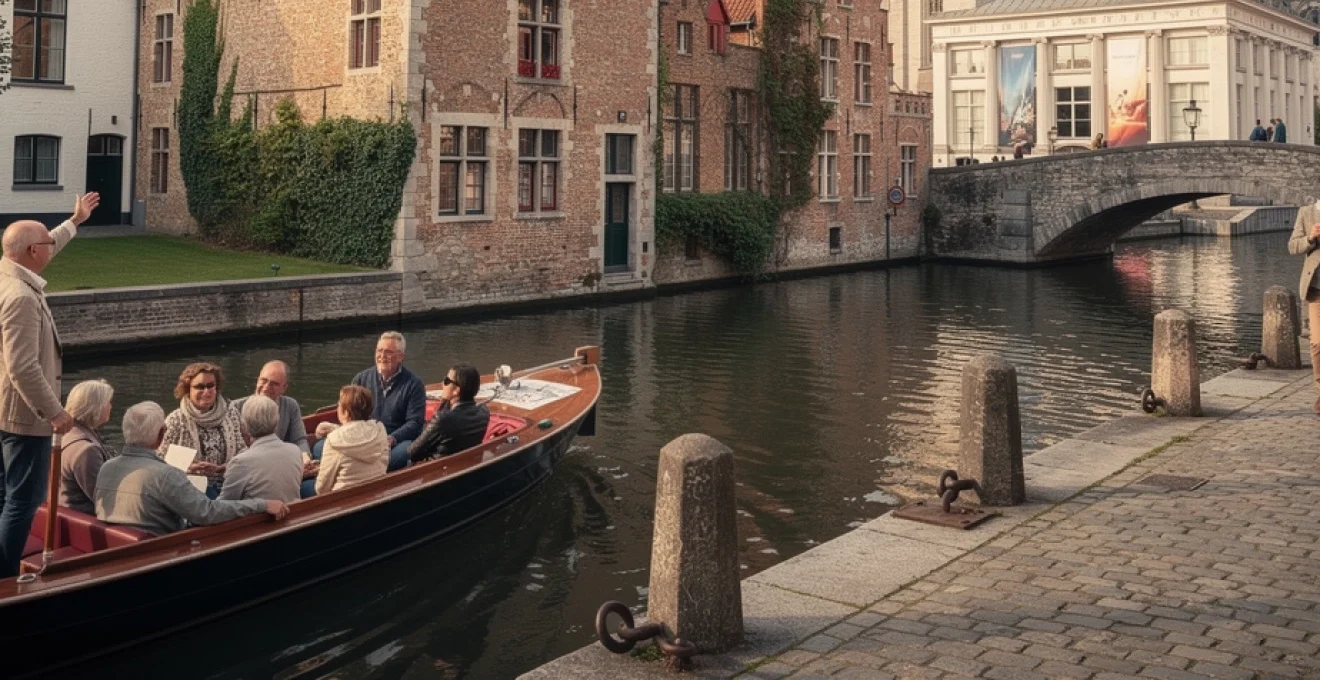
Bruges stands as one of Europe’s most remarkably preserved medieval cities, where cobblestone streets wind between Gothic facades and ancient canals reflect centuries-old architecture. This Belgian gem, known locally as Brugge, offers visitors an immersive journey through time, where each corner reveals another layer of its prosperous past as a major trading hub. The city’s ability to maintain its historical integrity while welcoming millions of visitors annually makes it a fascinating study in heritage conservation and sustainable tourism. When you walk through its streets today, you’re experiencing the same views that merchants, artists, and craftspeople witnessed during the city’s Golden Age—a rare privilege in our rapidly modernizing world.
Medieval architecture and UNESCO world heritage status of bruges’ historic centre
The historic centre of Bruges earned its UNESCO World Heritage designation in 2000, recognizing its outstanding universal value as an exceptionally well-preserved medieval settlement. The city’s architectural landscape represents a comprehensive example of urban development spanning several centuries, with structures dating from the 12th to the 19th centuries. Unlike many European cities that suffered extensive damage during wartime conflicts, Bruges emerged from both World Wars remarkably intact, preserving its medieval character for contemporary visitors to appreciate.
The UNESCO recognition encompasses approximately 410 hectares of the historic city centre, where strict conservation regulations now govern any modifications to buildings and public spaces. These protective measures ensure that renovations maintain historical accuracy, using traditional materials and construction techniques wherever possible. Property owners within the designated zone must obtain special permits for even minor alterations, a process that involves consultation with heritage conservation specialists. This rigorous approach to preservation has created a living museum where residents and businesses operate within authentic medieval frameworks, contributing to the city’s unique atmosphere.
The belfry of bruges: 13th-century civic tower and carillon system
The Belfry of Bruges, or Belfort, dominates the city’s skyline at 83 metres tall, serving as the most recognizable landmark in the urban landscape. Construction began in 1240 as a symbol of civic independence and municipal authority, with the tower functioning as both a watchtower and treasury for important documents and the city seal. The structure underwent several reconstructions following fires in 1280 and 1493, with the current octagonal upper section completed in the late 15th century. You can climb the 366 steps to reach the observation gallery, where panoramic views across the entire city reward your effort.
The tower houses a magnificent carillon system comprising 47 bells, with the heaviest weighing approximately 6 tonnes. Regular concerts take place throughout the year, filling the city with melodious chimes that have marked time for Bruges residents for centuries. The automated carillon plays programmed melodies every quarter-hour, while professional carillonneurs perform live concerts on Wednesday, Saturday, and Sunday afternoons. This musical tradition connects contemporary visitors directly to medieval civic life, when such bells communicated important information to citizens who couldn’t read written proclamations.
Basilica of the holy blood: romanesque and gothic architectural fusion
The Basilica of the Holy Blood presents a fascinating architectural duality, with its lower chapel exemplifying pure Romanesque style whilst the upper chapel showcases elaborate Gothic features. The lower chapel, dedicated to Saint Basil, dates from approximately 1134 and retains its original austere Romanesque character with heavy columns, rounded arches, and minimal decoration. This space provides a stark contrast to the upper chapel, which was rebuilt in the Gothic style during the 16th century following a devastating fire.
The basilica’s fame derives primarily from its religious relic—a phial purportedly containing a cloth with drops of Christ’s blood, brought to Bruges in 1150 by Thierry of Alsace, Count of Flanders, after the Second Crusade. The relic is displayed to the public daily, and each year on Ascension Day, it becomes the centrepiece of the Procession of the Holy Blood, a pageant that has taken place annually since 1304. This event transforms the entire city into a theatrical stage, with thousands of participants in historical costumes re-enacting biblical scenes through the medieval streets. For visitors interested in religious art and architecture, this dual-level structure offers profound insights into evolving European sacred design philosophies.
<hh3>Market square’s guild houses and commercial gothic facades
Just a few steps from the Basilica of the Holy Blood, the Market Square (Markt) opens up as the historic commercial heart of Bruges. Surrounded by stepped-gable guild houses and civic buildings, this expansive plaza has hosted markets, fairs, and political gatherings since the 10th century. The colourful facades you see today largely date from the 17th and 18th centuries, but many stand on medieval foundations that once belonged to powerful craft and merchant guilds. As you look up, the characteristic crow-stepped gables and narrow frontages tell the story of a dense trading city where every square metre of street-facing real estate was precious.
The so‑called “commercial Gothic” style of Bruges blends traditional Gothic verticality with the practical needs of merchants. Large ground-floor openings once served as shopfronts or warehouse doors, while upper stories housed counting rooms and family quarters. Many of these buildings have been carefully restored to reflect their historic colours, using mineral paints and lime-based plasters that allow the old brickwork to breathe. When you sit at a café terrace on the Markt today, you are literally surrounded by centuries of economic history, framed by architecture that still hints at the rivalry and pride of the medieval guilds that funded it.
UNESCO recognition criteria and conservation regulations since 2000
Bruges’ historic centre was inscribed on the UNESCO World Heritage List under criteria (ii) and (iv), which focus on its role as a major exchange of human values and its status as an outstanding example of a medieval European town. In practical terms, this means international recognition that Bruges illustrates the development of a commercial and cultural centre in northwestern Europe, especially during the 12th to 15th centuries. The city’s urban fabric, including its street plan, canals, and building typologies, is considered an integral part of this value. As a result, urban planning decisions are no longer purely local questions; they are tied to a global commitment to safeguard this irreplaceable heritage.
How does this translate into everyday life for residents and visitors? Since 2000, strict conservation regulations have governed everything from roof repairs to shop signage within the protected zone. New construction must respect traditional building heights, materials, and roof shapes, and even modern necessities like solar panels are carefully controlled to avoid visual disruption. Bruges operates a detailed heritage management plan that is regularly reviewed in consultation with UNESCO experts, ensuring that tourism growth, accessibility improvements, and climate adaptation projects do not compromise the medieval cityscape. This delicate balancing act is one of the reasons you can still “step into a postcard” when you arrive in Bruges today.
Canal network navigation: exploring the reien waterways system
The historic canals of Bruges, collectively known as the Reien, form the backbone of the city’s medieval transport and drainage system. Once essential arteries for bringing wool, grain, and exotic goods into the city, these waterways now offer one of the most atmospheric ways to explore Bruges. Following the natural course of the Reie River, the canal network winds past brick warehouses, private gardens, and hidden courtyards that remain invisible from street level. When you glide along these canals, you are effectively tracing the commercial lifelines that powered Bruges’ Golden Age.
From a practical perspective, the canal network is now carefully managed to balance tourism with ecological concerns and flood risk. Water levels are monitored year‑round, and periodic dredging ensures that boats can navigate safely without damaging the quay walls. For visitors, understanding the layout of the Reien waterways system can help you choose the most scenic routes, whether you’re standing on a bridge with your camera or boarding a tour boat. Think of the canals as Bruges’ “medieval ring road”—except instead of traffic jams, you’ll find reflections of church towers and swans gliding past.
Rozenhoedkaai wharf: photography hotspot and historic mooring point
Rozenhoedkaai (“Rosary Quay”) is arguably the most photographed spot in Bruges, and for good reason. Located at the junction of the Dijver and Groenerei canals, this small quay offers a postcard-perfect view of leaning brick facades, ivy‑covered walls, and the Belfry rising in the background. In the Middle Ages, this was a busy mooring point where ships unloaded salt, wine, and luxury textiles destined for the nearby markets. The name itself likely refers to merchants trading rosaries and devotional objects in the vicinity, a reminder that commerce and spirituality were closely linked in medieval Bruges.
Today, Rozenhoedkaai functions as both a departure point for canal cruises and a favourite stop for photographers chasing the perfect reflection shot at sunrise or dusk. If you’re planning to capture Bruges’ timeless atmosphere, arrive early in the morning or late in the evening when day‑trippers have dispersed and the water is at its calmest. The scene you photograph will be remarkably similar to early 20th‑century postcards and paintings, demonstrating how well Bruges has preserved its historic skyline. Standing at this wharf, you can almost imagine the creak of wooden hulls and the calls of dockworkers echoing off the walls centuries ago.
Dijver canal route: museum quarter waterfront access
The Dijver canal runs along the southern edge of Bruges’ historic core, forming a natural boundary to what many consider the city’s museum quarter. On one side of the water, you find major cultural institutions such as the Groeningemuseum and the Gruuthusemuseum; on the other, tree‑lined quays and historic houses frame serene water views. This stretch of canal once bustled with barges delivering raw materials to workshops and collecting finished textiles for export. Nowadays, it provides visitors with a tranquil corridor connecting some of Bruges’ most important art and history collections.
Walking along the Dijver, you’ll notice how closely the buildings hug the water, with cellar doors and low arches hinting at former loading bays. Boat tours that follow this route often provide commentary on the evolution of Bruges from a medieval trading powerhouse to a 19th‑century artistic muse. If you’re planning a day focused on museums in Bruges, using the Dijver canal as your reference line is a practical way to orient yourself. The combination of cultural access and waterside views makes this one of the most rewarding sections of the Reien to explore on foot or by boat.
Groenerei green canal: residential medieval water architecture
The Groenerei, or “Green Canal,” offers a more intimate perspective on Bruges’ medieval water architecture. Flanked by overhanging trees, private gardens, and small bridges, this canal historically bordered residential quarters rather than industrial zones. Many of the houses along the Groenerei feature water doors, stepped gables, and small outbuildings that once served as washhouses or storage for rivercraft. Compared to the busier Dijver and Rozenhoedkaai, the atmosphere here feels almost contemplative, especially early in the morning.
Architecturally, the Groenerei showcases how closely domestic life in medieval Bruges intertwined with the water. Families collected water, washed linens, and even cooled perishable goods directly from the canal. In some places, brick arches span the water, creating semi‑enclosed passageways that feel like outdoor cloisters. When you take a boat tour that passes along this stretch, you gain a rare glimpse into back gardens and hidden corners that remain invisible from the main streets. It’s a reminder that Bruges is not just a collection of monuments, but a city that has adapted its everyday life to the presence of water for centuries.
Boat tour operators: seasonal navigation and commentary services
Canal boat tours are one of the most popular ways to explore Bruges, with several licensed operators running small open boats from March to November. Boats generally seat around 25 people, and journeys last about 30 minutes, covering key sections of the Reien including the Dijver, Groenerei, and the area around Rozenhoedkaai. During high season, departures run every few minutes from multiple embarkation points, so you rarely need to book far in advance. In winter, services are reduced or suspended depending on weather conditions and water levels.
What can you expect on board? Most operators provide multilingual commentary that combines historical facts with local anecdotes, helping you understand how each stretch of canal functioned in medieval Bruges. Because boat size and routes are tightly regulated, the experience remains relatively calm despite the city’s popularity. For the best views and photographs, sit on the outer seats and be prepared for low bridges—ducking under them becomes part of the fun. As with any major attraction in Bruges, visiting early in the day or later in the afternoon can help you avoid the heaviest crowds and enjoy a more peaceful cruise.
Flemish primitive art collection at groeningemuseum
For many art lovers, the Groeningemuseum is a highlight of any visit to Bruges. This museum houses one of the world’s most important collections of Early Netherlandish painting, often referred to as “Flemish Primitives.” These 15th‑ and early 16th‑century artists revolutionised European art with their meticulous oil painting techniques, luminous colours, and psychologically complex portraits. Walking through the galleries, you can trace Bruges’ transformation from a commercial hub to a centre of artistic innovation, as wealthy merchants and civic institutions commissioned altarpieces and devotional works.
The museum’s collection extends beyond the medieval period, covering six centuries of Belgian art, but it is the Flemish Primitive paintings that most powerfully evoke Bruges’ Golden Age. Detailed cityscapes in the background of religious scenes often mirror real urban settings, giving us glimpses of lost buildings and vanished streets. For visitors interested in the historic centre’s architecture and atmosphere, the Groeningemuseum provides an invaluable visual archive. It’s like comparing a modern photograph with a centuries‑old painting and realising that many of the landmarks still align.
Jan van eyck’s madonna with canon van der paele: 15th-century masterwork
One of the crown jewels of the Groeningemuseum is Jan van Eyck’s Madonna with Canon van der Paele, completed around 1436. This large panel painting was commissioned by Joris van der Paele, a wealthy canon of Bruges’ Church of Saint Donatian, as a memorial piece. Van Eyck depicts the canon kneeling before the Virgin and Child, flanked by two saints rendered with astonishing realism. The gleam of metal, the softness of fur, and the intricate reflections in Saint George’s polished armour demonstrate why van Eyck is often hailed as the master of oil painting.
Beyond its technical brilliance, this work offers insights into civic and spiritual life in medieval Bruges. The donor appears aged and frail, yet richly dressed, highlighting both his piety and social status. Architectural details in the painting, such as sculpted capitals and patterned floor tiles, reflect the kind of sophisticated interiors that would have been familiar to Bruges’ elite. When you stand in front of this masterpiece, you are not only admiring a work of art; you are also encountering a carefully constructed image of identity, faith, and prestige in a thriving trading city.
Hans memling’s moreel triptych and portraiture techniques
Another highlight of the Groeningemuseum is the Moreel Triptych by Hans Memling, completed in 1484 for the influential Moreel family of Bruges. The central panel shows Saints Christopher, Maurus, and Giles, while the wings depict the donors Willem Moreel and his wife Barbara van Vlaenderberch with their numerous children. Memling’s serene figures, delicate landscapes, and balanced compositions exemplify the transition from the more sculptural style of earlier masters to a softer, more lyrical approach. His work would go on to influence portraiture across Europe.
Memling’s portraiture techniques are particularly interesting for modern visitors because they bridge the gap between medieval symbolism and Renaissance individualism. The donors are recognisably real people, with subtle variations in facial expression and posture that suggest personality and family dynamics. At the same time, carefully chosen attributes—such as patron saints and background settings—communicate their social aspirations and spiritual concerns. Studying these panels, you begin to understand how art in Bruges served both as a devotional tool and a sophisticated form of social communication, not unlike how curated social media feeds shape personal branding today.
Gerard david’s judgment of cambyses: legal iconography display
Gerard David’s Judgment of Cambyses, painted in 1498, stands out in the Groeningemuseum collection for its dramatic subject matter and civic function. Commissioned by the Bruges city authorities, this diptych was intended as a warning against judicial corruption. It depicts the Persian judge Sisamnes being flayed alive on the orders of King Cambyses II for accepting a bribe, with the gruesome scene rendered in meticulous detail. The flayed skin was then, according to legend, used to upholster the judge’s chair as a constant reminder to his successor.
Displayed in the former city hall, this painting served as a powerful piece of legal iconography for centuries. Its presence in a civic rather than religious setting shows how seriously Bruges’ magistrates took the idea of moral accountability. For modern viewers, the work can be challenging due to its graphic nature, but it offers a rare window into how late medieval societies used visual art to enforce ethical norms. When you view the Judgment of Cambyses today, you’re engaging with a centuries‑old conversation about justice, integrity, and the responsibilities that come with power—a topic that remains as relevant in the 21st century as it was in the 15th.
Béguinage ten wijngaarde: 13th-century monastic community architecture
Just south of the city centre, the Béguinage Ten Wijngaarde (Princely Beguinage of the Vineyard) offers a striking contrast to the bustling Markt and canals. Founded in the 13th century as a semi‑monastic community for lay religious women known as beguines, it functioned as a safe and structured environment for widows and unmarried women who wished to live a pious life without taking permanent vows. The complex is organised around a large central lawn shaded by tall poplar trees, surrounded by whitewashed houses dating mainly from the 17th and 18th centuries. Despite later alterations, the overall layout still reflects its medieval origins.
Architecturally, the beguinage exemplifies the understated simplicity of northern European devotional communities. Modest brick dwellings with small windows and steep roofs line the perimeter, while a chapel and communal buildings occupy key positions within the enclosure. The entire site is encircled by walls and accessed through a monumental gatehouse that once helped regulate entry. As you walk through the quiet paths, it’s easy to imagine the daily rhythms of prayer, work, and contemplation that structured life here. Visiting the beguinage allows you to experience a more intimate side of Bruges’ spiritual history, far removed from the grandeur of its major churches.
Today, Ten Wijngaarde is home to a small community of Benedictine nuns, and visitors are asked to respect the contemplative character of the site. Information panels explain the history and functions of different buildings, while a small museum offers further context on the beguine movement across Europe. If you’re seeking a moment of calm during a busy sightseeing day in Bruges, this is an ideal place to pause and reflect. In many ways, the beguinage functions as a living time capsule, preserving not just architecture but also a centuries‑old way of life oriented around community, modesty, and devotion.
Brewing heritage: de halve maan brewery and traditional beer production
Bruges is not only famous for its canals and medieval architecture; it also boasts a rich brewing heritage that stretches back to the Middle Ages. One of the best places to explore this tradition is the De Halve Maan (Half Moon) Brewery, a family‑run operation that has been producing beer on the same site for generations. Located near the Walplein, this brewery successfully bridges past and present by combining historic brewing methods with modern technology. Its flagship beers, such as Brugse Zot and Straffe Hendrik, pay homage to Bruges’ history and folklore while appealing to contemporary craft beer enthusiasts.
During a brewery tour, you’ll learn how beer production in Bruges evolved from small‑scale monastic operations to a major urban industry. Historically, beer was safer to drink than river water, so it became a staple of daily life for all social classes. De Halve Maan showcases traditional ingredients—malted barley, hops, water, and yeast—and explains how variations in brewing time, temperature, and fermentation produce different beer styles. Standing among the copper kettles and fermentation tanks, you gain a deeper appreciation for the technical expertise and careful timing involved, much like following a complex recipe where a single mistake can alter the final flavour.
One of the brewery’s most innovative features is its underground beer pipeline, completed in 2016. Stretching over three kilometres from the historic city‑centre brewery to a bottling plant on the outskirts, this pipeline reduces truck traffic in the narrow medieval streets and helps protect Bruges’ fragile infrastructure. It’s a clever solution to a very modern challenge: how to maintain industrial activity in a UNESCO World Heritage city without compromising its historic fabric. After your tour, you can sample fresh beer in the brewery’s tasting room or rooftop terrace, pairing it with local cheeses and dishes for a distinctly Bruges culinary experience.
Seasonal tourism patterns and crowd management strategies in bruges
Bruges attracts an estimated 8 to 9 million visitors each year, a remarkable figure for a city with fewer than 120,000 residents. This popularity brings both economic benefits and logistical challenges, especially during peak season from April to October and around major holidays. On sunny weekends, key sites such as the Markt, Rozenhoedkaai, and the Belfry can feel crowded, and queues for museums and boat tours may stretch longer than anticipated. Understanding Bruges’ seasonal tourism patterns can help you plan your visit strategically and contribute to more sustainable use of the historic centre.
So when is the best time to experience Bruges’ postcard‑like charm without the heaviest crowds? Shoulder seasons—March to early April and late October to November—often offer a good balance of pleasant weather and manageable visitor numbers. Weekdays are generally quieter than weekends, and early mornings or evenings provide more breathing space even in high season. The city authorities have introduced measures such as limiting large group tours in certain areas, encouraging overnight stays over day trips, and promoting lesser‑known attractions beyond the main tourist circuit. These strategies aim to distribute visitors more evenly in time and space, reducing pressure on the most fragile sites.
From a visitor’s perspective, small choices can make a big difference. Booking timed entries for popular museums, opting for early Belfry climbs, or exploring alternative viewpoints instead of crowding at the most famous photo spots all help preserve Bruges’ unique atmosphere. The city also encourages sustainable transport, with excellent train connections, extensive cycling infrastructure, and car‑free zones in the historic core. In many ways, managing tourism in Bruges is like fine‑tuning a complex mechanism: every small adjustment—whether by local authorities, businesses, or individual travellers—helps keep the system running smoothly without wearing down the delicate gears of this medieval masterpiece.