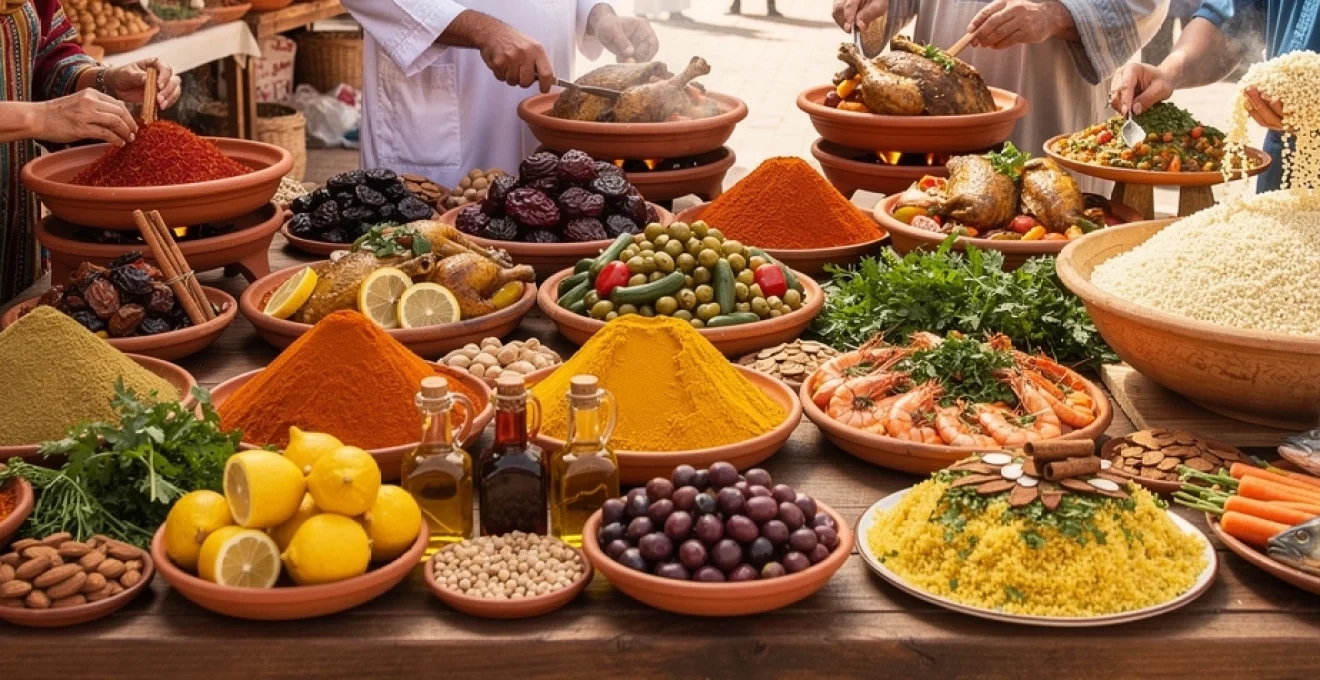
The amber glow of dawn spreads across Morocco’s ancient medinas, awakening merchants who have plied their trade for generations. In narrow souks perfumed with cumin, saffron, and cinnamon, the legacy of centuries-old spice routes continues to pulse through the kingdom’s culinary heart. Morocco’s position as a crossroads between continents has shaped not merely its geography, but its very flavour profile—creating a cuisine that speaks of Berber mountains, Andalusian courts, and desert caravans laden with precious aromatics. These spice trails, both literal and metaphorical, have woven themselves into every tagine, every couscous grain, and every cup of mint tea shared between friends.
Understanding Morocco’s spice heritage means tracing paths that wind through mountain passes, coastal ports, and desert oases. It requires tasting the earth in Taliouine’s saffron threads, feeling the Atlantic breeze in Essaouira’s argan groves, and sensing the weight of history in Fez’s medieval souks. The recipes that emerge from this landscape are not mere instructions, but living documents of cultural exchange, preservation techniques perfected over millennia, and the enduring human desire to transform simple ingredients into something transcendent.
Historical trade networks: the Trans-Saharan caravan routes and spice commerce
Long before modern supply chains, camel caravans traversed the Sahara’s unforgiving expanse, carrying gold, salt, and spices between sub-Saharan Africa and the Mediterranean world. These trans-Saharan routes established Morocco as a critical junction point where African, Arab, and European traders converged. The kingdom’s strategic position enabled it to absorb culinary influences from distant lands whilst developing its own distinctive spice traditions. Merchants from Timbuktu brought West African grains of paradise and Guinea pepper northward, whilst Venetian and Genoese traders introduced European herbs and Mediterranean aromatics.
The economic importance of these spice routes cannot be overstated. During the medieval period, certain spices commanded prices equivalent to gold by weight, making their transport and trade a lucrative—if perilous—enterprise. Moroccan cities that sat along these routes flourished, developing sophisticated trading protocols and storage facilities designed to preserve delicate aromatics in the harsh climate. The legacy of this commerce persists today in Morocco’s continued role as a spice trading hub, where traditional methods coexist with contemporary commercial demands.
Marrakech’s djemaa el-fna square as the central spice trading hub
Marrakech’s legendary Djemaa el-Fna square has served as Morocco’s beating commercial heart for nearly a millennium. Here, spice merchants arrange their wares in conical mounds of brilliant colour—turmeric’s golden yellow, paprika’s fiery red, cumin’s earthy brown. The square’s position at the terminus of trans-Saharan caravan routes made it the natural destination for spices travelling from as far as India and Indonesia. Even today, you can witness transactions conducted in much the same manner as centuries past, with merchants expertly identifying spice quality through sight, touch, and aroma.
The surrounding souks extend from Djemaa el-Fna like arterial branches, each specialising in particular aromatics or blends. In the Rahba Kedima spice square, vendors prepare ras el hanout—the complex Moroccan spice blend whose name translates to “head of the shop”—according to jealously guarded family recipes. These merchants possess encyclopaedic knowledge of spice properties, able to recommend precise combinations for specific dishes or even medicinal purposes. Their expertise represents generations of accumulated wisdom, passed from parent to child in an unbroken chain stretching back through centuries of spice commerce.
Fez’s medieval souks and the andalusian spice influence
Fez’s medina, a UNESCO World Heritage site, preserves perhaps the most authentic glimpse into medieval Moroccan spice trading. When Andalusian Muslims fled the Reconquista in the thirteenth century, they brought sophisticated culinary traditions that profoundly influenced Fez’s gastronomic landscape. These refugees introduced techniques for preserving le
preserving lemons in brine, incorporating almonds, and perfuming dishes with orange blossom water and saffron. Over time, Fez became known for its refined balance of sweet and savoury, a hallmark of Andalusian-inspired Moroccan cuisine. In the spice lanes around Place Seffarine, traders still offer blends designed for delicate pastries, subtly scented with anise, mastic, and fennel seed—echoes of Iberian courts where food was as much a display of culture as a matter of sustenance. Walking through these medieval souks today, you are essentially tracing the same spice trails that once connected Cordoba, Granada, and Fez in a shared culinary universe.
Tangier’s mediterranean gateway: european and middle eastern spice exchange
If Fez looks inward to the old Islamic world, Tangier gazes outward to the sea. Perched at the meeting point of the Atlantic Ocean and Mediterranean Sea, Tangier long functioned as Morocco’s cosmopolitan gateway, drawing European consuls, Levantine traders, and North African merchants into a dense network of exchange. From the sixteenth century onward, spices, teas, and preserved goods flowed through its port, blending Ottoman, Iberian, and Maghrebi influences into a distinctive coastal palette.
Here, you find Moroccan spice merchants as comfortable discussing smoked Spanish paprika and Provençal herbs as they are trading in cumin or coriander. European demand for saffron, argan oil, and preserved lemons helped standardise quality controls, storage methods, and even packaging techniques in Tangier’s warehouses. Meanwhile, arrivals from the eastern Mediterranean introduced new dried fruits, aromatic seeds like nigella, and techniques for candying citrus peel that quickly integrated into local sweets. In many ways, Tangier embodies Morocco’s role as a mediator between Europe and the wider spice world, translating global ingredients into distinctly Moroccan dishes.
The berber tribes’ role in mountain pass spice transportation
Behind the glamour of port cities and royal capitals lay the quiet, indispensable labour of Berber (Amazigh) communities in the Atlas Mountains. For centuries, Berber tribes controlled crucial passes that linked the saharan caravan routes to coastal markets, transporting spices, salt, and dried goods by mule and camel. Their intimate knowledge of terrain and seasonal weather patterns made them the logistical backbone of Morocco’s spice trade, ensuring that fragile aromatics survived long journeys through extreme heat and cold.
This role was not purely economic; it also shaped Berber cuisine. As spices moved through mountain villages, local cooks experimented with accessible seasonings such as cumin, paprika, and caraway, weaving them into hearty tagines and couscous designed for high-altitude life. Unlike the opulent sweet-savoury combinations of Fez or Rabat, Berber spice use is often bolder and more straightforward—think robust cumin in vegetable tagines or smoky paprika on grilled meats. When we talk about the “spice trails of Morocco”, we are really speaking about a shared system in which Berber caravaneers served as both carriers and creative interpreters of the kingdom’s most precious flavours.
Indigenous moroccan spice cultivation and terroir characteristics
While many Moroccan spices were historically imported, several key ingredients now associated with Moroccan cuisine are deeply rooted in local terroir. The concept of terroir—how soil, climate, and landscape shape flavour—is as relevant to saffron and argan oil as it is to wine. From the high, dry plateaus of the Anti-Atlas to the wind-brushed Atlantic coast, Morocco’s varied microclimates give rise to ingredients whose character cannot easily be replicated elsewhere.
Understanding indigenous Moroccan spice cultivation allows us to appreciate why “Moroccan saffron” or “Essaouira argan oil” are more than marketing labels. They are shorthand for specific growing conditions, harvesting traditions, and community practices. Just as you would expect a difference between a coastal and a mountain wine, you can taste the difference between saffron grown in Taliouine and threads from Iran or Spain. For home cooks and culinary professionals alike, paying attention to these origins can transform how you shop, season, and cook Moroccan recipes.
Taliouine saffron: crocus sativus growing techniques in the Anti-Atlas mountains
Taliouine, a small town nestled in the Anti-Atlas range, produces what many consider to be the finest saffron in Morocco—and increasingly, a competitor on the global market. At altitudes between 1,200 and 1,600 metres, the region’s cool nights and dry, sunny days create ideal conditions for Crocus sativus. Unlike industrial-scale farms elsewhere, most Taliouine saffron is cultivated on small family plots, where bulbs are planted in late summer and blooms are harvested by hand during the brief flowering season in October and November.
Each delicate purple crocus yields only three crimson stigmas, which must be plucked at dawn and carefully dried, usually over low heat or in shaded, well-ventilated rooms. It can take up to 150,000 flowers to produce a single kilogram of dried saffron—no wonder this “red gold” once travelled along the same trade routes as precious metals. When you cook with Taliouine saffron, blooming it in warm water or milk before adding to a tagine or couscous, you are tapping into a local ecosystem as precise and fragile as any vineyard. For the best results at home, buy whole threads rather than powder, look for a deep red hue with slightly orange tips, and store them in an airtight container away from light.
Essaouira’s argan oil production and culinary applications
On the Atlantic coast near Essaouira, gnarled argan trees dot the semi-arid landscape, their roots anchoring the soil against erosion and their fruit yielding one of Morocco’s most prized culinary ingredients: argan oil. Traditionally, Amazigh women’s cooperatives handle the entire process, from collecting fallen argan nuts to cracking them by hand with stones, removing the kernels, lightly toasting them, and grinding them into a rich, nutty paste. This paste is then kneaded and pressed to extract the deep golden culinary oil, distinct from the lighter, unroasted cosmetic version used for hair and skin.
In the kitchen, argan oil offers a flavour profile somewhere between toasted sesame and hazelnut oil, making it ideal for finishing dishes rather than high-heat cooking. Drizzle it over grilled fish, swirl it into vegetable tagines just before serving, or use it to dress simple salads of tomatoes, onions, and herbs. One of the most beloved preparations is amlou, a spread made by blending argan oil with toasted almonds and honey—often described as “Moroccan Nutella”, yet far more complex and nourishing. If you want to integrate authentic Moroccan coastal flavours into your own cooking, start by keeping a small bottle of culinary argan oil on hand for final seasoning; a little goes a long way.
Ras el hanout composition: regional variations from casablanca to ouarzazate
Ras el hanout—literally “the head of the shop”—is not a single recipe but an entire philosophy of spice blending. Each vendor, family, or region claims its own version, tailored to local tastes and available ingredients. In Casablanca, where international influences and modern dining intersect, you often find blends that lean aromatic and approachable: warm with cinnamon, ginger, and sweet paprika, with subtle floral notes from rose petals or lavender. These are ideal for everyday tagines and grilled meats, giving a distinctly “Moroccan” flavour without overwhelming the palate.
Further inland, in Ouarzazate and the Saharan fringes, ras el hanout can become more intense and complex, incorporating up to 30 or even 40 spices. Here you may encounter grains of paradise, ash leaves, cubeb pepper, or even tiny amounts of dried wild herbs known only to local apothecaries. The result is a blend designed for slow-cooked dishes that can handle deeper, more resinous notes and a gentle, lingering heat. When shopping or mixing your own, think of ras el hanout the way you might think of a good perfume: pay attention to top notes (like coriander and cardamom), heart notes (cumin, ginger, nutmeg), and base notes (cloves, allspice, long pepper) to create balance rather than brute force.
Preserved lemon production methods in meknes and rabat
Preserved lemons—salty, silky, and intensely aromatic—are one of Moroccan cuisine’s defining ingredients, and different cities have refined their own techniques. In Meknes, a historic centre of citrus cultivation, small, thin-skinned lemons are preferred for preservation because their fragrant peel softens quickly in brine. Lemons are quartered almost to the base, packed with coarse salt, and pressed into sterilised jars, then topped with more lemon juice and sometimes a splash of water. Over the following weeks, natural fermentation transforms their flavour, mellowing the sharp acidity into a deep, almost floral salinity.
Rabat’s coastal influence brings slight variations, such as adding bay leaves, peppercorns, or even a light touch of turmeric to tint the brine. Whether from Meknes or Rabat, the key to quality preserved lemons lies in time—most Moroccan cooks will wait at least four weeks before using them, and many swear they improve over several months. At home, you can recreate this tradition with organic, unwaxed lemons, plenty of sea salt, and a little patience. Remember: in most recipes, it is the softened rind, not the pulp, that brings that unmistakable Moroccan citrus perfume to chicken tagines, salads, and olive-based dishes.
Traditional moroccan spice blending techniques and preservation methods
Behind every memorable Moroccan dish lies careful work at the mill and mortar. Traditional spice blending and preservation techniques evolved not just to create complex flavours, but to protect precious ingredients from heat, light, and humidity. In an age before refrigeration and vacuum packaging, Moroccan merchants and home cooks developed sophisticated strategies to extend the life of volatile aromatics such as saffron, cumin, and dried herbs. These methods—slow roasting, grinding to order, layering spices with salt and oil—are as relevant to a modern pantry as they were to medieval souks.
Most serious Moroccan cooks still prefer to buy whole spices, toasting them lightly in a dry pan before grinding small quantities as needed. This approach preserves essential oils and yields blends that are noticeably fresher and more vibrant than pre-ground supermarket jars. Preservation often involves storing spices in opaque containers, away from direct sunlight, and sometimes even sealing them with a thin layer of oil. If you have ever wondered why a tagine from a Moroccan home tastes more alive than a quick weeknight version, these quiet practices of care and timing are a large part of the answer.
Signature tagine recipes: regional spice profiles and cooking methodologies
Tagine, both the name of the dish and the conical clay vessel in which it is cooked, is perhaps the purest expression of Moroccan spice trails in action. Each region, city, and even household has its own preferred combinations of spices, aromatics, and cooking times. Yet beneath the variety lies a shared methodology: slow, moist heat; careful layering of ingredients; and a respect for spices as building blocks of aroma rather than blunt instruments of heat. By looking at a few classic tagines, we can see how spice profiles mirror local history and terroir.
From the sweet-savoury lamb tagines of Marrakech to the briny, citrus-laced poultry dishes of Fez and the herb-forward seafood tagines of Agadir, every pot tells a story. Think of these recipes as maps; by following them, you trace lines between caravan routes, coastal ports, and mountain gardens. For home cooks, mastering even one or two regional tagine styles can open the door to improvisation—once you understand the “grammar” of Moroccan seasoning, you can play with vocabulary as ingredients shift with the seasons.
Lamb tagine with prunes and cinnamon: marrakech-style slow-cooking protocol
Marrakech is famous for its love of sweet-savoury contrasts, and lamb tagine with prunes and cinnamon may be its most iconic expression. At its heart, the dish relies on a warm spice profile built around ginger, turmeric, black pepper, and cinnamon, often supported by a subtle measure of ras el hanout. The lamb is first rubbed with spices and sometimes seared to develop flavour, then nestled into the base of the tagine with onions, garlic, and a splash of water or stock. As it simmers slowly over low heat—either on charcoal braziers in traditional homes or on modern stovetops—the meat becomes fork-tender while the spices meld into a deep, golden sauce.
Only after the lamb is nearly cooked do the prunes enter the picture, often simmered separately with a little cooking liquid, sugar or honey, and a stick of cinnamon until they are plump and glossy. This two-stage method ensures the fruit retains its structure and syrupy sheen rather than disintegrating into the sauce. Before serving, the tagine is typically crowned with toasted sesame seeds and blanched almonds, adding textural contrast and nutty depth. If you want to recreate this Marrakech-style slow-cooking protocol at home, patience is key: allow at least two hours on the lowest gentle simmer, resisting the urge to lift the lid too often, so that steam condenses within the conical top and naturally bastes the lamb.
Chicken tagine with preserved lemons and olives: fez’s aromatic layering method
Where Marrakech leans towards honeyed richness, Fez is renowned for its nuanced, aromatic poultry dishes, and chicken with preserved lemons and olives is a quintessential example. The flavour foundation begins with a marinade known as a chermoula blanche, combining garlic, ginger, turmeric, saffron threads (often bloomed in warm water), and freshly chopped herbs such as parsley and coriander. The chicken pieces are rubbed with this mixture and left to rest—sometimes overnight—allowing the spices to penetrate the meat. In the tagine, a bed of onions is softened gently in olive oil with the remaining marinade before the chicken is arranged on top.
The preserved lemons and green olives are introduced later in the cooking process, an important detail in Fez’s layering method. Adding them too early can make the dish overly salty and mask the delicate saffron and ginger notes. Instead, once the chicken is nearly tender and the sauce has thickened, wedges of preserved lemon rind and briny olives are tucked around the meat and heated just until their flavours bloom. The result is a bright yet rounded profile: citrusy without sharpness, savoury without heaviness. At home, you can control intensity by rinsing preserved lemons and olives briefly before use; think of them as finishing spices in solid form, added near the end to awaken the dish.
Berber-style vegetable tagine: cumin and paprika balancing in atlas mountain cuisine
In the Atlas Mountains, where access to meat can be limited or reserved for special occasions, vegetable tagines take centre stage. Berber-style preparations prioritise robustness and simplicity, relying on a narrower but assertive set of spices: cumin, paprika (often both sweet and hot), black pepper, and sometimes a hint of caraway or dried thyme. Root vegetables such as carrots, potatoes, and turnips form the base, layered like a pyramid over onions and tomatoes, with seasonal additions like courgettes or pumpkin completing the structure. A modest amount of water or broth is added, and the tagine is left to steam slowly until the vegetables are tender but not collapsing.
The key to flavour lies in balancing cumin and paprika, which function almost like bass and treble on an audio system. Too much cumin can dominate with earthy bitterness; too much paprika risks a dull, one-note sweetness. Berber cooks often bloom these spices briefly in oil with garlic before adding liquids, unlocking their aromas and helping them coat each piece of vegetable. For a home version that honours Atlas mountain cuisine, resist the temptation to add excessive spice variety. Instead, focus on quality cumin, a good smoky or sweet paprika, and a finishing drizzle of olive oil and chopped herbs to lift the dish just before serving.
Seafood tagine of agadir: coastal spice integration with chermoula marinade
Along Morocco’s Atlantic coast, particularly around Agadir, the tagine adapts to celebrate the day’s catch. Here, fish and shellfish are often marinated in a vivid green chermoula—a paste of fresh coriander and parsley, garlic, cumin, paprika, lemon juice, and olive oil. Unlike the “white” chermoula used for Fez-style chicken, this coastal version leans heavily on herbs and acidity, with spices playing a supporting role. The marinated seafood is layered with sliced tomatoes, peppers, and sometimes potatoes, then cooked gently so that the fish steams in its own fragrant juices.
Spice integration is more delicate here than in meat-based tagines; the goal is to enhance the sweetness of the fish, not overshadow it. For that reason, cooks in Agadir are sparing with strong spices like cinnamon or clove, favouring cumin, fresh or dried chilli, and a hint of saffron for colour. If you are preparing a seafood tagine at home, think of chermoula as both marinade and sauce: reserve a spoonful to drizzle over the finished dish, much like you might with Italian salsa verde or Argentine chimichurri. This final touch reintroduces bright, uncooked herbal notes that keep the dish tasting like the ocean breeze that inspired it.
Couscous preparation: hand-rolling techniques and spice steaming traditions
No exploration of Moroccan spice routes is complete without turning to couscous, the tiny semolina grains that have travelled across North Africa and far beyond. In many Moroccan homes, especially outside major cities, couscous is still prepared by hand—a labour-intensive but meditative process that transforms coarse semolina into light, separate grains. Women traditionally gather to sprinkle semolina with salted water and sometimes a bit of flour, then roll it between their palms in wide, shallow bowls until small granules form. These are sieved to ensure uniform size, dried briefly, and later steamed in a two-tiered pot known as a couscoussier, where broth bubbles below while couscous steams above.
Spice enters the picture both in the broth and in the finishing touches. Aromatics such as saffron, ginger, and pepper are added to the cooking liquid, so that as it evaporates and condenses, the couscous absorbs not only moisture but also layered flavours. Between steaming rounds—typically two or three—the grains are fluffed with butter or oil and sometimes rubbed with ground spices for additional depth. Have you ever noticed how truly great couscous feels almost weightless on the tongue? That texture is the result of this careful steaming and seasoning, a culinary technique refined over centuries to turn simple grain into a celebratory centrepiece.
Friday couscous ritual: seven-vegetable recipe with tfaya sweet onion topping
Across Morocco, Friday— the communal day of prayer—often concludes with a shared couscous meal, a ritual as much social as it is culinary. One beloved version is couscous with seven vegetables, each representing abundance and blessing: carrots, courgettes, potatoes, pumpkin, turnips, cabbage, and chickpeas are common choices. These are simmered in a saffron- and turmeric-tinted broth with onions, tomatoes, and sometimes small pieces of meat or marrow bones for richness. The couscous, steamed separately in the traditional manner, is then heaped into a wide platter, with the vegetables and broth carefully arranged on top.
The crowning touch is tfaya, a sweet onion topping that captures Morocco’s love of spice-tempered sweetness. Onions are slowly caramelised with raisins, cinnamon, and sometimes honey until they turn jammy and deeply browned, then spooned over the couscous in a generous mound. The contrast between savoury broth, fragrant semolina, and syrupy onions creates a layered experience in every bite. If you wish to bring a touch of this Friday couscous ritual into your own kitchen, focus on three details: steam your couscous rather than simply soaking it, season your broth boldly with ginger and pepper, and give your tfaya enough time to reach a rich mahogany colour—rushing the onions is the quickest way to a flat-tasting dish.
Seffa medfouna: sweet couscous with cinnamon, almonds, and orange blossom water
While couscous is often associated with savoury preparations, Morocco also boasts decadent sweet versions, and seffa medfouna is among the most famous. The name roughly translates to “buried seffa”, referring to meat—usually chicken or lamb—hidden beneath a mountain of sweetened couscous or, in some regions, fine vermicelli. The grains are steamed as usual, then tossed with butter, powdered sugar, cinnamon, and sometimes a whisper of orange blossom water. The result is a dish where perfume and texture play starring roles, with spice functioning almost like confectioner’s tools.
Presentation is central: the couscous is shaped into a conical mound, then lavishly decorated with ground cinnamon in geometric patterns, toasted almonds, and sometimes golden raisins. Served at weddings, births, and major celebrations, seffa medfouna embodies Morocco’s ability to treat spices as symbols of joy and prosperity. At home, you can simplify by omitting the hidden meat and serving sweet couscous as a dessert or brunch dish. Just remember that a light hand with orange blossom water is crucial—think of it as a fragrance, not a syrup; too much can overwhelm the dish, while just a few drops turn it into something unforgettable.
Bidaoui couscous from casablanca: fish-based variations with saffron infusion
In Casablanca, Morocco’s bustling economic capital, couscous reflects the city’s coastal location and cosmopolitan palate. Couscous bidaoui often departs from the more common lamb or chicken versions, featuring fish or seafood simmered in a saffron- and tomato-based broth. Peppers, fennel, and fresh herbs such as coriander bring brightness, while mild chillies and paprika add gentle warmth. The couscous itself is frequently infused with saffron water during steaming, giving it a sunlit hue and delicate aroma that sets it apart from simpler preparations.
This fish-based couscous illustrates how Moroccan spice traditions adapt to new ingredients while maintaining a recognisable core. The same techniques used for inland meats—layering spices in the broth, steaming grains over aromatic vapours, finishing with fresh herbs and citrus—translate seamlessly to coastal produce. For anyone looking to modernise their Moroccan cooking while staying authentic, couscous bidaoui offers a template: start with classic spice foundations, then swap proteins and vegetables according to what your own markets and seasons provide.
Contemporary preservation: unesco recognition and modern culinary applications of moroccan spice heritage
As globalisation accelerates and convenience foods proliferate, Morocco’s spice heritage has become both more accessible and more vulnerable. Recognising this, UNESCO has inscribed various elements of Moroccan culinary culture—such as the Mediterranean diet, argan practices, and artisanal know-how—on its lists of Intangible Cultural Heritage. These recognitions are more than honorary titles; they support programmes that train younger generations, protect small-scale producers, and document traditional techniques that might otherwise disappear. In a world where pre-mixed spice packets and generic “Moroccan seasoning” blends abound, safeguarding the nuances of regional practices matters.
At the same time, Moroccan spices are enjoying a renaissance in professional kitchens and home cooking far beyond the kingdom’s borders. Chefs in Europe, North America, and Asia are incorporating ras el hanout into rubs for roasted vegetables, using preserved lemons to brighten grain salads, and pairing argan oil with everything from scallops to roasted figs. Have you noticed how often “Moroccan-inspired” appears on modern menus? The challenge—and opportunity—for curious cooks is to move beyond inspiration towards understanding, grounding creative riffs in knowledge of where these flavours come from and how they are traditionally balanced.
Looking ahead, technology and tradition are likely to coexist more closely. Online spice merchants can now source directly from cooperatives in Taliouine or Essaouira, offering traceable saffron and argan oil to customers worldwide while sustaining local economies. Meanwhile, Moroccan cooks continue to grind spices fresh, steam couscous patiently, and pass down recipes orally, trusting the human senses more than any algorithm. As you incorporate Moroccan spice trails into your own kitchen—whether through a simple pot of mint tea or a full Friday couscous—you become part of this evolving story, one where ancient caravan routes still echo in every pinch of saffron, every preserved lemon, and every fragrant tagine shared around the table.