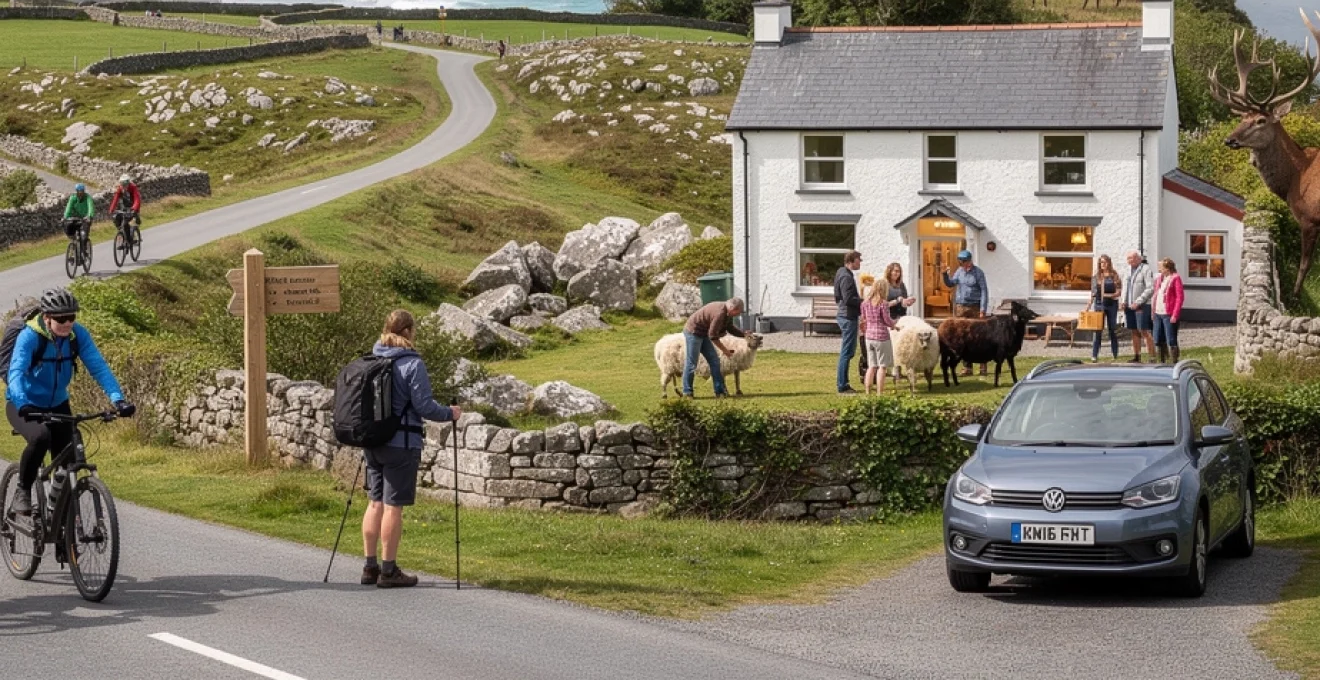
The Irish countryside offers more than postcard-perfect scenery—it presents an immersive journey through ancient landscapes, traditional villages, and ecosystems that have shaped Celtic culture for millennia. From the karst formations of the Burren to the sheep-dotted hills of Connemara, exploring rural Ireland requires thoughtful planning and an appreciation for both its rugged terrain and welcoming communities. Whether you’re navigating single-track boreens by car, cycling coastal routes that challenge even experienced riders, or walking heritage trails that connect Neolithic monuments, the Emerald Isle rewards those who venture beyond tourist hotspots with authentic experiences and unforgettable encounters with nature.
Ireland’s countryside encompasses diverse geographical regions, each offering distinct exploration opportunities. The Wild Atlantic Way stretches 2,500 kilometres along the western seaboard, whilst inland regions like the Boyne Valley provide archaeological treasures dating back 5,000 years. Recent infrastructure improvements have made rural areas increasingly accessible, with dedicated greenways, waymarked trails, and improved public transport connecting remote villages. Yet the countryside retains its essential character—stone walls still divide ancient field systems, traditional music sessions enliven village pubs, and farming rhythms continue to dictate the seasonal flow of rural life.
Cycling the wild atlantic way: route planning and essential gear
Cycling Ireland’s western coastline presents both exhilarating rewards and genuine challenges. The Wild Atlantic Way’s 2,500-kilometre route attracts approximately 15,000 international cyclists annually, with numbers increasing by 22% since 2019 according to Fáilte Ireland statistics. This dramatic coastal route encompasses everything from gentle coastal stretches to demanding mountain climbs, requiring cyclists to prepare thoroughly for Ireland’s notoriously changeable weather conditions and varied terrain.
Successful Wild Atlantic Way cycling demands realistic daily distance planning. Most experienced cycle tourists recommend covering 60-80 kilometres daily, allowing ample time for spontaneous detours, photography stops, and the inevitable chat with locals at roadside cafés. The route’s topography varies significantly—County Clare’s relatively flat coastal sections contrast sharply with the mountainous terrain around Connemara and Donegal, where gradients regularly exceed 15% and sustained climbs test even well-conditioned riders.
Navigating the skellig ring and dingle peninsula by bicycle
The Skellig Ring offers a quieter alternative to the tourist-heavy Ring of Kerry, with its 18-kilometre loop featuring spectacular coastal views and minimal traffic. This route passes through Portmagee—the colourful village named after the notorious smuggler Captain Theobold Magee—before climbing towards viewpoints overlooking the Skellig Islands. The ascent challenges cyclists with gradients reaching 12%, but rewards effort with panoramic Atlantic vistas and opportunities to spot seabirds including gannets, razorbills, and the occasional peregrine falcon.
The Dingle Peninsula’s 47-kilometre Slea Head loop presents more demanding terrain, with narrow roads winding through Irish-speaking communities where traditional culture remains vibrantly alive. Cyclists encounter ancient beehive huts, early Christian sites, and dramatic cliff scenery whilst navigating roads that often lack dedicated cycling infrastructure. Early morning starts prove essential during summer months when tour buses crowd these narrow routes after 10 AM. The peninsula’s microclimates mean conditions can shift dramatically—sunshine at Dingle town might give way to Atlantic squalls on exposed western sections within minutes.
Waterproof panniers and GPS devices for irish weather conditions
Ireland receives an average of 225 days with measurable precipitation annually, making waterproof gear absolutely essential rather than merely advisable. High-quality panniers with welded seams and roll-top closures protect essential items, whilst additional dry bags provide redundant protection for electronics, clothing, and documents. Ortlieb Back-Roller Classic panniers remain the gold standard among experienced cycle tourists, offering 40-litre capacity and genuine waterproof performance tested in Irish conditions.
Modern GPS devices have revolutionised rural navigation, though paper maps remain valuable backup resources when electronic systems fail or batteries deplete. The Garmin Edge 830 and Wahoo ELEMNT ROAM offer preloaded routing capabilities, though cyclists should download offline maps before departing connectivity-
maps before departing connectivity-dependent urban areas. Many rural sections of the countryside of Ireland have patchy mobile coverage, particularly in Connemara, Donegal, and West Cork, so downloading GPX tracks and using offline navigation apps such as Komoot or Ride with GPS provides an extra layer of security. A small power bank and dynamo hub can keep devices charged during multi-day tours, while a simple paper cue sheet stored in a ziplock bag serves as an analogue backup when all else fails.
Layering systems are equally important for cyclists on the Wild Atlantic Way. A breathable, fully waterproof jacket with taped seams, lightweight over-trousers, and neoprene shoe covers can transform a miserable, wind-lashed descent into a manageable, even enjoyable, experience. High-visibility elements are critical on narrow rural roads where hedgerows reduce driver sightlines—reflective ankle bands and rear lights on both bike and helmet significantly improve visibility in low light. As with all outdoor activities in Ireland, assume you will experience four seasons in a day and pack accordingly.
Greenway trails: great western greenway and waterford greenway
For cyclists who prefer traffic-free cycling in the Irish countryside, greenway trails provide an excellent alternative to busy regional roads. The Great Western Greenway in County Mayo follows a disused railway line for approximately 44 kilometres between Westport and Achill Island, offering gentle gradients and expansive views of Clew Bay and its drumlin islands. This route is ideal for families and less experienced cyclists who still want to immerse themselves in rural landscapes without contending with fast-moving vehicles or tour buses.
On the opposite side of the country, the Waterford Greenway has rapidly become one of Ireland’s most popular cycling corridors, attracting over 250,000 users annually according to local council figures. Stretching 46 kilometres from Waterford city to Dungarvan, it passes through tunnels, over viaducts, and alongside rivers and farmland that showcase the softer, more pastoral side of the countryside of Ireland. Bike hire stations in both Westport and Dungarvan offer standard, child, and tandem bikes, making spontaneous day trips straightforward for visitors who do not travel with their own bicycles. Cafés, picnic spots, and heritage interpretation boards along both greenways allow you to break up your ride and connect the landscape with local stories.
Electric bike hire stations in connemara and county clare
Electric bikes have transformed access to some of the most remote and hilly sections of the Irish countryside, opening up routes that might previously have been reserved for highly fit cyclists. In Connemara, e-bike hire hubs in towns such as Clifden, Leenane, and Roundstone enable visitors to tackle demanding loops around the Twelve Bens and along the Sky Road without dreading every gradient. The pedal-assist motors flatten steep climbs, allowing you to focus more on the scenery—bogland dotted with sheep, reflective lakes, and Atlantic inlets—than on your heart rate.
County Clare has also embraced e-bike tourism, with hire stations in Lahinch, Doolin, and Ennis giving riders a low-impact way to explore the Burren and the coastal roads near the Cliffs of Moher. Many providers offer route maps optimised for electric bikes, highlighting quieter backroads and suggested charging stops at cafés or accommodations. When planning your countryside cycling itinerary, it is wise to reserve e-bikes in advance during peak summer months and shoulder seasons, as demand has surged by more than 30% in recent years. As with conventional bikes, you should still carry basic rain gear, a helmet, and lights—Irish weather and narrow roads remain the same, even if the hills feel smaller.
Walking heritage trails through ancient irish landscapes
For many visitors, the most rewarding way to explore the countryside of Ireland is on foot, at a pace that allows you to notice wildflowers in hedgerows, hear curlews calling over peat bogs, and appreciate the subtle contours of ancient field systems. Ireland’s network of waymarked trails stretches for thousands of kilometres, from coastal headlands to inland valleys shaped by glaciation and human settlement. Walking heritage routes brings you into direct contact with millennia of history—Neolithic tombs, early Christian monasteries, Norman castles, and famine-era ruins all dot the rural landscape, often just a short detour from well-maintained paths.
Multi-day walking itineraries in Ireland’s countryside can be as challenging or as gentle as you choose. You might opt for hut-to-hotel style trips where luggage is transferred between B&Bs, or more independent hikes carrying all your gear between small villages. Weather again plays a crucial role in planning: ground conditions on upland trails can change quickly after prolonged rain, turning sections into boggy, energy-sapping stretches. Nonetheless, with the right preparation and respect for trail guidelines, walking offers a profound way to connect with both the physical and cultural layers of rural Ireland.
Wicklow way and kerry way: multi-day trekking routes
The Wicklow Way, Ireland’s oldest waymarked trail, runs for approximately 130 kilometres from Dublin’s southern suburbs through the Wicklow Mountains to Clonegal in County Carlow. Often completed in six to eight days, it provides an accessible introduction to multi-day trekking in the countryside of Ireland, with good public transport links to trailheads and a variety of accommodation options ranging from hostels to guesthouses. Hikers traverse forestry plantations, open moorland, and glacial valleys, passing landmarks such as Glendalough, a monastic site founded in the 6th century that now serves as a focal point for both pilgrims and outdoor enthusiasts.
Further west, the Kerry Way loops for about 215 kilometres around the Iveragh Peninsula, largely mirroring but often diverging inland from the more famous Ring of Kerry road. This route offers more remote, rugged terrain than the Wicklow Way, with longer stretches between services and sections where navigation requires close attention, particularly in mist or low cloud. Completing the full trail can take 9–11 days, though many walkers opt for shorter segments centred around towns such as Killarney, Glenbeigh, and Cahersiveen. Both the Wicklow Way and Kerry Way demonstrate how walking trails can reveal a deeper, quieter version of the Irish countryside, away from tour-bus timeframes.
Navigating waymarked trails around the burren karst formation
The Burren in County Clare is one of Europe’s most distinctive limestone karst landscapes, and walking here feels at times like crossing an ancient, weather-sculpted pavement. Waymarked trails such as the Burren Way (about 123 kilometres long) guide walkers through a mosaic of limestone terraces, hazel scrub, and traditional pasture known locally as winterage. Because the exposed rock can be slippery when wet and lacks obvious paths in places, sticking to waymarked routes is both safer and more respectful of this fragile environment. Durable footwear with good grip is essential, as is a willingness to slow your pace and watch your footing carefully.
Wayfinding in the Burren relies on a combination of wooden posts, painted markers, and local signage, which can seem sparse compared with urban park trails. A detailed 1:50,000 Ordnance Survey Ireland map or a reliable offline mapping app acts like a second pair of eyes, helping you interpret the subtle cues of this intricate landscape. One moment you are crossing bare stone etched with deep grikes; the next, you are walking through flower-rich meadows where orchids, gentians, and thyme flourish in spring and early summer. Does anything encapsulate the complexity of the Irish countryside better than this juxtaposition of apparent barrenness and hidden biodiversity?
Coastal path walking: causeway coast and sheep’s head peninsula
Coastal paths offer some of the most dramatic walking experiences in Ireland, where you can feel Atlantic spray on your face and watch seabirds ride the updrafts along cliffs. The Causeway Coast Way in County Antrim links Portstewart to Ballycastle over approximately 53 kilometres, passing highlights such as the Giant’s Causeway, Dunluce Castle, and Carrick-a-Rede rope bridge. Much of the route follows well-trodden cliff-top paths and sandy beaches, though weather exposure is significant—strong wind and driving rain can turn an easy section into a demanding undertaking. Good waterproofs, layered clothing, and a realistic assessment of daily distances are crucial when planning your Causeway Coast itinerary.
At the opposite end of the island, the Sheep’s Head Way in West Cork showcases a quieter, less commercialised version of Irish coastal walking. Its 93-kilometre main loop, with numerous shorter spurs, explores a slender peninsula where the land narrows to a lighthouse-tipped finger pointing into Bantry Bay. Here you tread along old fishermen’s paths and farm tracks, crossing boggy uplands and descending into sheltered coves where stone quays recall a more self-sufficient rural economy. If the Causeway Coast feels like an outdoor theatre with grand, vertical scenery, Sheep’s Head is more like a chamber piece—intimate, subtle, and best appreciated at an unhurried pace.
Archaeological walking tours of newgrange and hill of tara
Some of Ireland’s most important prehistoric and early medieval sites are best explored on foot through guided archaeological walking tours. In the Boyne Valley, Newgrange—a passage tomb older than the pyramids of Giza—forms the centrepiece of the Brú na Bóinne complex, which also includes Knowth and Dowth. Access to the interior of Newgrange is strictly controlled via official tours, but guided walks in the surrounding countryside reveal lesser-known features such as satellite tombs, ancient field systems, and later medieval earthworks. These walks help you see the landscape as a layered archaeological record rather than a collection of isolated monuments.
The Hill of Tara in County Meath, traditionally regarded as the seat of the High Kings of Ireland, offers another immersive walking experience. At first glance, Tara’s grassy mounds and earthworks might seem modest compared with monumental stone structures; yet, like reading a palimpsest, a guided walk gradually reveals ringforts, ceremonial avenues, and medieval church foundations underfoot. Combining Newgrange and Tara in a single day or two-day walking itinerary provides a powerful overview of how ritual, power, and landscape have intertwined in the countryside of Ireland for over five millennia. With well-qualified guides, archaeological jargon is translated into accessible stories, turning complex concepts into narratives as tangible as the soil beneath your boots.
Self-drive touring: scenic byways and hidden boreens
For travellers who value flexibility and spontaneous detours, self-drive touring remains one of the most effective ways to explore the countryside of Ireland. A rental car allows you to venture down boreens—narrow, hedge-lined lanes—where buses cannot go, discover lesser-known viewpoints, and linger in villages that resonate with you. That said, rural driving in Ireland differs significantly from motorway cruising: single-track roads, blind bends, livestock on the carriageway, and changeable weather demand heightened concentration. Think of self-drive touring as a partnership between you, your vehicle, and the landscape rather than a race from A to B.
Careful route planning can help you balance famous scenic drives with quieter alternatives that feel more authentic. Many visitors focus solely on headline routes like the Ring of Kerry or the Causeway Coastal Route, but some of the most rewarding experiences lie just off these established itineraries. Local tourism offices, small B&B owners, and even pub staff are often delighted to recommend favourite detours—perhaps a lesser-known beach, a ruined castle, or a hilltop car park that doubles as a sunset lookout. By allowing extra time in your schedule, you create space for these serendipitous discoveries that define a truly memorable countryside road trip.
Ring of kerry versus beara peninsula: traffic-free alternatives
The Ring of Kerry is justly famous for its sweeping mountain and coastal views, yet its popularity means that in peak season, long convoys of tour buses can make the experience feel less than tranquil. If you are seeking a more relaxed rural drive, the neighbouring Beara Peninsula offers a compelling alternative. Beara’s roads are narrower and more winding than the Ring of Kerry’s, but in exchange you gain quieter villages, less traffic, and a stronger sense of being embedded in the everyday countryside of Ireland rather than a tourist corridor. Towns such as Kenmare, Glengarriff, and Castletownbere provide natural bases for exploring.
One way to structure your itinerary is to drive the Ring of Kerry early or late in the day, when coach traffic is lighter, and allocate another full day to the Beara Peninsula. On Beara, highlights include Healy Pass, whose sinuous road climbs between rocky peaks with views that rival anything on the Ring of Kerry, and the cable car to Dursey Island, one of Ireland’s more unusual rural transport experiences. By comparing the two peninsulas, you quickly see how small shifts in route choice can drastically change your perception of Ireland’s countryside—one a grand, sometimes crowded stage, the other a quieter side road where local life continues at its own rhythm.
Navigating single-track roads in donegal and west cork
Single-track roads—those just wide enough for one vehicle—are common in Donegal and West Cork, regions celebrated for their wild, unspoilt character. Driving these lanes safely requires a mindset shift if you are used to wide highways. Rather than focusing only on your lane, you must constantly scan ahead for lay-bys or wider passing points where two vehicles can pass. When you meet oncoming traffic, the general convention is that the driver nearest a passing place reverses or pulls in, with a friendly wave exchanged as you pass—a small ritual that reflects the courtesy embedded in rural Irish driving culture.
Speed management is critical on these roads. Official limits often reach 80 km/h, but this figure is a legal maximum, not a target; in practice, many stretches are safest at 30–40 km/h, or even slower when visibility is restricted by bends or vegetation. In Donegal’s Gaeltacht regions and West Cork’s coastal inlets, sheep and cattle sometimes roam unfenced, particularly in upland grazing areas, turning the roadway into an extension of the field. Treat every corner as if there might be a tractor, flock, or fallen branch beyond it—this cautious approach not only keeps you safe but also encourages you to appreciate the surrounding scenery instead of rushing through it.
Parking etiquette at cliffs of moher and giant’s causeway
Two of Ireland’s most visited natural attractions, the Cliffs of Moher in County Clare and the Giant’s Causeway in County Antrim, present specific parking and access considerations for self-drive visitors. At the Cliffs of Moher, the main car park operates on a per-person fee system that includes access to the visitor centre and cliff paths, with pricing varying by season and time of day. While some travellers attempt to avoid these charges by parking on nearby roadside verges, such practices can damage fragile grassland, obstruct local traffic, and risk fines. Using official parking facilities supports site management and helps fund conservation efforts that protect the very landscapes you have come to see.
The Giant’s Causeway has a similar dynamic: paid parking at the visitor centre funds both infrastructure and the excellent interpretive displays, while the coastal path itself remains part of the public right of way. If you prefer a quieter approach, you can park in nearby towns such as Bushmills and walk or take a shuttle along the coast, reducing congestion at the main site. Wherever you park in the Irish countryside, basic etiquette applies: avoid blocking field gates, respect private property, and leave sufficient space for agricultural machinery and emergency vehicles to pass. In a landscape where farming and tourism coexist, considerate parking is a simple but powerful way to support local communities.
Farmhouse accommodation and agritourism experiences
Staying in farmhouse accommodation offers one of the most direct routes into the lived reality of the countryside of Ireland. Instead of viewing fields and livestock through a car window, you wake to the sound of roosters, smell turf smoke or freshly baked bread, and perhaps help feed lambs before breakfast. Agritourism has grown steadily over the last decade as farmers diversify their income streams, offering visitors experiences that range from simple B&B stays to structured farm activities and food-focused retreats. This style of travel suits those who value personal connection and are curious about how rural communities adapt to modern economic and environmental pressures.
Farm stays also anchor you geographically. Rather than racing from sight to sight, you can spend two or three nights in one place, using it as a base for nearby walks, heritage visits, or scenic drives. Host families often become informal guides, suggesting lesser-known beauty spots or introducing you to neighbours who run craft workshops, boat tours, or traditional music sessions. For many travellers, these conversations over a kitchen table or in a farmyard linger longer in memory than any famous viewpoint, revealing the human heartbeat behind Ireland’s pastoral landscapes.
Working farm stays in county tipperary and county meath
County Tipperary, with its fertile Golden Vale pastures, and County Meath, often called the Royal County, both offer excellent opportunities for authentic working farm stays. In Tipperary, dairy and beef farms dominate the landscape, and some now invite guests to observe or even assist with daily routines such as milking, calf feeding, or checking fences. These activities are usually structured and supervised, ensuring safety while giving you a realistic sense of the labour that underpins the postcard images of green fields and grazing cattle. Staying in such a setting can change how you view the countryside of Ireland—from a scenic backdrop to a complex, working environment.
In Meath, mixed farms often combine arable crops with livestock, reflecting the county’s rich soils and long agricultural heritage. Here, guests might walk through fields of barley or oats with their hosts, learning how weather patterns and EU regulations influence planting decisions and harvest schedules. Because many Meath farms lie within easy driving distance of Dublin, they make convenient first or last stops on a longer rural itinerary, offering a gentle transition between city and countryside. When booking, it is worth clarifying the level of involvement you seek: some properties focus on quiet, observational stays, while others actively encourage hands-on participation.
Sheep shearing demonstrations and cattle herding participation
For visitors interested in more specific agritourism experiences, sheep shearing demonstrations and cattle herding activities provide memorable, seasonal highlights. In western counties such as Mayo, Galway, and Donegal, small-scale sheep farms sometimes collaborate with tourism operators to offer shearing displays during late spring and early summer. Watching an experienced shearer work is like observing a practiced craftsperson—the speed, precision, and calm handling required often surprise those who associate shearing only with roughness. These demonstrations usually incorporate explanations about sheep breeds, wool quality, and the economic realities of hill farming.
Cattle herding participation, where available, tends to be more tightly controlled for safety reasons, but some farms allow guests to accompany farmers as they move stock between fields or bring animals in for veterinary checks. Often, simply walking behind the herd along narrow lanes or standing at a gate to help manage movement offers enough excitement for city-based visitors. Such experiences function almost like a live classroom, transforming abstract concepts such as rotational grazing, herd health, and land stewardship into tangible, observable practices. As with any animal-focused activity in the countryside of Ireland, listening closely to your host’s instructions and respecting the welfare of livestock is paramount.
Farm-to-table dining at ballymaloe house and burren smokehouse
Farm-to-table dining takes agritourism a step further by showcasing how local ingredients can be transformed into distinctive regional cuisine. Ballymaloe House in County Cork is perhaps Ireland’s most renowned example, with its walled gardens, orchards, and cookery school forming the backbone of a culinary philosophy centred on seasonal, locally sourced produce. Dining here connects you to the surrounding countryside through your plate—vegetables pulled from the soil a few hours earlier, dairy products from nearby farms, and fish landed on local quays. For many guests, a stay or meal at Ballymaloe becomes a reference point for understanding Irish food beyond stereotypes of potatoes and stew.
In County Clare, the Burren Smokehouse illustrates another facet of farm-to-table culture, focusing on sustainably sourced salmon and other fish smoked using traditional methods. Visitors can sample delicately flavoured products while learning about the interplay between marine ecosystems, inland farming practices, and tourism in the region. Tasting sessions often highlight how subtle differences in brining, smoking wood, and curing time create distinct textures and flavours—an edible analogy for the nuances that distinguish one part of the Irish countryside from another. Whether you are a dedicated foodie or simply appreciate well-prepared meals, prioritising venues that champion local supply chains deepens your engagement with the landscapes you travel through.
Wildlife observation and nature photography locations
The countryside of Ireland supports an impressive diversity of wildlife, from seabird colonies and migratory waterfowl to red deer and elusive pine martens. For nature enthusiasts and photographers, planning your itinerary around key habitats can yield rewarding encounters, especially if you are patient and prepared for early starts or late finishes. As with all wildlife tourism, ethical considerations matter: maintaining respectful distances, using binoculars or telephoto lenses, and following local guidelines help ensure that your presence does not disturb breeding, feeding, or roosting behaviour.
Ireland’s wildlife hotspots often overlap with its most scenic landscapes, meaning you can combine nature observation with broader countryside exploration. Coastal cliffs, blanket bogs, traditional hay meadows, and wetland reserves all offer different photographic challenges and opportunities. Lighting conditions can shift rapidly—soft morning mist one moment, bright Atlantic glare the next—so thinking of the sky as your second subject can transform how you compose shots. After all, what is wildlife photography in Ireland if not a dance between animal, land, and weather?
Puffin colonies on skellig michael and great saltee island
Puffins are perhaps Ireland’s most charismatic seabirds, and two of the best places to observe them are Skellig Michael off County Kerry and Great Saltee Island off County Wexford. Skellig Michael, a UNESCO World Heritage Site, is famous for its early medieval monastic settlement perched high above the Atlantic, but between May and early August its steep slopes and grassy ledges become vital nesting sites for puffins and other seabirds. Boat trips land only in suitable sea conditions and numbers are strictly limited, so advance booking is essential and weather-related cancellations are common. Photographers must be prepared to travel light and move carefully on uneven stone steps built by monks over a thousand years ago.
Great Saltee Island, privately owned but accessible by licensed boat operators, offers a different puffin-watching experience—less vertical than Skellig Michael but still wild and exposed. Here, puffins often come remarkably close if you sit quietly and avoid sudden movements, allowing for intimate images that capture their expressive faces and colourful beaks. Telephoto lenses in the 200–400 mm range help you frame birds without encroaching on burrows or nesting areas. Visiting either location underscores a central truth about the countryside of Ireland: its most enchanting spectacles often require flexibility, patience, and a healthy respect for the power of the sea.
Red deer spotting in killarney national park
Killarney National Park in County Kerry is home to Ireland’s only remaining native herd of red deer, descendants of animals that have roamed these mountains and woodlands since the last Ice Age. Spotting them can feel like stepping into a medieval tapestry, especially in the autumn rut (late September to October) when stags clash antlers and echoing roars carry across the valleys. Early morning and late evening offer the best chances of sightings, particularly in open areas near Muckross, Knockreer, and the edges of the upland bogs. Binoculars are invaluable, allowing you to observe behaviour without approaching too closely.
Photographers should remember that red deer in Killarney, though accustomed to human presence, remain wild animals with substantial size and strength. Keeping a safe distance—at least 50 metres, more during the rut—protects both you and the deer from unnecessary stress. Using longer focal lengths and waiting quietly for animals to move into better light often yields better results than trying to creep closer. As you watch a stag and harem moving across a misty field at dawn, framed by ancient oaks and distant mountains, you gain a visceral sense of how wildlife, landscape, and history intertwine in the Irish countryside.
Birdwatching hides at lough boora and wexford wildfowl reserve
Wetland reserves across Ireland provide structured opportunities for birdwatching and photography, with hides and boardwalks that minimise disturbance while maximising viewing potential. Lough Boora Discovery Park in County Offaly, a former industrial peat extraction site, has been transformed into a mosaic of lakes, grassland, and scrub that now supports over 130 bird species. Purpose-built hides overlook key water bodies where wintering ducks, geese, and swans gather, while summer brings warblers and waders to reedbeds and muddy margins. The juxtaposition of reclaimed industrial land and thriving wildlife offers a hopeful narrative about ecological restoration in the countryside of Ireland.
On the southeast coast, the Wexford Wildfowl Reserve is internationally recognised as a crucial wintering ground for Greenland white-fronted geese and other migratory species. Between October and March, thousands of birds use the reserve’s fields and wetlands as feeding and roosting sites, creating spectacular dawn and dusk fly-ins that reward those willing to brave cold, damp conditions. Indoor and outdoor hides provide shelter and interpretation panels help visitors identify key species and understand broader conservation issues along the East Atlantic Flyway. Whether you are a seasoned birder or a curious beginner, these reserves offer structured, educational encounters with Ireland’s avian life.
Traditional music sessions and cultural immersion in rural villages
No exploration of the countryside of Ireland is complete without engaging with its living cultural traditions, especially traditional music. In small towns and villages from Dingle in County Kerry to Ennis in County Clare, informal music sessions—known simply as “sessions”—take place in pubs, community halls, and even private kitchens. Unlike staged performances, sessions typically involve local musicians gathering to play for their own enjoyment, with visitors welcome to listen and, when appropriate, join in. The atmosphere can shift from hushed concentration during a slow air to foot-tapping energy as reels and jigs build in tempo.
For travellers, seeking out a session is one of the most immediate ways to feel part of rural community life, even if only for an evening. Asking your B&B host, tour guide, or a local shopkeeper where music is likely that night often yields more accurate information than relying solely on online listings, as many sessions are semi-spontaneous. In Gaeltacht areas such as Connemara and parts of Donegal, you may also hear Irish spoken around you, adding another layer to the cultural immersion. Ordering a drink, settling into a corner, and letting the tunes wash over you can feel like stepping into a centuries-old soundscape where past and present blend seamlessly.
Cultural immersion in rural Ireland extends beyond music to include storytelling, dance, and seasonal festivals tied to the farming calendar. Harvest fairs, pattern days (local saint celebrations), and agricultural shows provide opportunities to witness everything from sheepdog trials to céilí dancing under one figurative roof. Participating respectfully—listening more than talking at first, asking questions with genuine curiosity, and supporting local businesses—helps sustain the delicate balance between tourism and tradition. In the end, the most enduring memories of the Irish countryside often come not from spectacular viewpoints or perfect photographs, but from conversations, shared songs, and the feeling of being, however briefly, welcomed into a community.