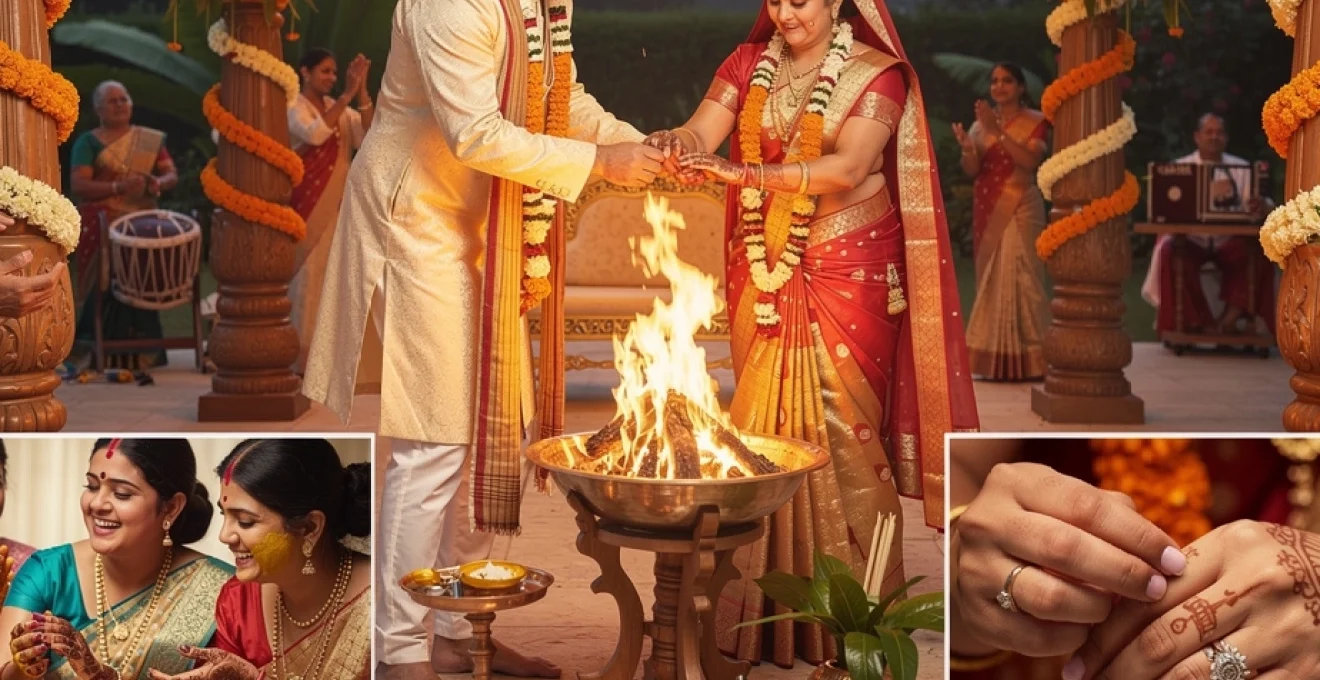
India’s wedding ceremonies are living museums of cultural philosophy, spiritual belief, and social history. Every ritual performed during these elaborate celebrations carries layers of meaning accumulated over millennia, revealing profound truths about how communities understand marriage, family, and cosmic order. From the sacred fire that witnesses vows to the intricate henna patterns adorning a bride’s hands, these traditions function as symbolic languages communicating values that transcend mere celebration. When you observe the careful choreography of a traditional Indian wedding, you are witnessing a complex interplay of Vedic cosmology, regional identity, gender dynamics, and evolving social consciousness. These ceremonies don’t simply mark a transition from singlehood to married life; they articulate entire worldviews about duty, prosperity, fertility, protection, and the interconnectedness of human relationships with divine forces.
The richness of Indian wedding traditions stems from the subcontinent’s extraordinary diversity. With over two thousand ethnic groups, multiple major religions, and countless regional variations, wedding practices vary dramatically from Kerala’s coastal communities to Punjab’s agricultural heartlands, from tribal villages in Chhattisgarh to cosmopolitan cities like Mumbai. Yet beneath this dazzling variety, certain fundamental concepts recur: the importance of family blessing, the invocation of divine witness, the public declaration of commitment, and the symbolic transformation of social identity. Understanding what these rituals reveal requires examining both their ancient origins and their contemporary adaptations.
Saptapadi: the seven sacred steps around agni in hindu wedding ceremonies
The Saptapadi represents the defining moment when two individuals legally and spiritually become husband and wife in Hindu tradition. This ritual, during which the couple takes seven steps together around the sacred fire, transforms a social arrangement into a consecrated bond witnessed by the most powerful element in Vedic cosmology. Each step represents a specific vow addressing different dimensions of married life, from nourishment and strength to spiritual growth and eternal companionship. The number seven holds profound significance in Hindu philosophy, corresponding to the seven chakras, seven sages (Saptarishi), seven sacred rivers, and seven worlds in Vedic cosmology. By taking seven steps, the couple symbolically traverses all dimensions of existence together, pledging unity across physical, emotional, and spiritual planes.
The physical act of circumambulation itself carries deep meaning. Moving clockwise around the fire replicates the movement of celestial bodies and represents alignment with cosmic order (Rita). The bride traditionally leads for the first three steps, symbolising her primacy in matters of household management and nurturing, while the groom leads for the remaining four, representing his responsibility for protection and provision. This choreography reveals traditional gender role expectations while simultaneously acknowledging complementary partnership rather than hierarchy. Modern couples increasingly modify this practice to reflect egalitarian values, with both partners walking side by side for all seven steps.
Symbolism of circumambulation and fire worship in vedic marriage rites
Fire worship (Agni puja) forms the foundation of virtually all Hindu sacraments, and nowhere is this more significant than in marriage ceremonies. Agni, the fire deity, serves as the divine messenger carrying human prayers to higher realms and bringing divine blessings to earth. In marriage rituals, Agni functions as the sacred witness whose presence makes the union unbreakable. Unlike human witnesses who may forget or die, the eternal nature of fire ensures that the vows spoken before it transcend temporal limitations. The fire’s purifying properties also symbolise the burning away of past karmas and the creation of new spiritual possibilities for the married couple.
The construction and maintenance of the wedding fire follows precise Vedic protocols. Sacred woods like mango, sandalwood, and banyan are used, each chosen for specific properties believed to invoke particular blessings. Ghee (clarified butter) offerings into the fire create fragrant smoke thought to carry prayers heavenward while purifying the ceremonial space. The couple makes offerings (ahutis) while reciting mantras, creating a multisensory experience that engages sight, sound, smell, and touch. This immersive ritual environment facilitates the psychological transformation necessary for individuals to embrace their new identities as married partners.
Regional variations: saat phere in north india versus saptapadi in south indian traditions
In North India, the ritual is popularly known as saat phere, and it usually takes place under a decorated mandap with the priest chanting mantras from the Rig Veda or Atharva Veda. The couple physically circles the fire seven full times, often with the bride’s scarf or dupatta tied to the groom’s stole, symbolising an unbreakable bond. In many Punjabi, Rajasthani, and Gujarati weddings, the emphasis is on the community witnessing this circular movement, turning the mandap into a kind of public stage where family members shower flowers and blessings. In South Indian Saptapadi rituals, especially among Tamil and Telugu communities, the “seven steps” may be taken in a straight line rather than full circumambulations, with the bride stepping on small stone mounds or grains symbolising stability and prosperity. These regional variations show how a core Vedic idea adapts to local aesthetics while preserving the underlying philosophy of shared journey and mutual support.
The seven vows and their dharmic significance in marital commitment
While the wording and order of the seven vows differ across regions and linguistic traditions, their dharmic core remains remarkably consistent. The first few steps often focus on basic sustenance—sharing food, securing livelihood, and promising mutual support in maintaining the household. Subsequent vows expand into emotional and ethical domains: respecting each other’s families, nurturing physical and mental strength, and standing together through joy and sorrow. The final steps usually invoke spiritual companionship, promising lifelong fidelity and a shared pursuit of dharma (righteous living), artha (prosperity), and moksha (spiritual liberation). When couples today choose to read or translate these vows in a language everyone understands, they effectively turn an ancient Sanskrit framework into a modern relationship charter.
From an anthropological perspective, these vows reveal how Indian society historically imagined marriage as more than romantic attachment. It is a joint economic unit, a ritual partnership, and a small moral community where duties are as important as desires. You could think of Saptapadi as an early “prenuptial agreement,” but one written in the language of sacred obligation rather than legal clauses. Modern urban couples sometimes adapt the vows to include commitments around career support, shared parenting, and gender equality, reflecting changing social realities. Yet, even in such customised ceremonies, the core idea remains: marriage is a conscious, spoken promise to walk together through every sphere of life.
Agni as divine witness: the role of fire deity in solemnising hindu marriages
Agni’s role as divine witness in Hindu weddings is rooted in the earliest Vedic hymns, where fire is described as the “mouth of the gods” that consumes offerings and transports them to the celestial realm. In marriage rites, this means that every promise uttered before the flames is believed to be registered not just socially but cosmically. The couple’s offerings of grains, ghee, and herbs are more than symbolic gestures; they are transactional acts that seek blessings of prosperity, fertility, and protection from unseen forces. By placing Agni at the centre of the mandap, communities quite literally place divine accountability at the heart of marital commitment.
From a psychological standpoint, the presence of a living, dancing fire creates a heightened sense of solemnity that few other elements can match. Fire is dangerous yet life-giving, mesmerizing yet disciplined, and this duality mirrors the potential intensity of married life itself. Just as fire must be tended carefully to provide warmth without destruction, so too must the relationship be nurtured with attention and respect. In many diaspora weddings, where open flames may be restricted by venue rules, couples opt for smaller ceremonial fires or even symbolic lamps, indicating how the essence of Agni as witness is preserved even when the physical form changes. This continuity underlines a key feature of Indian wedding traditions: the ability to adapt ritual form while safeguarding ritual meaning.
Kanyadaan and the patriarchal transfer: cultural anthropology of gifting the bride
If Saptapadi focuses on the couple’s mutual vows, Kanyadaan reveals how Indian societies historically structured family, lineage, and property. Literally meaning “the gifting of the maiden,” Kanyadaan is the moment when the bride’s parents formally place her hand into the groom’s, entrusting her care and happiness to her new family. In many Hindu weddings, this is accompanied by pouring sacred water or milk over joined hands, symbolising the irreversible flow of this transfer. The emotional intensity parents feel at this point—often visible in tears and trembling voices—speaks to the depth of the social and psychological shift being acknowledged.
Anthropologically, Kanyadaan encodes a patriarchal model where daughters are seen as temporarily “belonging” to their natal families and then “given away” to their marital homes. Yet, it also expresses ideals of generosity, sacrifice, and spiritual merit, as scriptures describe Kanyadaan as one of the highest forms of daan (sacred gifting). How do we reconcile these noble ideals with today’s emphasis on women’s agency and independence? The answer lies in closely examining both the Vedic origins of the practice and the contemporary reinterpretations emerging in different communities.
Vedic origins of kanyadaan in ancient sanskrit texts and dharmashastras
The roots of Kanyadaan can be traced back to Grhya Sutras and Dharmashastra texts, which outline various forms of marriage, including Brahma Vivaha, where the bride is gifted to a worthy groom educated in the Vedas. In these texts, the father “gifts” his daughter along with ornaments and household items, symbolising support for the new marital unit. Kanyadaan is framed not as commodification but as a sacred responsibility, with the father gaining spiritual merit by ensuring his daughter’s well-being. The bride is often compared to the goddess Lakshmi, and her departure is likened to the transfer of auspiciousness from one household to another.
However, these same texts also reflect social realities of their time: patriarchal lineage systems, control over women’s mobility, and the association of female purity with family honour. The language of “gifting” implicitly assumes that the bride is under guardianship rather than full legal autonomy. Over centuries, these scriptural formulations hardened into social norms, influencing dowry systems, inheritance patterns, and expectations around obedience. Understanding this Vedic and Dharmashastric background helps us see why contemporary critiques of Kanyadaan focus not only on the ritual moment but on the wider structure of gendered power it has historically supported.
Contemporary feminist critique and evolving interpretations of bride giving
In the last few decades, feminist scholars, activists, and even many couples themselves have questioned the idea that a woman can be “given away” like property. They ask a crucial question: if marriage is a partnership of equals, why does only one side perform the act of gifting? As more women pursue higher education, careers, and financial independence, the symbolism of Kanyadaan can feel out of step with lived realities. This has led some families to omit the ritual entirely, while others consciously reframe it as a mutual blessing rather than a transfer of ownership. For example, parents from both sides may jointly place the couple’s hands together, signalling that both families are entrusting their children to one another.
Another adaptation is inviting the bride to speak or recite her own vows during or after Kanyadaan, acknowledging her agency in choosing this relationship. Some priests also reinterpret the mantras to emphasise the parents’ desire for their daughter’s happiness and autonomy rather than their right to “give” her away. In urban centres and diaspora communities, you will increasingly find symbolic gestures where the couple “gifts” each other to the relationship, turning an originally one-sided act into a reciprocal one. These evolving practices reveal how Indian wedding rituals can become platforms for negotiating new gender norms while still honouring parental love and blessing.
Regional nomenclature: kanyadan versus var puja across indian states
While the core idea of parental blessing is widespread, the terminology and emphasis vary significantly across regions. In North India and parts of the East, Kanyadaan is the dominant term, tightly associated with the emotional moment of placing hands together. In Maharashtra and Gujarat, you may also encounter Var Puja, a ritual where the groom is formally welcomed and worshipped like Vishnu or Shiva before the main ceremony. Here, the focus temporarily shifts from gifting the bride to honouring the groom as an honoured guest and future family member. This dual ritual structure subtly reinforces the notion of the groom’s higher ritual status, though many modern families try to balance this by equally honouring the bride.
In South India, rituals like Kanyadaanam often intertwine with other acts such as washing the groom’s feet, tying the kankanam (sacred thread), or exchanging coconuts and betel leaves. Among Bengali Hindus, elements similar to Kanyadaan appear within the Sampradan ritual, where the bride’s guardian formally entrusts her to the groom while reciting mantras. By comparing these regional practices, we see how the concept of “transfer” is expressed through different symbolic languages—sometimes emphasising devotion, sometimes hospitality, and sometimes lineage ties. For couples planning cross-regional weddings, consciously choosing which version of these rituals to include can be a powerful way of expressing shared values about equality and respect.
Mangalsutra, sindoor, and toe rings: semiotic analysis of marital status markers
After the vows and parental blessings, Indian weddings often move into a cluster of rituals that visually mark the bride’s new status as a married woman. The mangalsutra (sacred necklace), sindoor (vermillion powder), and bichiya (toe rings) function like a complex, multi-layered code that instantly communicates marital status, community identity, and even regional origin. Historically, these markers helped regulate social interactions in tightly knit villages and extended families, guiding norms of modesty, inheritance, and sexual behaviour. Today, they also become sites of negotiation around personal choice, fashion, and gender equality, as increasing numbers of couples ask: which symbols do we want to carry into our daily lives, and why?
From a semiotic perspective, these items work much like uniforms or professional badges—they make a private commitment legible in public space. Yet unlike a uniform that can be removed without social consequence, removing or altering marital symbols can carry emotional and cultural weight. Many women describe their first experience of wearing a mangalsutra or applying sindoor as a moment when the idea of being “married” finally feels real. At the same time, some consciously choose minimalist or occasional use, reflecting a shift from rigid obligation to more personalised expressions of identity within marriage.
Black and gold beadwork: the mangalsutra design variations from maharashtra to tamil nadu
The classic image of the mangalsutra in popular culture is a black-and-gold beaded necklace with a central pendant, widely associated with Maharashtrian and North Indian communities. The black beads are believed to ward off the evil eye and protect the marital bond, while the gold element invokes prosperity and auspiciousness. In many Maharashtrian families, the pendent design—often twin golden vatis (small hollow cups)—is distinctive enough to signal caste or sub-community affiliation, turning the mangalsutra into a kind of wearable social map. Over time, jewellers have created lighter, more contemporary styles, from single-strand chains to diamond-studded pendants that blend ritual symbolism with modern aesthetics.
In South India, the functional equivalent of the mangalsutra is often called the thali or tali, a gold pendant tied on a yellow thread or gold chain, particularly among Tamil and Telugu Hindus. The design of the thali can include regional motifs like the Tulsi leaf, Shiva–Shakti symbols, or clan emblems, embedding theology and lineage directly into the ornament. Among some communities in Karnataka and Andhra Pradesh, multiple small discs are strung together, each representing different deities or family protectors. Interestingly, many contemporary brides commission mangalsutras that deliberately fuse these regional forms, reflecting inter-state marriages and cosmopolitan identities. In this way, a single necklace becomes a living archive of family history and evolving cultural geography.
Vermillion application rituals and the physiological beliefs around sindoor
The ritual of applying sindoor in the parting of the bride’s hair is one of the most visually powerful moments in many North and East Indian Hindu weddings. As the groom gently places the red powder along the maang, he symbolically claims responsibility for his partner’s protection and well-being, while she accepts a new social identity as a married woman. The colour red itself is layered with meaning in Indian culture—signifying fertility, power, and auspiciousness—which is why it appears prominently in bridal saris, bangles, and wedding decorations. Daily application of sindoor after marriage serves as a constant, embodied reminder of this sacred bond, visible both to the wearer and to the community.
Traditional Ayurvedic beliefs associate the region where sindoor is applied with energy channels related to the brain and pituitary gland, suggesting that its ingredients can influence mood and vitality. Historically, sindoor formulations often used turmeric and herbal components along with mercury and other minerals, though modern cosmetic versions rely more on synthetic pigments. While many women cherish the ritual for its emotional resonance, others raise health and autonomy concerns, choosing hypoallergenic products or occasional use. In mixed or interfaith marriages, couples sometimes adapt by incorporating a symbolic sindoor application during the wedding but not as a daily practice. These choices reveal how marital markers are increasingly negotiated rather than simply inherited, allowing women to balance cultural continuity with personal comfort and belief.
Bichiya: the ayurvedic and acupressure significance of silver toe rings
Bichiya, or toe rings, are especially prominent in North Indian and some South Indian communities as markers of a woman’s married status. Traditionally worn on the second toe of both feet and usually made of silver, they are not just ornamental. Ayurvedic and acupressure traditions hold that nerves in this toe are linked to the reproductive system, and that wearing toe rings can help regulate menstrual cycles and overall reproductive health. While scientific evidence for these claims is still limited, the belief persists, reinforcing the association between marriage, fertility, and bodily well-being in Indian cultural imagination.
Silver is preferred over gold for toe rings because gold is associated with divinity and is thus conventionally kept above the waist, while silver is thought to conduct earth’s cooling energies. For many brides, the moment of wearing bichiya is a blend of excitement and adaptation, as it subtly alters their gait and walking sensation, much like breaking in a new pair of shoes. In urban settings, where closed footwear and corporate dress codes dominate, some women switch to thinner, more discreet designs or reserve bichiya for festivals and special occasions. This quiet negotiation between ritual expectation and practical lifestyle underscores how Indian wedding symbols continue to evolve in dialogue with modern work and fashion cultures.
Regional diversity: thali in tamil weddings and muhurtham kodi in kerala
Among Tamil Hindus, the tying of the thali is the climactic moment of the marriage ceremony, accompanied by the beating of drums, showering of rice, and jubilant cries of “Gongura!” or “Mangalyam!” The groom ties the yellow-threaded gold pendant around the bride’s neck in three knots, each knot representing a layer of commitment—to the couple’s relationship, to the groom’s family, and to the divine. The thali’s design is highly codified; Brahmin communities may use a round disk with sacred symbols, while non-Brahmin groups have distinct shapes reflecting local deities and clan histories. Over time, many brides replace the cotton thread with a gold chain for durability, but the original thread is preserved as a sacred relic of the wedding day.
In Kerala, especially among Nair and some Syrian Christian communities, the equivalent marker is the muhurtham kodi or minnu, a small gold pendant often in the shape of a leaf or cross, tied around the bride’s neck with a thread pulled from her wedding sari. This fusion of cloth and metal symbolises the weaving together of material life and spiritual commitment. The act of threading the pendant through fibres drawn from the sari also visually connects the bride’s apparel to her new identity as a wife. Across South India, whether we call it thali, minnu, or mangalsutra, the common thread is clear: a tangible, wearable symbol that turns an abstract promise into something the body carries every day.
Mehndi, haldi, and sangeet: pre-wedding ceremonies as cultural identity markers
Before the main wedding day, a cascade of pre-wedding rituals like mehndi, haldi, and sangeet sets the emotional tone of celebration, bonding, and playful anticipation. If the wedding mandap is where cosmology and dharma are most visible, these events reveal the social and artistic heart of Indian marriage traditions. The mehndi ceremony, where intricate henna designs are applied to the bride’s hands and feet, functions almost like a visual biography—embedding motifs that reference the couple’s story, regional heritage, and sometimes even inside jokes. Haldi, the turmeric-anointing ritual, brings families together in tactile, affectionate ways, as relatives literally smear blessings onto the bride and groom’s skin.
Sangeet nights, especially in North Indian and diaspora contexts, have evolved into elaborate musical showcases where choreographed performances, skits, and mashups narrate the couple’s journey from childhood to courtship. These events act as social stages where gender roles, generational gaps, and even inter-caste or interfaith marriages are playfully negotiated through song and dance. For many families, the choice of songs, costumes, and dance styles becomes a way of asserting regional identity—Punjabi gidda, Gujarati garba, or Bollywood-style medleys. At the same time, they also reflect modern influences: DJ sets, LED backdrops, and social media-friendly choreography that make the wedding not only a family memory but a shareable digital event. In this blend of tradition and trend, we see how Indian pre-wedding ceremonies function as living, evolving markers of cultural identity.
Mandap architecture and vedic cosmology: sacred space construction in indian weddings
The mandap, or wedding canopy, is not just a decorative stage; it is a carefully constructed sacred space that temporarily becomes the centre of the couple’s universe. Drawing from Vedic cosmology and traditional architecture, the mandap symbolises a microcosm of the cosmos where earth, sky, and the human community intersect. Its dimensions, orientation, and materials are often selected according to astrological charts and vastu shastra principles, aiming to harmonise cosmic energies during the crucial rites. When you step under a mandap, you are effectively stepping into a ritual laboratory where social and spiritual transformations are orchestrated with precision.
In many regions, the mandap is built using natural materials like wood, bamboo, banana stems, and cloth, echoing ancient sacrificial altars described in the Vedas. Urban weddings may use metal frames and elaborate lighting, but still retain symbolic elements such as the central fire, sacred pots, and directional decorations. Think of the mandap as a three-dimensional mantra: every pillar, garland, and vessel contributes to a silent yet potent invocation of stability, fertility, and divine presence. As destination weddings and minimalist ceremonies grow more popular, couples are reimagining mandap design—with beachside canopies, glass mandaps, or eco-friendly installations—yet still preserving the core idea of a sanctified zone where vows gain cosmic legitimacy.
Four-pillar symbolism and directional deities in traditional mandap design
The classic Hindu mandap is supported by four pillars, each representing a cardinal direction and, by extension, the protective deities and energies associated with those directions. In some interpretive traditions, these pillars are also said to symbolise the parents of the bride and groom, literally holding up the structure within which the new household is inaugurated. This elegantly expresses the idea that marriages stand on the foundation of previous generations’ sacrifices, guidance, and blessings. The canopy above often represents the sky or celestial realm, while the ground-level platform signifies earth; together, they frame the couple as a bridge between the human and the divine.
Directionality is carefully considered in mandap placement, with the sacred fire usually positioned so that the couple faces east or north during crucial rites, aligning them with sunrise or auspicious energy flows. Corner decorations may include specific leaves, grains, or symbols tied to the ruling deities of each direction—Indra in the east, Varuna in the west, Kubera in the north, and Yama or Agni in the south, depending on local tradition. By embedding these cosmological associations into architecture, the mandap quietly teaches participants that marriage is not a private contract isolated from the universe but a covenant embedded within cosmic order. This perspective can be a powerful antidote to viewing weddings as purely personal or commercial events.
Floral decoration patterns: marigolds, jasmine, and regional botanical preferences
Floral decorations in Indian weddings are far more than aesthetic embellishments; they are carriers of fragrance, symbolism, and regional identity. Marigolds, with their bright orange and yellow hues, are ubiquitous in North Indian and many central Indian ceremonies, symbolising energy, purity, and the sun’s life-giving force. Their hardy nature and long-lasting freshness make them especially suitable for multi-day events, where garlands, backdrops, and door hangings must withstand heat and handling. Jasmine, on the other hand, dominates South Indian and coastal weddings, where its delicate white buds and intoxicating fragrance create an atmosphere of softness and sensuality. Jasmine strings woven into bridal hairstyles or mandap ceilings evoke both innocence and romantic allure.
Regional variations extend beyond these two iconic flowers. In Bengal and Assam, tuberose (rajnigandha) and lotus motifs are common, reflecting the watery landscapes and devotional traditions of the East. In Maharashtra and Karnataka, mango leaves and coconut fronds are frequently integrated into mandap design, symbolising fertility and continuity. Increasingly, eco-conscious couples are opting for locally sourced, seasonal blooms to reduce environmental impact, or even for reusable fabric flowers and foliage. Whether lavish or minimalist, the floral grammar of a wedding mandap reveals how communities understand beauty, prosperity, and their own relationship to the natural world.
Kalash placement and purna kumbha symbolism in ceremonial set-up
Among the many ritual objects placed around or within the mandap, the kalash—a metal pot filled with water, topped with mango leaves and a coconut—stands out as a concentrated symbol of abundance and divine presence. Known as Purna Kumbha (the full pot), it represents a womb of potential, holding within it the five elements and the blessings of various deities. In wedding contexts, kalash pots are often placed at the mandap’s corners, main entrance, or near the fire altar, marking thresholds and focal points where sacred and secular spaces meet. By inviting the couple to perform arati or circumambulate these kalash arrangements, the ritual emphasises that their union is being nourished by inexhaustible cosmic resources.
The coconut atop the kalash symbolises the human head or ego, wrapped in fibre (worldly entanglements) yet ultimately offered to the divine. Mango leaves represent fertility and lineage continuity, their evergreen nature suggesting resilience and longevity. In some regions, specific numbers of kalash are used to represent family deities, planetary influences, or local river goddesses, quietly tying the wedding to particular geographies and ancestries. Even when modern décor trends introduce crystal vases or sculptural installations, many families insist on at least one traditional kalash, seeing it as a non-negotiable anchor of authenticity amidst innovation.
Regional wedding rituals: from bengali shubho drishti to gujarati jaan reception
While Vedic elements like fire worship and Saptapadi appear widely, India’s regional wedding rituals add layers of colour, humour, and local philosophy to the core framework. In Bengali Hindu weddings, the magical moment of Shubho Drishti—literally “auspicious sight”—occurs when the bride, previously hidden behind betel leaves and carried on a wooden stool, finally lowers the leaves to meet the groom’s gaze. This orchestrated first look, accompanied by conch shells and ululation, dramatizes the idea that marriage begins with an intentional, conscious seeing of one another. In contrast, Gujarati weddings spotlight playful interactions like the Jaan ritual, where the groom tugs at his mother-in-law’s sari pallu in a mock request for permission to enter the mandap, underscoring the importance of humour and negotiation in new family bonds.
These regional customs serve as cultural signatures, allowing communities to recognise themselves even within increasingly pan-Indian and globalised wedding formats. They also encode local values: Bengali ceremonies emphasise romantic vision and poetic exchange, while Gujarati ones foreground entrepreneurship, wit, and the give-and-take of relationships. For inter-regional couples, choosing which of these rituals to include can become a creative exercise in storytelling—will there be a Shubho Drishti moment, a Jaan prank, or both? Such decisions reveal how modern Indian weddings are less about rigid conformity and more about curating a meaningful, shared narrative from multiple traditions.
Sindhi paana bhaat and sikh anand karaj: non-hindu wedding traditions in india
India’s wedding landscape is not limited to Hindu rituals; Sindhi and Sikh communities, among others, contribute their own distinctive practices that reflect different theological and historical trajectories. Among Sindhis, a key pre-wedding ritual is Paana Bhaat, where relatives from both sides gather for a ceremonial meal and offerings at the family deity’s shrine. This rite blends devotion and social bonding, marking the formal acceptance of the alliance within the extended clan network. Sindhi weddings also feature the Saanth ceremony, involving oil and turmeric applications, and the Ghari puja, where wheat grains and coconuts are worshipped for prosperity.
Sikh marriages, formalised through the Anand Karaj ceremony, centre on the Guru Granth Sahib rather than Vedic fire altars. The couple circumambulates the scripture four times while specific hymns called Lavan are sung, each round representing a stage in spiritual and marital union with the Divine. Here, the emphasis is on equality, devotion, and shared spiritual journey, with less focus on astrological calculations or caste-based customs. Notably, overtly patriarchal symbols like Kanyadaan are often absent or significantly toned down, aligning with Sikh teachings on gender equality. By observing how Sindhi and Sikh rituals structure consent, community, and devotion, we gain a richer understanding of the plural ways in which Indian societies conceptualise marriage.
Muslim nikah ceremonies: mehr, Ijab-e-Qubool, and islamic marriage contracts
In Indian Muslim communities, the central wedding ritual is the Nikah, a formal contract rooted in Islamic jurisprudence rather than Vedic sacrament. The Nikah revolves around three core elements: Ijab-e-Qubool (proposal and acceptance), Mehr (a mandatory gift or dower from groom to bride), and the presence of witnesses. The bride’s explicit verbal consent, often repeated three times, is a legal and spiritual requirement, underscoring her agency in entering the marriage. The Mehr amount, which may be immediate or deferred, symbolises financial security and respect, and remains her personal property even in cases of divorce.
The Nikahnama, or marriage contract, can include negotiated clauses about residence, education, and work, revealing a contractual understanding of marriage as a partnership with rights and obligations. Post-Nikah customs like the Ruksati (bride’s departure) and Walima (reception feast) vary regionally, blending pan-Islamic norms with local Indian influences such as music, dress styles, and food. In interfaith or inter-sect marriages, couples sometimes draft adaptive contracts that respect both Islamic legal frameworks and secular law, illustrating how marriage in India often sits at the crossroads of religion, custom, and state regulation. Observing Nikah practices alongside Hindu, Sikh, and Christian weddings reveals a key insight: while rituals differ, the core concerns—consent, security, community recognition—are remarkably shared.
Christian wedding customs in goa and kerala: Anglo-Indian ceremonial fusion
Christian weddings in India, especially in regions like Goa and Kerala, offer a fascinating fusion of European liturgical forms and local cultural elements. The core ceremony typically takes place in a church, with the exchange of rings, vows before a priest or pastor, and the signing of a civil register, aligning closely with global Christian practices. Yet many details are distinctly Indian: brides may wear white saris instead of gowns, and families incorporate traditional jewellery such as gold chains and bangles signifying local aesthetics and status. Hymns might be sung in Konkani or Malayalam, and the liturgy adapted to include regional devotional songs or instruments.
In Goa, Portuguese colonial influence is evident in music, food, and reception customs, with live bands, ballroom dancing, and multi-course meals featuring dishes like sorpotel and vindaloo. In Kerala, Syrian Christian weddings often include pre-wedding rituals resembling Hindu customs, such as lamp-lighting or turmeric-based beauty treatments, illustrating centuries of cultural intermingling. The Christian Thali Kettu in some Syrian Orthodox communities—where the groom ties a cross-shaped thali around the bride’s neck—directly parallels Hindu thali rituals, but reinterprets them through a Christian theological lens. These hybrid practices show how Indian Christian communities negotiate dual identities, simultaneously rooted in global Christendom and deeply embedded in local cultural ecologies.
Tribal marriage rituals: santhal, gond, and bhil community wedding practices
Beyond major religious traditions, India’s Adivasi (indigenous) communities maintain wedding rituals that foreground community participation, nature reverence, and relatively more flexible gender norms. Among the Santhal tribe of Jharkhand and West Bengal, weddings often take place in village courtyards rather than temples or churches, with elders presiding over simple yet deeply communal rites. Music and dance—powered by traditional instruments like the madal and tamak drums—form the heart of the celebration, and the couple’s union is publicly affirmed through shared feasting and ritual drinking rather than elaborate priest-led ceremonies. Bride and groom may garland each other or share symbolic items like rice or beer, emphasising reciprocity and equality.
Among the Gond communities of central India, marriage customs vary by sub-group, but often involve rituals like Paadla (formal invitation exchange) and communal blessings at sacred groves or ancestor shrines. The Bhil tribes of Rajasthan, Gujarat, and Madhya Pradesh historically included bride capture or mock abduction elements, though these have increasingly transformed into symbolic enactments or been abandoned under modern legal and ethical scrutiny. What stands out across many tribal weddings is the relatively lower emphasis on dowry, astrologically fixed “perfect” timings, or ostentatious display, and a higher emphasis on dance, song, and collective consensus. In an era when mainstream Indian weddings can become financially burdensome, these community-centric, low-consumption models offer alternative visions of what a meaningful, socially recognised union can look like.