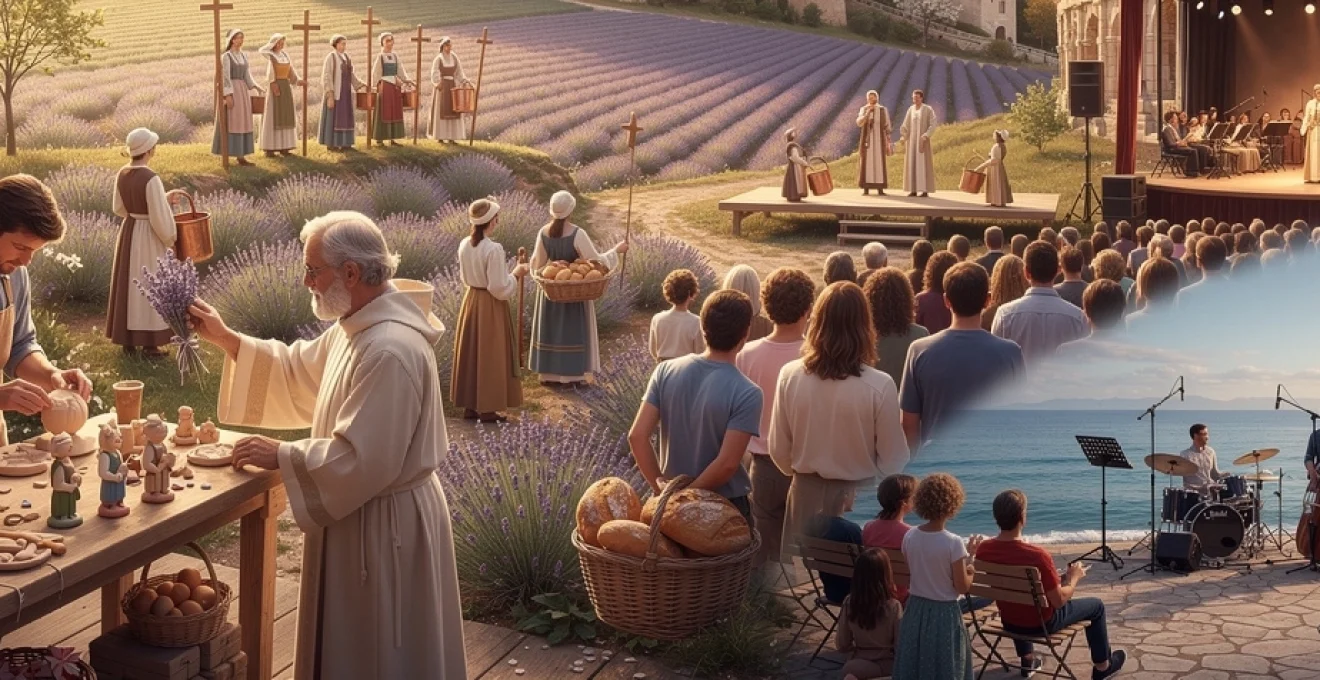
Provence stands as one of Europe’s most culturally rich regions, where ancient traditions seamlessly blend with contemporary celebrations throughout the changing seasons. From the almond blossoms of February to the truffle hunts of December, this Mediterranean paradise maintains a delicate balance between preserving ancestral customs and embracing modern interpretations. The rhythm of Provençal life follows nature’s calendar, with each season bringing distinct ceremonies, festivals, and cultural practices that have evolved over centuries whilst retaining their authentic essence.
What makes Provence truly remarkable is how seasonal transitions trigger corresponding shifts in local traditions. These transformations reflect not just agricultural cycles, but also deep-rooted spiritual and community bonds that connect generations of Provençal families. Whether you witness the grape harvests of autumn or the Christmas markets of winter, each season offers unique insights into how tradition adapts whilst maintaining its core identity.
Spring rituals and easter celebrations across provençal villages
Spring awakens Provence with spectacular displays of almond blossoms, cherry flowers, and early lavender shoots, marking the beginning of numerous religious and secular celebrations. The arrival of warmer weather coincides with Easter festivities that vary significantly from village to village, each maintaining distinctive customs passed down through generations. These celebrations often incorporate both Christian symbolism and pre-Christian fertility rites, creating unique hybrid traditions.
Easter processions through villages like Arles and Tarascon feature elaborate floats carrying religious icons, accompanied by traditional Provençal music and costume displays. Local brotherhoods, known as confréries, organise these events with meticulous attention to historical accuracy. The processional routes often follow ancient pathways that connect sacred sites, creating spiritual journeys that engage entire communities.
Santons de provence clay figurine crafting in aubagne workshop traditions
Aubagne maintains its reputation as the world capital of santons production, where artisan workshops continue centuries-old techniques for creating these beloved clay figurines. The spring season marks the beginning of new production cycles, as craftspeople prepare for the Christmas markets that will showcase their work months later. Traditional workshops open their doors to visitors, demonstrating hand-sculpting techniques that require years of apprenticeship to master.
Modern adaptations include contemporary characters alongside traditional Biblical figures, reflecting evolving Provençal society whilst respecting artistic heritage. Workshop masters now incorporate sustainable clay sourcing and environmentally friendly firing methods, proving that tradition can embrace ecological responsibility. These adaptations ensure the craft’s survival whilst maintaining authenticity.
Fête des gardians camargue horsemen ceremonies in arles and Saintes-Maries-de-la-Mer
The annual Fête des Gardians celebrates the legendary horsemen of the Camargue, whose traditions have evolved from purely functional cattle-herding practices into spectacular cultural demonstrations. Spring ceremonies showcase traditional horsemanship skills, including the famous abrivado and bandido events where bulls run through village streets escorted by mounted guardians. These events require exceptional coordination between riders and their Camargue horses.
Contemporary celebrations now include educational components that explain the ecological importance of traditional grazing practices in maintaining wetland ecosystems. Tourist participation has increased substantially, requiring careful management to preserve authentic traditions whilst accommodating modern audiences. Photography competitions and documentary projects help preserve these practices for future generations.
Lavender field blessing rituals in valensole plateau communities
Spring blessing ceremonies in lavender-growing regions combine Catholic traditions with agricultural pragmatism, as local priests bless fields to ensure successful harvests. These rituals typically occur in late April or early May, when young lavender plants show their first growth after winter dormancy. Community participation strengthens social bonds whilst acknowledging the economic importance of lavender cultivation.
Modern adaptations include organic farming blessing ceremonies that emphasise sustainable agricultural practices and biodiversity conservation. Some communities now incorporate ecological education into these events, teaching visitors about pollinator conservation and traditional farming methods. These adaptations reflect growing environmental consciousness whilst maintaining spiritual significance.
Pâques provençales easter bread baking techniques in marseille boulangeries
In Marseille and across coastal Provence, Pâques Provençales is inseparable from the aroma of freshly baked Easter breads wafting from local boulangeries. One of the most characteristic recipes is the sweet, anise-scented gibassier, a rich, olive-oil-based loaf often decorated with cross-hatched cuts or symbolic shapes. Bakers begin preparations weeks in advance, nurturing natural sourdough starters and sourcing regional ingredients such as orange blossom water, candied fruits, and IGP-labelled flour. These traditional Easter breads are more than seasonal treats; they serve as edible symbols of renewal and community sharing.
While older generations still knead dough by hand at home, many Marseille bakeries have adapted techniques to balance authenticity with modern demand. Slow, cold fermentation allows flavour to develop without artificial enhancers, and some artisans experiment with organic flours and reduced sugar to suit contemporary tastes. Yet the essential gestures remain unchanged: scoring the dough with symbolic patterns, blessing the first batch, and setting aside a loaf for extended family or neighbours. For visitors interested in Provençal food culture, booking an Easter bread workshop offers a hands-on way to connect with living tradition.
Summer festival transformations from traditional fêtes votives to modern celebrations
As spring gives way to the heat of summer, Provençal traditions shift from intimate village rituals to high-profile festivals that attract visitors from around the world. Historically, most towns held a fête votive—a local celebration dedicated to a patron saint—featuring processions, communal meals, and traditional music. Today, many of these gatherings have evolved into large-scale cultural events, blending avant-garde performances with centuries-old customs. The result is a summer calendar in Provence where ancient stones and modern spotlights share the same stage.
Despite their growth in size and international reputation, these festivals often retain subtle nods to their origins. Processions may still open a week of performances, church bells mark the start of an evening programme, and local guilds provide volunteers and logistical support. At the same time, contemporary organisers must address challenges that didn’t exist a century ago: crowd control, sustainability, digital ticketing, and global marketing. This delicate balancing act between heritage and innovation defines summer in Provence, from Avignon to Antibes.
Festival d’avignon theatre performances in palais des papes courtyard evolution
Founded in 1947 by director Jean Vilar, the Festival d’Avignon has grown from a modest theatre experiment into one of Europe’s most influential performing arts events. Its most iconic stage is the courtyard of the Palais des Papes, where evening productions unfold against a backdrop of Gothic ramparts and star-filled skies. Originally focused on classical theatre, the festival gradually opened its doors to contemporary writing, international companies, and boundary-pushing staging. Today, performances in the palace courtyard often incorporate multimedia projections, experimental soundscapes, and bold scenography that play with the monumental architecture.
This evolution reflects broader shifts in theatre culture: audiences now expect immersive experiences, and directors use the historic setting as a creative partner rather than a mere backdrop. At the same time, organisers remain committed to accessibility—offering discounted tickets for younger audiences, public debates, and performances in schools and prisons. For travellers interested in theatre in Provence, planning ahead is essential: courtyard shows sell out months in advance, and temperatures can remain high well into the evening, so light clothing and water are as important as your programme.
Chorégies d’orange roman amphitheatre opera adaptations since 1869
The Chorégies d’Orange, officially established in 1869, is the oldest active opera festival in France and one of the few to take place in a perfectly preserved Roman amphitheatre. The awe-inspiring Théâtre Antique, with its 37-metre-high stage wall, creates natural acoustics so powerful that singers can perform without microphones. For much of its history, the festival focused on grand opera and oratorio, celebrating the great works of Verdi, Gounod, and Bizet. Over time, programming diversified to include symphonic concerts, cross-genre collaborations, and more intimate recitals, while still honouring the classical repertoire that built its reputation.
Modern productions at Orange often use subtle amplification and advanced lighting to ensure optimal comfort and visibility for audiences of up to 8,000 people. Directors must adapt staging to respect the site’s UNESCO World Heritage status, avoiding any structures that could damage the stone or obstruct key architectural features. This unique constraint has sparked creative solutions: minimalist sets, strategic use of projections, and costume-driven storytelling. For opera enthusiasts, attending a performance here is like stepping into a living museum where Roman engineering and 21st-century artistry meet under the Provence night sky.
Jazz à juan-les-pins antibes riviera musical heritage preservation
Launched in 1960, Jazz à Juan in Juan-les-Pins—part of Antibes—stands among the oldest jazz festivals in Europe and has hosted legends from Ray Charles to Miles Davis. Set in a pine grove facing the Mediterranean, the festival continues a Riviera tradition that began when American musicians first brought jazz to the Côte d’Azur in the early 20th century. Each July, the seaside stage becomes a crossroads where classic swing, modern fusion, and world music coexist. Archival recordings and photographs from more than six decades of performances now form an important chapter in Provençal and global jazz history.
To preserve this musical heritage, organisers have developed educational initiatives, including masterclasses, exhibitions, and partnerships with local music schools. Recent editions highlight emerging artists alongside established headliners, ensuring that jazz in Provence remains a living, evolving art form rather than a museum piece. For visitors, a practical tip is to explore Antibes’ old town during the day, then head to the festival site by evening, when the scent of pine trees mixes with sea air and saxophone notes—a sensory reminder of why cultural tourism on the Riviera remains so compelling.
Rencontres d’arles photography festival contemporary art integration
Since its founding in 1970, the Rencontres d’Arles has transformed a quiet summer in a Roman city into a global meeting point for photography. Exhibitions are spread across chapels, warehouses, cloisters, and industrial sites, turning the entire town into an open-air museum. Initially focused on documentary and journalistic work, the festival has increasingly embraced contemporary art, video installations, and experimental formats. Curators invite artists who challenge traditional definitions of photography, from augmented reality projects to large-scale projections on historic façades.
This integration of contemporary art into a Roman and medieval urban fabric creates striking contrasts, much like seeing a digital collage inside a 12th-century cloister. It also raises questions: how do we preserve fragile architecture while installing heavy equipment, and how do we manage growing visitor numbers sustainably? The Rencontres responds with carefully planned visitor routes, limited-capacity venues, and a strong emphasis on local partnerships. If you are planning to visit, consider arriving early in the season, when temperatures are milder and queues shorter, allowing you to savour both the exhibitions and Arles’ cafés at a more relaxed pace.
Autumn harvest traditions and vendange wine-making customs
When summer heat softens into golden light, Provence turns its attention to the harvest. Autumn is the season of vendange—the grape harvest—as well as olives, figs, and almonds. Across the region, vineyards that lay quiet in winter and vibrant in spring suddenly hum with tractors, grape-pickers, and sorting teams. These weeks are more than an agricultural operation; they are the culmination of a year’s work and the heart of many Provençal family traditions. For centuries, the rhythms of harvest dictated local calendars, school holidays, and even village celebrations.
In recent years, climate change has shifted these patterns, with harvest dates moving earlier by one to three weeks in many appellations. Winegrowers now watch weather forecasts and sugar levels with almost obsessive attention, sometimes picking at night to preserve acidity and freshness in the grapes. Yet, despite technical advances—optical sorters, temperature-controlled tanks—the essential rituals remain: shared meals at long tables, harvest songs, and the first tasting of fermenting juice. For travellers, joining a harvest day or a cellar tour offers an intimate look at how tradition adapts to new environmental realities.
Châteauneuf-du-pape aoc grape harvesting ceremonial practices
In Châteauneuf-du-Pape, one of Provence’s most renowned AOC wine regions, harvest traditions are steeped in symbolism. Historically, the village’s name—“the Pope’s new castle”—reflects its strong ties to the Avignon papacy, and some estates still begin the vendange with a small blessing of the vines and tools. Pickers move through stony vineyards planted with Grenache, Syrah, and Mourvèdre, carefully selecting clusters by hand, a method that preserves grape quality and honours long-standing local practices. On some family estates, the first crate of grapes is ceremonially carried into the cellar, accompanied by a toast to a safe and prosperous harvest.
Modern cellars in Châteauneuf-du-Pape combine stainless-steel tanks with traditional concrete vats and large oak foudres. Many producers have embraced organic or biodynamic viticulture, aligning their methods with the natural cycles that shaped Provençal life for centuries. You might see moon-phase calendars on cellar walls or herbal preparations used to strengthen vines. Visitors are often surprised by how open winemakers are about their methods, eager to explain how the “galets roulés” (large round stones) retain heat and influence flavour. Participating in a harvest morning followed by a comparative tasting can deepen your understanding of how these ceremonial practices translate into the glass.
Bandol rosé production seasonal worker migration patterns
Along the Mediterranean coastline, the Bandol AOC is synonymous with structured rosés and characterful reds based on Mourvèdre grapes. Harvest in Bandol begins earlier than in cooler inland areas, often in late August or early September. Traditionally, families and neighbours formed the core of the workforce, but over the last decades seasonal worker migration patterns have changed the landscape. Today, teams may include students from northern France, experienced pickers from Spain or Eastern Europe, and local residents returning each year for extra income and camaraderie.
This diverse workforce brings new languages, music, and customs to the vineyards, creating a unique social microcosm each autumn. Estates must now manage not only logistics—housing, meals, transport—but also labour rights and fair working conditions. Some pioneering domaines offer training on sustainable viticulture and safety, turning harvest jobs into stepping stones for future careers in wine. For wine lovers curious about Bandol rosé production, visiting in September allows you to see both the traditional foot-treading of small batches and the precise temperature control required for crafting pale, aromatic rosé that has made this corner of Provence world-famous.
Côtes de provence wine estate family succession rituals
Across the vast Côtes de Provence appellation, many wine estates remain firmly in family hands, sometimes for four or five generations. The passing of responsibility from one generation to the next is often marked by informal but meaningful rituals. A daughter might officially sign her first vintage, a son may be entrusted with blending decisions, or grandchildren participate in planting a new parcel of vines symbolising continuity. These gestures underscore how deeply winegrowing is woven into Provençal identity; estates are seen not just as businesses but as guardians of land and memory.
Succession today involves more than simple inheritance. Heirs must navigate complex legal frameworks, sustainability certifications, and global marketing channels. Many choose to study oenology or business abroad before returning to innovate at home—introducing organic farming, wine tourism, or experimental cuvées. Yet, amid these changes, Sunday family lunches in the mas, debates over harvest timing, and shared tastings around the kitchen table remain central. When you visit a Côtes de Provence domaine and hear phrases like “this was my grandfather’s favourite parcel,” you are listening to living history spoken through vineyards.
Olive oil pressing techniques in les baux-de-provence mills
In the Vallée des Baux, olive groves cloak the hillsides beneath limestone cliffs, and the arrival of autumn means the beginning of olive harvest. Traditional mills once used stone wheels to crush olives and woven mats to separate oil from water. While a few heritage sites preserve these methods for demonstration, most modern mills employ cold-extraction techniques using stainless steel equipment. This shift has improved hygiene, yield, and consistency, but the sensory experience—the earthy aroma of freshly crushed olives, the hum of machinery, the first peppery drops of new oil—remains largely the same.
Producers in Les Baux-de-Provence AOP often blend local varieties such as Salonenque, Aglandau, Grossane, and Verdale to create balanced oils that reflect their terroir. Harvest timing is crucial: greener olives yield more bitter, grassy oils, while riper fruit brings softer, fruity notes. Many mills now offer guided tastings where you can learn to identify flavours, much as you would with wine, and understand labelling terms like “extra-virgin” or “cold-pressed.” Visiting in late autumn gives you the chance to watch the pressing in real time, taste the huile nouvelle, and appreciate how an age-old ritual has adapted to modern quality standards.
Winter solstice celebrations and christmas market adaptations
Winter in Provence is quieter on the surface, but below that calm lies a season rich in ritual. The period from early December to early February—known as the temps calendal—links ancient solstice observances with Christian feasts and rural customs. As days grow shorter, villages light up with Christmas markets, nativity scenes, and processions that mark both spiritual renewal and the practical turning of the agricultural calendar. While tourism drops compared with summer, an increasing number of travellers now seek out this more intimate Provence, drawn by truffle markets, festive lights, and the promise of fewer crowds.
Christmas markets in cities like Avignon, Aix-en-Provence, and Marseille have evolved from modest gatherings of local craftspeople into curated events that blend tradition and contemporary design. Stalls still sell santons, nougat, and pompe à huile, but you will also find artisanal gin, eco-friendly decorations, and gourmet food trucks. Organisers face the challenge of maintaining authenticity while supporting local economies and meeting modern expectations around sustainability. Many markets now reduce single-use plastics, promote regional products with official labels, and schedule concerts or storytelling sessions that reconnect visitors with Provençal legends and carols. For you as a visitor, planning your route around smaller village markets as well as the big city ones can offer a richer, more varied winter experience.
Transhumance sheep migration routes and pastoral calendar shifts
Transhumance—the seasonal movement of flocks between lowland winter pastures and high summer grazing grounds—has shaped Provençal landscapes and traditions for centuries. Each spring and autumn, shepherds once guided thousands of sheep along established routes, stopping at the same watering holes, chapels, and villages year after year. These journeys were marked by blessings, fairs, and communal feasts, reinforcing ties between mountain communities and valley towns. In some places, such as the Luberon and the Alps of Haute-Provence, you can still see echoes of these migrations in place names, dry-stone shelters, and former sheep pens.
Today, fewer flocks make the full journey on foot, as trucks and changing land use patterns alter the pastoral calendar. Climate change also plays a role, with unpredictable weather affecting when high pastures become usable or when drought forces early descent. Yet, rather than disappearing, transhumance is being reinterpreted. Several towns organise festive re-enactments in late spring or early autumn, where decorated sheep are paraded through streets accompanied by music, traditional dress, and local produce markets. These events educate younger generations about the ecological benefits of extensive grazing—such as wildfire prevention and biodiversity preservation—while supporting rural tourism.
If you are curious about this facet of Provençal life, look for local programmes that offer guided walks along historic transhumance paths or visits to working sheep farms. By following in the footsteps of flocks, even for a few kilometres, you gain a deeper sense of how movement, seasons, and tradition intertwine in Provence. In many ways, transhumance is a living metaphor for the region itself: always in motion, adapting to new realities, yet anchored by routes and rituals traced long ago.