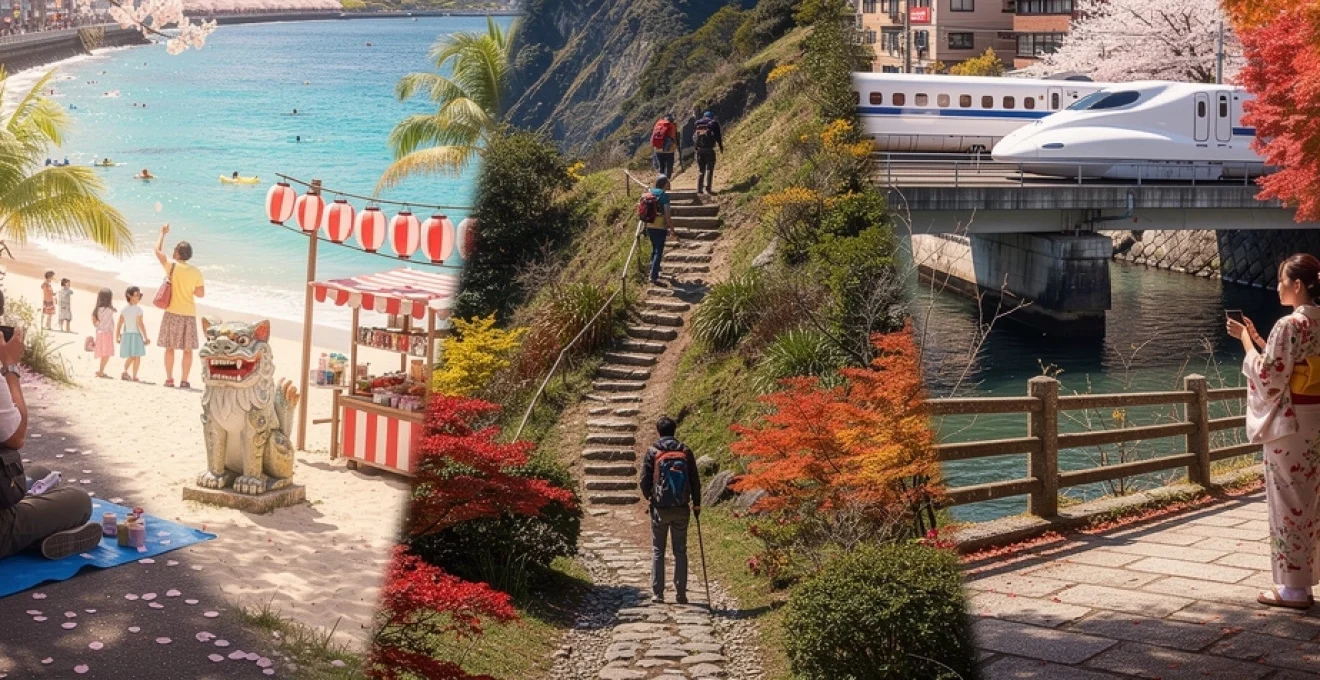
Japan’s seasonal transformations create an ever-changing tapestry of experiences, making timing your visit one of the most critical decisions in planning your journey. This archipelago nation stretches across multiple climate zones, from the subtropical beaches of Okinawa to the powder-snow mountains of Hokkaido, each region offering distinct characteristics throughout the year. Understanding these seasonal patterns, festival calendars, and visitor dynamics can mean the difference between a good trip and an extraordinary adventure. Whether you’re drawn to the ephemeral beauty of cherry blossoms, the vibrant hues of autumn foliage, or the pristine winter landscapes, Japan rewards those who align their travel with the rhythms of nature and culture. Beyond weather considerations, factors such as accommodation costs, crowd levels, and regional accessibility shift dramatically across the calendar, making strategic planning essential for maximizing your experience while managing your budget effectively.
Seasonal climate patterns and regional temperature variations across japan’s archipelago
Japan’s elongated geography creates remarkable climatic diversity, with temperature variations of up to 20°C between its northernmost and southernmost regions during the same month. The country experiences four distinct seasons, though their intensity and duration vary considerably depending on latitude and proximity to the ocean. Understanding these regional differences is fundamental to planning your itinerary, as what constitutes pleasant weather in Tokyo might be uncomfortably hot in Okinawa or insufficiently warm for cherry blossoms in Hokkaido. The Japan Meteorological Agency tracks these patterns meticulously, providing travellers with reliable forecasting tools to optimize their visit.
Spring temperatures gradually rise from north to south, with March seeing averages of 10°C in Tokyo and 18°C in Okinawa. By May, most of mainland Japan enjoys comfortable conditions between 15-22°C, ideal for outdoor exploration. Summer brings intense heat and humidity, particularly in urban centres where the heat island effect can push temperatures above 35°C. Autumn reverses the spring pattern, with cooling beginning in northern regions during September and gradually moving southward through November. Winter sees Hokkaido blanketed in heavy snow with temperatures frequently dropping below -5°C, while Okinawa maintains mild conditions around 15-18°C, creating opportunities for year-round beach activities.
Cherry blossom front (sakura zensen) tracking from kyushu to hokkaido
The sakura zensen, or cherry blossom front, represents one of nature’s most predictable yet anxiously anticipated phenomena in Japan. Beginning in late January in Okinawa and progressing northward through early May in Hokkaido, this botanical wave captures the nation’s attention and drives significant tourism patterns. The Japan Weather Association releases forecasts beginning in January, updated weekly as conditions develop, allowing you to plan your visit with increasing precision. Peak bloom typically lasts only 4-7 days in any given location, followed by another week of gradual petal fall, creating urgency around timing your visit.
Kyushu and southern Honshu typically see first blooms around March 20-25, with Tokyo’s famous Ueno Park and Chidorigafuchi reaching peak conditions between March 27 and April 5. Kyoto’s celebrations occur slightly later, usually April 1-10, while northern cities like Sendai peak around mid-April. Hokkaido’s cherry blossoms arrive last, with Hakodate blooming around late April and Sapporo reaching its spectacular peak during Golden Week in early May. This northern timing coincides with Japan’s busiest travel period, creating both opportunities and challenges for visitors. Temperature fluctuations can accelerate or delay the bloom by up to ten days, making flexibility in your travel dates advantageous if cherry blossom viewing is your primary objective.
Autumn foliage peak times in nikko, kyoto’s arashiyama, and the japanese alps
Japan’s koyo season rivals cherry blossoms for visual splendour, with the autumn colour front moving from north to south between late September and early December. The transformation begins when nighttime temperatures consistently drop below 10°C while daytime warmth remains, triggering the chemical changes that produce brilliant reds, oranges, and golds. Unlike cherry blossoms, autumn foliage maintains its peak appearance for 2-3
weeks in many regions, giving you a broader window to plan your autumn trip to Japan. In Nikko, high-elevation areas like Lake Chuzenji and Irohazaka Winding Road usually peak from mid to late October, with lower temple areas following in early November. Kyoto’s Arashiyama district, including the famous Togetsukyo Bridge and surrounding mountainsides, typically reaches its most vivid colours from mid to late November. In the Japanese Alps, locations such as Kamikochi and Tateyama Kurobe Alpine Route see foliage starting as early as late September at higher altitudes, cascading down to valleys through October. If you are hoping to photograph both temples and mountains in peak colour, planning a route that moves from high to low elevations over one to two weeks can be remarkably effective.
Winter snow conditions in niseko, hakuba valley, and tohoku region
Japan’s winter is synonymous with world-class powder snow, and understanding regional snow conditions helps you decide when to visit for skiing, snowboarding, or snowy onsen retreats. Niseko, on Hokkaido’s west coast, benefits from consistent Siberian weather systems that dump an average of 14-15 metres of dry powder snow each season, with the most reliable conditions from late December through February. Hakuba Valley in Nagano Prefecture, part of the Japanese Alps, offers steeper terrain and varied resorts, with peak snow depths typically recorded in January and early February. The Tohoku region, including resorts like Appi Kogen and Zao Onsen, combines generous snowfall with fewer international visitors, creating a more local atmosphere.
Early-season conditions in most ski areas usually begin improving from mid-December, though some higher-elevation resorts open earlier with artificial snow support. By January, base depths commonly exceed 200 centimetres in Niseko and 150 centimetres in Hakuba, providing ample coverage for off-piste exploration where permitted. Tohoku’s snow monsters, or juhyo, at Zao Onsen generally reach their most impressive forms between late January and mid-February, when rime ice accumulates on trees in surreal shapes. Shoulder months like March can still offer excellent snow in Hokkaido and higher-altitude Tohoku areas, often with clearer skies and reduced crowds, ideal if you prefer milder temperatures on the slopes.
Rainy season (tsuyu) duration and typhoon season impact on travel planning
The rainy season, known as tsuyu, is a crucial factor when deciding when to visit Japan, especially if you plan to spend a lot of time outdoors. In most of Honshu, Shikoku, and Kyushu, tsuyu typically runs from early June to mid-July, bringing steady showers and increased humidity rather than constant downpours. Okinawa experiences an earlier rainy season, generally from early May to mid-June, while Hokkaido is largely spared, making it an appealing escape for summer travellers who want to avoid the worst of the rain. While travel during this time is entirely feasible, you will want to pack waterproof layers and accept that some days may be best spent exploring museums, cafes, or covered shopping arcades.
Typhoon season partially overlaps with the rainy season, stretching from May through October, with peak activity usually in August and September. Most typhoons lose strength before hitting major urban areas, but they can still cause temporary disruption to flights, ferries, and train services, particularly in coastal regions and the southern islands. If you are planning a beach holiday in Okinawa or island-hopping in Kyushu, building a buffer of a day or two into your itinerary can help you adapt to any weather-related delays. Checking forecasts from the Japan Meteorological Agency and staying flexible with non-refundable bookings are sensible precautions. Think of it like travelling during winter storms in other countries: disruption is possible, but with preparation, it rarely ruins an entire trip.
Summer heat index and humidity levels in tokyo, osaka, and okinawa prefecture
Summer in Japan can be deceptively intense, as humidity significantly raises the perceived temperature and affects how comfortable you feel walking around cities. In Tokyo, average daytime highs in July and August hover around 30-32°C, but the heat index can feel closer to 35-38°C due to humidity levels regularly exceeding 70%. Osaka, known for its humid summers, often records similar or slightly higher heat index values, with nights that can remain above 25°C, making air-conditioned accommodation and frequent hydration essential. Public facilities, train stations, and shopping centres are well equipped with air conditioning, giving you places to cool down between sightseeing stops.
Okinawa, with its subtropical climate, experiences summer highs of 30-31°C, but the constant maritime humidity and strong sun can make beach days more draining than you might expect. The bonus is that sea breezes provide some relief, and water temperatures remain inviting for swimming, snorkelling, and diving. If you are sensitive to heat, consider planning urban-heavy itineraries in late May, early June (before peak heat), or from late September to early October, when conditions are still warm but more manageable. Simple strategies—travelling early in the morning or evening, taking midday breaks, and carrying a folding fan or cooling towel—go a long way to making summer travel enjoyable. Asking yourself how comfortable you are sightseeing in similar conditions at home is a useful benchmark when choosing your travel window.
Major festivals and cultural events throughout japan’s calendar year
Japan’s festival calendar is as defining a feature of the travel experience as its seasons, with major matsuri drawing millions of participants and spectators. Aligning your trip with a specific festival can turn a regular holiday into an immersive cultural journey, but it also requires more advanced planning due to increased demand for transport and accommodation. From winter snow celebrations in Hokkaido to lantern-lined streets in Kyoto and exuberant dance festivals in Shikoku, each region showcases its own traditions and aesthetics. Many festivals follow lunar or historical calendars, so dates shift slightly each year, making it wise to confirm schedules six to nine months in advance. If you enjoy photography, festivals also provide some of the best opportunities to capture Japan’s contrasts between old and new.
Sapporo snow festival and yuki matsuri photography opportunities in february
The Sapporo Snow Festival, or Sapporo Yuki Matsuri, held in early February, is one of Japan’s most famous winter events and a compelling reason to visit Hokkaido in mid-winter. Enormous snow and ice sculptures line Odori Park, Susukino, and Tsudome sites, some reaching several storeys high and illuminated at night in vivid colours. For photographers, this festival offers a rare combination of large-scale art, atmospheric lighting, and the soft reflectivity of snow, making a tripod and weather-sealed gear valuable additions to your packing list. Temperatures in Sapporo during the festival often range from -6°C to -1°C, so dressing in layers and using hand warmers will help you stay outside longer to capture the best shots.
Beyond Sapporo, smaller snow festivals across Hokkaido and Tohoku, such as the Otaru Snow Light Path Festival, offer more intimate settings with lanterns, snow candles, and historic streets. These events are ideal if you want to avoid the densest crowds while still experiencing Japan’s winter magic. Travelling in February also lines up well with prime ski conditions, allowing you to combine festival visits with time on the slopes. Have you ever imagined walking through a city that feels like a giant open-air ice gallery? That is precisely the sensation many travellers report when they attend Yuki Matsuri for the first time.
Gion matsuri in kyoto and awa odori dance festival in tokushima
Gion Matsuri in Kyoto, spanning the entire month of July with main events in mid-July, is one of Japan’s three great festivals and a showcase of traditional urban culture. Giant wooden floats called yamaboko, some weighing over 10 tonnes, are pulled through the streets by teams of locals during the grand procession, while yoiyama evenings see neighbourhoods transformed into lively street parties with food stalls and lanterns. The heat and humidity in Kyoto at this time can be intense, but many travellers find that the unique blend of ritual and celebration makes it worthwhile. Booking accommodation several months in advance is essential, as central hotels and traditional inns fill quickly.
In contrast, the Awa Odori Dance Festival in Tokushima, held in mid-August, centres around dynamic group dances and lively music, with both professional and amateur teams parading through the streets. The famous refrain, “The fools who dance and the fools who watch; if both are fools, you might as well dance,” captures the festival’s inclusive spirit, and visitors are often invited to join in. Nighttime temperatures remain warm, but the festive energy and illuminated streets create a memorable atmosphere. Combining Gion Matsuri and Awa Odori in a single trip can give you insight into how different regions express joy and tradition through performance. It is like seeing two variations of the same cultural melody, each with its own rhythm and flavour.
Takayama spring and autumn festivals with historic float processions
The Takayama Festivals, held in April (Sanno Matsuri) and October (Hachiman Matsuri), are smaller in scale than Kyoto’s major events but widely regarded as among the most beautiful in Japan. The town’s meticulously preserved Edo-period streets provide a natural stage for ornate yatai floats, many featuring intricate carvings, lacquer work, and mechanical dolls known as karakuri. During festival days, these floats are paraded through the old town and displayed at rest, allowing you to examine their craftsmanship closely and take detailed photographs. At night, lanterns illuminate the floats, creating a dreamlike atmosphere that contrasts sharply with daytime clarity.
The spring festival usually takes place around April 14-15, when weather in Takayama tends to be cool but pleasant, sometimes coinciding with late cherry blossoms in the region. The autumn festival around October 9-10 benefits from crisp air and, in some years, the first hints of autumn colours on surrounding hillsides. Because Takayama is a smaller city, accommodation capacity is limited and sells out fast for festival dates, so early booking is critical. Many travellers pair Takayama with nearby Shirakawa-go, allowing them to experience both historic townscapes and traditional thatched-roof villages in one trip.
Hanami viewing spots at ueno park, philosopher’s path, and mount yoshino
For many visitors, hanami—the tradition of cherry blossom viewing—is the single most important factor when deciding when to visit Japan. Ueno Park in Tokyo offers one of the country’s most accessible and festive hanami environments, with over 1,000 cherry trees lining wide avenues and boats available on Shinobazu Pond. During peak bloom, you can expect large crowds, blue picnic tarps covering every open space, and a carnival-like atmosphere lasting well into the evening. If you prefer a quieter experience, visiting early on weekday mornings can provide a more tranquil side to this iconic spot.
In Kyoto, the Philosopher’s Path runs along a picturesque canal in the Higashiyama district, lined with hundreds of cherry trees that form a tunnel of blossoms at their peak. This area is particularly atmospheric in the early morning or late afternoon, when soft light enhances reflections in the water and crowds tend to thin. Mount Yoshino, in Nara Prefecture, offers a very different style of hanami, with over 30,000 cherry trees arranged across four slopes at varying elevations. Because the trees bloom at different heights over a span of weeks, Yoshino provides a longer viewing window and stunning panoramic vistas of entire hillsides painted in soft pink. Planning your cherry blossom itinerary around at least one urban park, one temple district, and one mountainous location allows you to experience the full diversity of Japan’s hanami culture.
Peak tourist season dynamics versus off-peak travel advantages
Visitor numbers in Japan fluctuate dramatically across the year, and understanding these patterns will help you balance crowd levels, costs, and access to popular attractions. Peak tourist seasons often overlap with domestic holidays, major festivals, and natural highlights like cherry blossoms and autumn foliage. During these times, transportation networks operate at or near maximum capacity, and central accommodation can sell out months in advance. Off-peak periods, by contrast, reward flexible travellers with lower prices, more relaxed sightseeing, and increased opportunities to interact with locals in everyday settings. The trade-off usually involves less predictable weather or the absence of certain seasonal events, but for many, that is a small price to pay.
Golden week accommodation pricing and domestic travel surge analysis
Golden Week, spanning late April to early May, consists of several national holidays clustered within a single seven- to ten-day period, making it Japan’s busiest domestic travel season. During this time, Shinkansen bullet trains, domestic flights, and express buses often reach capacity, with reserved seats selling out soon after ticket release. Accommodation prices in popular destinations such as Tokyo, Kyoto, Osaka, and Hokkaido can increase by 30-100%, and minimum-stay requirements are common. If your schedule forces you to travel during Golden Week, booking transport and lodging as early as possible—ideally three to six months ahead—is essential.
International visitors should also be prepared for crowded attractions, longer wait times at theme parks, and fully booked restaurants in tourist hotspots. On the other hand, the atmosphere can be exhilarating, with more local families and groups of friends out enjoying their own country. One strategy is to use major cities as bases but plan day trips to less obvious destinations, such as smaller castle towns or regional gardens, where crowd densities are lower. Alternatively, you could focus on rural areas and hot spring resorts during this period, returning to major urban centres once the holiday rush ends.
New year (shogatsu) temple visits and transportation capacity constraints
New Year, or Shogatsu, from December 29 to January 3, is another period of intense domestic travel, though its dynamics differ from Golden Week. Many Japanese people return to their hometowns, leading to crowded trains and highways in the days before and after January 1, while some urban offices and smaller shops close completely. Major temples and shrines, including Tokyo’s Meiji Jingu and Kyoto’s Fushimi Inari Taisha, host hatsumode, the first shrine visit of the year, drawing massive crowds from midnight on New Year’s Eve through the first few days of January. Queues can last for hours, and popular sites sometimes employ crowd-control measures and one-way walking routes.
For travellers, this period can be both challenging and rewarding. On the plus side, New Year illuminations, seasonal foods like osechi ryori, and a generally festive atmosphere create a unique cultural experience. On the other hand, reduced business hours, limited restaurant availability, and restricted transportation capacity require more careful planning. If you plan to travel between cities around December 29-31 or January 2-4, reserving Shinkansen seats early is highly advisable. Some visitors choose to remain in one city for the entire New Year period, using slower-paced days to explore neighbourhoods and enjoy quieter side streets.
Low season benefits in january and june for budget-conscious travellers
Outside of the New Year holiday itself, January is one of Japan’s true low seasons, especially in major cities such as Tokyo and Osaka. After the festive rush, hotel occupancy drops, and you can often find excellent deals on central accommodation, making this an appealing time to visit if you are watching your budget. Cold but generally dry weather on Honshu means clear skies and good visibility for cityscapes and Mount Fuji views from the Tokyo area on many days. Crowds at popular attractions, museums, and shopping districts are also noticeably lighter, allowing you to explore at a more relaxed pace.
June, excluding the very start and end of tsuyu, is another underappreciated window, despite being the rainy season for much of Japan. Airfare and hotel rates tend to dip compared with spring and autumn peaks, and last-minute bookings become more realistic. While you will likely encounter showers, landscapes are at their greenest, and hydrangea gardens in places like Kamakura and Hakone come into full bloom. If you are comfortable carrying an umbrella and adjusting plans around the wettest days, the trade-off in cost savings and reduced crowds can be significant. This is also an excellent time for travellers who prioritise indoor attractions, food experiences, and onsen stays over constant outdoor sightseeing.
Shoulder season strategies for tokyo disneysea and universal studios japan
Theme parks such as Tokyo DisneySea and Universal Studios Japan (USJ) in Osaka are among the country’s most popular attractions, and timing your visit can greatly influence your experience. Shoulder seasons—typically late January to early March (excluding holidays) and mid-May to mid-June, as well as late September to early November on weekdays—often combine milder crowds with more tolerable weather. Visiting on Tuesdays through Thursdays further improves your chances of shorter wait times, as weekends and public holidays see a spike in attendance from local visitors. Purchasing dated entry tickets and express passes in advance helps you secure access during busier periods.
Weather considerations play a key role too: in summer, heat and humidity can make long outdoor queues uncomfortable, while winter evenings at coastal DisneySea can feel quite cold due to sea breezes. Planning early park entry, midday rests, and evening returns can help you avoid peak congestion and temperature extremes, especially if you are travelling with children. Have you ever wondered whether a weekday in October might be better than a cherry blossom weekend in April for theme parks? For many visitors focused on rides rather than seasonal decorations, a carefully chosen shoulder-season weekday can deliver more attractions in less time and at a lower overall cost.
Regional destination selection based on seasonal accessibility
Japan’s regional diversity means that the best time to visit one area may be far from ideal for another, so aligning destinations with seasons is key to building an efficient itinerary. Some regions, such as Okinawa, shine in late spring and early autumn, while others, like the Japanese Alps, are most accessible and enjoyable in summer and autumn. Winter snows can cut off mountain passes but turn otherwise quiet villages into fairytale landscapes, creating trade-offs between convenience and atmosphere. When planning your route, it helps to think of Japan not as a single climate but as several overlapping zones with distinct seasonal rhythms. This way, you can match your interests—beaches, hikes, festivals, or snow—to the regions best suited at the time you travel.
Okinawa and southern islands optimal visiting windows for beach activities
Okinawa and its surrounding islands, including Miyako and Ishigaki, offer some of the clearest waters and finest coral reefs in East Asia, but timing is crucial for enjoying them at their best. Beach seasons often begin as early as late March or April, when water temperatures become comfortable for swimming, though peak conditions usually run from late May to early July and again from late September to early November. These shoulder windows avoid both the chilliest waters of winter and the peak typhoon and school holiday crowds of mid-summer. During these months, you can expect warm air temperatures around 25-29°C and good underwater visibility for snorkelling and diving.
July and August bring very warm seas and a lively holiday atmosphere but also increased risk of typhoons and higher prices for flights and accommodation. If your primary goal is beach relaxation with minimal disruption, considering late spring or early autumn is often a smarter choice. Ferries between islands, boat tours, and marine sports operators also run more smoothly outside the stormiest weeks, giving you more flexibility in your daily plans. Asking yourself whether you value dependable beach days or peak summer buzz more will help you choose the most suitable window for visiting Okinawa and the southern islands.
Mount fuji climbing season and yoshida trail conditions july through september
For many travellers, climbing Mount Fuji is a bucket-list goal, but safety and accessibility are heavily dependent on season. The official climbing season generally runs from early July to early September, when most trails, mountain huts, and facilities are open, and snow has melted from the upper slopes. The Yoshida Trail, accessed from Yamanashi Prefecture, is the most popular route, offering numerous huts where you can rest, purchase basic supplies, or nap before a sunrise summit attempt. During peak weeks around school holidays and the Obon period in mid-August, this trail can become very crowded, with lines forming near the summit.
Weather on Fuji during climbing season can still be unpredictable, with sudden temperature drops, strong winds, and heavy rain possible even in mid-summer. Nighttime temperatures near the summit can fall close to freezing, so proper layering, headlamps, and rain gear are vital. If you prefer a quieter ascent, consider weekdays in early July or early September, when crowds thin but facilities remain largely available. Remember that outside the official season, trails may be closed and conditions can become dangerous due to snow and ice, making guided climbs or alternative viewpoints around the Fuji Five Lakes a safer choice.
Hokkaido lavender fields in furano and summer flower calendar
Hokkaido’s central region, particularly Furano and Biei, transforms into a patchwork of colour during summer, drawing visitors who plan their trips around flower calendars rather than festivals. Lavender fields typically reach their peak bloom from mid-July to early August, with Farm Tomita being one of the most iconic locations. Earlier in the season, from late June to early July, you can see poppies and lupines, while later weeks bring sunflowers and cosmos, creating a rolling sequence of floral displays. Because Hokkaido’s summer is notably cooler and less humid than Honshu’s, this period is especially attractive to travellers who struggle with heat.
Planning your itinerary to include multiple viewpoints and lesser-known farms allows you to avoid the densest crowds while still capturing the essence of Hokkaido’s summer landscapes. Renting a car can significantly increase your flexibility, as public transport between rural flower sites can be infrequent, particularly outside peak weekends. Combining flower viewing with visits to nearby national parks such as Daisetsuzan also lets you experience alpine hiking under comfortable conditions. Think of Hokkaido in summer as Japan’s open-air garden, where you can stroll from one blooming “room” to another as the season progresses.
Shirakawa-go and takayama winter illumination events in gifu prefecture
Shirakawa-go, a UNESCO World Heritage village in Gifu Prefecture, is famous for its traditional gassho-zukuri farmhouses, which take on a storybook quality under winter snow. On select evenings in January and February, the village hosts special illumination events, during which the steep thatched roofs and surrounding landscape are bathed in warm light. These limited dates are extremely popular, and crowd-control measures such as advance reservation systems or shuttle-only access are often implemented to preserve the site’s atmosphere and safety. As a result, securing a spot requires planning months ahead, especially if you hope to stay overnight in one of the historic farmhouses.
Nearby Takayama also embraces winter with subtle illuminations and a quieter, more contemplative feel in its preserved old town streets. Visiting both destinations in a single trip allows you to experience contrasts between a compact historic city and a remote mountain village. Snow can make regional roads and mountain passes difficult, but well-maintained bus routes generally keep these locations accessible throughout winter. If you are drawn to the idea of Japan as a snowy fairytale setting, timing your visit to coincide with these illumination events will likely become one of your most vivid travel memories.
Transportation efficiency and jr pass value across different periods
Japan’s transportation network is one of the most efficient in the world, and your choice of travel dates can influence both convenience and cost-effectiveness, particularly regarding rail passes. The nationwide Japan Rail (JR) Pass and regional passes are most valuable when you plan multiple long-distance journeys within a relatively short period, such as a two- or three-week itinerary spanning Tokyo, Kyoto, Hiroshima, and Hokkaido. During peak seasons, Shinkansen and limited express trains may sell out of reserved seats, but pass holders still benefit from flexibility, as they can often adjust departure times without penalty. In quieter months, the same passes can feel like an even better investment, as finding last-minute seats becomes easier, enabling spontaneous day trips.
However, it is important to remember that national holidays and festival periods can affect both seat availability and the perceived value of a JR Pass. For example, travelling during Golden Week or Obon might force you to commit to specific train times far in advance, reducing the pass’s flexibility advantage. Off-peak months such as January, February (outside ski hotspots), and June allow you to maximise your pass by making impulse side trips to lesser-known cities or onsen towns. Have you ever wanted to decide over breakfast whether to visit Hiroshima or Kanazawa that afternoon? In low and shoulder seasons, a JR Pass can make that level of spontaneity genuinely feasible.
Accommodation availability and pricing fluctuations in major metropolitan areas
Accommodation in major Japanese cities like Tokyo, Osaka, Kyoto, and Fukuoka follows pronounced seasonal pricing patterns, closely tied to domestic holidays, international tourism trends, and major events. During popular periods such as cherry blossom season (late March to early April), Golden Week, autumn foliage peak (November), and major festivals, average nightly rates can rise substantially, especially for centrally located hotels and traditional ryokan. Booking three to six months in advance is often necessary for Kyoto in particular, where limited room stock and high demand produce some of the country’s steepest price spikes. In contrast, visiting in low and shoulder seasons opens up a wider array of options, including last-minute deals on business hotels and serviced apartments.
Tokyo and Osaka, with their larger inventories, offer more flexibility year-round but still see noticeable rate increases around New Year, major trade shows, and international events. Selecting neighbourhoods slightly away from primary tourist hubs—such as staying in Shinagawa or Asakusa instead of Shinjuku in Tokyo, or in Tennoji rather than Namba in Osaka—can yield better value while keeping you within easy reach of key attractions by public transport. Winter months (excluding New Year) and early summer before school holidays often present the most attractive balance between price, availability, and comfort. By aligning your travel dates and booking strategy with these fluctuations, you can significantly reduce accommodation costs and allocate more of your budget to experiences, dining, and regional excursions.