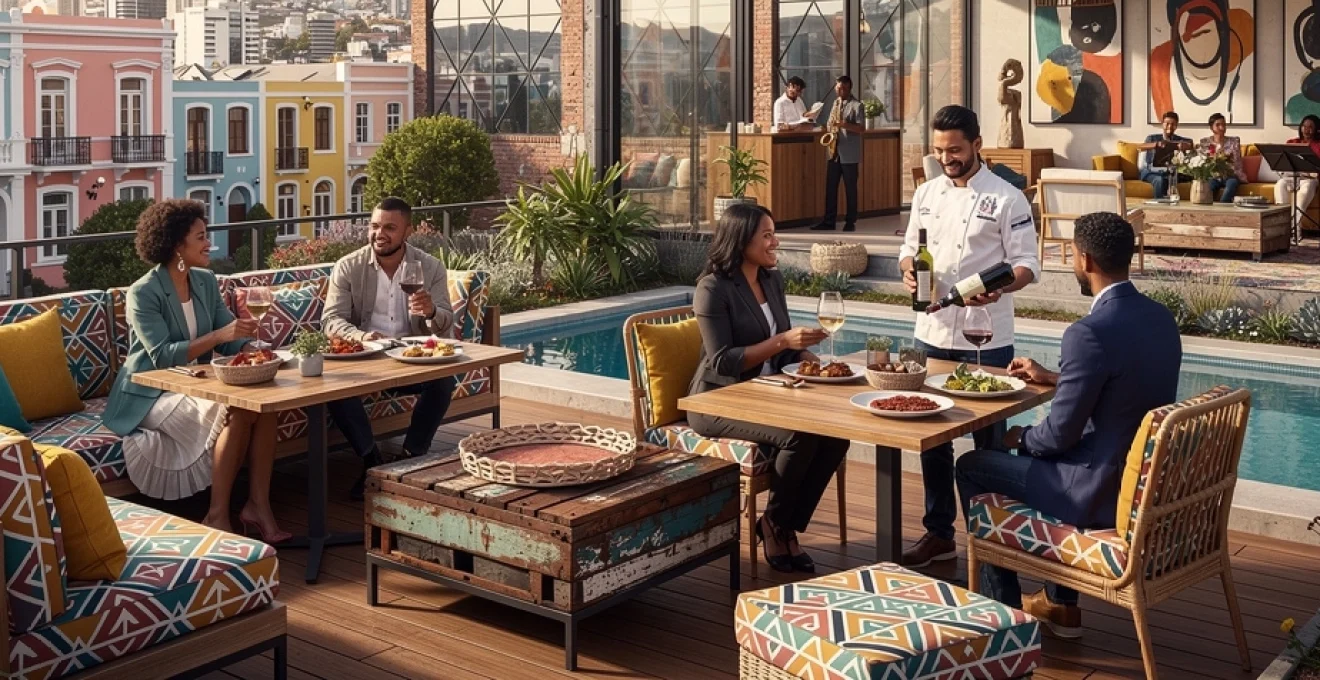
Cape Town’s hospitality landscape has undergone a remarkable transformation over the past decade, with independent boutique hotels emerging as the authentic heartbeat of the Mother City’s accommodation sector. These properties have moved far beyond merely providing a place to rest—they’ve become immersive cultural experiences that celebrate South Africa’s rich heritage, contemporary creativity, and architectural innovation. From converted grain silos overlooking the harbour to meticulously restored Victorian townhouses in the Bo-Kaap, these establishments represent a sophisticated fusion of African design sensibilities and world-class hospitality standards. As travellers increasingly seek meaningful connections with the destinations they visit, Cape Town’s boutique hotels are positioning themselves as cultural ambassadors, offering guests intimate windows into the city’s layered histories, vibrant artistic communities, and evolving urban identity.
Afrocentric design philosophy in cape town’s boutique accommodation sector
The design narrative within Cape Town’s boutique hotel sector represents a conscious departure from generic international aesthetics. Property developers and interior designers are increasingly embracing Afrocentric design principles that celebrate the continent’s visual language whilst maintaining contemporary luxury standards. This approach manifests through the thoughtful integration of indigenous materials, traditional craftsmanship techniques, and symbolic references to South Africa’s diverse cultural heritage. The result is a distinctly African hospitality experience that resonates with both international guests seeking authenticity and local visitors rediscovering their own cultural narratives through fresh contemporary lenses.
Indigenous xhosa and ndebele artistic motifs in interior spatial design
Traditional Xhosa and Ndebele geometric patterns have found sophisticated expression in contemporary hotel interiors across Cape Town. These bold, angular designs—historically painted on homestead walls as expressions of identity and status—now appear on feature walls, custom furniture pieces, and textile applications throughout boutique properties. Interior designers are working directly with cultural consultants to ensure these motifs are deployed respectfully and accurately, avoiding superficial appropriation whilst celebrating their visual power. The striking contrast between the geometric precision of Ndebele colour blocking and minimalist architectural frameworks creates visual tension that defines many of Cape Town’s most photographed hotel spaces.
Several properties have commissioned contemporary artists from Eastern Cape communities to create large-scale installations that reinterpret traditional beadwork patterns in modern materials. These pieces serve as both artistic focal points and conversation starters, providing guests with contextual understanding of the cultural significance behind the aesthetic choices. The integration extends beyond visual elements—some hotels incorporate traditional Xhosa storytelling sessions and cultural performances, transforming decorative choices into educational experiences.
Cape malay heritage colour palettes and architectural elements
The vibrant colour schemes synonymous with Bo-Kaap’s historic streetscapes have profoundly influenced interior design across Cape Town’s boutique hotel sector. These saturated jewel tones—cobalt blues, emerald greens, sunset oranges, and magenta pinks—reflect the Cape Malay community’s cultural celebration of colour as expression and identity. Beyond simply adopting these hues, thoughtful designers are researching the historical contexts of these colour choices, understanding how they represented freedom of expression following centuries of colonial suppression.
Architectural elements specific to Cape Malay heritage, including ornate fretwork screens, arched doorways, and intricate tile work inspired by Islamic geometric patterns, appear throughout contemporary hotel renovations. These features provide both aesthetic appeal and functional benefits—the traditional screens, or jali, offer privacy whilst maintaining airflow, perfectly suited to Cape Town’s climate. Several properties in the City Bowl have restored original Cape Malay architectural details during renovation projects, preserving these elements as focal points within modern design schemes.
Contemporary african art curation from local woodstock and maboneng galleries
Cape Town’s boutique hotels have become unexpected exhibition spaces for emerging and established African artists, with many properties maintaining rotating art programmes that rival commercial galleries. The Woodstock and City Bowl districts, home to thriving artistic communities, supply a constant stream of contemporary works that challenge, inspire, and provoke dialogue. Hotel art curation has evolved into a sophisticated practice, with specialist consultants advising properties on acquisitions that balance aesthetic appeal with investment value and cultural significance.
This approach transforms guest experiences from passive observation to active cultural engagement. Many hotels provide detailed
information on each piece, artist biographies, and the social or political context behind key works. Some boutique hotels in Cape Town also partner with galleries in Woodstock and Johannesburg’s Maboneng Precinct to host artist residencies, opening nights, and panel discussions on contemporary African art. For guests, this transforms corridors and lounges into living galleries, where you can discover new voices in African creativity without leaving your hotel. It also channels revenue back into local creative economies, strengthening the link between Cape Town’s boutique accommodation sector and its broader cultural ecosystem.
Reclaimed materials and sustainable sourcing from township artisan collectives
A defining characteristic of design-led boutique hotels in Cape Town is their commitment to reclaimed materials and ethical sourcing. Rather than importing generic décor, many properties collaborate with artisan collectives based in townships such as Khayelitsha, Langa, and Gugulethu. These partnerships often focus on upcycling—turning discarded wood, metal, glass, and textiles into bespoke furniture, lighting, and decorative objects. The result is a design language that feels both luxurious and grounded, where every piece has a story.
Guests might sit on a chair crafted from reclaimed timber sourced from old Cape Town warehouses, or admire woven light fittings made from repurposed telephone wire. This approach not only reduces the environmental footprint of new developments but also channels meaningful income into communities historically excluded from mainstream economic opportunities. Think of it as a circular design economy, where beauty and sustainability go hand in hand. For travellers who care about responsible tourism, staying in a boutique hotel that foregrounds township-made design becomes an easy way to support local craftsmanship.
Several Cape Town hotels now include information cards or QR codes that trace the provenance of key design elements back to specific cooperatives or individual makers. This level of transparency helps guests understand the impact of their accommodation choices, turning what might otherwise be a purely aesthetic decision into a form of social investment. It also fosters long-term relationships between hotels and artisans, ensuring consistent work pipelines and skills development. In a city wrestling with inequality, these design decisions carry weight—they demonstrate how high-end hospitality can contribute to inclusive, sustainable growth.
District six heritage properties: adaptive reuse and cultural preservation
Few urban districts in South Africa hold as much emotional and historical significance as District Six. Once a vibrant, multiracial neighbourhood, it was systematically demolished under apartheid’s forced removals, leaving a scar in Cape Town’s urban fabric. In recent years, a small but growing number of boutique hotels and guesthouses have chosen to engage with this complex legacy through adaptive reuse projects and sensitive heritage restoration. Rather than erasing the past, these properties seek to honour it—integrating storytelling, design, and community engagement into their hospitality model.
Adaptive reuse in this context often involves transforming surviving structures—warehouses, terrace houses, and institutional buildings—into intimate places to stay while retaining traces of their former lives. Exposed brickwork, original timber beams, and carefully preserved façades provide tangible links to a neighbourhood that once pulsed with jazz clubs, corner cafés, and tight-knit community life. For guests, staying in a District Six heritage property offers more than convenience; it becomes an opportunity to grapple with Cape Town’s contested histories in a thoughtful, human-scale way. The best operators work closely with heritage bodies, former residents, and the District Six Museum to ensure their projects contribute to cultural preservation rather than commercial exploitation.
The silo hotel’s grain elevator transformation at v&a waterfront
Perhaps the most iconic example of adaptive reuse in Cape Town’s boutique hotel landscape is The Silo Hotel at the V&A Waterfront. Housed in the former grain elevator of the historic grain silo complex, the project transformed an industrial storage structure into one of Africa’s most recognisable luxury hotels. Rather than demolishing and rebuilding, architects retained the silo’s concrete skeleton and cylindrical forms, inserting dramatic multi-storey spaces into the old grain bins. The now-famous pillowed glass windows protrude from the original façade like faceted jewels, refracting Cape Town’s changing light and framing panoramic views over Table Bay and Table Mountain.
This grain elevator transformation speaks to a broader philosophy of conservation through use. By repurposing a disused industrial building, the project preserved a key piece of harbour infrastructure that told stories of trade, labour, and the city’s economic evolution. Inside, contemporary African art, tactile materials, and bold colours soften the building’s industrial heritage, creating a compelling dialogue between past and present. From a guest’s perspective, spending a night in a former grain silo is both whimsical and profound—like sleeping inside a museum piece brought back to life.
The Silo Hotel’s success has catalysed interest in similar large-scale adaptive reuse projects throughout Cape Town and beyond. Investors have realised that reimagining heritage properties can yield strong returns while contributing to place-making and cultural storytelling. For boutique hotel developers, this model offers a blueprint: instead of chasing generic new-builds, why not look for under-utilised structures with powerful narratives embedded in their walls? The result is accommodation that feels rooted in context and impossible to replicate elsewhere.
Restoration techniques preserving bo-kaap victorian and georgian facades
On the slopes of Signal Hill, the Bo-Kaap remains one of Cape Town’s most visually distinctive and culturally significant neighbourhoods. For boutique hotels operating in or near this precinct, preserving Victorian and Georgian façades has become both an ethical responsibility and a key design opportunity. Many of these buildings feature sash windows, decorative cornices, and elegant proportions that date back more than a century. Rather than replacing these elements with modern substitutes, careful restoration work uses traditional techniques—lime-based plasters, hand-crafted timber joinery, and historically accurate paint systems—to retain authenticity.
Colour is central to the Bo-Kaap story, and boutique hotels here take special care when updating exteriors. Heritage consultants often research archival photographs and oral histories to understand original pigment choices and the cultural meanings associated with particular hues. Restoration becomes a delicate balancing act: how do you respect the architectural language of Victorian and Georgian Cape Town while allowing for contemporary Cape Malay colour expression? The most sensitive projects operate like custodians rather than owners, recognising that façades contribute to a collective streetscape and shared heritage.
For guests drawn to boutique hotels that blend design and local culture, these restored façades offer an immediate visual cue of place. Stepping through a brightly painted Georgian doorway into a meticulously curated interior creates a sense of transition—like moving between chapters in a living history book. Practical considerations also come into play: original shutters and deep verandas, when properly restored, provide passive cooling and shading well-suited to Cape Town’s climate. In this way, heritage preservation aligns with contemporary sustainability goals, demonstrating that old buildings can perform admirably when thoughtfully maintained.
Old biscuit mill precinct boutique hotels in woodstock industrial quarter
Woodstock’s Old Biscuit Mill precinct has evolved from industrial complex to creative hub, and now forms the anchor for several design-forward boutique accommodation concepts. While there are relatively few traditional “hotels” within the mill itself, the wider industrial quarter features guesthouses and micro-hotels that draw heavily on the area’s warehouse typologies. Think exposed trusses, polished concrete floors, steel-framed windows, and double-volume interiors softened with textiles, greenery, and contemporary African art. The proximity to independent galleries, design studios, and the famed Neighbourgoods Market makes this one of Cape Town’s most immersive neighbourhoods for culture-focused travellers.
Adaptive reuse in Woodstock often involves converting old factories, printing works, or light-industrial buildings into places to stay while retaining the grit and character that define the area. Rather than sanitising these structures, designers highlight original features—industrial hoists, brick loading bays, and ghost signage—using them as backdrops for modern comforts. The result is a raw-meets-refined aesthetic that feels distinctly urban yet undeniably African. If you’ve ever wanted to wake up steps from artisan coffee roasters, experimental fashion labels, and cutting-edge galleries, Woodstock’s boutique accommodation offerings deliver that experience in spades.
From a market perspective, the Old Biscuit Mill precinct demonstrates how boutique hotels can catalyse neighbourhood revitalisation without erasing local identity. By collaborating with nearby businesses, hosting design fairs, and promoting local makers in their retail spaces, these hotels act as connectors within the cultural ecosystem. Guests are encouraged to explore on foot, engaging with the street life, murals, and creative energy that make Woodstock unique. It’s a model increasingly emulated across Cape Town’s inner-city districts, where hospitality is viewed not as a standalone product but as a key component of urban regeneration.
Luxury micro-hotels showcasing table mountain urban-nature interface
One of Cape Town’s greatest assets is its dramatic interface between city and nature, where the built environment appears to lean against the sheer cliffs of Table Mountain. Luxury micro-hotels—typically offering between 6 and 20 rooms—have emerged along this urban-nature edge, particularly in neighbourhoods like Tamboerskloof, Oranjezicht, and Gardens. These properties leverage their scale to deliver highly personalised service while maximising sightlines towards the mountain, Lion’s Head, and the city bowl below. Large picture windows, rooftop terraces, and pocket gardens frame the landscape as a constant backdrop, reminding guests that wilderness is never far away.
Architecturally, these micro-hotels often adopt a light-footprint approach, inserting themselves discreetly into existing streetscapes rather than dominating them. Many are conversions of old villas or terrace houses, upgraded with contemporary interiors that emphasise natural materials, soft neutral palettes, and biophilic design. Indoor-outdoor living is key: sliding doors open onto shared courtyards, plunge pools sit beneath indigenous trees, and breakfast is served on verandas where you can watch the morning mist roll off the mountain. For travellers, it feels a bit like staying in a private home with the services of a five-star hotel.
From an operational standpoint, smaller room counts enable these boutique hotels to tailor experiences around each guest. Want a sunrise hike up Platteklip Gorge or a sunset cable car ride timed to golden hour photographs? Concierge teams in micro-hotels can arrange hyper-personalised itineraries that maximise the urban-nature interface on your doorstep. This is where Cape Town’s boutique accommodation really shines: instead of offering a generic “city break”, it curates an intimate, landscape-driven stay that you simply can’t replicate in more crowded global destinations. In a post-pandemic world where privacy and space are prized, this micro-hotel model is set to grow.
Gastronomic integration: farm-to-table partnerships with constantia winelands
Culinary experiences have become a powerful differentiator for boutique hotels in Cape Town, and nowhere is this more evident than in their partnerships with the nearby Constantia Winelands. Situated less than 30 minutes from the city bowl, Constantia is South Africa’s oldest wine-producing region, home to historic estates and innovative contemporary wineries. Many design-led hotels are now building formal farm-to-table relationships with these vineyards and surrounding farms, ensuring that seasonal produce, heritage grape varietals, and artisanal products feature prominently on their menus. For guests, this creates a seamless journey from city to vineyard, with terroir-driven flavours anchoring the experience.
These partnerships often go beyond simple supply agreements. Some boutique hotels organise dedicated shuttle services to Constantia estates, coordinate private cellar tours, or offer exclusive tastings led by winemakers in the hotel’s own dining spaces. Others work with biodynamic or organic farms to source vegetables, eggs, and dairy for daily breakfasts and tasting menus. The emphasis is on traceability and provenance: menus name-check farms and producers, turning each dish into a story about place. It’s a powerful way to connect visitors to Cape Town’s broader food ecosystem while supporting local agricultural communities.
Indigenous rooibos and fynbos botanical integration in hotel dining concepts
Beyond wine and traditional farm produce, Cape Town’s boutique hotels are increasingly incorporating indigenous botanicals—particularly rooibos and fynbos—into their culinary concepts. Rooibos, a naturally caffeine-free shrub endemic to the Cederberg region, appears not only in tea menus but also in desserts, bread glazes, and savoury marinades. Fynbos, the catch-all term for the Cape’s incredibly diverse floral kingdom, provides aromatic herbs and edible flowers that lend distinctive flavour profiles to cocktails, sauces, and infusions. For visitors, tasting these ingredients is like sampling the local landscape in liquid and edible form.
Chefs working in design-driven hotels often collaborate with botanists and foragers to ensure sustainable harvesting practices. Rather than stripping hillsides bare, they focus on small-scale, high-impact usages where a little goes a long way—think fynbos-smoked butter served with artisanal bread, or a rooibos reduction drizzled over grilled linefish. Beverage programmes mirror this ethos, with bar teams designing signature cocktails that feature buchu, honeybush, and wild mint alongside South African gins. If you’ve ever wondered what Cape Town “tastes” like, these botanical-led menus offer a compelling answer.
This indigenous botanical integration also feeds into wellness-focused offerings within boutique hotels. Rooibos-based spa treatments, fynbos aromatherapy, and herbal turndown teas create a holistic narrative that extends from the dining room to the guest suite. From a branding perspective, it provides a powerful point of difference in a crowded global market: few cities can claim such a distinctive, place-specific pantry of botanicals. For guests keen on authentic experiences, choosing a boutique hotel that champions rooibos and fynbos is an easy way to connect more deeply with the Cape’s natural heritage.
Collaborative menu development with wolfgat and pot luck club chefs
Cape Town’s reputation as a global food destination has been bolstered by chef-led restaurants like Wolfgat in Paternoster and The Pot Luck Club at the Old Biscuit Mill. Boutique hotels, particularly those that blend design and local culture, increasingly collaborate with chefs from these acclaimed establishments on menu development, pop-up dinners, and culinary residencies. While not every property can host a full-time celebrity chef, periodic collaborations allow them to tap into cutting-edge culinary thinking and offer guests truly memorable dining experiences. It’s akin to having a rotating art exhibition—only this time curated on the plate.
These collaborations often focus on hyper-local and seasonal ingredients, with chefs bringing their signature techniques and flavour philosophies into the hotel’s kitchen. One month might feature a shoreline-foraged tasting menu inspired by Wolfgat’s coastal terroir, while another highlights the bold, globally inflected small plates that have made The Pot Luck Club a Cape Town institution. For guests, such experiences blur the line between hotel restaurant and destination dining, meaning you can enjoy world-class gastronomy just a lift ride away from your room.
From the hotel’s perspective, partnering with high-profile chefs helps elevate their brand positioning and attract a clientele that cares deeply about food culture. It also encourages cross-pollination within Cape Town’s hospitality scene, as chefs, sommeliers, and mixologists circulate ideas and techniques across different venues. For travellers who plan itineraries around meals as much as museums or hikes, choosing a boutique hotel engaged in these culinary collaborations can dramatically enhance the overall Cape Town experience. In a city where dining reservations can be fiercely competitive, having access to chef-led events in-house is a significant advantage.
Cape malay spice route culinary experiences and cooking masterclasses
No exploration of Cape Town’s gastronomic landscape would be complete without engaging with Cape Malay cuisine, which blends influences from Southeast Asia, East Africa, and Dutch colonial history. Boutique hotels that prioritise cultural immersion are increasingly offering Cape Malay spice route experiences—guided tastings, market tours, and hands-on cooking classes led by community cooks and culinary historians. Rather than presenting these dishes as exotic novelties, the best programmes contextualise them within broader narratives of trade, migration, and resistance. A simple plate of bobotie or koesisters becomes a portal into centuries of lived experience.
Cooking masterclasses often begin with a walk through the Bo-Kaap or local spice markets, where guests can see, smell, and touch key ingredients such as turmeric, cardamom, star anise, and fenugreek. Back at the hotel, participants learn techniques for blending masalas, folding samoosas, or slow-cooking denningvleis, all while hearing stories from the women and men who keep these traditions alive. For many travellers, this intimate exchange is more memorable than a formal restaurant meal—it feels like being invited into someone’s family kitchen.
Hotels benefit too, as these programmes build deep, sustained relationships with local Cape Malay communities, ensuring that commercial gains are shared more equitably. Some properties even offer take-home spice packs and recipe booklets, allowing guests to recreate flavours once they return home. In an era when “food tourism” risks becoming superficial, Cape Town’s boutique hotels have an opportunity to set a higher standard—using Cape Malay culinary heritage to foster genuine cultural understanding and long-term connections between visitors and residents.
Experiential cultural programming: township tours and langa jazz sessions
Design and gastronomy are only part of the story; experiential cultural programming has become a defining feature of boutique hotels in Cape Town that seek to blend aesthetics with authenticity. Rather than outsourcing guest experiences to generic tour operators, many properties are curating their own township tours and Langa jazz evenings in partnership with trusted local guides, musicians, and community organisations. The goal is not to turn townships into spectator sport but to facilitate respectful, contextualised encounters that highlight creativity, resilience, and everyday life.
Thoughtfully designed township tours might include visits to artist studios, community gardens, and small eateries, with plenty of time for conversation and questions. Guests are encouraged to see beyond stereotypes, understanding how architecture, public art, and local entrepreneurship shape these neighbourhoods. In Langa, one of Cape Town’s oldest townships, evening jazz sessions have become a particularly popular offering. Boutique hotels arrange transport and introductions to intimate venues where live bands improvise beneath low ceilings, and the line between performer and audience often dissolves. The experience is less about polished performance and more about shared energy—like being welcomed into a neighbourhood living room.
Of course, such programming comes with ethical considerations. The most responsible hotels adopt community-first models, co-creating itineraries with residents and ensuring that financial benefits flow directly to local businesses and cultural practitioners. Pre-departure briefings help guests approach these experiences with humility and respect, while post-visit debriefs provide space for reflection and learning. As a traveller, you might ask yourself: are you here to collect poverty narratives, or to engage with complex, contemporary communities on their own terms? Boutique hotels that take this question seriously can become powerful platforms for more conscious, mutually beneficial tourism.
Sustainability certifications: green building council south africa standards in boutique hospitality
As global travellers grow more concerned about their environmental footprint, sustainability has moved from “nice-to-have” to core expectation—especially in design-led boutique hotels. In South Africa, the Green Building Council South Africa (GBCSA) provides a robust framework for assessing and certifying the environmental performance of buildings, including hospitality projects. While many early adopters were large commercial developments, a growing number of boutique hotels in Cape Town are now seeking GBCSA ratings or aligning their practices with its standards. For guests, this offers a tangible way to identify properties that walk the talk on sustainability rather than relying on vague marketing claims.
GBCSA certification looks at factors such as energy efficiency, water usage, waste management, indoor environmental quality, and responsible materials sourcing. In practice, this translates into features like solar photovoltaic systems, greywater recycling, low-flow fixtures, and smart building management systems that reduce unnecessary consumption. Boutique hotels, with their smaller footprints and flexible design, are well-positioned to experiment with innovative solutions—whether that’s rainwater-fed gardens, rooftop beehives, or natural ventilation strategies that reduce dependence on mechanical cooling. In some cases, adaptive reuse of existing structures already earns significant sustainability points by avoiding the embodied carbon associated with new construction.
What does this mean for you as a guest choosing between boutique hotels in Cape Town that blend design and local culture? Beyond the aesthetic appeal and cultural programming, you can look for concrete indicators of environmental performance—GBCSA plaques in lobbies, publicly available sustainability reports, or detailed breakdowns of energy and water savings. Some properties even invite guests to participate in their green journey, offering incentives for low-linen changes, showcasing on-site composting systems, or hosting talks with local environmental NGOs. In an industry where “eco-chic” can sometimes be an empty slogan, GBCSA standards help separate genuine commitment from greenwashing.
Ultimately, the intersection of Afrocentric design, cultural immersion, and sustainability is where Cape Town’s boutique hotel scene is most exciting. When a restored Bo-Kaap townhouse or converted grain silo not only looks beautiful and tells rich stories, but also meets rigorous environmental benchmarks, it sets a new paradigm for urban hospitality. For investors, operators, and travellers alike, the message is clear: the future of boutique accommodation in Cape Town lies in places that are as thoughtful about their impact as they are about their interiors.