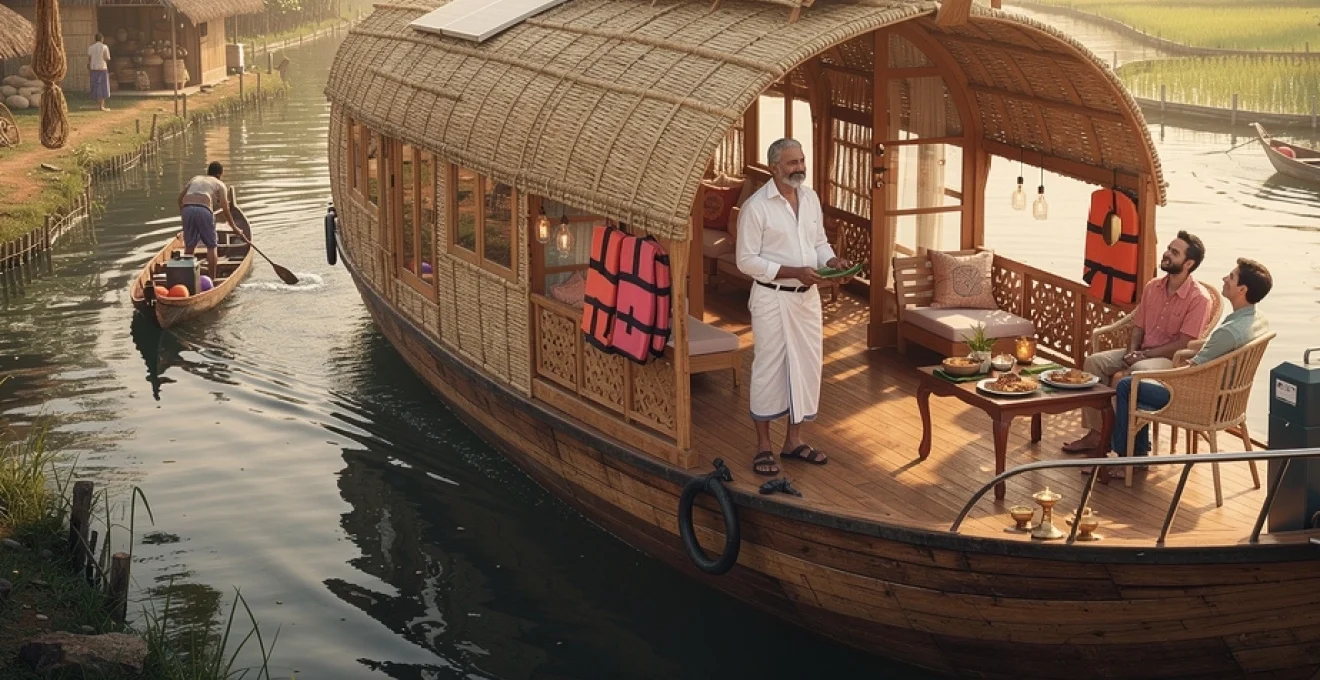
Kerala’s backwaters represent one of India’s most captivating natural phenomena, where ancient waterways weave through emerald landscapes and traditional life unfolds at a gentle pace. These intricate networks of canals, rivers, and lagoons stretch across 900 kilometres, creating a serene aquatic highway that has sustained local communities for centuries. The iconic houseboats, known as kettuvallams, drift silently through these waters, offering visitors an intimate glimpse into a world where time moves with the rhythm of the tides. Beyond the Instagram-worthy sunsets and luxury amenities, the backwaters reveal a complex ecosystem where traditional craftsmanship, sustainable living practices, and cultural heritage converge in remarkable harmony.
The appeal of Kerala’s houseboats extends far beyond simple accommodation; they serve as floating windows into a way of life that has evolved organically alongside the water. Each vessel tells a story of ingenious engineering, environmental adaptation, and cultural preservation that spans generations. As you navigate these tranquil waterways, the slow rhythm of backwater life becomes immediately apparent through the daily routines of fishing families, the gentle sounds of temple bells across the water, and the unhurried pace of traditional boat builders crafting new vessels using age-old techniques.
Traditional kettuvallam architecture and modern houseboat engineering
The transformation from cargo vessel to luxury accommodation represents one of Kerala’s most successful tourism innovations. Traditional kettuvallams were originally designed as heavy-duty cargo barges capable of carrying up to 30 tonnes of rice, spices, and coconuts through the shallow backwater channels. These magnificent vessels measured between 60 and 70 feet in length, with their distinctive curved hulls and bamboo canopies providing optimal weight distribution and weather protection for precious cargo.
Modern houseboat engineering has preserved the essential architectural elements whilst incorporating contemporary comfort features. The iconic curved roof structure, originally designed to shed monsoon rains from rice sacks, now shelters air-conditioned bedrooms and spacious living areas. Engineers have cleverly integrated modern plumbing, electrical systems, and safety equipment without compromising the boat’s traditional aesthetic or structural integrity. The result is a remarkable fusion where ancient maritime wisdom meets 21st-century hospitality standards.
Coconut palm timber construction and coir rope binding techniques
The construction of authentic kettuvallams relies entirely on locally sourced materials, with coconut palm timber forming the primary structural component. Master craftsmen, known as mistris, select mature anjili wood planks based on grain patterns and density characteristics that ensure optimal flexibility in water. The remarkable aspect of this construction technique lies in the complete absence of metal fasteners – every joint is secured using traditional coir rope binding methods passed down through generations of boat builders.
The coir rope binding technique involves drilling precisely positioned holes through timber planks, then threading coconut fibre ropes through these openings to create incredibly strong joints. This method allows the vessel to flex naturally with wave action rather than fighting against water movement, significantly extending the boat’s operational lifespan. The binding process requires exceptional skill, as tension must be perfectly balanced across hundreds of connection points to maintain structural integrity whilst preserving the hull’s characteristic flexibility.
Bamboo mat roofing systems and natural ventilation design
Traditional bamboo mat roofing systems demonstrate sophisticated understanding of tropical climate management. The distinctive arched canopy design channels air flow naturally through living spaces, creating cooling breezes that reduce reliance on artificial climate control. Bamboo mats are woven in specific patterns that provide excellent insulation properties whilst allowing moisture to escape, preventing the condensation issues that plague conventional roofing materials in humid environments.
Natural ventilation design incorporates multiple air flow pathways that work synergistically to maintain comfortable interior temperatures. Strategic placement of windows, roof vents, and floor openings creates convection currents that continuously circulate fresh air throughout the vessel. This traditional cooling system proves so effective that many luxury houseboats now combine natural ventilation with minimal air conditioning, achieving both comfort and energy efficiency whilst preserving authentic architectural elements.
Contemporary safety modifications and tourism compliance standards
Modern safety modifications have been seamlessly integrated into traditional designs to meet international tourism
operations, including mandatory life jackets, fire extinguishers, emergency lighting, and clearly marked escape routes. Kerala’s Department of Tourism and Inland Navigation authorities have introduced classification systems that rate houseboats on safety, hygiene, and environmental performance, with licensed operators required to undergo regular inspections. International guests will notice familiar safety briefings at the start of the cruise, along with prominently displayed emergency contact information and maximum occupancy limits.
In recent years, the state has tightened regulations around hull integrity, engine maintenance, and navigational training to reduce accidents on busy waterways. Many operators now equip their vessels with GPS tracking, radio communication systems, and depth gauges to navigate safely through shallow channels and during sudden weather changes. Compliance standards also extend to crew training, with captains and staff receiving instruction in first aid, basic firefighting, and responsible tourism practices. For travellers, choosing a certified houseboat not only enhances personal safety but also supports operators who invest in long-term sustainability and community well-being.
Solar power integration and eco-friendly waste management systems
Alongside structural and safety upgrades, Kerala’s most forward-thinking houseboats are embracing renewable energy and low-impact waste systems. Solar power integration has become increasingly common, with photovoltaic panels installed discreetly on the upper decks or roof surfaces to power lighting, fans, and small appliances. This reduces dependence on diesel generators, which are both noisy and polluting, and helps maintain the quiet, slow rhythm of backwater life that many visitors seek. On some premium vessels, solar arrays now contribute a significant portion of the boat’s daily energy needs, especially during the dry season when sunlight is abundant.
Eco-friendly waste management is another crucial area of innovation. Instead of discharging greywater and sewage directly into canals—a practice that once threatened the fragile backwater ecosystem—modern houseboats are increasingly fitted with modular onboard treatment plants and bio-digesters. These systems break down organic waste and treat wastewater to acceptable environmental standards before discharge. Solid waste segregation, reduced use of single-use plastics, and partnerships with onshore recycling facilities further minimise environmental impact. As a guest, you can actively support these initiatives by asking operators about their waste policies and choosing vessels that demonstrate clear, verifiable commitments to backwater conservation.
Alappuzha and kumarakom backwater navigation routes
Understanding the geography of Kerala’s backwaters will transform your houseboat experience from a simple cruise into a journey through interconnected landscapes and communities. Alappuzha (often written as Alleppey) and Kumarakom form the twin hubs of backwater tourism, each offering distinct routes that highlight different aspects of local life. While Alappuzha is sometimes compared to a tropical “Venice of the East” for its dense canal network and bustling houseboat jetties, Kumarakom provides a quieter, more contemplative gateway to the expansive Vembanad Lake. Together, these routes allow you to experience everything from wide, mirror-like lagoons to narrow, shaded canals threading through villages.
Choosing the right navigation route depends on your travel goals and the pace you prefer. Do you want to float across broad lakes with uninterrupted views of the horizon, or would you rather hug the banks where you can watch families cooking, children rowing to school, and fishermen casting nets at dawn? Many travellers opt for one- or two-night itineraries that combine both styles: open stretches on Vembanad Lake paired with intimate detours through village canals. Discussing your expectations with your operator in advance is one of the simplest ways to ensure your Kerala houseboat itinerary aligns with your interests.
Vembanad lake circuit and punnamada lake waterways
The Vembanad Lake circuit is the most iconic of all Kerala backwater routes, ideal if you are seeking sweeping panoramas and a sense of wide-open space. As the largest lake in Kerala, Vembanad stretches along multiple districts, including Alappuzha and Kottayam, with houseboats typically departing from Alappuzha or Kumarakom. Cruising this lake feels almost oceanic at times, with distant coconut groves forming a thin green line along the horizon and the water reflecting the sky in shades of silver and gold. Dawn and dusk are particularly magical, when fishing boats return with their catch and migratory birds skim the surface searching for food.
Connected to Vembanad is Punnamada Lake, best known internationally as the venue for the Nehru Trophy Boat Race held every August. Outside of race season, its long, calm stretches are perfect for slow cruising, offering glimpses of racing snake boats moored along the banks and training crews practising synchronised paddling. These waterways are also lined with small settlements where you can observe coir rope production, toddy tapping, and rice cultivation at close range. If you are interested in photography, the combination of broad water vistas and layered activity along the banks makes the Vembanad–Punnamada circuit particularly rewarding.
Kuttanad paddy field channels and mangrove creek networks
Venturing into Kuttanad, often called the “Rice Bowl of Kerala”, takes you into one of the few places in the world where rice is grown below sea level. Here, narrow channels carve through reclaimed polders and paddy fields protected by embankments, creating a hypnotic patchwork of shimmering water and bright green crops. Houseboats must reduce speed in these tighter waterways, which is a blessing for travellers seeking to experience the slow rhythm of backwater life in detail. From your deck, you might see farmers planting seedlings in knee-deep water, women weeding the fields, or entire families harvesting and bundling rice during peak seasons.
Interspersed with the paddy fields are networks of mangrove creeks that provide critical habitat for fish, crabs, and an array of bird species. Smaller country boats and canoes have an advantage here, able to slip into shaded channels overlooked by larger vessels. For eco-conscious visitors, choosing itineraries that include guided canoe excursions through these mangrove systems can deepen your understanding of backwater biodiversity. Just as importantly, these detours support local rowers and guides whose livelihoods depend on small-scale, low-impact tourism rather than high-volume mass travel.
Kollam to alappuzha canoe route and hidden lagoon access points
While many travellers focus on the central backwater hubs, the longer Kollam to Alappuzha route offers one of Kerala’s most immersive slow-travel experiences. Traditionally covered in eight to ten hours by government ferries or multi-day cruises, this stretch threads through remote villages, untouched lagoons, and less commercialised canal systems. For those willing to trade some modern comforts for authenticity, segments of this route can be explored by canoe or small motorboats, enabling you to pause in secluded coves and observe daily life at a much closer range than large houseboats allow.
Hidden lagoon access points along this route often reveal mirror-still waters hemmed in by leaning coconut palms and dense vegetation. These pockets feel worlds away from the congestion sometimes seen near major jetties. Here, you may encounter duck-rearing farms, small floating vegetable markets, or solitary fishermen checking prawn traps at first light. Because facilities are limited in some of these remote sections, it is essential to travel with reputable operators who prioritise safety and respect for local communities. If you enjoy the idea of “slow travel in Kerala” and value genuine cultural encounters over luxury amenities, requesting elements of the Kollam–Alappuzha route in your itinerary can be particularly rewarding.
Seasonal water level variations and monsoon navigation challenges
The backwaters may look timeless, but they are highly dynamic systems shaped by Kerala’s distinct monsoon cycles. From June to September, the southwest monsoon brings heavy rains that raise water levels, flush the canals, and transform the landscape into a lush, saturated green. For houseboat operators, this means constantly monitoring currents, submerged obstacles, and fluctuating depths. Some narrow channels become more accessible, while others are closed for safety reasons due to strong flow or debris. During intense downpours, visibility drops and captains rely heavily on experience and local knowledge to navigate safely.
In the drier months from December to March, water levels recede, exposing sandbanks and narrowing shallow stretches. While this period is generally considered the best time for Kerala houseboat cruises due to stable weather and pleasant temperatures, captains still need to adjust routes and speeds to avoid grounding in exposed sections. You may notice your boat slowing significantly when crossing particularly shallow areas, which is as much about protecting the fragile canal bed as it is about passenger comfort. Understanding these seasonal variations helps set realistic expectations: the backwaters are not a controlled theme park but a living environment that demands respect from everyone who travels through it.
Toddy tapping culture and village artisan traditions
No exploration of Kerala’s backwaters is complete without acknowledging the human skills and traditions that have evolved alongside the water. One of the most distinctive sights you may encounter from your houseboat deck is that of a toddy tapper climbing a coconut palm with a coil of rope and earthen pot. Toddy, a mildly fermented sap extracted from coconut or palm flowers, has been part of Kerala’s social and culinary culture for centuries. Tappers work twice daily, at dawn and dusk, carefully slicing the flower bud and tying small pots to collect the dripping sap. From the water, these figures silhouetted against the sky become emblematic of the intimate relationship between people and landscape.
Many houseboat itineraries include the option to visit traditional toddy shops along the canal banks, where you can sample fresh toddy alongside spicy local snacks such as tapioca and fish fry. While you should always drink responsibly and ensure hygiene standards are met, these visits offer valuable insights into rural social life and local taste preferences. Beyond toddy tapping, backwater villages host a wide variety of artisans: coir rope makers spinning coconut fibre into resilient rope, net weavers repairing fishing gear, and carpenters building or restoring country boats using hand tools. Watching these crafts in action is akin to reading a living textbook on sustainable resource use.
Backwater villages are not staged sets for tourists; they are working communities where traditional skills remain central to daily survival and identity.
If you are curious about supporting these artisans in a meaningful way, consider purchasing small handicrafts—such as coir mats, carved wooden objects, or handwoven baskets—directly from villagers rather than from mass-market souvenir shops. This simple choice helps keep traditional knowledge alive and ensures that the economic benefits of Kerala houseboat tourism flow more equitably into canal-side communities. Always ask your guide to facilitate introductions and translations where needed, and remember that respectful observation, rather than intrusive photography, is the foundation of responsible cultural engagement.
Ayurvedic wellness practices and traditional kerala cuisine aboard houseboats
For many visitors, part of the magic of drifting through Kerala’s backwaters lies in how easily physical relaxation and cultural immersion blend together. Ayurveda—India’s ancient holistic medical system—has deep roots in Kerala, and its principles often find subtle expression aboard well-managed houseboats. While you may not undergo a full Ayurvedic treatment programme during a short cruise, you will likely encounter herbal teas, medicated oils, and dietary recommendations that draw on this 3,000-year-old tradition. Some premium houseboats even offer onboard Ayurvedic massages conducted by trained therapists, using warm herbal oils to ease muscle tension after long days of travel.
Food, too, becomes a key medium for experiencing local wellness practices. Traditional Kerala cuisine emphasises fresh, seasonal ingredients, balanced use of spices, and techniques that make meals both flavourful and easy to digest in a humid climate. On a typical cruise, your onboard chef might prepare pearl-spot fish (karimeen) marinated in turmeric and chilli, slow-cooked lentil stews, stir-fried vegetables with coconut, and fluffy red rice grown in nearby Kuttanad fields. Coconut in its many forms—grated, milk, oil—is a constant presence, providing both richness and nutritional value. Have you ever noticed how a simple meal can feel more nourishing when eaten in tune with the landscape around you?
- Inform your crew of dietary preferences or restrictions—vegetarian, vegan, gluten-free—before departure so they can plan menus accordingly.
- Try traditional breakfasts such as appam with stew or puttu with kadala curry to experience how locals start their day in the backwaters.
Ayurvedic principles often subtly influence menu planning, with an emphasis on balanced flavours (sweet, sour, salty, bitter, pungent, and astringent) and the use of digestive aids like ginger, cumin, and black pepper. Herbal concoctions such as jeera water (cumin-infused) or kashayam (herbal decoctions) may be offered after meals to support digestion, especially useful when adapting to new cuisines. If you are interested in learning more, do not hesitate to ask your chef or guide about specific ingredients and their traditional uses; these conversations can turn an ordinary lunch into a mini Ayurveda lesson on the water.
Migratory bird watching protocols in pathiramanal island vicinity
The backwaters are not only cultural landscapes but also vital stopover points for migratory birds travelling along the Central Asian flyway. Pathiramanal Island, a small, lush isle nestled in the middle of Vembanad Lake, is one of the most celebrated birding hotspots in the region. Depending on the season, you may spot whiskered terns skimming the water, herons and egrets stalking the shallows, or flocks of cormorants drying their wings on exposed branches. During peak migration months, typically between November and February, birdwatchers can observe dozens of species in a single morning, from wintering ducks to rare waders.
However, the very popularity of bird watching in Kerala’s backwaters brings its own responsibilities. Boats venturing near Pathiramanal and other sensitive habitats must follow basic protocols to minimise disturbance. This includes maintaining a respectful distance from nesting areas, reducing engine speed to lower noise levels, and avoiding sudden movements or loud conversations when flocks are feeding or resting. Operators committed to eco-friendly Kerala tourism will often brief guests on these guidelines and choose vantage points that provide excellent viewing opportunities without intruding on the birds’ space.
- Use binoculars or telephoto lenses instead of trying to approach birds too closely for photos.
- Avoid playing bird calls or using flash photography, both of which can stress wildlife.
For serious birdwatchers, arranging an early-morning excursion in a smaller, quieter craft such as a canoe can be particularly rewarding, as many species are most active during the cooler hours just after sunrise. Local guides familiar with the avifauna can help you identify species, explain migration patterns, and highlight the link between healthy wetlands and thriving bird populations. Even if you are not an avid birder, simply pausing to watch a kingfisher dive or a flock of egrets lift off in unison can deepen your appreciation of the backwaters as a living ecosystem rather than a mere backdrop for leisure. In the end, observing basic bird watching protocols around Pathiramanal is less about rules and more about cultivating a mindset of respect—for the birds, for the water, and for the communities that depend on both.