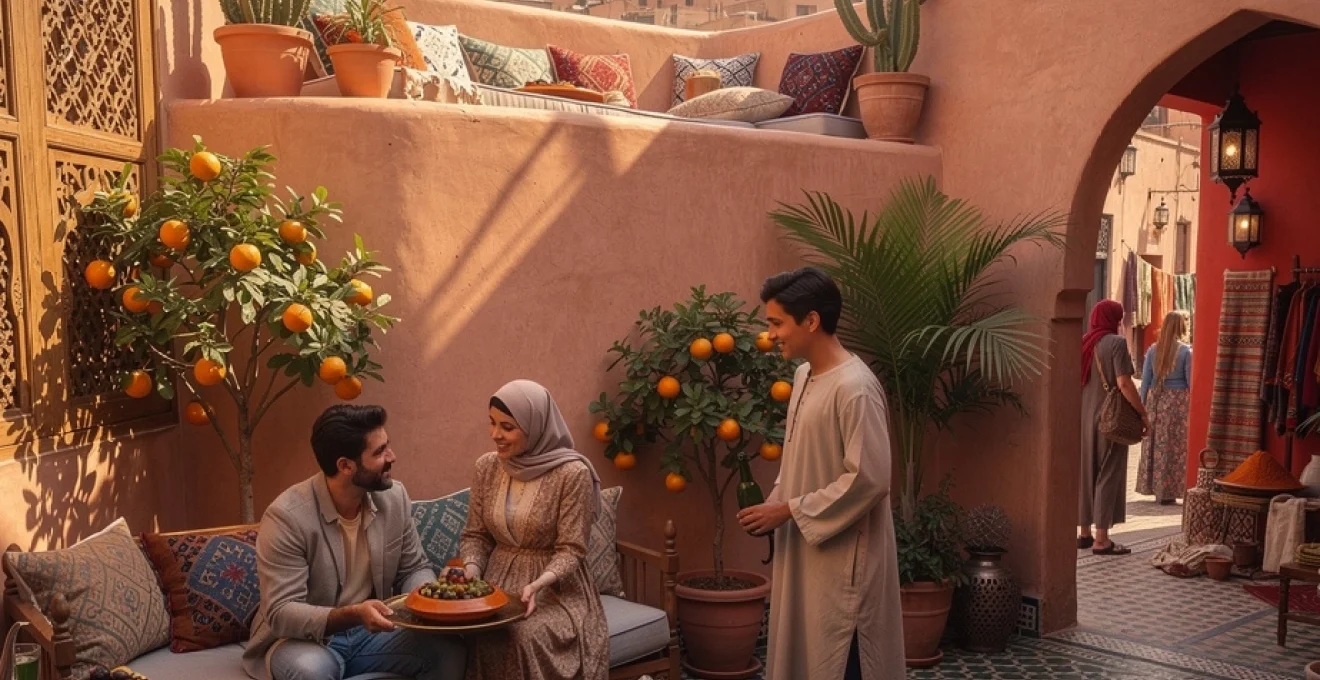
# Living like a local in a riad in the heart of Marrakech
Marrakech reveals its true essence not through hurried tourist itineraries, but through the intimate experience of residing within a traditional riad nestled deep in the medina’s labyrinthine passages. These architectural treasures, converted from historic family homes into boutique accommodations, offer you an unparalleled immersion into Moroccan daily life—far removed from the standardized anonymity of international hotel chains. When you choose to stay in a riad, you’re not merely selecting lodging; you’re embedding yourself within centuries-old neighbourhoods where the call to prayer echoes off ancient walls, where artisans still practice traditional crafts passed down through generations, and where the rhythm of local life unfolds at a pace determined by custom rather than commerce.
The medina districts of Marrakech—Mouassine, Kâat Benahid, Bab Doukkala—harbour some of Morocco’s most authentic residential quarters, where riads function as serene sanctuaries amid the controlled chaos of souks and thoroughfares. Staying in these traditional houses allows you to experience the genuine hospitality that defines Moroccan culture, to understand the architectural ingenuity developed over centuries to combat the harsh climate, and to participate in daily rituals that connect contemporary Marrakech to its illustrious past. From sunrise mint tea ceremonies on rooftop terraces to evening meals prepared by skilled dadas in traditional kitchens, riad living provides cultural insights impossible to obtain from conventional tourist accommodations.
Architectural heritage and interior design of traditional marrakech riads
The architectural philosophy underpinning riad design represents a sophisticated response to both climatic challenges and cultural values specific to Morocco. Unlike Western architecture that often emphasizes outward-facing facades and street presence, riads embody the Moroccan principle of privacy and inward focus. The word “riad” derives from the Arabic ryad, meaning garden, reflecting the centrality of nature within these domestic spaces. When you step through an unassuming wooden door from a dusty medina alley, you’re transported into a world of tranquility where every architectural element serves both aesthetic and functional purposes.
Historical riads served as family compounds for Marrakech’s merchant class and aristocracy, with multiple generations inhabiting different levels and wings surrounding the central courtyard. The conversion of these properties into guesthouses has preserved their essential character while adapting spaces for contemporary comfort. Many riads maintain original structural elements dating back to the 17th and 18th centuries, including hand-carved cedar columns, painted ceilings featuring geometric and floral motifs, and intricate plasterwork that required months of skilled labor to complete. Understanding these architectural features enhances your appreciation of the craftsmanship and cultural significance embedded in every surface.
Andalusian courtyard layout with central fountain systems
The central courtyard, or wast al-dar, functions as the spatial and social heart of every authentic riad. This open-air chamber typically measures between 4 to 8 meters square and extends vertically through multiple stories, creating a dramatic sense of space and allowing natural light to penetrate all surrounding rooms. The courtyard design reflects Andalusian influences that arrived in Morocco with Muslim refugees from Spain during the Reconquista, bringing sophisticated hydraulic engineering and garden design principles that transformed Moroccan domestic architecture.
At the courtyard’s center, you’ll invariably find a fountain—ranging from simple tile basins to elaborate marble structures with multiple tiers. These fountains serve critical functions beyond mere decoration. The sound of trickling water creates acoustic privacy, masking conversations within the riad from outside listeners and providing a soothing auditory backdrop that psychologically distances residents from the medina’s street noise. The evaporative cooling effect of water circulation reduces ambient temperatures by several degrees, particularly significant during Marrakech’s sweltering summer months when temperatures routinely exceed 40°C. Many riads incorporate citrus trees—orange, lemon, or mandarin—surrounding the fountain, their branches providing shade while releasing aromatic oils that perfume the air, especially in spring when blossoms appear.
Zellige tilework patterns and tadelakt lime plaster finishes</h
Zellige tilework, composed of thousands of hand-cut glazed terracotta fragments, forms intricate geometric patterns that line courtyard floors, fountain surrounds, stair risers, and lower wall sections. Each tile is cut by artisans known as maâlems, who follow centuries-old techniques to produce designs that are both mathematically precise and visually hypnotic. As you move through a riad, you’ll notice how the zellige patterns shift from bold, star-like motifs in communal areas to more delicate, restrained designs in private rooms, subtly guiding your sense of where you are meant to gather, rest, or pass through.
Above the zellige, walls are often finished in tadelakt, a traditional lime plaster polished with river stones and sealed with black soap made from olive oil. This technique yields a velvety, seamless surface that curves around arches, niches, and alcoves, reflecting light in a soft, almost liquid way. Beyond its aesthetic appeal, tadelakt is water-resistant and breathable, making it ideal for hammams, bathrooms, and courtyard walls exposed to moisture. As you run your hand along a tadelakt wall on your way to breakfast or the rooftop, you’re literally touching a finish that connects modern Marrakech riads to imperial palaces and ancient bathhouses across Morocco.
Moucharabieh wooden lattice screens and natural ventilation mechanisms
Another defining feature of traditional Marrakech riads is the use of moucharabieh—intricately carved wooden lattice screens that balance privacy, ventilation, and light. These screens often frame upper-level windows, balcony railings, or internal walkways overlooking the courtyard, allowing residents to observe the activity below without being seen from outside. For local families, this architectural element historically enabled women to participate in household life while preserving the cultural emphasis on discretion and modesty. For you as a guest, moucharabieh detailing adds a layer of visual richness and a sense of gentle enclosure as you move between rooms.
Beyond their decorative charm, moucharabieh structures play a critical role in passive cooling and air circulation. The perforated woodwork breaks up direct sunlight, casting patterned shadows that reduce glare while allowing air to flow freely between interior spaces and the courtyard. Combined with thick masonry walls, high ceilings, and narrow passages, this design creates a natural ventilation system that moderates temperature without heavy reliance on modern air-conditioning. When you sit in a shaded corner of the riad reading or sipping mint tea, the subtle cross-breeze you feel is the result of generations of architectural problem-solving tailored to Marrakech’s desert-edge climate.
Rooftop terrace access and medina skyline perspectives
Most Marrakech riads culminate vertically in a rooftop terrace, which functions as both an extension of living space and a privileged viewing platform over the medina. From here, chimneys, satellite dishes, and rooftop gardens form a textured carpet of urban life, punctuated by the minaret of the Koutoubia Mosque and, on clear days, the silhouette of the Atlas Mountains. Early morning and late afternoon are the most atmospheric times to be on the terrace, when the light softens and the muezzins’ calls to prayer weave together in a soundscape unique to Islamic cities. It’s in these moments that you truly feel you are living in Marrakech rather than just passing through.
Riad rooftops are typically furnished with low seating, sun loungers, and shaded pergolas, making them ideal for breakfast, quiet work sessions, or sunset aperitifs. Many riads cultivate rooftop herb gardens—mint, verbena, thyme—or potted succulents and bougainvillea, creating a micro-oasis above the bustling streets. In summer, some terraces feature small plunge pools or outdoor showers, allowing you to cool off while gazing across the sea of terracotta rooftops. As you settle into this elevated vantage point, you begin to understand why rooftop living is so integral to the Marrakech lifestyle: it’s where the city feels both intimate and infinite at once.
Navigating marrakech medina souks from your riad base
Using a riad as your base in Marrakech transforms how you experience the medina and its famous souks. Instead of treating the markets as a single chaotic attraction, you begin to understand them as a network of specialized districts, each with its own products, rhythms, and communities. Most riads provide a hand-drawn map during check-in, and many managers will personally walk you to the nearest main thoroughfare—often your first informal “orientation tour” of the neighbourhood. Over a few days, routes that initially felt like a maze become familiar, and you start to develop your own preferred paths to key souks, cafés, and landmarks.
Because riads are embedded within residential derbs (side alleys), you often have the advantage of entering the souks from quieter back routes rather than the most crowded main gates. This allows you to ease into the market atmosphere, noticing details—an old fountain, a neighbourhood bakery, children playing football—that day-trippers rarely see. With your riad just a short walk away, you can shop in shorter, more focused bursts, returning home to drop off purchases, rest, and recalibrate before heading out again. This rhythm of short excursions and courtyard retreats is key to truly living like a local in Marrakech rather than exhausting yourself in a single, overwhelming outing.
Souk semmarine textile quarter and dyer’s souk routes
One of the most essential circuits you’ll trace from your riad is the route to Souk Semmarine, the main textile artery of the medina. Here, vaulted alleyways are lined with stalls selling handwoven blankets, Berber rugs, embroidered kaftans, and rolls of shimmering fabric. If your riad is in Mouassine or Bab Doukkala, you’ll likely approach Souk Semmarine via quieter backstreets, emerging near the archways that mark its northern entrance. This route lets you avoid the densest crowds spilling out from Jemaa el-Fna and gives you time to acclimatise to the evolving scents of leather, wool, and incense as you draw nearer.
From Souk Semmarine, a natural extension is to continue towards the dyers’ quarter, known as Souk des Teinturiers, where skeins of wool in electric blues, saffron yellows, and pomegranate reds hang overhead like colourful curtains. Watching artisans rinse and wring newly dyed yarn in stone basins is a powerful reminder that the textiles you see neatly folded in shops begin life in these working spaces. A useful local tip is to visit the dyers’ souk in the morning, when production is in full swing and the colours appear most vibrant in the angled light. When you retrace your steps back to your riad, you’ll find yourself noticing splashes of those same hues in the zellige tiles and fabrics at “home”, making the connection between the craft districts and your living space.
Rahba kedima spice square and apothecary stall locations
Another classic souk route from many central riads leads to Rahba Kedima, the old spice square. Once a grain and slave market, this open plaza is now dominated by pyramids of powdered spices, woven baskets, and traditional apothecary stalls selling everything from dried rose petals to argan oil. The journey there typically takes you through narrower alleys where basket-makers and herb sellers operate side by side, the air becoming progressively more fragrant as you approach. Stepping into Rahba Kedima feels a bit like entering an open-air apothecary, where scents rather than signs guide your exploration.
For a deeper local experience, seek out the tiny herboristeries just off the main square rather than only browsing the central stalls. These family-run shops are where locals come for remedies, essential oils, and culinary blends. Don’t hesitate to ask for a custom spice mix for tagines or for advice on traditional herbal infusions for digestion or sleep; shopkeepers are often delighted to explain their products if you show genuine curiosity. When you return to your riad kitchen or rooftop with your purchases, you’ll find the aromas of cumin, saffron, and dried herbs transforming not just your meals, but the very atmosphere of your temporary Marrakech home.
Artisan workshops in souk haddadine metalworkers district
If you follow the clanging of hammers and the glow of small forges, you’ll eventually arrive in Souk Haddadine, the historical metalworkers’ district. Here, artisans shape brass, copper, and iron into lamps, teapots, door knockers, and intricate lanterns that later illuminate riad courtyards and salons. Unlike more tourist-facing areas, many workshops in Souk Haddadine are primarily production spaces, with craftsmen seated on low stools or crouched on the ground, working piece by piece. Watching a lamp’s filigree pattern emerge from a plain sheet of metal is like witnessing architecture in miniature.
Visiting this district offers insight into how the objects decorating your riad—door handles, lanterns, fireplace grates—are still made using largely manual techniques. If you establish rapport, some artisans may invite you deeper into their workshops, explaining how they learned their trade from fathers and grandfathers, and how long a particular piece takes to complete. When you later sit beneath a pierced-metal pendant lamp in your riad’s salon, casting lace-like shadows on the tadelakt walls, you’ll carry with you the image of the hands and tools that brought it into being. This understanding transforms decorative details into tangible connections with living craft traditions.
Derb network navigation techniques through medina alleyways
At first, navigating the medina’s web of derbs and zouaks can feel disorienting, especially when returning to your riad after dark. Locals, however, rely less on street names and more on a combination of landmarks, sensory cues, and spatial memory. As you settle into riad life, you can adopt the same strategies. Notice the distinct sound of a neighbourhood fountain, the smell of a communal bakery, or the sight of a particular painted door—these become your mental signposts. Many travellers find that after two or three days, what once seemed like a labyrinth becomes an intuitive circuit between “home”, favourite cafés, and key souks.
Practically speaking, it helps to save an offline map on your phone and pin your riad’s location, but equally valuable is the guidance of your riad staff. Ask them to walk you through the best daytime and nighttime routes, noting landmarks that are obvious to locals but invisible to visitors at first glance. Don’t be surprised if a young neighbour or shopkeeper offers to show you the way the first few times; tipping modestly for this help is customary. Over time, the simple act of turning the right corner without checking a map becomes part of your sense of belonging—evidence that you’re no longer just visiting Marrakech, but temporarily living within it.
Authentic moroccan culinary experiences within riad settings
One of the greatest advantages of staying in a riad rather than a conventional hotel is the proximity to truly authentic Moroccan cuisine prepared in a domestic setting. Instead of buffet counters and generic menus, you’re more likely to encounter home-style dishes cooked to order by a small team—often led by a dada, a traditional female cook. Meals are usually served in the courtyard or on the rooftop terrace, allowing you to dine to the sound of the fountain or under a canopy of stars. This intimate setting blurs the line between restaurant and family dining room, giving you a taste of how Marrakchis actually eat at home.
Many riads operate on a pre-booking basis for dinner, asking guests to decide by late morning if they’d like to eat in. While this might seem unusual at first, it reflects a fresh-market approach: ingredients are bought daily, and slow-cooked dishes are given the hours they need to develop depth of flavour. If you’re interested in Moroccan culinary traditions, this rhythm offers a unique opportunity to observe—or even participate in—the full cycle, from market shopping to final presentation. Over the course of your stay, you’ll find that sharing meals with riad staff and other guests can be as enlightening as any guided tour.
Traditional tagine preparation methods in riad kitchens
The tagine is perhaps the most emblematic dish you’ll encounter in a Marrakech riad—both a cooking vessel and a slow-simmered stew. In many riad kitchens, preparations begin mid-morning, when meat or vegetables are layered into the conical clay pot with onions, preserved lemons, olives, spices, and a modest amount of liquid. The key is gentle, sustained heat, often achieved over a gas flame or, in more traditional setups, on a charcoal brazier that mimics the effect of coals in a family courtyard. The narrow top of the tagine condenses rising steam, sending it back down to baste the ingredients, which is why dishes can be rich and saucy without ever becoming watery.
If you ask politely, riad staff will often let you watch as they build the layers of a tagine, explaining the role of each spice blend—ras el hanout, cumin, ginger, saffron—or the timing for adding delicate ingredients like olives or fresh herbs. You’ll notice that measurements are rarely exact; instead, cooks rely on intuition and experience, much like jazz musicians improvising within a familiar structure. When your tagine finally arrives at the table, still bubbling and fragrant, you’ll appreciate it not just as a meal, but as the culmination of a slow, deliberate process rooted in domestic tradition. Eating it with torn pieces of khobz (Moroccan bread) rather than cutlery only deepens the sense that you’re partaking in everyday local life.
Mint tea ceremony protocols and berber whisky traditions
No discussion of culinary life in a Marrakech riad would be complete without exploring mint tea—often jokingly called “Berber whisky”. Served on arrival, after meals, and during relaxed afternoon breaks, it functions as both a beverage and a social ritual. Preparation typically takes place in the kitchen or even in the courtyard, using a combination of Chinese gunpowder green tea, fresh mint, and generous amounts of sugar. The tea is boiled in a metal pot and then poured from a height into small glasses to aerate the liquid and create a frothy “crown”, or raza, on top.
As you observe or participate in this ritual, you’ll notice a certain choreography: rinsing the tea leaves, discarding the first infusion, layering mint into the glasses, and adjusting sugar based on guests’ preferences. In some riads, staff may recount the proverb that likens the three pours of tea to life—gentle as youth, strong as love, bitter as old age—using it as a way to open conversation about local customs. Don’t be shy about asking to try your hand at pouring from height; it’s harder than it looks, but a fun way to engage with a tradition that permeates every level of Moroccan society. Over time, the clink of tea glasses in your riad will come to signify hospitality, pause, and connection rather than mere refreshment.
Participating in cooking classes with local dadas
Many Marrakech riads now offer cooking classes led by their resident dadas, giving you a hands-on introduction to Moroccan cuisine in an environment that feels more like a home than a professional school. Classes typically begin with a visit to a nearby market or spice shop, where you learn to identify key ingredients—orange blossom water, preserved lemons, smen (aged butter)—and choose fresh produce. Back in the riad kitchen, you’ll don an apron and work side by side with the cook, chopping vegetables, marinating meat, or shaping msemen (layered flatbread) under her guidance.
These sessions are as much about cultural exchange as they are about recipes. As you roll out dough or stir simmering pots, your instructor may share stories about family celebrations, Ramadan customs, or how certain dishes are associated with particular life events. Unlike large-group tourist workshops, riad-based classes tend to be small and flexible, allowing you to ask detailed questions and adapt the menu to your dietary preferences. When you finally sit down in the courtyard or on the rooftop to eat the food you’ve helped create, you’ll carry with you not just a new set of skills, but a deeper understanding of how food structures daily life in Marrakech.
Daily rhythms and cultural practices in medina neighbourhoods
Living in a riad in the heart of Marrakech also means tuning into the daily rhythms that structure medina life. Mornings often begin before sunrise with the first call to prayer, followed by the sound of shutters opening, shopkeepers sweeping in front of their doorways, and the aroma of fresh bread wafting from communal ovens. As you step out from your riad to buy breakfast pastries or observe the neighbourhood waking up, you’ll notice that the medina feels almost like a village, where everyone knows the local grocer, the baker, and the man who sharpens knives at the corner.
Midday brings a different tempo. As the sun climbs and heat intensifies, many locals retreat indoors, and riads truly come into their own as cool sanctuaries. This is when you might see staff quietly watering plants in the courtyard, preparing lunch, or taking a short rest between tasks. The late afternoon and early evening mark another shift, as families shop for dinner ingredients, children play in the alleys, and rooftop terraces fill with people enjoying the cooler air. By staying in the medina rather than visiting it only during peak tourist hours, you experience these nuanced fluctuations—the ebb and flow of sound, scent, and movement—that define authentic Marrakech life.
Cultural practices also become more legible from a riad vantage point. During Ramadan, for example, you’ll hear the medina grow quieter during the day, then erupt in activity at sunset when the fast is broken. Neighbours may share plates of chebakia (sesame pastries) or bowls of harira soup across doorways, and your riad may adjust meal times and offerings accordingly. On Fridays, the main prayer day, shops might open later or close earlier, and communal couscous lunches become more prominent. Observing these patterns respectfully—dressing modestly, asking permission before photographing people, and avoiding loud behaviour late at night in residential derbs—helps you integrate harmoniously into the neighbourhood fabric.
Strategic riad locations near jemaa el-fna and koutoubia mosque
When choosing a riad to live like a local in Marrakech, location within the medina is crucial. Many travellers gravitate towards properties within a 5–10 minute walk of Jemaa el-Fna, the city’s iconic main square, and the Koutoubia Mosque, whose 12th-century minaret dominates the skyline. Staying in areas such as Mouassine, Bab Doukkala, or Kâat Benahid strikes a balance between accessibility and authenticity: you’re close enough to reach major landmarks on foot, yet far enough to avoid the most intense noise and crowds that cluster right around the square. Think of it as living in a characterful side street rather than on the main tourist avenue.
Proximity to the Koutoubia Mosque offers a practical navigational advantage as well. The minaret acts as a visual compass; whenever you glimpse it between rooftops or at the end of a street, you can reorient yourself. Riads in these neighbourhoods often provide direct walking routes not only to Jemaa el-Fna and the Koutoubia, but also to key museums, gardens, and souk districts. When assessing potential stays, it’s wise to ask the riad how long it takes on foot to reach the square, which bab (gate) they recommend for taxi drop-offs, and whether they offer escorted arrival to help you with your luggage through the car-free alleys.
From a lived-experience perspective, centrally located riads let you dip in and out of the city’s most dramatic spaces at different times of day. You might visit Jemaa el-Fna at dawn, when snake charmers and orange juice vendors are just setting up, then again at night when food stalls and storytellers animate the square. Knowing that your riad is only a short walk away allows you to experience these contrasts without feeling pressured to stay out for hours at a stretch. Over a few days, you’ll develop your own preferred time windows for exploring, and the route between your doorway and the Koutoubia or the square will become as familiar as a commute in your home city—another marker that you’re not just a visitor, but a temporary resident.
Hammam rituals and traditional wellness treatments accessible from riads
Finally, living like a local in a Marrakech riad invites you to engage with one of Morocco’s most enduring social and wellness traditions: the hammam. While luxury hotel spas offer polished versions of the experience, many riad guests opt for neighbourhood hammams that locals actually use, sometimes guided there by a staff member who can explain the process. Public hammams operate on gender-segregated schedules and typically involve a sequence of steam bathing, exfoliation with black olive soap, rinsing with buckets of warm water, and optional massages. For many Moroccans, the hammam is as much about community and ritual cleansing as it is about personal hygiene.
Some riads feature their own small hammams or treatment rooms, allowing you to enjoy similar rituals in a more private, tailored setting. Therapists may offer gommage (full-body exfoliation) using the traditional kessa glove, followed by rinsing and application of argan oil or scented body butters. Combining a morning walk through the souks with an afternoon hammam session can be an ideal way to balance stimulation and relaxation, especially if you’re not used to the medina’s intensity. Before booking, ask your riad whether treatments are performed by in-house staff or visiting specialists, and whether they can arrange appointments at trusted local hammams if you prefer a more communal experience.
Engaging respectfully with hammam culture also offers deeper insight into Moroccan notions of time and self-care. Unlike quick Western-style showers, the hammam is unhurried, encouraging you to slow down, relinquish control, and trust in the practiced hands of your attendant. As you walk back through the medina to your riad, skin tingling and senses sharpened, you may notice the city differently—the texture of walls, the fragrance of street food, the coolness of your riad courtyard. In this way, traditional wellness practices become another lens through which to experience Marrakech, completing the immersive cycle of living like a local in a riad at the heart of the city.