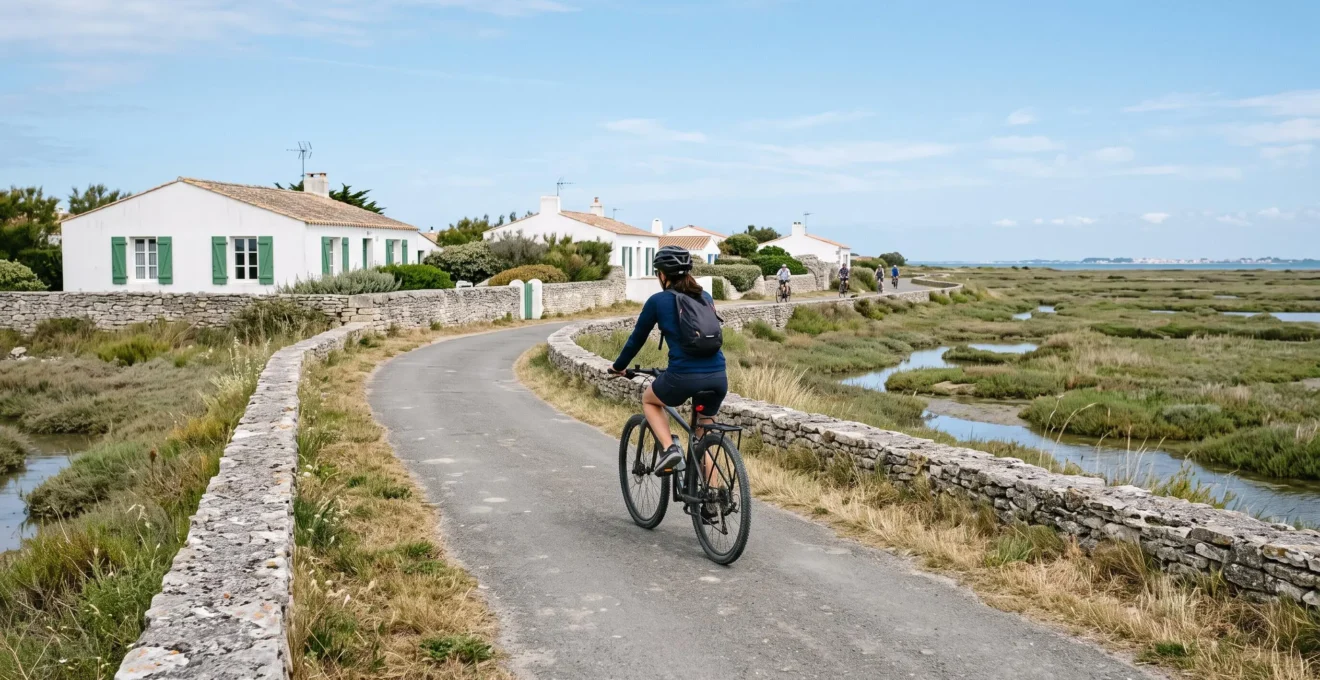
If you’re visiting Île de Ré with limited time and you don’t want to rely on a car, cycling is usually the simplest way to get around. The island is largely flat, villages are spaced in a way that makes short rides realistic, and you can stop whenever the landscape or a market catches your eye.
This article helps you explore Île de Ré by bike with a clear plan: how the cycle paths work, where to rent, which stops are worth it, and a one-day itinerary designed for beginners.
Your quick plan for cycling Île de Ré
- Count on a dense network of signposted pistes cyclables linking villages (officially listed at about 138 km).
- Rent a bike in a main village (book ahead in peak season) and ask for a lock and lights.
- Pick 3–5 meaningful stops (market + port + salt marshes + one “big” landmark) instead of trying to “do everything”.
- Ride at an easy pace and plan buffer time for photo stops and snack breaks.
- Use the official cycle map to choose quieter paths and avoid guesswork.
Why Cycling Is the Best Way to Explore Île de Ré
Direct answer: Cycling is the best way to explore Île de Ré because the island is mostly flat and connected by a large network of dedicated cycle routes, making village-to-village travel easy without a car.
The island is set up for slow, scenic movement: short hops between villages, coastal views, pine woods, and salt marsh landscapes that are easy to enjoy when you’re not searching for parking. You also get a practical advantage: you can stop in a village for a market, detour to a beach access, then rejoin your route with minimal stress.
138km
Approximate length of Île de Ré’s cycle route network, as listed on the 2026 official map from the Communauté de Communes de l’Île de Ré.
That “network effect” is the real game-changer. According to the Communauté de Communes de l’Île de Ré, the island has “un réseau de 138 kilomètres d’itinéraires cyclables” (official map, 2026). You can check the exact layout on the carte officielle des itinéraires cyclables, which is useful for choosing calmer connectors and avoiding road-only stretches.
Bike vs car on the island: what changes in practice?
By car, a “simple” village-to-village move can mean roundabouts, summer traffic, and then the question of where to leave the vehicle once you arrive. By bike, you usually follow a marked piste cyclable, roll straight into the village, lock up near the center, and walk the small streets freely.
If you’re a beginner, the reassuring part is that you’re not signing up for a sporting challenge. The official Destination Île de Ré tourist office describes the island’s relief as mostly flat and presents cycling as accessible at your own pace—helpful if you’re thinking, “I’m not very fit, will I manage?” (More on that in the planning section.)
Decision tip: if you only have one day, cycling helps you keep momentum. You can “link” 3–5 stops without wasting time on parking and backtracking.
How the Island’s Bike Paths Work?
Île de Ré cycling revolves around signposted routes and dedicated paths—often called pistes cyclables—that connect villages. The key is not to memorize everything, but to understand how to ride safely and how to choose the right bike for your day.
Where can you rent a bike on Île de Ré?
You’ll typically find rental shops in the main villages (especially around arrival points and village centers). Because opening months and rental terms can change by season and by shop, the safest approach is to decide your route first, then contact a local rental provider for the exact bike type, opening hours, and conditions (deposit, ID, accessories).
When you rent, ask for what makes a day smooth rather than fast: a bike that fits your height, working lights, and a solid lock. If you’re carrying a picnic or beach gear, a basket or pannier can make the ride feel much easier.
Do you always have to use the cycle path in France?
No. In France, using a cycle path is not automatically mandatory. The rule can be made compulsory locally by the police authority, after the prefect’s opinion. This is stated in the article R431-9 du Code de la route.
On Île de Ré, you’ll generally want to use the marked paths when they exist because they’re designed for cyclists and help you avoid faster traffic. Still, ride defensively: respect shared spaces, slow down near pedestrians, and anticipate crossings.
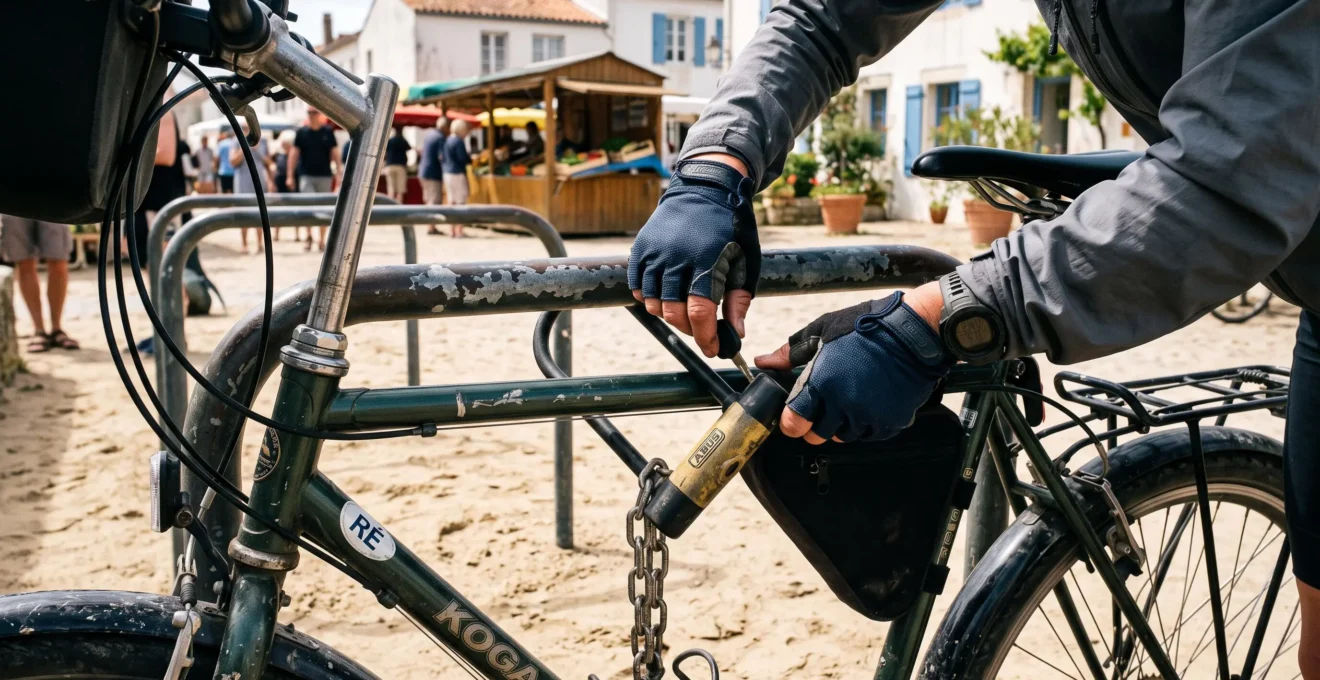
Beginner-friendly safety basics: Keep right, signal turns with your arm, slow down when paths get busy (especially in summer), and lock your bike every time you stop—even “just for 2 minutes”.
How do you follow the network without getting lost?
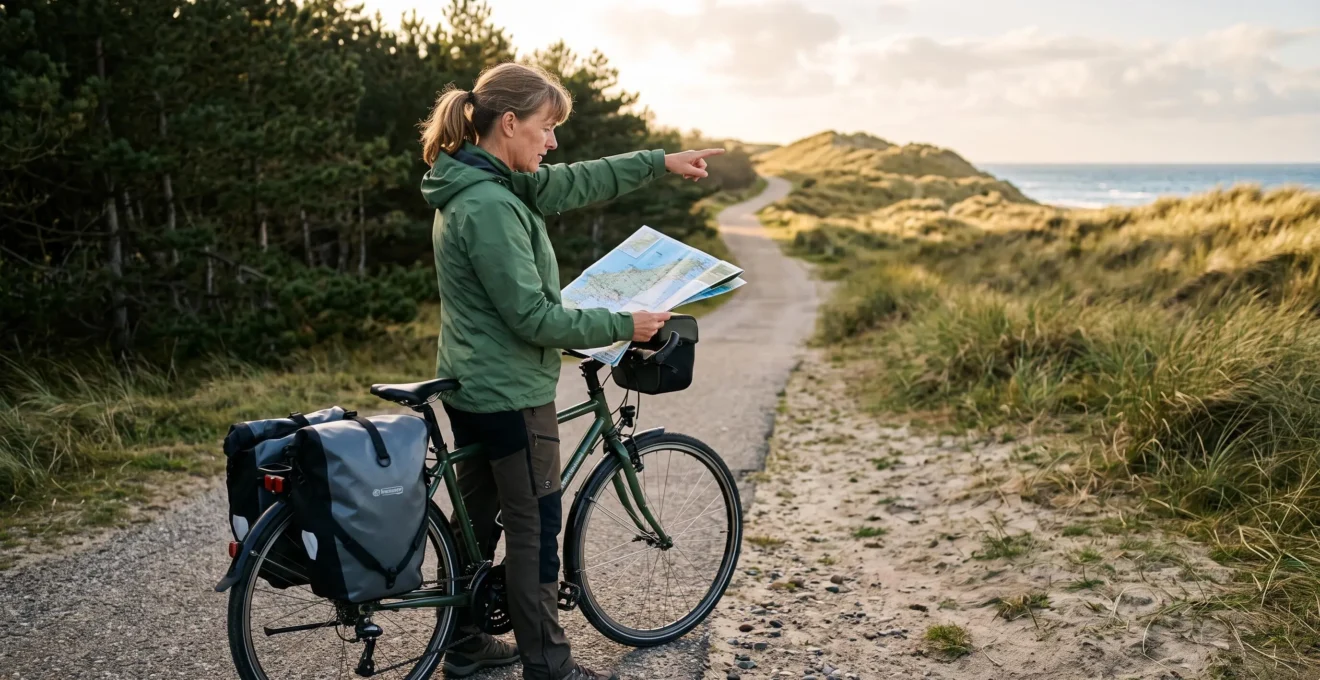
Use the official map (paper or digital) as your backbone, then keep your day simple: one “direction of travel” (east-to-west or the reverse) and a few planned stops. If you want a practical way to think about it, treat villages as “stations” on a line and pick the ones that match your interests (market, port, lighthouse, salt marshes).
Villages and Sights Worth a Bike Stop
If your time is limited, the best approach is to choose stops with different “feels”: one lively port, one classic village center, one nature landscape (like salt marshes), and one landmark. Destination Île de Ré highlights that the cycle paths connect the island’s villages, making this kind of mix easy to build without driving.
Which villages should you prioritize if it’s your first visit?
Rather than listing everything, prioritize villages that give you variety in a single day: a port atmosphere, local streets and small shops, and a calmer nature break in between. The island is made of ten villages, and the cycle network is designed to link them—so your choice is mostly about what you want to feel and photograph, not what is “possible”.
If you like slow exploration once you arrive, plan one stop where you’ll leave the bike and walk for 20–40 minutes. Those unplanned corners often become the highlight of the day—similar to what’s described in a simple walk that ends up shaping the whole trip.
What are the “signature” sights that work well by bike?
For many first-timers, the most memorable bike moments combine two things: a village pause (coffee, market, harbour) and a short nature segment (dunes, woods, salt marsh edges). You don’t need long hikes to feel the island—just plan time to stop, lock up, and wander a bit.
- You’re a beginner or riding with kids:
Choose fewer stops and longer breaks: one main village center + one nature viewpoint + an early lunch.
- You want “iconic” landmarks:
Add one bigger highlight (for example a lighthouse area), but keep the rest of the day simple to avoid rushing.
- You’re here for landscapes and calm:
Spend more time on the path segments near dunes, woods, and salt marshes, with fewer village detours.
Planning a One-Day Bike Itinerary
A realistic one-day plan on Île de Ré is not about crossing the whole island at all costs—it’s about choosing a route you can ride at a relaxed pace, with time to stop. The tourist office notes that distance tables between villages are available via local offices; use them to confirm your exact segments depending on where you start and finish.
Can you explore Île de Ré by bike in one day?
Yes—if “explore” means seeing a curated selection of villages and landscapes, not ticking every corner of the map. With a flat profile and a connected network, many visitors can comfortably ride several short segments in one day, especially if they keep stops focused and start early.
The practical limit is usually not fitness, but time: markets, photo breaks, beach accesses, and busy paths in high season can slow you down. That’s why an itinerary with clear “anchors” works better than a vague loop.
A beginner-friendly one-day itinerary (template you can adapt)
This is a practical template you can adjust to your accommodation and arrival point. It’s built around one simple idea: ride in one main direction, stop often, and avoid overloading the afternoon.
- 09:00–09:30 — Pick up the bike and do a 2-minute check
Adjust the saddle height, test brakes, confirm lights work, and decide where your lock and phone will sit.
- 09:30–11:00 — First ride segment (easy pace)
Follow the signposted pistes cyclables out of the village and settle into a steady rhythm. Plan a short photo stop rather than pushing speed.
- 11:00–12:00 — Village stop (market/port streets)
Lock the bike and walk. This is where your day feels “Île de Ré”, even if you only stay one hour.
- 12:00–13:30 — Lunch + shade break
Eat earlier rather than later if you’re visiting in summer. Refill water before leaving.
- 13:30–15:00 — Second ride segment (nature focus)
Choose a path segment that gives you scenery—salt marsh edges, dunes, or pine woods—then take a short pause before the next village.
- 15:00–16:30 — One “big” stop
Pick one landmark-style stop (or your favorite village) and give it time. This prevents the end of the day feeling rushed.
- 16:30–18:00 — Return segment + flexible detour
If you feel good, add a small detour; if not, follow the most direct cycle route back.
How to shorten or extend the day without stress
To shorten: remove the “big stop” and do two village pauses only (one morning, one afternoon). To extend: keep the same number of stops, but add time to the scenic segments—this is usually more enjoyable than stacking extra villages.
Practical pacing rule: if you feel like you’re “late”, stop adding detours. The island will still be there, and a calm finish is part of the experience.
What Should You Know Before Setting Off?
The biggest difference between a perfect bike day and a frustrating one is preparation. On Île de Ré, wind and crowds can change how a short distance feels—so it’s smart to plan with buffers and keep your gear simple.
Is cycling on Île de Ré suitable for beginners and families?
It can be, thanks to the mostly flat relief and the island’s connected cycle network as presented by the official tourist office. The practical condition is to keep the itinerary modest, avoid peak crowd hours on the busiest paths, and plan frequent breaks.
Peak-season reality check: In summer, some cycle paths and village centers can be very busy. Start earlier, slow down near pedestrians, and avoid trying to “fit everything in”.
What should you know before renting a bike on Île de Ré?
Because rental conditions vary, confirm three things before you commit: what’s included (lock, lights, helmet availability), what happens in case of a flat tyre, and the return time (end of day vs 24 hours). If you’re visiting during high season, booking ahead can save you time on arrival—especially if you need a specific size or a child seat.
Your checklist before you roll out
- Water (and a refill plan between villages)
- Sunscreen and something to cover your shoulders if it’s hot
- Lock (use it at every stop)
- Phone + offline map or a paper map
- Basic comfort: sunglasses, light layer for wind, snacks
If you’re still hesitating, keep it simple: pick a half-day loop near your base first. Once you’ve done that, planning a full-day ride feels much more obvious—and you’ll know what pace is comfortable for you.
Which bike route should I pick with only one day on the island?
Where can I rent a bike when I arrive on Île de Ré?
Is the island flat enough for easy cycling?
With a simple route, a realistic pace, and a couple of well-chosen stops, exploring Île de Ré by bike becomes the easiest way to feel the island—without losing time to logistics.