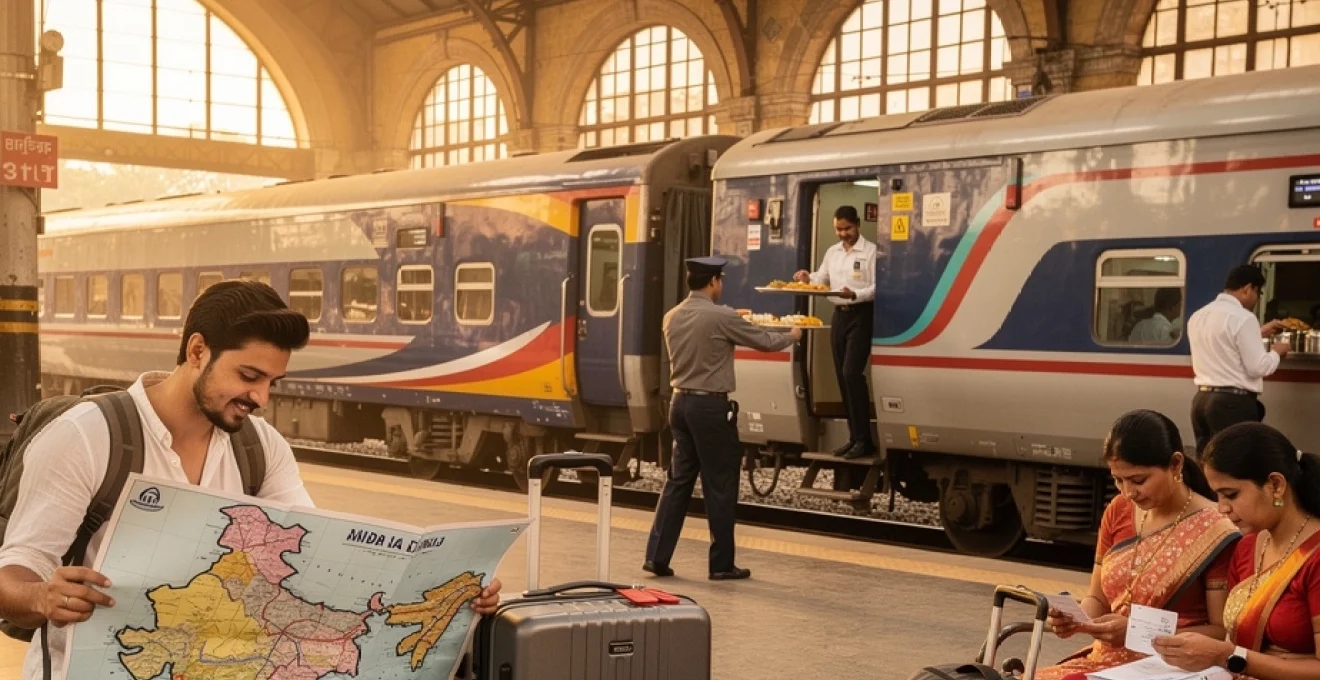
India’s vast railway network stretches across 68,000 kilometres, connecting remote villages to bustling metropolitan cities, forming one of the world’s most extensive and democratic transport systems. For travellers seeking to experience the subcontinent’s diverse landscapes, cultures, and communities, long-distance train journeys offer an unparalleled opportunity to witness the country’s remarkable contrasts. From the snow-capped Himalayas to tropical coastal regions, from ancient heritage sites to modern urban centres, rail travel provides a window into India’s soul that no other mode of transport can replicate. Embarking on a multi-day railway adventure requires careful preparation, an understanding of booking systems, and appreciation for the unique rhythms of life aboard India’s iconic trains.
Understanding indian railways infrastructure and booking systems
Indian Railways operates under a complex yet remarkably efficient system that handles over 23 million passengers daily across thousands of trains. The infrastructure encompasses everything from heritage narrow-gauge lines winding through mountains to high-speed corridors connecting major economic hubs. Understanding this vast network is essential for anyone planning an extended rail journey across the subcontinent. The reservation system, managed through IRCTC (Indian Railway Catering and Tourism Corporation), has evolved considerably over the past decade, transforming from chaotic booking counters to a predominantly digital platform accessible worldwide.
IRCTC registration and tatkal quota reservation strategies
Creating an IRCTC account represents your first essential step toward exploring India by rail. The registration process requires a valid email address, mobile number, and government-issued identification. Once registered, you’ll gain access to the comprehensive booking system where you can reserve tickets up to 120 days in advance for most mail and express trains. The platform allows you to search routes, compare train options, select preferred classes, and complete transactions using various payment methods including international credit cards.
The Tatkal quota deserves special attention for those planning last-minute travel. This emergency reservation system opens exactly one day before departure—at 10:00 AM for AC classes and 11:00 AM for non-AC classes. Tatkal bookings involve higher charges but provide crucial access when advance quotas are exhausted. Successful Tatkal booking requires preparation: have your account pre-loaded with passenger details, payment information saved, and a stable internet connection. The system experiences extreme traffic during opening minutes, with popular routes selling out within seconds. Experienced travellers often use autofill browser extensions and maintain multiple payment options to maximise booking success rates.
Decoding train classes: 1AC, 2AC, 3AC, sleeper, and chair car specifications
Indian Railways offers a remarkable range of travel classes catering to virtually every budget and comfort preference. First AC (1AC) represents the pinnacle of railway luxury, featuring enclosed cabins with two or four berths, individual reading lights, charging points, and attendant service. These compartments provide privacy comparable to hotel rooms, making them ideal for business travellers or those seeking maximum comfort during overnight journeys. The fare structure reflects this premium experience, often approaching or exceeding budget airline prices on equivalent routes.
Second AC (2AC) offers excellent value for long-distance travel, with open-bay configurations containing six berths per compartment. Curtains provide reasonable privacy, and the air-conditioned environment ensures comfort even during India’s scorching summers. Third AC (3AC) follows a similar layout but accommodates eight berths per bay, making it slightly more crowded yet still comfortable for overnight travel. Both 2AC and 3AC include bedding provisions and access to Western-style toilets, essential considerations for extended journeys.
Sleeper Class represents the backbone of Indian Railways, carrying millions of middle-class passengers daily. Without air conditioning but with opening windows that allow fresh air and unfiltered experiences of passing landscapes, Sleeper Class offers an authentic glimpse into everyday Indian life. The open configuration facilitates conversations with fellow passengers, often leading to shared meals and lasting friendships. Chair Car, found primarily on shorter daytime routes and Shatabdi Express services, provides aircraft-style seating with generous legroom and meal service included in premium trains.
Dynamic fare pricing on rajdhani, shatabdi, and duronto express services
Indian Railways
Indian Railways employs dynamic fare pricing on premium services such as Rajdhani, Shatabdi, and Duronto Express trains. Instead of fixed fares, prices increase in slabs as seats are sold, similar to airline revenue management systems. Booking well in advance generally secures the lowest fare buckets, while last-minute reservations on popular dates can be significantly more expensive. If you are flexible with your travel dates and departure times, you can often save money by choosing less popular days of the week, early-morning departures, or alternative trains on the same route.
For long-distance train travel, understanding this pricing structure helps you balance comfort and budget. Rajdhani and Duronto trains include meals in the ticket price and offer faster transit times, reducing overall journey fatigue. Shatabdi Express services cater mainly to day travellers with air-conditioned chair cars and inclusive catering, ideal for business trips and short intercity hops. When planning a multi-city itinerary, it can be smart to combine one or two premium dynamic-fare segments with slower, fixed-fare express trains, creating a cost-effective yet comfortable rail adventure.
Navigating waitlisted tickets and RAC confirmation probabilities
Waitlisted tickets and Reservation Against Cancellation (RAC) are integral parts of the Indian Railways booking ecosystem. When all confirmed berths are sold, the system issues waitlist numbers (WL) that move toward confirmation as passengers cancel their tickets. RAC status guarantees you the right to board the train and provides a shared berth, which usually converts into a full berth as further cancellations occur. Understanding your position in the queue—such as GNWL (General Waitlist) or RLWL (Remote Location Waitlist)—helps you judge the likelihood of confirmation.
How can you estimate whether your long-distance train ticket will get confirmed? Historical trends show that mainline routes originating from major cities have higher confirmation probabilities for GNWL compared to remote-location quotas. Several third-party apps and websites offer predictive tools that analyse past data to estimate confirmation chances, especially useful for peak seasons like festivals and school holidays. As a precaution, travellers often book an alternative train on the same day or keep a backup mode of transport in mind when their waitlist status appears risky a day or two before departure.
Planning multi-city railway routes across indian terrain
Designing a multi-city journey across India by train is a bit like assembling a jigsaw puzzle: every segment must fit together in terms of timing, distance, and connection windows. The country’s geography—ranging from desert plains to coastal belts and mountainous regions—means that average speeds vary considerably between routes. When planning long-distance rail travel, we need to consider buffer times between trains, the reliability of particular corridors, and seasonal disruptions such as monsoon-related delays on the Konkan coast. Using route-planning tools, timetables, and live train status platforms allows you to craft an itinerary that is ambitious yet realistic.
One effective approach is to anchor your trip around major railway hubs like Delhi, Mumbai, Chennai, Kolkata, and Bengaluru, then build side trips to nearby destinations. These junctions offer multiple daily connections, improving your chances of finding convenient departure times and comfortable train classes. Overnight trains can be especially efficient for long sectors, acting as “moving hotels” that save both time and accommodation costs. With a bit of foresight, you can weave together heritage cities, national parks, coastal towns, and hill stations into one continuous rail adventure across India.
Golden triangle circuit: Delhi-Agra-Jaipur rail connections
The classic Golden Triangle—Delhi, Agra, and Jaipur—forms one of India’s most popular tourist circuits and is exceptionally well served by trains. High-frequency intercity and superfast services operate between Delhi and Agra, including the Gatimaan Express and Shatabdi Express, which cover the distance in around two hours. From Agra to Jaipur, several daily trains traverse Rajasthan’s shifting landscapes, while the Delhi–Jaipur route offers Shatabdi, Vande Bharat, and overnight options. For long-distance travellers, integrating this triangle into a broader itinerary is straightforward because Delhi acts as a gateway to almost every region of the country.
When should you ride which train? Daytime chair-car services are perfect if you want to maximise sightseeing time and enjoy landscapes in natural light. Overnight trains can be useful when connecting from or to longer cross-country routes, allowing you to arrive refreshed for early-morning tours of the Taj Mahal or Amber Fort. Booking 2AC or 3AC on overnight segments balances comfort and cost, while Chair Car suits shorter hops. By checking train running status and integrating generous buffers between connections, you can experience the Golden Triangle without feeling rushed.
Trans-continental routes: mumbai CST to howrah via central railway
The journey between Mumbai’s historic Chhatrapati Shivaji Maharaj Terminus (CSMT) and Howrah Junction near Kolkata is one of India’s great trans-continental rail routes. Spanning central India, these trains traverse Maharashtra, Chhattisgarh, Odisha, and West Bengal, showcasing industrial towns, dense forests, and fertile river plains. Long-distance services such as the Mumbai–Howrah Mail and various Duronto and Superfast trains cover the roughly 2,000-kilometre distance in 30–36 hours, making them ideal for travellers who want to immerse themselves in the rhythm of Indian rail life. On such extended journeys, proper planning around food, hygiene, and rest becomes especially important.
If you are plotting a multi-stop itinerary, this corridor offers several interesting break points. You might disembark at Nagpur, “the orange city,” to connect toward central India’s tiger reserves, or at Bilaspur and Raipur for access to tribal regions and lesser-known cultural sites. Because these trains are heavily used by long-distance passengers, booking early—particularly in 2AC and 3AC—is advisable. Monitoring dynamic fares on premium services and comparing them with conventional express trains can help you choose the right balance of speed, comfort, and cost for this iconic cross-India ride.
Southern peninsula itineraries: Chennai-Bangalore-Kochi corridor
Southern India lends itself beautifully to long-distance rail exploration, and the Chennai–Bengaluru–Kochi corridor is one of the most versatile routes. High-frequency trains connect Chennai and Bengaluru in 5–7 hours, with options ranging from budget Sleeper Class to air-conditioned Chair Car and AC coaches on overnight expresses. From Bengaluru to Kochi (via Ernakulam), trains wind through the lush Western Ghats or coastal plains, revealing plantations, rivers, and backwaters along the way. This makes the route an attractive backbone for a broader South India itinerary that might also include Mysuru, Madurai, and Thiruvananthapuram.
How do you make the most of this corridor? One strategy is to use overnight trains for the longer legs, freeing your days for city exploration and local experiences. For example, travel by night from Chennai to Bengaluru, spend a couple of days in the tech hub and heritage sites, then board an overnight train toward Kochi to wake up near Kerala’s famous backwaters. Regional intercity trains can then be used for shorter hops within Kerala’s dense network. Because southern routes can be affected by seasonal rains, keeping an eye on live running status and leaving margin between connections is wise.
Himalayan foothills: Kalka-Shimla and darjeeling toy train extensions
No long-distance Indian rail adventure feels complete without at least one journey on a heritage “toy train” in the Himalayan foothills. The Kalka–Shimla Railway, a UNESCO World Heritage Site, climbs from the plains of Haryana into the cool hill station of Shimla through more than 100 tunnels and numerous stone bridges. Most travellers reach Kalka by overnight or early-morning trains from Delhi or Chandigarh, then transfer to the narrow-gauge toy train for a leisurely ascent that can take five to six hours. Because seating is limited and the route is highly popular in summer, advance reservations are essential.
On the eastern side of the Himalayas, the Darjeeling Himalayan Railway offers another unforgettable extension to your long-distance train itinerary. Travellers usually arrive at New Jalpaiguri (NJP) by broad-gauge trains from Kolkata, Delhi, or Guwahati, then connect to the narrow-gauge service climbing to Darjeeling. The toy train’s pace is unhurried, allowing you to absorb tea gardens, mountain vistas, and local life at close quarters—like watching a slow-motion film of the Himalayan foothills. Weather can impact operations, particularly during monsoon and winter, so it is sensible to build in flexibility and stay updated on service status before committing to tight onward connections.
Essential luggage and documentation for extended rail travel
Thoughtful packing can determine whether your long-distance train journey feels liberating or cumbersome. Because Indian Railways does not typically check bags in the way airlines do, you are responsible for managing your luggage from platform to coach and within often-busy compartments. The key is to travel light while still carrying all essentials for comfort, hygiene, and safety. A combination of one medium-sized suitcase or backpack and a smaller daypack works well for most travellers, allowing you to keep valuables close while storing bulkier items safely under the berth or in overhead racks.
Documentation is just as important as physical luggage when you travel across India by train. In addition to confirmed tickets (printed or digital), you will need valid photo identification, and in some cases, supporting documents such as concession certificates or permits. Keeping digital copies of passports, visas, and tickets on your phone—backed up in cloud storage—can be a lifesaver if physical documents are misplaced. For multi-day trips involving multiple states, organising all paperwork in a dedicated folder or pouch helps you access them quickly during checks or station transfers.
Permitted baggage allowances and secure storage solutions in indian coaches
While Indian Railways does not enforce baggage limits as strictly as airlines, there are prescribed allowances, especially for AC classes. As a general guideline, AC First Class passengers can carry up to around 70 kg, 2AC and 3AC about 50 kg, and Sleeper and Second Class around 40 kg without extra charges, though staff rarely weigh bags unless they are clearly excessive. For long-distance train travel, practical considerations are often more important than hard limits: bulky luggage can be challenging to manoeuvre on crowded platforms and narrow coach corridors. Travelling with compact, wheeled luggage or backpacks simplifies boarding and disembarking, especially during short station halts.
Once on board, secure storage becomes a priority. Most long-distance coaches provide space under lower berths where larger bags can be slid and locked to the seat frame with a chain and padlock. Overhead racks hold smaller bags and backpacks, but valuables like passports, electronics, and wallets are best kept in a daypack that stays with you. Some premium classes, particularly 1AC, offer lockable cabins or compartments, enhancing peace of mind on overnight journeys. By distributing your belongings—heavy items under the berth, essentials in reach—you minimise both clutter and risk.
Mandatory photo ID requirements and e-ticket verification procedures
Indian Railways requires at least one passenger in every booking to carry a valid government-issued photo ID, and for certain quotas (such as senior citizen or student concessions), all beneficiaries must carry proof. Acceptable IDs include passports, Aadhaar cards, voter IDs, driving licences, and for foreign visitors, typically the passport with valid visa. When travelling on an e-ticket, the name and ID number of at least one passenger must match exactly with the details entered during booking. Ticket examiners (TTEs) conduct random and routine checks, especially on longer routes and in reserved classes, so keeping your ID readily accessible avoids delays and confusion.
E-tickets, accessed via mobile apps or PDF printouts, have largely replaced paper tickets, streamlining the boarding process. While carrying a printed copy is still useful in case of phone battery issues, many TTES now accept digital displays on smartphones as sufficient proof. It is important not to rely on screenshots alone if your ticket has been recently modified, as live versions in IRCTC or partner apps reflect the latest status, including coach and berth numbers. For safety, many travellers keep a backup copy of tickets in email or cloud storage so they can be retrieved even if a device is lost or damaged mid-journey.
Medical kits, water purification, and hygiene essentials for multi-day journeys
Spending 24–48 hours on a train means you are in a semi-enclosed environment where access to pharmacies and clinics is limited. A compact medical kit is therefore indispensable for long-distance train travel in India. Basic contents should include pain relievers, anti-diarrhoeal tablets, antihistamines for allergies, motion sickness medication, band-aids, antiseptic cream, and any personal prescription drugs in original packaging. If you wear glasses or contact lenses, carrying a backup pair and cleaning solution prevents minor inconveniences from becoming major problems on board.
Water and hygiene management are equally crucial. While bottled water is widely available at most major stations and through onboard vendors, some travellers prefer portable water purification options—such as chlorine tablets or filter bottles—especially in remote areas. Hand sanitiser, wet wipes, and a small bar of soap can make a noticeable difference in daily comfort when toilets and washbasins are shared. Consider packing a lightweight quick-dry towel, tissues, and biodegradable trash bags to manage personal waste responsibly. By treating your coach as a temporary home and carrying the right hygiene tools, you make multi-day journeys far more pleasant for yourself and fellow passengers.
Onboard amenities and pantry car services across train categories
Indian Railways offers a wide spectrum of onboard amenities depending on the train category and class of travel. Premium trains such as Rajdhani, Duronto, and Shatabdi typically include meals, bottled water, and bedding as part of the fare, creating an experience closer to that of an overnight flight or full-service bus. Many long-distance express trains also feature pantry cars that prepare hot meals, snacks, and beverages for purchase en route. In recent years, the rise of e-catering has further expanded dining options, allowing you to order restaurant-quality food delivered directly to your seat at selected stations.
Amenities extend beyond food. Most AC coaches now provide electrical charging points, reading lights, and improved toilets, while some newer trains feature bio-vacuum systems and sensor-based taps. However, facilities can vary widely between routes and rolling stock, so it is wise to check recent reviews or train-specific information when planning particularly long journeys. By understanding what each train category offers, you can decide what to pack—from extra blankets to power banks—to bridge any gaps in onboard services.
IRCTC e-catering pre-booking from platforms like TravelKhana and RailRestro
E-catering has transformed how passengers eat during long-distance train journeys in India. Through IRCTC’s official e-catering service and partner platforms such as TravelKhana and RailRestro, you can pre-order meals from a variety of restaurants at selected stations along your route. Once you enter your PNR number, these platforms display menus and delivery times, enabling you to choose cuisines ranging from regional thalis and biryanis to continental and fast-food options. Meals are usually delivered fresh to your berth when the train arrives at the designated station, offering far more choice than traditional pantry car fare.
Why is this particularly useful for long-distance rail adventure? On journeys spanning multiple days, the variety and quality of food can significantly influence your overall experience. E-catering allows you to sample local specialities—for example, ordering dosa in South India or kachori in North India—without leaving your coach or worrying about train halt durations. It also helps travellers with dietary preferences or restrictions, such as vegetarian, vegan, or Jain meals, to find suitable options. To avoid disappointment, place your orders at least a couple of hours before the scheduled station arrival and keep your phone reachable so delivery staff can contact you if needed.
Electrical charging points and mobile connectivity in premium trains
Staying connected during long-distance train travel is almost as important as having a comfortable berth. Most AC coaches in express and premium trains now offer multiple electrical charging points—either at the end of each bay, near the window seats, or in shared panels along the aisle. Newer LHB coaches and Vande Bharat-style trains may provide a higher density of sockets, sometimes including USB outlets, but carrying a small power strip or multi-plug adapter remains a practical solution when outlets are scarce. Power supply can occasionally be interrupted during locomotive changes or technical issues, so travelling with a fully charged power bank gives you an extra layer of security.
Mobile connectivity, on the other hand, varies according to terrain and network coverage. On plain stretches and near cities, 4G connections are usually stable enough for browsing, messaging, and even streaming. However, in forested, mountainous, or sparsely populated regions, signals can drop for extended periods. Downloading essential maps, entertainment, and reading material for offline use before departure ensures you stay engaged even when the network fades. Some travellers treat these connectivity gaps as an invitation to disconnect, read, or simply watch the countryside roll by—one of the quiet joys of long-distance train journeys in India.
Bedding supply protocols and linen management by indian railways
On most long-distance AC trains, Indian Railways provides bedding kits that typically include two sheets, a pillow with cover, and a blanket. In the wake of heightened hygiene awareness, many trains temporarily suspended or modified bedding services, but they are gradually being reintroduced with improved laundering protocols. Linens are usually distributed by coach attendants shortly after departure on overnight journeys and collected in the morning before arrival. In 1AC, you may find bedding already laid out in your cabin, enhancing the feel of a private room on rails.
If you are particular about cleanliness or sensitive to allergens, you may wish to carry your own lightweight travel sheet, pillow cover, or even a compact sleeping bag liner. Sleeper Class passengers do not receive bedding by default, so packing a shawl or light blanket is advisable, especially in airier overnight coaches or during winter. Regardless of class, a small travel pillow and eye mask can greatly improve sleeping comfort, while earplugs or noise-cancelling headphones help filter out ambient sounds. With a few thoughtful additions, your berth can feel surprisingly cosy, even on journeys stretching across two or more nights.
Safety protocols and health considerations during long-distance travel
Safety and health are central concerns when planning long-distance rail travel across India’s vast network. While Indian Railways has implemented numerous measures—from CCTV cameras at major stations to dedicated security forces like the Railway Protection Force (RPF)—travellers still play a vital role in safeguarding themselves and their belongings. Simple precautions, such as watching your bags on crowded platforms and avoiding isolated areas late at night, go a long way. Health-wise, the combination of varied food, changing climates, and extended sitting or sleeping in confined spaces calls for a proactive approach to well-being.
Thinking of your train coach as a shared living space for a temporary community can be a helpful analogy. Just as you would in a hostel or dormitory, you manage personal space, respect others, and take basic hygiene measures. Staying hydrated, stretching regularly, and eating moderately helps prevent discomfort on multi-day journeys. Being prepared for minor illnesses and knowing how to respond in case of more serious issues offers peace of mind, allowing you to focus on the experience rather than worry about what might go wrong.
Overnight journey security: chain locks and personal belongings management
Overnight trains are a highlight of long-distance rail travel in India, but they also require careful management of personal security. Most seasoned travellers carry a sturdy chain and padlock to secure large bags to the metal loop under lower berths or seat frames. This simple step acts as both a physical and psychological deterrent, making opportunistic theft far less likely. Smaller valuables—phones, wallets, passports, and cameras—are best kept in a money belt or neck pouch worn under clothing, or in a zipped daypack that stays close to your head when you sleep.
How do you balance safety with comfort? One approach is to organise your belongings into layers: irreplaceable items stay on your person, frequently used essentials (like a water bottle, book, or sweater) go into a small bag by your berth, and bulkier luggage is locked under the seat. Avoid displaying large amounts of cash or expensive gadgets unnecessarily, especially in crowded stations or at night. Travelling in groups or forming informal watch arrangements with trusted co-passengers can add another layer of security, turning the overnight coach into a cooperative and reassuring environment.
Food safety standards at railway stations like new delhi, mumbai central, and howrah junction
Major stations such as New Delhi, Mumbai Central, and Howrah Junction host a wide variety of food outlets, ranging from branded chains to local snack vendors. Officially licensed stalls are expected to follow food safety regulations, but standards can still vary, especially in high-traffic areas. To reduce the risk of stomach upsets, favour busy stalls with a high turnover of freshly cooked food, avoid items that have been sitting uncovered for long periods, and be cautious with raw salads and cut fruits. Hot, thoroughly cooked dishes are generally safer than cold or reheated items.
If you are sensitive to dietary changes, consider relying more on e-catering orders from vetted restaurants or carrying a supply of dry snacks such as nuts, biscuits, and energy bars. Bottled water from reputable brands, purchased from authorised kiosks, remains the safest drinking option at stations. Many travellers follow a simple rule of thumb: “If in doubt, skip it,” especially on the day before a long onward train leg. By combining common sense with the convenience of modern e-catering, you can enjoy station cuisine while keeping food-related health risks to a minimum.
Medical emergency response and TDR filing for service disruptions
Despite best efforts, medical emergencies can occur during long-distance train journeys. Indian Railways provides emergency helpline numbers, and many long-distance trains carry basic first-aid kits with staff trained to coordinate assistance. In serious cases, the train can be halted at the nearest station where medical support is available, and announcements are made to locate doctors among passengers if needed. Keeping a note of important numbers—railway helplines, personal emergency contacts, and travel insurance hotlines—on paper as well as on your phone helps in critical moments.
Service disruptions such as significant delays, cancellations, or abrupt changes in coach composition may entitle you to partial refunds under the Ticket Deposit Receipt (TDR) system. TDR filing, usually done online through IRCTC, allows passengers to claim refunds for issues like train cancellations, non-travel due to illness, or failure to provide reserved accommodation. Understanding these rules before you travel is like having an insurance policy against unforeseen events: you hope not to need it, but you are glad it exists. Filing TDRs within the stipulated time frame and keeping supporting documentation—such as medical certificates or cancellation notices—improves the chances of a favourable outcome.
Maximising the cultural experience at major railway junctions
For many travellers, India’s railway stations are more than transit points; they are living museums of culture, commerce, and everyday life. Major junctions bring together people from diverse regions, languages, and backgrounds, creating a microcosm of the country in a single, bustling space. By scheduling slightly longer layovers at key stations, you can explore heritage architecture, sample local street food, and observe the intricate choreography of porters, vendors, and commuters. Long-distance train travel thus becomes not just a way of getting from A to B, but a continuous cultural immersion.
Rather than treating each stop as a brief interruption, you can view stations as chapters in your rail adventure narrative. What stories do the walls, signboards, and hawkers tell about the city you are passing through? How do regional languages and clothing styles shift as you move from one zone to another? With a curious eye and a bit of extra time, railway junctions transform from anonymous locations into memorable travel experiences in their own right.
Architectural heritage of victoria terminus and chhatrapati shivaji maharaj terminus
Mumbai’s iconic Chhatrapati Shivaji Maharaj Terminus (CSMT), formerly known as Victoria Terminus, is both a functional railway hub and an architectural masterpiece. Completed in 1887, this UNESCO World Heritage Site blends Victorian Gothic design with Indian motifs, featuring ornate stone carvings, stained glass windows, and an imposing central dome. For rail enthusiasts and history lovers, arriving or departing from CSMT turns a regular journey into a voyage through time. If your train schedule allows, taking a short walking tour of the station’s exterior and main concourse reveals intricate details that are easy to miss in the rush of boarding.
Viewing the terminus in the early morning or late evening, when light plays off its sculpted façade, is a highlight of many long-distance train itineraries. Photography is generally allowed in public areas, though it is advisable to avoid sensitive operational zones and follow security guidelines. Inside, the high ceilings, arched windows, and vintage nameboards evoke the romance of rail travel from a bygone era. By pausing to appreciate CSMT as a cultural landmark rather than just a departure point, you deepen your connection with India’s railway heritage.
Regional cuisine sampling at platforms in varanasi, ahmedabad, and madurai
Each major railway junction in India offers a distinct culinary snapshot of its region, and tasting local dishes on platforms can be a rewarding part of your journey. At Varanasi Junction, you might savour hot kachori-sabzi, jalebi, or a steaming cup of spiced tea served in traditional clay cups. Ahmedabad’s stations introduce you to Gujarati flavours like dhokla, fafda, and thepla, often sold in neatly packed boxes ideal for carrying onto the train. In Madurai, the aroma of freshly steamed idlis, crispy dosas, and filter coffee reflects Tamil Nadu’s rich culinary heritage.
How can you sample these delights without overloading your stomach or your luggage? One strategy is to share portions with travel companions or buy small quantities at each stop, turning your long-distance train route into a progressive tasting tour. Combining cautious selection—choosing busy, clean-looking stalls—with the convenience of e-catering from reputable restaurants allows you to balance authenticity and safety. By the end of your journey, your palate may have travelled as far as your train has, leaving you with flavourful memories linked to specific stations and landscapes.
Photography opportunities on scenic routes: konkan railway and northeast frontier
Some Indian rail routes are so scenic that they feel like moving viewpoints designed for photographers and nature lovers. The Konkan Railway, running along the western coast between Mumbai and Mangaluru, is famous for its dramatic cliffs, tunnels, rivers, and glimpses of the Arabian Sea. Travelling this route during the monsoon months, when waterfalls cascade down lush green hillsides, is particularly enchanting—though it can also mean slower journeys and occasional delays. The Northeast Frontier Railway, serving states like Assam, Meghalaya (via road connections), and Arunachal Pradesh, offers vistas of tea gardens, misty hills, and wide river valleys.
When capturing images from train windows, safety and etiquette come first. Avoid leaning out of doors or windows, especially on fast-moving trains and near tunnels or trackside structures. Instead, use clean windows, wide-angle lenses, and fast shutter speeds to freeze passing landscapes. Early morning and late afternoon light often yield the most evocative photographs, turning ordinary scenes into painterly compositions. Whether you are shooting with a professional camera or a smartphone, these routes remind us that the journey across India by train is as much about what you see along the way as it is about where you ultimately arrive.