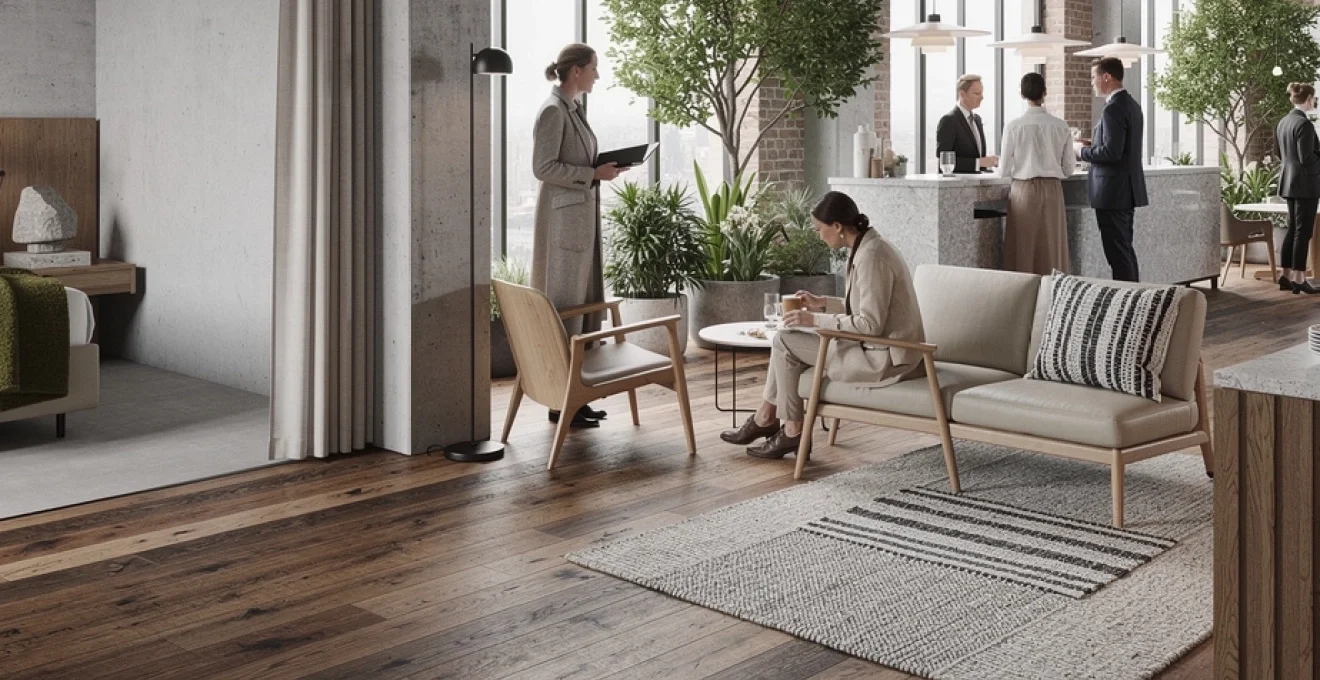
Copenhagen has emerged as a global epicentre for design-conscious hospitality, where historic architecture meets contemporary Scandinavian minimalism. The Danish capital’s hotel landscape reflects a profound respect for functionalism, material authenticity, and spatial refinement—principles that have defined Nordic design for generations. From adaptive reuse projects transforming century-old buildings into elegant accommodations to purpose-built structures incorporating cutting-edge sustainability practices, Copenhagen’s design hotels offer travellers an immersive experience in the aesthetic philosophy that has captivated architects and interior designers worldwide. These establishments don’t merely provide lodging; they function as living galleries where every element—from the carefully curated furniture to the precisely calculated natural light—demonstrates the timeless appeal of Scandinavian design principles applied to hospitality spaces.
Defining scandinavian minimalism in contemporary hospitality architecture
Scandinavian minimalism in hospitality design represents far more than aesthetic restraint. This design philosophy emerged from geographic and cultural conditions unique to Northern Europe, where long winter nights and limited natural resources fostered an appreciation for light maximisation, functional simplicity, and sustainable material choices. Contemporary Copenhagen hotels embody these principles whilst incorporating modern technologies and evolving sustainability standards that address today’s environmental challenges.
Functionalism and form: the bauhaus influence on nordic design principles
The intersection of Bauhaus modernism and traditional Scandinavian craftsmanship created the foundation for today’s Nordic hospitality design. When you examine Copenhagen’s premier design hotels, you’ll notice how form follows function without sacrificing aesthetic appeal. Each architectural element serves a purpose—whether enhancing acoustic properties, improving circulation patterns, or facilitating natural ventilation. This pragmatic approach descended from the Bauhaus movement’s emphasis on democratised design, where beautiful objects should be accessible and functional rather than purely decorative. In hotel contexts, this translates to guest rooms where storage solutions integrate seamlessly into wall structures, lighting fixtures provide both ambient and task illumination, and furniture serves multiple purposes without visual clutter.
Material authenticity: natural wood, stone, and textile integration
Material authenticity forms the cornerstone of Scandinavian hospitality design. Copenhagen’s design hotels showcase untreated oak, limestone, and natural textiles that age gracefully rather than deteriorate. The Danish concept of “ærlig materialer” (honest materials) demands that surfaces reveal their true nature—wood grain remains visible, stone textures feel tactile, and fabrics display their weave patterns. This authenticity creates psychological comfort for guests, as neuroscience research demonstrates that natural materials reduce stress responses and promote wellbeing. Recent studies indicate that hotel guests in rooms featuring natural materials report 23% higher satisfaction scores compared to synthetic-dominated spaces, validating the Scandinavian emphasis on material genuineness.
Colour palettes: monochromatic schemes and muted earth tones
The restrained colour palettes characteristic of Scandinavian design serve both aesthetic and psychological functions. Copenhagen’s design hotels predominantly feature whites, greys, and muted earth tones that create visual calm whilst maximising light reflection—particularly valuable during Denmark’s darker months. These neutral foundations allow natural materials to become focal points, with wood grain variations, stone veining, and textile textures providing subtle visual interest. Strategic colour accents appear through artwork, ceramics, or seasonal textiles, but never overwhelm the overall palette. This approach differs markedly from maximalist hospitality trends elsewhere, offering guests a respite from visual overstimulation whilst maintaining sophisticated elegance.
Spatial philosophy: negative space and light maximisation techniques
Scandinavian spatial philosophy treats empty space as a design element with inherent value. Rather than filling every corner, Copenhagen’s minimalist hotels embrace negative space that allows architectural features and selected furnishings to breathe. This spatial generosity creates psychological ease, as research shows that cluttered environments increase cortisol levels and reduce cognitive function. Light maximisation techniques include oversized windows, reflective surfaces, and strategic mirror placement that amplify both natural daylight and carefully designed artificial lighting. The Danish term “lysdesign” (light design) reflects the sophisticated understanding of how illumination affects mood, circadian rhythms, and spatial perception—knowledge that Copenhagen’s design hotels apply through
carefully layered lighting zones, dimmable fixtures, and warm colour temperatures that simulate candlelight. Many Copenhagen design hotels also incorporate daylight sensors and smart controls that adapt illumination throughout the day, reducing energy usage while preserving a consistent ambience. For guests, this results in spaces that feel energising in the morning and cocooning at night, reinforcing the sense of hygge without compromising the minimalist aesthetic.
Hotel SP34: brutalist interiors meet danish hygge aesthetics
Hotel SP34 in Copenhagen’s Latin Quarter encapsulates how Scandinavian minimalism can intersect with brutalist architecture and warm, homely touches. The hotel’s interiors embrace exposed concrete, sharp geometries, and stripped-back structural elements, yet they never feel cold or institutional. Instead, careful layering of textiles, considered lighting, and human-scale spaces soften the harder edges, delivering a hospitality experience that feels both urban and inviting. For design-conscious travellers looking for design hotels in Copenhagen that celebrate Scandinavian minimalism, SP34 offers a compelling case study in contrasts handled with precision.
Morten hedegaard’s curatorial approach to lobby design
Creative director Morten Hedegaard approached SP34’s lobby as a curated living room rather than a transient reception zone. Instead of an oversized, impersonal check-in desk, you encounter a sequence of intimate seating clusters, communal worktables, and low-slung sofas that invite lingering. Each piece of furniture is chosen for both comfort and sculptural quality, with Danish design classics sitting alongside contemporary pieces from smaller Nordic studios. The result is a space that feels edited rather than decorated—every object earns its place through function, form, or tactile appeal.
This curatorial approach extends to artwork, books, and accessories that celebrate Copenhagen’s creative community. Rather than generic hotel prints, the walls display rotating exhibitions by local photographers and illustrators, turning the lobby into a modest gallery. Shelves feature design monographs, architecture journals, and niche travel guides you are actually tempted to leaf through over a coffee or natural wine. From a hospitality perspective, this creates a memorable “arrival narrative” where you immediately sense the hotel’s personality and values, much like reading an opening chapter that sets the tone for the rest of your stay.
Exposed concrete and reclaimed oak: material contrasts in guest rooms
Guest rooms at Hotel SP34 continue the dialogue between brutalism and Danish comfort by pairing exposed concrete ceilings and structural columns with reclaimed oak floors and bespoke joinery. This interplay between rough and refined surfaces gives each room a quietly theatrical quality, as if you are inhabiting a minimalist stage set softened by natural materials. Built-in headboards, window seats, and storage solutions in warm-toned timber counterbalance the coolness of concrete, echoing the broader Scandinavian design principle that minimalism should feel human, not austere.
Textiles play a key role in tempering the architecture, with heavy wool throws, linen bedding, and thick curtains introducing layers of texture that absorb sound and soften light. Lighting follows a similar philosophy: adjustable wall lamps and discrete floor uplights create pockets of intimacy, while indirect LED strips highlight architectural lines without glare. For travellers interested in how to bring Scandinavian minimalism into their own homes, SP34’s rooms serve as a living blueprint—showing how a limited material palette and a few well-chosen pieces can achieve both calm and character.
Latin quarter location: urban context and architectural integration
Situated in Copenhagen’s historic Latin Quarter, Hotel SP34 occupies a cluster of townhouses that have been carefully reworked rather than replaced. This context-sensitive approach is typical of design hotels in Copenhagen that celebrate Scandinavian minimalism, where preservation and innovation are viewed as complementary rather than competing aims. The façades retain their traditional street rhythm, bay windows, and ornamentation, while the interiors reveal a more radical, contemporary language.
The hotel’s integration into the neighbourhood goes beyond architecture. Ground-floor spaces open directly onto the street with cafés, wine bars, and co-working nooks that attract locals as well as guests, blurring the boundary between public and private realms. This permeability reinforces the hotel’s role as a micro-urban hub rather than a sealed-off tourist enclave. For visitors, staying at SP34 means experiencing Copenhagen’s creative energy up close—hearing cyclists glide past cobblestones at dawn, catching snippets of conversation from nearby bistros, and feeling part of the city’s everyday choreography.
Nobis hotel copenhagen: industrial heritage reimagined through minimalist lens
Nobis Hotel Copenhagen occupies a grand late-19th-century building that once formed part of the Royal Danish Conservatory of Music, making it a standout example of adaptive reuse in Nordic hospitality. Behind its neoclassical façade, the hotel’s interiors reinterpret industrial heritage through a distinctly minimalist lens, balancing historic details with sharp contemporary interventions. High ceilings, generous windows, and original mouldings provide a dramatic architectural shell, while restrained furniture, subdued colours, and tactile materials introduce the quiet luxury associated with Scandinavian design hotels.
Adaptive reuse: transforming the royal danish porcelain factory
Although the building is more closely linked with the Conservatory, the design concept draws heavily on Copenhagen’s broader tradition of repurposing industrial structures, from old warehouses to the former Royal Danish Porcelain Factory. In this sense, Nobis Hotel participates in a citywide narrative where obsolete production spaces become refined cultural and hospitality venues. Rather than erasing the building’s past, architects chose to reveal traces of its previous life: exposed structural beams, restored staircases, and repurposed service corridors are all woven into the guest experience.
Adaptive reuse carries significant sustainability benefits, as reusing building shells can reduce embodied carbon by up to 50% compared to demolition and new construction, according to recent European studies. For guests, this translates into a feeling of history embedded in every corridor and suite—from the patina of stone stair treads to the proportions of former rehearsal rooms now serving as lounges. If you are drawn to design hotels in Copenhagen that combine heritage and minimalism, Nobis provides a compelling instance of how old and new can coexist without visual clutter or nostalgic pastiche.
Gubi furniture and arne jacobsen lighting: iconic danish design elements
The interior design of Nobis Hotel Copenhagen reads almost like a curated catalogue of Danish design history, with contemporary pieces by Gubi and classic lighting by Arne Jacobsen anchoring many of the spaces. Gubi’s sculptural lounge chairs, marble-topped tables, and soft-edged sofas sit comfortably within the grand rooms, their clean lines and muted upholstery reinforcing the minimalist ethos. Rather than overwhelming guests with variety, the design team selected a tight family of furnishings that repeat across the property, creating visual continuity and a sense of calm.
Arne Jacobsen’s lighting, including reinterpreted versions of his iconic AJ lamps, provides both functional illumination and a subtle historical thread. These fixtures act like punctuation marks in the interiors—small but highly legible design gestures that guide your eye through the space. For design enthusiasts, walking through Nobis feels akin to moving through a live museum of Nordic design, yet the atmosphere remains relaxed and unpretentious. The presence of such iconic pieces underscores how Scandinavian minimalism in hotels is less about starkness and more about the thoughtful selection of timeless objects.
Pezo von ellrichshausen’s architectural interventions in public spaces
The Chilean architecture studio Pezo von Ellrichshausen contributed a series of carefully calibrated interventions in Nobis’s public areas, demonstrating how bold architectural moves can coexist with Scandinavian restraint. Think of these interventions as spatial “instruments” within the hotel’s orchestration: sculptural staircases, framed views, and deliberate thresholds that choreograph how you move from one zone to another. Rather than adding decorative excess, these gestures clarify circulation and enhance spatial legibility, aligning with the functionalist roots of Nordic design.
One notable strategy involves the layering of semi-public and private zones through changes in floor level, ceiling height, and material tone. Lounges step down slightly from corridors, ceilings dip or rise to signal intimacy or grandeur, and floor finishes shift subtly from stone to timber to indicate transitions. As a guest, you may not consciously register these devices, but you feel them—as if the building is quietly directing you, much like stage lighting directs an audience’s attention during a performance. This approach offers a powerful lesson for hospitality architecture worldwide: minimalism can still be spatially dramatic when the core narrative is clear.
Textile narratives: kvadrat fabrics and scandinavian weaving traditions
Textiles at Nobis Hotel Copenhagen play an essential role in softening the architectural austerity and connecting the property to Scandinavian weaving traditions. Danish textile powerhouse Kvadrat supplies much of the upholstery and drapery, with wool, linen, and blended fabrics chosen for both durability and tactile richness. Subtle weaves, fine herringbones, and understated patterns add depth to the otherwise monochromatic palette, proving that minimalism does not require visual flatness.
These textile choices also contribute significantly to acoustic comfort—a critical, yet often overlooked aspect of hotel design. Heavy curtains, upholstered wall panels, and plush rugs absorb sound, ensuring that grand public spaces do not become echo chambers. Guests experience this as a background sense of calm, where conversations remain intimate and footsteps are softened. For travellers who value sensory wellbeing, Nobis illustrates how thoughtful textile integration can turn a potentially imposing building into a welcoming sanctuary.
Villa copenhagen: sustainable minimalism in leed-certified hospitality
Villa Copenhagen, housed in the former Central Post & Telegraph Head Office adjacent to Copenhagen Central Station, represents a new benchmark for sustainable minimalism in Nordic hospitality. The property has pursued ambitious environmental targets, including LEED certification, while preserving the grandeur of its early 20th-century architecture. Inside, a restrained material palette, uncluttered rooms, and generous public spaces exemplify Scandinavian design hotels’ shift from conspicuous luxury to conscious, experience-driven comfort. The building’s transformation demonstrates how sustainability and elegance can be mutually reinforcing rather than oppositional.
Upcycled materials: reclaimed timber from copenhagen harbour structures
One of Villa Copenhagen’s most compelling design stories lies in its use of upcycled materials, particularly reclaimed timber sourced from old harbour structures and industrial warehouses. These timbers, often oak or pine weathered by decades of exposure to wind and salt, are repurposed as flooring, wall cladding, and bespoke furniture elements. The result is a visual and tactile narrative that links guests to Copenhagen’s maritime past, while avoiding the environmental cost of newly harvested wood.
Upcycling also introduces subtle irregularities—varying tones, knots, and grain—that lend character to otherwise minimal spaces. Instead of pristine uniformity, you encounter surfaces that bear traces of their former life, much like scars or laugh lines that make a face more expressive. For travellers seeking design hotels in Copenhagen that celebrate Scandinavian minimalism with an ethical dimension, these choices demonstrate how aesthetics and sustainability can align. They also serve as a practical example for architects worldwide looking to reduce embodied carbon without sacrificing design quality.
Biophilic design integration: indoor greenery and natural ventilation systems
Villa Copenhagen embraces biophilic design principles, integrating nature into interiors to support guest wellbeing and reduce stress. Lush indoor greenery, from potted trees in the courtyard to cascading plants in lounge areas, softens the building’s monumental proportions and introduces dynamic, seasonal variation. Studies suggest that biophilic elements can improve perceived air quality and increase guest satisfaction scores by up to 15%, reinforcing their role as more than mere decoration.
Natural ventilation systems, where operable windows and carefully designed airflow paths supplement mechanical HVAC, further anchor the hotel in sustainable minimalism. Rather than sealing guests inside a hermetically controlled environment, Villa Copenhagen allows you to hear city sounds, feel changing temperatures, and smell fresh air when conditions permit. This approach requires careful planning—balancing comfort, noise control, and energy use—but it pays off in a more authentic, responsive experience of place. In an era of highly automated buildings, these analogue connections to climate and context feel almost luxurious.
Energy efficiency: passive climate control and geothermal heating
Behind Villa Copenhagen’s serene interiors lies a sophisticated energy strategy that includes passive climate control measures and geothermal heating systems. Thick existing walls, improved insulation, and high-performance glazing work together to moderate indoor temperatures, reducing reliance on active cooling and heating. Carefully designed shading devices and orientation-sensitive window placements limit overheating in summer while maximising solar gains in winter—classic passive design strategies updated for a contemporary hotel context.
The geothermal system taps into stable underground temperatures to provide efficient heating and cooling, significantly reducing the property’s operational carbon footprint compared to conventional boilers and chillers. For guests, these systems are largely invisible, yet they manifest as consistently comfortable indoor conditions and the reassuring knowledge that their stay aligns with responsible tourism principles. If you are evaluating design hotels in Copenhagen based on both style and sustainability, Villa Copenhagen’s technical backbone demonstrates what next-generation hospitality can look like.
Axel guldsmeden hotel: organic minimalism and balinese-nordic fusion
Axel Guldsmeden Hotel, located near Copenhagen’s central station, offers a distinctive interpretation of Scandinavian minimalism by blending it with Balinese-inspired organic design. Instead of stark white surfaces and sharp lines, you encounter rounded forms, natural fibres, and handcrafted details, all arranged within a restrained, clutter-free framework. The result could be described as “warm minimalism”: spaces that feel simple and soothing yet rich in tactile interest. For travellers seeking eco-conscious design hotels in Copenhagen that still deliver character and soul, Axel Guldsmeden is a compelling choice.
Guest rooms feature four-poster beds made from FSC-certified wood, stone basins, and woven rattan furniture, combined with the Nordic preference for ample daylight and neutral tones. Organic cotton linens, locally produced toiletries, and low-VOC finishes reinforce the brand’s commitment to holistic sustainability. This Balinese-Nordic fusion acts almost like a visual dialogue between two cultures that value craftsmanship, nature, and ritual, even if their climates differ dramatically. You might think of it as a calm beach retreat transplanted into an urban Scandinavian setting—proof that minimalism can be culturally hybrid while remaining coherent.
Material sourcing and craftsmanship in copenhagen’s design hotel scene
Across Copenhagen’s leading design hotels, one unifying thread is a deep respect for material sourcing and craftsmanship. Whether it is reclaimed timber at Villa Copenhagen, exposed concrete at SP34, or finely woven textiles at Nobis, every surface tells a story about origin, process, and intent. This focus reflects a broader Scandinavian belief that good design is inseparable from honest production methods and long-lasting quality. In an age of fast furnishings and short renovation cycles, Copenhagen’s hospitality sector stands out for prioritising pieces designed to endure both physically and aesthetically.
Danish cabinetmakers: bespoke furniture by fredericia and carl hansen & søn
Many of the city’s design hotels collaborate closely with Danish cabinetmakers such as Fredericia and Carl Hansen & Søn, whose workshops have been refining their craft for decades. Rather than filling rooms with off-the-shelf items, hotels commission bespoke pieces that respond precisely to spatial constraints, circulation needs, and ergonomic considerations. Built-in desks, window seats, and storage units are often produced in small series or even as one-off pieces, ensuring a level of fit and finish rarely found in mass-market hospitality settings.
This emphasis on craftsmanship is not purely nostalgic; it also supports sustainability by favouring repairable, upgradable furnishings over disposable ones. High-quality joinery, solid timber construction, and timeless silhouettes mean that these pieces can be refinished, reupholstered, or repurposed as design trends evolve. For guests who appreciate design at a granular level, the ability to run your hand along a perfectly chamfered edge or see the grain alignment in a cabinet door transforms everyday hotel rituals—unpacking a suitcase, making coffee at a console—into small moments of tactile pleasure.
Ceramic artistry: royal copenhagen and kähler design collaborations
Ceramics provide another layer of material storytelling in Copenhagen’s minimalist hotels, with brands like Royal Copenhagen and Kähler Design frequently appearing in tableware, decorative objects, and bespoke installations. Delicate porcelain cups, stoneware plates, and hand-glazed vases add subtle colour accents and artisanal texture to otherwise restrained interiors. These pieces act almost like punctuation in a neutral sentence—small, precise details that bring rhythm and emphasis without overwhelming the overall calm.
Some properties commission limited-edition collections or site-specific works from local ceramicists, turning breakfast rooms and lobby bars into informal galleries. For guests, the experience of drinking coffee from a finely balanced mug or noticing the irregularities of a hand-thrown bowl reinforces the hotel’s commitment to authenticity over generic luxury. If you’re considering which design hotels in Copenhagen best embody Scandinavian minimalism, paying attention to the ceramics on your table can be a surprisingly accurate indicator of the property’s overall design philosophy.
Lighting installations: louis poulsen and menu A/S signature pieces
Lighting is arguably the most crucial tool for shaping atmosphere in Scandinavian interiors, and Copenhagen’s design hotels often rely on renowned manufacturers such as Louis Poulsen and Menu A/S. Iconic fixtures like Poul Henningsen’s PH lamps for Louis Poulsen, with their multi-shade systems that eliminate glare, exemplify the region’s focus on human-centric illumination. In hotel lobbies and restaurants, these pieces do more than provide light; they become sculptural focal points that anchor seating areas and highlight architectural features.
Contemporary designs from Menu A/S, with their clean geometries and matte finishes, complement older classics, creating a layered lighting landscape that feels both current and timeless. Often, hotels combine ambient, task, and accent lighting in carefully orchestrated scenes that can shift from day to night with a few subtle adjustments. For guests, this means that the same space can serve as a bright, energising breakfast venue in the morning and a moody, intimate lounge after dark. It is a powerful reminder that in Scandinavian minimalism, light is treated as a material in its own right, not an afterthought.
Textile manufacturers: georg jensen damask and hay studio partnerships
Textiles from producers like Georg Jensen Damask and Hay provide the final, soft layer in many of Copenhagen’s minimalist hotel interiors. Georg Jensen Damask, with its centuries-long heritage in weaving, supplies finely crafted bed linens, towels, and tablecloths that subtly elevate everyday rituals. Precise jacquard patterns, long-staple cotton, and carefully calibrated colourways offer tactile luxury without visual excess—aligning perfectly with the understated ethos of Scandinavian design hotels.
Hay, known for its contemporary, playful approach to furniture and accessories, often contributes cushions, throws, and curtains that introduce gentle pops of colour or graphic pattern. These touches help prevent minimalist spaces from feeling monotonous, while still respecting the overall palette of whites, greys, and earth tones. For guests, the cumulative effect of these textile choices is a sense of enveloping comfort that never tips into clutter or opulence. And for anyone looking to infuse their own interiors with Scandinavian minimalism, observing how Copenhagen’s hotels balance texture, colour, and simplicity can be an invaluable source of inspiration.