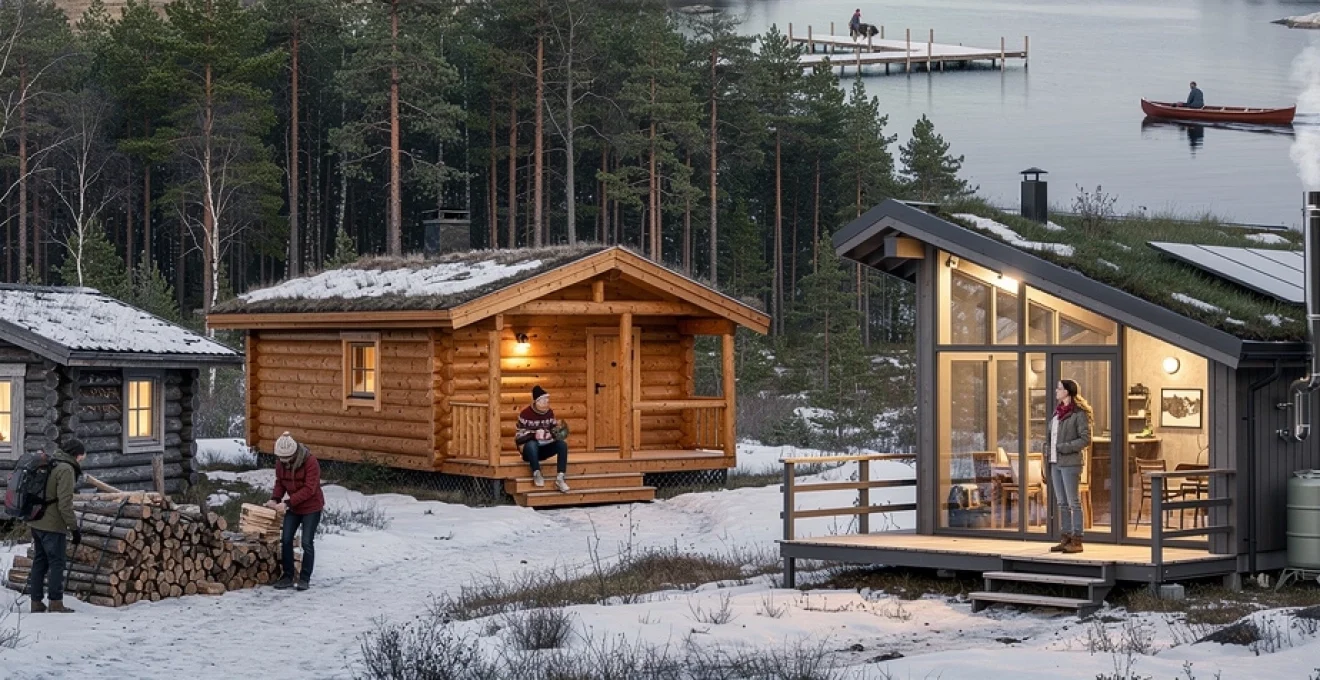
Finland’s vast wilderness offers an unparalleled sanctuary for those seeking genuine solitude and connection with nature. With over 190,000 lakes, 70% forest coverage, and the cleanest air in Europe, this Nordic paradise provides the perfect backdrop for remote cabin experiences that define tranquillity. The country’s commitment to preserving its natural heritage has resulted in a diverse array of accommodation options, from traditional log structures to modern eco-friendly retreats, each strategically positioned to maximise immersion in Finland’s pristine landscapes.
The appeal of Finnish remote cabins extends far beyond mere accommodation; they represent a gateway to experiencing the country’s deep-rooted connection with nature. These retreats offer respite from digital overwhelm whilst providing opportunities for authentic wilderness experiences, from midnight sun adventures to northern lights contemplation. The growing demand for such experiences has seen a 35% increase in remote cabin bookings over the past three years, reflecting a global shift towards meaningful travel that prioritises mental wellness and environmental connection.
Finnish wilderness cabin classifications and regional distribution
Finland’s remote cabin offerings span multiple architectural styles and construction methods, each adapted to specific regional conditions and cultural traditions. Understanding these classifications helps travellers select accommodations that align with their expectations for authenticity, comfort, and environmental integration. The distribution of cabin types across Finland’s diverse regions reflects both historical building practices and modern sustainability initiatives.
Kelo log construction cabins in lapland’s subarctic zones
Kelo log cabins represent the pinnacle of traditional Finnish construction, utilising naturally dried pine trees that have stood dead for decades before harvesting. These structures, predominantly found in Lapland’s subarctic regions, offer exceptional insulation properties crucial for surviving temperatures that can plummet to -40°C. The silvered exterior of kelo logs develops naturally through weathering, creating buildings that harmonise seamlessly with the arctic landscape whilst requiring minimal maintenance over decades of use.
The construction technique involves selecting trees that died naturally and remained standing for 10-20 years, allowing the wood to achieve optimal density and resin content. This process results in logs that are lighter than fresh timber yet possess superior strength and thermal properties. Authentic kelo cabins in Lapland typically feature walls 200-250mm thick, providing natural climate control that maintains comfortable interior temperatures with minimal heating requirements during harsh winter months.
Traditional hirsitalo timber cabins across karelia forest regions
Hirsitalo construction represents Finland’s most widespread traditional building method, characterised by horizontally stacked logs with carefully crafted interlocking joints. These cabins dominate the Karelia forest regions, where centuries of woodworking expertise have refined construction techniques to maximise structural integrity whilst preserving the natural beauty of timber materials. The dovetail joints used in hirsitalo construction allow for natural expansion and contraction of wood throughout seasonal temperature variations.
Modern hirsitalo cabins incorporate contemporary amenities whilst maintaining traditional aesthetics, featuring double-glazed windows, modern insulation techniques, and efficient heating systems. These structures typically utilise locally sourced pine or spruce logs ranging from 180-220mm in diameter, ensuring both authenticity and performance. The regional concentration of hirsitalo cabins in Karelia reflects the area’s abundant forest resources and the preservation of traditional craftsmanship skills passed down through generations.
Modern Eco-Cabin designs in saimaa lake district
The Saimaa Lake District has emerged as a hub for innovative eco-cabin designs that blend contemporary architecture with environmental responsibility. These structures incorporate cutting-edge sustainable technologies, including solar panels, rainwater harvesting systems, and advanced insulation materials derived from natural fibres. The designs often feature large windows strategically positioned to maximise lake views whilst optimising natural light penetration throughout interior spaces.
Contemporary eco-cabins in the Saimaa region typically achieve carbon-neutral operation through renewable energy systems and locally sourced building materials. Many feature green roofs that support local flora whilst providing additional insulation, creating structures that integrate so seamlessly with their surroundings that they enhance rather than disrupt natural ecosystems. The popularity of these innovative designs has contributed to a 28% increase in sustainable tourism bookings within the lake district over the past two years.
Off-grid wilderness huts in oulanka national park
Oulanka National Park, straddling the border between Finland and Russia, is renowned for its network of off-grid wilderness huts that cater to hikers, paddlers and backcountry skiers. These simple cabins, often maintained by Metsähallitus (the Finnish Forest Administration), prioritise shelter and safety over luxury. Built from robust timber and designed to withstand harsh boreal conditions, they typically feature basic bunks, a wood-burning stove, and minimal furnishings, offering an authentic back-to-basics experience in the heart of Finland’s wilderness.
Unlike commercial holiday cabins, most wilderness huts in Oulanka operate on a shared-use principle, with some freely accessible and others bookable for a small fee. Facilities are deliberately minimal: you can expect no mains electricity, no running water, and usually an outhouse instead of a flush toilet. Water is drawn from nearby rivers or lakes, and heating is entirely dependent on firewood that visitors are expected to use sparingly and replenish where possible. For travellers seeking a remote cabin in Finland that delivers true solitude and self-reliance, these huts offer an unmatched sense of immersion.
Because of their strategic placement along iconic trails such as the Karhunkierros (Bear’s Trail), Oulanka’s wilderness cabins support multi-day trekking and canoeing routes. Staying in these huts demands careful planning: you will need to carry a reliable headlamp, a power bank, and enough provisions for your entire stay, as there are no shops in the backcountry. Yet, for many, this complete removal from modern conveniences is precisely the appeal. You wake to the sound of the Kitkajoki rapids, step outside to pristine snow or mist-covered forest, and experience a level of silence that is increasingly rare in the modern world.
Strategic location selection for optimal nature immersion
Choosing the right location is just as important as selecting the right type of cabin. The distribution of remote cabins across Finland’s lakes, forests, fells and archipelagos allows you to match your stay with the specific nature experiences you value most. Whether you are drawn to mirror-still lakes, dense taiga forests, or the dramatic light displays of the Arctic sky, understanding how cabins are positioned in the landscape will help you create a peaceful escape into nature that feels tailored to you.
Lakefront positioning along päijänne and saimaa waterways
Lakefront cabins along the Päijänne and Saimaa waterways represent the classic Finnish remote escape. These properties are typically positioned just a few metres from the shoreline, often with a gentle, child-friendly beach and a private jetty. The orientation of the cabin is crucial: many are built facing west or south-west to maximise evening light, creating unforgettable sunsets over the water during summer. Large panoramic windows and terraces are designed to frame the water views, making the lake the focal point of the entire stay.
From a practical standpoint, lakefront positioning gives you direct access to activities such as swimming, canoeing, stand-up paddleboarding and fishing without ever needing to use a car. It is common for remote lake cabins to include a rowing boat by default, and in some regions, you can also rent kayaks or electric motors. If your goal is to disconnect from busy life and establish a simple daily rhythm—sauna, swim, cook, repeat—a remote cabin in Finland on Päijänne or Saimaa offers exactly that. You step from your private sauna straight into clear water, then sit on the pier watching the last light fade across the lake.
Forest edge placements within taiga ecosystem boundaries
Cabins located on the edge of Finland’s vast taiga forests provide a different kind of immersion, one where trees rather than water dominate the horizon. These forest-edge placements are often chosen to balance privacy, sunlight and biodiversity. Instead of being buried deep in dark woodland, many remote cabins sit at a transition zone where forest meets meadow, bog or shore. This ecotone—where two ecosystems meet—is typically rich in wildlife, making it ideal for birdwatching and wildlife photography right from your terrace.
From an experiential perspective, forest cabins are perfect for travellers who prioritise hiking, foraging and snow-based activities over water sports. Trailheads often begin directly at the cabin boundary, with marked routes leading into national parks or protected areas. In autumn, you can step outside with a basket and find lingonberries, blueberries and edible mushrooms within minutes, thanks to Finland’s Everyman’s Right that allows responsible foraging on public land. For many visitors, this ability to walk straight into the taiga from their remote cabin in Finland feels like having a private national park on the doorstep.
Arctic circle cabin positioning for aurora borealis viewing
In Lapland and other Arctic Circle regions, cabin siting is heavily influenced by northern lights visibility. Aurora-focused cabins are often placed on open fells, lake shores or riverbanks where the northern horizon is unobstructed by tall trees or hills. Light pollution is minimised by locating these properties far from major ski resorts and towns—often 20–50 kilometres away from the nearest built-up area. This strategic positioning dramatically increases your chances of seeing the aurora borealis on clear nights between September and April.
Many Lapland cabins designed for northern lights viewing combine traditional log construction with large north-facing windows or even glass-roofed annexes. This means you can observe the sky from indoors at -25°C without compromising comfort. When you book a remote cabin in Finland above the Arctic Circle, you will also want to consider the orientation of the main living space and outdoor terrace. Cabins with sheltered, north-facing decks or outdoor hot tubs allow you to spend longer periods outside in winter, watching the sky dance while staying warm—an experience that often becomes the highlight of the entire trip.
Archipelago island retreats in turku coastal waters
The Turku Archipelago and surrounding coastal waters host some of Finland’s most secluded island cabins, reachable only by ferry, water taxi or private boat. These retreats are typically positioned to capture sea views in multiple directions, with rocky outcrops, sheltered bays and open horizon lines all visible from the property. The feeling here is very different from inland lakes: the air is salty, the landscape more rugged, and the soundscape defined by waves, seabirds and distant boat engines rather than stillness.
Island cabins often emphasise self-sufficiency, as access to shops and services can be limited, particularly outside peak summer months. When you choose an archipelago retreat, you commit to a slower pace of life—planning food supplies in advance, following local ferry timetables, and adapting your activities to wind and weather. In return, you gain a sense of isolation that is hard to replicate elsewhere. Watching the sun set over the Baltic from a smooth granite rock, with no other lights in sight, encapsulates the unique magic of a remote cabin in Finland’s coastal regions.
Essential Off-Grid infrastructure and Self-Sufficiency systems
Many of Finland’s most peaceful remote cabins are either fully off-grid or operate with minimal connection to central utilities. Understanding the typical infrastructure and self-sufficiency systems will help you decide which level of remoteness suits your comfort threshold. Off-grid living here is less about survivalism and more about thoughtful design: systems are created to be robust, low-maintenance and reliable in harsh Nordic conditions.
Energy supply is usually a combination of solar panels, wood-burning stoves and, in some cases, backup generators. Solar arrays sized between 1–3 kW are common for modern eco-cabins, providing enough electricity for lighting, phone charging, a small fridge and sometimes a low-energy water pump during the brighter months. In winter, when daylight is limited in northern regions, heating and cooking rely more heavily on wood. Efficient masonry stoves, metal fireplaces and sauna heaters are designed to retain and radiate heat for hours, much like a thermal battery.
Water systems also vary. Some cabins have drilled wells and basic filtration, while others use lake or river water for washing and sauna, combined with separate drinking water brought from a tap in a nearby village. Composting toilets and dry closets are widespread, particularly in Lapland and on islands where plumbing is impractical or environmentally intrusive. For many travellers, using these systems for the first time can feel unfamiliar, but they are straightforward once you understand the basics. Think of it as learning a new “operating system” for daily life—after a day or two, fetching water and lighting the stove becomes part of a calming routine.
Food storage and cooking are typically centred around gas hobs or efficient electric induction plates in semi-off-grid cabins, with wood-fired ovens or outdoor grills providing backup and ambience. Because shops may be 30–80 kilometres away, you should plan meals ahead, especially in winter, and bring long-lasting staples. An easy strategy is to think in terms of “modules”: ingredients you can combine in different ways (for example, grains, canned tomatoes, local cheese, and smoked fish) to keep cooking simple yet satisfying. This planning allows you to enjoy the luxury of not needing to leave your remote cabin in Finland for days at a time, other than to explore the surrounding nature.
Seasonal accessibility and weather adaptation strategies
Finland’s seasons shape both the experience and logistics of staying in a remote cabin more than almost any other factor. The same property can feel like two completely different destinations depending on whether you visit under the midnight sun of July or the blue twilight of January. To make the most of your stay—and avoid unpleasant surprises—you will want to understand how accessibility and weather adaptation work throughout the year.
In winter, remote cabins in Finland often sit at the end of unpaved roads that may be ploughed less frequently during heavy snowfall. This does not mean they are inaccessible, but you might need winter tyres, a 4×4 vehicle, or even snowmobile transfers in the most isolated locations. Cabins in ski regions like Suomutunturi, Pyhä or Ylläs are usually well-serviced, while more wilderness-oriented destinations may rely on local caretakers to clear snow around arrival and departure days. It is wise to build some flexibility into your travel schedule in case snowstorms delay flights or road travel by a day.
Thermal adaptation is equally important. Interior temperatures in well-built log or eco-cabins remain comfortable even at -30°C, provided you use heating systems correctly. On arrival, you may need to light the fireplace and sauna to bring the structure up to temperature, a process that can take several hours if the cabin has stood empty. Layers of merino wool, windproof outerwear and insulated footwear will ensure that you stay warm while you explore the surroundings or watch the aurora. Think of your clothing as a portable cabin: when properly layered, you carry your comfort with you regardless of the weather.
Summer brings opposite challenges. While temperatures rarely exceed 30°C, the combination of long daylight hours and still air can sometimes make cabins feel warm. Modern eco-cabins address this through cross-ventilation, shading, and sometimes air-source heat pumps that double as cooling units. Mosquitoes can be abundant in certain areas from late June to August, especially near wetlands and slow-moving water. Quality remote cabins in Finland counter this with tight window screens, covered terraces and, occasionally, screened sleeping porches. Light sleep masks are recommended if you visit during the midnight sun, as curtains cannot always compete with 24-hour daylight.
Finnish nature activity integration and wildlife observation
Remote cabins are not just places to sleep; they are launchpads for engaging directly with Finland’s landscapes and wildlife. The country’s outdoor culture and Everyman’s Right mean that, from almost any cabin, you can hike, ski, paddle or forage without needing to pass through ticket gates or guided tour desks. This seamless integration between accommodation and activities is one of the main reasons travellers choose a peaceful escape into nature here rather than a conventional hotel stay.
In lake districts such as Saimaa and Päijänne, a typical day might start with a sunrise paddle in a rowing boat or kayak, followed by a forest hike on marked trails. Many cabin owners provide maps of local routes, advice on safe berry and mushroom picking, and tips on the best swimming spots. In winter, frozen lakes turn into natural ice fields for skating or cross-country skiing, sometimes with maintained tracks running right past the cabin. Have you ever imagined skiing straight from your front door into a snow-covered forest, with only your tracks visible behind you? In Finland, this is a commonplace luxury.
Wildlife observation is another highlight. Forest-edge cabins often attract species such as red squirrels, hares, woodpeckers and owls, which you can observe quietly from a terrace or kitchen window. In eastern regions and parts of Lapland, specialist operators offer ethically run hides for watching bears, wolverines and eagles at a respectful distance. The Saimaa Lake District is home to the endangered Saimaa ringed seal, which can sometimes be seen from remote shorelines in spring and early summer if you move silently and keep a responsible distance. Binoculars, a headlamp with a red light mode, and a simple field guide can transform casual sightings into memorable encounters.
For many visitors, the most meaningful “activity” becomes something less tangible: listening. Sitting by a campfire as cranes call across a marsh, or standing under a winter sky so clear you can hear snow crystals crunch beneath your boots, creates a sense of connection that goes beyond any itinerary. This, ultimately, is what a remote cabin in Finland offers: space and time to rediscover your own rhythm in sync with the natural world.
Booking platforms and accommodation pricing structures
Remote cabins across Finland are available through a mix of national platforms, international booking sites and direct-from-owner channels. Each option has its own advantages in terms of price transparency, communication and service level. While there is no single “best” platform, understanding how the market works will help you secure the right cabin at a fair price—and avoid common pitfalls when booking a peaceful escape into nature.
Large international marketplaces list thousands of cabins and cottages, offering familiar interfaces, reviews and secure payment systems. These sites make comparison easy, allowing you to filter for features like sauna, hot tub, pet-friendly policies or lake access. However, service fees can add 10–20% to the final cost. Finnish-specific platforms and cottage portals often provide broader coverage of truly remote properties and may allow you to contact owners directly. Direct booking with cabin owners can reduce costs by removing commission fees and service charges, and it can also improve communication about access, equipment and local conditions.
Pricing structures vary by region, season, cabin size and amenity level. A basic off-grid hut or simple lakeside cottage might start from around €50–€80 per night in shoulder seasons, while modern eco-villas with hot tubs, high-speed Wi-Fi and premium locations can exceed €300–€500 per night during peak weeks. Winter high season in Lapland (December–March) and midsummer weeks in June and July often command the highest rates. Weekly pricing is common, particularly in rural areas, and some owners prefer Saturday–Saturday bookings to simplify changeovers.
When budgeting, remember to factor in additional costs such as final cleaning fees, linen rental, firewood charges, and optional extras like hot tub use or motorboat hire. It is wise to read listings carefully and confirm what is included before committing. If you are planning a remote cabin holiday in Finland for the first time, consider using verified listings and paying close attention to guest reviews that mention road conditions, heating efficiency and the responsiveness of the host. These details matter more in isolated locations than they might in urban apartments.
Finally, demand for truly secluded cabins has increased significantly in recent years, especially among travellers seeking digital detox and nature-focused wellness. This means the best properties in popular regions such as Saimaa, Lapland or the Turku Archipelago often book out months in advance for peak periods. By starting your search early, staying flexible with dates, and being clear about your priorities—whether that is a private sauna, lake frontage, or northern lights visibility—you can secure a remote cabin in Finland that delivers the peaceful, nature-immersed experience you are looking for.