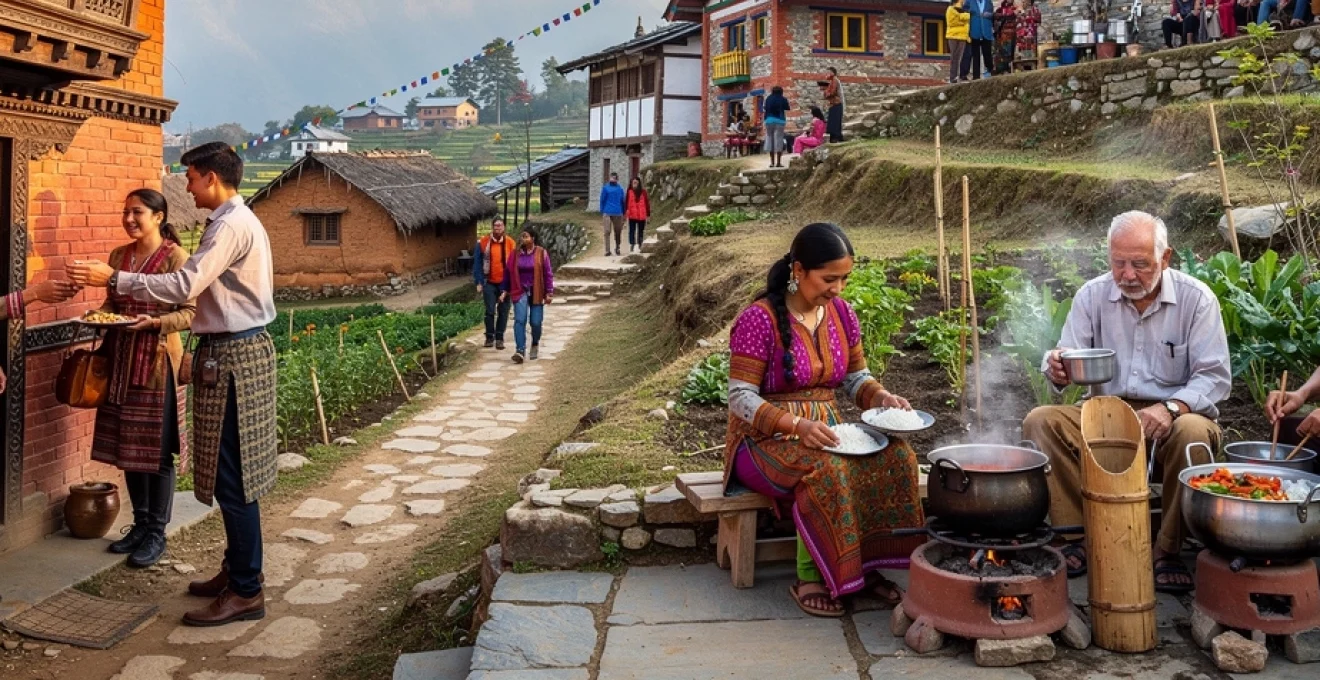
Nepal’s traditional homestay network represents one of the most authentic forms of cultural immersion available to travellers seeking genuine connections with local communities. These family-run accommodations offer visitors the rare opportunity to step beyond typical tourist experiences and engage directly with the daily rhythms of Nepalese life. From the ancient Newari houses of the Kathmandu Valley to remote mountain villages, homestays provide intimate access to centuries-old traditions, architectural heritage, and community-based tourism models that prioritise local empowerment over mass tourism profits.
The significance of Nepal’s homestay movement extends far beyond simple accommodation provision. These community-driven initiatives have transformed rural economies, preserved cultural practices, and created sustainable livelihood opportunities for families across the country’s diverse geographical regions. When you choose to stay with a local family, you become part of a transformative tourism model that ensures 80% of accommodation fees go directly to host families, while contributing to community development funds that support local infrastructure and educational initiatives.
Understanding nepal’s traditional homestay architecture and cultural significance
The architectural diversity found across Nepal’s homestay network reflects the country’s rich cultural tapestry and geographical variations. Each region’s building traditions have evolved over centuries, shaped by local climate conditions, available materials, and ethnic community preferences. Understanding these architectural elements provides crucial insight into how traditional construction methods continue to influence modern homestay experiences.
Newari heritage houses in kathmandu valley’s bhaktapur and patan districts
The Newari people have created some of Nepal’s most distinctive architectural masterpieces, with their traditional brick and timber houses serving as the foundation for many Kathmandu Valley homestays. These multi-storey structures feature intricate wood carvings, ornate window frames, and internal courtyards that facilitate family gatherings and cultural ceremonies. The ground floor typically houses livestock and storage areas, while upper floors accommodate living spaces and guest rooms.
Newari houses incorporate sophisticated ventilation systems through strategically placed windows and wooden lattice work, maintaining comfortable temperatures throughout seasonal variations. The sloped tile roofs and sturdy brick walls demonstrate remarkable earthquake resistance, a crucial consideration given Nepal’s seismic activity. Many homestay families in Bhaktapur and Patan maintain these traditional architectural elements while incorporating modern amenities to ensure guest comfort without compromising authentic aesthetics.
Gurung stone houses with slate roofing in annapurna region villages
Gurung communities in the Annapurna region have perfected stone construction techniques that withstand harsh mountain climates and frequent temperature fluctuations. These sturdy dwellings feature thick stone walls that provide excellent insulation, while slate roofing materials sourced from local quarries offer superior weather protection. The architectural design reflects practical mountain living requirements, with livestock areas on ground floors and human habitation spaces elevated to capture maximum sunlight and warmth.
Traditional Gurung houses incorporate wooden balconies and external staircases that serve both functional and aesthetic purposes. These architectural elements allow for optimal grain drying during harvest seasons while providing panoramic mountain views for guests. The internal layout typically includes a central hearth area where families gather for meals and storytelling, creating natural spaces for cultural exchange between hosts and visitors.
Sherpa lodge construction techniques in everest base camp trekking routes
Sherpa architectural traditions in high-altitude regions emphasise maximum thermal efficiency and structural stability in extreme weather conditions. Traditional Sherpa houses feature stone foundations with timber-framed upper sections, allowing for flexibility during seismic events while maintaining structural integrity. The distinctive flat-roofed design with prayer flag installations reflects the community’s Buddhist cultural practices and spiritual connection to mountain environments.
Modern Sherpa homestays incorporate traditional construction methods with contemporary comfort features, including improved insulation and heating systems essential for high-altitude accommodation. These adaptations ensure guest safety and comfort while preserving authentic architectural characteristics that define Sherpa cultural identity. The integration of solar panels and efficient wood-burning stoves demonstrates how traditional construction can embrace sustainable technology solutions.
Tharu Mud-Brick dwellings in chitwan national park buffer zones
The indigenous Tharu people have developed unique construction techniques perfectly adapted to the Terai region’s tropical climate and seasonal flooding patterns. Traditional Tharu houses utilise locally
available materials such as mud, clay, straw, and timber, creating naturally cool interiors during hot summers and providing adequate insulation during cooler months. Elevated plinths and raised thresholds help protect homes from floodwater, while thatched roofs and wide eaves divert heavy monsoon rains away from living spaces. Many Tharu homestays around Chitwan and Bardiya still showcase hand-painted exterior walls decorated with geometric motifs and scenes from rural life, giving guests an immediate visual introduction to Tharu identity.
Inside these mud-brick dwellings, you will often find spacious courtyards used for drying grains, social gatherings, and evening cultural programs. Sleeping areas are simple but comfortable, with woven mats, low wooden beds, and mosquito nets to suit the tropical environment. By staying in a Tharu homestay, visitors gain direct insight into flood-resilient building practices, traditional agricultural routines, and the community’s close relationship with the surrounding forests and river systems.
Authentic community-based tourism networks across nepal’s geographic regions
Beyond individual homes, many of Nepal’s traditional homestays are part of organised community-based tourism networks that coordinate standards, share profits fairly, and ensure that local people retain control over tourism development. These networks span the hills, mountains, and lowland Terai, connecting travellers with traditional homestays in Nepal in a way that is structured yet still deeply personal. Understanding how these models work helps you choose stays that truly support local communities rather than external operators.
Community tourism cooperatives usually establish common rules around pricing, rotation of guests among households, and reinvestment of income into shared projects such as water systems, school improvements, or trail maintenance. In practice, this means your payment for a night’s stay is not just a room fee; it is part of a carefully designed rural development tool. Let’s explore some of Nepal’s most influential community homestay networks and what makes them successful examples of responsible travel.
Ghandruk village homestay cooperative in kaski district operations
Ghandruk, a gateway village on the Annapurna trekking routes, is one of the best-known examples of a coordinated homestay cooperative. Located at around 2,000 metres, this Gurung settlement offers sweeping views of Annapurna South and Machhapuchhre, but its real strength lies in how the community has organised tourism to benefit local households. Rather than competing for guests, homestay owners work through a village committee that manages bookings, sets basic service standards, and rotates visitors among participating families.
This cooperative system ensures that tourism income is not concentrated in just a few homes but distributed more evenly across the village. A fixed percentage of earnings is channelled into a community fund, supporting projects like village trails, waste management, and scholarships for local children. For travellers, this means that when you choose a Ghandruk homestay you are directly supporting both your host family and wider community initiatives. You also benefit from clear information, transparent pricing, and consistently welcoming Gurung hospitality.
Sirubari model village development in syangja district framework
Sirubari in Syangja district is often cited as Nepal’s first “model village” for rural tourism, and with good reason. Developed in the late 1990s, the Sirubari village homestay program was intentionally designed as a blueprint for community-based tourism in Nepal. Local leaders, supported by tourism experts, created a comprehensive framework that covers everything from host training and guest welcome rituals to environmental guidelines and cultural performance schedules.
In Sirubari, homestay standards are clearly defined: rooms must be clean and well-ventilated, shared toilets must meet hygiene benchmarks, and hosts are trained in basic hospitality and safety. Guests are greeted with traditional garlands, community-guided walks, and cultural evenings showcasing Gurung songs and dances. What makes Sirubari particularly significant is how its structured approach inspired later community initiatives in eastern and western Nepal. When you stay in this model village, you are experiencing a living case study of how carefully planned tourism can strengthen rural livelihoods without eroding local culture.
Bandipur heritage town preservation through family-run accommodations
Bandipur, perched on a ridge between Kathmandu and Pokhara, provides a different but equally compelling example of community-led accommodation. Once a prosperous trading town, Bandipur’s Newari merchants built elegant townhouses with carved wooden windows and colonnaded facades. As modern highways bypassed the town, many of these buildings fell into disuse, until local families began converting them into small guesthouses and homestays focused on heritage preservation.
Today, staying in Bandipur’s family-run accommodations allows you to sleep in restored Newari homes that might otherwise have been abandoned or demolished. Local committees encourage owners to maintain traditional architectural elements, limiting unsympathetic concrete extensions and neon signage. Income from these heritage homestays has incentivised the restoration of temples, communal squares, and old shopfronts, turning Bandipur into a living museum rather than a frozen relic. For travellers interested in traditional homestays in Nepal with strong architectural character, Bandipur’s narrow lanes and sunset viewpoints offer a perfect blend of comfort and cultural immersion.
Langtang valley tamang community tourism management systems
In the Langtang region north of Kathmandu, Tamang communities have developed their own approach to community tourism following the devastating 2015 earthquake. Villages such as Briddim and Gatlang now operate homestays and lodges under informal but effective community management systems, often supported by NGOs and the Community Homestay Network. Village committees help coordinate bookings, provide training, and ensure that reconstruction respects traditional stone and timber building styles.
Many Tamang homestays along the Langtang and Tamang Heritage Trail are simple but warm, with wood-panelled rooms, central hearths, and thick blankets to combat cold mountain nights. Hosts share stories about life before and after the earthquake, giving guests a deeper understanding of resilience and community solidarity. By choosing these homestays, you help sustain local economies in an area that faced both natural disaster and a sudden drop in trekking visitors. The Langtang model illustrates how community tourism can act like a safety net, catching families before they are forced to migrate away from their ancestral lands.
Traditional nepali hospitality customs and guest integration protocols
Staying in a homestay in Nepal is not just a transaction; it is an invitation into the intimate spaces of family life. Traditional hospitality customs shape how you are welcomed, fed, and integrated into daily routines, and understanding these practices allows you to show respect and feel more at ease. In many communities, the concept of Atithi Devo Bhava—“the guest is God”—is taken quite literally, guiding everything from the first greeting to the farewell ceremony.
Typically, you will be welcomed at the door with a tika (a red powder mark on the forehead), a garland of marigolds, or a simple cup of sweet tea. Shoes are usually removed at the entrance, symbolising respect for the household. Mealtimes follow local customs: hosts may encourage you to eat first or serve you larger portions as a sign of care. If you are unsure how to sit on the floor, when to wash your hands, or whether to accept a second helping, it is perfectly fine to ask—your curiosity is seen as a compliment, not an inconvenience.
Household roles also shape guest integration protocols. In many traditional homestays, women manage the kitchen and much of the guest interaction, while men or older youths may guide walks or assist with logistics. As a visitor, you are gently folded into existing rhythms: you might be invited to help prepare vegetables, join a family member at the local market, or accompany children on their walk to school. Think of it less like checking into a hotel and more like becoming an honorary relative for a few days—one who is expected to observe, learn, and participate respectfully.
Cultural sensitivity is essential. Simple gestures, such as using your right hand to receive food or money, dressing modestly in villages, and asking before photographing people, go a long way in building trust. You may notice subtle practices around purity and sacred spaces, especially near household shrines or kitchen areas; when in doubt, following your host’s lead is the safest approach. By engaging with these hospitality customs, you transform your stay from a passive visit into a meaningful cultural exchange that benefits both you and your hosts.
Sustainable rural livelihoods through homestay tourism revenue models
One of the most powerful aspects of traditional homestays in Nepal is how directly they support sustainable rural livelihoods. Unlike conventional tourism, where profits often leak out to international chains, community homestays ensure that a significant share of revenue remains in the village. In many networks, around 80% of accommodation fees go straight to host families, while the remaining portion is channelled into community funds for shared projects. This localised revenue model acts like irrigation channels in a terraced field, spreading the benefits of tourism across multiple households.
Homestay income is rarely the sole livelihood source; rather, it complements agriculture, livestock rearing, and small-scale trade. This diversification makes families more resilient to shocks such as crop failure, climate change, or sudden drops in visitor numbers. In women-led homestays, earnings often support children’s education, healthcare, and investments such as biogas systems or improved water supply. Are you wondering whether a few nights’ stay can really make a difference? For many rural families, even modest, regular income from guests can be the deciding factor that keeps younger generations from migrating abroad for low-paid labour.
Community revenue-sharing models also have built-in incentives for conservation. When forests, rivers, and cultural sites become key assets for tourism, communities have a direct financial reason to protect them. Some homestay networks establish rules around waste management, plastic reduction, and trekking trail maintenance, funded by a small levy on overnight stays. Others allocate a percentage of income to scholarships, women’s cooperatives, or emergency funds. For you as a traveller, asking how your payment is distributed—and choosing homestays with transparent systems—is a simple but powerful way to support ethical, sustainable travel in Nepal.
Of course, these models are not without challenges. Seasonality can create income gaps, and not all families have equal access to capital for upgrading rooms or building toilets. To address this, some networks provide microloans, shared training sessions, and collective marketing platforms that promote the entire village rather than individual properties. By booking through recognised community organisations and planning visits outside peak months where possible, you can help smooth out such fluctuations and contribute to more stable rural economies.
Authentic culinary experiences and traditional food preparation methods
Food is often the highlight of staying in traditional homestays in Nepal, offering a delicious window into local culture and seasonal rhythms. Rather than standardised hotel buffets, you are likely to eat what the family eats: rice or millet from their own fields, vegetables from the kitchen garden, and pickles or fermented foods prepared over months. Sharing meals is more than satisfying hunger; it is a daily ritual where stories, jokes, and community news are exchanged. Think of the dining space as a classroom without walls, where you quietly learn about respect, hierarchy, and hospitality through every serving of rice.
Many homestays invite guests into the kitchen to observe or participate in traditional cooking methods. Clay chulo stoves, iron pans blackened by years of use, and wooden spice boxes with neatly arranged masala mixtures all contribute to an atmosphere that feels both timeless and deeply personal. You might knead dough for chapatis, shape momos under the patient guidance of your host, or help roast spices that fill the room with warm, nutty aromas. Let’s look more closely at some of the staple dishes and techniques you are likely to encounter.
Dal bhat tarkari cooking techniques using clay chulo stoves
Dal bhat tarkari—lentil soup, rice, and vegetable curry—is the heartbeat of everyday Nepali cuisine, and homestays are the perfect place to experience its many regional variations. In rural homes, this meal is often prepared on a clay chulo, a simple wood-fired stove that concentrates heat and imparts a subtle smoky flavour to the food. First, lentils are washed and simmered with turmeric and salt, while onions, garlic, ginger, and tomatoes are sautéed separately in oil before being mixed into the dal to create a rich, aromatic base.
Rice is typically cooked in large pots over the same stove, with hosts expertly managing multiple dishes at once by shifting pots closer to or further from the hottest coals. Seasonal vegetables, whether leafy greens in winter or squash and beans in warmer months, are chopped finely and spiced with cumin, coriander, and occasionally fenugreek. As you watch the process, you begin to appreciate cooking here as a choreography of timing and heat, not unlike a well-rehearsed dance. Many travellers find that learning to eat dal bhat with their right hand, shaping small rice and lentil morsels, becomes an unexpectedly meaningful cultural lesson.
Seasonal dhido and gundruk fermentation processes in mountain communities
In higher altitude regions where rice is harder to grow, you are more likely to encounter dhido, a thick porridge made from buckwheat, millet, or maize flour. Prepared by slowly whisking flour into boiling water over the chulo, dhido is served with ghee, pickles, or meat curries and eaten by hand. For many mountain communities, it is both comfort food and a symbol of self-sufficiency, drawing on grains that thrive in steep, rocky fields. Trying dhido for the first time can be like tasting the landscape itself—nutty, hearty, and unmistakably tied to the hills.
Another distinctive element of mountain homestay cuisine is gundruk, fermented leafy greens made from mustard, radish, or cauliflower leaves. The leaves are wilted, crushed, and left to ferment in earthenware pots or tightly wrapped bundles, then dried in the sun for long-term storage. When rehydrated and cooked into soups or pickles, gundruk provides a tangy, umami-rich flavour and important nutrients during lean winter months. Asking your hosts about how they prepare and store gundruk often opens up stories about seasonal cycles, food security, and ancestral knowledge passed down through generations.
Organic kitchen gardens and farm-to-table ingredient sourcing
One of the reasons food in Nepali homestays tastes so fresh is that much of it is grown just metres from the kitchen. Most rural households maintain kitchen gardens filled with seasonal vegetables, herbs, and fruit trees. Chickens scratch in the yard, cows or buffalo provide milk for yoghurt and butter, and terraces behind the house are planted with rice, maize, or millet. For travellers interested in sustainable travel in Nepal, seeing this farm-to-table system in action is often more eye-opening than any museum visit.
Many hosts are proud to show you around their fields, pointing out different crops and explaining planting and harvest times. You may have the chance to plant rice seedlings during the monsoon, pick oranges in the eastern hills, or help collect fodder for livestock. This direct involvement turns abstract concepts like “local food systems” into tangible experiences: you see how weather patterns, labour, and tradition combine to put a simple plate of curry and rice in front of you. As one host in Dhankuta might tell you, “When you eat here, you are eating our work, our land, and our love.”
Traditional raksi and tongba brewing methods for cultural immersion
Alcoholic beverages also play an important role in many homestay experiences, especially during festivals or special dinners. Raksi, a traditional distilled spirit made from rice, millet, or other grains, is commonly produced in small batches at home. The brewing process involves fermenting cooked grains, then distilling them using simple but ingenious apparatus of metal pots, bamboo pipes, and water-cooled lids. The result is a clear, strong liquor that is often shared in small metal cups, accompanied by toasts and laughter.
In eastern hill regions and among certain ethnic groups such as the Rai and Limbu, you might also encounter tongba, a warm millet beer served in tall wooden or metal vessels. Fermented millet is packed into the container, hot water is poured over it, and the drink is sipped through a bamboo straw. As the water level goes down, more hot water is added, turning a single serving into a leisurely, shared experience that can last an entire evening. If you choose to partake, doing so respectfully—pace yourself, accept refills politely or decline gently—helps keep the atmosphere convivial and safe for everyone.
Cultural exchange programs and local skill-sharing activities
Many traditional homestays in Nepal now go beyond accommodation and meals to offer structured cultural exchange programs and hands-on workshops. These activities turn your stay into an opportunity to learn skills that are woven into everyday life: weaving, pottery, woodcarving, language lessons, or farming techniques. Rather than staged performances, most are led by local experts—often women or elders—who share knowledge they use daily. Have you ever wondered what it feels like to paint a Tharu wall motif or to shape a clay pot in Bhaktapur? Homestays create exactly these kinds of immersive chances.
Common activities include cooking classes, where you learn to prepare momos, dal bhat, or local pickles alongside your host, and craft workshops such as bead bracelet making or traditional script calligraphy in Newari towns like Kirtipur. In rural areas, you might join a guided village walk focused on medicinal plants, birdwatching, or agricultural practices, sometimes led by young local guides building careers in eco-tourism. These exchanges are reciprocal: you gain insight and skills, while your fees and participation help validate and sustain local traditions that might otherwise fade.
Some community networks also facilitate more formal programs for schools, universities, and corporate groups, combining homestays with language immersion, volunteering, or research projects. For example, students might spend mornings in Nepali lessons and afternoons helping with environmental clean-ups or documenting oral histories. When done ethically—under community guidance, with clear expectations and no displacement of local labour—such programs can strengthen cultural pride and create new educational pathways for village youth.
As a guest, you can contribute to meaningful cultural exchange by approaching each activity with humility and curiosity. Ask permission before sharing photos or stories online, be open about what you hope to learn, and be equally ready to listen. Just as importantly, recognise that your presence is part of a bigger story: traditional homestays in Nepal are not simply about where you sleep, but about how tourism can build bridges between worlds, one shared meal, one story, and one homestay at a time.