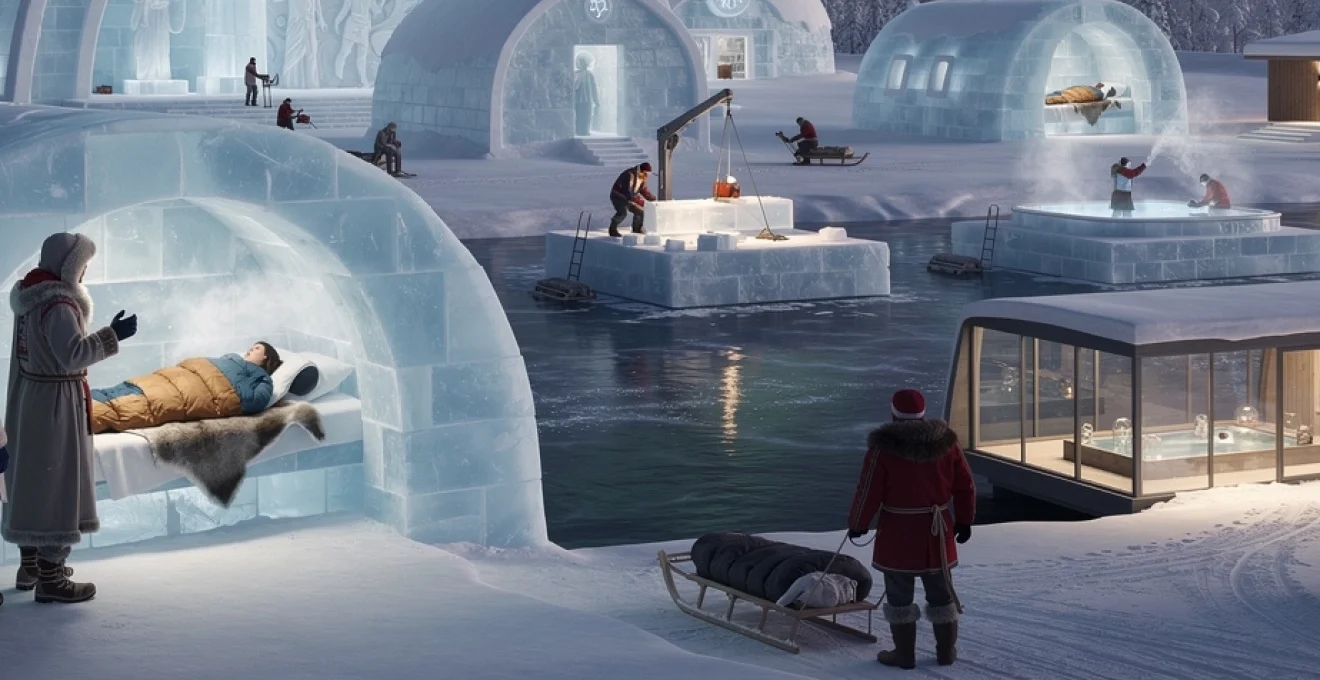
Sweden’s Arctic wilderness transforms each winter into a crystalline wonderland where ice and snow become the building blocks of extraordinary hospitality. The concept of sleeping in sub-zero temperatures within walls made entirely of frozen water challenges conventional notions of comfort whilst offering an unparalleled connection to nature’s raw beauty. These remarkable structures represent more than mere accommodation; they embody a fusion of architectural innovation, artistic expression, and environmental harmony that has captivated travellers for over three decades.
The phenomenon of ice hotels has evolved from a simple igloo-inspired shelter into sophisticated establishments that redefine luxury accommodation. Each winter season brings forth entirely new creations, as temperatures drop below freezing and the Torne River provides the essential raw materials. This cyclical process of creation and eventual melting reflects nature’s own rhythm, offering guests a truly ephemeral experience that can never be exactly replicated.
Architectural engineering and construction techniques of swedish ice hotels
The construction of ice hotels represents a remarkable feat of engineering that combines traditional building principles with the unique properties of frozen water. Master builders must work within narrow temperature windows, typically between -5°C and -8°C, to ensure optimal structural integrity whilst maintaining habitability. The entire construction process spans approximately eight weeks, requiring precise coordination between ice harvesting teams, sculptors, and technical specialists.
Snice block harvesting and preparation methods from torne river
The foundation of every Swedish ice hotel begins with the careful harvesting of pristine ice blocks from the Torne River. This process, known as snice preparation, involves cutting uniform blocks measuring approximately 1.2 metres in length and weighing between 2-3 tonnes each. Professional ice harvesters utilise specialised chainsaws and lifting equipment to extract these massive blocks during the optimal harvesting window in December and January.
The clarity and density of river ice make it superior to artificially frozen water for construction purposes. Natural ice contains fewer air bubbles and impurities, resulting in blocks that are both stronger and more visually appealing. Each block undergoes quality inspection to ensure it meets structural requirements before being transported to the construction site via specially designed ice vehicles.
Thermal insulation properties of compressed snow architecture
Compressed snow, or snice, serves as the primary insulation material in ice hotel construction, providing crucial thermal regulation properties. This specially prepared snow mixture contains approximately 30% ice content and 70% trapped air, creating an effective insulation barrier with an R-value comparable to traditional building insulation. The compression process removes excess air whilst maintaining sufficient porosity for thermal protection.
The thermal mass properties of compressed snow help regulate internal temperatures, preventing rapid temperature fluctuations that could compromise structural integrity. Snice walls typically measure 60-80 centimetres in thickness, providing adequate insulation whilst supporting the weight of ice sculptures and architectural features. This natural insulation system maintains interior temperatures between -3°C and -8°C regardless of external weather conditions.
Ice welding and joint sealing techniques for structural integrity
Ice welding represents one of the most critical aspects of ice hotel construction, requiring master craftsmen to create seamless joints between individual ice blocks. This technique involves applying small amounts of water to joint surfaces, which immediately freezes upon contact, forming molecular bonds stronger than the original ice blocks. Professional ice welders must work quickly and precisely, as improper welding can create weak points that compromise entire structural sections.
Advanced sealing techniques involve the strategic use of snow mortar, a specially prepared mixture of fine snow and water that fills microscopic gaps between ice blocks. This mortar freezes within minutes, creating hermetic seals that prevent air infiltration and maintain structural continuity. Quality control measures include thermal imaging inspections to identify potential weak points before construction completion.
Temperature control systems and ventilation design principles
Maintaining optimal temperature ranges within ice hotels requires sophisticated ventilation systems that balance air circulation with thermal stability. Natural convection principles guide the placement of strategically positioned air vents that allow controlled airflow without creating drafts that could discomfort guests. These ventilation systems must operate without mechanical assistance, relying entirely on thermal dynamics and carefully calculated air pressure differentials.
Supplementary heating is never introduced into the ice structure itself, as any localised warmth would destabilise the frozen architecture. Instead, technical teams focus on managing humidity levels and gentle air exchange so that surfaces remain dry and crisp rather than damp or frosted over. Monitoring systems track internal temperature gradients and carbon dioxide levels, allowing staff to adjust vent apertures or guest flow when needed. The result is a remarkably stable microclimate where you can comfortably sleep in snow at around -5°C, even when Arctic storms rage outside.
Premier ice hotel destinations: ICEHOTEL jukkasjärvi and regional competitors
Sweden’s ice hotels are not a single, uniform concept but a small ecosystem of innovative properties scattered across Lapland and beyond. Each destination interprets the idea of an ice hotel differently, blending frozen architecture with local culture, nature-based activities, and varying levels of luxury. When comparing the leading Swedish ice hotels, it is helpful to look at their design philosophy, seasonal availability, and the type of guest experience they prioritise. This way, you can choose the winter escape that best matches your expectations of Arctic adventure and comfort.
ICEHOTEL jukkasjärvi’s 34-year legacy and annual reconstruction cycle
ICEHOTEL in Jukkasjärvi is the original Swedish ice hotel and arguably the most famous in the world, with a legacy spanning more than 30 years. Located about 200 kilometres north of the Arctic Circle, it began in 1989 as an experimental ice art exhibition before evolving into a full-scale hotel made of snow and ice. Each winter, a new iteration rises on the banks of the Torne River, built from approximately 30,000 cubic metres of snice and several thousand tonnes of crystal-clear river ice. By spring, the entire structure melts back into the river, completing a closed-loop life cycle that is as poetic as it is sustainable.
The annual reconstruction cycle at ICEHOTEL has become a cornerstone of its identity. Every year, an international jury selects artists and designers from around the globe to create unique art suites, ice bars, and sculptural installations. This means that sleeping in ICEHOTEL is never the same experience twice; returning guests encounter entirely new themes, carvings, and spatial compositions. Alongside the seasonal structure, ICEHOTEL 365 – a permanent, solar-powered ice hall – enables guests to experience the ice suites and the famous Icebar even in summer under the midnight sun.
Hotel of ice jukkasjärvi’s boutique accommodation approach
While ICEHOTEL dominates the international spotlight, smaller boutique-style concepts in and around Jukkasjärvi offer a more intimate take on the ice hotel experience. These boutique accommodations often operate on a smaller scale, with a limited number of sculpted ice rooms paired with a larger proportion of warm cabins or chalets. The focus tends to be on personalised service, guided excursions, and the feeling that you are staying in a remote Arctic lodge rather than a large resort. For travellers who want to sleep in snow but avoid crowds, this boutique approach can be particularly appealing.
These properties leverage the same natural resources as their larger neighbour: clear Torne River ice, compressed snice walls, and traditional Sámi-inspired interior design elements such as reindeer hides and local textiles. However, they may experiment with more flexible layouts, hybrid warm–cold room combinations, and tailored packages for couples, families, or small groups. You will often find curated activities such as private northern lights photography tours, quiet snowshoe walks, and hands-on ice sculpting workshops that deepen your engagement with the frozen environment.
Arctic bath floating hotel’s hybrid Ice-Water experience
Arctic Bath, located on the Lule River, reimagines the idea of an ice hotel by merging water, ice, and wood into a striking floating complex. Rather than building an entire structure from snow and ice, Arctic Bath uses a circular timber architecture that freezes into place during winter and floats freely during summer. At the centre lies an open-air cold bath that becomes partially ice-covered in the coldest months, creating a dramatic setting for traditional hot–cold wellness rituals. This hybrid design blurs the boundary between an ice hotel, a spa retreat, and a design-forward eco-lodge.
From a guest perspective, Arctic Bath offers a softer introduction to sub-zero experiences compared with sleeping in a fully frozen room. You stay in well-insulated cabins or suites while still immersing yourself in winter bathing, frozen river views, and occasionally snow-dusted walkways over the ice. The hotel emphasises holistic wellness: saunas, locally sourced cuisine, massage treatments, and meditative spaces that encourage you to slow down. If you are intrigued by the idea of icy waters and Arctic stillness but still want the comfort of warm interiors, this hybrid ice–water model is a compelling option.
Lapland hotel tampere’s urban ice suite innovations
Lapland Hotel Tampere, although situated far south of the Arctic Circle in the city of Tampere, brings the aesthetics of an ice hotel into an urban context. Instead of building a stand-alone snow and ice structure, the property integrates specially designed “Lapland” or “ice-inspired” suites into a conventional heated hotel. These suites often feature sculptural elements, backlit panels that mimic ice blocks, and interior design inspired by northern lights, frozen rivers, and Sámi heritage. The idea is to give guests a taste of Lapland’s winter magic without the logistical challenges of remote travel.
This urban ice concept reflects a growing trend: travellers want the unique storytelling and visual drama of ice hotels but may only have a weekend or short city break. By translating the sensory experience – cool-toned lighting, tactile materials, Arctic soundscapes – into standard hotel infrastructure, Lapland Hotel Tampere offers an accessible preview of what a full Arctic stay could be like. For some guests, these suites act as a stepping stone, inspiring future trips further north to sleep in actual snow and explore the wild landscapes of Swedish Lapland.
Physiological adaptation protocols for Sub-Zero sleeping environments
Sleeping in a room made of ice is as much a physiological challenge as it is an architectural one. Your body is naturally designed to maintain a stable core temperature around 37°C, and a night spent at -5°C to -8°C requires deliberate preparation. Swedish ice hotels have developed detailed guest protocols to help visitors adapt safely and comfortably to these extreme conditions. Understanding how your body responds to cold – and how the hotels mitigate associated risks – can transform apprehension into excitement.
Core body temperature regulation in -5°C to -8°C conditions
When you step into an ice room, your body immediately activates several mechanisms to preserve core warmth. Blood vessels in your skin and extremities constrict, reducing heat loss from your hands and feet and directing warm blood toward vital organs. At the same time, your metabolic rate increases slightly, sometimes accompanied by mild shivering, which acts like an internal furnace. The goal is simple: to keep your core temperature within a narrow safe range, even when the ambient air is well below freezing.
Ice hotels support these natural processes by controlling not just air temperature but also humidity and air movement. Still, dry air at -5°C feels surprisingly tolerable compared with damp cold just below freezing. You are also advised to warm up before bed with a hot shower, light stretching, or a short sauna session. This pre-heating acts like charging a battery: you begin the night with a comfortable heat surplus, allowing your sleeping system – reindeer hides, insulated mattresses, and specialised bags – to trap and retain the warmth you generate.
Thermal sleeping bag specifications and TOG rating requirements
The sleeping bag is your primary defence against the cold when you sleep in an ice hotel, so technical specifications matter. Most Swedish ice hotels provide mummy-shaped down or synthetic bags rated for at least -15°C to -25°C comfort levels, far lower than the actual room temperature. In practical terms, this means the bag is over-engineered for the environment, giving you a generous safety margin. While TOG ratings are more common for duvets than bags, you can think of these Arctic sleeping systems as equivalent to a very high TOG duvet designed for extreme cold-weather camping.
What should you wear inside such a powerful insulation system? Contrary to intuition, you do not need thick layers; instead, hotels recommend a single set of clean, dry base layers made of wool or technical synthetics. Thick clothing can compress the loft of the sleeping bag and reduce its insulating ability, much like squashing the air pockets in a down jacket. By pairing a high-spec sleeping bag with a breathable base layer, you allow your body heat to create a warm microclimate that remains stable throughout the night. Zips, hoods, and draught collars further minimise heat loss around the head and neck, where much warmth can escape.
Reindeer hide insulation properties and traditional sami techniques
Underneath your sleeping bag, you will usually find reindeer hides laid atop a sturdy mattress and sometimes additional insulating layers. Reindeer hair is hollow, trapping air within each fibre in much the same way double-glazed windows trap air between glass panes. This structure gives reindeer hide an exceptional warmth-to-weight ratio and excellent performance in dry sub-zero conditions. Traditional Sámi communities have relied on these hides for centuries, using them as bedding, clothing, and sled covers during long winters on the tundra.
Ice hotels honour and adapt these traditional Sámi winter survival techniques for modern tourism. Hides are placed hair-side up to maximise air retention and comfort, creating a soft yet thermally effective buffer between you and the ice platform. This layered system – ice base, insulating mattress, reindeer hide, sleeping bag – works rather like a multi-layer technical clothing system, with each component performing a specific function. By experiencing these traditional materials firsthand, you gain insight into how Indigenous Arctic peoples have thrived in conditions that might otherwise seem uninhabitable.
Hypothermia prevention strategies and emergency response procedures
Because sleeping in snow involves inherent risks, Swedish ice hotels implement rigorous hypothermia prevention and emergency response protocols. Staff brief you thoroughly before your night in the ice room, explaining what to wear, how to use your sleeping bag, and when to call for assistance. Warm “backup” rooms are always available, and guests are encouraged, not shamed, if they decide to move to heated accommodation during the night. This open culture of safety reduces anxiety and ensures that you do not feel trapped in the cold environment if discomfort arises.
Operationally, staff conduct regular rounds throughout the night, checking communal areas and ensuring that guests can quickly contact them via bell systems or reception phones. Signs of early hypothermia – persistent shivering, confusion, slurred speech, or unusual fatigue – are well known to the team, who are trained in first aid and rewarming techniques. Mild hypothermia can usually be treated with warm drinks, dry clothing, and relocation to a heated space; protocols are in place to escalate to medical services if needed. In practice, serious incidents are rare because the insulation systems are robust and the temperature, although sub-zero, is controlled and predictable.
Sleep cycle disruption and circadian rhythm management in arctic conditions
Beyond temperature, Arctic environments pose another challenge: light. In midwinter, near-constant darkness can blur your internal sense of time, while in spring and summer the midnight sun may make it difficult to feel sleepy at all. How does this affect your night in an ice hotel? Sleeping in a sub-zero room already places your body outside its normal comfort zone; adding unusual light patterns can further disrupt circadian rhythms if you are not prepared. Some guests report a lighter, more fragmented sleep on their ice night followed by a deep, restorative sleep in a warm room the following evening.
To support healthy sleep cycles, many ice hotels recommend creating a pre-sleep routine: dimming lights, avoiding screens, and enjoying calm, low-stimulation activities such as reading or quiet conversation. Heavy curtains and low-level LED lighting in transition areas help you move from bright outdoor snow glare into a more restful environment. If you visit in the season of the midnight sun, eye masks can be invaluable, while in polar night conditions, exposure to bright daylight lamps during the day can help anchor your internal clock. By being intentional about light, you can turn this unique Arctic sleep into a memorable, rather than disorienting, experience.
Specialised Cold-Weather gear and technical equipment requirements
Proper equipment is essential for enjoying your stay at a Swedish ice hotel, whether you are dog sledding beneath the northern lights or simply walking between warm and cold areas. Most properties provide core items such as insulated overalls, winter boots, and mittens, but you are still responsible for an effective base and mid-layer system. Think of dressing for an ice hotel like building the hotel itself: you need layers that trap air, manage moisture, and protect against wind and snow. With the right gear, you can comfortably explore temperatures that might otherwise feel intimidating.
At a minimum, you should pack thermal underwear (preferably merino wool), a mid-layer such as a fleece or light down jacket, and a windproof, waterproof outer shell for daytime activities. Accessories are just as important: a warm hat that covers your ears, a buff or scarf for your neck, insulated gloves or mittens, and wool socks. For photography or northern lights watching, chemical hand warmers can make the difference between cutting a session short and staying out long enough to capture the perfect shot. Moisture management is key: avoid cotton next to your skin, as it retains sweat and quickly makes you cold once you stop moving.
On the technical side, many guests bring headlamps for moving around in low light, especially if they plan late-night aurora hunts away from built-up areas. Cameras and smartphones require extra battery planning, as cold weather drains power rapidly; keeping spare batteries close to your body helps them last longer. Some travellers also choose to bring their own sleeping bag liners for added comfort and hygiene, though hotels already provide high-spec Arctic-rated bags. By combining hotel-provided outerwear with well-chosen personal layers, you give yourself the flexibility to adapt to changing conditions throughout your stay.
Cultural immersion and traditional sami winter survival practices
Beyond the novelty of sleeping in snow, Swedish ice hotels serve as gateways into the culture and knowledge of the Sámi, the Indigenous people of the region. Many properties collaborate with Sámi guides and reindeer herders who share stories of seasonal migrations, traditional handicrafts, and ancestral survival skills. Learning how people have lived sustainably in this environment for thousands of years transforms your visit from a simple Arctic holiday into a deeper cultural encounter. You begin to see the frozen landscape not as hostile, but as a carefully understood and respectfully used resource.
Traditional Sámi winter survival practices emphasise mobility, layering, and intimate knowledge of the land. Clothing historically made from reindeer hide was tailored to allow moisture to escape while preserving warmth, much like today’s technical outerwear. Camp setups maximised shelter from wind and made strategic use of snowdrifts as natural insulation. On guided experiences, you might sit in a lavvu (a Sámi tent) around an open fire, tasting coffee brewed over the flames and listening to joik, a traditional form of song that captures the essence of people, animals, or places.
Many ice hotels also offer reindeer sled rides, storytelling sessions, and visits to working reindeer herds, where you can learn about contemporary Sámi livelihoods in a changing climate. These experiences highlight how modern technology – snowmobiles, GPS, advanced textiles – coexists with age-old wisdom about snow conditions, wind patterns, and animal behaviour. As you practise simple survival skills, such as lighting a fire in deep snow or reading the sky for approaching weather, you gain a newfound respect for both the fragility and resilience of Arctic life. In this way, sleeping in an ice hotel becomes part of a broader journey into the culture that has shaped Sweden’s far north.
Seasonal availability windows and optimal booking strategies for ice accommodation
Ice hotels are, by nature, temporary. Their existence is tied to seasonal temperature patterns, making timing a critical part of planning your Swedish ice hotel experience. In northern Sweden, the main ice hotel season usually runs from mid-December to early April, although exact dates vary depending on weather and each property’s construction schedule. ICEHOTEL’s permanent 365 facility allows for ice-suite stays year-round, but the full winter village – with freshly built snow corridors and newly carved art suites – is limited to the coldest months. If you dream of walking through crystalline hallways and seeing artists at work, you will need to align your trip with this window.
How can you choose the best time to visit? Early in the season (December and January), you can often see the finishing touches being put on new suites, and the landscape is at its darkest – ideal for northern lights hunters. February typically offers a balance of stable cold, increasing daylight, and reliable snow cover, making it popular with families and activity-focused travellers. March and early April bring longer days, milder temperatures, and a festival-like atmosphere, with more opportunities for daytime excursions such as cross-country skiing and snowmobiling. Each period offers a slightly different version of sleeping in snow, so your priorities – auroras, activities, or relative warmth – should guide your timing.
Booking strategies are just as important as timing. Ice suites and art suites tend to sell out months in advance, especially around holidays and school breaks, so early reservations are strongly recommended. A common approach is to book a package that combines one night in an ice room with one or more nights in warm accommodation, giving you the headline experience of sub-zero sleeping without sacrificing overall rest. Flexible dates and midweek stays can sometimes yield better availability and pricing than peak weekends. If you are set on a specific suite design or want to coincide with events such as the opening ceremony or ice sculpting competitions, planning 9–12 months ahead is wise.
Finally, consider travel logistics and potential weather disruptions. Winter flights to Kiruna or Luleå can be affected by storms, and train services, while generally reliable, may be limited at short notice. Building a buffer day into your itinerary reduces stress and increases your chances of experiencing all planned activities, from husky tours to dinner in an ice restaurant. With thoughtful timing, early booking, and a little flexibility, you can secure a spot in one of Sweden’s magical ice hotels and discover for yourself what it truly feels like to sleep in snow under the Arctic sky.