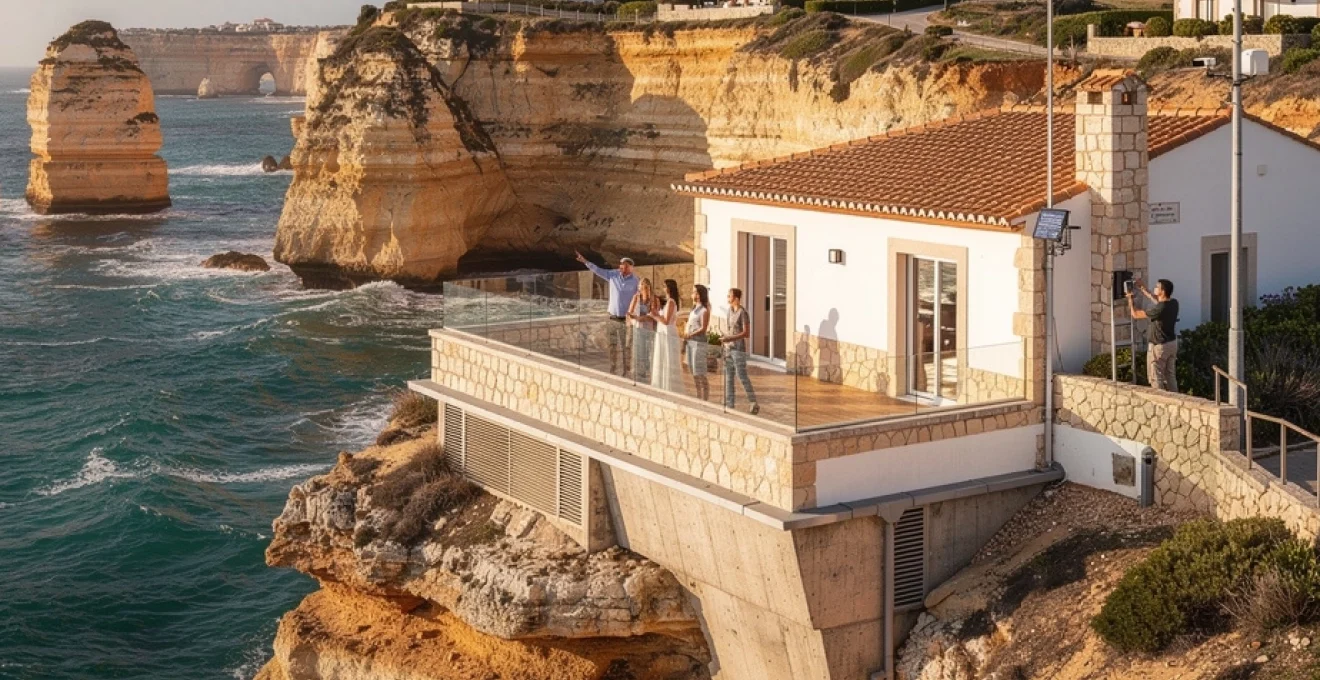
Portugal’s Algarve region stands as one of Europe’s most spectacular coastal destinations, where dramatic limestone cliffs meet the Atlantic Ocean in a stunning display of natural architecture. The region’s clifftop accommodations offer guests an unparalleled opportunity to experience this dramatic landscape firsthand, perched on golden sandstone formations that have been sculpted by millennia of ocean erosion. These coastal guesthouses represent a unique fusion of traditional Portuguese hospitality and modern engineering, designed to withstand the challenging marine environment while providing guests with breathtaking panoramic views of the Atlantic.
The development of cliff-edge accommodations along the Algarve presents both extraordinary opportunities and significant technical challenges. Property developers and architects must navigate complex geological considerations, marine conservation regulations, and extreme weather conditions to create sustainable, safe, and luxurious retreats. From the western promontories near Lagos to the protected ecosystems surrounding Tavira, each clifftop property tells a story of human ingenuity working in harmony with one of Europe’s most dynamic coastal environments.
Clifftop accommodation architecture and geological integration along algarve’s coastal formations
The architectural challenges of constructing guesthouses along the Algarve’s cliff faces require a sophisticated understanding of coastal geology and structural engineering principles. The region’s distinctive limestone and sandstone formations, while providing spectacular backdrops for accommodation, present unique foundation requirements that differ significantly from inland construction projects. Successful clifftop developments must account for ongoing erosion processes, seasonal ground movement, and the constant exposure to salt-laden Atlantic winds.
Limestone cliff erosion patterns and structural foundation requirements
The Algarve’s coastal cliffs experience continuous erosion at rates varying from 0.3 to 1.2 metres per decade, depending on rock composition and exposure to prevailing westerly winds. Understanding these erosion patterns is crucial for determining appropriate setback distances for permanent structures. Geological surveys typically recommend minimum setbacks of 15-20 metres from cliff edges for substantial buildings, with additional safety margins incorporated for structures intended for long-term occupancy.
Foundation systems for clifftop properties often employ deep pier foundations that extend well below the surface weathering zone, typically reaching depths of 8-12 metres into solid bedrock. These foundations utilise reinforced concrete piers with corrosion-resistant steel reinforcement, specifically designed to withstand the aggressive marine environment. The foundation design must also accommodate potential ground movement and differential settling that can occur as underlying rock formations gradually adjust to erosional forces.
Traditional Quinta-Style guesthouse design adaptations for coastal environments
Traditional Algarve quinta architecture, characterised by thick whitewashed walls, flat roofs, and central courtyards, requires significant modification for clifftop applications. The classic thick masonry walls, originally designed for thermal mass in hot inland climates, must be enhanced with moisture barriers and salt-resistant materials when exposed to marine conditions. Modern clifftop quintas incorporate vapour barriers, marine-grade concrete additives, and specialised render systems that can withstand constant salt spray exposure.
Roof design becomes particularly critical in clifftop locations, where wind speeds can exceed 120 km/h during winter Atlantic storms. Traditional flat roofs are often replaced with low-pitched designs that reduce wind loading while maintaining the quinta aesthetic. These modified roof systems incorporate advanced waterproofing membranes, hurricane straps, and reinforced parapet walls designed to channel wind flow efficiently around the structure.
Wind load calculations and salt air corrosion prevention systems
Clifftop guesthouses must withstand wind loads that can be 40-60% higher than those experienced by inland properties at similar elevations. Structural engineers utilise computational fluid dynamics modelling to predict wind behaviour around cliff edges, where acceleration effects can create localised pressure zones exceeding standard building code requirements. These calculations inform decisions about building orientation, structural bracing systems, and exterior material selection.
Salt air corrosion represents one of the most persistent challenges for clifftop accommodation infrastructure. Stainless steel components must meet marine-grade specifications (316L minimum), while structural steel requires hot-dip galvanising with additional protective coatings. Aluminium fixtures and fittings require anodising treatments specifically
designed for environments with constant chloride exposure. Even with these protective measures, facility managers typically implement strict maintenance schedules, including annual inspections, periodic re-coating of exposed steel, and replacement cycles for exterior metal components every 10–15 years. Mechanical systems, from HVAC units to elevator mechanisms, are often housed in sealed plant rooms with filtered ventilation to reduce direct salt air exposure and extend service life.
Drainage infrastructure for cliff-edge properties during atlantic storm seasons
Effective drainage design is critical for cliff-edge guesthouses along Portugal’s Algarve cliffs, particularly during the Atlantic storm seasons between November and March. Intense rainfall events can exceed 30–50 millimetres in just a few hours, increasing surface runoff and the risk of cliff-face instability. To mitigate these risks, engineers integrate multi-layer drainage systems that manage both rooftop discharge and subsurface water movement, preventing concentrated flows from accelerating erosion at the cliff edge.
Roof drainage systems typically employ oversized gutters, concealed box gutters, and high-capacity downpipes routed away from the cliff line. These downpipes discharge into controlled soakaways or engineered swales located landward of the property, where water can infiltrate more gradually. Beneath terraces and landscaped areas, perforated sub-drain networks capture groundwater and redirect it toward dedicated dissipation zones, reducing hydrostatic pressure within the cliff material and helping to maintain long-term slope stability.
Given the combination of heavy rain and strong onshore winds, many clifftop properties incorporate secondary drainage pathways and overflow scuppers to handle extreme storm surges. Permeable paving is increasingly used on driveways and parking areas to limit surface runoff while maintaining guest comfort and accessibility. You will also find that well-designed Algarve cliff accommodations include robust retaining walls, with weep holes and geotextile layers, acting as the final line of defence against water accumulation behind built structures.
Premium clifftop guesthouse destinations from lagos to vila real de santo antónio
While the engineering aspects of coastal guesthouses are essential, the allure of staying along Portugal’s Algarve cliffs ultimately lies in the diversity of its locations. From Lagos in the west to Vila Real de Santo António on the Spanish border, the coastline offers a progression of clifftop landscapes, each with its own character. Some stretches are dominated by iconic sandstone headlands and sea stacks; others merge into lagoon systems and barrier islands where guesthouses overlook protected wetlands rather than open ocean.
For travellers considering where to stay along the Algarve coast, understanding these geographical nuances can help you match your accommodation to your ideal experience. Do you prefer dramatic arches and sea caves carved into golden limestone, or quieter vantage points over the Ria Formosa’s bird-rich channels? In practice, many of the best clifftop guesthouses combine easy access to beaches and trails with secluded terraces, infinity pools, and design that frames the surrounding geology as part of the living space.
Ponta da piedade luxury retreats and sandstone formation views
The Ponta da Piedade headland near Lagos is one of the Algarve’s most photographed coastal formations, famous for its sculpted sandstone pillars, arches, and turquoise inlets. Clifftop guesthouses in this area take full advantage of the natural amphitheatre created by the headland, often orienting their main façades and terraces southwest to maximise sunset views. Many properties sit back from the cliff line behind public walking paths, using elevation rather than proximity to achieve uninterrupted sea vistas.
Architecturally, high-end retreats around Ponta da Piedade tend to blend contemporary minimalism with subtle references to traditional Portuguese design. Large glazed openings, shaded by pergolas or deep eaves, frame views of the sandstone formations much like a series of living paintings. Infinity pools are frequently aligned parallel to the cliff edge, creating the illusion that water spills directly into the Atlantic. At night, carefully controlled low-level lighting preserves the dark-sky ambience while guiding guests between suites, lounges, and viewing platforms.
From a practical perspective, guests choosing accommodation near Ponta da Piedade benefit from proximity to Lagos’s historic centre, marina, and well-known beaches such as Praia Dona Ana and Praia do Camilo. This area is particularly attractive if you plan to combine scenic clifftop walks with boat tours through sea caves and coves. However, because of its popularity, premium properties close to the headland often operate near full capacity from late spring through early autumn, making early booking essential.
Benagil cave proximity accommodations and sea stack panoramas
East of Lagos, the coastline around Benagil and Praia da Marinha is defined by some of the Algarve’s most iconic limestone features, including the renowned Benagil sea cave. Clifftop guesthouses in this sector are typically positioned above a maze of sea stacks, natural bridges, and sinkholes that open dramatically to the ocean below. The result is an accommodation experience where balcony railings, garden edges, and pool decks all become front-row seats to a constantly changing Atlantic panorama.
Because public access trails run along the cliff top near Benagil, many upscale properties are set slightly inland, using subtle elevation changes and carefully curated landscaping to maintain privacy without sacrificing views. Floor plans are often tiered, with stepped terraces and split levels that follow the natural contour of the terrain instead of imposing a single monolithic block. This terraced approach not only enhances aesthetics but also reduces visual impact on the skyline when seen from the sea.
For travellers, staying near Benagil offers strategic access to both the cave tours and the celebrated viewpoints above Praia da Marinha. You can start the day with an early kayak excursion into the cave, return for a leisurely breakfast on a sea-facing terrace, and then follow coastal trails to hidden coves. As with Ponta da Piedade, the region’s popularity means that clifftop accommodations close to Benagil Cave often implement strict visitor management and parking controls to preserve tranquillity and limit traffic through small coastal villages.
Sagres fortress area guesthouses and cabo de são vicente clifftop properties
At the southwestern tip of mainland Europe, the Sagres and Cabo de São Vicente region offers a very different interpretation of Algarve clifftop hospitality. Here, the limestone gives way to more rugged, wind-exposed headlands and towering vertical cliffs that drop sharply into the Atlantic. Guesthouses in this area are designed to respond to an environment that can feel almost cinematic: vast horizons, dramatic weather shifts, and some of the strongest winds along the coast.
Architectural language near Sagres often leans toward robust, low-rise forms with compact footprints, minimising wind exposure. You will notice thicker walls, smaller window openings on windward façades, and internal courtyards that create sheltered microclimates for guests. Outdoor communal spaces, such as fire pits and sunken lounges, are strategically located on the leeward side of buildings, where vegetation and topography break the force of prevailing winds without compromising views of the Sagres Fortress or the Cabo de São Vicente lighthouse.
This stretch of the Algarve is popular with surfers, hikers, and travellers seeking a wilder, less developed coastline. Clifftop guesthouses here often promote outdoor activities—such as coastal trail hikes, surf lessons, and birdwatching—rather than purely resort-style relaxation. Because conditions can change quickly, properties invest in real-time weather monitoring and robust safety protocols for cliff-path access, ensuring that guests can enjoy the raw beauty of the “end of the world” in a controlled, secure manner.
Tavira island approach accommodations and ria formosa natural park integration
As you travel east toward Vila Real de Santo António, the Algarve’s clifftop profile softens into the lagoon and barrier island system of the Ria Formosa. Around Tavira and Cacela Velha, some guesthouses still sit on low cliffs and bluffs, but their primary vistas extend over tidal channels, salt marshes, and the sandbars of Tavira Island rather than sheer ocean drops. These accommodations offer a more tranquil, nature-immersed experience, with birdlife, oyster beds, and shifting sandbanks taking centre stage.
Integration with the Ria Formosa Natural Park requires especially sensitive design. Many guesthouses adopt a refined farmhouse or quinta style, using low-impact materials, warm earth tones, and landscaping dominated by native species such as pines, junipers, and Mediterranean shrubs. Elevated walkways and light-touch access paths help protect fragile dune systems and marsh habitats, while rainwater harvesting and greywater reuse systems reduce freshwater demand in a region where water scarcity is an increasing concern.
From a visitor’s perspective, clifftop stays near Tavira provide convenient access to both cultural and ecological attractions. You can explore Tavira’s historic centre, then take a short ferry or water taxi across the lagoon to the island’s long sandy beaches. Many properties collaborate with local naturalists and boat operators to offer guided tours focused on bird migration, traditional salt production, and the lagoon’s complex tidal dynamics. The result is a coastal experience that balances comfort with a strong educational component and respect for protected landscapes.
Seasonal occupancy patterns and atlantic weather impact on coastal guesthouse operations
Operating a clifftop guesthouse along Portugal’s Algarve cliffs requires careful planning around highly seasonal demand and changing Atlantic weather conditions. Occupancy levels typically peak between June and September, when sea temperatures are highest and rainfall is minimal. During this period, many coastal properties report occupancy rates of 85–95%, with weekend stays and longer holiday bookings outpacing shorter midweek visits. In contrast, late autumn and winter can see occupancy drop below 40%, particularly in areas heavily focused on beach tourism.
Weather patterns have a direct influence on both pricing strategies and operational planning. Calm, sunny weeks in shoulder seasons—April, May, and October—are increasingly popular with travellers seeking fewer crowds and more competitive rates. Guesthouse operators often adjust minimum stay requirements and dynamic pricing to encourage bookings in these transitional months, capitalising on milder temperatures and less intense winds that still allow for clifftop walks and outdoor dining. Some properties also tailor their marketing to promote wellness retreats, remote working stays, or gastronomy-focused weekends during these quieter periods.
Atlantic storms present operational challenges that go beyond simple occupancy management. Strong winds, heavy rain, and high waves may temporarily restrict access to certain viewpoints, balconies, or cliff paths for safety reasons. To maintain guest satisfaction, well-prepared guesthouses build flexibility into their service offering: indoor spa facilities, wine tastings, cooking classes, or architectural tours of the property itself become valuable alternatives when the weather turns. Proactive communication, including pre-arrival emails that set expectations about seasonal conditions, helps guests understand why certain outdoor areas may be closed without diminishing their overall experience.
From a long-term perspective, climate variability is prompting many Algarve coastal properties to review their resilience strategies. Enhanced storm shutters, backup power systems, and more robust exterior materials are becoming standard for new constructions and major refurbishments. Some operators are also adjusting landscaping plans to favour hardy, deep-rooted species that stabilise soils and withstand saline spray, reducing maintenance demands after extreme weather events. As you compare different clifftop accommodations, paying attention to how each property addresses these operational realities can give you insight into its commitment to safety, comfort, and sustainability.
Marine conservation regulations and clifftop development restrictions in protected algarve zones
Clifftop development along the Algarve is tightly regulated, particularly within or adjacent to protected areas such as the Ria Formosa Natural Park and the Southwest Alentejo and Vicentine Coast Natural Park. Portugal’s national and regional planning frameworks impose construction setbacks, height limits, and strict environmental impact assessments to ensure that new guesthouses do not compromise coastal ecosystems or accelerate erosion. In some zones, new clifftop construction is effectively frozen, with only renovation or adaptive reuse of existing buildings permitted under specific conditions.
One key regulatory mechanism is the requirement for comprehensive geotechnical and environmental studies before any significant development is approved. These studies evaluate cliff stability, erosion rates, habitat sensitivity, and potential impacts on marine and bird life. Developers must demonstrate that foundations, drainage systems, and access infrastructure will not destabilise the cliff or disrupt natural water flows. In practice, this often results in lower building densities, reduced footprint designs, and limits on hard landscaping near the cliff edge, even for luxury guesthouses aiming to maximise sea views.
For operators and travellers alike, these restrictions shape what clifftop hospitality can look like. On the positive side, they help preserve the very landscapes that make these locations so desirable, preventing overbuilding and visual clutter along the horizon. However, they also increase development costs and lengthen project timelines, as planning approvals may take several years and involve multiple agencies. Some of the most sought-after Algarve clifftop properties are therefore conversions of historic quintas, farmhouses, or small hotels that predate modern regulations but have been sensitively upgraded to current environmental standards.
Guests may notice visible signs of regulatory compliance during their stay, from informational panels explaining nearby protected habitats to designated no-go zones along certain portions of the cliff. Noise and light pollution controls are also common, especially in nesting and migration areas, meaning that outdoor lighting is carefully shielded and evening events are often limited to specific terraces or interior spaces. By choosing guesthouses that clearly communicate their environmental commitments and certifications, you indirectly support ongoing conservation efforts that keep Portugal’s Algarve cliffs pristine for future visitors.
Transportation infrastructure and guest access solutions for remote cliff locations
Reaching remote clifftop guesthouses along the Algarve can be part of the adventure, but it also requires thoughtful transportation planning. Primary access routes generally follow the EN125 and the A22 motorway, with smaller municipal roads branching off toward the coast. From there, narrow lanes and sometimes unpaved tracks connect to individual properties perched above the ocean. To balance privacy with practicality, many guesthouses provide detailed arrival instructions, GPS coordinates, and recommended approaches to avoid steep or unsuitable roads.
Because public transport rarely serves the most dramatic cliff edges, car hire remains the most flexible option for guests who want to explore multiple beaches and viewpoints. Recognising this, several high-end properties offer dedicated parking areas set back from the cliff line, often screened by vegetation to reduce visual impact. From these parking zones, you might continue on foot via landscaped paths or use electric buggies provided by the guesthouse, which minimise noise and emissions while making the last stretch of the journey more accessible for those with limited mobility.
Innovative access solutions are increasingly common in especially sensitive or exposed locations. Some remote cliff accommodations near Sagres and Benagil schedule shared shuttle transfers from central hubs such as Lagos or Faro, reducing individual car traffic on narrow roads and easing parking pressure in small villages. Others encourage multimodal travel by offering bicycles or e-bikes for short-range exploration, paired with secure storage facilities and charging points. This approach not only supports local sustainability goals but also allows you to experience the coastline at a slower, more immersive pace.
Safety and resilience are also central considerations in transportation planning for cliffside properties. Access routes must allow for emergency vehicle passage and evacuation if necessary, even during adverse weather. This often leads to redundant path design—secondary access lanes or stairways—that remain usable if primary routes are blocked by fallen trees, rockfalls, or flooding. When you evaluate potential stays along Portugal’s Algarve cliffs, it is worth considering not just the beauty of the views, but also how thoughtfully each property has integrated access and mobility into a challenging yet spectacular coastal environment.