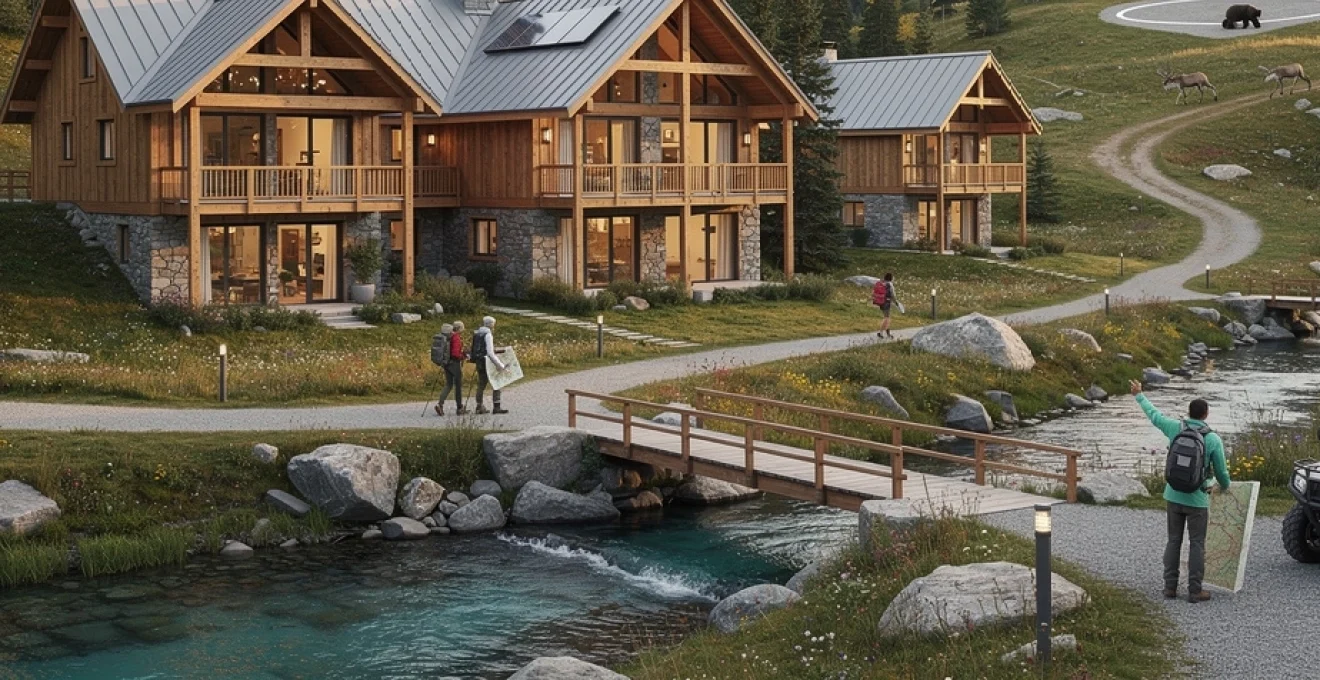
The Canadian Rockies represent one of the world’s most pristine wilderness environments, where remote mountain lodges offer extraordinary accommodations amidst towering peaks, ancient glaciers, and untouched alpine ecosystems. These remarkable establishments provide adventurous travellers with unique opportunities to experience the raw beauty of Canada’s mountain wilderness whilst enjoying comfortable lodging and exceptional hospitality. From historic railway hotels perched on lakeshores to eco-friendly backcountry huts accessible only by foot or helicopter, the region’s diverse accommodation options cater to every level of wilderness enthusiast.
The integration of human habitation within these protected mountain environments requires careful consideration of environmental impact, architectural innovation, and sustainable operations. Modern wilderness lodges must balance guest comfort with conservation principles, utilising cutting-edge technologies and time-tested construction methods to create facilities that harmonise with their natural surroundings whilst providing safe, reliable shelter in some of Canada’s most challenging climates.
Premier wilderness lodge destinations across alberta and british columbia mountain ranges
The Canadian Rockies encompass an extensive network of wilderness lodges spanning multiple national parks and provincial boundaries, each offering distinct experiences shaped by their unique geographical locations and accessibility. These establishments range from luxury resorts with helicopter access to rustic backcountry huts requiring multi-day hikes, creating a comprehensive spectrum of wilderness accommodation options.
Banff national park’s remote alpine accommodations and backcountry access points
Banff National Park hosts some of Canada’s most iconic wilderness lodges, including the legendary Fairmont Banff Springs Hotel and several remote backcountry facilities. The park’s lodge network provides strategic access to pristine wilderness areas whilst maintaining strict environmental protocols. Shadow Lake Lodge exemplifies this approach, offering comfortable cabin accommodation in a spectacular alpine meadow setting, accessible via a scenic hiking trail that immmerses guests in the natural environment from their first steps.
The Alpine Club of Canada maintains several high-altitude huts throughout Banff’s backcountry, including the historic Elizabeth Parker Hut near Lake O’Hara. These facilities serve as critical staging points for mountaineering expeditions and extended wilderness exploration. Skoki Lodge stands as perhaps the most atmospheric of these destinations, combining rustic charm with modern amenities in a location that epitomises the Canadian Rockies experience.
Jasper national park’s wilderness lodge network and maligne valley retreats
Jasper National Park’s vast wilderness encompasses numerous remote lodge facilities designed to provide access to some of Canada’s most pristine mountain environments. The park’s lodge network emphasises sustainable tourism practices whilst offering guests unprecedented access to wildlife viewing opportunities and pristine alpine landscapes. These establishments typically feature seasonal operations that align with natural wildlife patterns and weather conditions.
The Maligne Valley region hosts several boutique wilderness lodges that specialise in wildlife observation and nature photography. These facilities incorporate advanced bear-proof storage systems and wildlife deterrent technologies to ensure guest safety whilst minimising human impact on natural animal behaviours. Lake O’Hara Lodge represents the pinnacle of wilderness hospitality in this region, offering exclusive access to some of the Rockies’ most spectacular hiking terrain.
Kootenay and yoho national parks’ secluded mountain hospitality venues
The Kootenay and Yoho regions feature particularly remote wilderness lodges that emphasise authentic mountain experiences and environmental stewardship. These establishments often operate completely off-grid, utilising renewable energy systems and sustainable water management practices. Cathedral Mountain Lodge exemplifies this approach, offering luxury cabin accommodation within Yoho National Park whilst maintaining minimal environmental impact through innovative design and operations.
Cross River Wilderness Centre demonstrates how modern wilderness lodges can operate as completely self-sufficient facilities. This family-owned establishment generates power through solar and hydroelectric systems, sources water through natural gravity feed, and heats all buildings using deadfall timber. Such operations serve as models for sustainable wilderness tourism development throughout the Canadian Rockies.
British columbia’s glacier national park and mount revelstoke lodge options
British Columbia’s portion of the Canadian Rockies features numerous high-altitude lodge facilities that provide access to extensive glacier systems and alpine climbing routes.
Many of these lodges operate seasonally to align with backcountry skiing or alpine hiking conditions, and their remote settings demand specialised logistics for supplies and guest access. In Glacier National Park and Mount Revelstoke, smaller, independently run lodges and cabins often focus on ski-touring, avalanche education courses, and guided mountaineering. Guests typically reach these properties via a combination of highway access and snowcat or helicopter transfers, underscoring the importance of robust safety systems and carefully managed visitor numbers in these fragile high-mountain environments.
Architectural design and construction challenges in remote alpine environments
Designing and building mountain lodges in the Canadian Rockies requires a balance between structural resilience, guest comfort, and minimal environmental disturbance. Remote alpine construction sites face challenges such as extreme snow loads, freeze–thaw cycles, limited building seasons, and strict protected-area regulations. Architects and engineers must therefore adopt strategies that reduce on-site impact, optimise energy performance, and ensure long-term durability in conditions that can be harsher than many industrial sites.
Unlike urban hotels, wilderness lodges in the Canadian Rockies often rely on prefabricated components, helicopter-sling loads, and small work crews to complete construction. This constraint encourages compact footprints, efficient interior layouts, and careful orientation to maximise passive solar gain and natural wind protection. When successful, the result is a lodge that feels as if it grew out of the landscape, rather than being imposed upon it.
Sustainable building materials and low-impact construction methodologies
Material selection is one of the most critical decisions in remote lodge development. Builders frequently favour locally sourced timber, engineered wood products, and high-performance insulation to reduce transportation emissions and improve thermal efficiency. Using timber from regional forests also helps the finished buildings blend visually with their surroundings, especially when combined with stone and metal roofing that echo the local geology.
Low-impact construction methodologies prioritise reduced ground disturbance and minimal heavy-equipment use. In practice, this can mean using screw piles instead of poured concrete foundations, pre-assembling wall panels off-site, and scheduling work to avoid sensitive wildlife breeding seasons. Think of it as performing delicate surgery on the landscape rather than a large excavation: the goal is to complete the work with as little scarring as possible.
To further decrease their environmental footprint, many Canadian Rockies mountain lodges implement light-on-the-land site planning. Buildings are clustered on previously disturbed areas or natural clearings, avoiding old-growth stands and wetlands. Construction waste is strictly managed, with materials flown or trucked back out of the valley, and restoration plans ensure disturbed soils are re-vegetated with native species. For travellers seeking wilderness accommodation, these behind-the-scenes decisions significantly reduce the long-term ecological cost of their stay.
Off-grid power systems: solar, hydroelectric, and wind integration solutions
Because most wilderness lodges in the Canadian Rockies are far from municipal grids, reliable off-grid power systems are essential. Modern installations often combine solar photovoltaic arrays, micro-hydroelectric systems, and, in some locations, small-scale wind turbines to create hybrid energy solutions. This diversified approach ensures that power generation continues through variable mountain weather, where snowstorms, summer storms, and seasonal daylight shifts all influence output.
Solar panels, mounted on lodge roofs or adjacent arrays, provide a significant proportion of electricity during long summer days. In areas such as the Kootenay River Valley, where Cross River Wilderness Centre operates, gravity-fed streams enable micro-hydro turbines to generate consistent baseline power throughout much of the year. Wind turbines are used more selectively, often at exposed ridgelines or passes where gusts are strong and sustained enough to justify the infrastructure.
To stabilise these systems, lodges typically rely on advanced battery banks, intelligent charge controllers, and backup generators that run on propane or diesel. The design challenge is similar to packing for an extended backcountry expedition: you need enough redundancy to handle storms and emergencies without carrying unnecessary weight. For guests, the most noticeable outcome is a subtle emphasis on energy conservation, such as timed lighting, high-efficiency appliances, and clear guidelines on responsible use of in-room amenities.
Waste management systems and greywater treatment in wilderness settings
In remote mountain environments, waste management is as important as accommodation design. Lodges must adhere to strict regulations on wastewater discharge, solid waste disposal, and greywater treatment to prevent contamination of streams and sensitive alpine soils. Many properties install compact, high-efficiency septic systems or advanced biological treatment units that break down organic matter before water re-enters the environment.
Greywater from showers and sinks is often filtered, treated, and sometimes even reused for irrigation of non-native landscaping near the lodge, though most developers in the Canadian Rockies prefer minimal landscaping to preserve natural vegetation. Composting toilets are still used in some backcountry huts and high-elevation shelters, particularly where frozen ground makes traditional septic systems impractical. These systems require careful maintenance but dramatically reduce water consumption and the risk of leaching.
Solid waste protocols typically follow a pack-in, pack-out philosophy. Food waste is stored in bear-resistant containers and transported out by helicopter or vehicle on regular supply runs, rather than being incinerated on-site. Lodges also implement recycling and waste-reduction programs, encouraging guests to minimise packaging and, where possible, avoid single-use plastics. For travellers accustomed to urban conveniences, these practices offer a tangible glimpse of what true low-impact living looks like when every kilogram of waste must eventually leave the valley.
Helicopter and all-terrain vehicle access infrastructure requirements
Many of the most remote mountain lodges in the Canadian Rockies rely on helicopters and, in some cases, all-terrain vehicles (ATVs) or snowcats for seasonal access. Establishing safe, low-impact landing zones and access tracks is therefore a key component of lodge planning. Helicopter pads are typically sited on previously disturbed ground or open rock slabs to avoid forest clearing, and strict flight paths are established to minimise disturbance to wildlife corridors and neighbouring communities.
ATV and snowcat routes follow existing seismic lines, old logging roads, or carefully planned trails that avoid wetlands and erosion-prone slopes. Much like designing a hiking trail, the objective is to manage gradient, drainage, and surface stability to reduce long-term maintenance and ecological impact. Operators often limit motorised traffic to specific windows during the day and specific seasons to avoid conflicts with wildlife movements and visitor expectations of tranquility.
Regulatory compliance plays a central role in access planning. Parks Canada and provincial agencies require detailed environmental assessments for new infrastructure, including noise modelling and wildlife-impact studies. For guests, the result is often a seamless travel experience—perhaps a short, spectacular helicopter ride followed by a quiet, vehicle-free lodge environment—backed by extensive behind-the-scenes planning that keeps the wilderness character intact.
Wildlife habitat integration and environmental impact mitigation strategies
Because mountain lodges in the Canadian Rockies sit within some of North America’s most important wildlife habitats, developers and operators must design with animals in mind as much as people. Habitat integration goes beyond avoiding obvious impacts and works toward maintaining functional ecosystems where species can feed, breed, and migrate with minimal disturbance. This requires long-term monitoring, adaptive management, and close collaboration with biologists and conservation authorities.
Well-designed wilderness accommodation treats the surrounding landscape as the primary attraction and the lodge as a discreet guest within it. Lighting policies, building placement, and even meal schedules can be tuned to reduce conflicts with nocturnal species or peak movement periods. You might never notice that your evening dining time was chosen to avoid elk crossings or that your cabin’s exterior lights are shielded to protect migrating birds—but these details matter.
Grizzly bear and black bear corridor preservation around lodge developments
The Canadian Rockies form a critical stronghold for both grizzly and black bear populations, and maintaining movement corridors is essential for their survival. Lodge sites are therefore screened to avoid berry patches, riparian zones, and natural travel routes that bears use to move between feeding areas and denning sites. When avoidance is impossible, developers work with wildlife specialists to map corridors and establish no-build zones and vegetated buffers that allow bears to pass without encountering human structures.
Operational practices also reduce attractants that might draw bears into lodge areas. Food waste is stored in certified bear-resistant containers or buildings, barbecue facilities are limited or closely supervised, and guests receive clear instructions about not leaving food or scented items outdoors. Some wilderness lodges integrate motion-activated lighting and non-lethal deterrent systems, such as noise-makers, to dissuade curious bears from approaching without causing harm.
From the visitor’s perspective, these measures translate into both safety and remarkably authentic wildlife viewing opportunities. Guided walks often focus on identifying bear sign, understanding seasonal food sources, and learning how to behave during an encounter. By maintaining secure corridors and reducing attractants, lodges help ensure that bears remain wary, wild animals rather than habituated visitors to the back door.
Caribou migration route protection and seasonal access restrictions
In certain parts of the Canadian Rockies, particularly in northern and higher-elevation regions, woodland caribou herds still rely on large, undisturbed landscapes. These animals are highly sensitive to disturbance, especially during calving and winter foraging periods. To protect migration routes and seasonal ranges, some lodges and tour operators voluntarily limit helicopter flights, snowmobile traffic, and even guided ski-touring in key valleys during critical months.
Seasonal access restrictions can feel inconvenient at first glance, but they are often the difference between a declining herd and a stable population. Parks Canada and provincial wildlife agencies may close specific trails or backcountry zones when caribou are present, and responsible wilderness lodges factor these closures into their operating calendars and marketing. For guests, this can lead to creative itinerary planning—perhaps shifting a stay to early spring for ski touring or late summer for hiking to avoid sensitive windows.
In practice, protecting caribou migration routes involves detailed mapping, GPS collar data, and ongoing research collaborations. Lodges that participate in these initiatives sometimes offer interpretive programs explaining why certain areas are off-limits, turning potential disappointment into an educational moment. In this way, travellers become active partners in conservation efforts rather than passive observers.
Alpine ecosystem monitoring and biodiversity conservation protocols
Alpine ecosystems in the Canadian Rockies are thin, slow-growing, and highly vulnerable to trampling and climate change. To safeguard these unique habitats, many wilderness lodges participate in ecosystem monitoring programs, gathering data on vegetation, snowpack, and wildlife presence. This information supports broader conservation initiatives and helps managers detect changes—such as shifting treelines or altered flowering times—linked to warming temperatures.
Biodiversity conservation protocols can include designated boardwalks over fragile meadows, signed no-go zones near sensitive wetlands, and strict rules about staying on established trails. Think of an alpine meadow as a fragile carpet: one or two footprints might seem harmless, but repeated impacts quickly wear visible paths that take decades to heal. By channelling guest movement, lodges minimise cumulative damage while still providing access to scenic viewpoints and photographic opportunities.
Some properties partner with universities or non-profit organisations to host field courses and citizen-science projects. Guests might help survey wildflowers, record bird calls, or photograph glaciers from fixed viewpoints for long-term comparison. These activities enrich the wilderness accommodation experience and deepen travellers’ connection to the landscape, turning a simple stay in the mountains into a meaningful contribution to conservation.
Seasonal operations and extreme weather preparedness systems
Operating a mountain lodge in the Canadian Rockies means planning around seasons that can shift rapidly and deliver everything from heat waves to blizzards in a single week. Many remote properties adopt a seasonal model, opening in summer for hiking and paddling, or in winter for skiing and snowshoeing, while closing during shoulder periods when access is unreliable. This not only reduces operational risk but also gives ecosystems time to rest and recover from visitor pressure.
Extreme weather preparedness is built into both infrastructure and protocols. Buildings are engineered for heavy snow loads, high winds, and ice accumulation, with steep roof pitches, reinforced trusses, and robust anchoring systems. Backup heating sources, redundant communication systems (satellite phones, radio networks), and emergency power reserves ensure that guests remain safe and comfortable even during prolonged storms. Staff undergo regular training in avalanche awareness, cold-weather first aid, and emergency shelter procedures.
For visitors, these preparations often appear as subtle guidelines: advised check-in windows to avoid afternoon thunderstorms, recommended gear lists for sudden temperature drops, or instructions to remain in the main lodge during high avalanche hazard periods. By following staff guidance, you become part of a well-rehearsed safety system. In return, you gain the rare experience of watching a snowstorm or chinook wind event from the secure vantage point of a well-prepared mountain retreat.
Wilderness safety protocols and emergency response infrastructure
Safety in remote mountain environments is a shared responsibility between lodge operators and guests. Well-managed wilderness accommodation in the Canadian Rockies implements layered safety protocols that begin with pre-arrival communication and continue through daily briefings and on-trail guidance. Before you even set foot on the property, you may receive detailed packing lists, medical questionnaires, and information about altitude, wildlife, and terrain.
On site, lodges typically maintain comprehensive emergency response infrastructure. This can include first-aid stations, automated external defibrillators (AEDs), oxygen supplies, and evacuation plans tailored to helicopter or ground access options. Staff often hold advanced wilderness first-aid or paramedic certifications, and some properties coordinate directly with local search-and-rescue teams and Parks Canada wardens to ensure rapid response capability. Much like an insurance policy, you hope these systems never need to be used, but their presence is essential.
Guest education forms the final, crucial layer. Orientation sessions cover topics such as safe hiking practices, avalanche terrain recognition (in winter operations), and wildlife encounter protocols. Clear signage and detailed trail maps help visitors stay within designated areas, and many lodges require guests to sign out and in for independent excursions. These practices might feel formal compared to a typical urban hotel stay, but they allow you to explore some of North America’s most spectacular terrain with the confidence that robust support systems are in place.
Premium lodge experiences: moraine lake lodge and emerald lake lodge case studies
Among the many wilderness lodges in the Canadian Rockies, Moraine Lake Lodge and Emerald Lake Lodge stand out as exemplary models of premium mountain accommodation integrated into protected landscapes. Both properties combine high-end guest experiences with thoughtful environmental practices, showcasing how luxury and conservation can coexist. Their settings—along turquoise lakes framed by steep peaks and dense forests—are iconic images of the Rockies found in travel magazines worldwide.
Moraine Lake Lodge, situated on the shores of Moraine Lake in Banff National Park, offers a collection of lakeside cabins and lodge rooms designed for adults seeking tranquility and scenery. Guests benefit from exclusive amenities such as complimentary canoe rentals, a dedicated shuttle service to and from the lake, and market-fresh breakfasts at its sister property connections. By limiting vehicle access and managing visitor flow through shuttles and reservations, the lodge helps reduce traffic congestion and emissions in a sensitive alpine valley while still providing unforgettable lake access.
Emerald Lake Lodge, located in Yoho National Park, follows a similar ethos, with private cabins and lodge rooms perched close to the shoreline of Emerald Lake. Access via a causeway and restrictions on non-essential vehicle traffic create a quiet, pedestrian-friendly environment where you can hear loons and watch mist rise off the water at dawn. The property emphasises regional cuisine, natural building materials, and minimal night-time lighting to preserve dark skies for stargazing. Guests often describe the experience as stepping into a secluded alpine village, despite being only a short drive from the Trans-Canada Highway.
Together, these two case studies illustrate best practices for mountain lodges in the Canadian Rockies: careful control of visitor numbers, investment in shuttle systems and non-motorised recreation, and a commitment to architecture that reflects both local history and modern sustainability standards. When you choose to stay at lodges like Moraine Lake Lodge or Emerald Lake Lodge, you are not only reserving a room with a remarkable view—you are also supporting a model of wilderness tourism that seeks to protect those views for generations to come.