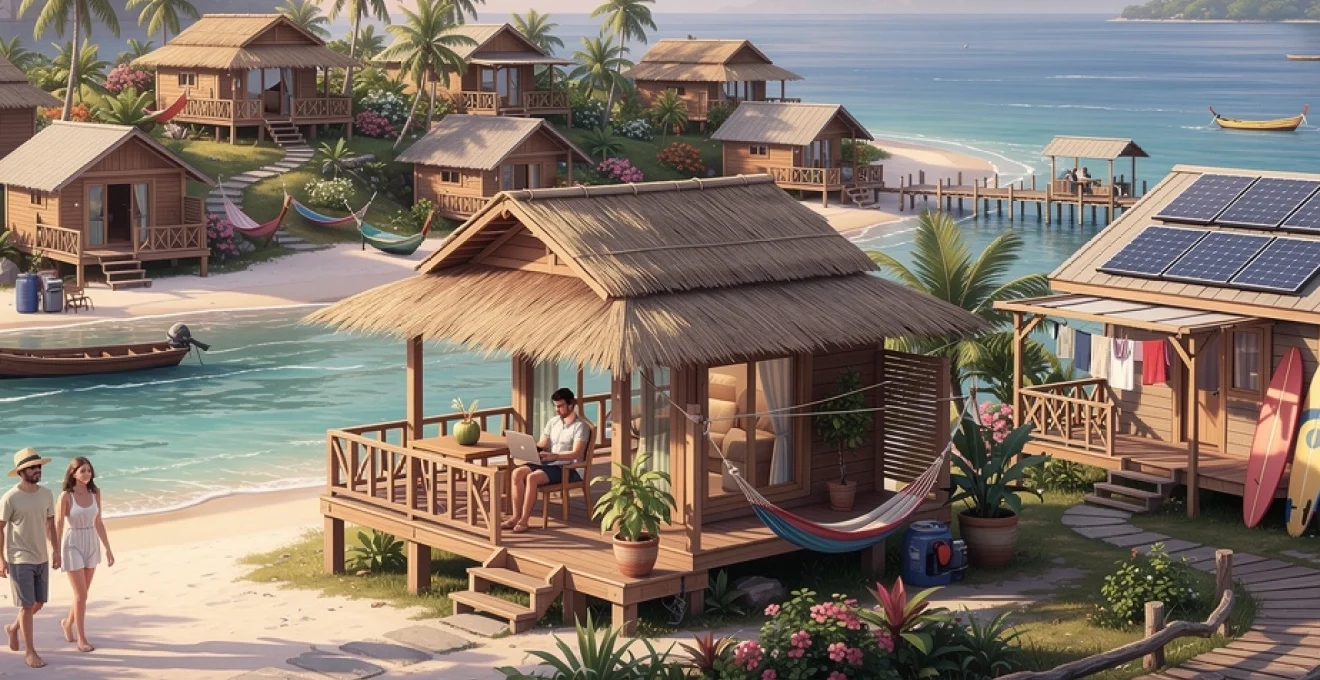
The allure of a simple beach bungalow nestled along Thailand’s pristine coastline represents more than just affordable accommodation—it embodies a complete lifestyle transformation. From the Gulf of Thailand’s tranquil shores to the dramatic limestone cliffs of the Andaman Sea, beach bungalows offer foreigners and digital nomads an authentic connection to island living that conventional hotels simply cannot replicate. These wooden and bamboo structures, ranging from basic backpacker shelters to sophisticated eco-retreats, provide the perfect foundation for those seeking to escape the relentless pace of modern life. With monthly rental costs often significantly lower than urban apartments back home, combined with Thailand’s welcoming visa policies for extended stays, the dream of waking to ocean sounds and stepping directly onto white sand beaches has never been more accessible.
Koh samui beach bungalow accommodation: chaweng to lamai coastal options
Koh Samui stands as Thailand’s second-largest island and offers the most developed bungalow infrastructure in the Gulf region. The island’s eastern coastline presents a diverse spectrum of accommodation styles, from bustling beachfront properties to secluded hideaways where you can genuinely disconnect from urban pressures. The island’s established tourism economy means you’ll find reliable internet connectivity, well-stocked supermarkets, and international dining options—essential considerations for anyone planning an extended tropical residence rather than a brief holiday.
Chaweng beach bungalow resorts with direct sea access
Chaweng Beach stretches approximately seven kilometres and hosts Koh Samui’s liveliest concentration of beach bungalows and resort properties. The southern section of Chaweng offers traditional sala-style bungalows constructed from teak and coconut wood, typically elevated on stilts to catch the sea breeze and provide protection during the monsoon season. These properties generally feature open-plan designs with peaked roofs, ceiling fans, and private verandas positioned just metres from the tide line. Monthly rates for a basic beachfront bungalow in this area range from 15,000 to 25,000 baht during low season, with prices doubling during December through February peak periods.
The central Chaweng area transforms considerably, with more contemporary bungalow-style accommodations incorporating air conditioning, hot water systems, and Wi-Fi infrastructure. These hybrid properties maintain the aesthetic appeal of traditional beach bungalows whilst providing the creature comforts that long-term residents typically require. You’ll discover that many operators in this zone offer significantly discounted rates for stays exceeding 30 days, with some properties providing monthly rental agreements that include weekly cleaning services and linen changes.
Lamai bay traditional Thai-Style bungalow properties
Lamai Beach presents a more authentic alternative to Chaweng’s commercialised atmosphere, with bungalow operations that have remained family-owned for decades. The beach curves gently around the bay, creating protected swimming conditions that prove particularly valuable during the northeast monsoon months from November through January. Traditional bamboo bungalows here maintain their original character, with woven palm leaf roofing, outdoor bathroom facilities, and minimalist interiors that encourage a genuinely simplified existence.
Monthly rental negotiations with Lamai property owners often yield exceptional value, particularly if you’re willing to commit to three or six-month agreements. Properties set back from the beach by 50 to 100 metres typically cost between 8,000 and 15,000 baht monthly, offering a remarkably affordable base for extended island living. The Lamai community hosts several long-established expat residents who can provide valuable insights into navigating Thai bureaucracy, locating reliable property management services, and understanding the unwritten social protocols that govern beachfront living.
Maenam beach secluded bungalow retreats for Long-Term stays
The northern coastline of Koh Samui, particularly around Maenam, attracts residents seeking tranquility over nightlife and authentic island rhythms over tourist spectacle. Bungalow developments here are notably more spacious, with many properties positioned within coconut plantations that provide natural shade and privacy. The beach itself features golden
sand and calm waters, making it suitable for year-round swimming and paddleboarding. Many Maenam beach bungalows are arranged in low-density clusters, with generous garden space between units, so you never feel crowded even in high season. For long-term residents, this translates into quieter evenings, fewer beach parties, and the kind of steady routine that supports remote work or a slow-travel lifestyle. Monthly rentals for simple fan bungalows begin around 10,000 baht, while air-conditioned, one-bedroom units with kitchenettes typically range from 18,000 to 28,000 baht depending on proximity to the shore and seasonality.
Maenam also benefits from regular ferry connections to Koh Phangan via the nearby pier, which is convenient if you intend to explore neighbouring islands without relocating. The village infrastructure includes local markets, low-key cafés, and several co-working-friendly coffee shops, all of which contribute to a balanced rhythm of productivity and relaxation. Compared with Chaweng and Lamai, utility costs here are often lower, and owners are more willing to install fibre internet or additional fans if you commit to a multi-month lease. If you value waking up to bird calls rather than club music, Maenam’s secluded bungalow retreats offer an ideal compromise between comfort and isolation.
Bophut fisherman’s village boutique bungalow accommodations
Bophut’s Fisherman’s Village has evolved from a traditional trading harbour into one of Koh Samui’s most atmospheric beachfront districts. Here, boutique bungalows sit behind restored wooden shopfronts and along narrow sois that lead directly to the sea, combining heritage aesthetics with contemporary amenities. Many of these properties feature polished concrete floors, large sliding doors, and modern bathrooms, while still retaining gabled roofs and timber details that echo classic Thai coastal architecture. Nightly rates are higher than in Maenam or Lamai, but extended-stay discounts are common during shoulder seasons from May to June and September to October.
Staying in a bungalow around Fisherman’s Village places you within walking distance of weekly night markets, international restaurants, and yoga studios that cater to both tourists and residents. This concentration of services makes Bophut particularly attractive if you want a beachside lifestyle without sacrificing urban conveniences or social opportunities. While direct beachfront bungalows are limited and command premium pricing, lanes immediately behind the main strip hide compact bungalow courts with shared pools and secure parking. For many digital nomads, this area strikes the ideal balance between “village feel” and functional infrastructure, especially if you prefer not to ride a scooter long distances for basic errands.
Koh phangan island living: haad rin to thong nai pan bungalow communities
Koh Phangan has long been synonymous with the Full Moon Party, but its bungalow communities extend far beyond Haad Rin’s nightlife zone. As you move around the island’s coastline, you encounter distinct micro-environments: party-centric beaches, yoga-oriented enclaves, and almost off-grid bays accessible only by boat or jungle trail. This diversity creates a broad range of beach bungalow options, from simple fan huts perched above the rocks to well-insulated, air-conditioned villas equipped for year-round living. For anyone considering an extended stay, understanding how each bay’s character aligns with your lifestyle preferences is as important as the bungalow’s design itself.
Haad rin nok beachfront bungalow infrastructure and amenities
Haad Rin Nok (Sunrise Beach) is ground zero for the Full Moon Party and maintains one of the island’s densest clusters of beachfront bungalows. Most structures here are built to be durable yet easy to renovate, with concrete bases, tiled roofs, and straightforward interiors that can withstand heavy foot traffic and monsoon conditions. During peak party dates, nightly rates can jump significantly, but if you plan a long-term beach bungalow rental outside these windows, you may be surprised at the competitive monthly prices. Many owners are keen to secure stable income from remote workers or long-stay travellers during quieter periods.
On the practical side, Haad Rin Nok offers strong 4G coverage, multiple fibre internet options, and reliable access to ATMs, pharmacies, and international restaurants. You will, however, need to accept higher background noise levels and periodic influxes of short-term partygoers. If you thrive on social interaction and nightlife, a bungalow slightly set back from the main strip—perhaps 100 to 200 metres inland—can give you a compromise between energy and rest. Think of it as living next to a stadium: on event nights, you feel the buzz, but on most days, you still have a reasonably normal routine.
Thong nai pan yai hillside bungalows with panoramic gulf views
On the island’s northeast, Thong Nai Pan Yai and its twin bay, Thong Nai Pan Noi, present a dramatically different atmosphere. Here, hillside bungalows climb the slopes around the bays, oriented to capture sweeping Gulf of Thailand views and cooling sea breezes. Many of these properties use split-level designs with elevated bedrooms and shaded terraces, allowing you to work or relax outdoors without direct exposure to midday sun. Monthly rentals for hillside bungalows with panoramic views generally start around 18,000 baht, rising to 35,000 baht or more for units with private pools or larger floorplans.
Because of their elevation, these bungalows are less vulnerable to storm surge during the monsoon season and benefit from better natural ventilation. However, the trade-off is the daily climb up and down steep paths or stairs, which can feel like a built-in fitness routine. Are you comfortable trading quick beach access for quieter nights and cooler interiors? If so, Thong Nai Pan Yai’s hillside bungalow communities offer a semi-secluded base that still has access to cafés, minimarts, and yoga studios down by the sand.
Haad yuan off-grid bungalow living and solar power solutions
Haad Yuan, located east of Haad Rin and reachable mainly by longtail boat or jungle trail, attracts travellers seeking a semi-off-grid lifestyle. Many beach bungalows here are built with natural materials such as bamboo and hardwood, set among jungle foliage that provides both privacy and shade. Electricity has historically been limited, so some owners have turned to solar power systems and battery storage to support lighting, fans, and basic appliances. It’s not uncommon to see solar panels integrated into rooflines, making these bungalows small-scale demonstrations of eco-conscious island living.
Choosing Haad Yuan as a long-term base requires a different mindset than staying near a main road or town. Supply runs to Haad Rin for groceries or banking may be restricted by boat schedules and sea conditions, particularly during rough weather. Internet speeds can vary significantly between properties, so it’s wise to test connectivity before committing to a multi-month lease if you plan to work online. Yet, for many residents, this relative isolation is exactly the draw: evenings are quieter, star visibility is exceptional, and the rhythm of life is governed as much by tides and weather as by calendar dates.
Srithanu beach digital nomad-friendly bungalow rentals
On the island’s northwest coast, Srithanu has emerged as Koh Phangan’s de facto digital nomad and wellness hub. Bungalows here often sit within mixed-use developments that combine long-term rentals, co-working spaces, and plant-based cafés in a compact radius. Layouts tend to prioritise work-friendly features such as strong Wi-Fi, ample power outlets, and shaded verandas suitable for laptop use throughout the day. Monthly beach bungalow rentals in Srithanu typically start around 15,000 baht for basic units and can exceed 30,000 baht for modern, air-conditioned spaces with kitchenettes and shared pools.
Because Srithanu attracts remote workers, owners are usually familiar with expectations such as stable internet, clear lease terms, and predictable utility billing. This makes negotiating longer contracts—three, six, or even twelve months—more straightforward than in transient party zones. The community also hosts a wide selection of yoga centres, meditation retreats, and social meetups, which helps new arrivals integrate quickly. If you’re building a location-independent lifestyle, Srithanu’s digital nomad-friendly bungalows offer the kind of ecosystem where accommodation, community, and work infrastructure reinforce each other like parts of a well-tuned machine.
Krabi province beach bungalows: railay, ao nang, and koh lanta developments
Crossing to the Andaman Sea, Krabi Province showcases a different coastal character, with dramatic limestone cliffs and mangrove-lined estuaries framing the region’s beach bungalow developments. While fewer areas here are as explicitly geared to long-stay living as Koh Samui or Koh Phangan, you can still find a range of monthly bungalow rentals that suit a laid-back island lifestyle. The main centres—Railay, Ao Nang, and Koh Lanta Yai—each offer distinct trade-offs between accessibility, scenery, and infrastructure. Understanding these differences will help you choose whether to base yourself near Krabi Town’s amenities or on a more remote stretch of sand.
Railay beach limestone cliff bungalow architecture and design
Railay Beach, accessible only by boat despite being attached to the mainland, delivers one of Thailand’s most iconic landscapes. Bungalow resorts here nestle between vertical limestone cliffs and soft sand beaches, resulting in compact plots where architects must use space creatively. Many bungalows employ split-level or mezzanine designs under steeply pitched roofs to maximise usable interior area while maintaining a small footprint. Natural materials such as teak, bamboo, and stone are widely used, not only for aesthetic reasons but also because they can better blend with the karst environment and cope with local humidity.
Due to Railay’s limited land area and strong seasonal demand from climbers and beachgoers, most bungalow properties operate on a nightly basis. However, some mid-range resorts will negotiate monthly rates during the low season from May to October, especially for repeat guests or those willing to occupy less central units. If you secure such a bungalow, you’ll benefit from proximity to world-class climbing, sea kayaking, and lagoon hikes, all within walking distance. The main lifestyle consideration is logistics: supplies and luggage must be ferried in by longtail, and sudden storms can temporarily disrupt boat connections to Ao Nang or Krabi Town.
Ao nang beach budget to mid-range bungalow property market
Ao Nang functions as Krabi’s principal beach town and gateway to nearby islands. Here, the bungalow market spans a broad spectrum from basic, fan-cooled huts set along backstreets to mid-range complexes with pools and on-site restaurants. Many properties are not directly on the beach but within a five to fifteen-minute walk, which helps keep rental prices more approachable for extended stays. Monthly rates for simple bungalows generally start around 10,000 to 14,000 baht, while more polished units with air conditioning and improved soundproofing sit in the 18,000 to 25,000 baht range.
If your priority is a balance between the beach bungalow lifestyle and urban convenience, Ao Nang is a strong candidate. You’ll have easy access to supermarkets, medical clinics, transport agencies, and daily longtail boat services to Railay, Tonsai, and various offshore islands. The downside is that Ao Nang’s main road can feel busy, particularly in high season, so you may prefer bungalows positioned on quieter side streets or gentle hills overlooking the bay. As with many Thai coastal towns, walking a few hundred metres inland can dramatically reduce both noise and rent.
Koh lanta yai long beach eco-bungalow construction standards
Koh Lanta Yai’s Long Beach (Pra-Ae) has become a favourite among travellers seeking a quieter, more spacious alternative to Phuket or Ao Nang. Bungalow resorts here often occupy larger plots, allowing for low-density layouts with generous green space and mature trees. Over the last decade, eco-bungalow construction standards have improved noticeably: better roof insulation, rainwater collection systems, and septic setups designed to minimise impact on the island’s fragile coastal ecosystem. Some developments also use locally sourced hardwood, bamboo, and compressed-earth bricks to reduce embodied carbon and improve thermal performance.
For long-term residents, these construction details matter more than they might during a short holiday. Well-insulated eco-bungalows stay cooler during the hot season and require less air conditioning, reducing both your electricity bill and environmental footprint. Properties that manage greywater effectively and utilise natural ventilation also tend to suffer less from mould build-up, an important consideration if you plan to stay through the monsoon. Monthly rentals on Long Beach vary widely—from around 12,000 baht for older, fan-cooled units set back from the shore, up to 30,000 baht or more for modern eco-bungalows with kitchens and high-speed internet. Before signing a lease, it’s worth inspecting roof overhangs, window placement, and drainage channels, as these design features can significantly affect year-round comfort.
Thai visa categories for extended bungalow residency and lease agreements
While Thailand’s beach bungalows invite long-term stays, your ability to reside legally hinges on choosing an appropriate visa category. For many remote workers and retirees, the most relevant options include the Tourist Visa (with possible extensions), the Non-Immigrant O (for retirees and family), the Non-Immigrant ED (for students), and the Long-Term Resident (LTR) visa for qualifying professionals and high-net-worth individuals. Each visa type carries specific requirements regarding income, bank balances, insurance, and permitted activities, so it’s essential to match your intended length of stay and lifestyle with the right legal framework. Overstays can result in fines or future entry bans, which can quickly derail your island-living plans.
Tourist Visas and visa-exempt entries suit short exploratory stays of one to three months, during which you can scout different islands and bungalow communities. If you fall in love with a particular location and plan to stay longer, retirement or education visas often become more relevant. For example, retirees aged 50 or above may qualify for a Non-Immigrant O (Retirement) visa by meeting certain financial thresholds in a Thai or overseas bank account and securing local health insurance. Meanwhile, language schools and cultural institutions offer education programmes that can support Non-Immigrant ED visas, though visa rules and enforcement standards have tightened in recent years.
What about remote workers who want to live in a beach bungalow while serving clients abroad? Officially, Thai immigration law is still evolving in this regard, although the LTR visa and some Smart Visa categories are designed with international professionals in mind. Until broader regulations settle, many digital nomads opt for a patchwork of tourist visas, visa runs (where permitted), and occasional long-stay visas through legitimate education or volunteer programmes. Because regulations change, it’s wise to consult an immigration lawyer or reputable visa agency before committing to a twelve-month bungalow lease. Treat visa planning like the foundation of a house: if it’s unstable, everything built on top becomes vulnerable.
Lease agreements themselves are typically straightforward but can vary significantly between islands and owners. For stays of one to three months, you may only sign a simple rental agreement with deposit terms, utility provisions, and house rules. Longer stays—especially six months or more—benefit from clearer written contracts that specify maintenance responsibilities, renewal options, and conditions for early termination. While foreigners cannot own land outright in most cases, they can legally enter into long-term lease agreements, often up to 30 years, for villas or more substantial properties. Even if you’re only renting a modest bungalow, insist on a written document; it’s your best defence against misunderstandings over deposits or repairs.
Monthly rental costs and property management services across thai islands
Across Thailand’s major islands, monthly rental costs for beach bungalows vary according to four main factors: location, season, construction quality, and included services. A basic, fan-cooled bungalow set 100 metres from the beach in a quieter area might cost as little as 8,000 to 12,000 baht per month in low season. In contrast, a modern, air-conditioned beach bungalow with kitchen facilities, strong internet, and a shared pool in a prime location can easily exceed 30,000 baht monthly, especially during high season from December to February. As a rule of thumb, the closer you are to the water and nightlife, the higher the rate.
To give you a rough comparison of typical monthly rental ranges, consider the following simplified overview:
| Destination | Basic Fan Bungalow | Mid-Range A/C Bungalow |
|---|---|---|
| Koh Samui (Maenam/Bophut) | 10,000–15,000 THB | 18,000–30,000 THB |
| Koh Phangan (Srithanu/Thong Nai Pan) | 9,000–14,000 THB | 17,000–28,000 THB |
| Ao Nang (Krabi) | 10,000–14,000 THB | 18,000–25,000 THB |
| Koh Lanta (Long Beach) | 12,000–16,000 THB | 20,000–30,000 THB |
Beyond rent, you’ll need to budget for utilities, which may or may not be included in your monthly agreement. Electricity is often billed at 5–10 baht per kilowatt-hour in private rentals, higher than the government rate but standard for tourist areas. Heavy use of air conditioning can push your monthly bill well above 2,000 baht, while fan-only living typically keeps electricity under 1,000 baht. Water charges are usually modest, and many bungalow operations factor them into the rent. Asking to see previous utility bills for your specific unit can help you estimate realistic running costs before you sign.
Property management services play a critical role in the day-to-day comfort of long-term beach bungalow living. Many family-run resorts handle maintenance, gardening, and security in-house, while larger developments on islands like Koh Samui and Phuket may contract professional management companies. Common services include weekly or bi-weekly cleaning, linen changes, rubbish collection, and basic repairs, although the exact package varies by property. If you plan to travel periodically while maintaining your bungalow as a base, ask whether the owner or manager can check the property in your absence to prevent issues such as leaks, mould, or pest infestations.
How can you find trustworthy rentals and managers without spending weeks on the ground? Online platforms and local Facebook groups provide a starting point, but it’s wise to cross-check reviews and, where possible, do an on-site inspection before committing to long leases. Some long-term residents also recommend starting with a one-month rental and extending once you’re confident in the property and owner. This phased approach is like test-driving a car before purchase: you get a real sense of how the bungalow performs during different times of day and weather conditions, rather than relying solely on photos and descriptions.
Monsoon season considerations and year-round bungalow habitability in the andaman sea
The Andaman Sea islands, including Krabi, Koh Lanta, and Phuket, experience a distinct southwest monsoon season typically running from May to October. During this period, heavy rains, stronger winds, and rougher seas can affect both bungalow living conditions and regional connectivity. Some beachfront properties face beach erosion or temporary flooding, while boat services to smaller islands may be reduced or cancelled on short notice. If you plan to maintain a beach bungalow as a year-round residence, you’ll need to look beyond high-season photos and assess how the property copes with sustained rainfall and occasional storms.
Construction features make a significant difference to monsoon comfort. Sturdy, well-braced roofs with adequate overhangs, proper guttering, and raised foundations help protect against leaks and pooling water. Good cross-ventilation reduces moisture build-up inside, which in turn limits mould growth—a common challenge in humid coastal climates. When inspecting potential rentals during the dry season, watch for signs of previous water damage such as peeling paint, swollen doorframes, or a persistent musty smell. These clues often reveal how the bungalow performs when the weather turns.
Daily life also changes during the monsoon months. Beaches may be less swimmable on some days due to strong currents or debris washing ashore, though many locals still enjoy walks and runs along the sand when conditions permit. Certain restaurants and bungalow operations close temporarily, particularly on smaller islands that rely heavily on seasonal tourism. On the other hand, rental rates generally decrease, crowds thin out, and the landscape becomes vividly green. If you value solitude and don’t mind occasional downpours, monsoon living can be both economical and rewarding.
Finally, consider transport and contingency planning when committing to a year-round bungalow near the Andaman Sea. Having flexible travel dates and a modest emergency budget helps if you face unexpected ferry cancellations or minor storm damage. Some long-term residents maintain a second base inland or on the Gulf of Thailand side, which experiences a different monsoon pattern and can offer more stable conditions when the Andaman is rough. By understanding seasonal weather patterns and choosing a well-built bungalow, you can transform potential monsoon challenges into simply another facet of your laid-back island lifestyle.