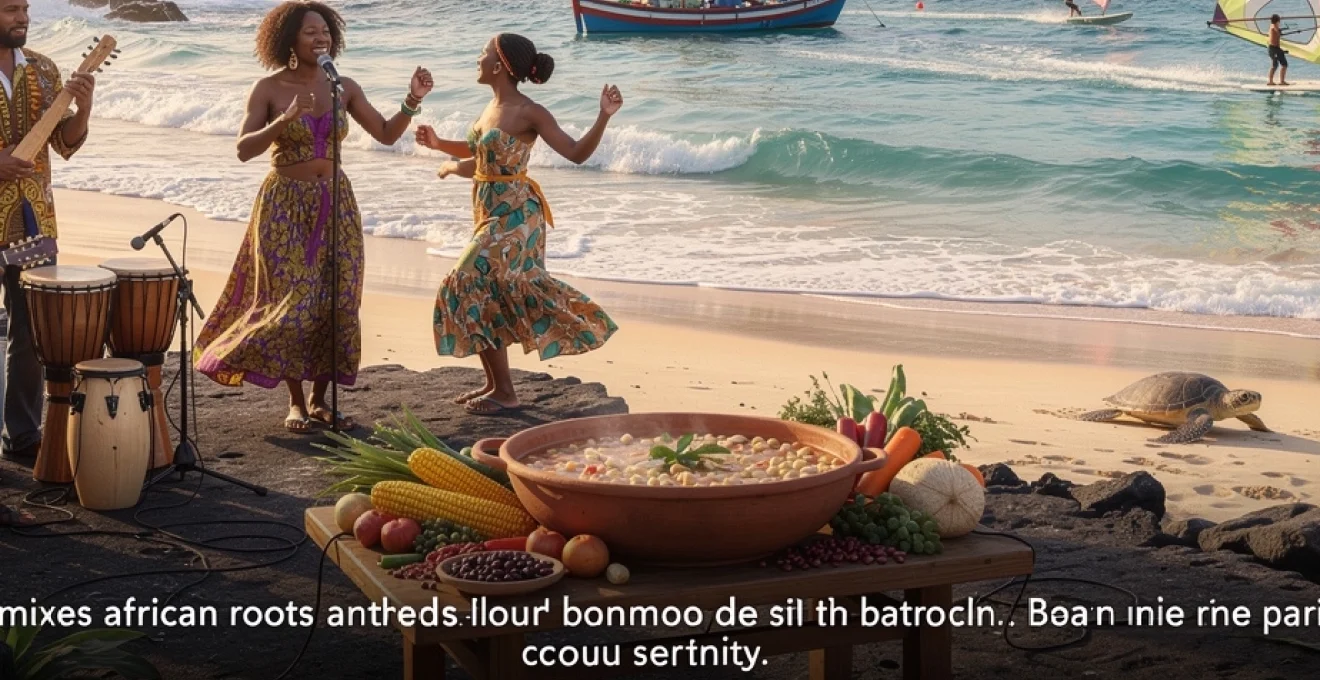
Some 400 miles west of Senegal, the Cape Verde archipelago emerges from the Atlantic Ocean as a captivating blend of cultures, landscapes, and traditions. These ten volcanic islands have cultivated a unique identity that seamlessly weaves together African heritage, Portuguese colonial influences, and Brazilian rhythms into something entirely distinctive. Unlike typical island destinations that offer predictable resort experiences, Cape Verde presents you with an extraordinary cultural tapestry where African drumming ceremonies echo across volcanic peaks, traditional morna melodies drift through cobblestone streets, and pristine beaches stretch endlessly beneath year-round sunshine. The islands’ geographical isolation has preserved authentic traditions whilst simultaneously fostering innovation, creating a destination that satisfies both cultural explorers and beach enthusiasts. Whether you’re drawn to the UNESCO-listed historical sites of Santiago, the musical soul of São Vicente, or the dramatic volcanic landscapes of Fogo, this Atlantic archipelago promises an experience that transcends conventional island tourism.
West african cultural heritage in santiago and fogo islands
Santiago stands as the most African of Cape Verde’s islands, where you’ll immediately sense the profound West African influences that shape daily life. As the first island to be permanently settled during Portuguese colonisation in the 15th century, Santiago became a crucial waypoint in the transatlantic slave trade, resulting in deep-rooted African cultural traditions that persist today. The island’s capital, Praia, buzzes with energy reminiscent of West African coastal cities, where funana music spills from doorways and street vendors sell traditional African-inspired crafts alongside Portuguese pastries.
Fogo Island shares this strong African heritage, particularly evident in its rural communities surrounding the dramatic Pico do Fogo volcano. The island’s isolation has preserved cultural practices that have evolved elsewhere, making it a living museum of Cape Verdean African traditions. Local communities maintain agricultural practices and social structures with clear links to West African societies, whilst the island’s distinctive architecture blends African building techniques with Portuguese colonial influences. When you visit Fogo’s villages, you’ll witness how African cultural retention has shaped everything from family structures to culinary traditions, creating a uniquely Cape Verdean identity that honours its ancestral roots.
Tabanka music traditions and batuco drumming ceremonies
The tabanka tradition represents one of Cape Verde’s most vibrant expressions of African cultural heritage. These community-based musical groups perform during religious festivals and celebrations, particularly on Santiago Island, where the tradition remains strongest. Tabanka groups create rhythmic processions through villages and towns, featuring elaborate costumes, flags, and instruments that reflect West African ceremonial practices. The performances blend Catholic religious elements with African spiritual traditions, creating a syncretic cultural expression unique to Cape Verde.
Batuco drumming ceremonies offer you an even more direct connection to West African traditions. Performed predominantly by women, batuco involves rhythmic drumming on cloth bundles whilst participants engage in call-and-response singing and provocative dancing. This tradition, particularly preserved in Santiago’s rural communities, shares clear similarities with West African drumming ceremonies and served historically as a form of resistance and cultural preservation during colonial times. Today, batuco performances provide entertainment whilst maintaining their role as important cultural expressions that strengthen community bonds and transmit traditions across generations.
Crioulo language evolution from Portuguese-Wolof linguistic fusion
Cape Verdean Crioulo stands as perhaps the most tangible evidence of the archipelago’s African-Portuguese cultural synthesis. This creole language developed from the contact between Portuguese colonisers and enslaved West Africans, primarily speakers of Wolof, Mandinka, and other West African languages. Whilst Portuguese provided the lexical base, African languages profoundly influenced Crioulo’s grammatical structures, pronunciation patterns, and rhythmic qualities. When you listen to Cape Verdeans speaking Crioulo, you’re hearing a linguistic creation that embodies centuries of cultural negotiation and adaptation.
Each island has developed its own Crioulo variant, with Santiago’s version showing the strongest African linguistic influences due to the island’s historical role in the slave trade. The language’s flexibility and expressiveness have made it the preferred medium for Cape Verdean music, poetry, and everyday communication, despite Portuguese remaining the official language. Recent decades have seen increased efforts to standardise and promote Crioulo,
with debates around its official status reflecting broader conversations about identity and postcolonial heritage. As you travel through Santiago and Fogo, you’ll hear how Crioulo shifts subtly from village to village, much like a musical theme that’s endlessly reinterpreted. For visitors eager to connect more deeply with local culture, learning a few basic Crioulo phrases is one of the most rewarding ways to show respect and spark conversation. Simple greetings such as “bom dia” (good morning) or “tudu dretu?” (how are you?) can open doors and smiles in markets, cafés and rural communities alike. In this way, language becomes more than a means of communication; it’s your gateway into Cape Verde’s living African-European fusion.
Pilão music festival and african diaspora celebrations
Among the many cultural expressions you’ll encounter, the Pilão music festival stands out as a powerful symbol of Cape Verde’s connection to the wider African diaspora. Named after the traditional wooden mortar used to pound maize, the festival highlights how everyday objects and rural practices are woven into the islands’ artistic identity. Hosted mainly on Santiago and Fogo, Pilão gatherings bring together local bands, dancers and storytellers who explore themes of migration, resilience and community solidarity. The atmosphere is electric yet intimate, blending African rhythms, Caribbean beats and Lusophone influences into a soundtrack that tells the story of Cape Verdean life.
These celebrations resonate deeply with Cape Verdeans who have family members scattered across Europe, the Americas and other parts of Africa. Much like a family reunion stretched across oceans, the Pilão festival and similar events celebrate the bonds that endure despite distance and hardship. You’ll often hear songs about saudade—a bittersweet longing for those who are far away—echoing across festival stages and village squares. For travellers interested in cultural tourism, timing your visit to coincide with one of these festivals offers a unique window into how Cape Verdeans negotiate identity between homeland and diaspora. It’s also a reminder that Cape Verde isn’t just a place on the map; it’s a global community connected by shared memory and music.
Cidade velha UNESCO site: slave trade historical landmarks
To understand how Cape Verde’s African roots intertwine with its tranquil island landscapes, a visit to Cidade Velha on Santiago is essential. Recognised as a UNESCO World Heritage Site since 2009, this former colonial capital was once a major hub in the transatlantic slave trade. As you walk along its cobbled streets, you’ll encounter landmarks such as the Pelourinho (pillory), where enslaved people were once punished, and the remains of warehouses where human beings were treated as cargo. It’s a sobering experience, yet one that adds crucial historical depth to any Cape Verde itinerary.
High above the town, the fortress of São Filipe overlooks the bay, its cannons once positioned to deter pirate raids and rival European powers. Today, the view from the ramparts feels peaceful, but the layered history beneath your feet is never far from mind. Guided tours often weave together stories of resistance, survival and cultural blending, helping you place modern Cape Verdean identity within a broader Atlantic context. Visiting Cidade Velha is like reading a chapter of global history written in stone and sea breeze; it calls for reflection as much as admiration. By acknowledging this past, Cape Verdeans affirm how far their society has travelled—from a crossroads of suffering to a nation confidently celebrating its mixed heritage.
Morna and coladeira: cape verdean musical identity beyond cesária évora
Few elements of Cape Verde culture have travelled the world as widely as its music, and yet what most visitors know begins and ends with the iconic Cesária Évora. While her legacy as the “Barefoot Diva” is undeniable, the country’s musical identity today is far richer and more diverse. At its heart lie two genres—morna and coladeira—which together capture the emotional and rhythmic spectrum of Cape Verdean life. Morna is introspective and poetic, often compared to Portuguese fado, whereas coladeira brings a more upbeat, danceable energy to festivals and beach bars. Exploring both styles during your trip is one of the best ways to understand how Cape Verde mixes African roots with island serenity on a deeply emotional level.
Sodade rhythmic patterns and melancholic portuguese fado influences
When you first hear a morna, you may be struck by its slow tempo and wistful melodies, built around a gentle 3/4 or 6/8 rhythm sometimes referred to as the “sodade heartbeat.” The term sodade itself conveys a complex feeling of longing, homesickness and nostalgia—emotions that speak directly to Cape Verde’s history of migration and separation. Musically, morna shares affinities with Portuguese fado, drawing on melancholic chord progressions and poetic lyrics that reflect on love, loss and the sea. Yet beneath this European influence, the syncopation and phrasing reveal clear African rhythmic sensibilities, creating a subtle push-and-pull that feels both grounded and floating.
Listening carefully, you’ll notice how the rhythm of a morna flows like a slow ocean swell: never static, always gently in motion. This is music composed for twilight hours on harbour walls, for quiet conversations in small bars, and for solitary moments of reflection under star-filled skies. Live performances in places like Mindelo, Praia and smaller coastal towns offer particularly immersive experiences, as local musicians interpret classic songs and introduce new compositions. For many travellers, attending a small morna concert becomes a highlight of their Cape Verde holiday, turning an abstract musical style into a personal memory. It’s here that you’ll truly feel how sound becomes a bridge between Cape Verde’s African roots, Portuguese ties and Atlantic wanderings.
Contemporary artists: mayra andrade and lura’s global recognition
While Cesária Évora helped introduce Cape Verdean music to international audiences in the 1990s, a new generation of artists has continued to evolve the sound and message of morna and coladeira. Singers like Mayra Andrade and Lura blend traditional rhythms with jazz, pop and Afro-Latin influences, reflecting the cosmopolitan lives of many Cape Verdeans today. Born in Cuba and raised between Cape Verde, Senegal and Europe, Mayra Andrade’s music mirrors her own migratory journey, weaving Crioulo lyrics with modern production and global arrangements. Her albums have received critical acclaim across Europe and Africa, positioning her as a powerful voice in contemporary world music.
Lura, often described as Cesária’s spiritual successor, brings a dynamic, dance-driven energy to coladeira while still honouring its emotional depth. Her performances showcase the full range of Cape Verdean rhythms, from funaná to batuco, and highlight how tradition can remain vibrant without being frozen in time. When you explore playlists or attend live shows in Cape Verde’s music bars, you’ll quickly realise that this is not a culture trapped in nostalgia. Instead, it’s constantly negotiating between heritage and innovation, much like a skilled dancer switching effortlessly between old steps and newly invented moves. Following these contemporary artists before your trip can enhance your appreciation on arrival, as familiar songs suddenly gain new resonance in their homeland setting.
Traditional cavaquinho and ferrinho instrumentation techniques
The distinctive sound of Cape Verdean music owes much to its traditional instruments, each adding a particular colour to the overall sonic palette. The cavaquinho, a small four-stringed instrument similar to a ukulele, often carries the harmonic backbone of morna and coladeira. Musicians use rapid strumming and subtle fingerpicking techniques to create a shimmering accompaniment that feels both percussive and melodic. Much like the rhythmic engine of a train, the cavaquinho quietly drives the music forward, allowing vocals and other instruments to glide over the top.
Equally iconic is the ferrinho, a simple iron rod scraped with a metal object in repetitive patterns. In skilled hands, this modest instrument becomes a complex rhythmic device, adding texture and swing to dance pieces and slower ballads alike. Watching a ferrinho player is a reminder that in Cape Verde, music doesn’t depend on elaborate equipment; creativity and feel are what matter most. As you attend live performances in Mindelo or beachside bars in Sal and Boa Vista, take a moment to focus on these small details—how a single metallic scrape or syncopated strum changes the whole atmosphere of a song. Understanding these techniques deepens your experience as a listener and reveals how Cape Verde’s musical identity is built from both simplicity and sophistication.
Pristine beaches and marine ecosystems across the archipelago
Beyond its cultural richness, Cape Verde offers some of the most varied and unspoiled coastal landscapes in the Atlantic. Each island presents a different expression of “island serenity,” from powder-soft white sands to dramatic black volcanic beaches. The surrounding marine ecosystems support whales, dolphins, turtles and vibrant reef life, making the archipelago a compelling destination for eco-conscious travellers. Unlike more crowded tropical hotspots, many Cape Verde beaches remain largely undeveloped, allowing you to experience wide horizons and star-filled skies with minimal light pollution. For those seeking a blend of beach relaxation and marine-based adventure, the islands offer an ideal balance of accessibility and authenticity.
Santa maria beach on sal island: kitesurfing and windsurfing conditions
Santa Maria Beach on Sal Island is often the first introduction many visitors have to Cape Verde’s coastal allure. Stretching for several kilometres around a gently curving bay, its golden sands and clear, turquoise waters create a picture-perfect setting for both relaxation and water sports. Thanks to consistent trade winds from November to March, Santa Maria has become a renowned hotspot for kitesurfing and windsurfing in West Africa. International competitions and training camps take advantage of the reliable wind patterns, while beginners can join local schools offering lessons with experienced instructors and modern equipment.
Even if you’re not planning to get on a board, watching the colourful kites dance across the horizon can be a mesmerising way to spend an afternoon. The town of Santa Maria itself offers a relaxed yet lively atmosphere, with beach bars, seafood restaurants and small craft stalls lining the promenade. This blend of activity and calm—where some people chase waves while others simply sunbathe with a book—captures the essence of Cape Verde’s island serenity. If you’re planning a multi-island trip, Santa Maria Beach makes an excellent starting point, giving you time to slow down, adjust to the subtropical climate and ease into the archipelago’s rhythm of life.
Tarrafal bay’s black sand volcanic formations
For a striking contrast, Tarrafal Bay on Santiago presents a very different kind of beach experience. Here, dark volcanic sands and rugged headlands frame a sheltered bay, creating a dramatic setting that feels almost cinematic. The beach is backed by gentle hills and clusters of fishing boats, giving you a glimpse into everyday coastal life beyond the usual resort scenes. Swimming conditions are generally calm, and the clear waters invite snorkelling close to the shore, where you may spot small fish darting among rocks and seagrass.
The volcanic origins of Tarrafal’s sands serve as a visual reminder of the forces that shaped Cape Verde’s islands, rising from the ocean floor through ancient eruptions. Walking barefoot across the darker grains, you’ll notice they retain warmth differently from pale beaches, especially in the late afternoon sun. Many visitors combine a day at Tarrafal with a scenic drive through Santiago’s mountainous interior, passing terraced fields and rural villages along the way. If you’re drawn to landscapes that tell geological as well as human stories, this black-sand bay offers an evocative setting for contemplation and photography. It also illustrates how each Cape Verde island, and even each bay, contributes its own chapter to the archipelago’s coastal diversity.
Boa vista’s praia de chaves: loggerhead turtle nesting sanctuary
Boa Vista, often described as the “desert island” of Cape Verde, is home to some of the most extensive dune systems and uninterrupted beaches in the country. Among them, Praia de Chaves stands out with its sweeping sands, shifting dunes and crystalline waters that seem to stretch into infinity. Despite hosting a few low-rise hotels, large sections of the coast remain untouched, preserving a sense of wilderness that is increasingly rare in modern beach destinations. This pristine environment is more than scenic; it provides critical nesting habitat for endangered loggerhead turtles.
Between June and October, female loggerheads come ashore at night to lay their eggs on Boa Vista’s beaches, including Praia de Chaves. Local conservation organisations work alongside international partners to monitor nests, reduce light pollution and guide responsible turtle-watching tours. If you choose to participate, you’ll be briefed on strict guidelines to minimise disturbance, such as keeping noise low, avoiding flash photography and following the lead of trained guides. Experiencing a turtle nesting or hatching event can be a transformative moment, reminding you that Cape Verde’s beaches are not just leisure spaces but vital ecosystems. By supporting conservation-based excursions rather than unregulated activities, you directly contribute to safeguarding these fragile marine life cycles for future generations.
São vicente’s mindelo bay: natural harbour and maritime culture
On São Vicente, the bay of Mindelo offers yet another perspective on Cape Verde’s relationship with the sea. Shaped like a protective crescent and surrounded by low hills, Mindelo’s natural harbour has long served as a strategic Atlantic port. During the age of coal-powered steamships, it was a key refuelling stop between Europe, Africa and the Americas, attracting traders, sailors and migrants from across the globe. This maritime history left a lasting imprint on the city’s architecture, cuisine and cosmopolitan atmosphere, which you can still sense as you stroll along the waterfront promenade.
Today, colourful fishing boats share the bay with small yachts and inter-island ferries, symbolising both tradition and modern connectivity. Freshly caught tuna, lobster and other seafood frequently appear on local menus, reinforcing the daily importance of the ocean to Mindelo’s residents. Festivals, including the famous Mindelo Carnival, spill out towards the harbour, where music and dance continue late into the night with the sea as a constant backdrop. For travellers, Mindelo Bay becomes a place where culture, history and natural beauty converge—an ideal vantage point from which to understand Cape Verde’s broader maritime identity. Whether you’re sipping coffee at a harbour café or boarding a boat to Santo Antão, you’ll feel the subtle yet constant pull of the Atlantic shaping local life.
Pico do fogo volcanic terrain and agricultural terracing systems
Dominating the skyline of Fogo Island, Pico do Fogo rises to nearly 2,829 metres, making it Cape Verde’s highest peak and most iconic volcanic landmark. The volcano’s brooding silhouette and periodically active crater remind visitors that these islands are geologically young and still evolving. Surrounding villages, particularly Chã das Caldeiras, have adapted ingeniously to life inside the volcano’s enormous caldera. Here, fertile volcanic soils support vineyards, coffee plantations and orchards, creating a patchwork of green against stark black lava fields. The resulting landscape feels almost otherworldly, like a meeting point between the moon and a Mediterranean hillside.
Agricultural terracing is central to how local communities manage this steep and challenging terrain. Stone walls and carefully levelled plots follow the contours of the volcano, capturing rainwater and preventing soil erosion in an environment where every drop counts. These terraces, some of which have been maintained for generations, are living examples of sustainable farming practices long before the term became fashionable. As you hike the trails around Pico do Fogo, you’ll often pass farmers tending vines or carrying harvests along narrow paths, embodying a deep relationship with the land. Many visitors choose to sample the island’s distinctive wines and coffee, produced in small quantities but prized for their volcanic minerality and unique flavour profiles.
Climbing Pico do Fogo is a popular activity for adventurous travellers, typically requiring a full day and the assistance of local guides who know the safest routes and current conditions. The ascent can be steep and physically demanding, with loose ash and gravel underfoot, but the panoramic views from near the summit often justify the effort. Looking out over the caldera, terraced fields and the Atlantic beyond, you gain a visceral sense of how nature and human ingenuity intersect on this remote Atlantic outpost. If you prefer a gentler experience, shorter walks through the vineyards or around lava flows left by recent eruptions still offer immersive perspectives on the volcano’s impact. In either case, Pico do Fogo serves as a powerful illustration of how Cape Verde’s dramatic geology underpins both its beauty and its resilience.
Cachupa gastronomy: slow-cooked maize and bean culinary traditions
No exploration of Cape Verde’s African roots and island serenity would be complete without tasting cachupa, the country’s beloved national dish. At its core, cachupa is a slow-cooked stew of maize, beans and root vegetables, often enriched with fish, pork or sausage depending on the region and occasion. The recipe reflects Cape Verde’s agricultural realities, making ingenious use of locally available ingredients to create a hearty, nourishing meal. Much like a family recipe passed down through generations, each household adds its own twist—more cabbage here, a different type of bean there—ensuring that no two cachupas are exactly alike. Eating it is not just a culinary experience; it’s a way of participating in the islands’ shared daily life.
In many homes, cachupa is simmered overnight on low heat, allowing flavours to meld slowly and the maize to soften until it absorbs the rich broth. This unhurried cooking process mirrors the relaxed pace of island living, where time is measured less by the clock and more by the readiness of communal meals. The following morning, leftovers are often transformed into cachupa refogada, lightly fried with onions and sometimes topped with eggs or sausage for a robust breakfast. For visitors, trying both the original stew and its refried version offers an insight into how Cape Verdean cuisine prioritises resourcefulness and comfort. You’ll find cachupa on menus from modest village eateries to upscale restaurants, a rare example of a truly democratic dish that crosses social boundaries.
Cachupa also carries symbolic weight, embodying the blend of African, European and New World influences that shape Cape Verdean identity. Maize and beans, crops originally from the Americas, were integrated into local diets through Portuguese colonial trade routes, then adapted to African cooking methods and seasonings. The result is a dish that, like the Crioulo language, fuses multiple origins into something uniquely Cape Verdean. When you sit down to a bowl of cachupa after a day of exploring beaches or mountain trails, you’re participating in a daily ritual shared by millions of Cape Verdeans at home and in the diaspora. It’s a reminder that in this archipelago, culture is tasted as much as it is heard or seen.
Year-round subtropical climate patterns and harmattan wind influences
One of Cape Verde’s greatest appeals for travellers is its consistently mild, dry climate, which makes the islands a viable destination in almost any month of the year. Classified as having a subtropical dry climate, the archipelago experiences relatively small variations in temperature, with coastal averages typically ranging between 22°C and 28°C. Rainfall is limited and highly seasonal, concentrated mainly between August and October, and even then often arriving in short, intense bursts. This means that, compared with many tropical destinations, Cape Verde enjoys a higher number of sunny days and lower humidity, conditions particularly appreciated by visitors from cooler or wetter climates. For those planning a beach escape or outdoor-focused trip, this reliability simplifies timing and packing decisions.
However, the islands’ position off West Africa also exposes them to the influence of the Harmattan, a dry wind that blows from the Sahara Desert between late November and March. At times, this wind can carry fine dust particles across the Atlantic, creating hazy skies and reducing visibility, especially at higher elevations. While some travellers may initially be surprised by the milky light and softer horizons, the phenomenon often adds a unique atmospheric quality to landscapes and sunsets. On certain days, you might notice a faint dustiness on surfaces or feel a slightly drier sensation in your throat and eyes, similar to spending time in a heated room in winter. Staying hydrated, using moisturiser and carrying sunglasses can help you remain comfortable during these periods.
The same trade winds and Harmattan patterns that shape sky conditions also underpin Cape Verde’s reputation as a premier kitesurfing and windsurfing destination. Steady breezes create ideal conditions on islands like Sal and Boa Vista, particularly between December and March when northern Europe experiences its coldest months. This climatic timing makes the archipelago especially attractive for winter sunseekers looking to escape grey skies without enduring long-haul flights. If you’re sensitive to dust or have respiratory concerns, it can be wise to consult updated air-quality advice or choose travel dates outside the peak Harmattan weeks. Overall, though, Cape Verde’s climate remains one of its most consistent and compelling assets, supporting agriculture, outdoor lifestyles and year-round tourism in a way that few other Atlantic destinations can match.