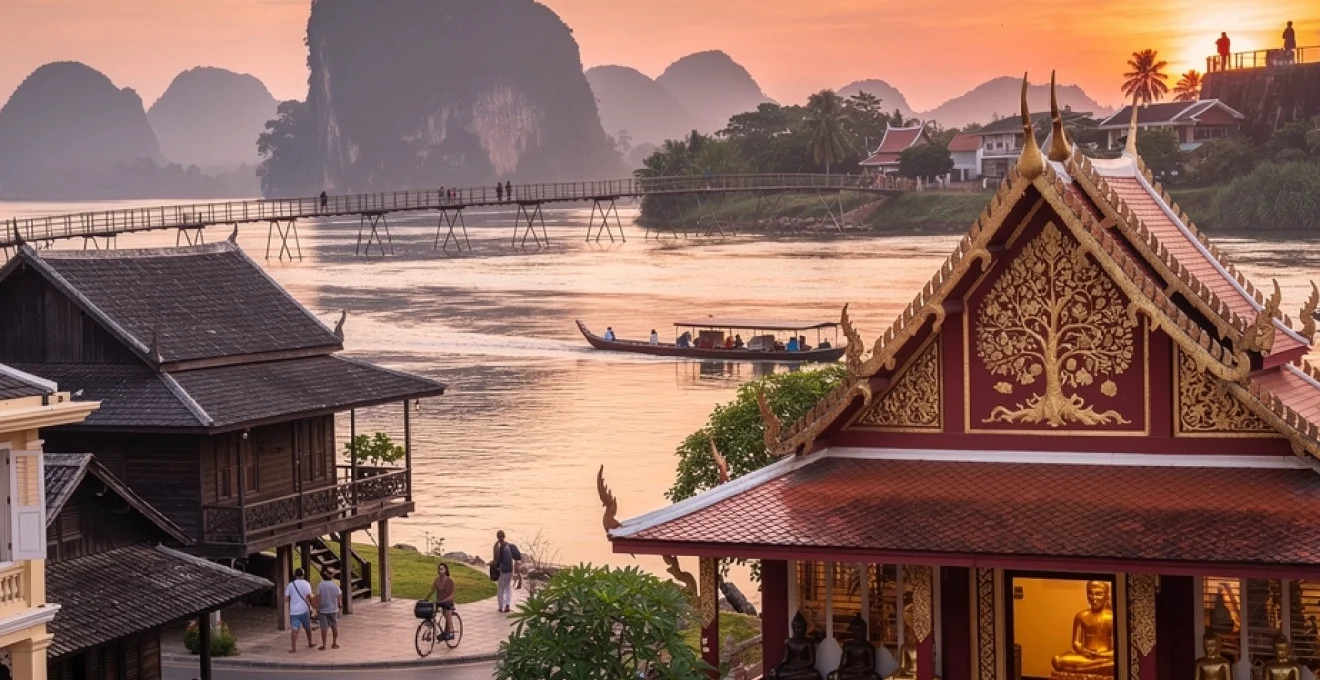
In the mountainous heart of northern Laos, where the Mekong and Nam Khan rivers converge, sits a city that seems suspended between centuries. Luang Prabang represents something increasingly rare in Southeast Asia—a destination where modernisation hasn’t overshadowed tradition, where the morning alms procession still dictates the city’s rhythm, and where colonial architecture coexists harmoniously with gilded Buddhist temples. For travellers seeking an antidote to the frenetic pace of contemporary travel, this UNESCO-designated city offers a masterclass in slow tourism, where days unfold with deliberate tranquillity and cultural immersion isn’t manufactured but genuinely lived. Understanding what makes this former royal capital special requires looking beyond its postcard-perfect façade to examine how heritage preservation, spiritual practice, and sustainable development have created a model for responsible tourism in the region.
UNESCO world heritage status and architectural preservation in luang prabang
When UNESCO granted World Heritage status to Luang Prabang in 1995, the designation recognised not merely individual monuments but an entire urban fabric where architectural traditions spanning several centuries remain remarkably intact. This recognition came at a critical juncture, as the city’s opening to international tourism threatened to overwhelm its delicate historical character. The UNESCO inscription specifically highlighted the « unique and remarkably well-preserved townscape » that illustrates the fusion of traditional Lao urban structures with European colonial architecture developed during the 19th and 20th centuries.
The protected zone encompasses approximately 66 hectares on the peninsula formed by the Mekong and Nam Khan rivers, containing over 600 heritage buildings. What distinguishes Luang Prabang from many other protected sites is the living heritage aspect—these aren’t museum pieces but functioning homes, temples, and businesses where daily life continues within historically significant structures. According to preservation data from 2022, approximately 78% of protected buildings maintain their original architectural integrity, a remarkably high percentage considering the economic pressures on heritage zones in developing nations.
French colonial villas along sisavangvong road
The primary artery through the old town, Sisavangvong Road, showcases some of Southeast Asia’s finest examples of French colonial architecture adapted to tropical conditions. These structures, built primarily between 1893 and 1954 during the French protectorate period, represent a distinctive architectural hybrid. High ceilings, tall shuttered windows, and deep verandas borrowed from French colonial templates were combined with elevated foundations, steep roof pitches, and natural ventilation strategies derived from traditional Lao building techniques. Many of these villas now house boutique hotels, restaurants, and cultural institutions, demonstrating how adaptive reuse can preserve architectural heritage while supporting economic viability.
Traditional lao wooden houses in the peninsula district
Interspersed among the grander colonial structures stand traditional Lao dwellings, typically elevated on stilts with walls of woven bamboo or wooden planks. These vernacular structures, some dating back over 150 years, represent construction techniques perfected over centuries for Laos’s climate and social patterns. The elevated design provides protection from seasonal flooding, creates cool storage space beneath the living quarters, and facilitates air circulation. You’ll notice that many traditional houses feature ornate gables and decorative woodwork demonstrating the craftsmanship that characterised pre-industrial Lao building traditions. Preservation efforts have focused on maintaining these structures as residences rather than converting them solely to commercial use, ensuring neighbourhood diversity remains intact.
Conservation regulations under the maison du patrimoine
The Maison du Patrimoine (Heritage House) serves as the technical implementing body for conservation regulations within the protected zone. Established in 2001, this institution reviews all proposed modifications to heritage buildings, approves materials and techniques, and provides technical assistance to property owners. The regulations prohibit demolition of heritage structures, restrict new construction heights to maintain historical sightlines, and mandate that renovations use traditional materials wherever feasible. Property owners must submit detailed plans for any alterations, and enforcement includes regular inspections. This regulatory framework has proven remarkably effective—violations have decreased by approximately 60% since 2010 as property owners have become more familiar with requirements and have seen the tourism benefits of
preservation. For travellers, these rules translate into a townscape that still feels coherent and human in scale, where neon billboards and concrete high-rises have not overwhelmed the timeless silhouette of temples, wooden houses, and colonial villas. From a broader perspective, Luang Prabang has become a regional reference point for how heritage conservation can support, rather than hinder, economic development.
Balancing tourism development with heritage protection standards
The real test of Luang Prabang’s UNESCO World Heritage status lies in how the city manages growing visitor numbers without eroding the very qualities that attract people in the first place. Annual arrivals increased from fewer than 100,000 in the late 1990s to over 600,000 before the pandemic, putting pressure on infrastructure, water resources, and housing. To respond, the municipal authorities, working with UNESCO and the Maison du Patrimoine, have implemented zoning rules that channel larger hotels and new construction to areas outside the historic peninsula, preserving the low-rise skyline and traditional street grid within the core.
This balancing act is ongoing and not without tensions. On one hand, local entrepreneurs understandably wish to capture tourism revenue through new guesthouses, riverfront restaurants, and souvenir shops. On the other, uncontrolled development risks turning Luang Prabang into another interchangeable backpacker hub. You can see the compromise in action in the way many family homes now incorporate small cafés or homestays on the ground floor while keeping upper levels as private living spaces. The city has also introduced limits on signage, noise levels, and nightlife hours in the protected zone to maintain the tranquil character that defines its appeal.
For visitors who care about responsible tourism in Luang Prabang, these policies offer a clear roadmap for how to support the local economy without undermining heritage. Choosing accommodation that respects traditional architecture, patronising businesses that employ local staff, and participating in certified tours all contribute to a virtuous cycle. Think of it as walking a narrow bamboo bridge across the Mekong: a careful, measured step is required to keep your balance, but the reward is an experience that remains authentic for generations to come.
Sacred temple circuit: wat xieng thong to wat mai suwannaphumaham
Beyond its architectural harmony, Luang Prabang’s soul resides in its temples. The compact size of the peninsula makes it easy to follow a sacred circuit on foot, linking some of the most significant religious sites in Laos. This temple route, stretching from Wat Xieng Thong at the northern end to Wat Mai Suwannaphumaham near the Royal Palace, allows you to experience the city’s Buddhist heritage as a continuous thread rather than isolated attractions. Along the way, the rhythm of chanting monks, the fragrance of burning incense, and the gentle clinking of prayer bells create an atmosphere that slows even the most hurried traveller.
Golden stencilled tree of life at wat xieng thong’s rear wall
Wat Xieng Thong, often described as the « jewel of Luang Prabang, » stands as the ceremonial gateway to this temple circuit. Its most photographed feature is the golden stencilled Tree of Life on the rear wall of the sim (ordination hall), a richly symbolic design set against a dark red background. The artwork depicts a mythic tree whose branches spread outward in intricate patterns, flanked by animals, celestial beings, and traditional Lao motifs. For many visitors, it serves as a visual metaphor for Luang Prabang itself: roots firmly embedded in the past, branches reaching into the present and future.
The Tree of Life was restored using traditional lacquer and gold leaf techniques, a meticulous process that underscores the city’s commitment to preserving sacred art forms. Standing before it in the late afternoon light, when the gold catches the sun and glows against the shaded courtyard, you gain a visceral sense of why Wat Xieng Thong has long been associated with royal ceremonies and national identity. If you’re sensitive to symbolism, you might notice how the design evokes interconnectedness—reminding us that, like the tree, the cultural heritage of Luang Prabang depends on many small acts of care from monks, artisans, and visitors alike.
Morning alms-giving ceremony along sakkaline road
From Wat Xieng Thong, the temple circuit gradually leads you south toward Sakkaline Road, where one of Luang Prabang’s most iconic daily rituals unfolds: the morning alms-giving ceremony, or tak bat. Just before dawn, lines of saffron-robed monks walk silently through the streets, receiving sticky rice and simple offerings from local residents kneeling on low stools or mats. For centuries, this practice has been a quiet exchange of generosity and humility, reinforcing the spiritual bond between monastic communities and laypeople.
In recent years, the alms-giving ceremony has also become a major attraction, raising complex questions about how to observe such a sacred event respectfully. You will often see signs reminding visitors to maintain a distance, avoid flash photography, and dress modestly with shoulders and knees covered. Reputable guesthouses and eco-resorts take care to brief their guests on proper etiquette and may even advise watching respectfully from across the street rather than participating directly. When approached as a moment of contemplation rather than a photo opportunity, tak bat can deepen your understanding of how Buddhism shapes daily life in Luang Prabang.
If you’re an early riser, consider walking the length of Sakkaline Road before sunrise, starting near Wat Xieng Thong and continuing toward the Royal Palace. The gradual brightening of the sky, the soft murmur of locals preparing offerings, and the slow emergence of temple silhouettes combine into a sensory experience that sets the tone for a mindful day of exploration. In an era of rushed city breaks, this quiet ritual invites you to match your pace to the measured footsteps of the monks.
Buddha statues collection at wat wisunarat museum
Further along the peninsula, Wat Wisunarat—often referred to as Wat Visoun—offers a different window into Luang Prabang’s spiritual history. One of the oldest temples in the city, originally founded in the 16th century, it houses a remarkable collection of Buddha images displayed in a small on-site museum. These statues, crafted from wood, bronze, and stone, illustrate shifting artistic styles over several hundred years, from slender, elongated figures of the Lane Xang period to more rounded forms influenced by neighbouring kingdoms.
The museum’s most intriguing feature is the variety of mudra (hand gestures) represented, each conveying a specific teaching or moment from the Buddha’s life. As you move from one statue to another, you begin to read these gestures almost like a visual script, gaining insight into how doctrine was communicated to largely illiterate communities in earlier eras. Many travellers find that a brief visit here enriches their appreciation of other temple complexes, where similar images might otherwise blur into the background. Think of Wat Wisunarat’s collection as a key that unlocks a deeper level of understanding across the entire temple circuit.
Practical considerations also make this stop worthwhile. The temple grounds are usually less crowded than those around Wat Xieng Thong or the Royal Palace, offering a quieter space for reflection. A modest entrance fee contributes directly to conservation and maintenance costs, ensuring that both the museum and the active temple structures remain accessible to future generations. If you’re travelling with children or first-time visitors to Buddhist sites, this small museum can serve as an accessible introduction to iconography and symbolism before you explore grander complexes.
Royal palace museum’s phra bang golden buddha
Completing the core sacred circuit, the former Royal Palace—now the National Museum—anchors the southern end of the historic centre. Built in 1904 for King Sisavang Vong, the complex blends Lao and French design elements and today houses one of the country’s most revered religious artefacts: the Phra Bang golden Buddha. According to tradition, this statue, cast in gold and said to date back to the 1st millennium, gave the city its name and has long been considered a protective palladium for the nation.
The Phra Bang is displayed in a special shrine hall within the museum complex, and viewing it is a highlight of cultural tourism in Luang Prabang. Visitors are reminded to dress respectfully and to refrain from photography, underscoring the statue’s ongoing spiritual significance beyond its artistic value. For many Laotians, the Phra Bang is not merely an object of national pride but a living symbol of resilience through periods of political upheaval and war. Standing quietly before it, you may sense how deeply intertwined sacred art and national identity are in this former royal capital.
Beyond the Phra Bang, the Royal Palace Museum offers context that helps you situate what you’ve seen along the temple circuit within a broader historical frame. State rooms preserved with original furnishings, gifts from foreign dignitaries, and displays on royal ceremonies paint a picture of how Buddhism, monarchy, and foreign influence interwove in 19th and 20th-century Laos. As you exit toward the front courtyard, with its view of Wat Mai Suwannaphumaham across the road, you complete a loop that unites architecture, ritual, and political history in a single walkable narrative.
Mekong and nam khan river convergence ecosystem
While Luang Prabang’s temples capture much of the attention, the city owes its very existence to the dynamic interplay of the Mekong and Nam Khan rivers. Their confluence wraps the historic peninsula on three sides, creating both a natural defensive barrier and a fertile corridor that has supported human settlement for centuries. Today, this convergence zone doubles as a key attraction for slow travel in Luang Prabang, offering opportunities for river cruises, kayaking, and simple riverside contemplation. Understanding the ecology of this meeting point adds another layer to your appreciation of the city’s unique character.
The Mekong, flowing from the Tibetan Plateau through six countries before reaching the sea, is one of the world’s great river systems, sustaining an estimated 60 million people along its course. The Nam Khan, by contrast, is a more modest tributary that originates in the mountainous forests east of Luang Prabang. Where they meet, sediment patterns, water colour, and flow rates visibly shift, creating a living laboratory for observing how large and small watercourses interact. For eco-conscious travellers, this environment presents both beauty and fragility—reminding us that the postcard-perfect views are anchored in complex hydrological and ecological processes.
Sunset viewing points at the peninsula’s northern tip
One of the simplest yet most rewarding experiences in Luang Prabang is to walk to the northern tip of the peninsula in the late afternoon, where the Nam Khan empties into the Mekong. This narrow strip of land, shaded by trees and dotted with small shrines, offers uninterrupted views across the river toward forested hills and distant villages. As the sun sinks, the water’s surface shifts from muted greens to layers of gold and amber, while long-tail boats cut slow lines across the current. It’s easy to see why many travellers describe sunsets at this spot as the moment when Luang Prabang’s « peaceful rhythm » becomes most tangible.
Unlike more developed riverfronts in Southeast Asia, the northern tip remains relatively low-key, with just a few simple cafés and benches. This minimal infrastructure reflects a conscious choice by local authorities to preserve the area’s contemplative character rather than turn it into a loud entertainment strip. For those who value slow tourism in Luang Prabang, this restraint is a blessing. Bring a book, a journal, or simply your full attention, and you may find that an hour here does more for your well-being than any tightly scheduled itinerary.
To fully appreciate the changing light, many visitors combine a sunset watch with a gentle stroll along the riverbanks on either side of the peninsula. The western Mekong side offers wide perspectives and a sense of the river’s scale, while the eastern Nam Khan side feels more intimate, with views of bamboo bridges, local gardens, and children playing near the shore. In both cases, the interplay of water, sky, and temple roofs rising above the treeline creates a visual harmony that is hard to capture in words—or even in photographs.
Traditional bamboo bridge to tham ting cave
Seasonal bamboo bridges are a characteristic feature of Luang Prabang’s river landscape, symbolising the city’s adaptability to changing water levels. For several months of the year, these simple yet ingenious structures span sections of the Nam Khan and smaller channels, providing pedestrians with shortcuts to villages, farms, and lesser-known temples. Locally constructed and repaired each dry season, they are dismantled when the monsoon swells the river too high. Crossing one can feel like stepping into a living piece of vernacular engineering, where flexibility and impermanence are built into the design.
Many visitors encounter bamboo bridges on their way to local villages or as part of excursions to caves and rural sites near Luang Prabang. While Tham Ting (Pak Ou Caves) themselves are typically accessed by boat along the Mekong, some community-based tours incorporate segments of bamboo bridges and forest paths en route to smaller cave systems and viewpoints. If you join one of these eco-tours, you’ll quickly see how the bridges function as vital connectors for residents, linking fields, schools, and markets. From a traveller’s perspective, they also offer memorable vantage points for photography, with river currents swirling beneath your feet.
It’s worth remembering that these structures are temporary and locally managed, so conditions can vary. Sensible footwear, a cautious step, and respect for any posted guidance are essential, especially if you’re crossing near dusk or after rain. In many ways, walking a bamboo bridge is a fitting metaphor for sustainable tourism in Luang Prabang: you move lightly, mindful of your impact, trusting in local knowledge to guide you safely across a shared resource.
Seasonal river patterns and monsoon navigation routes
The Mekong and Nam Khan rivers around Luang Prabang undergo dramatic seasonal transformations, shaping everything from transportation to agriculture. During the dry season (roughly November to April), water levels drop, sandbars emerge, and currents slow, making conditions ideal for leisurely cruises and kayaking. Local boat operators follow well-established dry-season navigation channels, and river-based day trips to villages, waterfalls, and caves feature prominently in many Luang Prabang travel itineraries. The cooler, clearer air at this time of year also makes for exceptional visibility, enhancing the appeal of riverfront sunsets and early-morning mists.
Once the monsoon rains arrive, typically from May to October, the picture changes. Water levels can rise by several metres, currents intensify, and some smaller landing points become inaccessible. Larger, more powerful boats take over many transport duties, and navigation relies heavily on local expertise and up-to-date knowledge of submerged rocks and shifting sandbanks. For residents along the Mekong and Nam Khan, these seasonal patterns are simply part of life—dictating planting schedules, fishing strategies, and even school timetables. For travellers, however, they require a degree of flexibility and an openness to altered plans.
If you’re planning river-based slow travel in Luang Prabang, it’s wise to check conditions with local operators a day or two in advance and remain open to alternative routes or timings. Monsoon-season journeys, while less predictable, can be extraordinarily atmospheric: mist rising from green hills, swollen rivers roaring past karst outcrops, and storms rolling in over the horizon. Dry-season trips, by contrast, offer calmer waters, more frequent stops, and greater opportunities for swimming or shore excursions. In both cases, the key is to view the rivers not as static scenery but as living arteries whose moods and manners change with the calendar.
Slow travel infrastructure along the mekong riverfront
Luang Prabang’s appeal to slow travellers is not accidental; it is supported by a thoughtful network of infrastructure along the Mekong riverfront that encourages walking, cycling, and unhurried observation. Instead of multi-lane roads and high-rise hotels, you’ll find narrow riverside lanes, low-key guesthouses, family-run cafés, and shaded benches that invite lingering. Street lighting is subtle rather than glaring, preserving night-time views of the sky and the softly illuminated silhouettes of temples across the water. This human-scale design makes it easier for you to move at a contemplative pace, whether you’re strolling at sunrise or returning from the night market after dark.
Bicycle rentals are widely available, and cycling the length of the Mekong and Nam Khan riverfronts has become one of the most popular slow travel activities in Luang Prabang. The relatively flat terrain around the peninsula, combined with limited car traffic in many streets, creates a safe and pleasant environment for riders of varying confidence levels. Many eco-conscious accommodations provide complimentary bicycles and detailed maps highlighting less-travelled village paths, weaving routes that take you past vegetable gardens, weaving workshops, and small monasteries. In this way, the riverfront serves as both a scenic corridor and an entry point into the daily life of the broader region.
Simple but thoughtful amenities underscore this slow travel ethos. Water refill stations reduce plastic waste, while small information boards explain local flora, fauna, and historical landmarks. Riverside cafés often extend just a few tables onto terraces overlooking the water, encouraging you to linger over a Lao coffee or herbal tea as boats glide past. Even the layout of piers and landing steps reflects an emphasis on small-group excursions rather than mass tourism: most boats carry a limited number of passengers, favouring personalised experiences over crowded group tours. When you combine these elements, the Mekong riverfront becomes less a « sight » and more a gentle framework for experiencing Luang Prabang’s peaceful rhythm.
Meditation retreats and buddhist monastery immersion programmes
For many visitors, the spiritual atmosphere of Luang Prabang prompts a desire to go beyond sightseeing and engage more deeply with Buddhist practice. In response, several monasteries and independent organisations have developed meditation retreats and immersion programmes that welcome international participants. These range from one-hour introductory sessions to week-long residential retreats, making it possible to fit some form of contemplative practice into almost any itinerary. The aim is not to « consume » spirituality as another travel product, but to offer structured ways for you to cultivate mindfulness, ethics, and understanding in a setting where these values are lived daily.
Participating in such programmes can transform the way you experience the city. Temples shift from being static photo backdrops to living communities where monks balance study, ritual, and service. Chanting, which might initially sound like an exotic soundtrack, becomes recognisable as a disciplined practice with distinct rhythms and meanings. Perhaps most importantly, periods of silence and guided reflection offer a counterpoint to the constant stimulation of modern travel. Have you ever returned from a trip feeling more exhausted than when you left? A few days immersed in Luang Prabang’s contemplative life can reverse that pattern.
Vipassana sessions at wat sop sickharam
One notable centre for meditation in Luang Prabang is Wat Sop Sickharam, a monastery that has developed a reputation for offering accessible vipassana (insight meditation) sessions to foreigners. Typically led by English-speaking monks or lay teachers, these sessions introduce basic mindfulness techniques focusing on the breath, bodily sensations, and mental states. Classes are often scheduled in the late afternoon or early evening, allowing participants to meditate as the day’s heat subsides and the sounds of the city soften. For many first-time meditators, this combination of climate, ambience, and expert guidance makes the practice feel more approachable than it might at home.
Sessions at Wat Sop Sickharam are usually donation-based, emphasising the Buddhist principle of generosity rather than commercial transaction. Simple guidelines—such as wearing modest clothing, removing shoes, and keeping phones switched off—help create an environment conducive to introspection. Even a single 60–90 minute session can leave you with practical tools for dealing with stress or distraction long after you’ve left Laos. Think of vipassana practice as a mental equivalent of watching the Mekong: you learn to observe the flow of thoughts and emotions without being swept away by them.
Those with more time may enquire about multi-day programmes that combine meditation with light chores around the temple, communal meals, and attendance at chanting sessions. While not as formal as full monastic ordination, these short immersions offer a structured glimpse into the rhythms of Buddhist communal life. They also highlight how Luang Prabang’s slow travel infrastructure extends inward, inviting you to explore inner landscapes with the same curiosity you bring to riverbanks and temple courtyards.
Monk chat opportunities in temple courtyards
Beyond formal retreats, several temples in Luang Prabang facilitate informal « monk chat » sessions, where visitors can sit down with young monks to ask questions about Buddhism, monastic life, and Lao culture. These conversations, often held in shaded courtyards or simple classrooms, serve a dual purpose: they give monks a chance to practise their English and broaden their worldviews, while giving travellers a rare opportunity to engage in candid dialogue. Topics can range from meditation techniques and daily schedules to contemporary issues such as technology, education, and climate change.
Participating in a monk chat requires the same basic etiquette as visiting any temple: respectful dress, calm behaviour, and a willingness to listen as much as you speak. Questions about doctrine and personal practice are generally welcomed, while more intrusive queries about past family life or political opinions may be less appropriate. Many visitors are struck by how relatable the monks’ experiences are; despite their distinctive robes and disciplined routines, they grapple with many of the same concerns and aspirations as young people everywhere. This human connection can demystify Buddhism and help you see the temples of Luang Prabang as vibrant institutions rather than static relics.
From a slow travel perspective, monk chat sessions encourage you to trade passive consumption of « culture » for active, reciprocal exchange. Instead of observing local life from behind a camera lens, you sit face-to-face with someone whose daily reality is shaped by the architecture and rituals you’ve been admiring. In that sense, a single hour of conversation can be as transformative as an entire day of sightseeing—especially if you approach it with humility and curiosity.
Dhamma study courses for international practitioners
For travellers and long-stay visitors who wish to delve deeper, Luang Prabang also hosts more structured Dhamma (Dharma) study courses tailored to international practitioners. These programmes, often run in collaboration with regional Buddhist universities or experienced lay teachers, explore foundational texts and concepts such as the Four Noble Truths, the Noble Eightfold Path, and the nature of impermanence. Sessions may be conducted in English or with translation support, and are usually complemented by periods of meditation, group discussion, and personal reflection.
Unlike brief temple visits, Dhamma courses require a commitment of time and attention—typically several days or weeks. In return, they offer a coherent framework for making sense of the diverse practices and symbols you encounter across Luang Prabang’s many temples. Have you ever wondered why certain Buddha statues are seated while others stand, or why monks follow such specific daily routines? A well-designed study programme can answer these questions in a way that connects intellectual understanding with lived experience.
Participants in these courses often report that the setting of Luang Prabang itself enhances their learning. The combination of quiet streets, riverfront walks, and accessible monasteries creates an environment where theoretical ideas can be tested against direct observation. After discussing concepts like non-attachment or compassion in a morning session, you might spend the afternoon watching how monks interact with laypeople during alms-giving, or how locals support one another at the night market. In this way, the city becomes both classroom and case study, grounding abstract teachings in concrete reality.
Night market economy and traditional hmong textile craftsmanship
As daylight fades and the last boats return to their moorings along the Mekong, Luang Prabang undergoes a subtle transformation. Sisavangvong Road, the main artery of the old town, closes to traffic and fills with rows of canopied stalls, signalling the start of the nightly market. For many visitors, this is where the city’s peaceful daytime rhythm shifts into a gentle buzz of commerce and social interaction. Yet the night market is more than just a convenient place to buy souvenirs; it is a vital component of Luang Prabang’s local economy and a showcase for traditional crafts, particularly Hmong textiles.
Hmong communities from the surrounding highlands have long brought their handicrafts to town, and the night market provides a centralised platform for them to reach an international audience. Walking through the rows, you’ll see vibrant embroidered pillow covers, hand-stitched bags, indigo-dyed fabrics, and intricate batik patterns created using beeswax and natural dyes. Each piece reflects hours of labour and generations of accumulated knowledge, making the market an open-air gallery of living textile traditions. If you take the time to look closely, you may even notice slight irregularities in stitching or dye patterns—subtle signatures of human craftsmanship in an age of machine-made uniformity.
From an economic standpoint, the night market plays a crucial role in distributing tourism revenue beyond the hospitality sector. Families often rely on income from textile sales to pay school fees, healthcare costs, and agricultural investments. By choosing to buy directly from artisans rather than mass-produced imports, you support a more equitable and sustainable model of development in Luang Prabang. Asking vendors about the origins of their products, or seeking out stalls where the maker is present, can help you distinguish genuinely handmade items from resold factory goods. In this way, your purchasing decisions become a practical expression of responsible travel values.
The market also offers a glimpse into how tradition and modernity intersect in contemporary Laos. Alongside classic Hmong designs, you’ll find textiles adapted for contemporary tastes: laptop sleeves in indigo batik, minimalist cushion covers with traditional motifs, or scarves blending old weaving patterns with new colour palettes. This adaptive creativity ensures that ancestral skills remain economically viable, much like how preserved colonial villas now house modern cafés and galleries. As you weave through the market’s aisles, perhaps with the aroma of grilled skewers and lemongrass drifting through the air, you participate in an evolving story—one where heritage is not frozen in time but continually reinterpreted for the present.