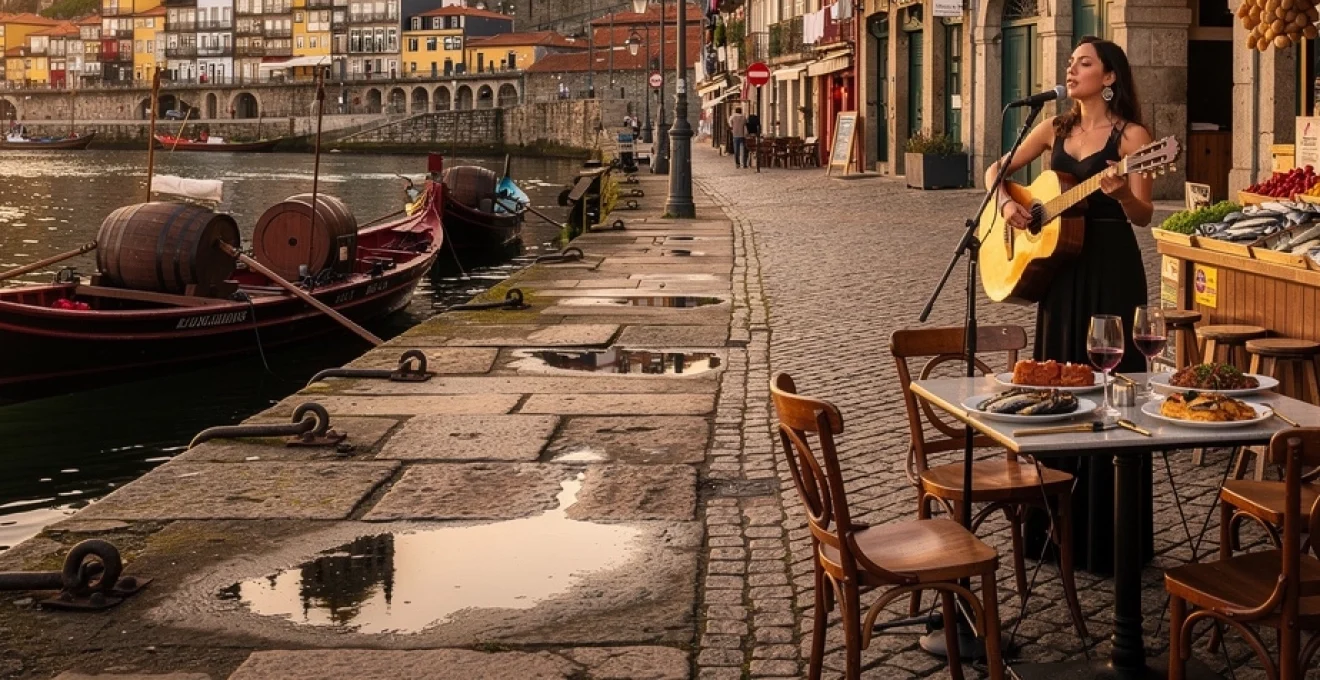
Porto stands as Portugal’s second-largest city, a magnificent tapestry of medieval architecture, maritime heritage, and contemporary cultural renaissance that captivates visitors with its genuine Portuguese character. Perched majestically along the northern banks of the Douro River, this UNESCO World Heritage destination presents an extraordinary blend of Romanesque cathedrals, baroque azulejo tilework, and centuries-old port wine traditions. The city’s cobblestone streets wind through historic quarters where traditional rabelo boats once transported precious cargo, whilst modern cultural venues and acclaimed restaurants breathe new life into ancient stone buildings. From the atmospheric Ribeira district’s riverside charm to the sophisticated wine cellars of Vila Nova de Gaia, Porto offers an authentic Portuguese experience that balances historical preservation with innovative urban development, creating an irresistible destination for discerning travellers seeking both cultural depth and scenic beauty.
Historical architecture and UNESCO world heritage significance in porto’s ribeira district
The Ribeira district represents the historical heart of Porto, where centuries of architectural evolution have created a remarkable urban landscape that earned UNESCO World Heritage status in 1996. This riverside quarter showcases an extraordinary concentration of medieval, baroque, and neoclassical structures that tell the story of Portugal’s maritime and commercial heritage. The district’s narrow cobblestone streets, lined with colourful houses featuring distinctive iron balconies and ornate facades, create an atmospheric maze that leads visitors through eight centuries of Portuguese urban development.
The architectural significance of Ribeira extends beyond individual buildings to encompass the entire urban fabric, where medieval street patterns have been preserved alongside successive layers of architectural styles. The district’s unique character stems from its organic development as a working port, where merchant houses, warehouses, and artisan workshops evolved to serve the needs of Porto’s thriving river trade. Today, these historic structures house restaurants, galleries, and boutique shops whilst maintaining their original architectural integrity.
Romanesque and gothic elements in sé cathedral’s 12th-century construction
Porto’s cathedral, known as Sé do Porto, stands as the city’s most significant Romanesque monument, its fortress-like appearance dominating the historic skyline since the 12th century. The cathedral’s construction began around 1110, representing one of Portugal’s earliest examples of Romanesque architecture adapted to local building traditions and defensive requirements. The massive granite walls and twin towers create an imposing silhouette that reflects the cathedral’s dual role as both spiritual centre and defensive stronghold during medieval times.
The cathedral’s architectural evolution reveals fascinating Gothic additions that complement the original Romanesque structure. The main chapel features soaring Gothic arches and ribbed vaulting that replaced earlier Romanesque elements during 13th and 14th-century renovations. The cathedral’s rose window, a masterpiece of Gothic stonework, demonstrates the skilled craftsmanship of medieval Portuguese artisans who successfully integrated French Gothic influences with local architectural traditions.
Baroque azulejo tilework at são bento station and igreja do carmo
The art of azulejo tilework reaches extraordinary heights in Porto’s baroque monuments, where blue and white ceramic tiles transform architectural surfaces into narrative masterpieces. São Bento Station exemplifies this tradition with over 20,000 hand-painted tiles created by artist Jorge Colaço between 1905 and 1916, depicting scenes from Portuguese history and rural life in the Douro region. The station’s main hall functions as both transport hub and art gallery, where commuters and visitors alike marvel at the intricate storytelling achieved through ceramic artistry.
Igreja do Carmo presents another spectacular example of azulejo excellence, with its exterior wall featuring one of Portugal’s largest azulejo panels. The 18th-century tilework depicts the founding of the Carmelite Order, executed with remarkable detail and artistic sophistication that demonstrates the mature development of Portuguese ceramic art. These azulejo installations represent more than decorative elements; they serve as historical chronicles that preserve cultural memory whilst beautifying urban spaces through their distinctive blue and white colour palette.
Medieval urban planning along rua das flores and travessa de cedofeita
The medieval street network of Porto reveals sophisticated urban planning principles that maximised commercial efficiency whilst adapting to the city’s challenging topography. Rua das Flores, historically known as the street of goldsmiths and silversmi
ths, connected the riverside port to the upper town where merchants, nobility, and religious institutions were based. Its relatively straight alignment and generous width for the period reveal a deliberate attempt to organise traffic, commerce, and processions within the dense medieval fabric. Today, as you walk along Rua das Flores, the mixture of noble townhouses, former artisan workshops, and contemporary cafés allows you to sense how this “spine” once structured daily life in historic Porto.
In contrast, passages such as Travessa de Cedofeita preserve a more organic medieval layout, with irregular alignments, tight corners, and abrupt changes in elevation that respond directly to the natural hillside. These narrow lanes functioned as intimate residential corridors, where neighbours would meet at doorways and small inner patios provided shared space. Exploring these streets on foot offers an authentic insight into Porto’s medieval urban planning logic, where the city grew like a living organism, adapting to terrain, trade routes, and social hierarchies rather than following a rigid grid.
Port wine cellars’ stone masonry architecture in vila nova de gaia
Across the Douro in Vila Nova de Gaia, the historic port wine cellars, or caves, form an impressive ensemble of stone masonry warehouses that speak to centuries of wine production and trade. Built predominantly between the 18th and 19th centuries, these long, low-slung structures were designed to maintain stable temperatures and humidity using thick granite walls, minimal window openings, and traditional clay or wooden roofing. Inside, high timber trusses span over rows of ageing barrels, creating a cathedral-like atmosphere dedicated entirely to port wine.
The cellars’ architecture is functional yet dignified, reflecting the economic power of the port wine trade in Porto’s development. Many façades feature modest neoclassical detailing, arched doors for cart access, and painted brand names that have become iconic elements of the riverside skyline. When you tour these port lodges today, you are not only tasting fortified wine; you are stepping into purpose-built industrial heritage, where architectural solutions were finely tuned to protect a product that travelled from the terraced vineyards of the Douro Valley to markets across Europe and beyond.
Douro river maritime heritage and waterfront infrastructure development
The Douro River has shaped Porto’s identity for over a millennium, serving as both commercial artery and cultural backdrop. Long before modern tourism arrived, this waterway connected inland vineyards and farms with the Atlantic Ocean, making Porto a strategic hub for trade, shipbuilding, and navigation. The city’s waterfront infrastructure evolved in response to this maritime role, transitioning from simple landing points and timber docks to engineered quays, bridges, and flood defences that support a thriving urban riverfront.
In recent decades, coordinated regeneration projects along the Douro have balanced heritage conservation with contemporary needs. Former warehouses have been converted into hotels, restaurants, and cultural spaces, while promenades and cycle paths allow locals and visitors to experience the river at a slower pace. As you explore Porto’s riverside areas, you can still read the layers of maritime history in the stone embankments, historic slipways, and carefully restored quays that line the water’s edge.
Traditional rabelo boats and historic wine transportation methods
For centuries, traditional rabelo boats were the workhorses of the Douro, transporting barrels of wine from upriver estates to the cellars of Vila Nova de Gaia. These flat-bottomed wooden vessels, with their distinctive square sails and oversized steering oars, were engineered to navigate the Douro’s unpredictable currents and submerged rocks before the construction of modern dams. Each rabelo could carry dozens of heavy barrels, carefully secured and protected from the elements during the often-perilous journey.
Although rail and road networks eventually replaced river transport for commercial purposes, rabelos remain powerful symbols of Porto’s wine heritage. Today, you’ll see them moored along both sides of the river, often painted with the names of famous port houses, and used for special events such as the annual São João celebrations and regattas. Watching these boats glide across the water is like seeing a living museum in motion, a reminder of how integral river navigation once was to daily life and the local economy.
Dom luís i bridge engineering and gustave eiffel’s structural influence
The Dom Luís I Bridge, inaugurated in 1886, stands as one of Porto’s most recognisable landmarks and a masterpiece of 19th-century engineering. Designed by Théophile Seyrig, a former partner of Gustave Eiffel, the bridge showcases a dramatic double-deck iron arch that spans 172 metres across the Douro. Its skeletal latticework and bold curvature reflect the era’s fascination with metal construction, echoing the structural language of Eiffel’s projects in France and beyond.
The influence of Eiffel’s school of engineering is evident in the bridge’s efficient use of iron, elegant proportions, and careful attention to weight distribution. Originally accommodating road traffic on both levels, the upper deck now carries Metro trains and pedestrians, while the lower deck serves cars, trams, and walkers close to the water. Crossing the bridge on foot offers not only sweeping views of Ribeira and Vila Nova de Gaia but also a tangible sense of Porto’s transition from industrial innovation to modern urban mobility.
Cais da ribeira quayside restoration and flood management systems
Cais da Ribeira, once a bustling working quay where goods were offloaded and traded, has undergone thoughtful restoration to become one of Porto’s most attractive public spaces. The colourful façades that line the waterfront have been structurally reinforced, their arcades revitalised to host cafés, restaurants, and small shops while preserving original stonework and historic proportions. Behind the scenes, modern engineering solutions have been discreetly integrated to address flooding risks and rising water levels.
Flood management along the Ribeira quayside includes improved drainage systems, reinforced embankments, and removable barriers that can be deployed during periods of heavy rain or exceptional tides. These interventions allow the area to remain vibrant and accessible for most of the year while protecting buildings and infrastructure from damage. As you sit at a riverside terrace today, it can be easy to forget that this picturesque setting is also a carefully managed interface between city and river, where heritage conservation and resilience go hand in hand.
Afurada fishing village maritime traditions and tidal patterns
Just downstream from central Porto, the fishing village of Afurada offers a more intimate perspective on the Douro’s maritime heritage. Here, small fishing boats line the modest harbour, and traditional practices such as net-mending and fish grilling still shape the rhythm of daily life. Many families have worked these waters for generations, adapting to changing fish stocks, regulations, and weather patterns while preserving a strong sense of community identity.
Afurada’s relationship with the river is closely tied to tidal cycles and seasonal shifts. Fishermen time their departures and returns according to the tides, taking advantage of favourable currents to reach the Atlantic and come back safely. When you stroll through the village’s narrow streets, you’ll notice façades decorated with maritime motifs, outdoor laundry lines swaying in the ocean breeze, and simple eateries serving freshly caught seafood. Afurada demonstrates that Porto’s maritime story is not only about grand ships and bridges, but also about everyday lives lived in synchrony with the river.
Contemporary cultural attractions and modern tourism infrastructure
While Porto’s historic core and riverfront evoke centuries past, the city has also invested heavily in contemporary cultural attractions and modern tourism infrastructure. This dual focus has helped transform Porto into one of Europe’s most appealing city-break destinations, attracting more than 3 million visitors annually in recent years. Cultural institutions, design-led hotels, and efficient transport links ensure that travellers can explore the city comfortably while engaging with its evolving creative scene.
Key cultural anchors include the Serralves Museum of Contemporary Art, housed in an award-winning building by Álvaro Siza Vieira, and Casa da Música, a striking concert hall designed by Rem Koolhaas that has become an icon of modern Porto. These venues host exhibitions, concerts, and festivals that bring international artists and audiences together, complementing the city’s historic attractions. For visitors, combining a morning in Ribeira with an afternoon in Serralves or a night at Casa da Música showcases the full spectrum of Porto’s cultural identity, from medieval stone to cutting-edge glass and concrete.
Modern tourism infrastructure has been developed with both accessibility and sustainability in mind. Porto’s Metro system connects the airport to the city centre in under 30 minutes, while electric trams, funiculars, and cable cars reduce reliance on private cars in sensitive historic areas. Many hotels and guesthouses occupy restored townhouses or warehouses, blending contemporary comfort with architectural heritage. As a traveller, you benefit from fast Wi‑Fi, contactless payments, and multilingual services, yet you still feel immersed in an authentic urban environment rather than a generic resort.
The city has also embraced experiential tourism, encouraging visitors to explore Porto beyond the main postcard sights. Neighbourhoods such as Cedofeita and Bonfim now host independent galleries, co-working spaces, and concept stores where local designers showcase work in textiles, ceramics, and cork. Street art trails, themed walking tours, and bike-sharing schemes provide fresh ways to interact with the urban landscape. If you are curious and willing to venture a few streets away from the riverfront, you’ll discover how Porto’s contemporary culture thrives alongside its preserved past.
Authentic portuguese gastronomy and traditional market systems
Food and wine play a central role in Porto’s appeal, offering visitors a direct connection to Portuguese traditions and regional produce. Rather than focusing solely on fine dining, the city celebrates a spectrum of culinary experiences, from humble tascas (traditional taverns) to Michelin-starred restaurants. At every level, the emphasis is on honest flavours, seasonal ingredients, and a strong sense of place. For many travellers, tasting Porto’s gastronomy is as memorable as seeing its monuments, whether you’re savouring a simple grilled sardine or a carefully aged vintage port.
Traditional markets serve as vital hubs in this food ecosystem. The historic Mercado do Bolhão, recently restored after a multi-year renovation, remains the beating heart of everyday shopping for locals and an essential stop for curious visitors. Here, you can watch vendors expertly fillet fish, choose from piles of fragrant oranges and late-harvest grapes, or chat with stallholders selling cured meats, cheeses, and olives. Visiting in the morning, when deliveries arrive and regular customers queue for their favourites, offers the most authentic glimpse into Porto’s culinary life.
Porto’s signature dishes reflect both its riverside location and working-class roots. Hearty specialities such as francesinha—a layered sandwich of meats covered in melted cheese and spicy sauce—and tripas à moda do Porto, a tripe stew dating back to the Age of Discoveries, tell stories of resourcefulness and local taste. Seafood is abundant, from salted cod prepared in countless variations to grilled octopus and clams cooked with garlic and coriander. Pairing these dishes with regional wines from the Douro, Vinho Verde, or Dão regions elevates a simple meal into a deeper cultural experience.
In recent years, Porto has seen a rise in food tours and cooking classes that introduce visitors to traditional recipes and market systems. Joining a guided tasting walk through downtown or Ribeira often includes stops at century-old grocery stores, pastry shops specialising in pastéis de nata, and wine bars offering flights of port and still Douro wines. These experiences not only support small family-run businesses but also help you decode local menus and customs, making it easier to order confidently when you dine on your own. After all, navigating a Portuguese menu can feel like deciphering a map—once you understand the landmarks, every meal becomes an adventure.
Fado musical heritage and performance venues throughout porto’s quarter districts
Beyond architecture and gastronomy, Porto’s emotional landscape is shaped by Fado, Portugal’s melancholic musical genre that expresses themes of longing, nostalgia, and the sea. Although Lisbon and Coimbra are more traditionally associated with Fado, Porto has cultivated its own intimate scene, with small venues scattered across Ribeira, Miragaia, and the city centre. Listening to Fado in Porto allows you to experience this art form in spaces where stone walls, candlelight, and close seating create a powerful sense of connection between performers and audience.
Many Fado houses in Porto combine performances with dinner or wine tastings, offering a full evening experience. Typically, sets are interspersed with quiet intervals for conversation and service, and audiences are encouraged to remain silent while the music plays to respect the singers’ emotional intensity. You might hear both classic Lisbon-style Fado and Coimbra’s student-influenced variant, distinguished by different vocal styles and guitar arrangements. Regardless of the specific tradition, the combination of Portuguese guitar, heartfelt lyrics, and the city’s nocturnal atmosphere can be deeply moving, even if you do not understand every word.
Performance venues range from dedicated Fado clubs to multipurpose cultural spaces and even small taverns that host weekly sessions. Some guided evening tours include reserved seating at reputable Fado spots, which can be helpful during busier months when demand is high. If you prefer to explore independently, it’s wise to book ahead and arrive a little early to settle in, order a drink, and adjust to the dimly lit, contemplative environment. As you listen, you may notice how the music echoes Porto’s broader story: a city shaped by departures and returns, by the ebb and flow of the Douro, and by a quiet resilience that underpins its authentic charm.