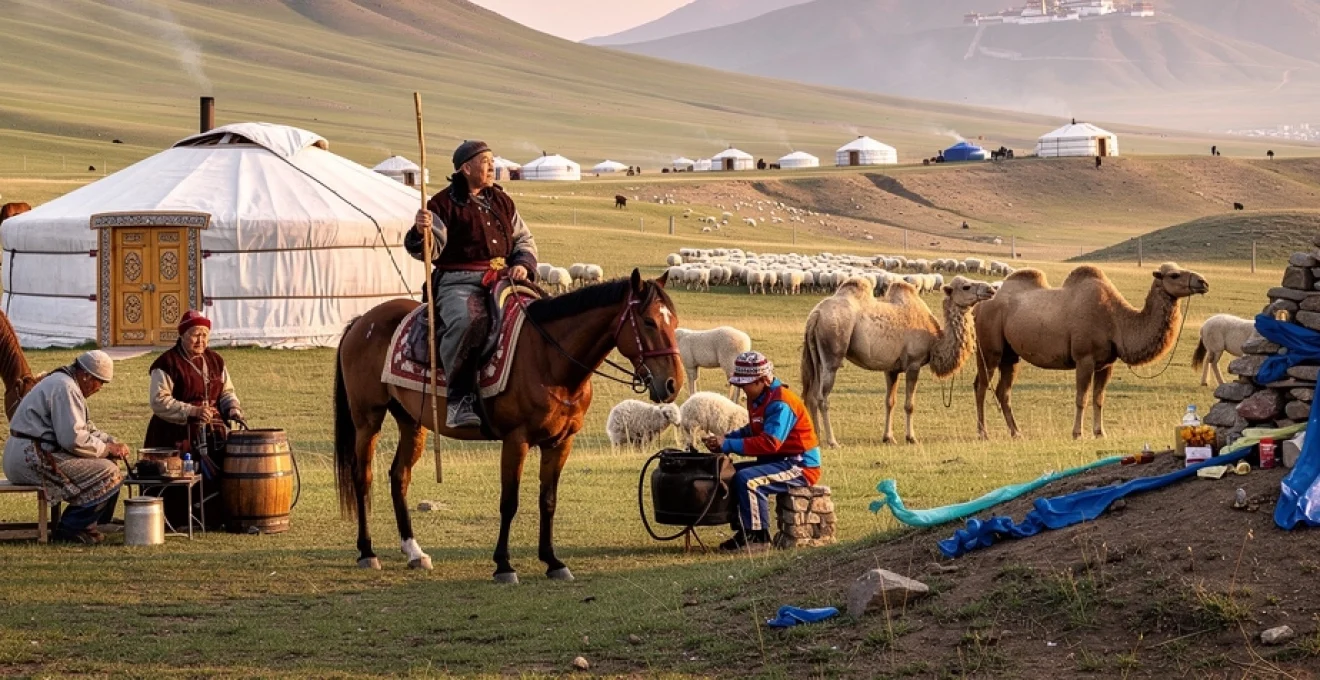
Mongolia stands as one of Earth’s last frontiers where ancient traditions persist against a backdrop of breathtaking natural beauty. The landlocked nation, spanning over 1.5 million square kilometres between Russia and China, represents a remarkable intersection of ecological diversity and human resilience. From the windswept grasslands of the central steppe to the harsh extremes of the Gobi Desert, Mongolia’s landscapes have shaped a unique pastoral culture that continues to define the national identity. Despite rapid modernisation and urbanisation pressures, the connection between Mongolians and their environment remains profound, offering valuable insights into sustainable land management and cultural preservation in the 21st century.
The vast steppe ecosystem: grassland biodiversity across the khangai and gobi regions
Mongolia’s steppe ecosystem represents one of the world’s largest intact grassland biomes, covering approximately 80% of the country’s territory. This vast expanse of prairie creates a critical ecological zone that supports remarkable biodiversity whilst serving as the foundation for traditional nomadic lifestyles. The variation between the Khangai mountain range in central Mongolia and the southern Gobi Desert creates distinct ecological zones, each hosting specialised flora and fauna adapted to dramatically different conditions. Recent satellite imagery analysis reveals that Mongolia’s grasslands sequester approximately 3.5 billion tonnes of carbon, making them globally significant for climate regulation.
The transition zones between these regions display fascinating ecological gradients where species from different biomes overlap and interact. These ecotones support some of the highest biodiversity levels in Central Asia, functioning as natural laboratories for studying species adaptation and ecosystem resilience. However, increasing temperatures and changing precipitation patterns threaten to disrupt these delicate balances, with average annual temperatures rising by 2.2°C over the past seventy years.
Endemic flora adaptation mechanisms in mongolia’s continental climate zones
Mongolia’s extreme continental climate, characterised by temperature variations exceeding 80°C between winter and summer extremes, has driven extraordinary plant adaptations. Endemic species such as the Mongolian saxaul tree (Haloxylon ammodendron) and various feathergrass species have developed sophisticated survival mechanisms. These plants employ deep taproot systems extending up to 30 metres below the surface, accessing groundwater reserves unavailable to most vegetation. The short growing season, typically lasting just 90-120 days, has prompted accelerated reproductive cycles and drought-resistance strategies including reduced leaf surface area and specialised water-storage tissues.
Cryptobiotic soil crusts, composed of cyanobacteria, lichens, and mosses, play an underappreciated role in maintaining steppe ecosystem health. These biological communities stabilise soil surfaces, reduce erosion by up to 85%, and fix atmospheric nitrogen, essentially fertilising the grasslands naturally. Unfortunately, these fragile crusts require decades to develop but can be destroyed by a single livestock hoof-print, making them particularly vulnerable to overgrazing pressures.
Wildlife migration corridors: snow leopards, argali sheep, and przewalski’s horse populations
Mongolia’s megafauna populations represent some of Asia’s last remaining large-scale wildlife assemblages. The country supports approximately 1,000 snow leopards, representing nearly 20% of the global population of these elusive predators. These cats traverse vast territories across the Altai and Khangai ranges, with individual home ranges spanning up to 1,000 square kilometres. Their presence indicates healthy ecosystem functioning, as apex predators require abundant prey populations and intact habitat corridors.
The Mongolian argali, the world’s largest wild sheep species, migrates seasonally across mountain ranges following vegetation patterns and avoiding deep snow accumulations. Adult rams can weigh up to 200 kilograms and sport magnificent spiral horns reaching 190 centimetres in length. Conservation efforts have stabilised populations at approximately 20,000 individuals, though habitat fragmentation and illegal hunting remain persistent threats. Przewalski’s horse, the world’s only truly wild horse species, represents a remarkable conservation success story. After extinction in the wild by the 1960s, reintroduction programmes beginning in the 1990s have established viable populations exceeding 760 individuals roaming freely in Hustai National Park and the Gobi B
Strictly Protected Area. These reintroduced herds move seasonally across semi-desert steppe, following ancient wildlife migration corridors that once echoed with millions of wild equids. Their grazing behaviour helps maintain grassland structure much like a finely tuned natural mowing system, preventing shrub encroachment and sustaining open habitat for ground-nesting birds. Yet these fragile conservation gains depend on cross-border cooperation with China and Russia, effective anti-poaching efforts, and careful integration with local herder livelihoods.
Desertification patterns and grassland degradation in the gobi-altai province
Desertification in the Gobi-Altai province has accelerated over the past three decades, driven by a combination of climate change, overgrazing, and unsustainable land use. Satellite monitoring indicates that approximately 23% of Mongolia’s territory is now affected by land degradation, with the driest southerly soums of Gobi-Altai among the hardest hit. Vegetation cover loss exposes sandy soils to wind erosion, creating dust storms that can travel hundreds of kilometres, even reaching Beijing on particularly severe days. As grasslands thin, hardy but less nutritious shrub species replace palatable grasses, reducing carrying capacity for both wildlife and livestock.
Understanding desertification patterns in Mongolia is similar to reading a slow-moving but relentless weather forecast written into the soil. In areas of chronic overstocking, you can observe a « halo » effect around wells and winter camps where vegetation is almost entirely stripped. Further out, patchy tufts of grass cling on, separated by expanding bare ground that reflects more sunlight and dries out faster. Climate models project a 10–20% decrease in summer precipitation in parts of the Gobi by mid-century, which, combined with higher evaporation rates, could lock degraded areas into a feedback loop that is increasingly difficult to reverse.
Efforts to stabilise grassland degradation in the Gobi-Altai province blend traditional ecological knowledge with modern restoration science. Community-based grazing plans limit stock numbers around fragile dunes and encourage rotational use of wells to allow vegetation recovery. Pilot projects using straw checkerboard barriers and native shrub planting have reduced wind speeds at ground level by up to 40%, trapping moving sand and providing microhabitats for seed germination. Still, without coordinated regional policies and economic alternatives to livestock expansion, these local successes risk being overwhelmed by broader desertification trends.
Seasonal grazing cycles and their impact on steppe regeneration
Seasonal grazing cycles lie at the heart of Mongolia’s steppe regeneration, functioning like a rhythm that synchronises livestock needs with grassland recovery. Traditional herders historically moved four times a year, exploiting fresh growth in spring pastures, lush summer meadows, autumn stubble, and sheltered winter ranges. This mobile system allowed heavily grazed areas months to regenerate, maintaining plant diversity and soil structure. Research from the Mongolian Academy of Sciences shows that rotational grazing aligned with natural phenology can increase above-ground biomass by 15–30% compared to continuous grazing.
However, as climate extremes intensify and some households reduce mobility, the delicate balance between seasonal grazing and steppe health is under strain. When herds remain on the same pastures for longer than the vegetation can withstand, palatable species are selectively removed, leaving behind unpalatable or toxic plants. The impact is similar to repeatedly cutting a lawn too short without allowing it to recover; root systems weaken, and invasive species take hold. In Mongolia’s context, this can mean reduced forage quality, lower livestock weights, and heightened vulnerability to winter disasters known as dzud.
For policymakers, development agencies, and travellers alike, understanding seasonal grazing cycles offers a practical lens for evaluating sustainable steppe management. Supporting herders to maintain mobility through improved access to water points, veterinary care, and accurate weather forecasts can help align grazing pressure with ecosystem limits. At the same time, participatory pasture-use agreements allow local communities to set stocking rates and rest periods tailored to specific valleys or watersheds. When we respect the seasonal pulse of the steppe, we reinforce a system that has maintained Mongolia’s grasslands for centuries.
Nomadic pastoralism: socio-economic systems of mongolian herder communities
Nomadic pastoralism in Mongolia is not simply a way of raising animals; it is an integrated socio-economic system shaped by climate, topography, and deep-rooted cultural values. Roughly one in four Mongolians still belongs to a herding household, and livestock-based production accounts for around 10% of national GDP. Herding families rely on a diversified mix of animals for meat, milk, fibre, transport, and social status, using mobility as their primary strategy against environmental risk. As global interest in sustainable food systems grows, Mongolian nomadic pastoralism offers a living example of low-input, climate-adaptive land use.
At the same time, herder communities face complex challenges that test the resilience of this traditional livelihood. Market volatility for cashmere and meat, rising fuel prices, and educational aspirations for younger generations all push households to reconsider long-distance mobility. How can a family maintain their seasonal migrations when children need internet access for school, or when veterinary supplies are only found in distant soum centres? The answer increasingly lies in hybrid strategies, where households blend traditional herding with wage labour, tourism services, or small-scale trade while trying to keep their animals on the move.
The ger dwelling structure: architectural functionality and thermal efficiency
The Mongolian ger (often known internationally as a yurt) epitomises mobile architecture perfectly tuned to a harsh continental climate. Its circular shape reduces wind resistance across the open steppe, while the low profile and tensioned lattice walls distribute stress evenly during storms. Wooden roof poles radiate from a central crown, the toono, creating a self-supporting frame that can be assembled or dismantled within an hour by an experienced family. Layers of felt insulation made from compressed sheep wool wrap the structure, topped by a waterproof outer canvas that sheds rain and snow.
Thermally, the ger functions like a highly efficient passive house scaled for nomadic life. In winter, herders add extra felt layers, achieving insulation values that keep interior temperatures up to 30°C warmer than outside, even when the mercury plummets below –30°C. A central iron or cast-iron stove provides heat and cooking capacity, with smoke venting through the openable crown. In summer, the outer canvas can be partially rolled up and the crown opened to create natural ventilation, turning the dwelling into a wind-cooled shelter. Compared with many rural brick or concrete houses, a well-maintained ger often performs better in both thermal comfort and energy efficiency.
Beyond its physical attributes, the ger encodes social and cosmological order in its internal layout. The door traditionally faces south to maximise light and minimise exposure to cold northern winds, while men’s saddles and tools occupy the western side and women’s cooking utensils the eastern. Sacred or valued objects are placed in the north, opposite the entrance, reinforcing a subtle orientation between household life and the wider landscape. For visitors, understanding this spatial logic is essential etiquette: stepping on the threshold, leaning on support poles, or blocking the central hearth is considered deeply disrespectful.
Five snouts livestock management: horses, cattle, camels, sheep, and goats in khangai mountains
Mongolian herding revolves around the management of the « five snouts » (tavan khoshuu mal): horses, cattle (including yaks and hybrids), camels, sheep, and goats. Each species plays a specific ecological and economic role, especially in regions like the Khangai Mountains where forest-steppe, river valleys, and alpine pastures intersect. Horses provide transport and serve as cultural icons; dairy from mares is fermented into airag, a mildly alcoholic drink central to summer hospitality. Cattle and yaks thrive in cooler, wetter valleys, producing rich milk and meat, while their hybrids, khainag, combine strength and endurance for ploughing or hauling.
Sheep and goats form the backbone of pastoral income, especially through wool and high-value cashmere fibre. Yet their grazing behaviour differs significantly: goats, like ecological vacuum cleaners, browse closer to the ground and are more likely to damage fragile root systems if numbers are too high. Studies in the Khangai region show that pastures with more than 60% goats in the herd composition experience faster degradation, particularly near winter camps. Camels, primarily Bactrian camels in Mongolia, are more common in drier areas but sometimes share transhumance routes with Khangai herders trading salt or fuel between ecological zones.
Skillful « five snouts » management is comparable to conducting a complex orchestra, where each animal type must enter and exit pastures at the right moment. Herders adjust species composition in response to market prices, climate forecasts, and pasture quality, seeking a balance between cash income and ecological sustainability. International buyers increasingly look for responsibly sourced cashmere and meat products, giving Mongolian herders an incentive to adopt pasture certification schemes and traceability systems. When you purchase a sustainably labelled scarf or felt rug from Mongolia, you are indirectly supporting these nuanced herd management decisions.
Otor migration practices: seasonal relocation patterns in arkhangai and zavkhan provinces
Otor migration refers to temporary, often long-distance moves to emergency or reserve pastures, a time-tested coping strategy during drought or approaching dzud. In Arkhangai and Zavkhan provinces, herders may travel hundreds of kilometres to reach snow-sheltered valleys or wind-swept ridges where forage remains accessible. These journeys often involve negotiating rights-of-use with host communities, arranging water access, and coordinating with local authorities to avoid conflicts. Historically, otor was guided by intergenerational knowledge of « refuge pastures, » but climate variability is making these safe havens harder to predict.
When we think of otor, it can help to imagine an insurance policy that is paid not in money but in distance and social relationships. Families who maintain strong ties across provinces, or who have relatives in more favourable ecological zones, can activate these networks when local conditions collapse. Field research after the severe 2010 dzud showed that households undertaking timely otor migrations lost fewer animals than those who stayed put, despite the substantial cost and stress of moving entire camps. Yet, increasing land privatisation debates, infrastructure development, and mining concessions complicate these traditional movement routes.
For development planners, supporting otor practices requires recognising mobility as a rational adaptation rather than a sign of backwardness. This might mean mapping historical migration paths to avoid blocking them with new roads or mines, or establishing legal frameworks that clarify temporary grazing rights between provinces. Weather and satellite-based forage forecasts delivered via mobile phones already help some herders decide when and where to move. When used in combination with local observation, these tools can make otor a more targeted and efficient strategy for climate-resilient pastoralism.
Khot ail social units: kinship networks and cooperative herding strategies
The basic social unit of Mongolian pastoral life is the khot ail, a cluster of related households that share labour, pasture, and protection responsibilities. Typically consisting of two to six gers, a khot ail enables division of tasks such as herding, milking, and haymaking according to age, gender, and skill. Children drive small stock, teenagers handle horses, and elders oversee decision-making about pasture moves and herd composition. This cooperative arrangement also spreads risk; if one household loses animals during a storm, others may provide breeding stock to help them recover.
Khot ail networks resemble informal micro-cooperatives long before the concept became fashionable in development circles. Shared corrals, pooled use of motorbikes or trucks, and coordinated rotations of night watch duties all reduce individual workload and costs. During critical periods such as lambing or calving, neighbouring households often merge their efforts, ensuring around-the-clock supervision that would be impossible alone. At the same time, complex kinship norms govern reciprocity, inheritance, and marriage, reinforcing social cohesion while occasionally leading to tensions over resource use.
In the context of rural depopulation and youth migration to cities, the future of khot ail structures is a pressing question. Some clusters are shrinking as younger members seek education and wages elsewhere, leaving elderly couples to manage large herds with limited support. Yet new forms of cooperation are also emerging, including pasture-user groups and community herder associations that operate at a larger territorial scale. For researchers and visitors, paying attention to how khot ail units adapt offers valuable insight into the evolving social fabric of Mongolia’s nomadic pastoralism.
Shamanic and buddhist syncretism: spiritual landscapes of the mongolian plateau
Mongolia’s spiritual landscape is shaped by a distinctive blend of shamanic traditions and Tibetan Buddhism, a syncretism that mirrors the meeting of steppe and mountain ecosystems. Rather than existing in opposition, these belief systems often intertwine, with families visiting both lamas and shamans for different needs. Sacred mountains, rivers, and springs dot the countryside, acting as spiritual anchors in an otherwise open horizon. For many Mongolians, the natural world is not a passive backdrop but a living network of spirits and deities that must be respected through offerings, rituals, and everyday behaviour.
The revival of religious practices since the 1990 democratic transition has been dramatic, especially after decades of communist repression that saw hundreds of monasteries destroyed. New temples, restored monasteries, and re-established shamanic lineages now play a visible role in community life and national identity. How does this spiritual resurgence affect land use and conservation? In many areas, sacred sites function as de facto protected zones where hunting, logging, or mining are restricted because of religious taboos, creating an intriguing overlap between faith and environmental stewardship.
Ovoo cairn rituals and sacred mountain veneration at bogd khan uul
Ovoo cairns—stone or wood mounds adorned with blue prayer scarves called khadag—are among the most recognisable features of Mongolia’s sacred geography. Positioned on mountain passes, hilltops, or near springs, they act as gateways between human society and the spirit world. Rituals at ovoo sites typically involve circling the cairn three times clockwise while offering milk, vodka, sweets, or rice, asking for protection, good weather, and safe journeys. Travellers are often invited to participate, and leaving even a small stone is considered a way to connect with the land.
Bogd Khan Uul, just south of Ulaanbaatar, stands as one of Mongolia’s most venerated sacred mountains and one of the world’s oldest legally protected areas, first decreed under protection in the 18th century. Its slopes host numerous ovoo sites where annual rituals draw monks, shamans, and laypeople who honour mountain deities believed to oversee the well-being of the capital. Despite its proximity to a fast-growing city, customary rules against tree-cutting, hunting, and noisy behaviour near sacred zones have helped preserve significant patches of forest and wildlife habitat. In this sense, Bogd Khan Uul illustrates how spiritual values can complement formal conservation regulations.
For those exploring Mongolia’s sacred mountains, sensitivity to ovoo etiquette is essential. Walking counter-clockwise, removing offerings, or stepping directly on the cairn is seen as disrespectful to the mountain spirits. Many local guides will explain these customs, helping visitors engage respectfully while also revealing how deeply spirituality and landscape are intertwined. When you pause at an ovoo and feel the wind whip across the steppe, it is easy to understand why generations have seen these places as thresholds between earth and sky.
Tibetan buddhist monasticism: erdene zuu and gandan khiid architectural legacy
Tibetan Buddhism arrived in Mongolia in the 16th century, leaving a profound architectural and cultural legacy that is still visible in monastic complexes such as Erdene Zuu and Gandan Khiid. Erdene Zuu, located in the Orkhon Valley near Kharkhorin, is considered the country’s oldest surviving Buddhist monastery. Encircled by massive walls punctuated with 108 stupas, it reflects a fusion of Mongolian, Tibetan, and Chinese design motifs, with ornate temples rising against the backdrop of rolling steppe. Many visitors are struck by the way ancient stone foundations of Karakorum, the former capital of the Mongol Empire, sit side by side with prayer wheels and chanting monks.
Gandan Khiid in Ulaanbaatar serves as the spiritual heart of contemporary Mongolian Buddhism, housing hundreds of monks and the towering statue of Migjid Janraisig, a manifestation of Avalokiteshvara. Its mixture of Soviet-era buildings and traditional temple roofs tells a visual story of survival and adaptation through political upheaval. Daily rituals—such as morning chanting, butter-lamp offerings, and circumambulation of sacred images—connect urban residents with a broader Buddhist cosmology despite the bustle of city life outside the monastery gates. For travellers, Gandan Khiid offers a vivid encounter with living religious practice rather than a static museum of the past.
The architectural layouts of Erdene Zuu and Gandan Khiid also illustrate the integration of spiritual and environmental awareness. Temples are oriented to maximise sunlight and protect against prevailing winds, while courtyards provide sheltered spaces for gatherings in a harsh climate. Conservation projects supported by international partners focus not just on structural restoration but also on safeguarding intangible heritage—ritual knowledge, liturgical manuscripts, and artistic techniques. In doing so, they help ensure that these monasteries remain active centres of learning and devotion rather than simply tourist attractions.
Tengerism cosmology: sky worship and ancestral spirit communication practices
Long before Buddhism took root, Mongolians followed a belief system often referred to as Tengerism, centred on reverence for the eternal blue sky (Tenger) and the spirits of ancestors and nature. In this cosmology, the sky is a supreme entity overseeing justice, fate, and the success of human endeavours, from warfare to herding. Shamanic practitioners, known as böö, mediate between human and spirit worlds through trance, drumming, and song, seeking guidance or healing. Many rural Mongolians still speak of the sky and earth as living parents, a metaphor that emphasises obligation as much as dependence.
Shamanic rituals often take place at night around a central fire, with the rhythmic beat of the drum likened to a horse galloping toward the spirit realm. Animal symbolism features strongly; eagles, wolves, and horses frequently appear as spirit helpers or clan totems. Ancestral spirit communication may involve offerings of meat, dairy, and alcohol, with specific protocols for family lineages and local deities. While some practices were driven underground during the socialist period, they have re-emerged in both rural and urban settings, adapting to contemporary concerns such as environmental degradation or mental health.
Today, many Mongolians move fluidly between Tengerist and Buddhist practices, seeking a lama’s blessing for one occasion and a shaman’s help for another. This syncretic spirituality can seem paradoxical from a Western perspective, yet on the steppe it feels more like a layered insurance system for navigating uncertainty. From a landscape perspective, Tengerism reinforces a sense of moral accountability to mountains, rivers, and sky, shaping how people perceive and respond to environmental change. When we recognise this cosmological dimension, we gain a richer understanding of why land and heritage protection resonate so deeply in Mongolia.
Equestrian culture and naadam festival traditions
Horses occupy a central place in Mongolian culture, economy, and identity, to the extent that there are said to be more horses than people in the country. Equestrian skills are learned from early childhood, and many children can ride confidently before they can read. This deep horsemanship converges each summer in the Naadam festival, a nationwide celebration of the « three manly games »: wrestling, horse racing, and archery (now often joined by ankle-bone shooting). Naadam is both a sporting event and a living expression of historical memory, recalling the martial prowess that once powered the Mongol Empire.
For visitors, attending Naadam can feel like witnessing a living tapestry where athletic competition, folk music, religious rituals, and modern nationalism are woven together. Yet the equestrian culture that underpins the festival is not confined to a few days in July. Throughout the year, herders train racehorses, craft saddles, and compose songs in honour of prized animals, embedding horses into everyday routines and seasonal rhythms. In this way, equestrian culture and Naadam traditions act as a bridge between past and present, rural pasture and urban stadium.
Mongolian horse breeding: genetic resilience and endurance characteristics
Mongolian horses are renowned for their hardiness and endurance, traits honed over centuries of natural and human selection in a demanding environment. Genetically, they differ from many modern sport breeds by prioritising resilience over speed, with compact bodies, strong hooves, and thick coats adapted to winter temperatures that can dip below –40°C. Unlike stable-kept horses in many countries, Mongolian horses live outdoors year-round, grazing freely and developing exceptional navigational memory across vast territories. Studies in equine genetics have highlighted their unique mitochondrial lineages, reflecting deep historical continuity with horses ridden by Genghis Khan’s armies.
Endurance characteristics of Mongolian horses are legendary: they can travel 30–40 kilometres a day for weeks with minimal concentrated feed, relying on sparse steppe grasses. Their metabolism adjusts efficiently to fluctuating forage availability, a crucial adaptation in a land prone to drought and dzud. Herders select breeding stock based not only on physical conformation but also on temperament, herd leadership, and performance in long-distance races. This holistic approach has produced animals that function more like resilient partners than specialized racing machines.
In recent years, there has been growing interest from international endurance riders and conservationists in protecting Mongolian horse genetics from indiscriminate crossbreeding. While some crossbreeds can fetch higher prices for speed, they often lack the cold tolerance and disease resistance of local strains. Supporting community-based breeding associations and documenting bloodlines can help maintain this unique genetic resource. When we talk about sustainable equestrian culture in Mongolia, preserving the integrity of the native horse is as important as safeguarding historic battlefields or monasteries.
Morin khuur music: horsehead fiddle construction and throat singing techniques
The morin khuur, or horsehead fiddle, stands as a powerful symbol of Mongolia’s emotional bond with horses and the open steppe. Traditionally carved with a horse’s head crowning the pegbox, the instrument features two strings made from horsehair and a bow also strung with horsehair. The sound box, once covered with animal skin and now often with wood, produces a rich, resonant tone reminiscent of wind over grasslands or hooves pounding on earth. Mythology credits the invention of the morin khuur to a herder whose beloved horse appeared in his dreams, teaching him how to transform its spirit into music.
Performance techniques for the morin khuur intertwine closely with Mongolian throat singing, known as khöömei. Throat singers manipulate their vocal tract to produce a fundamental drone while isolating overtones that ring out as distinct, flute-like melodies. The result is a layered soundscape that can evoke streams, birds, or the hum of the universe, often accompanied by the undulating tones of the horsehead fiddle. Learning these techniques requires years of apprenticeship and precise control of breath and resonance, rather like training an athlete’s body for a demanding sport.
UNESCO has inscribed both the morin khuur and throat singing on its list of Intangible Cultural Heritage, reflecting their significance beyond national borders. In modern Mongolia, these art forms are heard not only in rural rituals but also on urban stages, fusion music projects, and film scores. If you attend a Naadam opening ceremony or a concert in Ulaanbaatar, you are likely to experience a performance that blends ancient melodies with contemporary arrangements. For many listeners, the music provides an auditory analogue to Mongolia’s landscapes—expansive, haunting, and surprisingly intricate.
Khökh mori wrestling competitions and traditional athletic disciplines
Wrestling, or bökh, is often described as the oldest and most prestigious of Mongolia’s traditional athletic disciplines. During Naadam, wrestlers wearing iconic open-chested jackets, tight shorts, and leather boots face off in elimination-style tournaments that can last for hours. There are no weight classes; skill, leverage, and strategy matter as much as brute strength. The objective is simple yet demanding: to make any part of the opponent’s body above the knee touch the ground. Victorious wrestlers perform an eagle dance after each bout, symbolising power and freedom.
The term khökh mori (« blue horse ») sometimes appears in the naming of wrestling teams or competitions, evoking the protective power of the eternal blue sky and the speed of a supernatural steed. Traditional training emphasises not only physical conditioning but also moral qualities such as respect for elders, fairness, and resilience. Alongside wrestling, archery and ankle-bone shooting (shagai) test precision and composure, with competitors often using handmade bows and carved bone pieces. Together, these disciplines form a holistic athletic culture that values balance, agility, and mental focus.
In contemporary Mongolia, professionalisation and commercial sponsorship are reshaping aspects of traditional sports, raising debates about fairness and authenticity. Nonetheless, local Naadam events in provincial towns and rural soums retain a strong community character, where neighbours cheer for familiar wrestlers and archers. For visitors, watching a bout or trying their hand at archery under the guidance of local instructors offers an immersive way to engage with Mongolia’s living heritage. It also raises an important question: how can these traditions evolve to remain relevant without losing their core values?
Long-distance horse racing: child jockeys and cross-country endurance events
Mongolian Naadam horse races differ markedly from Western track races, resembling cross-country endurance events more than short sprints. Distances vary from 10 to 30 kilometres depending on the age class of the horses, with the youngest « two-year-olds » sometimes racing over 10–12 kilometres. Races take place over open terrain outside towns, where riders navigate hills, rivers, and dust, relying on deep knowledge of local landscapes. Victory brings great prestige not just to the jockey but also to the horse’s owner and trainer.
Child jockeys, often between 7 and 13 years old, are a distinctive and controversial feature of these races. Proponents argue that lighter riders place less strain on young horses and that children gain confidence, skill, and social recognition. Critics, including international human rights organisations, raise concerns about safety and exploitation, particularly given the risk of falls at high speed. The Mongolian government has responded by introducing regulations on minimum age, mandatory protective gear, and race-day safety inspections, although implementation varies by region.
For those interested in responsible cultural tourism, attending a well-organised Naadam where safety standards are clearly enforced can be a way to appreciate the tradition while supporting reform. Some herding families now offer horse-riding experiences and non-competitive endurance treks as alternative income sources, showcasing horses without the risks inherent in racing. When you watch a herd of racehorses thunder across the steppe, it is hard not to feel the raw energy that has captivated Mongolians for centuries. Yet that same moment invites reflection on how best to balance cultural continuity, animal welfare, and child protection.
Contemporary challenges: urbanisation pressures in ulaanbaatar and rural depopulation
Mongolia’s rapid urbanisation poses profound challenges to both the environment and traditional ways of life. Ulaanbaatar, home to nearly half the country’s population, has grown at an unprecedented pace since the 1990s, fueled by rural migration, mining revenues, and service-sector expansion. Many newcomers settle in unplanned ger districts on the city’s outskirts, where access to piped water, sanitation, and heating infrastructure remains limited. In winter, coal and raw fuel burning in these areas contributes to some of the worst air pollution in the world, with particulate levels frequently exceeding WHO guidelines by more than 10-fold.
Rural depopulation, the flip side of this urban growth, erodes the human foundations of nomadic pastoralism. Younger generations leave herding communities for education and jobs, while aging parents struggle to manage herds with less labour. Abandoned pastures may see temporary ecological recovery, but the loss of mobile herders can also reduce early fire detection, predator monitoring, and traditional stewardship of water sources. In some areas, land once used for rotational grazing is leased to mining or infrastructure projects, narrowing future options for those who might otherwise return.
Policy responses to these twin pressures emphasise diversification and decentralisation. Investments in provincial centres aim to provide services and employment that can reduce the pull of Ulaanbaatar, while renewable energy and digital connectivity offer new opportunities for rural entrepreneurship. At the same time, social safety nets and pastureland governance reforms seek to make herding more economically viable and ecologically sustainable. As Mongolia navigates this transition, the question is not whether change will come, but how it can be guided to support both urban innovation and rural resilience.
UNESCO cultural heritage preservation: orkhon valley and burkhan khaldun sacred sites
UNESCO recognition has played a significant role in drawing international attention to Mongolia’s cultural landscapes, particularly the Orkhon Valley Cultural Landscape and Burkhan Khaldun Mountain. The Orkhon Valley, inscribed as a World Heritage Site in 2004, encompasses the remains of ancient capitals, including Kharkhorin, and monasteries such as Erdene Zuu, set within an enduring pastoral landscape. This combination of archaeological remains and living nomadic culture makes the valley a rare example of continuity between imperial history and present-day herding practices. Visitors can witness herds grazing near centuries-old stone monuments, a juxtaposition that brings abstract history to life.
Burkhan Khaldun and its surrounding sacred landscape, part of the « Great Burkhan Khaldun Mountain and its surrounding sacred landscape » inscription, are traditionally associated with the life and burial place of Chinggis Khaan. Revered as a holy mountain long before modern nationalism, Burkhan Khaldun embodies both natural beauty and spiritual significance. Pilgrims climb its slopes during summer rituals, paying respects at ovoo cairns and seeking blessings for health and prosperity. Strict rules against logging, hunting, and certain forms of development around the mountain have inadvertently provided strong conservation benefits, protecting forests, wildlife, and watersheds.
UNESCO status brings opportunities and challenges. On one hand, it can attract funding for conservation, infrastructure improvements, and community-based tourism initiatives that generate income for local residents. On the other, increased visitor numbers risk damaging fragile sites if not carefully managed, from erosion along pilgrimage trails to disturbance of wildlife. Effective heritage preservation in Mongolia therefore depends on participatory management that involves local herders, religious leaders, scientists, and government officials in decision-making. When we walk through the Orkhon Valley or ascend Burkhan Khaldun with this broader perspective in mind, we become part of an ongoing effort to honour both the endless horizons and the nomadic traditions that shape the soul of Mongolia.