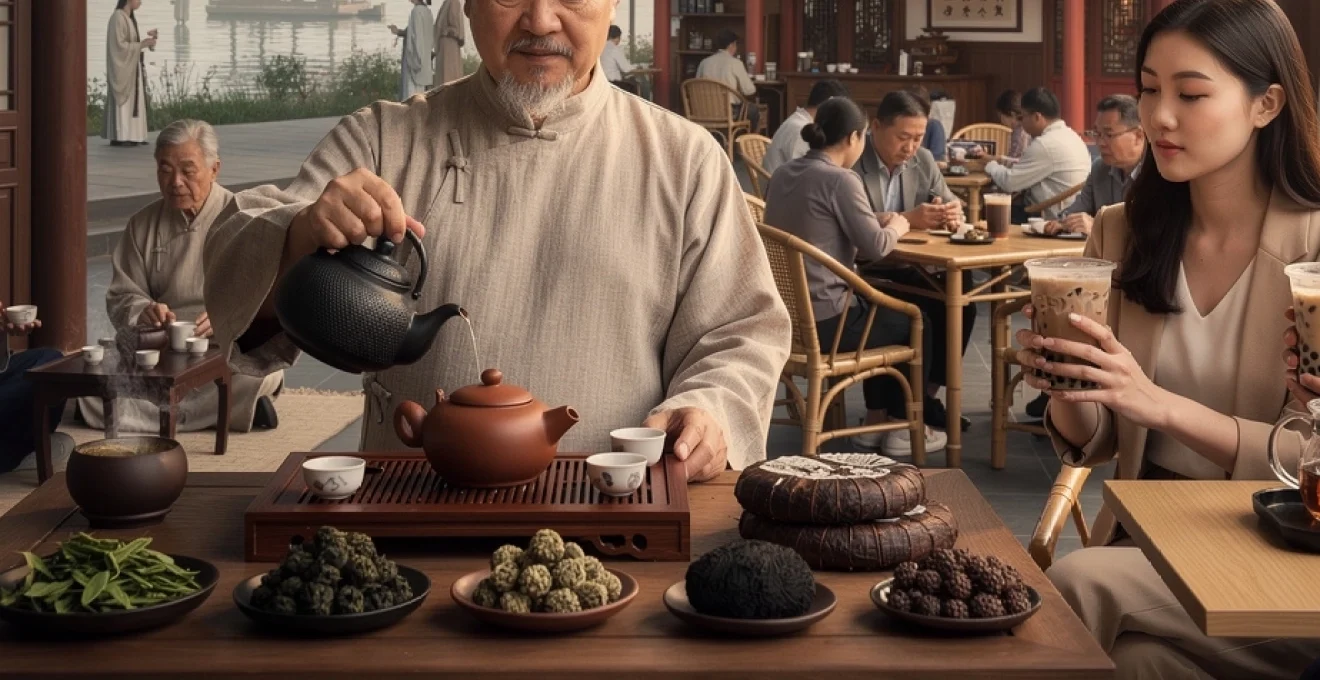
Tea in China transcends the simple act of drinking a beverage—it represents millennia of philosophical reflection, social hierarchy, and artistic expression woven into the fabric of daily existence. From the misty mountains of Fujian where oolong leaves undergo meticulous processing to the bustling teahouses of Chengdu where elders gather for animated discussions, tea ceremonies and customs reveal profound truths about Chinese values, interpersonal relationships, and spiritual aspirations. The intricate rituals surrounding tea preparation, the regional variations in brewing methods, and the symbolic gestures embedded in tea service collectively offer a window into understanding how Chinese society has evolved whilst maintaining continuity with ancient traditions. This cultural phenomenon, recognised by UNESCO in 2022 as intangible cultural heritage, continues to shape modern Chinese identity even as globalisation introduces new expressions of tea consumption.
The historical evolution of gongfu cha ceremony and its philosophical underpinnings
The Gongfu Cha ceremony, whose name translates to « making tea with skill, » represents one of the most refined expressions of Chinese tea culture. This elaborate method of tea preparation emerged as a sophisticated art form during imperial times, transforming the practical necessity of brewing tea into a meditative practice that requires years of dedication to master. Unlike casual tea drinking, Gongfu Cha demands complete attention to every detail—from water temperature to steeping duration—reflecting the broader Chinese philosophical emphasis on mindfulness and the pursuit of excellence in seemingly mundane activities.
Origins in fujian province during the ming dynasty
The Gongfu Cha tradition took root in Fujian Province during the Ming Dynasty (1368-1644), a period when the Hongwu Emperor revolutionised tea culture by banning compressed tea cakes and promoting loose-leaf tea production. This imperial decree fundamentally altered how Chinese society approached tea preparation, as loose leaves required different brewing techniques compared to the powdered or compressed forms previously dominant. Fujian’s tea masters responded by developing specialised small-pot brewing methods that maximised the flavour profiles of their region’s renowned oolong teas, creating protocols that balanced precision with aesthetic beauty.
The transition from compressed to loose-leaf tea marked more than a technical shift—it democratised tea culture by making preparation accessible beyond the exclusive domain of trained specialists. However, the Gongfu method maintained an element of exclusivity through its emphasis on skill and refinement, establishing a middle ground between imperial ceremony and common consumption. The small Yixing teapots that became central to Gongfu Cha, holding merely 100-150 millilitres, forced practitioners to focus intensely on each brewing cycle, creating multiple infusions that revealed the tea’s evolving character.
The influence of chan buddhism on tea preparation rituals
Chan Buddhism (known as Zen in Japan) profoundly shaped the philosophical dimensions of Chinese tea ceremonies, particularly the Gongfu tradition. Monks discovered that tea’s caffeine content helped maintain alertness during extended meditation sessions, transforming the beverage from a simple stimulant into a spiritual tool. This practical application evolved into a deeper integration, where the act of preparing tea itself became a form of moving meditation—a practice requiring the same focused awareness cultivated during seated contemplation.
The Buddhist principle of mindful presence permeates every aspect of Gongfu Cha, from the deliberate warming of vessels to the careful observation of leaves unfurling in hot water. Tea masters speak of achieving a state of « Wu Wo » or « without self » during preparation, where ego dissolves and the practitioner becomes one with the process. This mirrors the Chan Buddhist teaching that enlightenment emerges not through intellectual understanding but through direct, mindful engagement with immediate experience. The repetitive nature of multiple infusions—often five or more from a single portion of leaves—creates a rhythm that quiets mental chatter and cultivates tranquillity.
Yixing clay teapots and their role in flavour enhancement
Yixing teapots, crafted from the distinctive purple clay (zisha) found in Yixing, Jiangsu Province, occupy a revered position in Chinese tea culture due to their unique mineral composition and porous structure. These unglazed vessels absorb trace amounts of tea with
each use and gradually develop a patina that subtly enriches subsequent brews. Over years of attentive brewing, a well-seasoned Yixing pot can produce tea with remarkable depth and softness, even when using relatively simple leaves. For this reason, connoisseurs often dedicate a single pot to one category of tea—such as oolong or puerh—to avoid flavour cross-contamination and to allow the clay to « memorise » the tea’s aromatic profile. In a way, the teapot becomes an invisible collaborator in the ceremony, silently recording every infusion and returning that history in the form of enhanced complexity.
The cultural esteem for Yixing clay teapots also reveals how Chinese tea culture intertwines artistry with utility. Master potters spend decades perfecting their craft, balancing structural integrity with elegant proportions and tactile comfort in the hand. Collectors assess not only the pot’s ability to brew balanced liquor but also its calligraphic inscriptions, carved motifs, and the harmony between lid, handle, and spout. By investing so much care in an everyday object, Chinese society affirms a long-standing belief: that refinement of the material world can support refinement of the mind.
The precise temperature control methods in traditional brewing
Before the advent of electric kettles and digital thermometers, tea masters relied on sound, sight, and touch to control water temperature with impressive accuracy. Classical tea manuals describe different stages of boiling water with poetic names such as « shrimp eyes, » « crab eyes, » and « fish eyes, » referring to the size and movement of bubbles rising in the kettle. For delicate green tea, water is poured at the « shrimp eyes » stage, when tiny bubbles form along the pot’s edges; for robust oolong or puerh, water is allowed to reach a rolling boil or just below, then briefly cooled. This intuitive calibration reflects a broader Chinese tendency to read the natural world as a living guide rather than relying solely on instruments.
In Gongfu Cha, temperature control is not a single decision but an ongoing dialogue between the brewer, the tea leaves, and the evolving infusion. If an early steep tastes too sharp, later water may be cooled slightly; if the flavour seems muted, the next pour may be a touch hotter or a few seconds longer. This responsiveness mirrors Daoist ideas of harmony and adaptation—just as a wise person adjusts to changing circumstances, a skilled brewer responds to the subtle feedback of aroma and taste. For modern readers practising at home, simply allowing boiled water to rest for 30–60 seconds for green teas, or using fresh off-the-boil water for oolongs and puerh, is an easy way to approximate these traditional methods while still honouring the spirit of precision.
Regional tea varieties and their cultural significance across chinese provinces
China’s vast geography and diverse climates have given rise to an extraordinary range of regional tea varieties, each entwined with local customs, dialects, and values. Travelling from Zhejiang to Yunnan or Fujian, you are not just changing taste profiles—you are entering different cultural worlds shaped by tea. In many regions, particular teas are inseparable from local identity, much like specific cheeses in France or wines in Italy. By examining a few iconic examples, we can see how Chinese tea traditions reveal regional nuances within a shared national culture.
Longjing dragon well tea and hangzhou’s scholar traditions
Longjing, or Dragon Well tea, is grown in the misty hills near Hangzhou in Zhejiang Province and is often hailed as the « emperor » of Chinese green teas. Its flattened, jade-green leaves and chestnut-like aroma have been celebrated in poetry and painting since at least the Song Dynasty. During the Ming and Qing periods, Hangzhou evolved into a cultural hub where scholars, poets, and officials gathered around West Lake to compose verses and debate philosophy over cups of freshly brewed Longjing. For them, the tea’s clear, refreshing liquor symbolised moral clarity and upright character—qualities Confucian scholars aspired to cultivate.
This association between Longjing and literati culture continues today. Modern tea houses in Hangzhou often echo classical garden aesthetics, with lattice windows, calligraphy scrolls, and views of water and stone that invite reflection. When locals serve Longjing to guests, it can be a subtle way of honouring them with what is considered a refined and historically prestigious tea. For visitors hoping to experience this tradition, paying attention to how hosts invite you to admire the dry leaves, the aroma in the warmed gaiwan, and the pale green hue in the cup can offer a brief immersion in the quiet elegance of scholar life.
Pu-erh fermentation techniques in yunnan’s ethnic minorities
In contrast to the delicate immediacy of Longjing, Pu-erh tea from Yunnan embodies patience, transformation, and the wisdom of mountain communities. Traditionally produced from broad-leaf tea trees—some of them centuries old—Pu-erh is either naturally aged (sheng) or deliberately fermented (shou), developing earthy, woody, and sometimes fruity notes over time. Ethnic minority groups such as the Dai, Hani, and Bulang have long cultivated and processed these teas, passing down nuanced fermentation techniques through apprenticeships rather than written records. The result is a beverage that, like aged wine, gains depth and mellow complexity over years or even decades.
For these communities, Pu-erh is not just a commodity but a cultural anchor intertwined with festivals, ancestor worship, and everyday hospitality. Cakes of aged tea are offered at weddings or as respected gifts, signalling long-term goodwill and stable relationships. The famous Tea Horse Road, which once linked Yunnan with Tibet and beyond, turned Pu-erh into a bridge between cultures, as compressed cakes were traded for horses, salt, and other essentials. When we sip a well-aged Pu-erh today, we are, in effect, tasting a condensed history of trade routes, ethnic diversity, and the slow art of fermentation.
Tieguanyin oolong and fujian’s ancestral worship practices
Tieguanyin, an aromatic oolong hailing from Anxi in Fujian Province, sits halfway between green and black tea in oxidation level but often surpasses both in floral intensity. Its name, « Iron Goddess of Mercy, » derives from the Buddhist bodhisattva Guanyin, a figure associated with compassion and protection. Local legend tells of a poor farmer who cared for a neglected temple of Guanyin and was rewarded with a miraculous tea plant; the resulting tea brought prosperity to his village. This story has shaped how residents understand generosity, piety, and communal obligation.
In many Fujianese households, Tieguanyin plays a central role in ancestral worship and family gatherings. During major holidays such as Qingming (Tomb-Sweeping Festival) and Lunar New Year, families will brew high-quality Tieguanyin both for the living and as an offering on ancestral altars. The rising steam symbolically carries respect and remembrance to previous generations, while the shared cups among present family members reinforce kinship bonds. For guests, being served Tieguanyin in a Gongfu Cha style can signal that they are being welcomed almost as extended family, invited into an intimate circle of trust and continuity.
Jasmine pearl tea production in guangxi’s marriage ceremonies
While many Chinese teas emphasise the pure character of the leaf, jasmine pearl tea from Guangxi and neighbouring regions highlights the art of scenting. Producers hand-roll tender green tea buds into tight spheres and layer them with fresh jasmine blossoms overnight, allowing the leaves to absorb the flower’s fragrance. This process may be repeated several times, demanding both patience and a keen sense of timing to avoid overpowering the tea. The result is a cup that marries vegetal freshness with soft floral sweetness—an aromatic « conversation » between plant and flower.
In parts of Guangxi, jasmine tea holds particular significance in courtship and wedding customs. Exchanging or serving jasmine-scented tea can symbolise hopes for a fragrant, harmonious marriage, where separate lives intertwine as seamlessly as tea leaf and blossom. During engagement visits, a bride’s family might offer jasmine pearl tea to the groom’s relatives as a gesture of welcome and good faith. For those exploring Chinese tea traditions at home, offering jasmine tea to guests at celebratory occasions can be a simple way to echo these meanings of romance, purity, and new beginnings.
The social hierarchy reflected in tea house architecture and service protocols
Step into a traditional Chinese teahouse and you immediately sense more than just a place to drink tea; you enter a microcosm of social order, etiquette, and communal life. From the layout of rooms to the hierarchy of seating and the choreography of service, teahouses have historically mirrored broader patterns of Chinese social structure. At the same time, they have often provided spaces where these hierarchies could be gently relaxed, allowing different classes to interact over shared cups of tea.
Beijing’s lao she teahouse and imperial court etiquette
Beijing’s Lao She Teahouse, named after the renowned 20th-century writer, was founded in the 1980s but deliberately evokes the atmosphere of late Qing and early Republican teahouses. Its multi-level layout, ornate wooden screens, and stage for opera and storytelling recall venues where officials, merchants, and literati once rubbed shoulders. Here, tea service often reflects imperial court etiquette: higher-status guests are seated with clear views of performances, and the most refined and expensive teas are prepared with extra ceremony. Even the choice of teaware—delicate porcelain versus more rustic cups—can signal subtle status distinctions.
Historically, such teahouses functioned as semi-public salons where political ideas and cultural trends circulated under the cover of leisurely tea drinking. Knowledge of proper tea manners, from how to hold the cup to when to acknowledge the server, formed part of an educated person’s social toolkit. For visitors today, paying attention to these protocols—waiting to drink until the host has lifted their cup, accepting refills with a quiet nod or gentle thanks—offers a way to participate in a living tradition that once shaped imperial court behaviour and continues to inform urban etiquette.
Chengdu’s bamboo chair culture and community gathering spaces
In stark contrast to Beijing’s historically elite teahouse culture, Chengdu in Sichuan Province is famous for its relaxed, democratic tea gardens filled with bamboo chairs and low tables. These open-air or semi-open spaces, often located near parks, rivers, or temple courtyards, serve as communal living rooms where retirees, workers, students, and families all converge. Ordering a simple pot of jasmine or green tea grants you a seat for hours, during which you might play mahjong, have your ears cleaned by a specialist, or simply watch the world go by.
This « bamboo chair culture » reveals another side of Chinese social values: the importance of slow time, neighbourly interaction, and accessible public space. While there is still a basic hierarchy—regulars may have preferred spots, and elders are usually shown deference—the atmosphere is far more egalitarian than in elite salons. In a sense, Chengdu teahouses democratise the meditative qualities of tea, turning them into everyday leisure rather than rarefied ritual. For travellers, lingering in one of these venues can feel like joining an ongoing community conversation that predates modern cafés by centuries.
The teamaster’s status and apprenticeship systems
Across both formal and informal settings, the figure of the teamaster embodies expertise, hospitality, and, increasingly, cultural heritage preservation. In classical times, highly skilled teamasters could be employed by aristocratic households or imperial courts, much like calligraphers or musicians. Their role went beyond brewing tea to curating the entire sensory environment—selecting teas appropriate to the season, choosing teaware to match the occasion, and guiding guests in proper appreciation. In contemporary China, certification systems and tea schools have formalised this training, but traditional apprenticeship models, where a novice learns by assisting a master for years, remain influential.
The status of a teamaster also tells us something about Chinese attitudes toward specialised knowledge and craft. Although they may not hold political power, accomplished teamasters command respect as custodians of intangible cultural skills. Their work demonstrates that mastery of detail—how to pour without splashing, how to judge leaf quality at a glance—can be a path to social recognition. For anyone interested in deepening their own relationship with tea, seeking guidance from such practitioners, whether in person or through modern video platforms, is akin to studying with a seasoned musician rather than teaching oneself only from sheet music.
Symbolism and ritualistic gestures in chinese tea service etiquette
Beyond flavour and aroma, Chinese tea service is rich with small gestures and symbols that communicate respect, gratitude, and social awareness. These ritualistic elements may appear subtle, but they encode centuries of custom and reveal how carefully calibrated interpersonal relationships are within Chinese culture. Learning to recognise or adopt some of these gestures allows us not only to enjoy better tea but also to engage more thoughtfully with the values that underlie its service.
The finger-tapping gratitude gesture and its imperial origins
One of the most charming features of Chinese tea etiquette is the finger-tapping gesture used to silently say « thank you » when someone refills your cup. According to popular lore, this custom dates back to the Qing Dynasty, when the Qianlong Emperor travelled incognito and once poured tea for his servants. Unable to kneel and bow without revealing his identity, a quick-witted attendant bent two fingers and tapped them on the table, mimicking a tiny kneeling figure. Over time, this motion evolved into a discreet way for diners, especially in southern China and in dim sum restaurants, to acknowledge refills without interrupting conversation.
For modern tea drinkers, adopting this practice can transform a simple refill into a moment of shared cultural memory. It is also a lesson in how Chinese etiquette often balances formality with practicality: a grand bow is condensed into a tiny gesture that still honours the same sentiment. Of course, in more formal ceremonies or in northern regions, a verbal « xie xie » or slight nod may be preferred. Knowing when to use which expression—silent tapping in bustling teahouses, spoken thanks in solemn rituals—reflects the broader Chinese skill of adjusting behaviour to context.
Cup placement and pouring order in formal settings
In structured tea ceremonies or formal banquets, the way cups are placed and the order in which tea is poured communicate social ranking and respect. Typically, the most senior or honoured guest sits in the seat of honour—often facing the entrance or with the best view—and is served first. Cups are placed so that the handle or most decorative side faces the guest, and the server uses both hands to pour, signifying full attention and humility. Younger family members or junior colleagues will usually be served last, reinforcing hierarchical order even in a moment of shared enjoyment.
Interestingly, these rules are not rigid for their own sake but aim to create relational harmony. When you pour tea clockwise around the table or serve elders before peers, you are essentially « brewing » respect into the interaction, just as carefully as you brew the leaves. For readers navigating cross-cultural business or family gatherings, observing how hosts arrange seating and sequence service can provide valuable clues about unspoken relationships in the room. When in doubt, offering to pour for those older or more senior than you is almost always read as a courteous gesture.
Seasonal tea selection and yin-yang balance principles
Traditional Chinese medicine and Taoist philosophy have long influenced tea choice, framing different varieties as « warming » or « cooling » in their energetic effects on the body. In hot summers, lighter green teas, white teas, or floral infusions like chrysanthemum are favoured for their cooling, yin qualities, believed to reduce internal heat and soothe irritability. In contrast, during the cold, damp months of winter, darker oolongs and fermented Pu-erh are chosen for their warming, yang properties, thought to aid digestion and circulation. This seasonal tea selection is more than habit; it reflects a worldview that sees health as a dynamic balance between opposing forces.
For everyday tea drinkers, adopting this yin-yang approach can be both practical and enjoyable. You might reach for a delicate green tea after a heavy meal to feel lighter, or choose a robust, earthy Pu-erh on a chilly morning instead of coffee. Much like dressing according to the weather, aligning tea choices with climate and bodily needs can make each cup feel more attuned to the moment. Asking yourself, « Do I need something cooling and refreshing, or warming and grounding today? » is a simple way to bring this ancient principle into modern life.
The art of appreciating tea liquor colour and aroma
Chinese tea appreciation extends well beyond taste to include visual and olfactory pleasures that are considered integral to the experience. Connoisseurs speak of the « three looks and three smells »: examining the dry leaves, watching them unfurl in water, and admiring the colour of the liquor, followed by inhaling the aroma from the pot, the fairness cup, and the empty drinking cup. The hue of the tea—pale jade, golden amber, deep mahogany—offers early clues about oxidation level, age, and brewing strength, much like the colour of wine does for sommeliers. Aromas can range from orchid and osmanthus to honey, roasted nuts, or forest floor, each hinting at terroir and processing methods.
Engaging deliberately with these senses turns tea drinking into a form of everyday mindfulness. Instead of absent-mindedly sipping while distracted, you pause to watch steam curl from the cup, notice how the fragrance changes between the first and fifth infusion, and perhaps compare impressions with friends. This practice reveals an important aspect of Chinese culture: the belief that aesthetic cultivation is available to anyone willing to pay attention, not just to those with expensive teas. Even with a simple, affordable green tea, you can train your senses to discern subtle shifts in colour and scent, deepening your connection to what might otherwise feel like a routine beverage.
Contemporary tea culture in urban china and globalisation effects
While many of the rituals described above date back centuries, tea in China today is far from frozen in time. Urbanisation, rising incomes, and digital technology have reshaped how younger generations encounter and reinterpret tea traditions. In megacities like Shanghai, Shenzhen, and Beijing, sleek tea boutiques, fusion tea cocktails, and viral milk tea brands coexist with old neighbourhood teahouses. This coexistence illustrates a key feature of Chinese culture: a capacity to absorb global influences while reasserting local identity through adaptation.
Heytea and the modern bubble tea phenomenon in shanghai
One of the most visible symbols of contemporary tea culture is the explosive growth of bubble tea and « new-style tea » chains such as Heytea (喜茶) and Nayuki. Originating in southern China and Taiwan but now ubiquitous in cities like Shanghai, these brands blend high-quality Chinese tea bases with cheese foam, fruit purees, and chewy toppings. Long queues outside Heytea stores, often filled with young professionals and students, show how tea has been recast as a fashionable, Instagram-ready indulgence. At first glance, this sugary trend might seem far removed from serene Gongfu ceremonies, yet it still centres tea as the primary ingredient.
Interestingly, many of these brands market their products with language that nods to tradition—highlighting specific varieties like Tieguanyin or jasmine green as the base for innovative drinks. In doing so, they act as gateways for younger consumers who might later explore these teas in purer forms. For global readers, the next time you order a bubble tea, you might look beyond the toppings and ask which leaf underpins the flavour; in that question lies a bridge back to centuries of Chinese tea craftsmanship.
Neo-chinese tea salons merging traditional and western aesthetics
Alongside mass-market chains, a quieter but influential movement has emerged in the form of neo-Chinese tea salons that blend traditional Gongfu elements with minimalist, often Western-influenced design. These intimate spaces might feature concrete floors, clean lines, and jazz soundtracks, yet serve carefully sourced oolongs in Yixing pots or gaiwans. Their clientele often includes designers, entrepreneurs, and culture enthusiasts seeking a slower, more reflective counterpoint to urban busyness. In these settings, tea functions almost like specialty coffee does in Europe and North America: as a marker of taste, connoisseurship, and a certain lifestyle.
This synthesis of old and new aesthetics demonstrates how Chinese tea culture remains a living, flexible tradition rather than a museum piece. You might sit at a Scandinavian-style wooden bar while the host rinses cups and explains harvest seasons much like a sommelier. For visitors or expatriates, these salons can be ideal entry points into deeper tea appreciation, offering menus and guidance in multiple languages without sacrificing authenticity. They also highlight a broader cultural trend in China of reinterpreting heritage through contemporary design rather than simply replicating past forms.
Digital tea communities and e-commerce platforms like taobao
The digital revolution has also profoundly changed how tea is bought, discussed, and even learned about. Major e-commerce platforms such as Taobao, JD.com, and Pinduoduo host thousands of tea sellers, from small family farms to large brands, enabling consumers across China and abroad to order region-specific teas with a few taps on their phones. Live-streaming sessions, where farmers or teamasters brew tea on camera and answer questions in real time, have become popular, turning what used to be highly localised knowledge into a nationwide (and even global) conversation. Online reviews and ratings further democratise access to information that once circulated mainly among connoisseurs.
At the same time, social media platforms like WeChat, Xiaohongshu (RED), and Bilibili host vibrant tea communities where users share brewing tips, unboxing videos, and tasting notes. For someone just beginning to explore Chinese tea traditions, these digital spaces can act like virtual teahouses, offering both education and camaraderie. The risk, of course, is information overload or encountering misleading marketing. As in traditional markets, developing a discerning palate and cross-checking sources—perhaps by buying small sample packs from several vendors—is a practical way to navigate this abundance while gradually finding trusted suppliers.
Tea as a diplomatic tool and gift-giving protocol in chinese business culture
From ancient tribute teas sent to imperial courts to modern state visits where leaders exchange carefully chosen blends, tea has long served as a subtle yet powerful instrument of diplomacy in China. Because tea embodies hospitality, respect, and cultural refinement, offering it in political or business contexts communicates goodwill without the need for grandiose gestures. Even today, formal meetings often begin with tea service, setting a tone of calm deliberation and shared humanity before negotiations commence.
In corporate settings, high-quality tea is a common and culturally resonant gift. When visiting a partner company or government office, Chinese executives may present elegantly packaged regional teas, such as a famed Longjing or aged Pu-erh, as tokens of esteem. The choice of tea can signal the giver’s thoughtfulness: a rare vintage Pu-erh might imply long-term commitment, while a delicate jasmine tea could suggest hopes for a pleasant, harmonious collaboration. For foreign professionals engaging with Chinese counterparts, reciprocating with either fine local products from their own country or well-chosen Chinese teas demonstrates respect for these unspoken codes.
Understanding basic tea gift-giving protocol can prevent misunderstandings. It is generally advisable to avoid extremely cheap supermarket teas, as they may be seen as lacking sincerity; instead, select something mid- to high-quality, and if possible, learn a sentence or two about its origin to share when presenting it. When you receive tea as a gift, handle the box respectfully, express appreciation, and, if appropriate, suggest enjoying it together at a later time. In this way, tea continues to function as more than a drink—it becomes a shared cultural language that smooths relationships, honours tradition, and opens doors across borders.