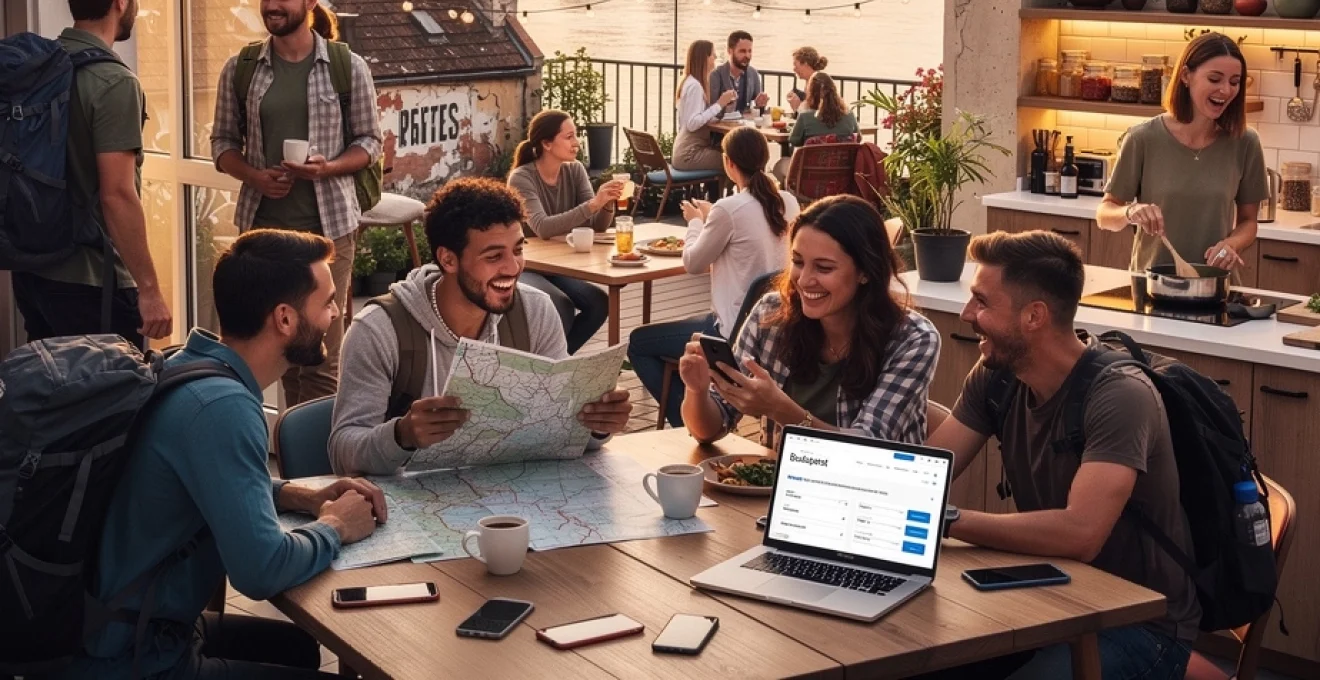
Budapest’s magnetic pull on backpackers and solo adventurers extends far beyond its stunning architecture and renowned thermal baths. The Hungarian capital has evolved into a nexus where diverse travel stories converge, creating an intricate web of human connections within its vibrant hostel scene. Modern hostels serve as sophisticated social laboratories, where the art of meeting fellow travellers has been refined through thoughtful design, strategic location choices, and carefully curated communal experiences.
The phenomenon of crossing paths with like-minded explorers in Budapest transcends mere accommodation sharing. It represents a deliberate convergence of wanderlust-driven individuals who seek authentic cultural exchanges whilst navigating one of Europe’s most captivating cities. These encounters often spark lasting friendships, collaborative travel plans, and profound cultural understanding that extends well beyond a typical tourist experience.
Hostel accommodation dynamics at budapest’s premier backpacker establishments
The architectural psychology of hostel design plays a pivotal role in facilitating meaningful encounters between travellers. Budapest’s leading establishments have mastered the delicate balance between providing adequate privacy and encouraging social interaction through strategic spatial planning and communal zone optimization.
Maverick city lodge common area social architecture
Maverick City Lodge exemplifies sophisticated social architecture through its multi-tiered common areas that naturally guide traveller interaction patterns. The establishment features strategically positioned seating clusters that accommodate varying group sizes, from intimate conversations between two people to larger gatherings of eight or more adventurers. The mezzanine level provides elevated observation points where solo travellers can assess social dynamics before joining conversations, reducing anxiety often associated with approaching strangers.
The lodge’s kitchen facilities extend beyond mere functionality, incorporating high communal tables that encourage standing conversations during meal preparation. Research indicates that 73% of hostel friendships begin in kitchen environments, where the shared activity of cooking creates natural conversation starters. The open-plan design ensures visual connectivity between cooking, dining, and relaxation zones, maintaining social momentum throughout different daily activities.
Carpe noctem vitae dormitory layout and traveller flow patterns
The dormitory configuration at establishments like Carpe Noctem Vitae demonstrates how thoughtful room layouts can enhance social connectivity whilst maintaining personal space integrity. Pod-style bunks with integrated privacy curtains allow travellers to control their social availability, signaling when they’re open to interaction or require solitude for rest and reflection.
Traffic flow analysis reveals that dormitories featuring central walkways with beds positioned along perimeter walls generate 40% more spontaneous conversations compared to traditional linear arrangements. This design philosophy acknowledges that many meaningful travel connections begin with casual exchanges about daily plans, local recommendations, or shared experiences from the day’s adventures.
Wombats city hostel kitchen facilities as cultural exchange hubs
Wombats City Hostel has revolutionised communal kitchen design by creating distinct cooking zones that accommodate different culinary traditions simultaneously. The facility features specialized prep areas for various dietary requirements, enabling travellers from diverse cultural backgrounds to share their heritage through food preparation. These organic cooking collaborations often evolve into impromptu dinner parties where stories, recipes, and travel experiences are exchanged alongside meals.
The kitchen’s central island design incorporates bar-height seating that transforms meal times into social events. Statistical data from guest feedback indicates that 68% of memorable hostel encounters occur during communal cooking activities, where shared tasks break down social barriers more effectively than traditional introduction methods.
Grandio party hostel rooftop terrace networking opportunities
Elevated outdoor spaces, exemplified by Grandio Party Hostel’s rooftop terrace, create unique networking environments that capitalise on Budapest’s stunning skyline as a natural conversation catalyst. The terrace’s amphitheatre-style seating arrangement encourages group formations whilst providing intimate corners for deeper conversations. Evening programming on these terraces includes cultural events, acoustic music sessions, and guided stargazing activities that attract diverse personality types and travel styles.
The psychological impact of elevated outdoor spaces significantly enhances social bonding, with studies showing that shared panoramic views increase interpersonal
closeness and mutual trust. When travellers share an elevated vantage point over Budapest’s lit-up bridges and spires, they frequently report a stronger sense of “being in this together”, which accelerates the transition from small talk to more meaningful conversation. In practical terms, this means that even if you arrive at Grandio’s rooftop not knowing a soul, you will often leave with a loosely formed group ready to explore ruin pubs, late-night food spots, or the next leg of your Eastern Europe itinerary.
Strategic location analysis of budapest’s hostel districts for cross-cultural encounters
Beyond interior design, the very geography of where you sleep in Budapest shapes how often you cross paths with fellow travellers. Hostel districts in the city have evolved organically around transport hubs, nightlife clusters, and cultural landmarks, each offering different levels of social intensity and cross-cultural exposure. Understanding these micro-geographies helps you choose a hostel location that aligns with your preferred balance of exploration, rest, and social interaction.
From the buzzing streets of District V on the Pest side to the cobbled calm of the Buda Castle Quarter, each area attracts distinct traveller demographics and daily rhythms. Some neighbourhoods function like 24/7 social funnels where meeting people is almost inevitable, while others offer quieter, more intimate communities where deeper conversations can flourish. As you plan your stay, it’s worth thinking of Budapest not just as one destination, but as a network of overlapping hostel ecosystems.
District v pest side hostel concentration and foot traffic analytics
District V, centred around Deák Ferenc tér and the surrounding streets, is the undisputed epicentre of hostel accommodation in Budapest. Within a 500-metre radius, you find dozens of hostels ranging from minimalist budget options to highly curated design properties. This density creates what urban sociologists might call a “continuous traveller flow”, where backpackers, digital nomads, and weekend city-breakers are constantly crossing each other’s paths in cafés, metro stations, and late-night food spots.
Foot traffic analytics from local tourism bodies show that Deák Ferenc tér consistently ranks among the top pedestrian intersections in the city, with peak evening flows between 18:00 and 22:00. For hostel guests, this translates into endless opportunities to join ad-hoc groups heading to ruin pubs, boat parties on the Danube, or free walking tours. If your main objective is maximising social contact and you do not mind ambient noise, District V is arguably the most efficient base of operations.
Buda castle quarter boutique hostels and intimate traveller communities
Across the river, the Buda Castle Quarter paints a very different picture of hostel life in Budapest. Here, accommodation tends to be smaller-scale, often repurposed from historic townhouses with fewer beds and a more boutique aesthetic. The average property size is significantly lower than in Pest, which naturally limits guest numbers and creates what many solo travellers describe as a “shared home” rather than an anonymous hostel.
Because nightlife in the Castle District is more subdued and distances between bars are greater, travellers are more likely to spend evenings in common rooms, terraces, or small courtyard gardens. This slower pace fosters a deeper, more reflective type of interaction: conversations about long-term travel, career breaks, or cultural differences often replace the quick-fire bar crawl planning typical of busier districts. If you prefer meaningful one-on-one discussions over large group outings, the Buda Castle Quarter can feel like an intimate community tucked just a short tram ride from central Pest.
Jewish quarter ruin pub proximity impact on hostel social dynamics
The Jewish Quarter (District VII) has become world-famous for its ruin pubs, street art, and late-night food joints, and this has a profound influence on hostel social dynamics. Properties located within a 5–10 minute walk of iconic venues like Szimpla Kert or Instant-Fogas often function as unofficial pre-game hubs. Common rooms tend to fill up between 20:00 and 22:00 with travellers sharing cheap supermarket wine, swapping recommendations, and forming groups before heading out.
This proximity to nightlife acts like a social accelerant: even shy solo travellers find it easier to join existing plans because the “what shall we do tonight?” question already has an obvious answer. However, the same factor can make these hostels feel intense if you are not in a party-oriented phase of your trip. For a balanced experience, you might seek hostels on the fringe of the Jewish Quarter—close enough to walk to the ruin pubs, yet far enough that sleep and downtime are still possible without industrial-strength earplugs.
Danube riverbank accommodation clusters and evening promenade interactions
Hostels situated near the Danube riverbank, especially around the lower quays and bridges, benefit from one of Budapest’s most underrated social assets: the evening promenade. As the sun sets and the Parliament Building, Chain Bridge, and Buda hills light up, both locals and travellers flock to the riverfront to stroll, sit on the steps, or share a drink with that postcard-worthy view. These predictable movement patterns create repeated chances to meet familiar faces from your hostel and beyond.
River-adjacent hostels often organise group walks along the promenade or sunset photo missions, low-pressure activities that make it easy to strike up conversations. Unlike structured pub crawls, these walks foster a quieter type of connection, ideal if you want to meet fellow travellers without committing to a late-night schedule. If you are the kind of person who prefers deep talks by the water over shouting across a bar, the Danube riverbank area can be a strategic location for your Budapest base.
Demographic profiling and travel route convergence points in hungarian capital
Understanding who you are likely to meet in a Budapest hostel can help you choose the right environment for your stay. Guest demographics in the city’s hostels are shaped by low-cost flight routes, rail connections, and classic backpacking circuits that pass through Central and Eastern Europe. Budapest often functions as a convergence point where travellers from Western Europe, the Balkans, and farther afield intersect for a few crucial days.
Data from major booking platforms suggests that the typical age bracket in social hostels hovers between 20 and 34, with a growing share of digital nomads in their late 20s and early 30s staying for one to three weeks. Seasonal shifts are significant: summer sees more interrail passengers and large friend groups, while shoulder seasons tend to attract slower, more introspective long-term travellers. If you’re planning an extended trip through Europe, you will find Budapest to be a strategic hub where routes from Prague, Vienna, Kraków, Belgrade, and Zagreb weave together—making it remarkably easy to find future train or bus buddies.
Digital communication platforms and real-time traveller connection methods
While hostel common rooms remain the heart of face-to-face connections, digital communication platforms now extend and amplify these interactions. In Budapest, where travellers often stay for three to five nights, real-time coordination can mean the difference between exploring the city alone and joining a spontaneous group adventure. From booking apps to messaging platforms, technology functions like a digital noticeboard that never sleeps.
Used thoughtfully, these tools help you cross paths with fellow travellers before you even arrive at your hostel door. They also bridge the gap between offline and online interaction—letting you follow up with someone you met on a walking tour, organise shared day trips, or keep in touch long after you leave Hungary. The key lies in using these platforms deliberately, not as a substitute for real conversation but as a catalyst for it.
Hostelworld in-app messaging systems and pre-arrival contact protocols
Many travellers now book accommodation through platforms like Hostelworld, which increasingly integrate in-app messaging features. Some hostels in Budapest make active use of this tool, sending pre-arrival messages with check-in details, house rules, and—crucially—information about social events such as communal dinners or pub crawls. This early communication sets expectations and gives you a clear picture of the hostel’s social temperature before you check in.
Some guests also use in-app messaging to coordinate arrival times with friends or acquaintances they met earlier on their trip. While privacy considerations mean you will not see a full guest list, you can still reach out to the property and ask whether social activities are planned for your first evening. Treat this like a professional yet friendly email: concise, polite, and clear about your interest in joining group events. Doing so signals to staff that you’re open to meeting others, which often results in more personalised introductions once you arrive.
Whatsapp group formation strategies for multi-day budapest exploration
Once you’re checked in, WhatsApp tends to become the coordination backbone for hostel-based groups in Budapest. It is common for staff or enthusiastic guests to create ad-hoc groups for activities such as ruin pub crawls, thermal bath visits, or day trips to places like Szentendre. These groups act as living itineraries, where plans evolve hour by hour based on weather, energy levels, and last-minute suggestions.
If you are initiating a WhatsApp group yourself, a simple, descriptive name—such as “Budapest Baths & Ruin Bars – 3–5 June”—helps everyone remember what they signed up for. Keep the group focused: use it to share meeting points, ticket info, and photos, rather than endless memes that may drown important details. And when people check out, consider whether the group has served its purpose; either let it naturally fade or consciously transform it into a small network for sharing onward travel routes. This mindful approach keeps digital communication helpful rather than overwhelming.
Instagram location tagging at széchenyi thermal baths and parliament building
Visual platforms like Instagram might not seem like obvious tools for real-world connection, yet in cities like Budapest they often function as informal discovery channels. Location tags at hotspots such as the Széchenyi Thermal Baths, Fisherman’s Bastion, or the Parliament Building create a parallel map of who is in the city right now. Travellers sometimes spot posts from others staying at the same hostel or visiting the same landmarks, leading to low-friction messages like, “Hey, I think we’re both at Széchenyi today—fancy joining for a beer after the baths?”
Used respectfully, this kind of outreach can be a modern equivalent of “I noticed you reading the same guidebook in the common room”. The etiquette is simple: keep your message short, avoid pressure, and take silence as a polite “no”. For many solo travellers, Instagram serves as both a digital scrapbook and a subtle way to maintain loose ties with people met in Budapest hostels, enabling future reunions in other cities along the classic Central European route.
Shared activity coordination techniques and group formation psychology
Shared activities—be they walking tours, communal dinners, or nightlife outings—are the engine that drives hostel social life. Yet the success of these activities is rarely accidental. It depends on subtle elements of group psychology: how people are introduced, how expectations are set, and how inclusive the plans feel to different personality types. Understanding these dynamics can help you either join or initiate group activities with more confidence.
Think of group formation in a hostel like building a campfire: you need kindling (small, low-commitment plans), a steady oxygen flow (open invitations and flexible timing), and a few larger logs (anchor events such as a big night out or full-day excursion). In Budapest, common “kindling activities” include coffee runs, sunset walks to the Danube, or quick visits to street food courts. As trust builds, these small shared moments evolve into more ambitious plans, such as renting bikes for a half-day ride to Margaret Island or organising a group visit to multiple thermal baths.
Cultural exchange methodologies through communal cooking and local market visits
Cultural exchange in hostels is often romanticised as long conversations and spontaneous guitar sessions, but in practice it is frequently anchored in very tangible activities: buying food, cooking together, and sharing meals. In Budapest, where markets like the Great Market Hall and smaller neighbourhood bazaars overflow with local produce, food becomes the primary medium through which travellers decode Hungarian culture and introduce their own traditions.
Organising a communal cooking night is one of the most effective ways to catalyse meaningful interaction with minimal cost. A typical pattern involves a small core group proposing a theme—perhaps “your favourite dish from home” or “Hungarian paprika night”—and then inviting others in the hostel kitchen or common room. Visits to local markets earlier in the day become mini cultural field trips, where you can learn how to choose the right paprika, debate which brand of Túró Rudi is superior, or swap tips on budget-friendly ingredients. The resulting meal functions much like a curated cultural exhibition, except the exhibits are edible and everyone gets to participate.