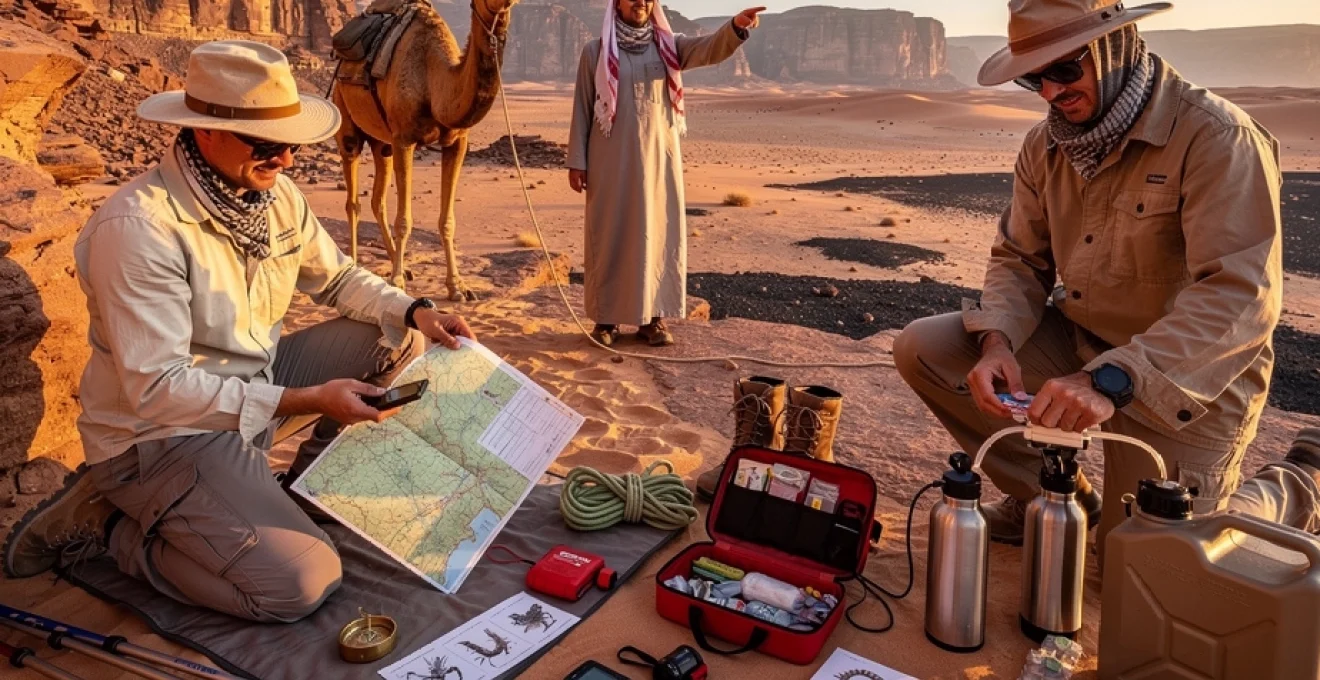
Jordan’s desert landscapes represent some of the most challenging yet rewarding terrain on Earth, where ancient Nabataean trade routes meet modern adventure seekers. From the otherworldly red sandstone formations of Wadi Rum to the remote Eastern Desert plateaus near the Iraqi border, these arid environments demand meticulous preparation and respect for their unforgiving nature. The country’s desert regions experience extreme temperature variations, with scorching days reaching 45°C and nights plummeting below freezing, particularly during winter months between December and February.
Successful desert exploration in Jordan requires far more than basic hiking experience. You’ll encounter everything from loose sand dunes that shift beneath your feet to razor-sharp basalt fields that can shred inadequate footwear within hours. The atmospheric conditions create unique challenges: intense UV radiation at altitude, sudden sandstorms that reduce visibility to mere metres, and humidity levels so low they can cause rapid dehydration even during minimal exertion. Understanding these environmental factors forms the foundation of proper preparation for any serious desert expedition across Jordan’s vast wilderness areas.
Pre-departure physical conditioning and health protocols for arid desert terrain
Cardiovascular endurance training for high-temperature hiking in wadi rum
Preparing your cardiovascular system for desert hiking requires a specific training regimen that mimics the stress of sustained activity in extreme heat. Begin training at least eight weeks before departure, focusing on heat adaptation protocols that gradually condition your body to perform under thermal stress. Indoor cycling sessions at elevated room temperatures, combined with sauna exposure immediately following cardio workouts, effectively simulate the physiological demands you’ll face whilst trekking through Wadi Rum’s sun-baked valleys.
Your training programme should progressively increase both duration and intensity whilst incorporating heat stress elements. Start with 30-minute sessions at moderate intensity in warm environments (25-28°C), building to 90-minute endurance sessions by week six. This approach enhances your body’s natural cooling mechanisms, improving sweat production efficiency and electrolyte regulation – crucial adaptations for maintaining performance when ambient temperatures exceed 40°C in Jordan’s desert corridors.
Hydration protocol preparation using WHO desert travel guidelines
Effective hydration preparation extends beyond simply drinking more water; it involves training your body’s fluid management systems through structured protocols. The World Health Organization’s desert travel guidelines recommend beginning hydration conditioning three weeks before departure, consuming 35-40ml of water per kilogram of body weight daily whilst maintaining normal activity levels. This baseline establishes optimal kidney function and cellular fluid balance before introducing desert-specific stress factors.
During the final week before travel, implement electrolyte loading strategies that prime your system for the intense mineral losses associated with desert sweating. Consume 500mg of sodium and 300mg of potassium daily through natural food sources rather than supplements, allowing your body to develop efficient retention mechanisms. This preparation proves invaluable when you’re losing up to 2-3 litres of fluid hourly during peak activity in Jordan’s desert heat.
Altitude acclimatisation techniques for jordan’s eastern desert plateaus
Jordan’s Eastern Desert plateaus reach elevations exceeding 1,200 metres, where reduced atmospheric pressure compounds the physiological stress of extreme aridity. If you live at sea level, begin altitude preparation using intermittent hypoxic training techniques six weeks before departure. Simple breath-holding exercises and high-intensity interval training at maximum sustainable pace help develop the oxygen efficiency you’ll need when scaling desert ridgelines.
Consider spending several nights at the highest elevation accessible near your home location during the month before travel. Even modest altitude exposure (300-600 metres) provides measurable benefits for desert plateau exploration. Your red blood cell production increases, improving oxygen delivery to working muscles when you’re navigating the challenging terrain around Dana Biosphere Reserve or the remote eastern regions near Azraq.
Medical kit assembly following royal geographical society desert specifications
A properly assembled desert medical kit addresses the specific health risks associated with Jordan’s arid environments, following Royal Geographical Society protocols developed through decades of expedition experience. Your kit must include advanced wound care supplies designed for dusty conditions: sterile saline solutions
for eye irrigation, high-adhesion dressings that stay in place on sweaty skin, and antiseptic solutions that remain effective in sandy, contaminated environments. Pack hydrogel dressings for burns (critical if you experience severe sunburn), plus antiseptic wipes and alcohol swabs for cleaning cuts sustained on basalt or sandstone. Include a small irrigation syringe to flush debris from wounds and a pair of fine-tipped tweezers for removing thorns or splinters from acacia and other desert vegetation.
Pain management and gastrointestinal support are equally important for multi-day desert trekking in Jordan. Following Royal Geographical Society field guidelines, your kit should contain paracetamol and ibuprofen, oral rehydration salts, loperamide for acute diarrhoea, and an antihistamine for allergic reactions to bites or stings. Add a broad-spectrum antibiotic prescribed by your doctor for severe bacterial infections, along with a short course of anti-inflammatory medication if you are prone to joint pain. Finally, pack blister treatment supplies (hydrocolloid plasters, zinc oxide tape) – on long days hiking in Wadi Rum or Dana, a single untreated hotspot can end your desert adventure.
Technical gear selection and desert-specific equipment configuration
Lightweight shelter systems for sandstone desert camping in dana biosphere
While many travellers to Jordan stay in fixed Bedouin camps, those planning self-supported journeys through Dana Biosphere or remote Eastern Desert areas need shelter systems designed for high UV, wind and sand. Traditional double-wall tents can trap heat like a greenhouse, so opt for a lightweight, three-season desert-optimised tent with a high mesh ratio and excellent cross-ventilation. Look for low-profile designs that shed wind and feature extended vestibules where you can store gear away from blowing sand.
Ground insulation is as important as overhead shelter when camping on sandstone and gravel plateaus. A closed-cell foam pad combined with an ultralight inflatable mat provides both thermal protection from cold night-time ground temperatures and comfort on rocky surfaces. Choose a tent footprint or groundsheet made from durable, puncture-resistant material – sharp basalt fragments around Dana and Wadi Mujib can easily tear standard fabrics. When you configure your camp, orient doorways away from the prevailing wind and use sand anchors or buried rocks instead of relying solely on traditional tent pegs.
Water purification technology for brackish desert springs near azraq oasis
In Jordan’s drier regions, especially around Azraq Oasis and the Eastern Desert, reliable water sources can be scarce and often brackish. Relying solely on bottled water is impractical for extended hikes, so you need a layered water purification strategy. Start with a high-capacity mechanical filter (0.1–0.2 micron), which removes sediment and most bacteria and protozoa from desert springs and cisterns. Pair this with chemical purification tablets or drops (chlorine dioxide is preferable to iodine for long-term use) to neutralise remaining pathogens and viruses.
Because some desert sources in Jordan contain elevated mineral and salt levels, consider carrying a compact, battery-powered UV purifier as a backup for marginal water. While UV treatment doesn’t improve taste or reduce salinity, it provides an additional safety net if your main filter becomes clogged with fine sand or organic matter. Pre-filter turbid water through a bandana or coffee filter to extend the life of your main system. In practice, this means you can confidently refill from remote springs or traditional Bedouin wells when trekking between Wadi Rum, Azraq and the basalt deserts east of Amman.
Navigation equipment redundancy using gps and traditional compass methods
Desert landscapes in Jordan are notoriously disorienting; dune fields, gravel plains and basalt plateaus often lack distinct landmarks, especially under hazy or low-light conditions. Relying on a single navigation device is a common mistake, so build redundancy into your system. A rugged, handheld GPS unit with topographic maps of Jordan provides accurate position tracking even when mobile reception disappears between Wadi Rum and the Saudi border. Preload key waypoints such as water sources, campsites and vehicle tracks before departure, and carry spare batteries or a power bank.
Technology, however, should never replace basic desert navigation skills. Pack a reliable baseplate compass and a 1:50,000 or 1:100,000 scale topographic map of your route, and practise using them before you arrive. Learn to take bearings on distant rock outcrops, ridgelines and wadis, and to estimate distance travelled by time and pace count. Think of your GPS as a calculator and your compass and map as the underlying mathematics – when one fails, the other keeps your journey on course. This dual approach is particularly valuable in sandstorms, when visibility drops and electronic screens become hard to read under blowing grit.
Textile selection for extreme uv protection in al-karak desert regions
In Jordan’s Al-Karak and central desert regions, UV intensity can be as punishing as the heat itself. Clothing is your first line of defence, and the right textiles will protect your skin while regulating body temperature. Choose long-sleeved shirts and trousers made from lightweight, tightly woven synthetic or merino-blend fabrics with a UPF rating of 30 or higher. These materials block the majority of UV rays while allowing sweat to evaporate, a crucial balance when you’re hiking exposed ridgelines above Wadi Mujib or exploring open plateaus.
A wide-brimmed desert hat with a neck flap is far more effective than a simple baseball cap, shading your face, ears and the back of your neck. Complement this with a lightweight scarf or shemaqh that you can wrap around your head during midday sun or sandstorms – it acts like movable shade and a breathable dust filter. Avoid dark cotton garments, which absorb heat and retain sweat like a sponge. Instead, imagine your clothing as a portable microclimate: light colours reflect heat, high-tech fibres wick moisture, and loose cuts allow air to circulate freely around your body.
Footwear engineering for mixed terrain navigation across basalt desert fields
Few environments test footwear like Jordan’s deserts, where soft dunes transition abruptly to jagged basalt and sandstone. For Wadi Rum and the basalt fields near Azraq, look for mid-cut hiking boots with robust toe caps and rock guards, constructed from abrasion-resistant synthetic materials rather than heavy leather. A stiff, torsionally stable sole with deep lugs will help you edge on rock slabs while still offering enough flex to walk comfortably across softer sand. Reinforced sidewalls protect against sharp basalt shards that can slice lighter trail runners.
Inside the boot, your sock system matters as much as the outer shell. Use a thin, moisture-wicking liner sock under a slightly thicker merino or synthetic hiking sock to minimise friction and blisters on long days around Petra and Dana. Consider gaiters to keep sand and small stones from entering your footwear – a small annoyance that can quickly turn into raw heels and lost skin. Before your Jordan desert trip, break in your boots on mixed terrain at home and test them on hot days; if they’re uncomfortable in mild conditions, they’ll become unforgiving in 40°C heat.
Desert navigation mastery and waypoint planning across jordan’s arid landscapes
Mastering navigation in Jordan’s deserts is less about heroics and more about methodical planning. Before you set foot in Wadi Rum, the Eastern Desert or the high plateaus around Al-Karak, build a waypoint strategy that combines physical maps, digital tools and local knowledge. Plot daily stages based on realistic walking speeds in heat – typically 3–4 km per hour on mixed terrain – and mark critical points such as water sources, shade zones, vehicle tracks and bailout routes to paved roads. Treat each waypoint as a safety net rather than a mere dot on a screen.
On the ground, navigation becomes a continuous process of observation and adjustment. Use prominent features – an isolated butte, a distinctive dune line, a headland of sandstone – as “handrails” that guide your movement across the landscape. In open gravel plains where everything looks the same, fall back on compass bearings and timed legs, checking your progress at regular intervals rather than waiting until you feel lost. Ask yourself every hour: “If my GPS died now, could I still find my way to water or camp?” If the answer is no, pause, reassess your bearings, and re-anchor your route to visible terrain.
Cultural immersion protocols and bedouin community engagement strategies
Jordan’s deserts are not empty spaces; they are living homelands for Bedouin communities whose knowledge has shaped safe travel here for generations. Approaching these communities with respect and curiosity transforms your desert experience from a simple hike into a cultural journey. Learn a few basic Arabic greetings – as-salamu alaykum (peace be upon you) and shukran (thank you) – and use them when meeting your hosts or guides in Wadi Rum or Dana. Simple gestures like accepting an offered cup of tea, or asking permission before photographing people, help build trust.
When staying in Bedouin camps, observe local customs around dress and behaviour. Modest clothing that covers shoulders and knees is appreciated, especially in family areas, and it’s polite to remove your shoes before entering tents or shared indoor spaces if others do the same. Take mealtimes as opportunities to ask questions about desert life, water management and traditional navigation; you’ll often discover route advice or safety insights that no guidebook mentions. Think of yourself not just as a visitor passing through Jordan’s deserts, but as a guest in someone’s extended home.
Wildlife encounter preparedness and venomous species identification in eastern desert
Beyond its dramatic rock formations, Jordan’s desert hosts a resilient ecosystem of reptiles, small mammals and insects adapted to extreme aridity. While encounters with dangerous animals are rare, understanding the local fauna – especially venomous species – is a core component of safe desert travel. In the Eastern Desert and basalt regions, you may share the landscape with horned vipers, desert cobras, scorpions and large spiders that seek shade in rock crevices and under stones. Most will avoid you if given the chance, but unintentional contact often occurs at night or around camps.
Prevention is your most effective tool. Always shake out boots, sleeping bags and clothing before use, and avoid placing hands blindly into rock cracks or under ledges when scrambling in Wadi Mujib or Dana. Use a head torch when moving around camp after dark, and wear closed shoes rather than sandals. If you spot a snake or scorpion, maintain distance and allow it to move away; trying to kill or capture it increases the risk of a bite. Carry a printed or offline reference guide with clear photographs of Jordan’s key venomous species so you can provide accurate information to medical staff in the unlikely event of an incident.
Emergency response protocols and satellite communication systems for remote desert areas
Even the best-planned Jordan desert expedition can encounter unexpected problems: sudden storms, vehicle breakdowns, injuries or navigation errors. A clear emergency protocol, rehearsed before departure, turns chaos into manageable steps. Start by establishing a check-in schedule with a trusted contact at home, detailing your daily route, planned camps and expected communication times. If you deviate from your itinerary due to weather or local advice, update this contact as soon as possible so that rescue efforts, if needed, begin from the correct baseline.
Because mobile coverage can be patchy or non-existent between Wadi Rum, Azraq and the far Eastern Desert, invest in a satellite communication device such as a satellite phone or SOS-enabled GPS messenger. These tools allow you to send pre-set “all good” messages, share your live location, or trigger an emergency alert linked to international rescue coordination centres. Pack a compact signalling kit – high-visibility panel, whistle, and small mirror – as a low-tech backup for attracting attention from ground or air. By combining modern satellite systems with old-fashioned preparedness, you create multiple layers of security that allow you to explore Jordan’s deserts with confidence rather than complacency.