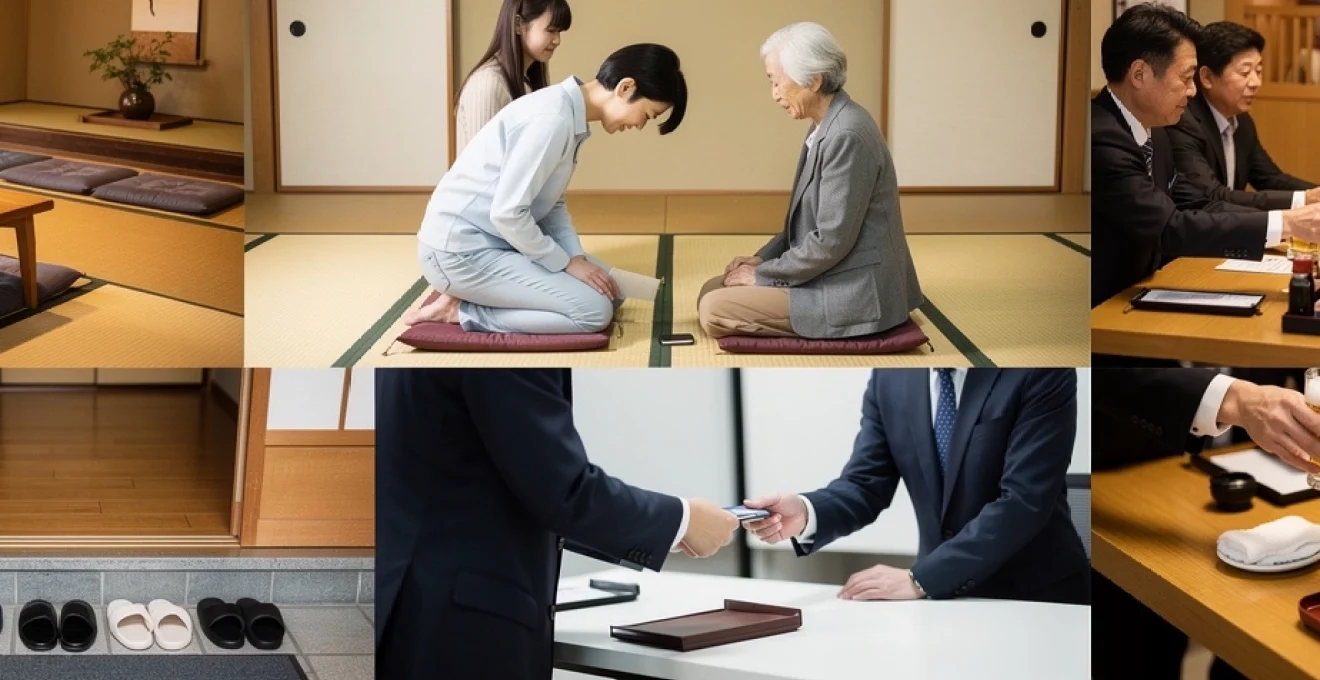
Japan’s intricate social fabric weaves together centuries of tradition with modern practicality, creating a complex tapestry of everyday etiquette that shapes every interaction. From the precise angle of a bow to the careful placement of chopsticks, these cultural protocols serve as the foundation for harmonious social relationships throughout Japanese society. The concept of kikubari, meaning to share one’s spirit with others through attentive consideration, permeates every aspect of daily life, transforming routine encounters into meaningful expressions of mutual respect.
Understanding these etiquette principles becomes particularly crucial as Japan continues to welcome increasing numbers of international visitors and residents. What might appear as rigid formality to outsiders actually represents a sophisticated system designed to ensure everyone feels valued and comfortable in social situations. The depth of Japanese etiquette extends far beyond simple politeness, encompassing subtle hierarchies, seasonal considerations, and contextual adaptations that demonstrate profound cultural sophistication.
Fundamental bowing protocols and tatami mat positioning techniques
The art of bowing in Japan transcends mere greeting gestures, functioning as a comprehensive communication system that conveys respect, gratitude, apology, and social hierarchy simultaneously. This foundational element of Japanese etiquette requires careful attention to angle, duration, and context to avoid inadvertent social missteps.
Ojigi classification system: eshaku, keirei, and saikeirei execution methods
Japanese bowing operates within a sophisticated three-tier classification system that determines appropriate angles and durations based on social context. The eshaku represents the most casual form, involving a gentle forward nod of approximately 15 degrees, typically used for acknowledging acquaintances or expressing brief thanks. This bow requires minimal time commitment, lasting roughly one to two seconds, making it suitable for busy public environments or quick interactions.
The intermediate keirei bow demands greater formality, with the upper body inclining forward at 30 degrees for three to four seconds. This respectful gesture appears frequently in business settings, formal introductions, or when expressing sincere gratitude. The deeper angle and extended duration signal heightened respect for the recipient, making it essential for maintaining professional relationships.
At the apex of formal respect stands the saikeirei, requiring a profound 45-degree bow held for four to six seconds. Reserved for the most formal occasions, sincere apologies, or interactions with individuals of significantly higher social status, this bow demands complete attention and genuine reverence. The extended duration allows both parties to acknowledge the gravity of the moment and the depth of respect being conveyed.
Seiza positioning requirements for traditional japanese rooms
The traditional seiza kneeling position represents far more than mere floor seating; it embodies principles of discipline, respect, and mindfulness that have shaped Japanese culture for centuries. Proper seiza execution begins with kneeling on the floor, placing the tops of the feet flat against the ground while resting the buttocks on the heels. The spine maintains perfect alignment, with shoulders relaxed and hands placed gently on the thighs.
This positioning requires significant practice and conditioning, as the unfamiliar posture can cause discomfort for those unaccustomed to floor seating. Traditional Japanese homes often accommodate guests who struggle with seiza by providing small cushions or allowing alternative sitting positions, though attempting the proper form demonstrates cultural awareness and respect. The position facilitates proper bowing mechanics while seated, allowing practitioners to maintain dignity and formality even during extended gatherings.
Genkan shoe removal procedures and slipper transition protocols
The genkan entrance area serves as a sacred threshold between the outside world and the purified interior space, requiring specific protocols that maintain cleanliness and respect for the home environment. Upon entering, visitors must remove their shoes completely before stepping onto the elevated floor surface, placing footwear neatly with toes pointing toward the exit to facilitate easy departure.
Most establishments provide house slippers immediately upon entry, which guests should don before proceeding further into the space. These indoor slippers must never touch outdoor surfaces, and specific toilet slippers often replace house slippers when entering bathroom facilities. The meticulous attention to footwear separation reflects deep cultural values
by separating the physical and symbolic dirt of the street from the calm interior. As a visitor, you signal your understanding of everyday etiquette in Japan by moving slowly and observing how locals handle this transition. If you are unsure whether to remove shoes, look for visual cues such as a raised floor, a line of neatly placed shoes, or a small step up into the main area. When in doubt, it is perfectly acceptable to pause at the genkan and ask, or simply wait to be instructed. This brief moment of attention helps you avoid the common faux pas of stepping inside with outdoor shoes.
Zabuton cushion placement and guest seating hierarchy systems
Once inside a tatami room, seating arrangements follow a clear, if sometimes subtle, hierarchy that reflects Japanese values around seniority and hospitality. Cushions called zabuton are usually placed in advance, with the most honored position known as the kamiza, or “upper seat.” This spot is typically farthest from the door, in the safest and most comfortable location, historically reserved for the person of highest status or the primary guest. The seat closest to the entrance, the shimoza, is usually taken by junior members or the host, who can easily move in and out to serve.
As a foreign visitor, you are almost always guided toward the kamiza unless a very senior person is present, so resisting the urge to sit wherever you like is an important part of respecting Japanese seating etiquette. You should wait just inside the room until your host indicates where to sit, either with words or a small gesture. If you accidentally choose the wrong spot, people will rarely correct you directly, but you may notice subtle hesitation or rearranging of cushions. By pausing and observing first, you allow the host to honor you properly and avoid disrupting the carefully considered seating hierarchy.
Business card exchange rituals and meishi presentation standards
In Japanese business culture, the exchange of business cards, or meishi, is not a casual afterthought but a structured ritual that sets the tone for the entire relationship. Much like a formal bow, meishi etiquette encodes respect, hierarchy, and attention to detail into a few brief moments. Understanding this protocol—a cornerstone of mastering intercultural workplace communication in Japan—is essential if you want to build trust quickly and avoid the impression of carelessness or arrogance. Think of the business card exchange as the « handshake plus introduction plus first impression » all compressed into one precise action.
Ryōte-watashi two-handed presentation methodology
The core of proper business card etiquette in Japan is the ryōte-watashi method, where you both present and receive cards with two hands. When offering your card, you hold it at the top two corners, thumbs along the front edge and fingers behind, ensuring that the text faces the other person so they can read it immediately. A slight bow accompanies the presentation, and you clearly state your name and company, often in the format “Company name, department, your name.” This simple yet coordinated movement conveys humility and professionalism.
When receiving a card, you mirror this respect by accepting it with both hands at chest level, taking a brief moment to read the name and title aloud or silently. Placing the card straight into your pocket—especially a back pocket—is considered disrespectful, almost like putting the other person themselves into storage. Instead, you hold it carefully until you can place it on the table in front of you or into your card holder. This pause to examine the card serves as a small but powerful signal: you are paying attention to who they are and what position they hold.
Meishi-ire business card holder selection and usage protocols
Because business cards carry such symbolic weight, the item that holds them—the meishi-ire or card case—also plays an important role in everyday business etiquette in Japan. A clean, well-maintained leather or high-quality synthetic holder suggests that you take professional relationships seriously. Scratched, overstuffed, or flimsy holders can imply disorganization, so it is worth choosing a simple but respectable case and keeping it in good condition. You should also avoid mixing your own cards and received cards in a messy pile, as this makes it difficult to handle them respectfully during a meeting.
During introductions, you typically draw your card from the meishi-ire with a smooth motion, avoiding rummaging through bags or wallets while others wait. After receiving someone else’s card, you place it gently on top of your card holder or next to it on the table, where it remains visible throughout the meeting. This makes it easier to recall names and roles, but it also has a deeper meaning: by physically keeping the card in front of you, you symbolically keep the relationship at the forefront of your attention. At the end of the meeting, you transfer the cards carefully into your holder rather than stuffing them into random pockets.
Hierarchical reading sequence during group introductions
Group meetings introduce another layer of complexity, as meishi exchange follows a clear hierarchical order. Typically, the most senior member of the visiting party exchanges cards first with the most senior member of the host organization, followed by others in descending order of rank. If you are part of a team, you should wait for your leader to complete their introductions before stepping forward. This sequence preserves the delicate balance of status and responsibility that underpins Japanese business relationships.
Once all cards are exchanged, you will often find yourself with several meishi in front of you. Rather than stacking them at random, you can align them on the table according to where people sit, creating a mental map of the room. When you address someone, glancing briefly at their card helps you use their correct name and title, which is especially valuable when you are still unfamiliar with Japanese names. This practice is a good example of how everyday etiquette in Japan is both symbolic and practical—by following the protocol, you not only show respect but also make interactions smoother and less awkward.
Desktop placement arrangements following nomikai reception events
After a formal meeting or a nomikai (drinking reception), your handling of business cards continues to send signals about your professionalism. Back at your desk or in your hotel room, it is common to review the cards you collected, making brief notes about the conversation, promises made, or follow-up tasks. Many Japanese professionals temporarily arrange new contacts along the edge of their desk or work area, keeping them visible until any immediate actions are completed. This habit prevents lost opportunities and reinforces the idea that every connection deserves thoughtful attention.
In the longer term, cards may be transferred to a dedicated storage box or digitized for a contact management system, but the underlying expectation remains the same: you do not discard or mistreat someone’s meishi casually. Throwing a card directly into the rubbish bin, especially in a shared office space, could be interpreted as discarding the relationship itself. By consciously managing where and how you store cards after social and business events, you align yourself with a deeper Japanese norm—that relationships are assets to be nurtured, not disposable conveniences.
Dining etiquette mechanics in washoku and contemporary restaurant settings
Eating together occupies a central place in Japanese social life, and dining etiquette acts as one of the most visible expressions of everyday etiquette in Japan. Whether you find yourself in a traditional washoku restaurant, a bustling ramen shop, or a casual izakaya, the expectations around how you handle utensils, share dishes, and settle the bill follow consistent cultural logic. Many of these customs may feel unfamiliar at first, yet they are rooted in a simple idea: show respect for the food, the people who prepared it, and the companions sharing the table with you.
Chopstick manipulation techniques: avoiding tsukidate and watashihashi taboos
Chopsticks, or hashi, function almost like an extension of your hands in Japan, and how you use them can leave a strong impression. Two of the most important taboos to avoid are tsukidate—sticking chopsticks upright in a bowl of rice—and watashihashi, resting chopsticks across the rim of a bowl. Both gestures echo funeral rituals and therefore carry strong negative associations. Instead, when you pause eating, you should place your chopsticks neatly on the provided rest, or create a temporary holder by folding the paper sleeve that disposable chopsticks come in.
You should also avoid pointing with chopsticks, spearing food, or passing items directly from one pair of chopsticks to another, as these actions also resemble funerary practices. When sharing dishes, use the communal serving utensils if they are provided, or invert your chopsticks and take food with the clean, unused end. This extra step may feel slightly awkward at first, but it quickly becomes second nature and demonstrates that you are mindful of hygiene and cultural norms. If you drop your chopsticks, simply ask for a new pair rather than continuing with the ones that touched the floor.
Kampai toast coordination and alcohol pouring hierarchies
Alcohol plays a significant role in social bonding, especially in business contexts, and understanding the mechanics of toasting and pouring helps you navigate these occasions confidently. Most meals that include alcohol begin with a collective toast, kampai, where everyone raises their glasses at roughly the same height. Traditionally, junior members tilt their glasses slightly lower than those of their seniors as a subtle acknowledgement of hierarchy, though as a foreign guest you are not expected to be perfect about this. What matters most is waiting until everyone has a drink before you begin and joining the toast enthusiastically but not loudly.
Once the drinking begins, an important unspoken rule comes into play: you rarely pour your own drink when sharing bottles of beer, sake, or shochu. Instead, you pay attention to the glasses of people around you and offer to refill them when they are running low. When you pour, you hold the bottle with both hands, particularly if the recipient is senior to you. When someone offers to pour for you, you lift your glass slightly off the table and support it with one hand. This mutual care creates a rhythm of giving and receiving that goes far beyond simple thirst—it is a social dance of consideration and equality within hierarchy.
Oshibori usage protocols in izakaya and kaiseki establishments
Another small but telling detail of Japanese dining etiquette is the oshibori, the wet hand towel presented at the start of a meal in both casual izakaya and high-end kaiseki restaurants. The primary purpose of the oshibori is to clean your hands before eating, especially in places where you might use your fingers for certain dishes. While you might be tempted to refresh your face or neck on a hot day, this is generally considered inappropriate in more formal settings. In casual venues, you may occasionally see locals dabbing their face, but as a guest it is safer to restrict the towel to your hands only.
After using the oshibori, you should fold or roll it roughly back into its original shape and place it on the small tray or stand provided. Leaving it sprawled across the table or using it to wipe spills blurs the line between personal hygiene and cleaning duties, and may be seen as disrespectful to the staff. In multi-course meals, the oshibori might be replaced partway through, especially before dessert, signaling a fresh stage of the dining experience. Paying attention to these small cues allows you to move in harmony with the flow of the meal rather than accidentally working against it.
Payment processing etiquette: warikan splitting and gochisou gestures
When the meal ends, the question of who pays—and how—reveals another dimension of everyday etiquette in Japan. In many casual gatherings among friends or colleagues, the default practice is warikan, an even split of the total bill regardless of who ordered what. This approach emphasizes group harmony over precise accounting and prevents awkward debates about small price differences. If someone significantly senior insists on paying more or covering the entire bill, younger participants often respond with a short, ritual resistance before graciously accepting.
When you are clearly the guest—particularly in business settings—it is common for your host to insist on paying as part of their hospitality. In such cases, offering a sincere “gochisousama deshita” at the end of the meal, perhaps with a slight bow and hands briefly pressed together, becomes your primary way of reciprocating. You can also look for opportunities to host the next meal or bring a small gift at a later date to balance the relationship. At the register, many establishments place a small tray for you to rest cash or cards on, rather than handing them directly to staff; using this tray instead of pushing money across the counter shows that you are sensitive to local norms.
Public transportation behaviour codes on JR lines and tokyo metro systems
Japan’s rail network is famous worldwide for its punctuality and cleanliness, but what truly keeps trains running smoothly is the collective discipline of passengers. Everyday etiquette in Japan is especially visible on JR lines and Tokyo Metro systems, where millions of people share limited space with remarkably little conflict. The guiding principle is simple: minimize disturbance to others. This means being quiet, orderly, and mindful of how your actions affect the comfort and safety of those around you, even during the most crowded rush hours.
On platforms, you will notice neatly formed lines at marked boarding points, where passengers wait for disembarking riders to exit before stepping on. Cutting queues or pushing ahead is strongly frowned upon, even when trains are crowded and time is tight. Inside the carriage, phone calls are discouraged, and phones are usually set to silent or “manner mode.” Many commuters read, sleep, or use their devices with headphones at a low volume, creating an almost library-like atmosphere. You are expected to keep bags off seats, avoid sprawling, and remove large backpacks or wear them on your front to reduce the space you occupy.
Another key expectation involves priority seating, usually marked with distinct colors or icons for the elderly, pregnant women, people with disabilities, and passengers with small children. Even if these seats are empty, you should be ready to stand up immediately when someone who might need them boards. The same applies to passengers wearing a “Help Mark,” a discreet sign indicating an invisible disability or medical condition. Eating and drinking on local trains and subways is generally discouraged, though it is acceptable on long-distance services like the Shinkansen, where special train bento boxes, or ekiben, are part of the travel experience. By following these codes, you contribute to the quiet efficiency that many visitors find so impressive about Japanese public transport.
Gift-giving ceremonial practices: omiyage selection and wrapping methodologies
Gift-giving, or omiyage, forms another pillar of everyday etiquette in Japan, operating at the intersection of gratitude, obligation, and social connection. Unlike casual souvenirs, omiyage are typically consumable items—often beautifully packaged sweets or regional specialties—meant to be shared with colleagues, friends, or family after a trip. Bringing back omiyage is less about the monetary value of the gift and more about the message it carries: “I thought of you while I was away.” In this way, travel becomes not just a personal experience but a shared social event that continues upon your return.
When selecting omiyage, you usually choose items that reflect the region you visited, such as Kyoto sweets, Hokkaido dairy products, or Okinawan snacks. Many shops conveniently package these products in boxes of individually wrapped portions, making them easy to distribute in an office or group setting. If you are visiting someone’s home or meeting a client, a modest but nicely presented gift from your own country can also serve as a thoughtful gesture. The key is appropriateness and presentation rather than extravagance; a gift that is too expensive may make the recipient feel burdened or obligated to reciprocate.
Wrapping carries special importance in Japanese gift culture, as the outer appearance of a present expresses the giver’s care and aesthetic sense. Department stores routinely offer complimentary wrapping services, using seasonal colors and designs that align with current festivals or weather. At a minimum, you should ensure the package is clean, undamaged, and free of price tags, with no torn corners or smudges. When handing over the omiyage, you present it with both hands, often saying something like “tsumaranai mono desu ga” (literally, “it’s a trivial thing, but…”), a modest phrase that lowers the gift’s importance to avoid placing pressure on the recipient. As with many aspects of everyday etiquette in Japan, the modest language and deliberate wrapping underline a central value: relationships, not objects, are what truly matter.
Seasonal greeting formulas and keigo honorific language applications
Language provides one of the most nuanced windows into everyday etiquette in Japan, especially through seasonal greetings and keigo, the system of honorific speech. Japanese communication patterns change subtly throughout the year, reflecting shifts in weather, holidays, and social rhythms. In formal letters and emails, it is common to begin with a seasonal phrase—acknowledging the heat of summer, the blossoms of spring, or the first chill of autumn—before moving to the main topic. Even in spoken interactions, simple comments about the season can act as polite small talk, easing into more serious discussions while showing cultural sensitivity.
Keigo itself is often daunting for learners, yet understanding its basic logic helps you navigate respectful communication without needing perfect grammar. Broadly, keigo divides into three categories: sonkeigo (respectful language used to elevate the listener), kenjougo (humble language used to lower oneself), and teineigo (polite language using “-masu” and “desu” forms). Everyday interactions with strangers or service staff typically require at least teineigo, whereas business and formal situations may call for selective use of sonkeigo and kenjougo. For example, when talking about your own actions to a client, you might choose humble verbs that downplay your role, while using respectful verbs when referring to the client’s actions.
As a visitor, no one expects you to master keigo, but making an effort with a few core expressions can significantly enhance your interactions. Phrases like “itsumo osewa ni natte orimasu” (thank you for always taking care of us) or “yoroshiku onegaishimasu” (I look forward to your kind cooperation) carry layers of meaning that go beyond literal translation. They acknowledge ongoing relationships, shared responsibilities, and future collaboration. Even something as simple as consistently using “arigatou gozaimasu” instead of just “arigatou” signals that you recognize and respect the social distance between yourself and the other person. By tuning in to seasonal phrases and basic keigo patterns, you begin to hear how Japanese people continuously weave consideration and humility into their everyday speech—and you can slowly join that conversation yourself.