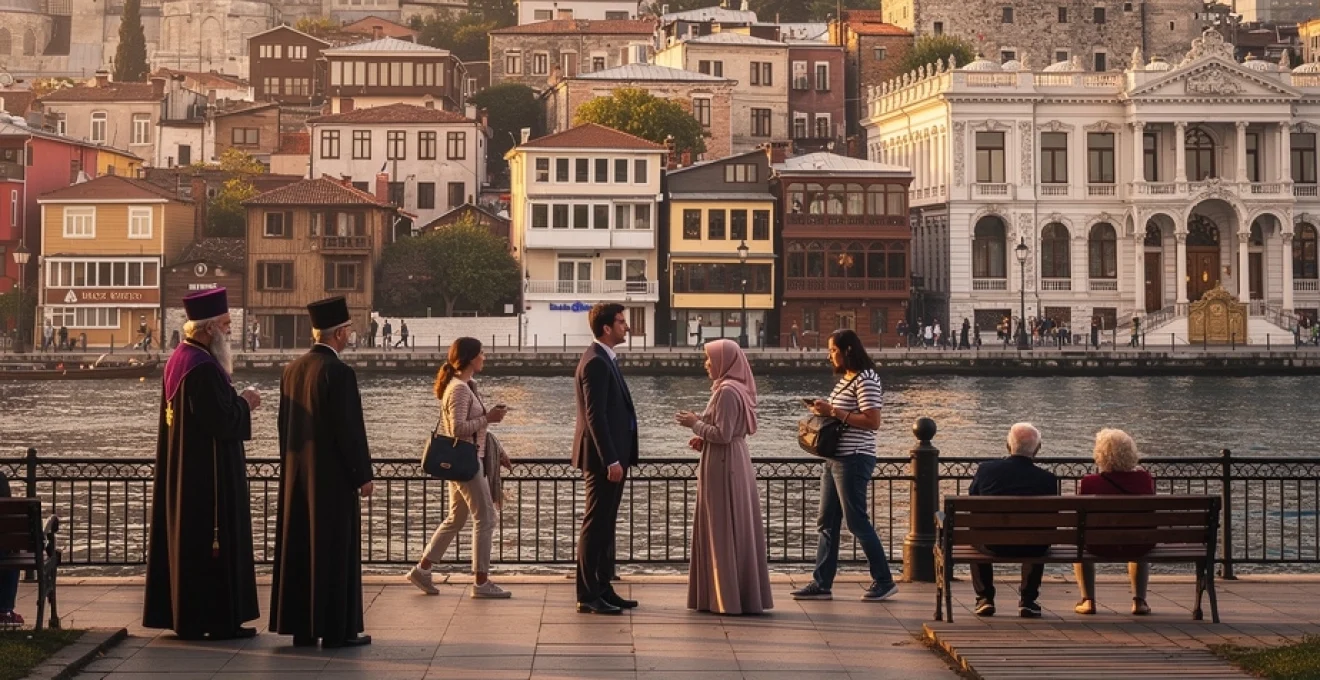
Istanbul stands as one of the world’s most extraordinary architectural palimpsests, where millennia of cultural exchange have left their indelible marks on the urban landscape. The city’s built environment tells a compelling story of civilisational transition, religious transformation, and cultural synthesis that spans from ancient Byzantium through Ottoman grandeur to contemporary global metropolis. Each architectural layer reflects the values, aspirations, and cultural identity of its creators, forming a unique urban tapestry that continues to evolve today. The interplay between architectural heritage and cultural expression in Istanbul reveals how buildings serve not merely as functional spaces, but as powerful symbols of collective memory and cultural continuity.
Byzantine architectural heritage and cultural continuity in modern istanbul
The Byzantine legacy in Istanbul architecture extends far beyond its most famous monuments, permeating the city’s spatial organisation and cultural consciousness in ways that continue to influence contemporary design. The sophisticated urban planning concepts introduced during the Byzantine era established fundamental principles that still guide Istanbul’s development patterns today. These ancient planning strategies reflect a deep understanding of topography, climate, and social organisation that modern architects increasingly recognise as timeless wisdom.
Hagia sophia’s structural engineering and cultural symbolism
The Hagia Sophia represents perhaps the most profound architectural achievement of Byzantine culture, embodying both revolutionary engineering techniques and profound spiritual symbolism. Its massive dome, spanning 31 metres without intermediate supports, demonstrated unprecedented structural innovation that influenced mosque architecture for centuries. The building’s conversion from cathedral to mosque and later to museum reflects Istanbul’s complex cultural negotiations between different religious traditions.
The architectural genius of Hagia Sophia lies not only in its structural audacity but in its ability to create transcendent spatial experiences through the manipulation of light and scale. The building’s interior demonstrates how Byzantine architects understood architecture as a vehicle for spiritual transformation, using architectural elements to guide visitors through carefully orchestrated sequences of revelation and contemplation.
Constantine’s urban planning vision and contemporary city layout
Constantine’s original urban plan for Constantinople established enduring principles of civic organisation that continue to influence Istanbul’s development. The emperor’s vision integrated ceremonial boulevards, public forums, and religious complexes in ways that created meaningful relationships between secular and sacred spaces. This holistic approach to urban design established precedents for comprehensive city planning that modern Istanbul continues to grapple with as it manages rapid growth and urban transformation.
The Byzantine emphasis on creating grand ceremonial axes connecting major civic and religious monuments established a template for urban dignity that contemporary planners study when addressing modern infrastructure challenges. Constantine’s integration of natural topography with built form created a model for sustainable urban development that respects environmental constraints whilst achieving monumental scale.
Justinian’s basilica design principles in contemporary religious architecture
Justinian’s architectural patronage established design principles that transcended specific religious contexts, creating spatial concepts that continue to influence contemporary sacred architecture. The basilica form developed during his reign balanced grandeur with intimacy, creating spaces that could accommodate both large congregations and individual contemplation. These design principles demonstrate remarkable adaptability across different cultural and religious contexts.
Modern Istanbul’s religious architecture continues to draw inspiration from Justinian’s approach to creating spaces that serve both functional and symbolic purposes. Contemporary mosque design often incorporates Byzantine spatial concepts whilst adapting them to Islamic liturgical requirements, demonstrating the continuing relevance of these ancient architectural principles.
Byzantine mosaic techniques and modern decorative arts integration
The sophisticated mosaic techniques developed during the Byzantine period established Istanbul as a centre for decorative arts that continues to influence contemporary design. Byzantine craftsmen developed innovative approaches to creating luminous interior environments through the strategic placement of reflective surfaces and carefully controlled natural lighting. These techniques demonstrate an understanding of how decorative elements can transform architectural space into transcendent environments.
Contemporary Istanbul designers increasingly draw inspiration from Byzantine decorative traditions, adapting ancient techniques to modern materials and aesthetic sensibilities. The integration of traditional craftsmanship with contemporary design creates a distinctive Istanbul aesthetic that honours cultural heritage whilst embracing innovation and creative evolution.
Ottoman imperial architecture as cultural identity expression
Ottoman architecture in Istanbul represents one of history’s most successful syntheses of diverse cultural influences, creating a distinctive architectural language that expressed imperial power whilst incorporating elements from Byzantine, Persian, and Islamic traditions. The Ottoman approach to architectural design reflected a sophisticated understanding of how built environments could communicate cultural values and political authority. Imperial
Imperial complexes, neighbourhood mosques, and domestic architecture all became vehicles through which Ottoman culture projected ideals of hierarchy, hospitality, piety, and urban order. From the great mosque complexes crowning Istanbul’s hills to the modest wooden houses lining its backstreets, Ottoman architecture transformed the former Byzantine capital into the physical expression of a new imperial identity while still engaging with the city’s deeper historical layers.
Sinan’s süleymaniye mosque engineering and spatial hierarchy
The Süleymaniye Mosque, designed by Mimar Sinan for Sultan Süleyman the Magnificent, stands as the clearest articulation of Ottoman cultural values through architecture. Structurally, Sinan developed a sophisticated system of semi-domes, buttresses, and concealed supports that allowed the central dome to appear weightless, a deliberate engineering illusion that embodied the idea of divine order supported by an invisible framework. This refined structural logic would later influence mosque design across the empire and continues to inform contemporary mosque engineering in Istanbul.
The spatial hierarchy of the Süleymaniye complex reflects Ottoman notions of social organisation and sacred progression. Visitors move from the bustling city through a series of courtyards, each more serene than the last, before entering the main prayer hall. This transition from public to sacred space operates like a physical metaphor for spiritual refinement, a sequence that modern religious architects in Istanbul still reference when designing mosques that must mediate between dense urban environments and contemplative interior worlds.
Topkapi palace complex organisation and power dynamics
Topkapi Palace functioned as both the symbolic and administrative heart of the Ottoman Empire, and its architectural organisation reveals how power was spatially choreographed. The palace’s four main courtyards create a carefully controlled sequence from public ceremony to private imperial retreat, with each threshold marking a new level of restricted access. This layered approach to security and privacy mirrors Ottoman court protocols, turning architecture into a tangible expression of hierarchy and controlled visibility.
In contemporary Istanbul, visitors walking through Topkapi’s gates experience a living lesson in how spatial design reinforces political authority. The progression from the monumental Imperial Gate to the intimate harem quarters demonstrates how architecture can both reveal and conceal power. Modern government buildings and corporate headquarters in Istanbul often echo this logic, using layered entrances, courtyards, and controlled vistas to signal status while balancing transparency and seclusion in an age that increasingly demands both openness and security.
Classical ottoman külliye design and community infrastructure
The Ottoman külliye (multi-building religious and social complex) represents one of the most holistic architectural responses to urban life in Istanbul’s history. Centred on a mosque but incorporating schools, hospitals, soup kitchens, baths, and caravanserais, these complexes physically manifested the Ottoman ideal of charitable governance. They served as early models of mixed-use development, where spiritual, educational, and social services were integrated within walkable enclaves that anchored neighbourhood identity.
Today, urban planners and architects in Istanbul increasingly revisit the külliye concept when designing large-scale developments and social housing. The idea that architecture should provide not only shelter but also healthcare, education, and communal facilities resonates strongly in contemporary debates about equitable urbanisation. When we compare a historical complex like the Fatih or Mihrimah Sultan külliye to a modern community centre, we can see how the Ottoman template for community infrastructure continues to influence how Istanbul negotiates density, social services, and cultural cohesion.
Baroque synthesis in 18th century dolmabahçe palace construction
Dolmabahçe Palace marks a pivotal moment when Ottoman architecture openly engaged with European Baroque and Neoclassical influences while preserving its own spatial logic. Designed in the mid-19th century, the palace adopts European stylistic vocabulary—ornate façades, grand staircases, and lavish interiors—yet retains the Ottoman tradition of layered reception spaces and carefully controlled circulation. This synthesis illustrates how Istanbul architecture became a laboratory for cultural negotiation rather than simple stylistic imitation.
Walking through Dolmabahçe today, one encounters crystal chandeliers, gilded ceilings, and monumental halls that speak to the empire’s desire to present itself as a modern European power. At the same time, the palace’s organisation into public, semi-private, and private zones reflects continuity with earlier Ottoman palatial models. Contemporary luxury hotels and waterfront residences along the Bosphorus often reference Dolmabahçe’s visual language, using its fusion of European ornament and Ottoman spatial principles to signal cosmopolitan sophistication rooted in local tradition.
Vernacular ottoman housing typology in balat and fener districts
The timber houses of Balat and Fener present a more everyday, vernacular expression of Ottoman architectural culture. These multi-storey dwellings, with their overhanging upper floors and street-facing bay windows (cumba), were designed to balance privacy and social interaction. Families could observe neighbourhood life without being fully visible themselves, a subtle architectural response to social norms around modesty and community engagement.
In recent years, restoration projects in Balat and Fener have highlighted how these housing typologies fostered dense yet humane urban environments. Narrow streets, small internal courtyards, and shared thresholds encouraged neighbourly interaction while maximising airflow and shade in Istanbul’s climate. As contemporary architects grapple with issues of liveability in high-density housing, many look back to these Ottoman models as early examples of climate-responsive, socially rich urban design—demonstrating that traditional forms can offer relevant strategies for today’s housing challenges.
Art nouveau and neoclassical movements in galata quarter
The Galata and Beyoğlu districts emerged in the late 19th and early 20th centuries as Istanbul’s window onto Europe, and their architecture reflects this cosmopolitan role. Art Nouveau curves, Neoclassical façades, and eclectic ornamentation line streets that once hosted embassies, banks, and grand hotels catering to international visitors. This built environment illustrates how architecture became a medium through which Istanbul signalled its participation in global cultural and economic networks while maintaining its own layered identity.
Pera palace hotel’s european architectural language
The Pera Palace Hotel, completed in 1892 to receive passengers of the Orient Express, crystallises the Galata Quarter’s European architectural aspirations. Its Neo-Orientalist and Neoclassical façades, grand staircases, and ornate interiors draw on Parisian and Viennese models, yet the building is firmly anchored in Istanbul’s topography and social life. The hotel’s design reflects a period when the city repositioned itself as a modern, international metropolis, using architecture to communicate refinement and technological progress—Pera Palace was among the first buildings in the city to have electricity and an elevator.
Today, the Pera Palace functions as both a luxury hotel and a cultural landmark, its restored interiors acting as a time capsule of late Ottoman cosmopolitanism. For visitors, simply walking through its lobby provides insight into how Istanbul’s elites once imagined their place between East and West. The building demonstrates that architectural style can be read like a language—a carefully composed statement about identity, hospitality, and global belonging that still resonates with contemporary discussions of Istanbul’s European and Asian cultural affiliations.
Galata tower’s medieval structure and modern urban context
Galata Tower, originally constructed by the Genoese in the 14th century, introduces a medieval European element into Istanbul’s skyline that has been repeatedly reinterpreted over time. Its robust stone form and commanding height were once purely defensive and symbolic, asserting Genoese commercial power over the Golden Horn. As the city transformed, the tower’s function shifted from watchtower to fire lookout and eventually to panoramic viewing platform for residents and tourists.
In its current context, surrounded by cafés, boutiques, and Art Nouveau apartment blocks, Galata Tower acts as an anchor point in a rapidly changing urban fabric. It exemplifies how Istanbul architecture layers new uses and meanings onto older structures, allowing medieval defensive architecture to become a focal point of contemporary leisure and cultural tourism. This adaptive recontextualisation raises important questions: how do we preserve historical authenticity while integrating heritage buildings into a living, evolving city?
Banking district architecture and financial power representation
The historic banking district around Bankalar Caddesi showcases how architecture visually encodes financial power and stability. Late 19th-century bank headquarters and insurance buildings adopt Neoclassical and Beaux-Arts forms—massive stone façades, colonnades, and ornate pediments—to project permanence and trustworthiness in a period of expanding global trade. These structures formed the physical backbone of Istanbul’s integration into international financial networks, translating abstract concepts of capital and credit into solid architectural statements.
Many of these former bank buildings have since been converted into museums, cultural centres, and creative offices, yet their architectural gravitas continues to influence how we perceive the area. The reuse of financial architecture for cultural purposes in Istanbul mirrors a global trend in adaptive reuse, where buildings associated with commerce are reimagined as spaces for public engagement. This transformation invites reflection on how shifting economic structures leave their mark on the urban landscape and how new cultural economies reinhabit those legacies.
Levantine community buildings and cultural pluralism
The Galata Quarter’s built fabric also bears witness to Istanbul’s Levantine communities—merchants and diplomats of Italian, French, Greek, Armenian, and other backgrounds whose presence shaped the city’s multicultural identity. Their residences, churches, schools, and social clubs combine European architectural styles with local building practices, creating hybrid typologies that speak to everyday cultural exchange. These structures often feature ornate balconies, internal courtyards, and richly decorated stairwells that reveal a lifestyle oriented toward both private family life and public sociability.
Although some Levantine buildings have fallen into disrepair, ongoing restoration projects highlight their importance as material evidence of Istanbul’s pluralistic past. For contemporary architects and heritage professionals, these structures pose both a challenge and an opportunity: how to conserve fragile fabric while keeping it relevant for current urban needs. When we walk through side streets behind İstiklal Avenue and notice a modest chapel tucked beside an apartment block, we are encountering the spatial traces of communities that have long negotiated identity, belonging, and coexistence within Istanbul’s dense urban mosaic.
Contemporary istanbul architecture and cultural globalisation
In the 21st century, Istanbul architecture has become a stage on which global design trends and local cultural narratives intersect. Glass towers in Levent and Maslak, the sweeping new Istanbul Airport, and emblematic cultural projects like Istanbul Modern and the rebuilt Atatürk Cultural Center all demonstrate how the city engages with international architectural languages while grappling with its own heritage. These new landmarks reveal a city eager to participate in global networks of finance, tourism, and culture, yet still negotiating how much of its identity should be articulated in local versus universal terms.
Projects such as the new Istanbul Modern by Renzo Piano show how contemporary architecture can consciously dialogue with its context. The museum’s ship-like aluminium cladding and transparent ground floor connect the building visually and physically to the Bosphorus, while advanced seismic engineering and photovoltaic panels address present-day environmental and safety concerns. Similarly, the reimagined Atatürk Cultural Center at Taksim Square retains the memory of its 1960s façade while introducing state-of-the-art performance spaces, demonstrating that cultural modernisation in Istanbul often proceeds through the careful balancing of preservation and innovation rather than tabula rasa redevelopment.
Bosphorus waterfront development and cultural transformation
The Bosphorus shoreline has long been Istanbul’s most emblematic urban stage, and its evolving architecture reflects shifting cultural values and economic priorities. Historic wooden yali mansions once signalled Ottoman aristocratic leisure, with their generous waterfront gardens and intimate piers. Today, many of these structures have been restored as private residences, embassies, or luxury venues, while new developments such as Zorlu Center and Galataport introduce large-scale commercial and cultural programmes to the waterfront.
Recent projects along the Bosphorus illustrate both the opportunities and tensions of contemporary urban transformation. Galataport’s underground cruise terminal and reactivated promenade reconnect citizens with previously inaccessible sections of the shoreline, turning former industrial and customs areas into public spaces lined with museums, shops, and cafés. At the same time, debates about privatisation of the waterfront, rising property values, and the displacement of long-standing communities remind us that architectural renewal inevitably raises questions about who benefits from change. As we stroll along the Bosphorus today, the juxtaposition of Ottoman mansions, early Republican buildings, and cutting-edge cultural complexes reveals a continuous process of renegotiating how Istanbul’s most iconic edge should look, feel, and function.
Archaeological preservation strategies and cultural memory
Beneath and between Istanbul’s visible architecture lies an extensive archaeological palimpsest, from Roman harbours and Byzantine cisterns to Ottoman foundations. Managing this buried heritage within a living megacity requires sophisticated preservation strategies that balance construction pressures with the safeguarding of cultural memory. Large infrastructure projects, such as the Marmaray rail tunnel under the Bosphorus, have unearthed significant finds, prompting delays but also generating invaluable knowledge about the city’s past. These episodes demonstrate that archaeological discovery and modernisation are not mutually exclusive, but they demand patience, resources, and careful planning.
Contemporary preservation practice in Istanbul increasingly embraces integrated approaches, where excavated remains are incorporated into new developments rather than removed or reburied. Examples include glass floors revealing ancient streets beneath modern buildings, or public squares that frame exposed sections of the Theodosian Walls. Such strategies turn archaeology into an everyday encounter, allowing residents and visitors to experience history not only in museums but also in metro stations, plazas, and hotel lobbies. In this way, Istanbul’s architecture continues to act as a dynamic archive of cultural memory, constantly updated yet deeply rooted in layers that extend far below the current street level.