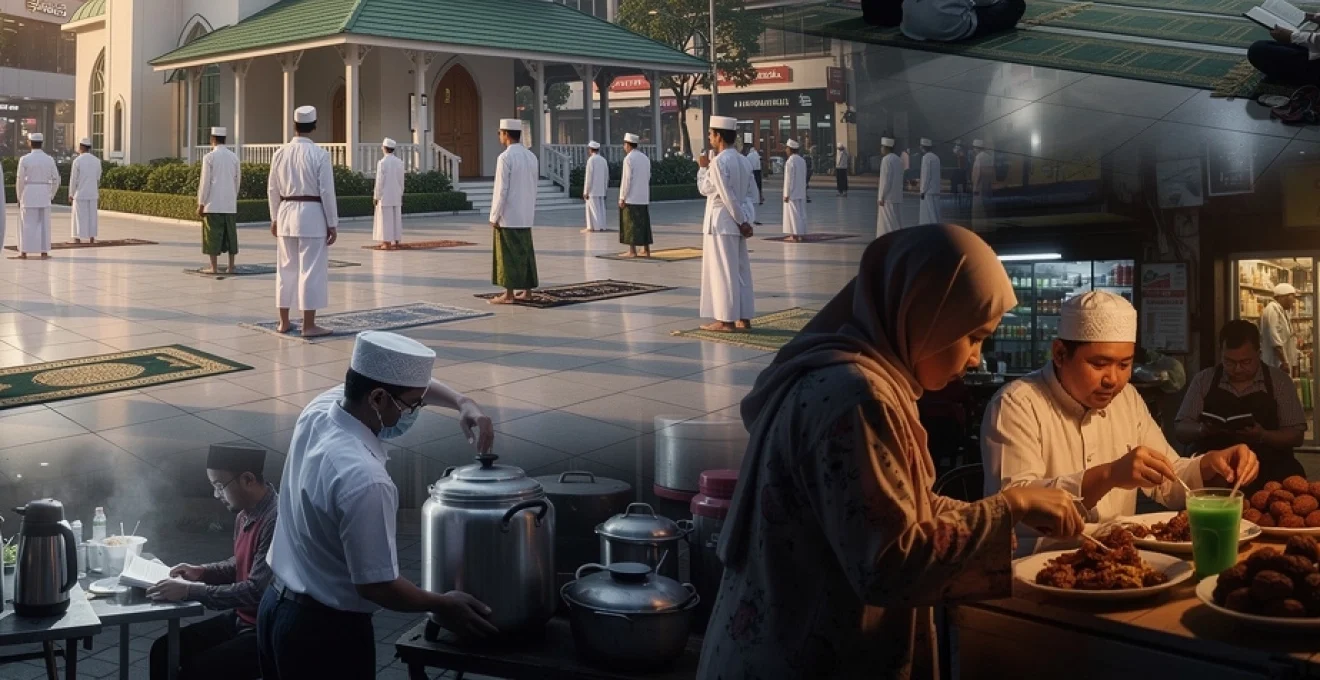
Indonesia’s social fabric pulses to a distinctly religious beat. With 98% of Indonesians considering religion very important in their lives, the archipelago’s daily routines, work schedules, and community interactions are profoundly shaped by spiritual practices. From the pre-dawn call to prayer echoing across Jakarta’s business districts to the silent meditation periods observed in Bali’s Hindu communities, religious observance establishes the temporal framework within which Indonesian society operates. This integration extends far beyond personal devotion—it influences government policy, corporate scheduling, educational structures, and even the culinary landscape. Understanding how religion shapes Indonesia’s daily rhythms reveals much about the nation’s unique approach to balancing spiritual devotion with modern economic demands.
Islamic prayer schedules and their impact on indonesian work patterns
The five daily prayers—Fajr, Dhuhr, Asr, Maghrib, and Isha—create natural temporal markers throughout the day for Indonesia’s Muslim-majority population. These prayer times, which shift gradually throughout the year based on solar positioning, effectively establish a fluid daily schedule that organizations must accommodate. In Indonesia, 95% of the population reports praying regularly, with 82% of Malaysian Muslims and 76% of Sri Lankan Muslims doing so daily. This devotional commitment significantly affects workplace planning and urban infrastructure development.
Salat times as temporal anchors in jakarta’s business districts
Jakarta’s commercial centres operate within a framework where prayer times function as acknowledged breaks in the workday. The midday Dhuhr prayer, falling roughly between 11:45 AM and 12:30 PM depending on the season, creates a natural pause in business meetings and transactions. Many corporations schedule important presentations and negotiations either before or after this window, recognizing that attempting to conduct critical business during prayer time demonstrates cultural insensitivity and practical inefficiency. The afternoon Asr prayer, occurring approximately between 3:00 PM and 4:00 PM, similarly influences meeting schedules and client appointments.
Stock exchange activities and banking operations also show subtle adaptations to these rhythms. While formal trading hours don’t officially pause, transaction volumes often dip during the minutes surrounding prayer times as traders step away from their desks. This pattern has become so predictable that some financial analysts incorporate prayer-time considerations into their market timing strategies, recognizing that liquidity may temporarily decrease during these intervals.
Adhan broadcast systems and urban soundscape management
The call to prayer, or adhan, transmitted from mosque loudspeakers five times daily, creates what scholars describe as an « acoustic community »—a shared auditory experience that reinforces collective religious identity. In densely populated urban areas like Surabaya and Bandung, multiple mosques’ simultaneous broadcasts create a layered soundscape that marks time more effectively than any clock. This acoustic phenomenon has sparked ongoing discussions about volume regulation and broadcast timing, particularly in mixed-religious neighbourhoods where the adhan overlaps with other community activities.
Municipal governments have developed nuanced approaches to managing these broadcasts. Some cities have implemented guidelines recommending specific decibel limits while respecting religious freedom. The challenge lies in balancing the spiritual needs of Muslim communities with the practical considerations of noise pollution in high-density residential areas. This negotiation reflects the broader Indonesian approach to religious accommodation—seeking harmony without imposing uniformity.
Prayer room infrastructure in shopping malls and office complexes
Indonesian commercial architecture now routinely incorporates dedicated prayer spaces, reflecting both religious obligation and practical necessity. Modern shopping centres like Grand Indonesia in Jakarta feature well-appointed musholla (prayer rooms) on multiple floors, complete with ablution facilities, prayer mats, and clear directional markers indicating the qibla (direction of Mecca). These spaces are not afterthoughts but integral design elements, often positioned in easily accessible locations near main corridors or escalator hubs.
Corporate office buildings similarly prioritize prayer room provision. Companies recognize that employees who must leave the building to find prayer facilities waste productive time and may experience stress about fulfilling religious obligations. By providing on-site musholla, businesses simultaneously demonstrate religious sensitivity and maintain operational efficiency. Some multinational corporations operating in Indonesia have adapted global workplace standards to include these facilities, recognizing them as essential rather than optional amenities.
Flexible working hours during ramadan’s fasting period
These spatial accommodations are complemented by temporal adjustments, especially during Ramadan. Throughout the fasting month, many government offices and private companies implement shortened or shifted working hours so employees can conserve energy during daylight fasting and return home earlier to prepare for iftar, the fast-breaking meal. In Jakarta and other major cities, you will often see offices opening earlier in the morning and closing by mid-afternoon, subtly reshaping traffic patterns and public transport usage.
School schedules are also modified, with classes ending earlier and extracurricular activities reduced, acknowledging that students’ concentration may dip later in the day. Nighttime, by contrast, becomes more active: shopping centres extend operating hours, and street food vendors thrive after Maghrib when families head out together. In effect, Indonesia’s daily rhythm shifts from a daytime-oriented pattern to a more nocturnal one, illustrating how religious fasting practices can reorganize an entire urban ecosystem for a month each year.
Pancasila philosophy and multi-faith calendar integration
Indonesia’s ability to accommodate these Islamic rhythms while honouring other faith traditions is rooted in Pancasila, the state philosophy that enshrines belief in one God while affirming pluralism. Rather than elevating a single religious calendar, Indonesia weaves Islamic, Christian, Hindu, Buddhist, and Confucian observances into one national schedule. The result is a multi-faith holiday system that structures work, school, and public life around a diverse range of sacred days.
This integrated calendar is not merely symbolic; it has concrete effects on how families plan travel, how businesses manage peak seasons, and how government agencies sequence policy rollouts. Multi-faith public holidays remind citizens that religion in Indonesia is both personal devotion and shared civic rhythm. When we look at how Nyepi, Waisak, Christmas, Eid, and Chinese New Year coexist on the national calendar, we see Pancasila in action as a timekeeping philosophy.
Nyepi silent day observance in bali’s hindu communities
Nyepi, the Balinese Hindu Day of Silence, offers one of the most striking examples of religion reshaping daily life. For 24 hours, almost all activity on the island stops: the airport closes, streets empty, businesses shut, and residents remain indoors with lights dimmed. It is as if an entire province collectively presses “pause,” creating a profound contrast with Indonesia’s normally bustling rhythm. This enforced quiet is intended for introspection, fasting, and spiritual purification.
The impact reaches far beyond ritual observance. Tourism operators schedule arrivals and departures around Nyepi, and digital nomads or short-term visitors must plan to stock up on food and stay indoors. Even non-Hindu residents and foreigners comply with the silence regulations, highlighting how religious observance in Indonesia can create shared temporal experiences across faith boundaries. Nyepi demonstrates that in some contexts, religious time not only guides daily life but temporarily overrides economic priorities.
Waisak celebrations at borobudur temple complex
For Buddhist communities, Waisak (Vesak) marks the birth, enlightenment, and passing of the Buddha, and its celebration at Borobudur Temple in Central Java shapes annual religious tourism flows. Pilgrims and monks from across Southeast Asia converge on the site, and local authorities adjust traffic routes, security arrangements, and public transport schedules to facilitate processions. The iconic candlelit walk from Mendut Temple to Borobudur often runs late into the evening, creating a distinct nocturnal ritual rhythm.
These ceremonies turn the surrounding villages into temporary hubs of economic and social activity, with homestays, food stalls, and cultural performances timed around the main rituals. For local residents, Waisak weekend becomes a reference point in the yearly calendar, much like Ramadan or Christmas in other regions. You can think of it as a spiritual “high season” that coordinates everything from school excursions to media coverage, synchronizing daily routines with Buddhist sacred time.
Christmas and chinese new year as national public holidays
Although Indonesia is Muslim-majority, Christmas and Chinese New Year (Imlek) are both recognized as national public holidays, illustrating the multi-faith nature of the country’s time structure. For Christians, Christmas services determine when families travel, when malls host concerts, and when businesses launch end-of-year promotions. Many non-Christians also align their shopping and leisure activities with these festive sales periods, making Christmas part of a broader commercial rhythm.
Chinese New Year shapes routines in a different way, particularly in cities with large Chinese-Indonesian communities like Medan, Pontianak, and Jakarta’s Glodok. Many shops close for several days, family gatherings take precedence over work, and lion dance performances and temple visits create busy daytime and evening schedules. Even those who do not celebrate may find themselves adjusting plans around traffic diversions near temples or altered opening hours in predominantly Chinese-Indonesian business districts.
Coordinated religious holiday scheduling by ministry of religious affairs
The intricate balance of these observances is managed through coordinated religious holiday scheduling led by the Ministry of Religious Affairs in collaboration with other agencies. Each year, the government issues an official calendar of national holidays and joint leave days (cuti bersama), aligning Islamic lunar events like Eid al-Fitr with fixed Gregorian dates for Christian, Hindu, Buddhist, and Confucian celebrations. This top-down planning shapes when schools close, civil servants take leave, and factories plan maintenance shutdowns.
Businesses and families rely on this calendar for long-range planning: when to schedule weddings, when to launch products, or when to book flights to visit relatives. The result is a patterned ebb and flow of productivity and rest throughout the year, with clear peaks during major religious seasons. This formal coordination turns religious festivals into predictable temporal anchors, helping Indonesia balance economic efficiency with multi-faith respect.
Pesantren education systems and daily time structuring
Beyond state structures, religious education systems also shape everyday rhythms, particularly in pesantren, or Islamic boarding schools. A typical pesantren day begins before dawn with Fajr prayer, followed by Quran recitation, religious study sessions, and formal general education classes. The schedule alternates between religious and secular subjects, weaving faith practice into students’ experience of time from early morning until late evening.
Breaks are often synchronized with the five daily prayers, so students learn to perceive the day not in terms of “periods” alone but in relation to salat times. Nighttime activities, such as collective dhikr (remembrance of God) or informal religious mentoring, extend the learning environment beyond the classroom. For alumni, this structured religious timetable often continues to influence their adult lives; many retain the habit of waking before dawn or allocating specific evening hours to spiritual reading or community service.
Culinary rhythms shaped by halal certification and fasting practices
Religious influence on daily rhythms in Indonesia is perhaps most tangible in the culinary sphere. The principles of halal food consumption and regular fasting practices create distinct patterns in how, when, and what people eat. From roadside stalls to multinational food manufacturers, the demand for halal-certified products and Ramadan-specific offerings guides production schedules, opening hours, and marketing campaigns.
Halal certification and fasting do not just affect individual choices—they structure entire supply chains. Slaughterhouses, logistics companies, and restaurant franchises all time their operations to match peaks in religiously motivated consumption. As a result, Indonesia’s food economy pulses in sync with Islamic and, in some regions, Hindu and Buddhist dietary calendars.
Pre-dawn sahur meal economy in urban food markets
During Ramadan, the normally quiet pre-dawn hours transform into a brief but intense window of economic activity centred on sahur, the early meal before fasting begins. Street vendors who usually operate in the evening may shift their hours to start around midnight and continue until just before Fajr. In dense urban areas like Jakarta, Bandung, and Makassar, entire neighbourhoods develop temporary sahur food circuits, with mobile carts, motorcycle deliveries, and online orders peaking between 2:00 and 4:00 AM.
Digital food delivery platforms also adapt, adding Ramadan-specific menus and extending delivery cut-off times to serve sahur customers. For many workers and students, their sleep cycle shifts accordingly; naps in the afternoon become more common, while late-night socializing around sahur becomes a key part of religious and social life. This illustrates how a single religious obligation—fasting from dawn to sunset—can reconfigure both domestic and commercial routines across a city.
Iftar dining culture and restaurant operating hours
If sahur reorients the early morning, iftar reshapes the evening. As the Maghrib call to prayer sounds, families, office colleagues, and community groups break their fast together, turning sunset into a daily peak for hospitality and food service industries. Restaurants, cafes, and hotel buffets craft special iftar packages, timing kitchen workflows so that large volumes of food are ready within minutes of sunset.
To accommodate this iftar dining culture, many eateries open earlier in the late afternoon and extend operations deep into the night, especially in the last ten days of Ramadan. Traffic patterns adjust as people rush home or to designated iftar spots, and you can often feel a collective lull in public activity in the hour before sunset, followed by a burst of movement right after. For non-fasting residents or visitors, understanding these timing patterns can be crucial for planning meetings, travel, or even simple errands.
MUI halal certification influence on food industry practices
Outside of fasting seasons, halal certification shapes more stable, year-round culinary rhythms. The Indonesian Ulema Council (MUI) oversees a widely recognized halal certification process, and obtaining the MUI halal label has become almost mandatory for major food brands aiming to build consumer trust. This requirement influences production timelines, ingredient sourcing, and quality control schedules, as companies must align their processes with religious standards.
Supermarkets and convenience stores also organize shelf space and promotional cycles around halal-certified products, especially in anticipation of Ramadan and Eid. For consumers, the presence of a halal logo can speed up daily shopping decisions, reducing the cognitive load of verifying each item. Over time, this has created a marketplace where religious assurance is built into the ordinary rhythm of buying groceries or grabbing a snack, integrating faith seamlessly into everyday consumption.
Mosque-centred community activities and neighbourhood scheduling
Beyond individual prayer, mosques function as temporal hubs that synchronize neighbourhood life. Daily calls to prayer mark the passage of time, but scheduled activities such as study circles, youth programs, and charity drives also create weekly and monthly rhythms. In many Indonesian communities, you can almost reconstruct the local calendar by looking at a mosque’s activity board: which nights are devoted to Quran study, which weekends host health clinics, and when special prayers for national events are held.
This mosque-centred scheduling often complements, rather than competes with, school and work timetables. Activities are commonly placed in early evenings or weekends to maximize participation. For residents, knowing that Thursday evenings mean yasinan (reciting Surah Yasin) or that Friday afternoons are reserved for congregational prayer provides a predictable structure around which other commitments can be arranged.
Tarawih prayer gatherings during ramadan evenings
During Ramadan, the nightly tarawih prayers create a powerful communal rhythm that reshapes evenings across the archipelago. After breaking the fast and performing the obligatory Isha prayer, Muslims gather for extended tarawih prayers, sometimes lasting up to an hour or more. This shared activity alters everything from television programming—many channels schedule special religious shows before or after tarawih—to shop opening hours in residential areas.
Children often accompany parents to the mosque, turning tarawih into a multigenerational social event as well as a religious one. Street vendors selling snacks or drinks station themselves along routes to and from mosques, timing their presence to coincide with the end of prayers. In effect, tarawih compresses and then releases local activity in nightly waves, creating a distinct pulse that you can both see and hear in many Indonesian neighbourhoods.
Pengajian study circles and weekly religious learning sessions
Outside of Ramadan, pengajian—informal or semi-formal Islamic study circles—structure weekly and monthly time for many Indonesians. These gatherings may occur in mosques, homes, offices, or community halls, typically in the evening after work hours or on weekends. Participants schedule their social and family commitments around these sessions, treating them as recurring appointments for spiritual learning and community bonding.
Pengajian groups often develop their own micro-calendars, planning special sessions before major holidays like Eid or the Prophet’s birthday. For women, workplace professionals, or youth, these circles can become primary points of social organization, much like regular sports practice or club meetings in other societies. Through this rhythm of recurring study, religious education seeps into everyday life in manageable, predictable intervals.
Zakat distribution programs and economic cycles
Economic rhythms in Indonesia are also linked to religious obligations, particularly zakat (almsgiving). Many Muslims time their zakat payments to coincide with Ramadan or the end of the Islamic lunar year, creating seasonal peaks in charitable distributions. Zakat management institutions and mosque committees respond by organizing intensive collection and distribution campaigns, often working late into the night as Eid approaches.
For low-income households, these cycles of zakat and related donations like zakat fitrah and sedekah can provide crucial support for food, clothing, and school fees, especially around key religious festivals. Local markets and small businesses may also see increased spending during these periods as beneficiaries use their funds. In this way, religious charity does not only fulfil spiritual obligations; it injects periodic pulses of liquidity into local economies, subtly influencing financial planning and consumption patterns.
Traditional javanese abangan syncretism in daily ritual observance
While Islam provides a dominant framework, many Indonesians—especially in Java—live within a syncretic religious rhythm that blends Islamic practice with older Javanese spiritual traditions, often described as abangan or kejawen. In these communities, the day may be punctuated by standard prayers, yet the week, month, and year are also shaped by ancestral commemorations, local spirit observances, and Javanese calendrical cycles. Religious time becomes a layered tapestry rather than a single linear thread.
This syncretism means that you can find households observing Islamic holidays while also making offerings at local sacred sites or consulting traditional spiritual experts. The result is a complex pattern of rituals that overlap and interweave, sometimes leading to particularly busy days when Islamic and Javanese dates coincide. Understanding these rhythms helps explain why some Javanese communities exhibit especially high rates of religious practice across multiple traditions.
Slametan communal feast traditions and social cohesion
At the heart of Javanese religious rhythm is the slametan, a communal feast held to mark life-cycle events, agricultural milestones, or significant dates in the Javanese calendar. These gatherings usually take place in the evening, after the last daily work tasks are done, allowing neighbours to come together for shared prayers and simple offerings of food. Invitations and preparation schedules revolve around these events, often setting the social calendar for an entire neighbourhood.
Slametan functions as both religious ritual and social glue, reinforcing community bonds through regular shared meals and collective supplication. For many families, planning a slametan—choosing the date, preparing the menu, inviting participants—becomes a key temporal project that shapes weeks or even months. The feast thereby anchors time not just in individual memory, but in communal experience, making religion a lived, social rhythm rather than a solitary practice.
Kejawen spiritual practices alongside islamic obligations
Many Javanese Muslims integrate kejawen practices—such as meditation, offerings at sacred trees or springs, or consultations with spiritual elders—into their otherwise orthodox Islamic routines. These activities often occur at night or during specific Javanese calendar days considered auspicious, like Jumat Kliwon (a Friday that coincides with a particular Javanese weekday). As a result, certain nights see heightened spiritual activity, with families staying up later for prayer, reflection, or quiet visits to local sacred sites.
This dual observance can create a rhythm reminiscent of polyphonic music: Islamic obligations provide a steady, predictable beat, while kejawen practices add occasional, more fluid accents. For outsiders, the pattern may seem irregular, but for practitioners, it forms a coherent whole that structures emotions, decisions, and community life. These blended practices demonstrate how religion in Indonesia is not monolithic, but constantly negotiated within local cultures.
Peringatan calendar system blending lunar and javanese dates
Underlying many Javanese rituals is a blended calendar system that combines the Islamic lunar calendar with the traditional Javanese wuku cycle and solar influences. Families track peringatan—commemorative days for ancestors, births, deaths, or important vows—using this hybrid system, leading to recurring observances at intervals like 7, 40, 100, or 1000 days after a significant event. These peringatan dates structure when households host gatherings, prepare extra food, or visit graves.
Because this calendar intertwines with the Islamic one, certain months or weeks can become especially dense with overlapping events, requiring intricate scheduling and budgeting. You might see a family adjusting work leave not just for Eid or school holidays, but also for a grandparent’s 1000-day commemoration. In this way, the peringatan system extends religious time deep into personal and familial histories, ensuring that the rhythm of daily life remains closely tied to memory, ancestry, and spiritual continuity.