# Hostels in Berlin that redefine budget travel
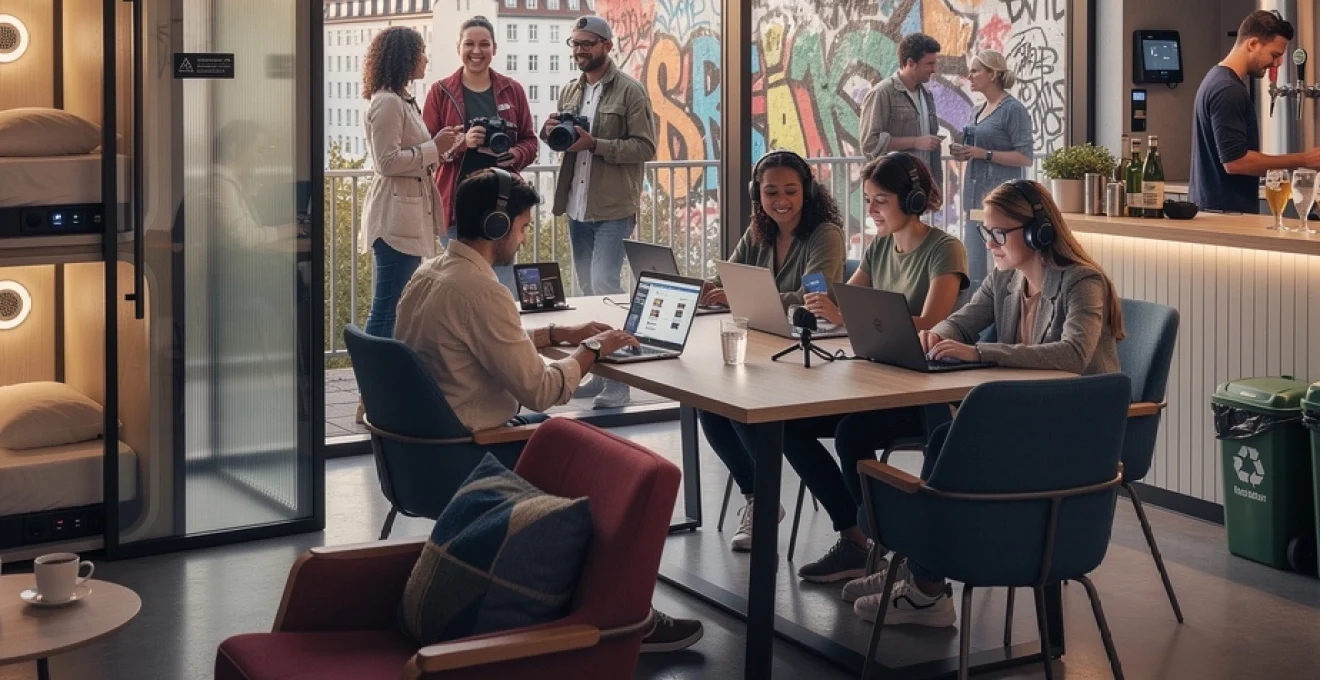
Berlin’s accommodation landscape has undergone a remarkable transformation over the past decade, with budget hostels evolving far beyond basic bunk beds and shared bathrooms. Today’s travellers expect sophisticated technology, sustainable practices, and community-focused spaces that rival boutique hotels in terms of design and functionality. The German capital, known for its innovation and forward-thinking culture, has become a testing ground for next-generation hostel concepts that challenge traditional notions of what affordable travel accommodation should offer. From modular sleeping pods equipped with personalised climate controls to carbon-neutral operations and co-working spaces designed for the digital nomad generation, Berlin’s hostel scene represents the cutting edge of hospitality innovation. These establishments prove that budget-conscious travel no longer means compromising on comfort, security, or environmental responsibility.
Micro-hotel innovations: plus berlin’s modular sleeping pods and smart design
The concept of micro-living has infiltrated Berlin’s hostel industry with remarkable sophistication, transforming how guests experience shared accommodation. Plus Berlin has pioneered a revolutionary approach to dormitory design that prioritises personal space within communal environments. Rather than traditional open-plan bunk beds, their modular sleeping pods create individual sanctuaries that offer privacy, comfort, and technological integration. Each pod functions as a self-contained unit measuring approximately 2 metres by 1.2 metres, featuring ergonomic memory foam mattresses, integrated USB charging ports, and adjustable LED reading lights. The design philosophy draws inspiration from Japanese capsule hotels but incorporates European comfort standards and contemporary aesthetic sensibilities. These innovations address one of the most common complaints about traditional hostel accommodation: the lack of personal space and privacy in shared rooms.
Rfid-enabled lockers and contactless Check-In systems at plus berlin
Security concerns have long plagued budget accommodation, but Plus Berlin has implemented cutting-edge technology to address these anxieties comprehensively. Radio-frequency identification (RFID) systems have replaced traditional padlocks, with guests receiving programmable wristbands upon arrival that serve multiple functions throughout their stay. These wristbands grant access to sleeping pods, personal lockers, and restricted areas within the facility, whilst also functioning as payment methods at the hostel’s café and bar. The contactless check-in system reduces queue times dramatically, with guests able to complete registration through a mobile application before arrival. Biometric verification options, including fingerprint scanning, provide an additional security layer for those carrying valuable equipment such as laptops or camera gear. The RFID-enabled lockers are significantly larger than traditional hostel storage, accommodating full-sized backpacks and small suitcases with dimensions reaching 60cm x 50cm x 40cm.
Climate-controlled pod architecture in prenzlauer berg locations
Temperature preferences vary dramatically among travellers, and traditional dormitories often become battlegrounds over thermostat settings. Plus Berlin’s Prenzlauer Berg locations have solved this perennial problem through individual climate control systems within each sleeping pod. Using energy-efficient micro-ventilation technology, each pod maintains its own temperature zone, ranging from 16°C to 26°C according to guest preferences. The system operates almost silently, with noise levels below 30 decibels, ensuring that cooling or heating one pod doesn’t disturb neighbouring guests. Advanced air filtration removes 99.7% of airborne particles, a feature that has become particularly valued in the post-pandemic travel environment. The climate control interface is remarkably intuitive, featuring a simple touchscreen panel at the pod entrance that responds within minutes to adjustment requests. This technology has proven especially popular with guests from varying climate zones who struggle to adapt to Berlin’s sometimes unpredictable weather patterns.
Soundproofing technology in shared dormitory configurations
Noise pollution represents perhaps the most significant challenge in shared accommodation environments, where guests maintain different schedules and noise tolerances. Plus Berlin has invested heavily in acoustic engineering to create dormitory spaces that feel remarkably peaceful despite housing multiple guests. Each sleeping pod features multi-layer soundproofing materials, including acoustic foam padding and dense fabric panels that absorb rather than reflect sound waves. The pod entrances incorporate weighted curtains with magnetic seals that create an effective sound barrier when closed. Research conducted by the hostel group demonstrated a 60% reduction in perceived noise levels compared to traditional dormitory configurations.
Beyond the individual pods, entire dormitories are constructed with floating floors, insulated ceilings, and vibration-dampening door frames that cut down corridor noise. White-noise diffusion in common areas further helps to mask disruptive sounds from social spaces and reception. For light sleepers, this level of soundproofing can make the difference between a restless night and feeling genuinely refreshed for another full day of exploring Berlin on a budget. The result is a micro-hotel environment that feels closer to a modern business hotel than to a traditional backpacker dorm, even when you are sharing with several other guests.
App-integrated lighting and temperature controls for individual berths
To tie these micro-hotel innovations together, Plus Berlin has introduced an app-integrated system that lets you manage your pod from your smartphone. Once checked in, you can pair your berth with the hostel’s dedicated app and adjust lighting intensity, hue, and temperature with a few taps. This means you can dim the lights for reading, switch to a warm evening glow, or fine-tune the climate to your comfort level without disturbing anyone else in the room. For travellers arriving late from a delayed flight or a night out in Kreuzberg, being able to slip quietly into bed and control everything from your phone is a subtle but powerful upgrade.
The app also allows you to set routines, such as a gradual “sunrise” effect that brightens your pod in the morning instead of relying on blaring alarms. Think of it as having a tiny smart home system built into your hostel bed: individual control within a shared, resource-efficient structure. Energy usage data is tracked in the background, so the hostel can optimise heating and cooling loads across all pods, reducing overall consumption while still letting you customise your immediate environment. For budget travellers who value both comfort and sustainability, this blend of smart controls and shared infrastructure encapsulates why Berlin’s new generation of hostels feels so different.
Kreuzberg’s generator hostels: co-working infrastructure for digital nomads
Hostels in Berlin increasingly recognise that many guests are not just tourists; they are remote workers, freelancers, and founders who need serious workspace as much as a bed. Generator’s properties in Kreuzberg and nearby Mitte have leaned into this trend by building co-working style facilities directly into their layouts. Rather than treating laptops in the lobby as an afterthought, these hostels provide dedicated areas designed for productivity, complete with reliable connectivity and ergonomic furnishings. For digital nomads trying to balance exploring Berlin’s nightlife with hitting project deadlines, this fusion of hostel and co-working space is transformational.
Fibre-optic connectivity and dedicated workstation zones at generator mitte
Reliable high-speed internet is the backbone of any digital-nomad-friendly hostel, and Generator Mitte has invested in fibre-optic connectivity to meet that demand. Download speeds regularly exceed 200 Mbps, with equally robust upload rates that make video calls, large file transfers, and cloud-based workflows feel seamless. Instead of crowding around a single overloaded router, you will find segmented bandwidth allocations for guest rooms, co-working spaces, and common areas, reducing bottlenecks during peak hours. In practical terms, this means you can join an important Zoom call from your workstation without worrying that a full dorm streaming movies will knock you offline.
The co-working zones themselves are laid out like a compact creative studio rather than a generic lobby. Long communal tables with built-in power strips, smaller focus booths, and a scattering of high stools and lounge chairs let you choose your ideal working posture. Large windows in the Kreuzberg locations bring in natural light, which can be a welcome contrast to the darker club basements Berlin is known for. If you have ever tried to finish a client presentation from a noisy hostel bar, you will appreciate how much of a difference a clearly defined, laptop-friendly space can make to your productivity and peace of mind.
Conference room booking systems and video call booths
For remote workers who need privacy, Generator’s approach goes beyond simple desk space. Bookable conference rooms equipped with large screens, HDMI connectivity, and whiteboards allow you to host virtual workshops or team meetings without leaving the building. Rooms can usually be reserved via the hostel’s website or internal app, with hourly rates that undercut typical co-working day passes in the city. This setup is particularly useful for small start-up teams travelling together or for solo professionals who occasionally need to present to clients in a professional-looking environment.
Recognising that not every call requires a full meeting room, Generator has also implemented compact video call booths in selected Berlin locations. These phone-box-style booths are sound-insulated and furnished with a simple desk, stool, and built-in lighting, so you look and sound clear on screen. Imagine trying to pitch a new project from a busy dorm versus stepping into a quiet, purpose-built booth; the difference in focus and confidence is dramatic. For budget-conscious travellers, having this level of infrastructure included in an affordable hostel stay adds tangible value that goes beyond the nightly room rate.
24-hour access business lounges with ergonomic furniture
Work schedules do not always align with standard office hours, especially when you are juggling time zones. Generator’s 24-hour business lounges acknowledge this reality, offering round-the-clock access to work-ready spaces. These lounges are fitted with ergonomic chairs that support longer working sessions, height-adjustable desks in some zones, and softer seating options for more casual laptop use. The goal is to reduce the physical strain often associated with working from improvised spots like bunk beds or bar stools.
Late-night workers will also appreciate proximity to the hostel’s 24/7 bar and snack stations, enabling quick breaks without fully leaving “work mode.” Think of the business lounge as a hybrid between a traditional office and a relaxed café, but with the flexibility and price point of a hostel. If you are planning a longer stay in Berlin, choosing a hostel with this kind of 24-hour infrastructure can turn what might have been a holiday detour into a sustainable base for remote work. You are not just saving money on accommodation; you are folding essential workspace into your budget travel strategy.
Mesh network WiFi architecture across multi-floor facilities
One of the most frustrating aspects of older hostels is patchy WiFi that works in the lobby but collapses in upper floors or corner rooms. Generator addresses this using mesh network architecture, deploying multiple interconnected access points throughout the building. Instead of relying on a single router trying to push a signal through thick Berlin walls, a mesh network intelligently routes data through the nearest node, maintaining a more consistent connection as you move between your dorm, lounge, and co-working areas. For you, this means fewer dropped connections and more stable performance for cloud apps, streaming, and calls.
From a technical perspective, mesh networks can dynamically adjust to load, redirecting traffic if one node becomes overloaded or fails. This resilience is particularly important in peak travel seasons when hundreds of devices may be connected simultaneously. In essence, you are benefiting from infrastructure similar to what you would expect in a modern office building, but embedded in a budget hostel. When evaluating hostels in Berlin that support remote work, asking whether they use mesh WiFi or still rely on a single access point can be as important as checking the distance to the nearest U-Bahn.
Sustainable hospitality models: st christopher’s inns carbon-neutral operations
As travellers become more climate-conscious, hostels in Berlin are increasingly judged not just on price and design but also on environmental impact. St Christopher’s Inns has positioned itself at the forefront of sustainable budget accommodation by pursuing carbon-neutral operations across its Berlin properties. Rather than treating sustainability as a marketing slogan, the brand has integrated tangible infrastructure upgrades and operational changes that reduce energy use, minimise waste, and conserve water. This matters for budget travellers who want to explore Berlin without amplifying their carbon footprint unnecessarily.
Greywater recycling systems and low-flow fixture implementation
Water consumption is a major consideration in high-occupancy buildings like hostels, especially when you factor in showers, laundry, and kitchen use. St Christopher’s Inns addresses this through greywater recycling systems that capture lightly used water from sinks and showers, treat it, and repurpose it for non-potable uses such as toilet flushing. This can cut fresh water demand by up to 30–40%, depending on occupancy levels and guest behaviour. When multiplied across hundreds of guests per night, the savings become substantial both environmentally and economically.
Complementing greywater systems are low-flow fixtures installed in bathrooms and communal kitchens. Modern low-flow showerheads and taps in these Berlin hostels are designed to maintain comfortable water pressure while significantly reducing litres per minute. If you have ever stayed in older budget hostels where the choice seemed to be between weak dribbles and wasteful torrents, the difference here is noticeable. For guests, the experience remains pleasant and functional; for the hostel, it means aligning daily operations with Berlin’s broader sustainability goals and EU water efficiency standards.
Solar panel integration on friedrichshain rooftop installations
Energy consumption is another key pillar of carbon-neutral hostel operations, and rooftop solar installations have become a visible symbol of St Christopher’s commitment. On selected buildings in Friedrichshain, photovoltaic panels supply a significant share of the property’s daytime electricity needs, particularly for lighting, reception systems, and low-voltage infrastructure. While Berlin’s climate may not deliver Mediterranean levels of sunshine, modern solar technology still makes these arrays worthwhile, especially when paired with smart energy management systems.
By generating renewable power on-site, these hostels reduce reliance on fossil-fuel-heavy grid electricity during peak hours. In some months, surplus energy can be fed back into the local grid, effectively turning the building into a tiny urban power plant. For eco-conscious travellers, staying at a hostel powered partly by rooftop solar can feel like a direct way to align your accommodation choices with your environmental values. It is akin to choosing a bike over a taxi in the city: a small decision that, scaled across thousands of visitors, has real impact.
Zero-waste kitchen operations and composting infrastructure
Food waste is another area where St Christopher’s Inns has rethought traditional hostel operations. Zero-waste kitchen principles guide menu planning, food preparation, and storage, with an emphasis on using whole ingredients, rotating stock efficiently, and repurposing surplus items. For instance, vegetables nearing the end of their shelf life may be turned into soups or daily specials rather than discarded. Clear labelling and portioning also reduce overproduction during busy breakfast services, which is often a silent source of waste in high-volume hostels.
On the back end, organic waste that cannot be avoided is separated and directed into composting systems, either on-site or via local partners. This closes the loop by diverting biodegradable material from landfill, reducing methane emissions and supporting urban agriculture or green spaces around Berlin. As a guest, you might notice well-marked sorting bins in kitchen and dining areas, along with signage explaining how your small actions contribute to the hostel’s zero-waste goals. These cues can be surprisingly educational; many travellers report taking these habits home, extending the impact of their stay far beyond Berlin’s city limits.
Cultural immersion programming at wombat’s city hostel berlin
While technology and sustainability are critical, many budget travellers choose hostels in Berlin for an entirely different reason: cultural immersion. Wombat’s City Hostel Berlin has built a strong reputation for programming that goes beyond basic pub crawls, offering guests structured ways to engage with the city’s art, history, and contemporary culture. Instead of simply handing out maps, the hostel curates experiences that help you understand Berlin’s layered identity—from Cold War scars to cutting-edge creativity. These activities turn a standard hostel stay into an informal cultural residency, all within a budget-friendly framework.
Guided street art tours through east side gallery and raw-gelände
Berlin is arguably one of the world capitals of street art, and Wombat’s leverages its location to connect guests with this open-air gallery. Regular guided tours depart from the hostel, leading small groups through iconic spots like the East Side Gallery—a preserved stretch of the Berlin Wall covered in murals—and the RAW-Gelände, a former railway site now filled with galleries, bars, and large-scale graffiti pieces. Local guides, often artists themselves, explain the stories behind key works, from political commentary to playful abstractions.
Rather than simply pointing out photo opportunities, these tours explore how street art intersects with topics like gentrification, immigration, and subculture in modern Berlin. For travellers on a budget, joining a hostel-organised tour is often cheaper and more insightful than booking a commercial excursion. It is the difference between wandering past colourful walls and learning to “read” them as a living archive of the city’s recent history. You come away with not only a camera roll full of images but also a vocabulary for understanding the visual language that covers Berlin’s streets.
Curated craft beer tastings featuring local breweries
Food and drink can be a shortcut to understanding a city, and Wombat’s uses curated craft beer tastings to showcase Berlin’s evolving brewing scene. In collaboration with local microbreweries, the hostel hosts regular tasting evenings on-site, typically featuring a flight of beers that range from traditional lagers to experimental IPAs and sours. A beer expert or brewer walks guests through each sample, explaining brewing techniques, flavour profiles, and the story of the brewery itself. For many visitors, this is an accessible introduction to German beer culture beyond the mass-market labels.
Importantly for budget travellers, these tastings are priced with hostel guests in mind and often include discounts on full-size pours or merchandise. You might discover a favourite local brewery in Friedrichshain or Neukölln that you would not have found on your own, giving you new destinations for the rest of your stay. It is a bit like having a sommelier for Berlin’s craft beer scene, but in a relaxed, social hostel setting where conversation flows as freely as the drinks. For solo travellers in particular, these events are also a low-pressure way to meet others with similar interests.
Language exchange events and neighbourhood walking routes
Recognising how diverse its guests are, Wombat’s organises language exchange evenings where travellers and locals can practise German, English, and other languages in an informal environment. Tables or corners of the common room are often dedicated to specific language pairs, and simple conversation prompts help break the ice. If you have ever wanted to test your high-school German or pick up a few phrases in another language, this is an inviting, low-stakes environment to do so. The dynamic is more like a friendly café meetup than a classroom, which makes participation feel natural even for shy guests.
To encourage independent exploration, the hostel also provides curated neighbourhood walking routes that highlight lesser-known attractions along with practical stops like bakeries, parks, and viewpoints. These routes are often compiled by staff and updated regularly, reflecting new openings or seasonal events. Instead of following only the standard guidebook circuit, you might find yourself detouring through a courtyard art installation or a community garden in Mitte. For budget travellers, such self-guided walks are a cost-effective way to deepen your connection to Berlin, turning everyday strolls into small cultural adventures.
Premium amenity integration at heart of gold hostel near alexanderplatz
Some of the most interesting hostels in Berlin blur the line between budget lodging and boutique hotel, and Heart of Gold Hostel near Alexanderplatz is a prime example. Inspired by the whimsical sci-fi universe of Douglas Adams, the property combines playful design with surprisingly premium amenities, all within walking distance of central sights. Guests benefit from features that used to be reserved for higher-end hotels—think high-quality mattresses, secure access systems, and thoughtfully designed common spaces—without sacrificing the sociable, budget-friendly atmosphere that defines hostel culture.
Dorms and private rooms alike are equipped with robust bed frames, thick mattresses, and blackout curtains that help you recover from long travel days or late nights out. Many beds come with individual reading lights, power sockets, and small shelves so you can keep essentials within easy reach. Shared bathrooms are maintained to a high standard, with hotel-style fixtures and regular cleaning schedules that reduce the typical hostel wear and tear. If you have previously associated hostels with creaky bunks and thin pillows, Heart of Gold may feel like a revelation—proof that budget travel in Berlin can still feel indulgent.
Common areas further elevate the experience, with a spacious lounge, pool tables, and a bar that doubles as a casual co-working spot during the day. The hostel’s proximity to Alexanderplatz and Museum Island means you can drop back in between sightseeing sessions to rest, work, or socialise. From an amenity perspective, details like secure luggage storage, laundry facilities, and reliable WiFi make longer stays more comfortable and predictable. It is this combination of playful theme, central location, and near-hotel-level comfort that has helped Heart of Gold earn a loyal following among travellers who want to stretch their budget without feeling like they are sacrificing quality.
Security infrastructure: biometric access and CCTV systems in budget accommodation
With more travellers carrying laptops, cameras, and other high-value tech, security has become a top priority when choosing hostels in Berlin. Modern properties across the city now employ security infrastructure that would once have been associated only with upscale hotels, including biometric access controls and comprehensive CCTV coverage. These systems are designed to strike a balance between robust protection and a relaxed atmosphere, ensuring you feel safe without feeling surveilled. For solo travellers and first-time hostel guests, this can ease many of the anxieties traditionally associated with shared accommodation.
Biometric access, such as fingerprint or facial recognition at key entry points, reduces reliance on physical keys or easily lost cards. In some Berlin hostels, biometric data is paired with digital room assignments, meaning only registered guests can enter specific floors or dorms. This limits the risk of unauthorised visitors wandering through sleeping areas, a common concern in older properties. Combined with secure, RFID-enabled lockers and well-lit corridors, these measures create multiple layers of protection around both your person and your belongings.
CCTV systems play a complementary role, focusing on entrances, reception areas, luggage rooms, and other sensitive zones rather than intruding into private spaces. In well-managed hostels, camera footage is monitored in real time at reception and stored securely in line with EU data protection regulations. The visible presence of cameras often acts as a deterrent to opportunistic theft, while also providing evidence in the rare event of an incident. For you as a guest, this infrastructure adds a quiet but reassuring backdrop to your stay: you can enjoy Berlin’s nightlife, return late, and still feel that your hostel environment is controlled and monitored.
As you compare hostels in Berlin, it is worth looking beyond glossy photos to understand how each property handles safety. Do they offer biometric or at least keycard-controlled access to rooms? Are there staffed receptions and visible CCTV in common areas? Asking these questions is not about being paranoid; it is about ensuring that your budget accommodation delivers on modern expectations of security as well as comfort. In a city as dynamic and experimental as Berlin, the best hostels prove that you do not need to compromise on either.