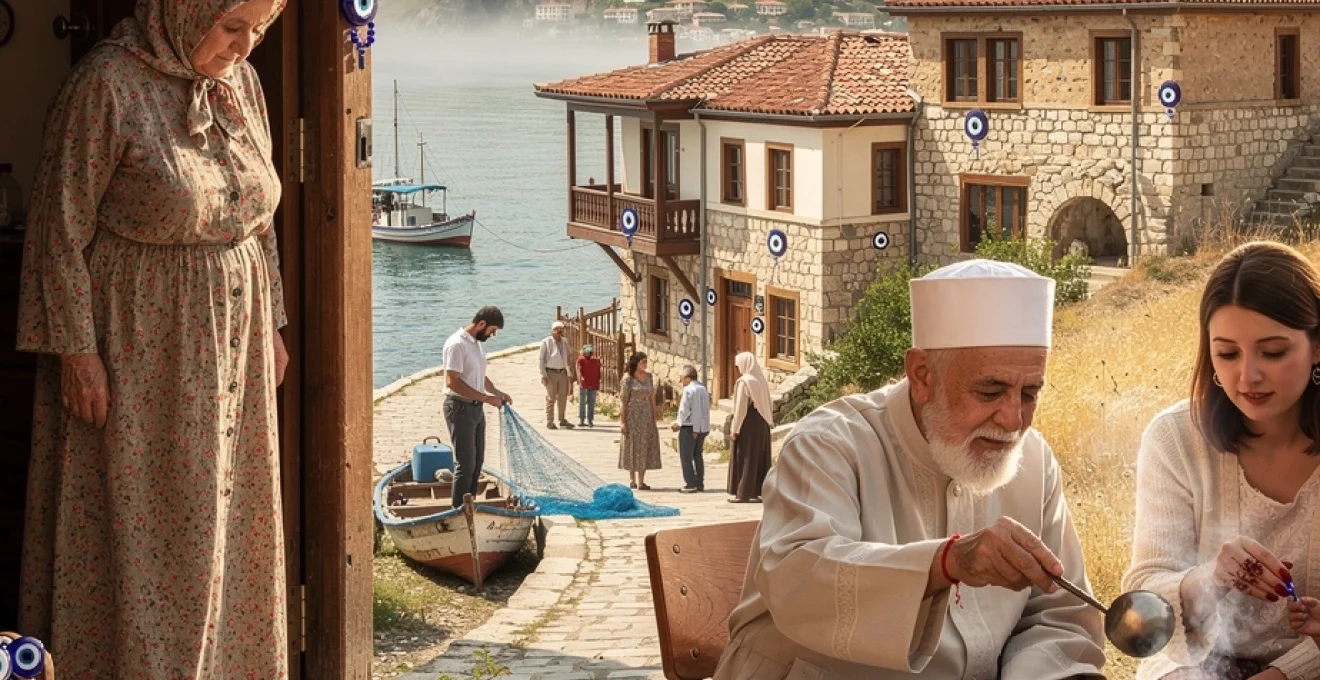
Superstitions form an intricate thread in the cultural fabric of Turkey, weaving together thousands of years of Anatolian tradition, Islamic practice, and pre-Islamic shamanic customs. These beliefs are not relics confined to museums or academic texts; they pulse through contemporary Turkish life, shaping decisions from the mundane to the momentous. When you walk through Istanbul’s Grand Bazaar and notice countless blue glass beads hanging in shop windows, or observe a Turkish friend refusing to hand you scissors directly, you’re witnessing living anthropology. Understanding these superstitious practices offers profound insights into Turkish society’s collective psyche, revealing how ancient anxieties, spiritual frameworks, and social cohesion mechanisms persist in an increasingly modern nation. The endurance of these beliefs across millennia and their continued relevance in twenty-first-century Turkey demonstrate that superstition serves functions far deeper than irrational fear—it provides psychological comfort, cultural identity, and social bonding in ways that rationalist perspectives often overlook.
The cultural anthropology of turkish nazar boncuğu and evil eye symbolism
The nazar boncuğu, Turkey’s iconic blue glass evil eye bead, represents perhaps the most recognizable and widespread superstitious practice in Turkish culture. This talismanic object transcends socioeconomic boundaries, appearing equally in the homes of secular intellectuals in Ankara and devout villagers in central Anatolia. The belief system underlying the nazar addresses a fundamental human anxiety: the destructive power of envy. According to Turkish folk wisdom, when someone looks upon another’s good fortune with jealousy or admiration, their gaze can inadvertently transmit negative energy that causes misfortune, illness, or material loss. The nazar boncuğu functions as a spiritual lightning rod, attracting and absorbing this malevolent attention before it can harm its intended target.
Prophylactic function of blue glass amulets in anatolian society
The prophylactic function of nazar beads operates on multiple psychological and social levels. From an anthropological perspective, the evil eye belief system provides a culturally sanctioned explanation for seemingly random misfortune, transforming chaos into comprehensible cause-and-effect. When you experience sudden illness, business failure, or interpersonal conflict in Turkish society, attributing these events to nazar offers both an explanation and a solution. This attribution framework reduces anxiety by suggesting that protective measures can be taken against future harm. The physical act of hanging a nazar bead or wearing one as jewelry represents tangible agency in an uncertain world.
Interestingly, the blue color of traditional nazar beads carries specific symbolic weight rooted in ancient Mesopotamian and Egyptian traditions. Blue glass was historically expensive and rare, making it a luxury item associated with divine protection. The concentric circles of the nazar—typically blue, white, light blue, and a dark central pupil—create an eye-like appearance that « watches back » at potential sources of envious gazes. This counter-surveillance function embodies the principle of sympathetic magic: like repels like, and an eye protects against harmful eyes. When a nazar bead cracks or breaks, Turks interpret this as evidence that it successfully absorbed a curse directed at its owner, necessitating immediate replacement.
Archaeological evidence of evil eye beliefs from göbekli tepe to ottoman empire
Archaeological evidence suggests that evil eye beliefs predate modern Turkey by millennia, with protective eye symbols appearing in ancient Sumerian, Babylonian, and Hittite artifacts excavated across Anatolia. The archaeological site of Göbekli Tepe in southeastern Turkey, dated to approximately 9600 BCE, features carved stone pillars with eye-like motifs that some researchers interpret as early protective symbols. Throughout the Bronze Age, cylinder seals and amulets depicting eyes were common across Mesopotamia and the Levant, regions with which Anatolian populations maintained extensive trade and cultural exchange.
During the Hellenistic and Roman periods, evil eye beliefs became systematized and widespread throughout the Mediterranean basin. Mosaics from the Roman city of Antioch (modern Antakya, Turkey) explicitly depict evil eye symbols being attacked by various weapons and animals, demonstrating the apotropaic function of such imagery. The Byzantine Empire continued these traditions, incorporating evil eye protection into Christian contexts.
Under the Ottomans, the use of eye-shaped talismans and written charms proliferated in both elite and popular culture. Court records, travelogues and miniatures depict soldiers, traders and palace women using amulets against nazar, often combining the eye motif with Qur’anic inscriptions. By the late nineteenth century, the production of blue glass evil eye beads around İzmir and in villages near Kuşadası had become a specialized craft, feeding regional and later global demand. The modern nazar boncuğu therefore condenses at least ten thousand years of Anatolian visual symbolism into a small, mass-produced object that still carries deep emotional and spiritual weight in contemporary Turkey.
Nazar boncuğu distribution patterns across turkish households and businesses
If you walk through any Turkish neighborhood, from an Istanbul high-rise to a village in Cappadocia, you will quickly notice how systematically nazar boncuğu are deployed in everyday spaces. They are typically positioned at points of vulnerability: front doors, rear-view mirrors, baby cribs, and cash registers. Anthropologists describe this as a « protective perimeter » strategy: by ring-fencing entrances, transitional spaces and sources of pride, families attempt to neutralize potential evil eye attacks before they penetrate the social unit. In commercial settings, many shopkeepers believe that hanging a large eye bead near the entrance or above the till helps keep business « open » and money flowing.
Distribution patterns also reveal subtle hierarchies of concern. Newborn babies and unmarried young women are statistically the most likely to be adorned with personal nazar charms, reflecting anxieties about health, fertility and beauty. Cars—especially new or expensive ones—almost always sport at least one dangling bead, a direct response to the idea that conspicuous success invites envy on the road. Even digital spaces are not immune: profile pictures and social media posts from Turkey are frequently accompanied by the nazar emoji or image, a modern extension of the same logic into online life. In this way, the evil eye belief system adapts to new technologies while preserving traditional symbolic geographies of risk.
Psychological apotropaic mechanisms behind turkish eye bead practices
From a psychological perspective, the popularity of nazar boncuğu in Turkey illustrates how apotropaic rituals—acts intended to ward off evil—provide cognitive and emotional benefits. In a society where social comparison is intense and economic conditions can be volatile, attributing misfortune to nazar externalizes blame, protecting self-esteem and relationships. Instead of accusing a specific person of malice, people can speak of an abstract « evil eye, » preserving social harmony. The simple act of hanging an eye bead, then, functions much like wearing a seatbelt: it reassures us that we have done something concrete to manage invisible risks.
Moreover, these practices create shared cultural scripts. When someone gifts you a nazar charm after good news—a job promotion, a new home, a healthy birth—they are not only offering protection but also acknowledging your achievement in a socially acceptable way that tempers bragging. Studies in cultural psychology suggest that such rituals help regulate emotions by turning vague anxieties into manageable routines. Just as we might feel uneasy boarding a plane without performing small habits, many Turks report a sense of incompleteness if a new car or house lacks a nazar. The bead itself may be inert glass, but the belief around it mobilizes powerful placebo-like effects that can reduce stress and reinforce group identity.
Islamic syncretism and pre-islamic shamanic residues in turkish folk beliefs
To understand everyday superstitions in Turkey, we need to recognize that they emerge from a layered religious history. Long before the arrival of Islam in Anatolia, Turkic peoples practiced Tengrism, a shamanic belief system centered on sky deities, nature spirits and ancestral souls. When the Seljuks and later the Ottomans adopted Islam, many older rituals and cosmologies did not simply disappear; instead, they were reinterpreted through an Islamic lens. The result is a rich tapestry of folk Islam in which Qur’anic verses coexist with practices that clearly echo Central Asian shamanism and ancient Anatolian cults. When you hear of someone visiting a hodja to have lead poured or commissioning a muska amulet, you are witnessing this syncretic blend in action.
Tengrism elements preserved in contemporary turkish superstitious practices
Several contemporary Turkish superstitions show striking parallels with Tengrism and broader shamanic traditions. In Tengrism, the world was animated by spirits inhabiting mountains, rivers, trees and crossroads, and shamans mediated between human communities and these forces. Today, many rural Turks still avoid cutting down certain old trees or disturbing particular springs, fearing the wrath of unseen entities. The idea that lakes, forests or abandoned places are « owned » by spirits echoes the ancient belief that nature is not inert but populated by beings who must be respected or appeased.
Another likely residue of shamanic cosmology is the strong emphasis on the upper and lower worlds. Practices such as not pouring hot water outside at night, or avoiding urinating in wild places, stem from the notion that you might accidentally harm or provoke invisible beings beneath or around you. Similarly, the belief that spinning a chain or whistling can summon spirits recalls shamanic techniques of sound and rhythm to open gateways between realms. While most Turks today would explain these practices in Islamic terms—perhaps referencing jinn or general bad luck—their structural logic reflects a much older worldview in which the human and spirit worlds constantly overlap.
Hoca and hodja consultation rituals for kurşun dökme lead pouring ceremonies
One of the most emblematic examples of Islamic-shamanic syncretism in Turkey is kurşun dökme, the practice of pouring molten lead into water over a person’s head to break the evil eye or persistent bad luck. Traditionally, this ritual is performed by an experienced woman or a hodja (religious practitioner) who recites Qur’anic verses while melting the lead in a ladle. The afflicted person sits or stands with a cloth held above their head, and the melted lead is then quickly poured into a bowl of cold water, producing dramatic shapes and loud hissing sounds. These shapes are interpreted as representations of the source of nazar or spiritual disturbance.
From a ritual studies perspective, kurşun dökme closely resembles shamanic extraction ceremonies, where harmful spiritual intrusions are symbolically removed from the body. The use of metal, sound, heat and sudden transformation all contribute to the sense of purification and release. At the same time, the explicit recitation of Qur’anic surahs, especially al-Fatiha and al-Ikhlas, firmly anchors the practice within an Islamic framework. In many communities, people will only trust a hodja who is known to be pious and literate in religious texts, even though the structure of the ritual itself follows pre-Islamic patterns of magical healing.
Muska talisman creation and quranic verse integration methods
Another widespread manifestation of this syncretism is the muska, a small, usually triangular amulet containing written prayers or Qur’anic verses. These talismans are believed to protect against nazar, nightmares, jinn, illness or even legal troubles, depending on the text and intention inscribed inside. The creation of a muska often involves a hodja or respected elder who writes specific ayahs on a piece of paper, sometimes adding numerical codes derived from the abjad system, in which Arabic letters carry numerical values. The paper is then folded in a prescribed pattern and encased in leather, silver or cloth before being worn on the body or placed in a home or vehicle.
While the protective power is officially attributed to Allah’s words, the way muskalar are used reflects broader magical thinking. Some families will not open a muska for fear of « releasing » its power, and it is common to see multiple muskalar attached to baby cribs or sewn into children’s clothing. Techniques for integrating Qur’anic text with older numerological or astrological systems have been documented in Ottoman manuscripts, where scholars straddled the line between acceptable devotional practice and condemned sorcery. For observers, muskalar thus offer a window into how Turkish Muslims negotiate the boundary between orthodox religion and folk magic in everyday life.
Jinn perception and exorcism traditions in turkish muslim communities
Belief in jinn—supernatural beings made of smokeless fire mentioned in the Qur’an—is nearly universal in Turkish Muslim communities, but local interpretations are shaped by both Islamic scripture and older spirit lore. Many Turks distinguish between different types of jinn, some relatively benign and others dangerous, and associate them with liminal spaces such as ruins, baths, forests and thresholds. Sudden personality changes, persistent nightmares or unexplained illnesses are sometimes attributed to jinn possession, especially when medical explanations appear inadequate. In such cases, families may consult a hodja for okuma (recitation) sessions or exorcism-like rituals.
These rituals typically involve repeated recitation of specific Qur’anic chapters, blowing gently into water or oil that the afflicted person will drink or apply, and the use of protective verses written on paper or plates. In some regions, loud recitation is combined with commands addressed directly to the jinn, urging them to leave in the name of Allah. Although many urban, educated Turks may approach such practices with skepticism, surveys consistently show that belief in jinn remains high across socioeconomic groups. If we think of the jinn as a culturally sanctioned way to talk about experiences of trauma, mental distress or social conflict, the persistence of these exorcism traditions becomes more understandable. They provide a narrative and ritual framework through which communities can confront the inexplicable.
Onomastic taboos and verbal superstitions in turkish linguistic behaviour
Language is another arena where Turkish superstitions subtly shape everyday behavior. The words people choose, avoid or modify in conversation reveal deep-seated anxieties about drawing misfortune toward themselves or others. In this sense, speech acts in Turkey often function like miniature rituals, where saying the « right » formula can protect against envy, illness or death, while the « wrong » word might invite disaster. Linguists studying onomastics—the science of names—and taboo language in Turkey have documented a rich vocabulary of euphemisms, blessing formulas and avoidance strategies that reflect how beliefs and spoken language intertwine.
Maşallah usage frequency and social contexts in turkish communication
One of the most frequently heard expressions in Turkish daily life is maşallah, an Arabic phrase meaning « what God has willed. » You will hear it when someone compliments a baby’s beauty, admires a new car, or remarks on a student’s exam success. Functionally, maşallah operates as a linguistic shield against the evil eye, ensuring that praise acknowledges divine will rather than human merit alone. Many Turks feel uneasy hearing repeated compliments without the protective buffer of maşallah; failing to say it after admiring someone or something can even be perceived as careless or subtly hostile.
From a sociolinguistic standpoint, the high frequency of maşallah creates a ritualized pattern of interaction. Compliment sequences often follow a predictable script: praise, immediate maşallah, and sometimes the addition of « nazar değmesin » (« may the evil eye not touch [them] »). For visitors or new residents in Turkey, adopting this phrase is a simple but powerful way to show cultural sensitivity. Not only does it reduce the risk of being seen as giving nazar unintentionally, it also aligns your speech with a collective worldview in which success is always precarious and must be carefully framed.
Euphemistic language surrounding death and misfortune expressions
Just as Turks try not to tempt fate by overpraising, they also use euphemisms to soften references to death and disaster. Instead of bluntly saying someone « died » (öldü), it is more common to hear « vefat etti » (passed away), « hakkın rahmetine kavuştu » (met God’s mercy), or simply « kaybettik » (we lost [them]). These expressions both show respect and acknowledge a religious understanding of death as a transition rather than an end. Even casual talk about future risks is hedged with phrases like « Allah korusun » (« may God protect [us] ») and « Allah göstermesin » (« may God not let it happen »), functioning much like knocking on wood in other cultures.
Negative predictions often trigger counter-expressions that aim to neutralize their potential effects. If someone mentions the possibility of an accident or illness, another person may quickly respond with « ağzından yel alsın » (« may the wind take it from your mouth »), symbolically blowing away the harmful words. In some regions, people accompany such phrases by tugging their earlobe and knocking lightly on wood or a table. These embodied speech rituals illustrate how verbal superstition in Turkey is not just about vocabulary; it is about treating spoken words as forces that can shape reality, for better or worse.
Name-giving superstitions and protective nomenclature strategies
Names themselves carry potent symbolic weight in Turkish culture, and families often navigate a web of superstitions when choosing what to call a child. One widespread practice is naming children after revered grandparents or pious figures, both to honor them and to draw down their perceived baraka (blessing). In some regions, however, families who have experienced repeated infant mortality may choose deliberately « ugly » or modest names—such as Satılmış (sold) or Dursun (may [this one] stay)—to trick malevolent forces into overlooking the child. Historically, such protective nomenclature strategies were especially common in rural Anatolia, though they are less frequent in contemporary urban settings.
There are also taboos around calling certain powerful beings or misfortunes by their direct names. Instead of saying şeytan (Satan), some people prefer euphemisms like « o mel’un » (that cursed one) or « adı lazım değil » (one whose name need not be mentioned), reflecting a belief that naming can invoke presence. Similarly, jinn are often referred to as « cinler » in a lowered voice or replaced with circumlocutions like « üç harfliler » (the three-lettered ones). For outsiders, these patterns might seem like mere quirks, but they reveal how deeply many Turkish speakers feel that words are not neutral labels but active agents in the moral-spiritual landscape.
Temporal and spatial turkish superstitions governing daily activities
Beyond objects and language, Turkish superstitions also map time and space into zones of relative safety and risk. Certain days, hours and physical thresholds are thought to be more susceptible to spiritual interference or bad luck than others. This temporal and spatial coding subtly influences how people schedule weddings, launch businesses, enter homes or even get out of bed. If we pay attention to these patterned behaviors, we can see how belief systems quietly shape the rhythms of everyday life in Turkey.
Tuesday prohibition patterns and salı günü avoidance behaviours
One intriguing temporal superstition in Turkey revolves around Tuesday, or salı. In some regions, especially in Central and Eastern Anatolia, Tuesday is considered an inauspicious day for starting major ventures such as moving house, opening a shop, or getting married. Older people may insist that significant journeys or surgeries be avoided on this day if possible. While the exact origin of this taboo is debated, some scholars link it to folk interpretations of historical disasters or to earlier cosmological systems that assigned each day a particular planetary influence.
In practice, these Tuesday avoidance behaviors create subtle patterns in social life. Wedding halls, for example, tend to be less booked on Tuesdays compared to traditionally auspicious days like Thursday or Sunday, even in large cities where modern scheduling pressures are strong. Some shopkeepers refuse to count money at the very beginning of a Tuesday, fearing it will set the tone for the rest of the week. You might wonder: do such practices actually change outcomes, or do they mainly change how people feel about their choices? From a cultural psychology point of view, even if there is no causal power in Tuesday itself, organizing decisions around this belief can reduce anxiety and provide a sense of order in the face of uncertainty.
Threshold symbolism and eşik crossing rituals in turkish homes
Thresholds—eşik in Turkish—are another space where superstition and social practice intersect. The physical line between outside and inside, street and home, is imbued with symbolic meaning as a place where energies, people and spirits cross. Many Turkish households avoid standing directly on the threshold or shaking hands over it, considering such acts unlucky or disrespectful to the invisible guardians of the home. Instead, greetings and farewells typically occur either clearly inside or clearly outside, emphasizing the transition.
Hospitality customs also reflect this threshold symbolism. When guests arrive, it is common to be offered a glass of water or sweets just after stepping inside, a gesture that both refreshes and ritually welcomes them into the household’s protective sphere. When someone departs for a journey, family members often pour water on the ground behind them as they cross the threshold, accompanied by the wish that « their path flows like water. » This simple act turns the doorway into a ritual stage where concerns about safety, return and good fortune are enacted in miniature. For visitors, being attentive to how people move around thresholds can reveal a great deal about the invisible boundaries that structure Turkish domestic life.
Right-left dichotomy in turkish superstitious etiquette and body movement
The distinction between right and left sides of the body is a powerful organizing principle in many cultures, and Turkey is no exception. Drawing on both Islamic symbolism—where the right side is associated with purity and favor, and the left with impurity—and older folk beliefs, numerous everyday practices emphasize « starting with the right. » Many Turks are careful to step into their homes with the right foot first, to get out of bed on the right side, and to put on the right shoe before the left. Doing the opposite is sometimes said to invite a « bad day » or minor misfortunes, even among people who might not identify as particularly religious.
Etiquette rules also encode this right-left dichotomy. Offering or receiving items, especially food and drink, with the right hand is considered polite and auspicious, while using the left hand can be perceived as careless or disrespectful in more traditional contexts. Some superstitions link bodily sensations on different sides to predictive meanings: an itching right palm may herald incoming money, while an itching left palm suggests expenses; a twitch in the right eye signals good news, the left eye bad. These interpretive schemas turn the body into a kind of living omen system, where everyday tingles and movements are read as messages about the near future.
Turkish wedding and life-cycle superstitious rituals and customs
Life-cycle events—birth, marriage, circumcision and death—are focal points where Turkish beliefs and superstitions become especially visible. At these moments of transition, when individuals and families feel particularly vulnerable, protective rituals multiply. Many of these customs serve a double purpose: they mark social status changes in a festive way while also warding off misfortune, envy and spiritual harm. For someone trying to understand what everyday superstitions reveal about beliefs in Turkey, observing a wedding or postpartum period can be more instructive than any textbook.
Kına gecesi henna night protective symbolism and red thread practices
Kına gecesi, the henna night held just before a wedding, is one of the richest ritual events in Turkish culture. Traditionally hosted at the bride’s family home, it combines music, tears, laughter and a dense network of symbolic acts. Henna itself is applied to the bride’s hands (and sometimes the groom’s) as a sign of blessing, fertility and protection; its reddish color evokes both blood and life force. In many regions, women tie a red ribbon around the bride’s waist or wrist, a practice said to guard her chastity and ward off the evil eye as she moves from maiden to married woman.
Red thread and ribbon practices extend beyond the henna application. Some families discreetly sew a small red thread into the bride’s dress or veil, while others tie red strings to items in the new couple’s home, such as the bed or mirror, to discourage envy and ensure harmony. During the emotional moment when the bride’s hands are hennaed, older women may circle a coin above her palms, linking the ritual to hopes for financial abundance. On the surface, kına gecesi appears as a colorful party; at a deeper level, it functions as a collective spell in which female relatives and friends gather to cloak the bride in layers of spiritual insurance against an uncertain future.
Gelin alma bride fetching ceremonies and anti-evil measures
The gelin alma (bride fetching) ceremony, when the groom’s side comes to take the bride from her family home to the wedding, offers another window into Turkish protective customs. As the bridal convoy arrives, cars are often decorated with ribbons and sometimes adorned with nazar boncuğu to shield against jealous glances. When the bride finally steps out of her childhood home, someone—often a younger male relative—will hold a Qur’an or mirror above her head as she passes through the doorway, symbolically covering her with divine protection or reflecting away harmful energies.
Various anti-evil measures punctuate the journey to the groom’s house or wedding hall. Some families break a clay pot at the threshold to scatter bad luck, while others place a piece of bread or a small sum of money under the bride’s foot as she steps inside, wishing for abundance and stability. In rural areas, it is not uncommon to fire celebratory gunshots into the air, an act that historically may have served both to ward off spirits and to signal communal strength. Seen collectively, these gestures turn the bride’s movement across physical space into a carefully choreographed protection ritual, in which every step is mindful of nazar, jinn and the gaze of the community.
Lohusalık postpartum superstitions and kırklama fortieth day traditions
The period immediately after childbirth, known as lohusalık, is surrounded by dense layers of superstition in Turkey. Both mother and baby are considered especially vulnerable to the evil eye, jinn and general misfortune during the first forty days. As a result, many families limit visitors, avoid taking the infant outside at night, and take care not to leave mother or child alone in a dark room. Red ribbons, nazar boncuğu and muskalar are commonly attached to the baby’s clothing or crib, and some women wear a small safety pin with a blue bead on their undershirt as an extra precaution.
At the end of this critical period, families perform a kırklama ritual, derived from the number forty’s significance in both Islamic and older symbolic systems. This may involve bathing the baby (and sometimes the mother) with water poured from forty spoons or collected from different sources, often mixed with gold coins or certain herbs. Relatives might visit with small gifts, repeating blessings and protective formulas. From a health perspective, the forty-day mark roughly corresponds to a time when both mother and baby have gained strength and resistance; from a cultural perspective, kırklama marks their formal reintegration into the wider social world, now fortified against the unseen dangers that were thought to lurk in the threshold between birth and everyday life.
Turkish circumcision superstitions and sünnet protective amulets
Circumcision, or sünnet, is another key rite of passage in Turkey, transforming a boy into a socially recognized Muslim male. While modern medical settings have changed the physical procedure, many families still surround the event with elaborate customs and superstitions. The boy is often dressed in a special white outfit with a cape and scepter, echoing royal imagery and signaling his elevated status for the day. Beneath this outfit, however, mothers may pin nazar boncuğu, muskalar or small Qur’an pendants to protect him from pain, infection and the evil eye of onlookers.
In some regions, the boy is paraded through town in a decorated car or on horseback, accompanied by music and honking horns. This public display invites admiration but also heightens anxiety about nazar, prompting relatives to constantly invoke maşallah and distribute sweets as appeasing offerings. A common belief holds that boys who do not cry during circumcision will grow up brave and strong, while excessive tears may be a bad omen; to tilt the odds, older women might whisper prayers or quietly perform gestures like pulling their earlobe and knocking on wood before the operation. These practices underscore how even highly medicalized life events in Turkey are still interpreted through a lens where spiritual and social forces are ever-present.
Regional variation in turkish superstitious practices across anatolia
Although many superstitions in Turkey are shared nationally, their expression and intensity vary across regions, reflecting different historical influences, ethnic compositions and economic lifestyles. The beliefs of Black Sea fishermen, for example, differ in emphasis from those of Kurdish villagers in Southeastern Anatolia or olive growers along the Aegean coast. Paying attention to these regional flavors helps us avoid treating « Turkish superstition » as a monolith and instead see it as a mosaic of localized worldviews anchored in specific landscapes and histories.
Black sea region supernatural beliefs and karadeniz folk magic traditions
The Black Sea region, or Karadeniz, is famous within Turkey for its misty mountains, dense forests and distinct cultural identity, and its folk beliefs reflect this dramatic environment. Stories of forest spirits, shape-shifters and mysterious lights in the hills are widespread, and many villagers maintain a cautious respect for certain groves, springs or abandoned structures deemed « unclean » or inhabited. In some communities, women known for their knowledge of herbs and incantations provide informal healing and divination services, blending Islamic prayers with older magical formulas whispered into smoke or water.
For Black Sea fishing communities, the sea itself is a capricious, almost personified force that must be treated with ritual care. Fishermen may avoid going out on specific days linked to local legends of storms or shipwrecks, and some refuse to utter certain words or names on the boat to avoid attracting bad luck. Instead, they may recite short prayers, touch amulets nailed to the hull, or pour a small libation of tea or raki into the water before casting their nets. Just as farmers in inland Anatolia closely read the behavior of birds and insects as weather omens, Black Sea sailors interpret wave patterns, winds and even dreams as signs from an animated, spiritually charged seascape.
Southeastern anatolian superstitions in şanlıurfa and mardin communities
Southeastern Anatolia, including cities like Şanlıurfa and Mardin, sits at the crossroads of Turkish, Kurdish, Arab and Syriac Christian cultures, producing a particularly rich mix of beliefs. Here, visits to the tombs of saints (türbe) play a major role in coping with illness, infertility or family conflict. People may travel long distances to tie pieces of cloth to sacred trees, light candles or sleep near a shrine hoping for a revelatory dream. These practices combine Islamic concepts of intercession with older Near Eastern pilgrimage traditions that view certain sites as charged with healing power.
In more conservative villages, fear of the evil eye and jinn can be pronounced, especially regarding women and children. Black headscarves decorated with nazar motifs, extensive use of muskalar and strict rules about women’s movements after dark all reflect concerns about spiritual as well as social safety. At the same time, local Christians and Yazidis maintain their own protective rituals, such as drawing crosses or specific symbols on doorways at certain times of the year. For an outsider, walking through the stone alleys of Mardin at dusk, with blue beads glinting above doorways and incense drifting from hidden courtyards, can feel like witnessing a living museum of overlapping apotropaic strategies rooted in millennia of Mesopotamian religious history.
Aegean coastal superstitions and fishing community ritual practices
Along Turkey’s Aegean coast, where olive groves meet turquoise bays, superstitions reflect both a maritime livelihood and a long history of Greek-Turkish cultural contact. In coastal towns, fishermen and boat owners commonly paint nazar symbols on their vessels or hang glass beads from the mast, believing they deflect storms and envy alike. Before the first voyage of a newly built boat, a small sacrificial ritual—ranging from breaking a bottle to slaughtering an animal in more traditional settings—may be performed to ensure safe travels, echoing older Mediterranean maritime customs.
On land, Aegean villagers show special reverence for olive trees, sometimes attributing misfortune to those who cut or damage very old specimens without necessity. Spring festivals like Hıdırellez, marking the meeting of the prophets Hızır and Ilyas and the coming of abundance, are celebrated with wish-making rituals that blend Islamic saints’ lore with pre-Islamic fertility rites. People might draw symbols of houses or boats on paper, tie them to rose bushes or throw them into the sea at dawn, hoping their desires will « take root » or be carried favorably by the water. In these practices, we again see how Turkish beliefs about luck, protection and destiny are inseparable from the specific landscapes and livelihoods that sustain communities across Anatolia.