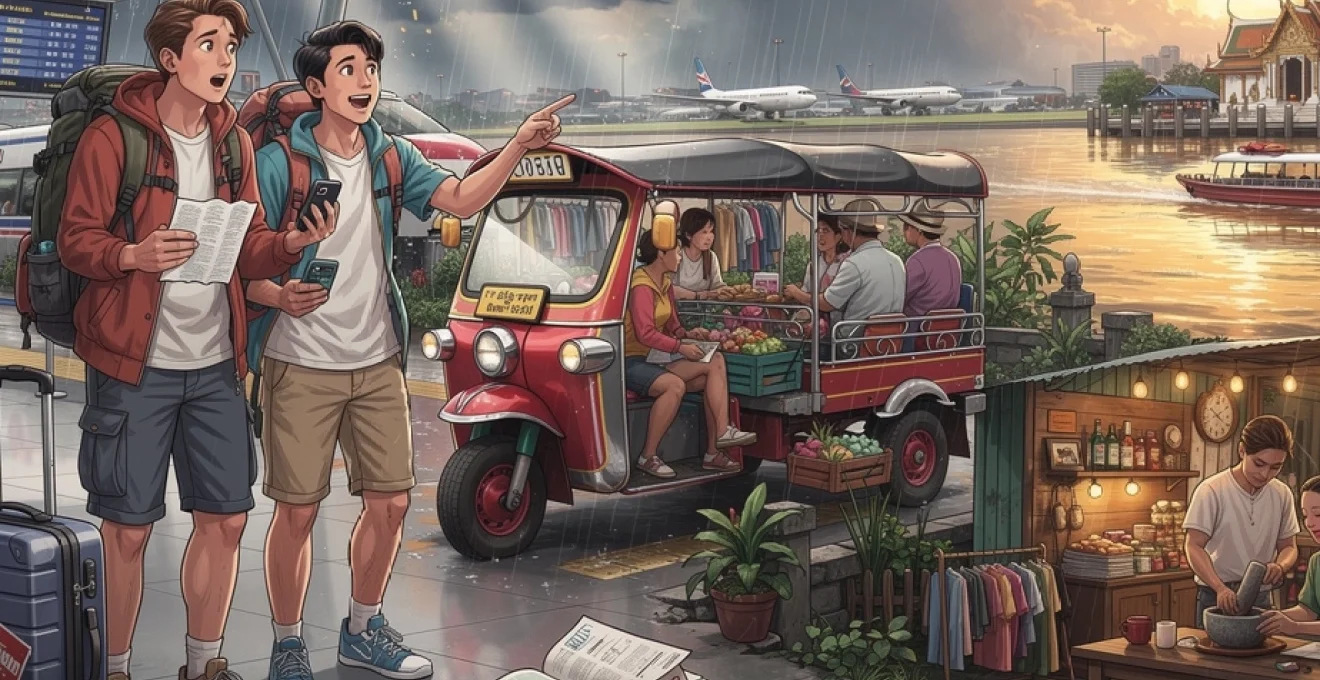
Bangkok, Thailand’s bustling capital, has a reputation for turning carefully orchestrated travel itineraries into wonderfully chaotic adventures. When flights get cancelled, accommodation bookings disappear, and transportation systems fail, many travellers find themselves facing what initially feels like a nightmare scenario. However, these disruptions often become the catalyst for the most memorable and authentic experiences the city has to offer. The unpredictable nature of travel in Southeast Asia’s largest metropolitan area creates opportunities that structured tourism simply cannot provide.
The reality of modern travel is that disruptions are increasingly common, particularly in major transit hubs like Bangkok’s Suvarnabhumi International Airport. Weather patterns, political situations, and global events can transform a straightforward journey into an extended stay filled with unexpected discoveries. Rather than viewing these setbacks as failures, experienced travellers have learned to embrace the uncertainty as an invitation to explore beyond the typical tourist trail.
Pre-trip planning disruptions at suvarnabhumi international airport
Suvarnabhumi International Airport serves as Southeast Asia’s second-busiest airport, handling over 60 million passengers annually. This massive throughput means that when disruptions occur, they affect thousands of travellers simultaneously. The airport’s strategic location makes it a critical connection point for routes between Europe, Asia, and Australia, amplifying the impact of any operational challenges.
Flight cancellations during thailand’s monsoon season impact
The monsoon season, typically running from May through October, creates significant challenges for air travel operations. Heavy rainfall and strong winds can ground flights for hours or even days, leaving passengers stranded in the airport or scrambling to find accommodation. Airlines often cancel flights proactively during severe weather warnings, creating a domino effect that impacts connecting flights and subsequent travel plans. These weather-related disruptions have increased by approximately 15% over the past five years, according to aviation industry reports.
When faced with monsoon-related cancellations, travellers often discover Bangkok’s extensive network of airport hotels and nearby accommodation options. The Novotel Bangkok Suvarnabhumi Airport, connected directly to the terminal, becomes a lifeline for stranded passengers. However, during peak disruption periods, even these facilities reach capacity, forcing travellers to venture into the surrounding Lat Krabang district.
Accommodation booking failures in khao san road district
The infamous Khao San Road area, long considered the backpacker hub of Bangkok, presents unique challenges for advance bookings. Many guesthouses and hostels in this district operate with informal reservation systems that can fail spectacularly during high-demand periods. Online booking platforms may show availability that doesn’t actually exist, particularly during peak season or local festivals.
These booking failures often lead travellers to explore alternative neighbourhoods like Banglamphu or Phra Nakhon, areas that offer more authentic local experiences away from the tourist-focused Khao San strip. The serendipitous discovery of family-run guesthouses and traditional shophouses converted into accommodation frequently results in more meaningful cultural exchanges than sterile hotel experiences.
Currency exchange rate fluctuations affecting budget calculations
Thailand’s economy remains sensitive to global market fluctuations, and the Thai Baht can experience significant volatility against major currencies. Travellers arriving with predetermined budgets based on exchange rates from weeks or months earlier often find their purchasing power dramatically different from expectations. A 10-15% fluctuation in exchange rates can transform a mid-range travel budget into either a luxury experience or a survival challenge.
These financial surprises force travellers to adapt their spending habits and discover more economical ways of experiencing Bangkok. Street food becomes not just a culinary adventure but a financial necessity, leading to authentic food experiences that expensive restaurants cannot replicate.
Visa extension requirements at chaeng watthana immigration office
Thailand’s visa regulations can catch even experienced travellers off guard, particularly when flight disruptions extend stays beyond permitted periods. The Chaeng Watthana Immigration Office, located far from central Bangkok, becomes an unexpected destination for travellers needing visa extensions. The office processes thousands of applications daily, with wait times often extending several hours.
This bureaucratic necessity introduces travellers to Bangkok’s outer districts and
gives a glimpse into daily Thai life beyond the usual tourist districts. Many travellers use this forced detour as an opportunity to explore local food courts, quiet temples, and residential neighbourhoods nearby. Sharing benches with long-term expats and Thai workers waiting for their number to be called often leads to unexpected conversations, practical advice on overland travel, and new ideas for routes that move beyond the standard Bangkok–Chiang Mai–islands loop.
For those whose travel plans are collapsing in real time, understanding the visa extension process at Chaeng Watthana becomes essential. Preparing photocopies in advance, arriving early in the morning, and dressing modestly can speed things up slightly in an otherwise slow system. What begins as a stressful bureaucratic hurdle frequently becomes a day of quiet observation of Thai administrative culture, revealing the patience and pragmatism that underpin long-term travel in Thailand.
Transportation system breakdowns leading to alternative route discoveries
Bangkok’s transport network is usually efficient, but even the best systems break down under pressure. When the BTS Skytrain, MRT subway, or airport rail link suffers delays, thousands of commuters and travellers are forced to improvise. This is often the moment when you discover that Bangkok is not just a city of concrete and expressways, but a sprawling maze of canals, alleys, and side streets that still move people every day.
Learning to navigate alternative routes in Bangkok can feel like switching from a printed map to a living, breathing organism. When trains stop, boats, buses, tuk-tuks, and motorbike taxis fill the gap. Rather than seeing a service interruption as wasted time, many travellers have turned these disruptions into urban exploration, stumbling upon temples, markets, and neighbourhood cafés they would never have planned to visit.
BTS skytrain service interruptions during peak hours
Peak-hour breakdowns on the BTS Skytrain are increasingly common, especially on the Sukhumvit and Silom lines. During the evening rush, a 20-minute delay can quickly turn into packed platforms, long queues, and announcements encouraging passengers to seek other modes of transport. For visitors racing to catch a flight, a cooking class, or a reserved time slot at a popular attraction, this can seem disastrous.
Yet, stepping out of an overcrowded station often pushes you into the heart of Bangkok’s street-level life. Walking a single BTS stop distance along Sukhumvit Road, for example, can lead you past tiny noodle stalls, massage shops, and small shrines hidden under flyovers. Some travellers discover that walking between stations or using elevated pedestrian bridges is one of the best ways to understand the city’s scale, while also avoiding the claustrophobic crush of delayed trains.
From a practical perspective, it pays to build buffer time into your Bangkok itinerary during peak hours (07:00–09:00 and 17:00–19:30). Keeping ride-hailing apps installed, carrying a paper map, and knowing two or three alternative ways to reach your hotel or the river can turn a BTS breakdown from a crisis into a minor detour. Think of the Skytrain as the spine of the city; when it stiffens, you start discovering all the flexible side streets and local shortcuts that make Bangkok so fascinating.
Tuk-tuk navigation through chatuchak weekend market chaos
Chatuchak Weekend Market, one of the world’s largest open-air markets, is both a magnet for tourists and a choke point for traffic. When buses are stuck and the MRT exits are overwhelmed, tuk-tuks become the unofficial shuttle service feeding the area from nearby districts. At first glance, climbing into a tuk-tuk in heavy traffic may seem like the worst possible decision—but it often leads to the most interesting backstreet routes.
To avoid the gridlocked main roads around Chatuchak, experienced tuk-tuk drivers cut through narrow lanes, residential blocks, and temple courtyards. As you weave past laundry-hung balconies and schoolyards, you see a quieter side of Bangkok that most market-bound shoppers never witness. It’s a bit like slipping behind the stage at a theatre show: suddenly, you’re in the unpolished, everyday world that keeps the performance running.
Of course, negotiating fares and avoiding common scams remains crucial. Agreeing a price before you get in, insisting on a direct route (no “gem shops” or “special tailors”), and using your phone’s GPS to track general direction can keep the ride stress-free. When the official transport options around Chatuchak fail, treating a tuk-tuk journey as both transport and mini sightseeing tour helps turn the chaos into a highlight of your weekend.
Chao phraya express boat schedule modifications
The Chao Phraya Express Boat is often the quickest way to move between old town attractions, riverside temples, and modern malls along the river. However, during high water levels, festivals, or maintenance periods, schedules can be cut, piers can close temporarily, and express lines may be reduced. Many travellers only discover these changes when they arrive at a shuttered pier, timetable scrapped and locals already adapting.
When the express boats are limited, you may find yourself boarding slower local boats or even small cross-river ferries instead. These alternatives often cost just a few baht and open up areas on the “other” side of the river—Thonburi—which many short-stay visitors skip entirely. Wandering into Thonburi’s quiet lanes, visiting less-famous temples like Wat Kalayanamit, or simply sitting with locals on a wooden pier can feel worlds away from the Grand Palace crowds.
Checking updated schedules online helps, but flexibility is your most valuable resource on the river. If the boat you expected is not running, ask pier staff or fellow passengers, “pai thii nai dii?” (where is good to go?), and be open to suggestions. A cancelled express boat might lead you to an unplanned lunch at a riverside community market, or a sunset walk through neighbourhoods where Bangkok still feels like a network of villages threaded together by canals.
Motorbike taxi routes through sukhumvit soi networks
Motorbike taxis are the city’s unofficial emergency response team when traffic collapses. At the base of almost every BTS station and major intersection, drivers in orange vests wait to ferry passengers through the tangle of Sukhumvit sois—narrow side streets that form an intricate web behind the main road. When cars are barely moving, these bikes slip between lanes, duck down alleys, and emerge blocks away in minutes.
For many visitors, hopping on the back of a motorbike taxi feels intimidating at first. But with proper precautions—helmet on, backpack secured, hands firmly gripping the side rails—it becomes one of the fastest ways to navigate Bangkok’s urban labyrinth. In terms of discovering the city, these rides are like tracing its capillaries rather than the main arteries. You catch glimpses of local street food stalls, tiny bars, and mid-soi temples that you might return to later on foot.
To use this option safely, confirm the fare in advance, avoid riding without a helmet, and skip motorbikes in heavy rain when roads are slick. Having your destination written in Thai or pinned on a map helps reduce misunderstandings. When the monsoon, protests, or accidents paralyse Sukhumvit Road, a five-minute motorbike taxi through the sois can transform a missed appointment into a quick detour and a newfound sense of how locals really move around the city.
Unplanned cultural immersion experiences in local communities
When travel plans unravel in Bangkok, the city often nudges you into its residential side streets and local communities. Delayed flights and cancelled trains frequently translate into extra days with no fixed agenda, and this is exactly when the most meaningful cultural immersion tends to happen. Without tight schedules, you have the freedom to linger at neighbourhood temples, chat with street vendors, or simply sit in a small café watching daily life unfold.
Many travellers find that a single unplanned day in a lesser-known district teaches them more about Thai culture than a week of ticking off major attractions. Perhaps your overbooked Silom hotel forces you to relocate to a guesthouse in Ari or On Nut, where evenings are defined more by family dinners than rooftop parties. Maybe a missed bus to the islands keeps you in the city long enough to attend a local festival, school fair, or temple ceremony that you never would have scheduled.
These encounters are rarely glamorous, but they are deeply human. Sharing sticky rice and grilled chicken with neighbours, being invited to join a game of takraw (kick volleyball), or practising a few Thai phrases with curious children transforms Bangkok from a transit hub into a place you genuinely connect with. When plans fall apart, think of it as the city’s way of inviting you backstage, beyond the curated highlights into the everyday rhythms that make Bangkok feel alive.
Spontaneous food trail adventures beyond tourist restaurant guides
Few disruptions are as pleasantly distracting as discovering Bangkok’s food scene outside the usual recommendations. When you miss a reservation, arrive too late for a famous brunch spot, or find a guidebook-listed restaurant permanently closed, the city responds with a thousand other options. That detour can easily become the start of a spontaneous food trail, one that leads far beyond tourist restaurant guides.
Because Bangkok is a crossroads for regional Thai cuisines and international influences, every lost taxi or delayed train is an excuse to try something new. You might leave a crowded mall food court and stumble into a family-run khao man gai (chicken rice) stall that locals swear by, or follow the aroma of grilled pork skewers down a side alley to discover an entire row of evening food carts. In a city where eating is a core part of social life, unexpected hunger often leads to the most memorable meals.
Street vendor discoveries in yaowarat chinatown alleyways
Yaowarat, Bangkok’s Chinatown, is fertile ground for unplanned food adventures. The main road is full of neon lights and well-known stalls, but when crowds or sudden closures push you into the back alleys, that’s when things get truly interesting. Here, small carts and hole-in-the-wall kitchens serve dishes that barely appear in English-language guides: peppery fish ball soup, black sesame dumplings in ginger syrup, or charcoal-grilled squid with spicy dipping sauce.
Getting “lost” in Yaowarat’s alleyways is one of the easiest ways to experience street food like a local. Instead of hunting for a particular stall from a blog post, you follow queues of Thai customers and the sound of sizzling woks. Asking simple questions—“What’s good today?” or “Is it spicy?”—often leads vendors to recommend their proudest dishes, turning a random stop into a mini tasting session.
To make the most of these Chinatown food discoveries, arrive with an open mind and a light schedule. Share plates so you can sample more, carry small bills for quick payments, and be ready to sit on low plastic stools or stand while eating. If you let go of the idea of finding “the best” stall and instead focus on following your senses, disruptions to your original dinner plans will start to feel like invitations to explore.
Local market exploration at saphan phut night market
When popular night markets close, move, or become overwhelmingly touristy, many travellers seek alternatives like Saphan Phut Night Market near Memorial Bridge. Sometimes you end up there because your taxi cannot reach Asiatique due to traffic, or your chosen market is unexpectedly shut. What begins as a backup plan turns into a fascinating window into how young Bangkokians actually shop, eat, and socialise after dark.
Saphan Phut offers a mix of second-hand clothes, quirky accessories, and casual street food that feels more local than curated. There is less emphasis on perfect Instagram shots and more on everyday bargains and comfort snacks. Wandering the aisles, you might try fried quail eggs, iced Thai tea, or spicy som tam from vendors who mainly cater to students and office workers unwinding after work.
Exploring a night market like Saphan Phut on a whim helps you recalibrate your expectations of Bangkok nightlife. Instead of choreographed bar crawls or rooftop bar itineraries, you get simple pleasures: live buskers, couples sharing skewers, and groups of friends laughing over shared plates. It is in places like this, reached by accident, that many travellers realise the city’s charm lies as much in its ordinary evenings as in its headline attractions.
Traditional thai cooking classes in bang sue district
Sometimes, when outdoor plans are ruined by heavy rain or transportation issues, travellers look for indoor activities and stumble upon community-based cooking classes in districts like Bang Sue. Far from the tourist centres, these classes are often held in private homes, local schools, or small studios above markets. Instead of polished, Instagram-friendly experiences, you get hands-on instruction from home cooks and small business owners who teach recipes they grew up with.
Learning to cook pad kra pao, green curry, or coconut soup in a residential neighbourhood gives context to the dishes you have been eating on the street. Shopping for ingredients at a nearby wet market, identifying different types of basil or eggplant, and understanding the balance of sweet, sour, salty, and spicy flavours turns a rainy day into a full cultural deep dive. It is like moving from watching a performance to stepping onto the stage yourself.
If your original day trip outside Bangkok falls through, searching for “community cooking class Bang Sue” or asking your guesthouse for local recommendations can open this door. Beyond the practical skills, you leave with recipes, stories, and often new friends. In a very real sense, travel plans falling apart in Bangkok can send you home with more than just photos—you bring back the ability to recreate parts of Thailand in your own kitchen.
Rooftop bar alternatives to lebua sky bar experiences
Lebua Sky Bar has become an icon of Bangkok’s skyline, but its popularity also means strict dress codes, high prices, and occasional closures or capacity limits. When travellers are turned away—because of flip-flops, budget constraints, or fully booked reservations—they often feel they have missed a “must-do” experience. Yet, this disappointment frequently leads to the discovery of more relaxed, characterful rooftop bars scattered across the city.
Neighbourhood rooftops in areas like Ari, Ekkamai, or even near Victory Monument offer comparable views of the cityscape with lower prices and fewer crowds. Instead of carefully staged photo spots, you might get mismatched chairs, indie music, and a mix of locals and expats winding down after work. In many ways, these spots capture the real essence of Bangkok nightlife: informal, inventive, and more about atmosphere than prestige.
To find these alternatives, ask hotel staff where they go for a drink with friends, or search for “hidden rooftop bar” combined with the neighbourhood you are staying in. Arriving without a reservation is usually fine, and dress codes tend to be more forgiving, as long as you are neat. When your carefully planned Lebua evening falls through, raising a glass on a lesser-known rooftop can feel like you have traded a postcard view for an authentic memory.
Emergency accommodation solutions in bangkok’s hidden neighbourhoods
Flight cancellations, overbooked hotels, and sudden visa complications often force travellers to find last-minute accommodation. In a city as large as Bangkok, this can be stressful—especially when major areas like Sukhumvit or Silom are at capacity. Yet, these emergencies are precisely what push people into lesser-known districts where prices are lower, pace is slower, and daily life feels more tangible.
Hidden neighbourhoods such as Lat Phrao, Udom Suk, or Talat Phlu may not feature prominently in glossy travel brochures, but they are rich in character and community. Small hotels, serviced apartments, and homestay-style guesthouses often have availability even during peak season, because they serve long-term visitors and domestic travellers as much as tourists. Checking map-based booking platforms and widening your search radius can turn a panic-filled hour into an unexpected relocation that reshapes your entire Bangkok experience.
Staying in these areas changes how you interact with the city. Instead of relying solely on BTS and taxis, you might use local buses, motorcycle taxis, or simply walk to nearby markets and street-side eateries. Morning routines shift from hotel buffets to jok (rice porridge) at a corner stall; evenings become about exploring small night markets rather than catching every big-name attraction. What started as an emergency solution often becomes travellers’ favourite memory of their time in Bangkok, precisely because it was unplanned.
Serendipitous encounters with bangkok’s underground art scene
One of the least-expected outcomes of disrupted travel plans in Bangkok is stumbling into the city’s underground art scene. When events are cancelled or itineraries fall apart, travellers often have extra evenings with no clear agenda. Wandering through districts like Charoen Krung, Ekkamai, or the warehouse zones around the river, you may notice small galleries, mural-covered alleys, or bars hosting live art and music nights.
Bangkok’s creative community operates in a flexible, pop-up-friendly way that mirrors the city’s own unpredictability. Openings shift dates, venues move, and exhibitions appear in former shophouses or old factories with little advance notice. If you stay curious and follow posters, social media updates, or word-of-mouth tips from café staff and bartenders, you can easily find yourself at an underground gig, an independent film screening, or a live painting session that was never part of your original plan.
These serendipitous encounters provide a counterpoint to the city’s commercial side. Instead of mega malls and branded attractions, you engage with local photographers, street artists, and musicians who use Bangkok as both canvas and muse. Conversations in these spaces often touch on rapid urban change, gentrification, and the realities of creative life in a mega-city—all topics you rarely hear discussed on organised tours.
If a night out goes sideways because a venue is closed or an event is sold out, consider asking nearby bar staff, “Is there any live art or music happening tonight?” You might be directed to a warehouse gallery in Thonburi, a DIY zine fair above a café, or a rooftop poetry reading. In a city where unpredictability is the norm, the underground art scene thrives on exactly the kind of loosened schedules and open-minded wandering that disrupted travel creates.