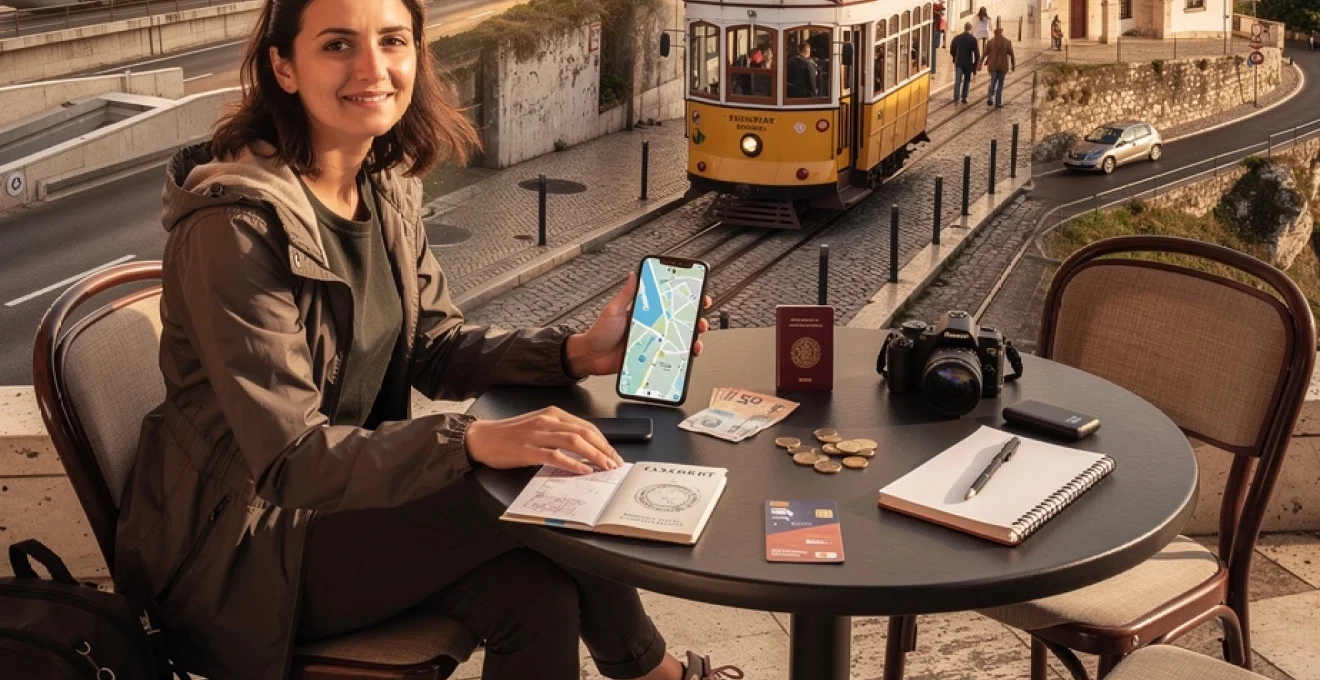
Portugal emerges as one of Europe’s most welcoming destinations for independent travellers, combining centuries of maritime heritage with modern infrastructure and an inherently safe environment. The country’s compact geography, from the dramatic coastlines of the Algarve to the terraced vineyards of the Douro Valley, creates an ideal playground for solo adventurers seeking authentic cultural experiences without the complexity of navigating vast distances or language barriers.
The Portuguese approach to hospitality, known locally as saudade—a uniquely Portuguese concept encompassing longing, nostalgia, and warmth—extends naturally to solo visitors. This cultural characteristic, combined with Portugal’s ranking as the 7th safest country globally according to the Global Peace Index, creates an environment where independent travel feels both secure and enriching. The nation’s strategic position on the Iberian Peninsula offers easy access to diverse landscapes, from Atlantic beaches to medieval hilltop villages, all connected by reliable transport networks.
Recent tourism statistics indicate that solo travel to Portugal has increased by 23% since 2019, with female independent travellers representing 62% of this growth. This surge reflects Portugal’s evolution into a sophisticated yet accessible destination that balances authentic local experiences with modern conveniences essential for comfortable solo exploration.
Essential Pre-Departure planning for portugal solo adventures
Successful solo travel to Portugal begins with thorough preparation that addresses legal requirements, health considerations, and practical logistics. Understanding these foundational elements ensures a smoother transition from planning to experiencing the country’s rich offerings. The preparation phase serves as your foundation for confident independent exploration.
Visa requirements and schengen zone navigation for UK citizens
Post-Brexit travel regulations require UK citizens to navigate new entry requirements for Portugal as a Schengen Area member state. British passport holders can visit Portugal visa-free for tourism purposes for up to 90 days within any 180-day period. Your passport must maintain validity for at least three months beyond your intended departure date from the Schengen Area.
The 90/180-day rule operates on a rolling basis, meaning the calculation resets continuously rather than following calendar periods. Immigration officials increasingly scrutinise entry and exit stamps, making accurate record-keeping essential. Consider maintaining a travel log documenting your Schengen Area visits to avoid inadvertent overstays that could result in future entry restrictions.
Digital nomads and extended solo travellers should explore Portugal’s D7 visa programme, designed for remote workers and passive income earners. This residence permit allows stays exceeding the standard tourist allocation whilst maintaining legal status for property rental, banking, and healthcare access throughout Portugal and the broader Schengen Zone.
Seasonal weather patterns and regional climate considerations
Portugal’s Mediterranean climate varies significantly between coastal and inland regions, creating distinct microclimates that influence solo travel planning. The Atlantic coastline moderates temperatures year-round, whilst interior areas experience more pronounced seasonal variations. Understanding these patterns helps solo travellers optimise their itinerary timing and packing decisions.
Spring (March-May) offers ideal conditions for solo exploration, with mild temperatures ranging from 15-22°C and reduced tourist crowds. This shoulder season provides excellent value for accommodation whilst maintaining comfortable walking conditions for city exploration and coastal activities. However, occasional Atlantic storms can disrupt ferry services to the Azores and Madeira.
Summer months (June-August) bring peak tourist season with temperatures reaching 35°C in interior regions like Alentejo. Coastal areas benefit from Atlantic breezes, making cities like Porto and Lisbon more comfortable than inland destinations. Solo travellers should book accommodation well in advance during this period and expect higher prices across all service sectors.
Portugal’s diverse climate zones mean you could experience mountain snow in Serra da Estrela and beach weather in the Algarve within the same winter day, making flexible packing essential for comprehensive solo exploration.
Portuguese healthcare system access and EHIC alternative documentation
The Portuguese healthcare system, known as Serviço Nacional de Saúde (SNS), provides universal coverage with generally high standards of care. Post-Brexit changes mean UK citizens can no longer rely on European Health Insurance Card (EHIC) benefits, making comprehensive travel insurance essential for solo travellers.
The UK Global Health Insurance
(GHIC) now functions as the EHIC replacement for most UK residents. This card entitles you to state-provided medically necessary treatment in Portugal on the same terms as Portuguese residents, which usually means low co-payments at public hospitals and clinics. However, GHIC is not a substitute for travel insurance; it does not cover private healthcare, mountain rescue, repatriation flights, or non-urgent treatment that you choose to have abroad.
Solo travellers should apply for a GHIC several weeks before departure and carry both the physical card and a digital copy. In practice, emergency treatment is never refused, but having valid documentation simplifies administrative processes and reduces potential costs. When selecting travel insurance, verify that your policy explicitly covers medical expenses, emergency evacuation, and trip interruption, as well as higher-risk activities such as surfing, hiking in Serra da Estrela, or boat excursions in the Algarve.
Portugal maintains high vaccination coverage and does not require special immunisations for most visitors. Nonetheless, it is wise to ensure your routine vaccines (such as tetanus) are up to date, particularly if you plan to hike rural trails or engage in outdoor adventure sports. Keep a concise list of any medications you take, including generic names, and pack them in original packaging; Portuguese pharmacies are well stocked and pharmacists are highly trained, but brand names can differ from those in the UK.
Currency exchange strategies and contactless payment infrastructure
Portugal uses the euro, and for solo travellers this simplifies budgeting across multiple Schengen countries. In major cities and tourist regions, card payments are widely accepted, with contactless terminals standard in supermarkets, restaurants, metro stations, and museums. You will find that even small cafés in Lisbon and Porto often accept contactless payment, though very local tascas, rural bakeries, and village markets may still prefer cash for low-value transactions.
To minimise fees, consider using a fee-free travel card from UK-based fintech providers, which usually offer competitive interbank exchange rates and no foreign transaction charges. Traditional high street banks often add a 2–3% foreign transaction fee plus an additional ATM withdrawal charge, which can quickly erode your budget on a longer solo trip. When withdrawing cash from ATMs in Portugal, always decline “dynamic currency conversion” (the option to charge you in pounds rather than euros), as this typically applies a poor exchange rate.
Carrying a modest amount of cash—around €50–€100—is sensible for emergencies, tipping, and small purchases in rural areas. However, there is no need to travel with large sums, as ATMs are widely available in urban centres and larger towns. As a solo traveller, using digital payments where possible also reduces the risks associated with carrying visible cash or returning to your accommodation with large withdrawals, particularly after dark.
Mobile connectivity solutions and portuguese SIM card providers
Reliable mobile connectivity is central to safe and efficient solo travel in Portugal, enabling you to navigate, translate, and communicate with ease. Portugal’s three main network operators—MEO, NOS, and Vodafone—offer extensive 4G coverage across urban areas and main transport routes, with 5G rolling out in larger cities such as Lisbon, Porto, and Faro. Prepaid SIM cards are straightforward to purchase at airport kiosks, shopping centres, and official operator stores, typically requiring presentation of your passport for registration.
If your UK plan does not include free EU roaming, a local Portuguese SIM or eSIM can be significantly more cost-effective than paying daily roaming surcharges. Tourist packages often bundle generous data allowances with local and EU minutes for a fixed price over 7–30 days. Before departure, ensure your phone is unlocked and capable of supporting eSIM if you prefer a fully digital solution; this can be particularly useful if you intend to cross into Spain during the same trip.
Once connected, consider downloading key apps while on Wi‑Fi: offline maps for Lisbon, Porto, and the Algarve, public transport apps such as CP for trains or city-specific metro apps, and translation tools for quick Portuguese phrases. Having dependable data means you can check live train times, share your location with trusted contacts, and call a taxi or ride‑hailing service if a situation feels uncomfortable—small but powerful safety nets for solo travellers.
Transportation infrastructure and solo navigation strategies
Portugal’s transport infrastructure is one of the reasons solo travel here feels so manageable. A dense network of trains, long-distance coaches, metros, and urban buses links the main tourist corridors from Porto to Faro, while regional connections enable deeper exploration of wine regions, hill towns, and coastal villages. Understanding how these systems interconnect allows you to design flexible itineraries without relying on a private vehicle, particularly helpful if you prefer low-stress navigation.
CP railway network coverage from porto to faro routes
The national rail operator, Comboios de Portugal (CP), runs an extensive network that forms the backbone of long-distance travel for independent travellers. The primary north–south axis links Porto, Coimbra, Lisbon, and Faro, with faster Alfa Pendular and Intercidades services reducing journey times and offering reserved seating. For example, the Lisbon–Porto route can take as little as 2 hours 45 minutes, while Lisbon–Faro usually takes around 3 hours, making same-day relocations entirely realistic for solo travellers.
Regional services connect smaller cities such as Braga, Aveiro, Évora, and Beja, although frequencies may be lower, particularly on weekends and public holidays. Booking tickets in advance through the CP website or app can secure discounts of up to 40% on long-distance routes, which is helpful if you are planning a structured itinerary. However, for a more spontaneous style of solo travel, you can often buy tickets on the day, especially outside peak summer or major holidays.
On board, trains are generally clean and punctual, with clear announcements in Portuguese and often in English on high-speed services. Seat reservations provide an added layer of comfort for solo travellers, reducing the stress of searching for a place to sit with luggage. If you tend to feel vulnerable in unfamiliar stations, travelling during daylight hours and choosing mid-morning or early-afternoon departures can make transitions between cities feel more relaxed.
Rede expressos coach services and inter-city connections
Where rail lines do not reach, long-distance coaches pick up the slack. Rede Expressos and its affiliated brands operate an extensive inter-city network that reaches deep into rural regions, including parts of Alentejo and the interior Beiras. Coaches typically depart from central bus terminals and are equipped with air conditioning, Wi‑Fi, and luggage storage, offering a comfortable alternative when you are travelling solo on a budget.
Journeys such as Lisbon to Lagos, Lisbon to Sagres, or Porto to Vila Real are often more straightforward by coach than by train. Online booking platforms allow you to compare schedules and fares, and digital tickets on your smartphone reduce the need to queue at ticket offices. As with trains, aim for daytime departures when possible; not only do you enjoy the scenery, but you also arrive in unfamiliar towns with enough light to orient yourself and check into your accommodation calmly.
Connections between trains and coaches can be used strategically to reach less-accessible areas like the Douro wine villages or remote Atlantic beaches. Think of the network like a tree: mainline trains form the trunk between major cities, while coaches are the branches that take you to smaller towns. With a bit of planning, you can move between them smoothly, minimising waiting time and making solo navigation feel intuitive rather than overwhelming.
Metro systems in lisbon and porto for urban solo travel
Within cities, metro systems in Lisbon and Porto provide fast, predictable ways to move between neighbourhoods, train stations, and airports. Lisbon’s metro comprises four colour-coded lines connecting the airport, downtown Baixa, bustling Bairro Alto, and residential districts. Porto’s metro, a blend of underground and light-rail lines, links the airport and central Trindade station with the historic centre and outlying suburbs such as Matosinhos by the sea.
Both systems use rechargeable travel cards (Viva Viagem in Lisbon, Andante in Porto) that can be topped up at machines with English-language menus. For solo travellers, this reduces the need to handle cash repeatedly and simplifies route planning; you tap in at the start of a journey and, where required, tap out at the end. Stations are generally well lit and monitored by CCTV, and you will often see commuters, students, and families using them into the evening, which contributes to a sense of safety.
That said, like any urban transport, metros can attract pickpockets at busy times, particularly around central interchanges and airport links. Keep valuables close to your body, avoid displaying large amounts of cash, and stand away from doors if the carriage is crowded. Travelling slightly outside rush hour—mid-morning or early afternoon—can make journeys more comfortable and is often easier for solo travellers who are still finding their bearings.
Car rental considerations for douro valley and alentejo exploration
While public transport serves most major destinations, certain regions lend themselves better to car travel, particularly if you want to move at your own pace. The Douro Valley’s terraced vineyards and the wide plains of Alentejo are prime examples: trains and coaches reach key hubs, but many quintas, hilltop villages, and viewpoints sit beyond easy walking distance. Renting a car for a limited portion of your trip can open up these landscapes in a way that feels similar to adjusting the zoom on a camera—suddenly the fine details come into focus.
Driving in Portugal is on the right-hand side, and roads are generally well maintained, with motorways connecting major cities and national roads serving smaller towns. For solo travellers, automatic cars may be more comfortable if you are not used to manual transmissions, though they can be more expensive and in shorter supply, so advance booking is advisable. You should also factor in toll costs on some motorways and consider whether you prefer to pay these manually or via an electronic transponder provided by the rental company.
In rural regions, traffic is usually light, but roads can be narrow and winding, especially along the Douro’s riverbanks or in old village centres. If you are a less confident driver, arriving in daylight and planning shorter daily distances can reduce stress. Always ensure that your rental agreement includes adequate insurance, and check excess amounts carefully; adding an extra driver is sometimes possible and can be useful if you meet a trusted travel companion en route and decide to share a leg of your journey.
Accommodation selection criteria for independent travellers
Choosing the right base is central to a successful solo trip in Portugal, influencing not only your comfort but also how easily you connect with local life. The country offers a broad spectrum of options, from design-led hostels and boutique guesthouses to centuries-old convents converted into heritage hotels. As a solo traveller, you will want to balance location, safety, social atmosphere, and flexibility, ensuring that each stay supports the style of travel you enjoy—whether contemplative, sociable, or a mix of both.
Pousada network heritage hotels and solo-friendly policies
Portugal’s Pousadas de Portugal network comprises historic buildings—castles, palaces, monasteries, and manor houses—transformed into characterful hotels. For solo travellers seeking cultural immersion with a dose of comfort, a short stay in a pousada can be a memorable highlight. Properties are typically located in or near historic centres or scenic rural sites, such as hilltop towns in Alentejo or coastal fortresses overlooking the Atlantic.
While pousadas often cater to couples and small groups, many maintain fair single-occupancy policies, with smaller room categories or shoulder-season rates making them more accessible to independent guests. Breakfast is usually included and can act as a gentle social moment where you interact with staff and other travellers. If you plan to stay in multiple pousadas, loyalty schemes and seasonal promotions may reduce costs; checking these options before departure can make a curated pousada “mini-route” surprisingly feasible.
From a safety perspective, pousadas tend to have staffed receptions, secure entrances, and on-site restaurants or bars, which can be reassuring if you prefer not to venture far after dark. Their historic architecture and landscaped grounds also create an atmosphere of calm retreat—especially welcome after a busy day of sightseeing or driving. Think of them as living museums where you sleep within the story, rather than simply visiting it.
Quintas and rural tourism properties in minho and beiras regions
For a different type of immersion, quintas (country estates) and turismo rural properties in regions such as Minho, Trás-os-Montes, and the Beiras offer close contact with Portugal’s agricultural and winemaking traditions. These family-run accommodations, often set among vineyards, orchards, or forested hills, are ideal if you want to slow your itinerary, enjoy home-cooked meals, and experience rural hospitality. Many operate on a bed-and-breakfast model, with optional dinners shared at a communal table.
As a solo traveller, staying in a quinta can feel like being welcomed into an extended family rather than checking into a hotel. Hosts frequently provide local insights, suggest walking routes, or arrange tastings and farm visits, helping you connect with the surrounding community in a way that might be difficult if you only passed through on a day trip. However, it is important to note that public transport to these properties may be limited, so you will often need a car or pre-arranged transfers.
When choosing a rural stay, pay attention to distance from the nearest town, availability of evening meals on-site, and any language considerations—some hosts speak fluent English, while others may communicate primarily in Portuguese. Reviews from other solo travellers can be particularly valuable here, highlighting whether the atmosphere felt inclusive and whether the location worked well without a companion to share driving or navigation.
Hostel culture in lisbon’s bairro alto and porto’s ribeira districts
Portugal’s hostel scene has evolved far beyond basic dormitories, with many properties in Lisbon and Porto winning international awards for design, cleanliness, and community atmosphere. In neighbourhoods such as Bairro Alto and Cais do Sodré in Lisbon or Ribeira and Cedofeita in Porto, you will find hostels that blend stylish communal spaces with a mix of dorms and private rooms. This makes them particularly attractive to solo travellers who want social opportunities without sacrificing comfort.
Daily activities—walking tours, communal dinners, wine tastings, or surf lessons—create low-pressure ways to meet other travellers. If you are new to solo travel, joining a hostel-organised event can feel like dipping your toe into a ready-made social circle without committing to group travel. At the same time, quiet hours, female-only dorms, and secure keycard access strike a balance between sociability and security.
Location remains critical: central hostels reduce the need for late-night public transport and allow you to walk to major sights and restaurants. However, some nightlife-heavy districts can be noisy until the early hours, so if sleep is a priority, look for properties slightly removed from the loudest streets or with clear soundproofing and review mentions of “quiet rooms.” As always, recent guest feedback is one of your best tools for assessing whether a particular hostel suits your solo travel style.
Booking platform strategies and cancellation policy considerations
Online booking platforms have streamlined accommodation searches, but savvy use can make a noticeable difference to both budget and flexibility. Comparing rates across multiple platforms—and against the property’s own website—can reveal price variations or special offers such as free breakfast, late checkout, or complimentary upgrades. Once you have identified your preferred stay, consider whether it makes sense to book directly; many smaller Portuguese guesthouses appreciate direct bookings and may offer more personalised communication as a result.
For solo travellers, cancellation policies warrant particular attention. Plans can evolve as you receive local recommendations or simply decide to linger longer in a city that resonates with you. Opting for flexible or semi-flexible rates on key nights—such as your first arrival and any stays in rural or remote areas—gives you a safety net if transport disruptions or personal preferences require last-minute adjustments.
Finally, reading reviews through the lens of solo travel is essential. Look for comments about staff responsiveness, neighbourhood safety at night, Wi‑Fi reliability (crucial if you work remotely), and the ease of reaching the property from main transport hubs. Think of the booking process as part research project, part intuition exercise: the more information you gather, the easier it becomes to select places that support, rather than hinder, your independence.
Cultural immersion techniques and local integration methods
One of the joys of solo travel in Portugal is the freedom to engage with local culture on your own terms, without needing to compromise on interests or pace. Instead of treating your trip as a checklist of monuments, you can think of it as a series of conversations—with people, with places, and with everyday rituals such as coffee breaks and evening strolls. How, then, can you move beyond the surface and feel genuinely connected, even during a short stay?
Learning a handful of Portuguese phrases is a powerful first step. Simple greetings like “bom dia” (good morning), “boa tarde” (good afternoon), and “por favor” (please) signal respect and willingness to engage, even if you quickly switch back to English. In non-touristic neighbourhoods and smaller towns, locals often respond warmly to such efforts, sometimes turning a brief interaction in a bakery or market into a longer conversation about food, football, or family.
Structuring your days around local rhythms also aids immersion. In many parts of Portugal, lunch remains the main meal, often eaten between 12:30 and 14:30, while dinner tends to start later than in the UK, especially in Lisbon and Porto. Choosing a traditional tasca for a weekday lunch exposes you to office workers, pensioners, and families engaging in their everyday routines; these settings provide an authentic window into Portuguese life that is hard to replicate in tourist-focused restaurants.
Participating in small group activities—cooking classes, Fado evenings with introductions in English, wine tastings at family-run quintas, or guided walks through historic districts—can deepen your understanding while still preserving your independence. Unlike large bus tours, these experiences typically involve fewer participants and more direct interaction with hosts. For solo travellers, they function like bridges: short, structured intervals of connection that leave you free to wander alone again afterwards, now seeing the streets through richer eyes.
Safety protocols and risk management for solo female travellers
Portugal consistently ranks among Europe’s safest destinations, and many women choose it specifically for their first solo trip abroad. Nonetheless, taking a proactive approach to safety allows you to relax more fully, much like fastening a seatbelt before a drive—you hope you never need it, but its presence makes the journey calmer. Risk management here is less about fear and more about establishing simple habits that reduce exposure to avoidable problems.
Accommodation choice forms your first line of defence. Prioritise well-reviewed properties in central, well-lit neighbourhoods with 24-hour reception or secure access. If you arrive after dark, consider booking a private transfer or using a reputable ride‑hailing app rather than navigating unfamiliar backstreets with luggage. Once checked in, familiarise yourself with exits, lock your door, and use room safes or secure lockers for passports, spare cards, and other irreplaceable items.
When out and about, standard city precautions apply: keep bags zipped and worn across your body, avoid placing phones or wallets on café tables, and be particularly attentive in crowded areas like trams, markets, and major viewpoints. If someone engages you in a distracting conversation while another person stands very close, politely step back and create space; most Portuguese interactions are respectful, so any pushiness is a red flag. At night, stick to well-trafficked streets, trust your instincts, and do not hesitate to change direction, enter a busy café, or request help from staff if a situation feels uncomfortable.
Alcohol consumption requires additional care when you are travelling alone. Enjoying a glass of Vinho Verde or Port is part of the cultural experience, but pacing yourself and keeping your drink in sight at all times helps maintain clear judgment. If you join a bar crawl or nightlife tour, choose operators with strong reputations and clear safety guidelines, and let someone at your accommodation know where you are going and roughly when you expect to return.
Finally, digital safety is as important as physical security. Share your itinerary with a trusted contact at home, agree on regular check-in times, and use location-sharing features on your phone if that makes you feel more confident. Store scans of key documents in a secure cloud folder, and avoid public Wi‑Fi for sensitive tasks like online banking unless you are using a VPN. These measures may sound technical, but in practice they become quick routines that support a more carefree experience on the ground.
Culinary exploration framework and authentic dining experiences
Portuguese cuisine is a highlight of solo travel, offering comfort, variety, and deep regional character. Approaching food with a framework—rather than leaving everything to chance—can help you move beyond tourist menus and tap into the everyday dishes that locals cherish. Think of your culinary journey as composed of three layers: quick bites, traditional meals, and regional specialities, each adding detail to your understanding of the country.
At the base layer, cafés and pastelarias are your daily anchors. Starting the day with a bica (espresso) and a warm pastel de nata places you shoulder-to-shoulder with office workers and pensioners, observing how people interact and start their mornings. Ordering at the counter is both cheaper and more social than table service, and as a solo traveller you may find it less intimidating than sitting alone in a formal restaurant. Over time, you will likely develop favourite spots, turning them into informal “neighbourhood bases” during your stay.
The second layer involves traditional sit-down meals in tascas and family-run restaurants. Here, daily specials—often listed on a handwritten board—offer some of the best value and authenticity. Dishes like bacalhau à brás, arroz de polvo (octopus rice), or cozido à portuguesa reveal regional differences and seasonal ingredients. If menu translation feels daunting, do not hesitate to ask staff for recommendations based on your preferences; most will happily guide you towards something typical yet approachable.
At the top layer sit regional and celebratory foods that may justify planning your route around them. In the north, francesinha in Porto or smoky rojões in Minho; in central Portugal, leitão da Bairrada (suckling pig) or chanfana (goat stew); in the Algarve, cataplana seafood stews and grilled sardines. Integrating a vineyard visit in the Douro, a Port lodge tasting in Vila Nova de Gaia, or a ginjinha sampling in Lisbon’s Rossio area can transform a simple drink into a cultural lesson in terroir, history, and trade.
For solo diners, counter seating, petiscos (Portuguese-style small plates), and food markets such as Lisbon’s Time Out Market or Porto’s Mercado do Bolhão provide low-pressure environments where eating alone feels entirely natural. If you feel unsure about entering a busy restaurant by yourself, arriving slightly earlier than peak times often secures a quiet table and more attentive service. Above all, treat each meal as part of the journey, not just fuel; through food, you engage with seasons, regions, and stories, turning your solo travel in Portugal into a series of delicious, memorable encounters.