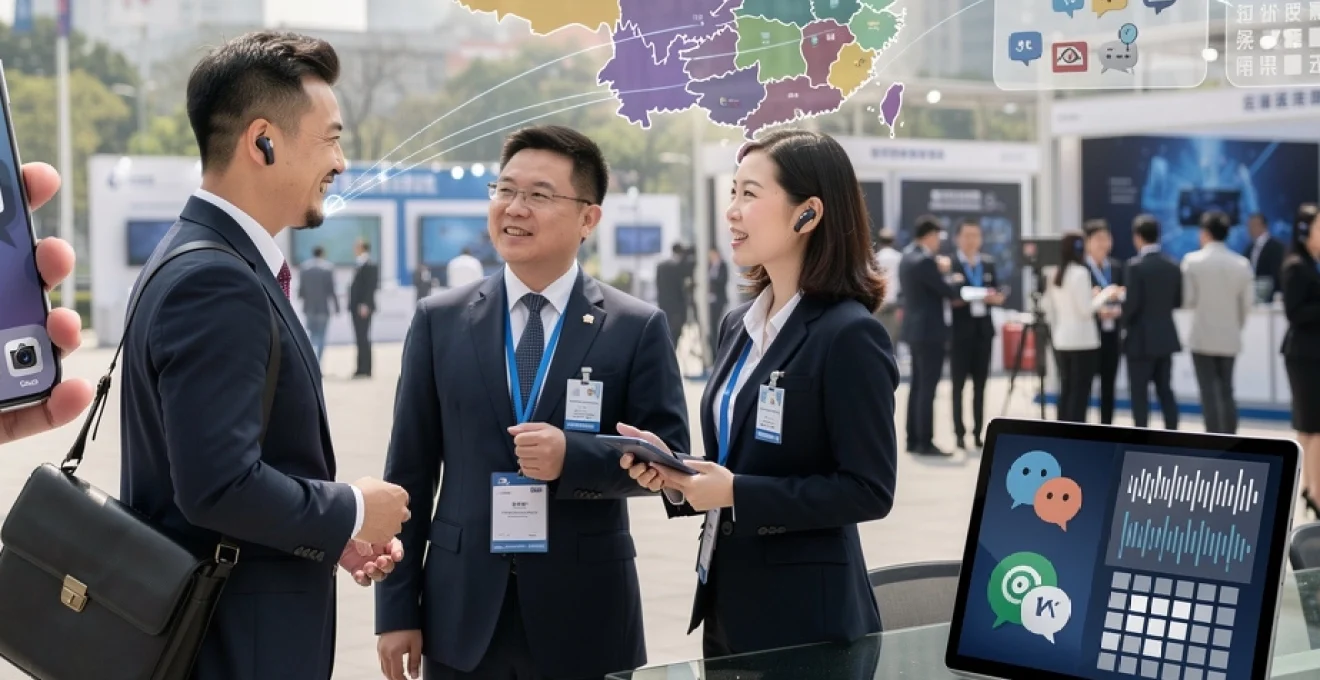
China’s rapid economic expansion and emergence as a global business hub have made it an essential destination for international professionals, entrepreneurs, and travellers. However, the linguistic complexity of this vast nation presents unique challenges that can significantly impact business success and cultural integration. With over 1.4 billion native speakers of various Chinese dialects and a predominantly Mandarin-speaking business environment, understanding how to navigate language barriers becomes crucial for anyone seeking to establish meaningful connections or conduct successful ventures in the Middle Kingdom.
The linguistic landscape of China extends far beyond simple translation needs, encompassing cultural nuances, regional variations, and technological solutions that can either facilitate or complicate communication efforts. Modern China operates within a sophisticated digital ecosystem where traditional language barriers intersect with cutting-edge translation technologies, creating both opportunities and complexities for foreign visitors and business professionals. Mastering these communication challenges requires a comprehensive understanding of both traditional linguistic protocols and contemporary digital solutions.
Essential mandarin chinese phrases for business and daily communication
Establishing effective communication foundations begins with mastering core Mandarin phrases that serve as building blocks for more complex interactions. Professional success in China heavily depends on demonstrating respect through appropriate language use, even when relying primarily on translation technologies or interpreter services.
Core greetings and politeness protocols in chinese business culture
Business interactions in China follow strict hierarchical protocols that extend to linguistic expressions. The fundamental greeting « 您好 » (nín hǎo) represents the formal version of hello, essential for professional encounters, while « 你好 » (nǐ hǎo) serves casual interactions. Understanding when to employ formal versus informal address demonstrates cultural competency and establishes appropriate relationship boundaries from initial contact.
Politeness markers such as « 请 » (qǐng) meaning « please » and « 谢谢 » (xiè xiè) for « thank you » must be integrated naturally into business conversations. The response « 不客气 » (bú kè qì) meaning « you’re welcome » completes essential courtesy exchanges. Professional apologies require « 对不起 » (duì bu qǐ) for serious matters and « 不好意思 » (bù hǎo yì si) for minor inconveniences, with each carrying different levels of formality and responsibility admission.
Navigating guangdong cantonese versus standard putonghua in commercial settings
Southern China’s commercial centres, particularly Guangdong Province, present unique linguistic challenges where Cantonese remains dominant in local business networks despite Mandarin’s official status. Understanding this regional variation becomes critical for companies establishing manufacturing partnerships or supply chain relationships in these economically vital areas.
Cantonese greetings such as « 你好 » (nei hou) differ significantly in pronunciation from Mandarin equivalents, though written characters often remain identical. Business professionals must recognise when Cantonese takes precedence in local negotiations, particularly in traditional industries and family-owned enterprises. Many successful international companies employ bilingual staff capable of switching between Cantonese for local relationship building and Mandarin for broader Chinese market communications.
Emergency medical and legal terminology for foreign professionals
Critical situations demand precise communication capabilities that extend beyond basic pleasantries. Medical emergencies require knowledge of essential phrases such as « 我需要医生 » (wǒ xū yào yī shēng) meaning « I need a doctor » and « 我过敏 » (wǒ guò mǐn) for « I am allergic. » Understanding body part terminology and pain descriptions can prove lifesaving when professional medical translation services remain unavailable.
Legal terminology becomes equally important for business professionals facing contractual disputes or regulatory compliance issues. Key phrases include « 律师 » (lǜ shī) for lawyer, « 合同 » (hé tóng) for contract, and « 法律 » (fǎ lǜ) for law. Emergency contact numbers in China include 120 for medical emergencies, 110 for police assistance, and 119 for fire services, though English-speaking operators may not always be immediately available
To minimise risk, foreign professionals should keep a short list of critical medical and legal phrases saved on their phone in both Chinese characters and pinyin, and ideally printed on a card in their wallet. Sharing this information proactively with hotel staff, colleagues, or local partners ensures that someone nearby can advocate for you if you are unable to communicate clearly yourself. Combining these essential terms with translation apps and local emergency numbers gives you a robust safety net when operating in unfamiliar environments.
Wechat communication etiquette and digital language conventions
In contemporary China, mastering WeChat etiquette is almost as important as mastering basic Mandarin phrases. WeChat serves as the default communication platform for business, blending messaging, payments, document sharing, and social networking in one ecosystem. Professional contacts frequently exchange WeChat IDs after initial meetings, and follow-up discussions often shift quickly from email to WeChat for speed and convenience.
When communicating in English on WeChat, concise and polite messages are preferred, often accompanied by a brief Chinese greeting such as « 您好 » or « 辛苦了 » (xīn kǔ le), which literally means « you’ve worked hard » but functions as a courteous acknowledgement of someone’s effort. Emojis are common but should be used sparingly in early-stage business relationships to maintain professionalism. Voice messages are widely used by Chinese professionals; however, many foreign executives prefer text for clarity, so you can politely request written responses if needed by saying « 可以请您打字吗? » (kě yǐ qǐng nín dǎ zì ma?) – « Could you please type it? »
Group chats for project teams or negotiations often follow implicit hierarchical norms, where senior participants speak first and others respond in sequence. You can show respect by waiting for key stakeholders to reply before you add your own comments, especially on sensitive topics such as pricing or contract terms. Time-sensitive messages are usually acknowledged with a short response like « 收到 » (shōu dào), meaning « received, » which signals that you have read and understood the content. Adopting these digital language conventions helps you integrate smoothly into Chinese business communication culture and reduces misunderstandings in fast-moving discussions.
Digital translation technologies and mobile applications for real-time communication
As China’s digital infrastructure has expanded, real-time translation tools have become indispensable for overcoming language barriers in meetings, factory visits, and daily life. While human interpreters remain vital for high-stakes negotiations, translation apps provide an agile first line of support for routine conversations, menu reading, or document checking. Selecting the right tools – and understanding their limitations – can dramatically improve your communication efficiency in Chinese business environments.
Most international visitors rely on a combination of global platforms and Chinese-developed applications to navigate both online and offline interactions. Because several Western services face connectivity restrictions or require VPN access in mainland China, it is wise to install and test multiple translation apps before departure. By blending machine translation, dictionary databases, and voice recognition, you can create a layered strategy that covers most real-world communication scenarios, from small talk with colleagues to technical terminology in client presentations.
Baidu translate versus google translate performance analysis in chinese markets
For many professionals, the comparison between Baidu Translate and Google Translate is central to planning how to navigate language barriers in China. Google Translate offers solid offline capabilities and a familiar interface, but full functionality can be limited by internet restrictions without a reliable VPN. Baidu Translate, on the other hand, is optimised for use inside China’s digital ecosystem and tends to perform better with colloquial expressions, internet slang, and region-specific terminology.
In recent independent tests, Baidu’s neural machine translation has shown slightly higher accuracy when handling short Chinese-to-Chinese paraphrasing and specialised vocabulary related to local industries. Google Translate often performs competitively when translating longer English paragraphs into formal written Chinese, which can help you draft initial versions of emails or proposals. However, both tools can struggle with nuanced business language, idioms, or contract clauses where subtle differences in wording carry legal implications.
Practically speaking, professionals should treat machine translation output as a working draft rather than a final product, especially for agreements, technical specifications, or HR documents. A useful workflow is to run text through both Baidu Translate and Google Translate, compare the results, and then ask a trusted bilingual colleague or interpreter to confirm the final wording. This dual-tool approach reduces the risk of critical mistranslations while still leveraging the speed and convenience of AI-powered translation.
Pleco dictionary and character recognition for complex hanzi interpretation
Pleco has become a gold standard among serious Chinese learners and business travelers who need reliable, in-depth support for reading complex characters. Unlike simple dictionary apps, Pleco offers advanced features such as optical character recognition (OCR), handwriting input, and highly detailed entries that include usage examples, classifier information, and multiple definitions. This makes it particularly valuable when you encounter specialised terms on contracts, invoices, or technical manuals.
With Pleco’s OCR, you can point your phone camera at printed Chinese text – from product labels to meeting agendas – and instantly identify unfamiliar characters. Handwriting recognition is equally powerful in situations where digital text is not available, such as handwritten notes from a factory manager or a whiteboard during a strategy meeting. Instead of copying every character stroke perfectly, you can sketch an approximate shape and still receive accurate suggestions, much like sounding out a word in a foreign alphabet.
The app also allows you to build custom flashcard lists for industry-specific vocabulary, enabling you to systematically study phrases relevant to your sector, whether that is logistics, finance, manufacturing, or technology. Over time, this transforms Pleco from a passive reference tool into an active learning platform that strengthens your ability to operate with less reliance on interpreters. For professionals planning long-term engagement with Chinese markets, regular use of Pleco can significantly shorten the learning curve associated with complex Hanzi interpretation.
Microsoft translator integration with windows and office applications
For corporate users embedded in Microsoft ecosystems, Microsoft Translator offers seamless integration with Windows, Office, and Teams, which can be a major advantage in cross-border collaboration. In Outlook and Word, you can translate entire emails or documents with a few clicks, quickly generating a readable Chinese version for internal review or client communication. While this output still requires human oversight, it accelerates the drafting process and helps non-Chinese-speaking teams understand the gist of incoming Chinese documents.
Within Microsoft Teams, real-time captioning and translation features support multilingual meetings by providing on-screen subtitles in participants’ preferred languages. For example, a Chinese colleague can speak Mandarin, while overseas team members view English subtitles in real time, reducing the cognitive load of following complex discussions. This is particularly valuable during technical workshops, product demos, or training sessions where dense terminology makes manual note-taking challenging.
On Windows devices, the Microsoft Translator app and browser extensions enable quick on-page translation of Chinese websites, internal portals, and cloud-based dashboards. When combined with other tools like Pleco and Baidu Translate, Microsoft’s ecosystem helps create an integrated workflow where you can move fluidly between email, documents, and live conversations without constantly switching platforms. For multinational companies, standardising on this suite can improve consistency and security when sharing translated content across departments.
Iflytek voice recognition technology for spoken chinese translation
China’s domestic leader in speech technology, iFlytek, provides some of the most advanced Mandarin voice recognition tools on the market. Its AI-powered engines are trained extensively on local accents, regional variations, and real-world audio conditions, giving it a significant edge in accurately transcribing spoken Chinese. For foreign professionals, this means more reliable conversion of fast, conversational Mandarin into written text that can then be translated or analysed.
iFlytek’s handheld translation devices and mobile apps are widely used in conferences, business negotiations, and factory tours. These tools can capture speech from multiple speakers and provide near real-time translations between Chinese and several major foreign languages. While no voice translation system is perfect – especially when dealing with technical jargon or heavy dialects – iFlytek’s accuracy often surpasses general-purpose international tools when operating within mainland China.
In practical terms, you might use iFlytek to record a client briefing in Mandarin, generate a Chinese transcript, and then feed that text into a translation engine for an English summary. This layered approach is similar to using multiple lenses on a camera: each tool refines the picture, resulting in a clearer overall understanding. For companies frequently hosting bilingual meetings or site inspections, investing in iFlytek-compatible devices can significantly reduce the friction of spoken communication.
Professional interpreter services and cultural mediation in major chinese cities
Despite rapid advances in translation technology, professional interpreters remain irreplaceable for high-stakes negotiations, regulatory discussions, and complex technical presentations. Interpreters not only convert words from one language to another, but also act as cultural mediators who understand subtle cues, unspoken expectations, and industry-specific norms. In China’s largest business hubs, you can access a mature ecosystem of language service providers tailored to different sectors and event types.
When deciding whether to hire an interpreter, consider the potential financial and reputational impact of miscommunication. For informal supplier visits or routine factory tours, translation apps may suffice, especially if your counterparty has some English ability. However, for contract signing ceremonies, board-level meetings, or government approvals, a certified interpreter can make the difference between a smooth interaction and a costly misunderstanding. Viewing interpreter fees as a strategic investment rather than a simple expense helps align language planning with broader market-entry goals.
Beijing and shanghai certified translation service providers
Beijing and Shanghai host the largest concentration of certified translation and interpretation professionals in mainland China, serving multinational corporations, embassies, and international organisations. Many agencies in these cities employ interpreters accredited by national or international bodies, offering simultaneous, consecutive, and whisper interpreting services. This level of certification is particularly valuable for legal proceedings, financial roadshows, and high-level government or regulatory meetings.
In Beijing, demand is strong for interpreters experienced in policy, energy, technology, and public sector communications, reflecting the city’s role as the political capital. Shanghai, by contrast, leans more heavily toward finance, logistics, and international trade, with many interpreters specialising in IPOs, M&A discussions, and investor conferences. When selecting a provider, you should review case studies, client lists, and interpreter profiles to ensure alignment with your industry and event format.
Most reputable agencies can also provide certified written translations of contracts, articles of association, and compliance documents that meet the requirements of Chinese authorities and foreign regulators. For sensitive documents, confirm that your provider follows strict confidentiality protocols and, if necessary, signs non-disclosure agreements. Planning interpreter support in advance – often several weeks before large events – helps secure top-tier talent and allows time for briefing materials, glossaries, and rehearsal sessions.
Guangzhou trade fair interpreter booking and specialisation requirements
Guangzhou, home to the renowned Canton Fair and numerous industry exhibitions, has a thriving market for trade fair interpreters who specialise in product presentations and buyer–seller negotiations. Unlike conference interpreters who often work in booths, trade fair interpreters typically accompany you on the show floor, facilitating conversations with dozens of potential partners in quick succession. Their ability to switch rapidly between technical product vocabulary and informal relationship-building language is crucial in this high-energy environment.
When booking interpreters for trade fairs, you should prioritise candidates with proven experience in your specific product category, such as electronics, textiles, machinery, or consumer goods. Many interpreters list prior participation in major fairs on their profiles, along with the names of brands they have supported. This background ensures they can handle detailed questions about specifications, certifications, and pricing structures without constant clarification.
Because peak trade fair seasons create intense demand, it is wise to confirm interpreter arrangements at least one to two months before major events. Provide product catalogues, technical sheets, and a list of target clients ahead of time so your interpreter can familiarise themselves with key vocabulary and talking points. This preparation turns them into an extension of your sales team rather than a simple linguistic conduit, improving deal quality and conversion rates during your time in Guangzhou.
Shenzhen technology sector language support networks
Shenzhen’s rise as a global technology and hardware manufacturing hub has created a distinctive ecosystem of language support tailored to innovation-driven companies. Many local interpreters and translators in Shenzhen possess engineering backgrounds or hands-on experience with product development cycles, from prototyping to mass production. This technical literacy allows them to navigate detailed conversations about PCB layouts, firmware updates, user interface design, or supply-chain optimisation with minimal confusion.
Beyond traditional agencies, Shenzhen also hosts community-based networks of bilingual consultants, startup mentors, and accelerator program staff who informally support foreign founders. These professionals often bridge not only language barriers but also differences in business culture, regulatory expectations, and negotiation styles. For example, they may advise you on how to adapt pitch decks for Chinese investors or how to adjust documentation for local manufacturing partners.
For long-term operations, some companies choose to hire in-house bilingual project managers or product coordinators who can liaise daily with Chinese teams, suppliers, and government bodies. This hybrid approach – combining dedicated staff with external interpreters for high-level or overflow needs – creates a flexible language strategy aligned with Shenzhen’s fast-paced innovation culture. If you are expanding R&D or hardware production in the region, investing in these language support networks early can significantly reduce friction and accelerate time to market.
Cross-cultural communication strategies in chinese regional dialects
China’s linguistic diversity extends far beyond the Mandarin–Cantonese divide, with dozens of regional dialect groups such as Shanghainese (Wu), Hokkien (Minnan), and Hakka. While Standard Mandarin (Putonghua) remains the official working language in government and most corporate environments, local dialects often dominate informal conversations, especially in family businesses or regional markets. Understanding how to navigate these dialect layers can strengthen relationships and help you read the dynamics inside an organisation.
You are not expected to speak local dialects as a foreign professional, but showing interest and learning a few greetings can build rapport quickly. For example, in Shanghai, hearing a foreigner attempt a simple Shanghainese phrase can be disarming and memorable, much like using a regional phrase in Europe or Latin America. At the same time, it is important to gently steer critical discussions back into Mandarin or English, where clarity and record-keeping are easier.
One practical strategy is to identify a bilingual ally within each regional team who can quietly summarise side conversations occurring in dialect during meetings. This is not about mistrust, but about ensuring that key points, objections, or concessions are captured accurately in a language you understand. Think of it as having both a local guide and a language navigator in the same person – they help you read the « subtitles » of regional culture without derailing the main discussion.
Traditional chinese characters versus simplified script navigation techniques
For many newcomers, the coexistence of traditional and simplified Chinese scripts can feel like encountering two related but distinct writing systems. Simplified characters dominate in mainland China and Singapore, while traditional characters remain standard in Hong Kong, Taiwan, and many overseas Chinese communities. Business professionals operating across these regions need practical strategies to read, compare, and convert between scripts without becoming full-time language scholars.
From a functional perspective, most modern digital tools can convert text between traditional and simplified characters automatically, much like converting between British and American spelling. However, small differences in terminology and style may still appear, particularly in legal, financial, or cultural content. Learning to recognise a few common character transformations helps you navigate signage, business cards, and documents when crossing between jurisdictions.
Hong kong and taiwan traditional character systems for international business
Hong Kong and Taiwan maintain robust traditional character systems deeply embedded in their legal codes, education systems, and corporate documentation. Contracts, government regulations, and financial statements in these jurisdictions are almost always written in traditional characters, which can initially appear more complex to those accustomed to simplified script. However, many businesspeople in both regions are comfortable with English, making bilingual documentation common in cross-border deals.
When negotiating with partners in Hong Kong or Taiwan, you may receive bilingual contracts where one column uses traditional Chinese and the other uses English. It is crucial to clarify which language version prevails in case of discrepancies, as this can affect dispute resolution later. If the Chinese version is deemed authoritative, engaging a legal translator who is fully fluent in traditional characters becomes essential for risk management.
Digital tools such as built-in character converters in word processors, browser extensions, and translation apps can ease day-to-day reading, but they are not a substitute for professional review in high-value transactions. For marketing or branding projects, you should also be aware that character choice can convey subtle cultural associations in Hong Kong and Taiwan, influencing how slogans or product names are perceived. Local copywriters or brand consultants can help ensure that your messaging resonates appropriately in traditional character markets.
Mainland china simplified hanzi implementation in government documentation
In mainland China, simplified Hanzi is the standard across education, media, and official government documentation. All key administrative processes – from business registration and tax filings to regulatory approvals – require forms and submissions in simplified characters. Even if you rely on local partners or law firms to handle paperwork, having a basic awareness of simplified script conventions helps you track which documents you are signing and why.
Most major ministries and regulatory bodies now publish online portals with downloadable forms and guidance notes in simplified Chinese, sometimes accompanied by limited English summaries. Translation software can provide a general understanding of these materials, but for compliance-critical procedures such as licensing or data protection filings, professional legal translators should verify the details. This is particularly important if your home jurisdiction has different reporting standards or terminology.
For operational staff on the ground, maintaining a small internal glossary of frequently used simplified terms – such as « 营业执照 » (business licence), « 发票 » (official invoice), and « 税务 » (taxation) – can streamline communication with local authorities and service providers. Treat this glossary as a navigation map through China’s administrative landscape, reducing reliance on ad hoc translations and helping new team members integrate more quickly.
Pinyin romanisation systems for non-native speaker pronunciation
Pinyin, the official romanisation system for Mandarin Chinese, is one of your most powerful tools for bridging the gap between spoken and written language. By representing Chinese sounds with the Latin alphabet, pinyin enables non-native speakers to approximate pronunciation, search for words on digital devices, and input characters using standard keyboards. Most street signs, subway stations, and maps in major cities now display both characters and pinyin, making navigation significantly easier for international visitors.
However, pinyin is not a perfect mirror of English phonetics; letters such as « q », « x », and « zh » represent sounds that may not exist in your native language. Tones – indicated by marks above vowels – add another layer of meaning, transforming « mā », « má », « mǎ », and « mà » into four different words. A practical approach is to treat pinyin like musical notation: even if you cannot play perfectly at first, learning to « read the score » helps you understand where your pronunciation should rise, fall, or remain flat.
In business contexts, using pinyin correctly can improve how Chinese colleagues perceive your effort and professionalism. For example, saving contacts in your phone with both Chinese characters and accurate pinyin allows you to pronounce names more confidently during meetings. Many language-learning apps now incorporate speech recognition to provide feedback on your tones and consonants, effectively turning your smartphone into a personal pronunciation coach. Over time, even partial mastery of pinyin can significantly reduce misunderstandings and make daily interactions in China feel far more manageable.