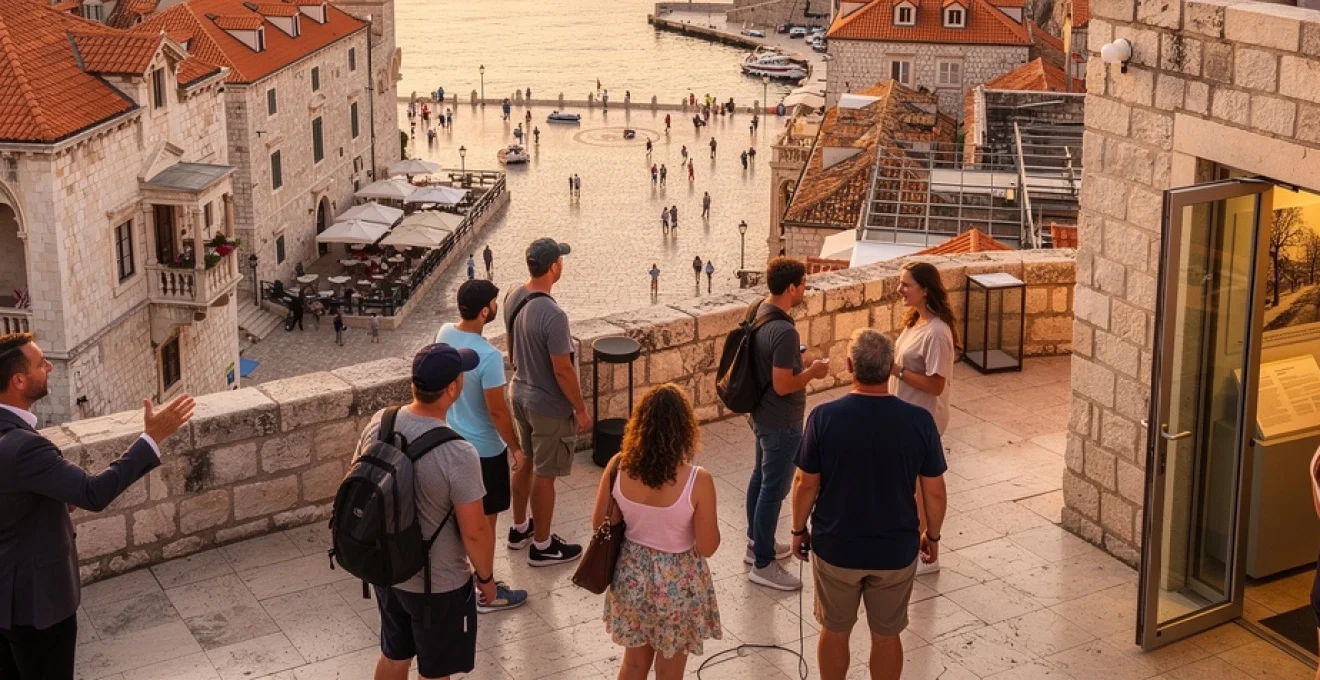
Dubrovnik stands as one of Europe’s most remarkable examples of a living medieval city, where centuries of history remain embedded within every stone wall and cobblestone street. The Pearl of the Adriatic presents visitors with a unique challenge: how can one truly appreciate both the profound historical legacy of the former Republic of Ragusa and the vibrant contemporary culture that has evolved within these ancient boundaries? This question becomes particularly pressing given the city’s transformation into a global tourism phenomenon, accelerated by its role as King’s Landing in HBO’s Game of Thrones series. The intersection of medieval heritage, modern urban development, and popular culture tourism creates a complex tapestry that demands careful exploration to fully comprehend.
Historical stratification analysis: dubrovnik’s medieval maritime republic era
The historical foundation of Dubrovnik extends far beyond its famous city walls, revealing layers of civilisation that have accumulated over more than a millennium. Understanding these temporal layers requires examining specific architectural and archaeological evidence that tells the story of one of Europe’s most successful maritime republics. The city’s strategic position along Adriatic trade routes enabled it to maintain independence for centuries, creating a unique political and cultural identity that persists today.
Rector’s palace archaeological evidence and venetian influence documentation
The Rector’s Palace serves as perhaps the most significant repository of Dubrovnik’s governmental evolution, with architectural elements revealing the complex relationship between local autonomy and foreign influence. Recent archaeological investigations have uncovered foundation layers dating to the 14th century, alongside evidence of multiple reconstructions following earthquakes and fires. The palace’s Gothic-Renaissance hybrid style reflects the pragmatic approach of Ragusan rulers who balanced Venetian architectural trends with distinctly local requirements. Documentation from the State Archives reveals how the palace functioned not merely as a residence but as the administrative heart of a sophisticated republican system that predated many European democratic institutions.
Ragusa republic trade route remnants along stradun
The limestone-paved Stradun represents more than Dubrovnik’s main thoroughfare; it functions as a physical timeline of commercial activity spanning six centuries. Archaeological surveys beneath the current surface have revealed evidence of earlier medieval street levels, alongside fragments of Ragusan coins and trade goods from across the Mediterranean. The uniform baroque reconstruction following the 1667 earthquake created the harmonious architectural ensemble visitors see today, yet careful observation reveals subtle variations that indicate individual merchant family preferences and wealth levels. Stone mason marks on building facades provide insight into the guilds and craftsmen who rebuilt the city, creating a form of historical documentation carved directly into the urban fabric.
Franciscan monastery’s 14th-century pharmaceutical heritage
Within the Franciscan Monastery complex lies one of Europe’s oldest functioning pharmacies, operational since 1317 and representing an unbroken chain of pharmaceutical knowledge spanning seven centuries. The monastery’s apothecary records document remedies and treatments that bridge medieval herbalism with early modern medical practices. Original ceramic vessels, some bearing Latin inscriptions detailing their contents, remain displayed alongside documentation of the monastery’s role in treating plague victims during the 15th and 16th centuries. This pharmaceutical heritage demonstrates how religious institutions served as centres of practical knowledge preservation, maintaining medical traditions that influenced healthcare practices throughout the eastern Adriatic region.
Dominican monastery’s Gothic-Renaissance architectural timeline
The Dominican Monastery showcases architectural evolution through its construction phases, with the original 14th-century Gothic structure incorporating Renaissance additions that reflect changing artistic and religious sensibilities. Stone carving techniques visible in the cloister reveal the transition from medieval craftsmanship to Renaissance artistry, with local artisans adapting Italian stylistic influences to suit Adriatic building materials and seismic requirements. The monastery’s museum houses religious artworks that document the spiritual and cultural development of the Ragusan Republic, including pieces by local masters who studied in Venice and Florence before returning to contribute to Dubrovnik’s artistic heritage. Manuscript collections within the monastery library contain historical chronicles written by Dominican friars who witnessed key events in the city’s development.
Sponza palace customs house historical transaction records
Sponza Palace stands as a testament to Dubrovnik’s commercial sophistication, housing the State Archives that contain over 100,
000 individual documents, including notarial contracts, customs registers, and cargo manifests that map the economic reach of the Ragusa Republic from the eastern Mediterranean to the Atlantic. These transaction records reveal how Dubrovnik functioned as a neutral mediator between powerful states, handling commodities ranging from wax and salt to silk and precious metals. For visitors, understanding Sponza as a data-rich « logbook in stone » transforms it from a picturesque façade into a crucial node in the global trade networks of the late medieval and early modern periods. The building’s carefully preserved inscriptions and merchant marks provide rare insight into the legal frameworks and commercial norms that underpinned Ragusa’s prosperity and relative stability.
Contemporary urban development impact on medieval infrastructure
While Dubrovnik’s medieval walls and baroque streets dominate most photographs, the contemporary city continuously adapts to modern demands. Urban planners face the constant challenge of integrating infrastructure for 21st-century tourism and daily life without compromising the integrity of this UNESCO World Heritage site. From transportation systems to hospitality projects, every intervention within and around the Old Town is scrutinised to ensure that the living city remains functional while preserving its fragile historical layers.
Cable car system integration with mount srđ fortress accessibility
The reintroduction of the cable car system to Mount Srđ in 2010 significantly altered how visitors experience Dubrovnik’s defensive landscape. Previously, the ascent to the Imperial Fortress required either a steep hike or a vehicle journey along winding roads, limiting access to those with time and mobility. The modern cable car, designed with minimal visual impact on the skyline, now provides rapid access to panoramic views and the Homeland War Museum housed within the fortress. This integration of contemporary transport infrastructure with a 19th-century fortification illustrates how Dubrovnik balances accessibility with conservation, offering a layered vantage point from which visitors can interpret both medieval maritime defences and the 1990s siege lines in a single visit.
Cruise tourism pressure on old town’s UNESCO world heritage capacity
The rise of cruise tourism has brought acute pressure to Dubrovnik’s compact historic core, often resulting in daily visitor numbers that far exceed the comfort capacity of its narrow streets. UNESCO and local authorities have responded with monitoring systems, time-slot management, and occasional caps on cruise ship arrivals to protect both the built heritage and residents’ quality of life. When several large ships dock simultaneously, pinch points such as Pile Gate, Stradun, and the city walls can become congested, challenging the idea of an « authentic » historical experience. Understanding these dynamics helps time-limited visitors plan their Dubrovnik itinerary more strategically, choosing early morning or late afternoon slots to encounter the Old Town’s medieval fabric in a more contemplative atmosphere.
Modern hospitality sector within historic palazzo conversions
Across the Old Town, former noble residences and merchant palaces have been carefully converted into boutique hotels, guesthouses, and high-end apartments. These adaptive reuse projects demonstrate how modern hospitality can coexist with centuries-old structures, provided that structural interventions respect original stonework, floor plans, and sightlines. In many cases, what appears to be a contemporary reception area still rests on medieval vaulted cellars once used for olive oil storage or wine trading. For the discerning traveller, staying in such converted palazzi offers a tangible way to connect with Dubrovnik’s past and present simultaneously, as breakfast is taken beneath beams that once overheard diplomatic negotiations and commercial agreements.
Digital heritage preservation technologies at dubrovnik museums
Dubrovnik’s museums increasingly rely on digital tools to safeguard and interpret their collections, especially fragile manuscripts, maps, and artefacts that are vulnerable to environmental damage. High-resolution 3D scanning, augmented reality overlays, and interactive touchscreens allow visitors to explore layers of information that would be impossible to convey through traditional labels alone. At sites such as the Cultural History Museum in the Rector’s Palace and the Maritime Museum in St. John’s Fortress, digital reconstructions of earthquake damage, naval battles, and trade routes help you visualise phases of history otherwise invisible to the naked eye. This technological shift not only preserves original objects but also shortens the learning curve for time-pressed visitors trying to understand a millennium of Dubrovnik history in a single stay.
Game of thrones production legacy and cultural tourism transformation
The association of Dubrovnik with King’s Landing has become one of the most visible examples of how film-induced tourism can reshape a historic city’s image. While the Republic of Ragusa’s achievements once defined Dubrovnik’s narrative, many new visitors now arrive primarily through the lens of popular culture. This transformation raises complex questions: can cinematic fantasy and documented history complement each other, or does one inevitably overshadow the other in a short visit?
King’s landing filming location economic impact analysis
Since the first Game of Thrones episodes featuring Dubrovnik aired in 2012, local tourism authorities have recorded a marked increase in visitor numbers, with some estimates linking up to 10–15% of arrivals in peak years directly to the series. Production spending on location fees, local crews, and services injected substantial capital into the local economy during filming, while subsequent themed tours have created enduring jobs for guides, boat operators, and small businesses. However, this economic impact is double-edged: increased demand has contributed to rising property values and the proliferation of souvenir shops, sometimes at the expense of long-standing local businesses. For travellers, recognising this economic backdrop adds nuance to a Game of Thrones walking tour, transforming it from pure fandom into a case study of how modern media reshapes heritage cities.
Fort lovrijenac battle scene tourism circuit development
Fort Lovrijenac, once primarily interpreted as a 11th-century defensive outpost guarding the western approach to the city, has been reimagined in the public imagination as a key battle stage for King’s Landing. Tour operators now include the fortress in curated routes that blend historical narratives of Venetian threats with scene-by-scene recollections of sieges from the series. This layered storytelling can act like a palimpsest, where medieval cannon placements and 21st-century camera angles coexist in the same physical space. When guides successfully connect archival references to real sieges with anecdotes from the film crew, visitors gain a richer understanding of why Dubrovnik’s authentic military architecture proved so compelling as a fantasy backdrop.
Jesuit staircase and red keep connections tourist engagement
The baroque Jesuit staircase, designed by Pietro Passalacqua in the 18th century, has become globally recognisable as the site of the « Walk of Shame » sequence. This single association has dramatically increased foot traffic to what was previously a more contemplative religious precinct leading to St. Ignatius Church. For many, the staircase now acts as an accessible starting point for engaging with Dubrovnik’s layered identity: you arrive for a famous television moment but quickly encounter the city’s baroque urban planning, Jesuit educational traditions, and local religious practices. In this sense, the staircase functions as a cultural gateway, inviting you to move from fictional Red Keep connections towards a deeper exploration of the real city that inspired them.
Cultural heritage interpretation methodologies for time-limited visits
Faced with a compressed schedule, many visitors wonder whether it is even possible to grasp Dubrovnik’s complex evolution from medieval republic to modern tourist hub in a couple of days. The answer lies not only in what you see, but in how you structure your experience. Strategic use of passes, curated routes, and interpretive technologies can transform a potentially overwhelming checklist into a coherent narrative that moves through different historical periods with intention.
Dubrovnik card multi-site access strategic planning
The Dubrovnik Card, available in 1-, 3-, and 7-day versions, functions as a practical tool for coordinating access to key heritage sites while also covering public transport. By bundling entry to the city walls, museums, and selected galleries, the card encourages visitors to think holistically about their time rather than purchasing tickets ad hoc. From an interpretive standpoint, planning your Dubrovnik Card itinerary allows you to sequence visits in a way that mirrors the city’s chronological development: for example, starting with the walls and Maritime Museum to understand defence and trade, then moving to the Rector’s Palace for governance. Using the card strategically means you spend less time in ticket queues and more time connecting disparate locations into a single, meaningful story.
Walking tour route optimisation through historical epochs
Designing an efficient walking route through Dubrovnik is a bit like editing a documentary: you need to decide which scenes are essential and in what order they should appear. One effective approach is to structure your path as a journey through epochs, beginning with medieval fortifications on the walls, descending to baroque Stradun, and then threading through monastic complexes and noble residences. By grouping sites with similar time periods, you reduce backtracking and allow architectural details—such as Gothic windows versus Renaissance portals—to stand out through repetition and contrast. Joining a small, private walking tour can further optimise this route, as local guides adjust pacing and content on the fly, ensuring your limited hours are spent on the most historically significant or personally relevant corners of the city.
Audio guide technology integration at key heritage sites
Audio guides, whether rented on-site or accessed via smartphone apps, have become indispensable for travellers trying to absorb complex history at their own pace. In Dubrovnik, many major attractions now offer curated audio tracks that weave archival sources, expert commentary, and ambient soundscapes to immerse you in past events. This technology functions like a portable historian, filling in the gaps between plaques and signage, especially when crowds or heat make extended reading uncomfortable. For time-limited visitors, audio guides allow for flexible depth: you can skim key points at one site and then dive into longer, thematic tracks—such as episodes on the 1667 earthquake or the 1991–1992 siege—while resting in a shaded cloister or café.
Museum pass coordination between rector’s palace and maritime museum
Coordinating visits between the Cultural History Museum in the Rector’s Palace and the Maritime Museum in St. John’s Fortress is crucial for anyone seeking a balanced understanding of Dubrovnik’s political and seafaring heritage. Many combined tickets or card inclusions encourage pairing these two institutions, which together tell the story of how governance and maritime trade were interdependent in the Ragusan Republic. Visiting the Rector’s Palace first introduces you to the legal frameworks, diplomatic strategies, and social hierarchies that underpinned the city’s autonomy; following up with the Maritime Museum then shows how those policies manifested at sea through ship design, navigational charts, and trade networks. When experienced in tandem, these museums act like two halves of a single narrative, allowing you to perceive Dubrovnik not merely as a static walled city but as the headquarters of a dynamic maritime state.
Seasonal tourism dynamics and historical site accessibility
Dubrovnik’s capacity to convey its layered history varies dramatically with the seasons, as temperature, crowd levels, and opening hours all influence how you interact with key sites. In peak summer months, intense heat and high visitor numbers can limit the duration and comfort of activities such as walking the city walls or climbing to hilltop viewpoints. Shoulder seasons—late spring and early autumn—often provide the best compromise, combining pleasant weather with more manageable queues, allowing for longer, more reflective stays at monasteries, museums, and quiet side streets. Winter, by contrast, offers an almost cinematic experience of the Old Town’s architecture emptied of crowds, though some smaller attractions may operate on reduced schedules. Understanding these seasonal dynamics helps you align your expectations: a high-summer visit might prioritise early-morning or evening exploration, whereas an off-season trip may reward deeper museum visits and extended conversations with local guides.
Experiential tourism products bridging historical periods
Increasingly, Dubrovnik’s most compelling experiences are those that consciously weave together different historical layers rather than isolating them. Culinary tours that pair traditional Ragusan recipes with contemporary Dalmatian fusion cuisine, for example, reveal how trade-era ingredients such as spices, citrus, and dried fruits still shape local menus today. Live performances in historic venues—whether classical concerts in Rector’s Palace courtyards or modern theatre in fortresses—turn static architecture into a living stage, demonstrating continuity of public life across centuries. Even themed Game of Thrones tours, when led by historically informed guides, can act as bridges, using familiar scenes to introduce discussions of real sieges, diplomatic strategies, and the city’s resilience during the Homeland War. By choosing experiential tourism products that explicitly connect past and present, you maximise the chances that your single visit to Dubrovnik will feel less like a rushed checklist and more like a coherent, multi-layered encounter with a city that has never stopped reinventing itself.