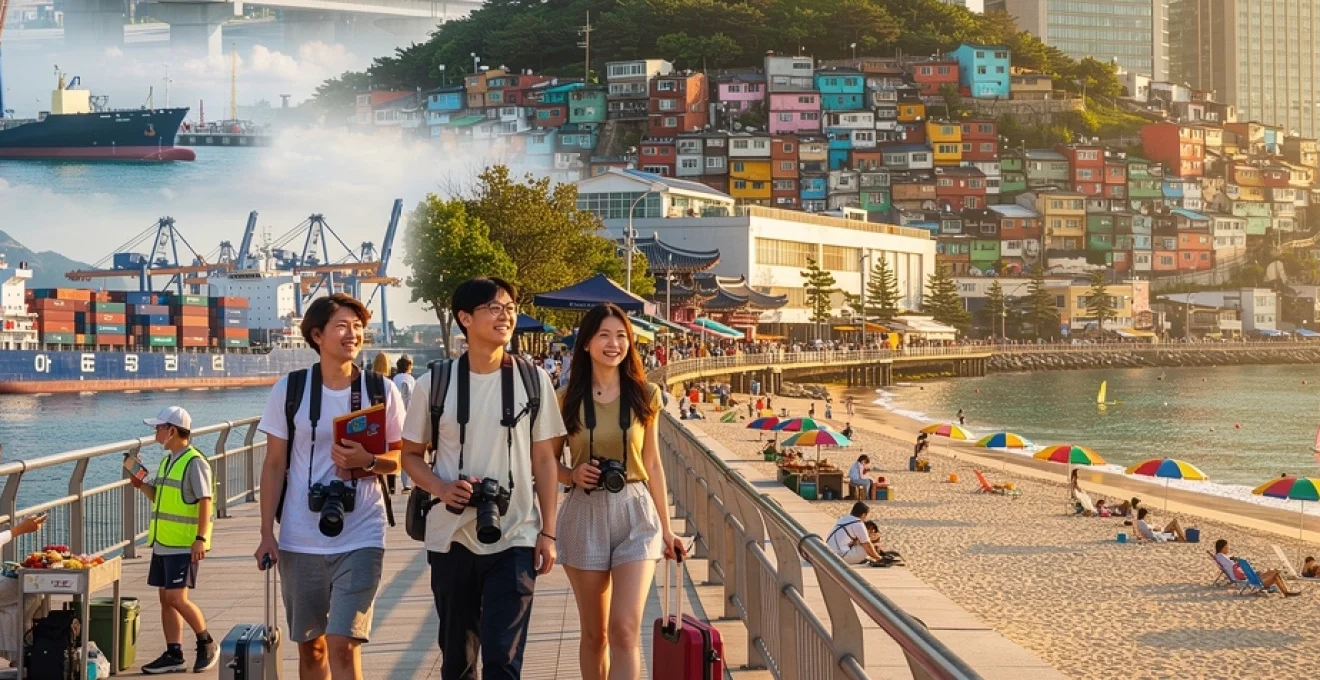
While Seoul commands global attention as South Korea’s political and economic powerhouse, Busan emerges as the nation’s compelling coastal counterpart, offering a distinctive blend of maritime heritage, cultural depth, and modern urban sophistication. This southeastern metropolis, home to over 3.4 million residents, serves as the country’s primary gateway to international waters whilst maintaining a relaxed seaside atmosphere that contrasts sharply with the capital’s frenetic pace. The city’s strategic positioning along the Korean Peninsula’s southern coast has shaped its identity as both a major commercial hub and a premier destination for cultural tourism, making it an increasingly attractive alternative for those seeking authentic Korean experiences beyond Seoul’s well-trodden paths.
Busan’s metropolitan infrastructure and urban development compared to seoul’s capital framework
Busan’s urban landscape represents a fascinating study in coastal metropolitan development, where mountainous terrain meets expansive waterfront districts in a configuration that differs markedly from Seoul’s inland sprawl. The city’s administrative framework operates through 15 districts and one county, creating a decentralised governance model that allows for specialised urban planning approaches tailored to each area’s unique geographical and economic characteristics. This structure enables targeted development strategies that maximise both the coastal advantages and mountainous topography that define Busan’s physical identity.
Busan port authority operations and maritime commercial hub status
The Busan Port Authority oversees what has become the world’s sixth-largest container port by volume, handling over 22 million TEU (Twenty-foot Equivalent Units) annually. This massive maritime infrastructure spans multiple terminals across Busan New Port and the original Busan Port, creating a comprehensive logistics network that connects Northeast Asia to global markets. The port’s strategic significance extends beyond mere cargo handling, as it serves as a crucial transshipment hub for goods flowing between China, Japan, and destinations worldwide.
Modern automated container handling systems and state-of-the-art warehouse facilities position Busan as a leading example of port modernisation in Asia. The integration of smart logistics technologies, including AI-driven cargo management and automated guided vehicles, demonstrates how traditional maritime industries can evolve to meet contemporary demands whilst maintaining operational efficiency.
KTX High-Speed rail connectivity from seoul station to busan station
The Korea Train Express (KTX) high-speed rail service transforms the 325-kilometre journey between Seoul and Busan into a comfortable 2.5-hour experience, operating at speeds up to 305 kilometres per hour. This critical transportation link processes over 180 daily services during peak periods, effectively creating a transportation corridor that enables seamless business and leisure travel between the nation’s two largest metropolitan areas.
Advanced booking systems and multiple service classes cater to diverse passenger needs, from business travellers requiring workspace connectivity to tourists seeking scenic journey experiences. The rail connection’s reliability and frequency have significantly contributed to Busan’s emergence as a viable alternative base for exploring South Korea, particularly for international visitors who appreciate efficient ground transportation options.
Busan metropolitan city administrative structure and governance model
Busan’s metropolitan governance operates through a mayor-council system that emphasises regional autonomy whilst maintaining coordination with national policies. The city’s administrative districts each possess distinct characteristics, from the high-tech focused Centum City to the traditional fishing communities of Gijang-gun, requiring flexible governance approaches that accommodate diverse local needs and development priorities.
Strategic planning initiatives focus heavily on sustainable urban development, balancing economic growth with environmental preservation. Recent policy frameworks emphasise green infrastructure, coastal protection measures, and smart city technologies that leverage Busan’s position as a testing ground for innovative urban solutions.
Urban planning initiatives in haeundae and centum city business districts
Haeundae district exemplifies Busan’s approach to integrated coastal development, combining luxury residential towers, international hotel chains, and entertainment complexes within walking distance of pristine beaches. The area’s master planning incorporates mixed-use developments that maintain public beach access whilst maximising commercial and residential density, creating a model for sustainable coastal urbanisation.
Centum City represents South Korea’s largest urban regeneration project, transforming former industrial land into a high-tech business district anchored by the world’s largest department store and numerous corporate headquarters. The district’s design emphasises pedestrian connectivity, green spaces, and cultural
venues, including the Busan Cinema Center, Busan Museum of Art and Museum 1, reinforcing the city’s status as a cultural and commercial hub that can rival Seoul’s Gangnam and Yeouido business districts. For travellers and investors alike, these flagship neighbourhoods illustrate how Busan’s metropolitan infrastructure combines coastal livability with cutting-edge urban development, offering a compelling alternative framework to the capital’s more concentrated, high-density core.
Coastal tourism assets and seaside recreational infrastructure in busan
Where Seoul relies on the Han River for waterside leisure, Busan’s tourism appeal is fundamentally coastal, defined by a chain of developed beaches and marine parks along the city’s rugged shoreline. These coastal tourism assets have been systematically upgraded over the past two decades, with investment in promenades, public art, marinas and family-friendly facilities. The result is a seaside city that supports both domestic holidaymakers and a growing number of international visitors looking for a beach destination in South Korea that does not require a flight to Jeju Island. From large-scale resort complexes to quieter ecological reserves, Busan’s shoreline demonstrates how a working port city can also function as a year-round leisure destination.
Haeundae beach resort complex and international tourism facilities
Haeundae Beach remains Busan’s flagship coastal attraction and arguably the most famous beach in South Korea. Stretching for roughly 1.5 kilometres, this wide crescent of pale sand is framed by luxury hotels, serviced residences and convention venues, including the Busan Exhibition and Convention Center (BEXCO). In summer, Haeundae turns into a dense urban resort, with colourful parasols lining the shore, seasonal festivals, and night markets catering to visitors who want to blend city comforts with easy ocean access.
International travellers will find that Haeundae is particularly well-equipped with multilingual signage, globally recognised hotel brands and tourism services ranging from guided yacht cruises to aquarium visits. The nearby Haeundae Blueline Park, with its coastal train and Sky Capsule system running between Mipo, Cheongsapo and Songjeong, offers a scenic mobility option that feels halfway between public transport and amusement ride. For business travellers seeking “bleisure” in Busan, the ability to attend a conference at BEXCO and reach the beach or waterfront cafés within minutes is a tangible advantage over landlocked convention districts in Seoul.
Gwangalli beach waterfront development and marina district
Gwangalli Beach presents a more relaxed, neighbourhood feel compared with Haeundae’s resort atmosphere, yet it has evolved into one of Busan’s most desirable lifestyle districts. The gently curving beach faces the iconic double-deck Gwangan Bridge, which becomes an illuminated landmark after sunset, with LED light shows and the reflection of headlights creating a cinematic backdrop. Along the waterfront, a dense strip of cafés, craft beer bars, live music venues and rooftop lounges caters to a younger crowd, including students and creative professionals who prefer Busan’s coastal nightlife to Seoul’s crowded Hongdae and Itaewon districts.
Behind the beachfront, a growing marina district supports recreational boating and water sports, including paddle boarding, sailing lessons and seasonal festivals like the Busan Fireworks Festival. Urban planners have emphasised pedestrian access, cycling paths and viewing decks, encouraging residents and visitors to engage with the waterfront at all hours. If you are evaluating whether Busan can deliver the same buzz as Seoul while staying close to the sea, an evening on Gwangalli’s boardwalk—perhaps timed with a drone light show—provides a convincing answer.
Songdo beach coastal park and songdo marine cable car system
Songdo Beach, often cited as Korea’s first official public beach, showcases Busan’s ability to modernise historic coastal areas without erasing their character. Once an early 20th-century holiday spot, Songdo has been redeveloped with a contemporary coastal park that includes glass-floored skywalks, sculpture installations and landscaped promenades. The centrepiece of this transformation is the Songdo Marine Cable Car, which extends over the bay from Songnim Park to Amnam Park, offering elevated views of the cliffs, harbour and city skyline.
For families and casual visitors, the cable car system functions as both a transport link and an attraction in its own right, similar to how Hong Kong’s Ngong Ping 360 reframes access to Lantau Island. Enclosed cabins, some with transparent floors, allow you to experience Busan’s maritime scenery in a way that ground-level walks cannot provide. Practical considerations—such as ticketing machines with English options and clear wayfinding—make Songdo an easy half-day excursion, particularly for travellers staying near Nampo-dong or Jagalchi Market who want a coastal escape without crossing the entire city.
Dadaepo beach sunset fountain and ecological wetland preservation
Dadaepo Beach, located at Busan’s southwestern edge where the Nakdong River meets the sea, offers a different atmosphere again: wide tidal flats, long stretches of sand and one of the city’s most impressive sunset viewpoints. Unlike Haeundae and Gwangalli, Dadaepo is less about dense high-rise development and more about open space and ecological preservation. The adjacent Nakdong Estuary Eco-Center and reed marshes provide important habitats for migratory birds, turning this district into a low-key destination for nature enthusiasts and photographers.
The Dadaepo Sunset Fountain of Dreams—once recognised as one of the largest musical fountains in the world—adds an urban entertainment layer, with choreographed water and light shows in the warmer months. Boardwalks, picnic areas and carefully managed dunes illustrate Busan’s attempt to balance coastal recreation with environmental stewardship. If you are comparing Busan vs Seoul in terms of access to green-blue spaces, Dadaepo’s combination of wetlands and beach demonstrates why many domestic travellers see Busan as the more restorative choice.
Cultural heritage sites and traditional korean architecture in busan
Beyond beaches and high-rises, Busan distinguishes itself through a network of temples, markets and historical neighbourhoods that reveal layers of Korean culture often overshadowed by Seoul’s royal palaces and museum clusters. The city’s role as a refuge during the Korean War, its centuries-old maritime links with Japan, and its mix of Buddhist and modern civic architecture create a cultural landscape that rewards slow exploration. For visitors who want to deepen their understanding of South Korea beyond pop culture, Busan’s heritage sites offer immersive, often less crowded alternatives to the capital’s most famous landmarks.
Beomeosa temple buddhist monastery and geumjeongsan mountain location
Beomeosa Temple, founded in the 7th century on the slopes of Geumjeongsan Mountain, is widely regarded as one of Korea’s most significant Buddhist monasteries. Unlike the urban temples scattered around central Seoul, Beomeosa occupies a tranquil forest setting, reached via a short bus ride and a walk through streams and towering pines. The complex comprises multiple halls, pagodas and stone gates, many reconstructed after wartime damage yet preserving architectural details characteristic of traditional Korean temple design.
For travellers interested in spiritual tourism, Beomeosa’s temple stay programmes provide an opportunity to experience monastic life first-hand, from dawn chanting and meditation to communal vegetarian meals. The surrounding hiking trails connect to Geumjeongsanseong Fortress and panoramic viewpoints, meaning you can combine cultural immersion with nature-based recreation in a single day. If you have visited Seoul’s Jogyesa or Bongeunsa temples and are wondering whether another temple visit is worthwhile, the mountain setting and scale of Beomeosa offer a distinctly Busan perspective on Korean Buddhism.
Jagalchi fish market traditional commerce and culinary tourism
Jagalchi Fish Market embodies Busan’s identity as a working port more vividly than any skyline view could. As South Korea’s largest seafood market, it occupies both indoor market halls and surrounding streets along the waterfront, with vendors—often middle-aged women known as ajumma—displaying everything from live crabs and octopus to sea squirts and seasonal delicacies. The atmosphere at dawn, when boats unload their catch and buyers haggle over prices, offers a raw, sensory-rich experience very different from the polished food halls of Seoul.
For culinary tourists, Jagalchi doubles as an open classroom in Korean seafood culture. Many stalls allow you to select fresh fish, shellfish or sashimi-grade cuts, which can then be prepared in adjacent restaurants or casual eateries upstairs. If eating live octopus or trying fermented seafood seems daunting, you can start with grilled mackerel, spicy fish stews or steamed shellfish platters that are more approachable yet still local in character. Compared with Seoul’s Noryangjin Market, Jagalchi’s waterfront setting and proximity to Nampo-dong shopping streets make it particularly convenient to integrate into a broader day of sightseeing.
Gamcheon culture village artistic community and hillside settlement
Gamcheon Culture Village, a hillside neighbourhood of stacked pastel houses overlooking the harbour, has evolved from a post-war refugee settlement into one of Busan’s most photographed cultural districts. Rather than clearing the area for high-rise development—a common pattern in major Asian cities—local authorities and artists collaborated on a regeneration model that emphasised street art, small galleries and creative studios embedded within the existing urban fabric. The result is a living community that feels at once historical and playfully contemporary.
Visitors can purchase a stamp map at the entrance and follow marked routes through narrow alleys, discovering murals, installations and viewing platforms along the way. This gamified approach to urban exploration not only distributes foot traffic more evenly but also encourages you to slow down, notice details and support local cafés and craft shops. While some critics argue that Gamcheon is becoming commercialised, it still offers a more intimate and community-oriented alternative to Seoul’s heavily touristed Bukchon Hanok Village, particularly if you visit early in the morning or outside peak holiday seasons.
Yongdusan park and busan tower panoramic observation facilities
Yongdusan Park, located near Nampo-dong, provides a green oasis in the middle of Busan’s dense lower city and houses one of its most recognisable landmarks: Busan Tower. The park itself features walking paths, memorials and seasonal flower displays, attracting local residents as much as tourists seeking a quiet break from nearby shopping streets and markets. In many ways, it functions as Busan’s counterpart to Seoul’s Namsan Park, albeit on a smaller, more approachable scale.
Busan Tower’s observation deck offers 360-degree views of the port, surrounding hills and bridge network, particularly striking at dusk when the city lights begin to glow. Interactive exhibits and digital displays provide context on Busan’s history and development, making the visit more than just a photo opportunity. If you are choosing between multiple observation points across South Korea, Busan Tower’s vantage point over working docks, coastal neighbourhoods and offshore islands provides a distinctly maritime panorama that you will not find in the landlocked capital.
Economic diversification and industrial sectors beyond seoul’s financial dominance
While Seoul remains South Korea’s primary financial and political centre, Busan has steadily diversified its economy beyond traditional shipping and manufacturing into sectors that give it a complementary, rather than subordinate, role in the national landscape. The city’s industrial base includes automotive production (with Renault Korea Motors headquartered here), shipbuilding, logistics technology, film and creative industries, and a growing digital economy anchored around blockchain and smart city initiatives. This multi-pillar structure helps insulate Busan from cyclical downturns in any single sector and positions it as a resilient regional hub.
Centum City’s emergence as a media and IT cluster, including the Busan Cinema Center and studios associated with the Busan International Film Festival (BIFF), has boosted the city’s global cultural profile. At the same time, initiatives such as the Busan Eco Delta Smart City and the proposed OCEANIX floating city pilot highlight Busan’s ambition to lead in sustainable urban innovation. For investors and professionals who might instinctively look only to Seoul for opportunities, Busan offers an alternative ecosystem where maritime logistics, tourism, advanced manufacturing and creative fields intersect—much like how Osaka complements Tokyo in Japan.
Transportation networks and regional connectivity systems
Busan’s appeal as an alternative base to Seoul is reinforced by its comprehensive transportation networks, which integrate high-speed rail, metro lines, buses, ferries and air links into a cohesive regional system. Internally, the Busan Metro spans four main lines and a light rail connection to the airport, making it straightforward for visitors to navigate between beaches, business districts and cultural attractions. Fares remain affordable, and T-money cards used in Seoul work seamlessly here, reducing friction for travellers combining both cities in a single itinerary.
Externally, in addition to the KTX high-speed rail corridor, Busan is connected to Japan via high-speed ferries to Fukuoka and other ports, and to the rest of Asia through Gimhae International Airport’s expanding route network. Express bus terminals link Busan to secondary Korean cities, while future projects, such as upgraded intercity rail and potential extensions of smart mobility services, aim to reduce travel times further. If you are planning a broader East Asia journey, Busan’s status as both a rail terminus and maritime hub effectively makes it a gateway node, allowing you to move between Seoul, Japan and regional destinations without backtracking through the capital.
Accommodation options and hospitality infrastructure for international visitors
Busan’s hospitality infrastructure has expanded rapidly in response to rising domestic tourism and increasing international awareness, offering a range of accommodation options from global five-star brands to boutique guesthouses and budget-friendly hostels. Haeundae and Centum City host many of the city’s upscale hotels, including properties integrated with resort facilities, spas and direct beach or shopping mall access. These are ideal for conference attendees, families seeking convenience, or travellers who prioritise amenities comparable to those found in Seoul’s premier districts.
For visitors looking for a more local experience, neighbourhoods such as Seomyeon, Nampo-dong and Gwangalli provide mid-range hotels, serviced apartments and design-focused guesthouses within walking distance of restaurants, bars and public transport. Prices are often more competitive than equivalent locations in the capital, especially outside peak summer or festival periods. Backpackers and solo travellers will find hostels and capsule hotels clustered around Busan Station and key metro interchanges, making short stays and onward travel logistics straightforward.
When choosing where to stay in Busan, it can be helpful to think in terms of lifestyle rather than purely star ratings: do you want sunrise walks on Haeundae Beach, sunset drinks at Gwangalli, or easy access to Jagalchi Market and Gamcheon Culture Village? Because distances between districts are greater than in central Seoul, selecting the right base can significantly streamline your daily movements. Fortunately, the breadth of Busan’s accommodation ecosystem—paired with its efficient transport system—means you can tailor your stay to suit both your budget and preferred pace, reinforcing the city’s position as a vibrant, liveable alternative to South Korea’s capital.