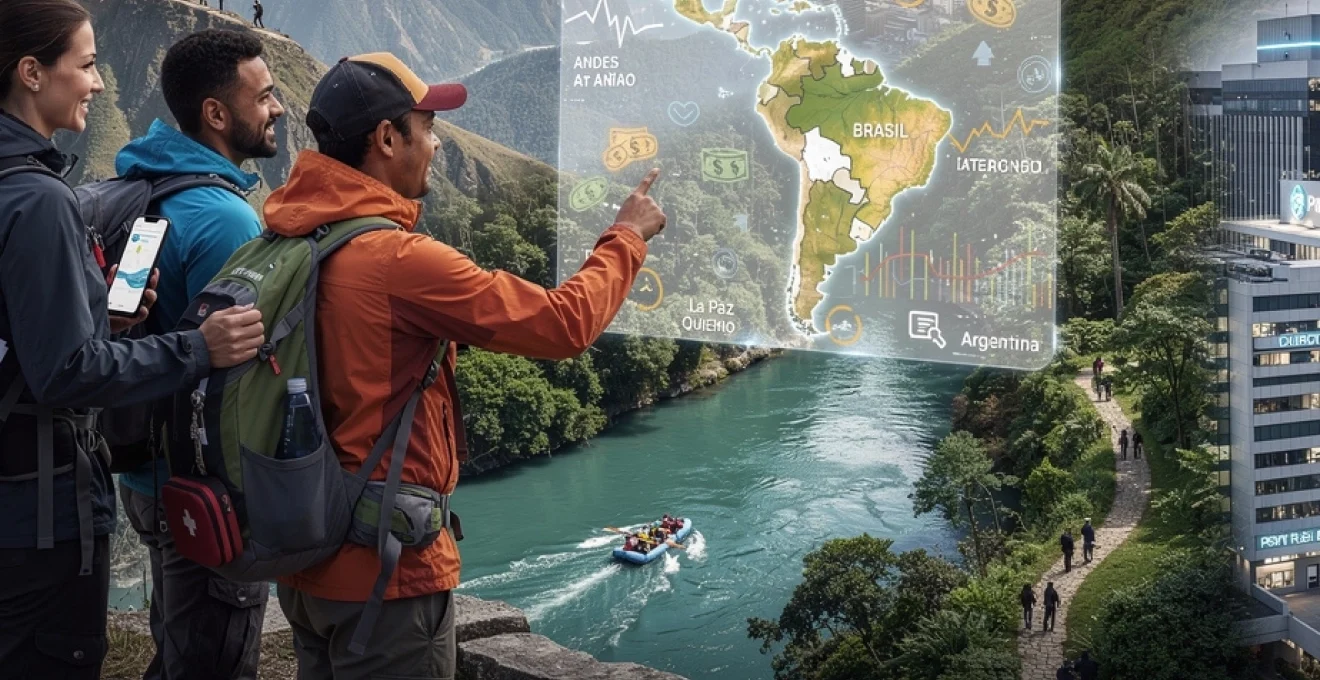
South America presents an extraordinary tapestry of experiences, from the snow-capped peaks of the Andes to the verdant Amazon rainforest, each destination offering unique adventures alongside distinct risks. The continent’s diverse geography, altitude variations, and varying levels of medical infrastructure create a complex landscape for travellers seeking comprehensive protection. Understanding the intricacies of travel insurance for South American destinations becomes particularly crucial when considering the potential for altitude-related medical emergencies, adventure activity incidents, and the challenges posed by remote locations with limited medical facilities.
The importance of securing appropriate travel insurance coverage extends far beyond basic medical protection, encompassing emergency evacuation from isolated regions, coverage for high-altitude activities, and protection against the economic volatility that characterises several South American nations. Modern travellers must navigate policy exclusions, understand regional risk assessments, and ensure their coverage aligns with the specific activities and destinations planned throughout their South American journey.
Medical coverage requirements for High-Altitude destinations in the andes
The Andean mountain range presents unique medical challenges that standard travel insurance policies often overlook or inadequately address. At elevations exceeding 2,500 metres, the human body faces significant physiological stress, with reduced oxygen levels triggering a cascade of potential health complications. Acute mountain sickness affects approximately 25% of visitors to high-altitude destinations, with symptoms ranging from mild headaches to life-threatening cerebral or pulmonary oedema.
Medical coverage for Andean destinations must specifically address altitude-related conditions, as many insurers classify these as pre-existing conditions or exclude them entirely from standard policies. The cost of emergency medical treatment at altitude can reach £50,000 to £100,000, particularly when helicopter evacuation becomes necessary from remote mountain locations. Comprehensive policies should include coverage for hyperbaric chamber treatment, specialised altitude medications, and emergency descent procedures.
Altitude sickness protection for cusco and machu picchu expeditions
Cusco, situated at 3,400 metres above sea level, serves as the gateway to Machu Picchu and experiences thousands of altitude-related medical incidents annually. Travel insurance policies must explicitly cover altitude sickness treatment, including immediate medical consultation, prescription medications such as acetazolamide, and potential hospitalisation for severe cases. The ancient Inca capital’s medical facilities, while adequate for basic treatment, may require patient transfer to Lima for serious complications.
The Inca Trail trek presents additional challenges, with passes reaching 4,215 metres at Dead Woman’s Pass. Emergency evacuation from these remote locations requires helicopter services costing between £15,000 and £25,000, making comprehensive evacuation coverage essential. Travellers should ensure their policy covers porter-assisted evacuation to accessible landing zones, as weather conditions frequently prevent direct helicopter rescue from trail locations.
Emergency evacuation coverage from remote patagonian locations
Patagonia’s vast wilderness areas present some of South America’s most challenging evacuation scenarios, with distances to medical facilities often exceeding 500 kilometres across harsh terrain. The region’s unpredictable weather patterns can ground rescue aircraft for days, necessitating comprehensive ground evacuation coverage including overland transport by specialised vehicles. Emergency evacuation from remote Patagonian locations typically costs between £30,000 and £80,000, depending on weather conditions and accessibility.
Insurance policies must address the unique logistical challenges of Patagonian rescues, including coverage for multi-day evacuation procedures, temporary sheltering costs, and coordination between Argentine and Chilean rescue services for cross-border incidents. The region’s limited communication infrastructure often delays emergency response, making satellite communication device rental coverage a valuable policy addition for serious adventurers exploring remote areas.
Specialist medical facilities access in la paz and quito
La Paz, the world’s highest capital city at 3,500 metres, maintains several specialist altitude medicine clinics, but access requires specific insurance arrangements with local providers. The city’s medical infrastructure includes hyperbaric chambers and altitude-specialised physicians, yet many international insurance policies fail to recognise these facilities or provide inadequate reimbursement rates. Travellers require direct billing arrangements to avoid substantial upfront payments that can reach £20,000 for serious treatments.</p
Similarly, Quito’s elevation of 2,850 metres and its role as a hub for Amazon and Andean expeditions mean that travellers often require access to tertiary-level hospitals and cardiopulmonary specialists. Not all hospitals in Quito have direct relationships with international insurers, so you should check whether your travel insurance for South America specifies cashless treatment at named facilities or offers a 24/7 assistance team to provide payment guarantees. Without this, you may be asked to pay for consultations, diagnostic tests, and even short hospital stays up front, which can quickly climb into the thousands of pounds. When reviewing policies, look for clear wording on recognised clinics, direct-settlement agreements, and coverage for specialised transport between regional centres and these high-altitude capitals.
Hyperbaric chamber treatment coverage for severe altitude-related conditions
Hyperbaric chamber treatment, while more commonly associated with diving incidents, is increasingly used in the Andes to stabilise severe altitude sickness and related complications. A single hyperbaric session in cities such as La Paz or Cusco can cost several hundred pounds, and complex cases may require multiple sessions combined with intensive care. Many generic travel insurance policies either exclude hyperbaric therapy or treat it as an experimental procedure, leaving travellers exposed to substantial out-of-pocket expenses. When you compare travel insurance for South America, confirm that altitude-related complications and hyperbaric chamber treatment are explicitly listed as covered medical expenses rather than falling into a grey area.
Why is this level of detail so important? Because insurers sometimes classify advanced treatments as optional or non-standard, especially if they are not widely available in your home country. Think of it like buying a car that includes a spare tyre but no jack – the basic tool is there, but you still cannot use it in an emergency. Robust South America travel insurance will not only cover consultations and medication but also the full spectrum of altitude care: hyperbaric therapy, high-dependency care, and medically supervised descent where necessary. To avoid disputes later, keep medical reports, invoices, and any written recommendations from local specialists to support potential claims.
Adventure activity exclusions and coverage gaps across south american policies
South America is a magnet for adventure tourism, but the very activities that make the region so compelling are often those insurers are most cautious about. Policies frequently divide sports and adventures into risk tiers or activity packs, with higher-risk pursuits requiring additional premiums or specialist cover. If you plan to climb, raft, paraglide or trek through remote jungle, you cannot assume these will be covered just because you have a “comprehensive” policy. Instead, you need to match each planned activity, altitude, and location with the exact wording in your travel insurance for South America. Missing this step is one of the most common reasons claims are rejected after an accident.
Insurers differentiate not only by the type of activity, but also by altitude limits, use of technical equipment and whether a certified guide is present. Two travellers on the same mountain may face very different coverage outcomes if one is on a guided, non-technical trek and the other is leading an independent, technical ascent. Before locking in your policy, make a written list of everything you might do – even “optional” extras – and check each one against the policy’s activity list or speak directly with the underwriter. Where necessary, upgrade to higher activity levels or purchase specialist adventure cover so that your insurance genuinely reflects your South America itinerary.
Mountaineering coverage limitations for aconcagua and huascarán ascents
Aconcagua in Argentina and Huascarán in Peru are iconic high-altitude objectives, yet they sit firmly in the high-risk category for most insurers. Many standard South America travel insurance policies cover trekking up to 3,000–4,000 metres but specifically exclude mountaineering, which they define as any ascent requiring ropes, crampons, ice axes or technical skills. Aconcagua’s summit stands at 6,961 metres, and even its “non-technical” routes are typically classed as expedition mountaineering. As a result, climbers often need specialist high-altitude or expedition insurance that includes search-and-rescue, helicopter evacuation, and medical repatriation at substantially increased limits.
Huascarán, at 6,768 metres, presents additional objective hazards such as crevasses and avalanche risk, leading insurers to impose even stricter exclusions. Policies may cap altitude coverage, require proof of climbing experience, or insist on a licensed local guide and registered itinerary in the Cordillera Blanca. One useful analogy is to think of standard travel insurance as everyday footwear and expedition cover as crampons – both go on your feet, but only one is designed for ice and steep slopes. If your plans include big Andean peaks, carefully review altitude ceilings, definitions of mountaineering, and any requirements for safety equipment, guiding, or route registration before you assume you are covered.
Whitewater rafting insurance exclusions on futaleufú and urubamba rivers
World-class whitewater rivers such as Chile’s Futaleufú and Peru’s Urubamba attract rafters from across the globe, but their high-intensity rapids can fall outside the comfort zone of standard policies. Many insurers exclude Grade IV and above rapids, or they only cover rafting when it is operated by licensed companies on designated stretches of river. If you are drawn to multi-day Futaleufú expeditions or advanced sections of the Urubamba near Cusco, you should verify whether your travel insurance for South America distinguishes between leisure rafting and whitewater rafting above Class III. Otherwise, a serious capsize or collision may result in medical bills that are only partially reimbursed, if at all.
Another common exclusion involves unsanctioned or self-guided trips using rented equipment without certified guides. Insurers often consider these undertakings significantly riskier, particularly in remote canyons where rescue logistics are complex and costly. To avoid coverage gaps, choose reputable, licensed rafting operators who provide safety briefings, helmets, and life jackets, and keep proof of your booking and trip classification. Before confirming your policy, ask your insurer to state in writing that whitewater rafting up to a specific grade is covered in your chosen region. This simple step can be the difference between a smooth claim process and a costly dispute if you are injured on the river.
Jungle trekking protection in amazon basin and pantanal regions
Jungle trekking in the Amazon Basin and wildlife safaris in Brazil’s Pantanal introduce a different set of risks, from snake bites and insect-borne diseases to boat accidents and remote medical evacuations. Some travel insurance policies treat extended jungle travel, bushwalking or off-trail expeditions as higher risk and either exclude them or require an adventure upgrade. When assessing travel insurance for South America that includes jungle trekking, review coverage for animal bites, infectious diseases such as malaria or dengue, and emergency evacuation by riverboat or light aircraft. Remember that reaching the nearest hospital may take many hours and multiple modes of transport, significantly inflating evacuation costs.
Pre-existing medical conditions, heat-related illnesses and dehydration can further complicate jungle emergencies. Insurers may require that you follow recognised routes or travel with licensed guides to remain covered in these regions, as unguided expeditions are often seen as avoidable risk-taking. Think of the Amazon like an enormous, living maze – without a map and someone who knows the turns, the chance of getting lost or injured increases dramatically. To safeguard yourself, declare any pre-existing conditions, confirm that multi-leg evacuations from remote lodges are fully covered, and ensure your policy includes 24/7 assistance able to coordinate with local operators who know the river systems and trails.
Paragliding and hang-gliding coverage in rio de janeiro and medellín
Iconic launch sites above Rio de Janeiro’s beaches and Medellín’s surrounding hills make paragliding and hang-gliding some of the most tempting activities in South America. Yet, airborne sports are among the most frequently excluded pursuits in standard policies, often lumped together under “extreme sports” with blanket exclusions. If you are planning a tandem flight over Ipanema or a scenic glide above Medellín, check whether your South America travel insurance categorises these as paragliding, micro-light aviation or airborne sports and whether tandem rides with qualified pilots are treated differently from solo flights. Some insurers only cover tandem experiences operated by licensed companies using certified equipment and within defined altitude limits.
In the event of an accident, injuries from hard landings or mid-air collisions can require complex orthopaedic surgery and prolonged rehabilitation, quickly exceeding basic coverage limits. Consider whether your medical expense ceiling and emergency evacuation coverage are realistic for high-impact trauma in urban and coastal settings. A helpful way to think about this is to treat every planned flight as you would renting a motorbike abroad: you would not ride without checking your licence, helmet, and insurance; you should adopt the same mindset in the air. Ask your insurer to confirm, in writing if possible, that paragliding or hang-gliding in your chosen destinations is covered, and retain receipts from the operator and photos of safety briefings or equipment as supporting evidence if you later need to file a claim.
Regional risk assessment and policy underwriting factors
Behind every travel insurance quote for South America lies a detailed regional risk assessment carried out by underwriters. They examine factors such as local crime rates, political stability, natural disaster frequency, healthcare quality and historical claims data to decide both whether to offer cover and at what price. Countries or regions with elevated kidnapping risk, civil unrest or limited medical infrastructure may attract higher premiums, lower coverage limits or specific exclusions for certain activities. You may notice that policies cost more or carry stricter conditions for extended trips to parts of Colombia, Peru or Brazil compared with short urban stays in Chile or Uruguay, reflecting this risk-based pricing approach.
Underwriters also pay close attention to your personal profile and travel style. Longer itineraries that combine remote trekking, high-altitude stays and multiple border crossings are viewed differently from short city breaks, even within the same country. Pre-existing medical conditions, solo travel, and previous claims history can further influence both eligibility and cost. For travellers, the practical lesson is simple: be transparent and precise when you declare your plans. Attempting to save money by downplaying risk – for instance, describing a high-altitude expedition as a “short hike” – can lead to claim denials when the insurer later compares your account with rescue reports and medical notes.
Emergency repatriation networks and medical infrastructure analysis
Emergency repatriation is one of the most valuable, yet least understood, elements of travel insurance for South America. In serious cases, it can involve air ambulances, medical escorts, upgraded commercial flights or complex multi-leg transfers from jungle, mountain or desert to your home country. The feasibility and speed of repatriation depend heavily on the region’s medical infrastructure, available airports, and bilateral agreements between local providers and your insurer’s assistance network. Major hubs like São Paulo, Santiago, and Buenos Aires typically offer advanced hospitals and frequent international flights, making medical evacuation and repatriation more straightforward than from remote Amazonian towns or Patagonian outposts.
Quality and capacity of local healthcare also influence whether stabilisation and treatment take place in-country or whether early repatriation is recommended. In areas where intensive care units are limited or specialised surgery is unavailable, insurers may opt to move you to another South American country or back home once you are stable enough to travel. Coordinating this is logistically complex, which is why policies with robust assistance networks – including 24/7 multilingual teams and pre-existing contracts with air ambulance providers – are worth prioritising. When reviewing your policy, look for clear wording on medical repatriation, maximum benefit limits (often in the hundreds of thousands of pounds), and whether decisions are made by the insurer’s medical team in consultation with local doctors, rather than by cost alone.
Currency fluctuation protection and claims processing in volatile economic markets
Several South American economies are characterised by notable currency volatility, which can complicate both the pricing of medical services and the settlement of insurance claims. Hospital bills may be denominated in local currency, while your travel insurance for South America sets benefit limits in pounds, euros or dollars, and exchange rates can shift significantly between the time of treatment and the time of reimbursement. Insurers typically convert costs at the rate in effect on the date of service or payment, but extreme devaluation or sudden appreciation can still affect how far your coverage limits stretch in practice. Understanding how your insurer handles currency conversions and what documentation is required can help you avoid unpleasant surprises.
Claims processing in volatile markets also hinges on the insurer’s relationships with local providers. Where strong direct-billing agreements exist, you may be shielded from day-to-day currency swings because the insurer pays the hospital directly at negotiated rates. Where such arrangements are absent, you may have to pay upfront by card or cash, then seek reimbursement in your home currency. It is wise to retain all receipts in the original currency, along with itemised invoices and proof of payment, and to submit claims promptly. Doing so allows the insurer to apply the most accurate and timely exchange rate, and reduces the risk that prolonged delays or further devaluations will complicate your reimbursement.
Brazilian real and argentine peso devaluation impact on coverage limits
Brazil and Argentina have both experienced periods of substantial currency fluctuation, with the Brazilian real and Argentine peso subject to frequent revaluations and periods of sharp devaluation. On the one hand, a weaker local currency can mean that a fixed benefit limit in pounds or euros goes further in covering hospital bills denominated in reals or pesos. On the other, private clinics in major cities often peg certain services to foreign currencies or adjust their pricing to reflect import costs for equipment and medication, blunting the perceived advantage. When choosing travel insurance for South America, pay close attention to the overall medical expense limit and to any sub-limits for outpatient care, diagnostics or emergency room visits, ensuring they remain adequate even in high-cost private facilities.
Another subtle effect of currency swings is how they influence your out-of-pocket thresholds. Some policies include policy excesses or deductibles stated in your home currency, while local providers may quote in reals or pesos; rapid devaluation between booking and treatment can change the real-world value of that excess. To manage this, consider policies with low or no excess for medical claims, especially if you intend to use private hospitals in São Paulo, Rio, Buenos Aires or Mendoza. Ask your insurer how they determine exchange rates for partial payments and whether they cap reimbursements at local market rates or at fixed international benchmarks.
Venezuelan bolívar hyperinflation considerations for extended stays
Venezuela’s prolonged period of hyperinflation and complex dual-currency environment pose particular challenges for travel planning and insurance coverage. Many insurers have responded by restricting or excluding cover for non-essential travel to Venezuela, reflecting both security concerns and the unpredictability of medical costs in bolívars. For travellers who must visit for essential reasons, it is crucial to verify whether your travel insurance for South America includes Venezuela at all, and if so, under what conditions. Some policies may only offer cover if expenses are settled in hard currencies such as US dollars, which are often used informally in private clinics and pharmacies.
Extended stays complicate things further, as long-term inflation can outpace previously negotiated service rates, and local providers may demand payment in cash or foreign currency. In such environments, direct-billing agreements can break down, and you may need to work closely with your insurer’s assistance team to identify reputable clinics that will still accept insurer guarantees. Keep in mind that international transfers, card usage and ATM withdrawals can be restricted, so ensure you have contingency funds and clear instructions from your insurer before departure. As always, closely follow your government’s latest travel advisories, as visiting against official advice can invalidate your policy entirely.
Multi-currency policy benefits for cross-border travel between chile and argentina
Travellers frequently cross between Chile and Argentina, whether to ski in the Andes, explore Patagonia or enjoy wine regions that span both sides of the border. In these cases, a multi-country or worldwide excluding home policy with multi-currency capabilities can simplify both emergency payments and claims. Some insurers maintain regional assistance centres in Santiago or Buenos Aires that can issue guarantees in US dollars while settling local invoices in pesos or Chilean pesos, limiting your exposure to exchange-rate volatility. If your South America itinerary includes multiple crossings of the Andes, consider a policy that explicitly covers all countries visited and offers a single set of benefit limits valid across borders.
Multi-currency policies can also streamline compensation for cancelled transport or missed connections when currency movements affect ticket prices. For example, if a domestic flight in Chile is cancelled and replacement tickets in Argentina are suddenly more expensive due to exchange-rate shifts, clearly worded trip-interruption benefits denominated in your home currency can protect you from unexpected spikes. When comparing options, ask how the insurer treats claims that span multiple currencies and whether they use a single reference currency internally. This helps ensure that your coverage remains coherent and generous, even as you move between different monetary systems on either side of the Andes.
Country-specific mandatory insurance requirements and legal compliance
Some South American countries impose specific insurance requirements on visitors, particularly for activities such as skiing, driving or entering national parks. While comprehensive travel insurance for South America will often meet or exceed these minimums, you should not assume automatic compliance. For instance, certain ski resorts in Chile and Argentina may require proof of liability or accident insurance at the lift ticket office, and some guided treks in Peru or Bolivia insist on written confirmation of evacuation and medical cover to accept your booking. Failing to provide satisfactory proof can lead to denied entry, cancelled excursions or the need to purchase expensive, limited on-site coverage.
Legal considerations extend beyond activities to include visa regulations and driving laws. If you plan to rent a car or motorcycle, several countries require compulsory third-party motor insurance from local providers, which sits alongside – rather than replaces – your own travel policy. Likewise, long-stay visas, student permits or work assignments may demand specific health insurance certificates, sometimes with minimum benefit levels or local insurer recognition. Before departure, review the latest entry requirements published by consulates and official tourism boards, and cross-check them against your chosen insurance policy. Doing so helps you avoid breaches that could invalidate your cover or lead to fines.
Finally, remember that insurers often stipulate compliance with local laws and government travel advice as a condition of coverage. Travelling to regions under a “do not travel” warning, participating in unlicensed tours, or ignoring mandatory safety rules can provide grounds for claim denial. Treat your policy wording as a legal contract as much as a safety net: read it carefully, ask questions where terms are unclear, and keep a digital copy accessible on your phone while you travel. By aligning your itinerary with both legal requirements and your policy’s conditions, you give yourself the best chance of enjoying South America’s extraordinary diversity with robust, reliable protection in place.