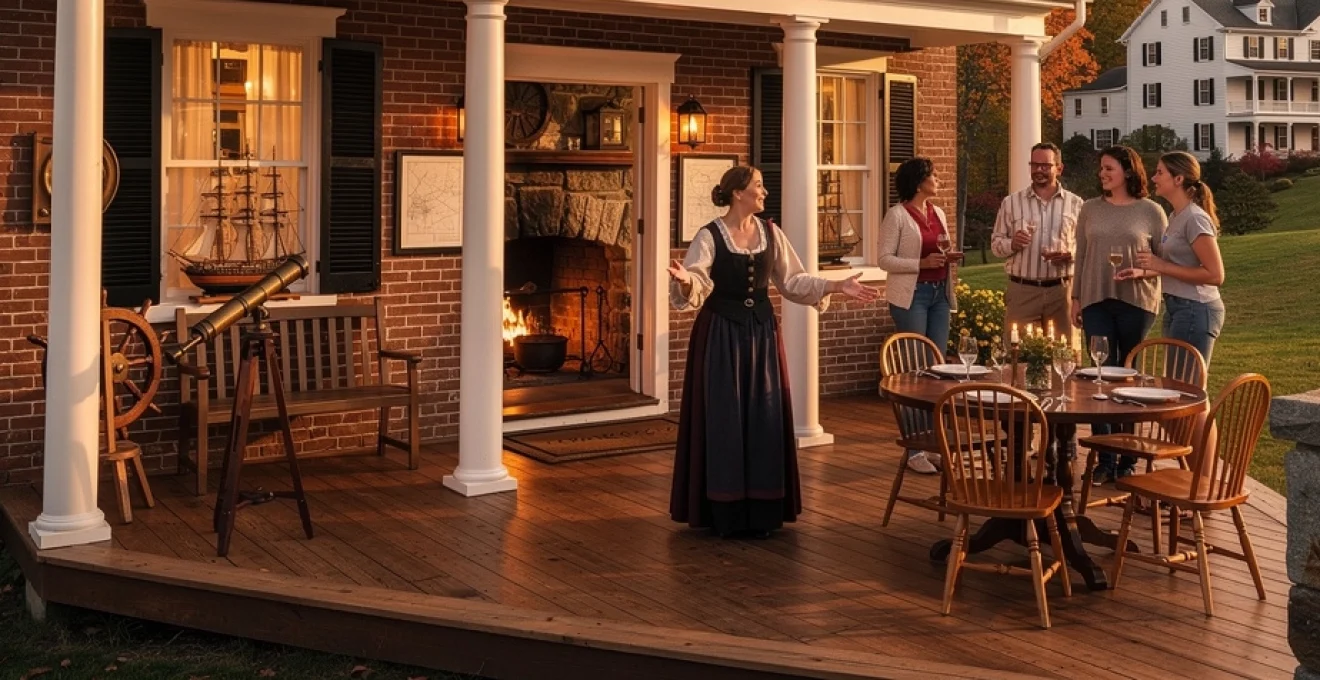
New England’s historic inns represent more than mere accommodations—they are living repositories of American heritage, architectural craftsmanship, and hospitality traditions that span centuries. From colonial-era coaching stops to grand Gilded Age resorts, these establishments offer you an authentic glimpse into the past whilst providing modern comfort. The region’s innkeeping legacy extends back to before American independence, with some properties welcoming travellers continuously since the early 18th century. Walking through their hand-hewn timber doorways, you encounter preserved architectural details, maritime memorabilia, and Revolutionary War connections that transform an ordinary stay into an immersive historical experience. These properties have survived fires, economic depressions, and changing travel patterns precisely because they embody something irreplaceable: the spirit of New England’s formative years.
Architectural heritage and period features of Colonial-Era new england inns
The architectural integrity of New England’s historic inns tells a compelling story of craftsmanship, regional materials, and evolving construction techniques. These buildings weren’t designed as museums—they served practical purposes as gathering places, overnight stops, and community centres. Yet their construction methods and design elements have proven remarkably durable, allowing modern visitors to experience authentic colonial environments. Understanding these architectural features enhances your appreciation for the preservation challenges innkeepers face whilst maintaining operational hospitality businesses.
Federal and georgian architectural elements in 18th-century coaching inns
Federal and Georgian architectural styles dominated New England inn construction from the 1760s through the early 1800s, characterised by symmetrical facades, central chimneys, and refined decorative elements. These coaching inns served as vital infrastructure along post roads, where horses were changed and travellers rested. The Georgian influence brought balanced window arrangements, panelled doors with decorative pediments, and classical proportions that conveyed stability and respectability. You’ll notice how Federal-period additions introduced more delicate ornamentation, including slender columns, elliptical fanlight windows, and intricate cornices. The Publick House Historic Inn in Sturbridge exemplifies this architectural tradition, with its 1771 structure showcasing the transitional elements between Georgian robustness and Federal refinement.
Post-and-beam construction techniques at the griswold inn, essex
The Griswold Inn in Essex, Connecticut, demonstrates the remarkable durability of traditional post-and-beam construction methods that defined colonial-era building practices. This timber framing technique employed massive vertical posts connected by horizontal beams, joined through mortise-and-tenon joinery secured with wooden pegs rather than metal fasteners. The structural system’s inherent flexibility allows the building to shift slightly with seasonal changes and settling without compromising integrity. When you examine exposed ceiling beams in historic dining rooms or guest chambers, you’re observing individual timbers hand-selected from old-growth forests, shaped with broad axes and adzes, then assembled by skilled framers who learned their craft through apprenticeship. This construction method required extraordinary precision—each joint was custom-fitted, making replacement or repair a specialised undertaking even today.
Original Wide-Plank flooring and Hand-Hewn timber preservation
Wide-plank flooring represents one of the most evocative period features in historic New England inns, with individual boards often measuring 12 to 24 inches across—dimensions impossible to replicate with modern lumber. These planks were hewn from massive old-growth pine or oak trees that no longer exist in commercial quantities. The wood’s patina develops over centuries of use, foot traffic creating gentle undulations and wear patterns that convey authentic age. Preservation specialists face complex challenges maintaining these floors: modern building codes require structural reinforcement, yet invasive interventions can damage irreplaceable materials. Skilled craftspeople employ techniques like sistering joists from below, applying historically appropriate finishes, and carefully replacing only beyond-repair sections with reclaimed period lumber. At establishments like the Deerfield Inn, you can examine floors that have supported travellers since 1884, their surfaces bearing witness to generations of stories.
Authentic Colonial-Era fireplaces and fieldstone hearths
Colonial-era fireplaces served as the technological heart of early inns, providing heat, cooking facilities, and social gathering points. These massive structures often
featured deep fireboxes, fieldstone or brick surrounds, and massive timber mantels blackened by centuries of use. In many historic inns in New England, you will still find crane arms, wrought-iron hooks, and bake ovens integrated into these hearths, hinting at a time when all meals were cooked over open flames. Preservation today means balancing safety and building codes with visual authenticity: flues may be relined and fireboxes retrofitted with modern inserts, yet the original stonework and brick patterns remain visible. When you settle into a wingback chair by the fire at a place like the Publick House Historic Inn or the Red Lion Inn, you are essentially occupying the same communal space early travellers used to warm themselves, trade news, and share stories.
Wavy glass windows and crown moulding restoration practices
Another defining feature of historic inns in New England is their original window glazing and interior trim. Early glassmaking techniques produced the characteristic “wavy” or “bubbled” glass panes you still see in some guest rooms and stairwells. Rather than replacing these with modern, perfectly flat panes, preservation-minded innkeepers often install storm windows on the exterior or interior to improve energy efficiency while retaining the historic glass. Interior crown mouldings, chair rails, and panelled wainscoting are repaired using traditional profiles, sometimes copied from surviving fragments. Craftspeople may mill new sections from old-growth or reclaimed wood to ensure the grain and density match, then finish them with historically appropriate paints or stains. This meticulous approach ensures that when you look out from a guest room or study the joinery in a parlour, the view and the details feel genuinely 18th or 19th century rather than “theme-park” reproductions.
Maritime legacy and coastal inn traditions along the new england seaboard
Beyond the inland coaching routes and village greens, many of the most evocative historic inns in New England grew up along the coast, shaped by the region’s powerful maritime heritage. Whaling, fishing, and coastal trade created prosperity that funded elegant captain’s houses, harbourside taverns, and grand seaside hotels. Staying at these coastal inns today, you encounter nautical artefacts, sea charts, and ship models that speak to centuries of seafaring life. The inn buildings themselves often occupy commanding positions overlooking harbours, bays, or ocean bluffs, just as they did when captains watched for returning vessels or incoming storms.
Whaling captain residences converted to historic lodgings in nantucket
On Nantucket, historic inns such as the Jared Coffin House and other former captain’s homes illustrate how maritime wealth was translated into domestic architecture. Built for successful shipmasters and merchants, these residences featured refined parlours, carved staircases, and imported finishes that signalled status in the whaling era. As the industry declined in the late 19th century, many of these buildings were adapted into guesthouses and inns, preserving both their architecture and their stories. Today, when you book a room in a former captain’s chamber, you may sleep beneath original beams, pass portraits of whaling magnates in the hallway, and walk streets that still follow the same patterns as in the 1820s. For travellers seeking a truly historic inn in New England with a strong narrative, these Nantucket conversions deliver an experience that ties directly to global trade, risk, and adventure.
The red lion inn’s stagecoach stop heritage in stockbridge, massachusetts
Although inland, the Red Lion Inn in Stockbridge, Massachusetts, embodies another crucial thread of New England’s travel history: the stagecoach era. Established in the 1770s as a tavern and stopover on important overland routes, the inn linked coastal ports with interior market towns and emerging industrial centres. Horse-drawn coaches would arrive covered in dust or snow, passengers stiff from hours of travel, grateful for a hot meal and a bed. The Red Lion Inn has carefully preserved that sense of arrival: its broad front porch, central lobby, and tavern spaces still encourage mingling and conversation. When you check in today, it is easy to imagine a coach pulling up outside, drivers calling out to ostlers, and travellers exchanging news from Boston, New York, or beyond. This blend of road and maritime commerce underscores how historic inns in New England functioned as vital nodes in a wider network of movement and trade.
Seafaring memorabilia collections at captain lord mansion, kennebunkport
In coastal towns such as Kennebunkport, former residences like the Captain Lord Mansion (now styled as Captain Lord or Captain’s Collection properties) showcase the visual language of New England’s maritime legacy. Inside, guests encounter model ships, framed charts, telescopes, and logbook reproductions that once would have been tools of the trade rather than decorative items. These curated displays are not merely ornamental; they provide context for the wealth that built such mansions and for the risks sailors undertook on every voyage. For you as a visitor, these seafaring collections offer an informal museum experience built into your stay. Combined with harbour views, the cry of gulls, and the scent of salt air outside, they turn a simple overnight into a multi-sensory immersion in coastal New England life.
Historic tavern rooms and original publick house spaces
Many historic inns in New England began life as publick houses, where local residents and passing sailors, farmers, or traders gathered to eat, drink, and debate. These tavern rooms remain central to the character of properties like the Griswold Inn in Essex, the Publick House in Sturbridge, and various harbourfront inns in Maine and Rhode Island. Low ceilings, exposed beams, and wide hearths define these spaces, often lit by candlelight or low lamps to maintain ambience. Original bar counters, pewter tankards, and framed tavern licenses may still be on display. When you sit down for a locally brewed ale or a bowl of chowder, you are participating in traditions that long predate modern tourism—traditions that gave these inns their reputations as safe harbours for travellers on both land and sea.
Revolutionary war-era accommodations and their historical significance
New England’s role in the American Revolution is woven into the very fabric of many of its oldest inns. During the late 18th century, taverns and lodging houses were critical hubs for communication, political organising, and military logistics. Some historic inns in New England hosted militia officers, stored supplies, or served as informal headquarters for local committees of safety. Staying in these properties today, you are often only a staircase or two away from rooms where decisive conversations once took place. For history enthusiasts, choosing a Revolutionary War-era inn transforms a simple getaway into a form of experiential learning.
The wayside inn’s role as america’s oldest operating inn since 1716
Located in Sudbury, Massachusetts, Longfellow’s Wayside Inn is often cited as the oldest continuously operating inn in the United States, with origins dating back to 1716. During the Revolutionary period, it sat along the Old Boston Post Road, serving as a stop for travellers, messengers, and local patriots. The inn’s early owners, the Howe family, witnessed political tensions build as British authority was increasingly challenged in nearby Boston and beyond. Today, the complex includes the original inn building, outbuildings, and a non-denominational chapel, all maintained with close attention to historical authenticity. When you walk its creaking corridors or dine in low-lit rooms, you are moving through a site that bridges pre-Revolutionary colonial life and the early republic, making it a flagship example of a Revolutionary War-era historic inn in New England.
Longfellow’s tales of a wayside inn literary connections
The Wayside Inn owes much of its modern fame to Henry Wadsworth Longfellow’s 1863 poetry collection Tales of a Wayside Inn, which romanticised the inn as a gathering place for storytellers. Longfellow never used the real names of his characters, but he based them on acquaintances, presenting the inn as a microcosm of New England society. This literary association layers cultural history onto physical space: guests can sleep in rooms named for Longfellow or his fictional narrators and stroll grounds that inspired 19th-century readers to imagine the inn as a timeless refuge. For you, this connection illustrates how historic inns in New England often exist at the intersection of architecture, politics, and literature. The same building that housed colonial travellers later became a symbol of American identity in poetry—a reminder that “heritage accommodations” often have lives far beyond simple lodging.
Revolutionary soldier lodging records at jared coffin house
On Nantucket, the Jared Coffin House—built in the mid-18th century by a prosperous shipowner—offers another lens on Revolutionary history. While islands like Nantucket were somewhat insulated from mainland battles, they were deeply entangled in the economic disruption of the war. Historical records and local lore suggest that houses of this type sometimes offered lodging or meeting space for officers, privateers, and merchants navigating shifting allegiances and British blockades. Although documentation may be fragmentary—surviving account books, letters, or second-hand narratives—innkeepers and local historians often work together to interpret these traces for guests. When you read a framed reproduction of an 18th-century letter in the hallway or join a short history talk in the lobby, you gain insight into how even seemingly quiet island inns were touched by the upheavals of the Revolutionary era.
Colonial militia meeting rooms and period-authentic common spaces
Across New England, town militias and local committees frequently met in tavern rooms and common spaces that today form part of historic inns. These rooms were ideal: large enough to gather men, centrally located, and already equipped for food and drink. Properties such as Concord’s Colonial Inn in Massachusetts—near the sites of the first Revolutionary skirmishes—highlight former parlours and chambers where surgeons treated wounded soldiers or officers convened. Modern restoration efforts often seek to preserve the scale and feel of these spaces, using period-appropriate paint colours, furnishings, and lighting. As a guest, you might find interpretive plaques, guided tours, or even living-history events that animate these rooms. In this way, Revolutionary War-era inns are more than quaint places to stay—they become accessible gateways into the political and military origins of the United States.
Vermont and new hampshire white mountains historic lodge characteristics
Heading north into Vermont and New Hampshire, the character of historic inns in New England shifts from colonial taverns and coastal mansions to grand mountain resorts and alpine-style lodges. In the 19th and early 20th centuries, the White Mountains and Green Mountains became fashionable retreats for urban elites seeking fresh air and cooler temperatures before the advent of modern air conditioning. Vast hotels and intimate country inns sprang up along rail lines and carriage routes, many of which survive today as carefully preserved heritage properties. Their architecture reflects both American Gilded Age opulence and European mountain influences, creating a distinct style of New England hospitality.
The mount washington hotel’s bretton woods grand resort architecture
The Omni Mount Washington Hotel in Bretton Woods, New Hampshire, stands as one of the most iconic grand hotels in the region. Completed in 1902, its sprawling Spanish Renaissance–influenced facade, red roofs, and twin towers dominate a broad valley framed by the Presidential Range. Originally financed by industrialist Joseph Stickney, the resort was conceived on a scale that rivalled Europe’s great mountain hotels, with vast public rooms, sweeping verandas, and advanced infrastructure for its day. The 1944 Bretton Woods Conference, which created the World Bank and International Monetary Fund, cemented its global significance. Today, as you walk its marbled corridors or stand on the long wraparound porch facing Mount Washington, you are engaging with a building that blends leisure, politics, and engineering innovation—an outstanding example of how historic inns in New England can also be monuments of international history.
Alpine-influenced design elements in crawford notch area establishments
Elsewhere in the White Mountains, inns and lodges around Crawford Notch and Jackson reveal strong alpine influences in their design. Steeply pitched roofs, deep eaves, and generous porches echo Swiss and Austrian mountain architecture, adapted to local climate and materials. Properties such as Eagle Mountain House or smaller chalet-style lodgings use wood shingle siding, decorative brackets, and banks of windows to frame mountain vistas. Inside, you often find cosy parlours with heavy timber beams, fieldstone fireplaces, and wood-panelled dining rooms that evoke the feeling of a European ski lodge. For travellers, this combination of New England setting and alpine aesthetic offers the best of both worlds: easy access to hiking, skiing, and scenic railways, along with a distinctive historic inn environment that feels purpose-built for mountain leisure.
19th-century ski lodge evolution at jackson’s christmas farm inn
The evolution of historic ski lodges in New England is well illustrated by properties like Christmas Farm Inn in Jackson, New Hampshire. Originally a working farm and later a coaching inn, it gradually transformed in the 20th century to cater to winter sports enthusiasts as skiing gained popularity. Early ski tourists arrived by train and horse-drawn sleigh, staying for weeks at a time to enjoy the snow-covered landscape. Over the decades, the inn added amenities such as ski storage, hot tubs, and more insulated guest rooms, all while preserving original farmhouse structures and barn elements. When you stay there today, you may cross from 18th- or 19th-century sections into more modern wings, experiencing physically how historic inns in New England adapt to changing travel trends. It is much like reading different chapters of the same book as you move from lounge to dining room to guestroom.
Preservation standards and historic register compliance for heritage accommodations
Maintaining the authenticity of historic inns in New England while operating them as viable 21st-century businesses requires careful navigation of preservation standards and regulatory frameworks. Many of these properties are listed on the National Register of Historic Places or designated as local landmarks, which brings both prestige and responsibility. Owners must work closely with preservationists, architects, and state historic commissions to ensure that renovations respect original materials and design intent. At the same time, they need to meet modern safety codes, accessibility requirements, and guest expectations for comfort. How do innkeepers manage this tightrope walk without diluting the old-world charm that makes their inns special?
National register of historic places requirements for operating inns
Listing on the National Register of Historic Places does not freeze a building in time, but it does establish guidelines for what constitutes appropriate treatment of historic fabric. To qualify, a property typically must be at least 50 years old, retain integrity of location and design, and be associated with significant events, persons, or architectural styles. For operating inns, this often means documenting original features—such as stairways, window configurations, rooflines, and interior layouts—and avoiding drastic alterations that would erase those elements. While National Register status does not by itself impose federal restrictions on private owners, it is often tied to access to tax credits or grants for rehabilitation. As a guest, you benefit from these incentives: they encourage innkeepers to invest in meticulous preservation rather than quick, generic updates, ensuring that the character of historic inns in New England remains intact.
Period-appropriate renovation guidelines under state historic commissions
Beyond federal recognition, state historic preservation offices and local commissions frequently review proposed changes to heritage accommodations, particularly in historic districts. Renovation guidelines typically emphasise repair over replacement, recommending that original windows, doors, and trim be retained whenever feasible. When new materials are necessary—for example, to meet fire safety or accessibility standards—they should be compatible in appearance and scale with the historic fabric. Innkeepers might be asked to place modern mechanical systems, such as air conditioning condensers or elevator shafts, in less visible locations or to conceal them within existing chases and service spaces. This can feel like solving a complex three-dimensional puzzle. Yet when done well, the result is almost invisible to you as a guest: you enjoy climate control, reliable plumbing, and Wi-Fi without losing the sense that you are staying in a genuinely old building rather than a modern replica.
Adaptive reuse challenges in maintaining authentic guest experiences
Adaptive reuse—converting old buildings to new purposes—is at the heart of many historic inns in New England. However, the challenge lies in updating structures for today’s travellers while preserving the quirks and imperfections that give them soul. Should every guestroom have a perfectly square layout, or is part of the charm the sloping floors and irregular angles that come with age? How do you add ensuite bathrooms to 18th-century rooms without sacrificing historic panelling or window placements? Innkeepers often adopt creative strategies: clustering plumbing along former service corridors, using freestanding tubs instead of built-in units, or leaving sections of exposed framing visible behind glass. From your perspective, these details matter because they dictate how “real” the experience feels. A well-executed adaptive reuse project will feel seamless, like a house that has naturally evolved over centuries, rather than one that has been stripped and rebuilt behind an old facade.
Traditional new england hospitality customs and inn-keeping practices
While architecture and history provide the backdrop, it is the human element—hospitality customs and innkeeping traditions—that brings historic inns in New England fully to life. Many owners see themselves as stewards not only of buildings but of ways of welcoming guests that have been refined across generations. From hearty breakfasts served at communal tables to evening gatherings by the fire, these practices foster a sense of connection that modern chain hotels rarely replicate. You are not just a room number; you become part of an unfolding story that includes past guests, local communities, and the innkeepers themselves.
Colonial-era breakfast service and historic menu authenticity
Food is one of the most enjoyable ways historic inns in New England evoke earlier eras. Colonial breakfast traditions emphasised substantial, locally sourced fare—think johnnycakes, porridge, fresh bread, farm eggs, and preserved meats—designed to fuel a day of travel or work. While modern palates and dietary needs are more varied, many inns still draw inspiration from these roots. You may find house-made jams, maple syrup from nearby sugarhouses, or baked beans slow-cooked in traditional crocks. Some properties include notes on their menus explaining historical origins of particular dishes, turning your morning meal into a mini history lesson. For those curious about authenticity, asking your host about the provenance of recipes can be surprisingly rewarding; many are family heirlooms or adapted from 18th- and 19th-century cookbooks.
Candlelit dining experiences at the inn at shelburne farms
On the shores of Lake Champlain, The Inn at Shelburne Farms in Vermont offers a particularly evocative approach to historic dining. Housed in a former Gilded Age estate, it emphasises atmosphere as much as cuisine: high-ceilinged rooms, original woodwork, and, in some spaces, candlelit dinners that recall an era before electric light dominated every interior. The gentle flicker on plaster walls and polished silver softens the room, encouraging slower conversation and a deliberate pace to the meal. Combined with farm-to-table menus that highlight produce grown on the surrounding 1,400-acre working farm, the experience transports you both spatially and temporally. It’s not simply a restaurant inside a historic building; it is a continuation of a tradition in which estate kitchens and dining rooms were central to social life and hospitality.
Seasonal harvest traditions and farm-to-table heritage at historic properties
Many historic inns in New England have deep agricultural roots, whether as former farms, country estates, or village hostelries tied to local foodways. Today’s farm-to-table movement, often seen as modern and trendy, in fact echoes the original operating model of these properties: serve what is in season, draw from nearby fields and waters, preserve the harvest for winter. Inns like Shelburne Farms in Vermont, coastal retreats in Maine, and country houses in western Massachusetts often maintain kitchen gardens, orchards, or partnerships with local farmers and fishers. As a guest, you might encounter special autumn menus built around apple harvests and root vegetables, spring dishes featuring foraged greens, or summer plates centred on fresh-caught seafood. This seasonal rhythm not only improves flavour and reduces environmental impact; it also reinforces the sense that you are part of a living landscape. Much like the wavy glass in the windows or the creak of wide-plank floors, a thoughtfully sourced meal connects you directly to the land and communities that have sustained New England’s historic inns for centuries.