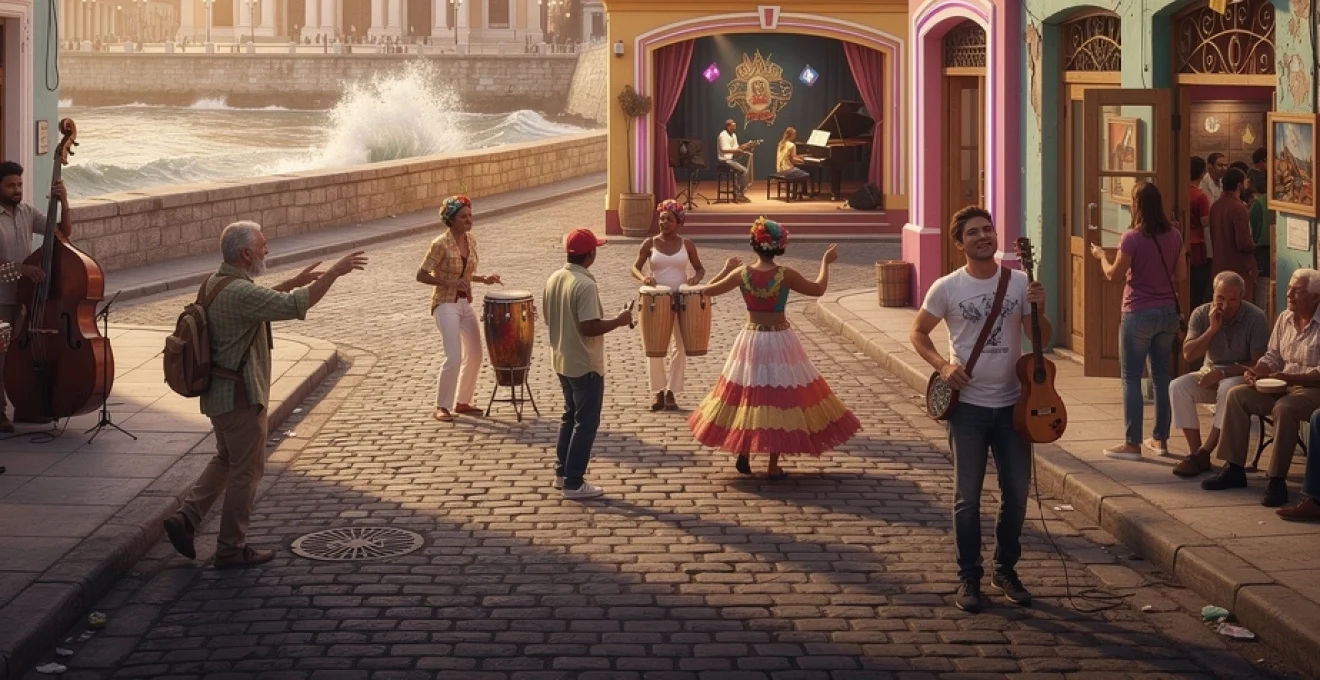
When you step onto the cobblestones of Havana, you enter a living symphony where every corner pulses with rhythm and every building echoes with centuries-old tales. The Cuban capital stands as one of the world’s most extraordinary musical cities, where sounds spill from weathered doorways, colonial courtyards transform into impromptu concert halls, and the very architecture amplifies the heartbeat of a culture that refuses to be silenced. From the son cubano melodies drifting through Old Havana’s plazas to the revolutionary ballads that once stirred a nation, this Caribbean metropolis offers an unparalleled auditory journey through time.
The streets of Havana don’t simply contain music—they breathe it, live it, and share it with anyone willing to listen. Each neighbourhood tells its own musical story, shaped by African rhythms, Spanish colonial influences, and the passionate spirit of generations who turned struggle into song. Walking through this extraordinary city means experiencing a cultural phenomenon that has influenced global music for over a century, where traditional genres continue to evolve whilst preserving their authentic roots.
Sonic cartography: mapping havana’s musical districts and cultural soundscapes
Havana’s musical geography reveals distinct sonic territories, each neighbourhood contributing unique rhythmic signatures to the city’s overall symphony. Understanding these musical districts requires more than casual observation—it demands an appreciation for how geography, history, and culture converge to create distinctive soundscapes that define each area’s character.
Son cubano epicentres in old havana’s plaza de armas
Plaza de Armas serves as the historical heart of son cubano, where this foundational Cuban musical form first gained prominence among the colonial elite and working classes alike. The plaza’s acoustic properties, enhanced by surrounding baroque and neoclassical buildings, create a natural amplification system that has made it a preferred gathering place for musicians for over two centuries. Here, traditional son groups maintain the authentic six-instrument format that defined the genre’s golden age.
The musical traditions centred around Plaza de Armas reflect broader patterns of cultural preservation and innovation that characterise Cuban music. Street performances often feature classic compositions by Arsenio Rodríguez and Benny Moré, whilst contemporary artists incorporate modern elements without abandoning the essential clave rhythm that forms the backbone of Cuban music. These performances demonstrate how son cubano continues to serve as a foundation for musical evolution throughout the Caribbean and Latin America.
Afro-cuban rhythmic traditions along malecón’s seafront promenade
The Malecón’s eight-kilometre stretch becomes a percussion laboratory after sunset, where Afro-Cuban rhythmic traditions flourish in the salt-tinged air. Rumba circles form spontaneously along the seawall, with cajón drums and claves creating polyrhythmic patterns that reflect the complex heritage of African musical traditions preserved and transformed in Cuban soil.
These impromptu gatherings represent more than entertainment—they constitute active preservation of musical knowledge passed down through generations of drummers, dancers, and singers. The Malecón’s role as a cultural meeting point allows for cross-pollination between different Afro-Cuban traditions, from the ceremonial rhythms of Santería to the secular celebrations of comparsa carnival groups. This musical exchange continues to influence contemporary Cuban artists who draw from these rhythmic wellsprings.
Jazz fusion venues in vedado’s calle 23 entertainment quarter
Vedado’s Calle 23 corridor showcases Havana’s sophisticated jazz scene, where Cuban musicians have created unique fusion styles that blend traditional island rhythms with international jazz harmonies and improvisational techniques. Venues like Jazz Café and La Zorra y el Cuervo have become crucibles for musical experimentation, hosting both established masters and emerging talents who push the boundaries of Afro-Cuban jazz.
The jazz culture in Vedado reflects broader cultural exchanges that have shaped Cuban music throughout the 20th century. Musicians trained in classical
conservatories bring technical precision to their playing, yet the soul of the music is still forged in neighbourhood jam sessions and late-night descargas. As you wander this entertainment quarter, you move through overlapping sound maps: one club might layer timba over bebop changes, while another experiments with electronic textures over traditional clave. For visitors, Calle 23 offers one of the best places in Havana to hear how the city’s jazz musicians translate global influences into something unmistakably Cuban.
Nueva trova movement legacy in centro habana’s cultural corridors
Centro Habana’s dense streets formed an essential backdrop for the Nueva Trova movement, which emerged after the 1959 Revolution as a powerful blend of poetic lyricism, folk melodies, and political commentary. Here, in modest cultural centres and workers’ clubs, artists such as Silvio Rodríguez, Pablo Milanés, and Noel Nicola performed songs that examined love, sacrifice, and social justice with rare emotional depth. The movement’s legacy still echoes through Centro Habana’s cultural corridors, where informal guitar circles and small venues keep these storytelling traditions alive.
Today, younger singer-songwriters draw from Nueva Trova while addressing contemporary concerns such as migration, economic hardship, and digital-era identity. You might hear a student on a stoop reworking a classic Silvio Rodríguez progression, adding spoken-word verses that reference life in present-day Havana. These neighbourhood performances function like open-air seminars in Cuban history and philosophy, where lyrics become tools for reflection rather than simple entertainment. For travellers, listening closely in Centro Habana offers a rare chance to hear how Havana’s residents narrate their own past and future through song.
Architectural acoustics: how havana’s colonial infrastructure amplifies street performance
Havana’s distinctive sound is not only the product of its musicians; the city’s architecture acts as an enormous, complex instrument that shapes how every note is heard. Narrow streets, high-ceilinged interiors, and stone facades refract and reflect sound in ways that would make an acoustical engineer pause and listen. Walking through Old Havana, you notice how a single trumpet line can bounce between balconies, or how a choir rehearsing in a side chapel spills harmonies across an entire block. Understanding these architectural acoustics helps explain why live music remains so central to Havana’s cultural identity.
From a practical perspective, colonial-era urban planning inadvertently created ideal conditions for street performance. Thick masonry walls limit outside noise, while interior courtyards and arcades form sheltered performance spaces protected from sun and rain. These design features predate sound systems and amplifiers, yet they achieve a similar effect: they project voices and instruments outward, ensuring that music travels far beyond the musicians themselves. When you experience live music in Havana, you are also hearing the city’s stone, wood, and iron sing along.
Spanish colonial courtyards as natural amphitheatres for rumba sessions
Many Spanish colonial houses in Havana are built around central courtyards, or patios, that function like open-air amphitheatres. These spaces, enclosed on four sides and open to the sky, naturally focus and project sound, making them ideal for intimate rumba sessions and son gatherings. When drummers sit near one wall and dancers move in the centre, the surrounding arcades create multiple reflections that enrich the percussion tones and human voices. The result is a warm, enveloping acoustic environment without any technological intervention.
For performers, these courtyards allow nuanced dynamics: a whispered vocal line or a subtle drum accent can still be heard across the space, inviting more expressive, conversational music-making. As a visitor, stepping into such a patio feels like entering a different acoustic world, shielded from street noise yet filled with resonance. You might find a family-run casa particular where evening gatherings evolve into full rumba performances, with neighbours leaning in from balconies above. The architecture itself invites participation, blurring the line between performer and audience.
Art deco building facades and sound reverberation patterns
Moving into neighbourhoods developed in the early 20th century, Havana’s Art Deco and modernist buildings introduce new acoustic textures. Their smooth facades, sharp angles, and decorative reliefs create complex reverberation patterns that can make even a simple street performance sound cinematic. Stand at a crossroads in Centro Habana or Vedado, and you may notice how a busker’s saxophone line lingers for a moment longer than expected, carried by reflections from polished stone and glass.
These acoustic effects shape how musicians choose their spots. Street bands often position themselves at the mouth of side streets or in front of recessed entrances, using building geometry to project sound toward busy corners. For listeners, this means you can follow an echo as easily as you follow a melody, tracing performances down side alleys like a kind of sonic treasure hunt. In this way, Havana’s Art Deco architecture becomes both stage set and soundboard, amplifying the city’s reputation as an open-air concert hall.
Neoclassical architecture’s role in gran teatro de la habana’s acoustic design
The Gran Teatro de La Habana Alicia Alonso, with its neoclassical foundations and ornate façade, represents the pinnacle of Havana’s formal acoustic engineering. Inside, carefully calculated proportions, tiers of balconies, and intricate plasterwork disperse sound evenly throughout the hall. Unlike many modern venues that rely on electronic amplification, the Gran Teatro was designed so that an unamplified operatic voice or a chamber ensemble can reach the furthest seat with clarity.
For visitors attending a ballet performance or classical concert, the experience offers insight into how Havana’s architectural heritage supports high art as effectively as it supports street music. The theatre’s design channels centuries of European acoustic knowledge, yet local materials and craftsmanship give it a distinct character. Listening to a symphony here after spending the day among street drummers on the Malecón, you grasp how Havana’s musical ecosystem spans both the formal and the informal. The same cultural commitment to listening attentively runs through each space, from grand theatre to humble courtyard.
Ethnomusicological heritage: decoding multi-generational storytelling through oral traditions
Cuban music is more than rhythm and melody; it is a living archive of stories, beliefs, and collective memories. For centuries, communities in Havana have passed down their histories through oral traditions, embedding narratives in drum patterns, melodies, and poetic forms. Ethnomusicologists often describe Cuban musical culture as a “sung library”, where each genre preserves specific layers of African, European, and indigenous heritage. As you walk through the city, you are effectively browsing this library, hearing different “chapters” with every performance.
Understanding these oral traditions adds a deeper dimension to any Havana itinerary. A rumba is not only a dance; it can be a coded conversation about power, identity, or faith. A simple street ballad may reference key revolutionary events or local legends that never made it into official textbooks. When you listen with curiosity—asking guides, musicians, or hosts about song meanings—you tap into a form of historical storytelling that is as vivid as any museum exhibit. In this way, your walk through Havana becomes both a cultural experience and a participatory research project.
Santería ceremonial narratives embedded in batá drumming patterns
One of the most intricate examples of musical storytelling in Havana comes from Santería, an Afro-Cuban religion that fuses Yoruba deities with Catholic iconography. Central to its ceremonies are the batá drums: a trio of double-headed hourglass drums known as iyá, itótele, and okónkolo. Each drum plays interlocking patterns that correspond to specific orishas (deities), myths, and moral lessons. To an untrained ear, the rhythms may sound abstract, but to practitioners they are as legible as written scripture.
These drumming sequences narrate foundational stories: the journeys of warriors like Changó, the wisdom of Obatalá, or the resilience of Yemayá, goddess of the sea. Ceremonial singers overlay the drum patterns with call-and-response chants that reference episodes from a vast oral corpus. In some neighbourhoods of Centro Habana and Regla, you can occasionally hear fragments of these rhythms drifting from private houses during feast days. While respectful distance is crucial—many ceremonies are not performances but acts of worship—understanding that such sonic narratives exist deepens your appreciation for Havana’s soundscape.
Revolutionary chronicles through nueva canción lyrical compositions
Parallel to religious musical traditions, the Nueva Canción and Nueva Trova movements of the 1960s and 70s turned popular song into a vehicle for political reflection across Latin America. In Cuba, these currents found fertile ground in Havana’s universities, cultural institutions, and neighbourhood clubs. Songwriters wove revolutionary chronicles into their lyrics, describing everything from literacy campaigns and international solidarity efforts to the everyday sacrifices demanded by social transformation. The guitar became both instrument and witness.
Many of these compositions still form part of Havana’s shared repertoire, sung at gatherings or quoted in ordinary conversation. For example, a line from a Silvio Rodríguez song might surface during a discussion about hope or disappointment, functioning almost like a proverb. When you hear an older musician in a small bar performing nueva canción standards, you are listening to lived testimony set to music. Paying attention to recurring references—dates, places, images of workers, farmers, and students—helps you piece together how Cubans have processed decades of upheaval through art.
Spanish colonial period documentation in traditional décima poetry recitations
Long before gramophones and streaming services, Cuban storytellers preserved memories of the colonial era through the décima, a ten-line poetic form imported from Spain and transformed in the Caribbean. In rural areas and in certain Havana gatherings, repentistas (improvising poets) still compose décimas on the spot, adhering to strict rhyme and metric rules. Their verses may recount historical battles, local scandals, or humorous commentary on current affairs, all delivered with sharp wit and verbal agility.
Though more commonly associated with the countryside, décima recitations occasionally appear in Havana at cultural events, book fairs, or neighbourhood fiestas. Listening to a repentista improvise is like watching a historian, comedian, and rapper share the same stage. Many décimas contain fragments of colonial-era documentation—names of governors, anecdotes about trade, or descriptions of everyday life—that rarely appear in formal archives. If you encounter such a performance, you are effectively hearing centuries of continuity in Cuban oral literature, sustained by memory rather than paper.
Sugar plantation history preserved in work song melodic structures
Cuba’s economic and social history is inseparable from sugar, and traces of plantation life survive in the structures of traditional work songs. Rhythms once used to coordinate collective labour—cutting cane, loading carts, or processing harvests—evolved into musical genres that now enliven festivals and parades. Call-and-response formats, steady tempos aligned with repetitive tasks, and lyrics referencing landowners or seasons all point back to this agricultural past.
In Havana, echoes of these work songs surface in comparsa performances during carnival and in community ensembles that rehearse for local festivities. The upbeat energy can mask the harsh conditions these songs originally accompanied, but ethnomusicologists have traced melodic motifs and refrains back to specific plantation regions. When you dance to a carnival group beating out a relentless march-like rhythm, you are moving to patterns forged in fields rather than ballrooms. Recognising this history adds gravity to your enjoyment and highlights how Cuban music transforms suffering into celebration without erasing memory.
Contemporary musical innovation: modern havana’s fusion experimentation and global influence
Despite its deep roots in tradition, Havana’s music scene is anything but static. In recent decades, the city has become a laboratory for fusion, where hip-hop, reggaetón, jazz, rock, and electronic music intersect with Afro-Cuban rhythms and son structures. Artists such as Cimafunk, Daymé Arocena, and Havana D’Primera have gained international attention by drawing boldly from this hybrid vocabulary. Their global tours and streaming releases ensure that sounds born in Havana’s rehearsal rooms now influence playlists from Berlin to Bogotá.
On the ground, innovation often emerges in small studios cobbled together with limited resources. Musicians sample 1950s vinyl records, record horn sections in improvised vocal booths, and exchange files on USB sticks rather than cloud platforms. This constraint-driven creativity can feel like watching an engineer repair a classic Chevy with spare parts: the tools may be outdated, but the ingenuity is remarkable. For visitors, seeking out contemporary concerts and jam sessions—rather than only heritage shows—offers a chance to witness Havana’s role as a forward-looking musical city, not just a nostalgic one.
Digital platforms have also altered how Cuban artists connect with the world, even in the face of intermittent internet access. Independent labels and collectives curate playlists, organise festivals, and collaborate with foreign producers, expanding Havana’s influence in genres like global bass, Latin jazz, and Afro-futurist pop. You might attend a rooftop DJ set where rumba samples loop over electronic beats, or stumble into a gallery where live painting responds in real time to an experimental trumpet solo. These experiences challenge the cliché of Cuba as “frozen in time” and reveal a metropolis in constant sonic motion.
Tourist cultural immersion: authentic musical encounters beyond commercial performances
For many travellers, the central question is simple: how do you experience Havana’s music authentically, without getting trapped in tourist-only shows? The answer lies in seeking out everyday contexts where music arises naturally—community events, neighbourhood bars, rehearsal spaces—while approaching them with respect and curiosity. Rather than rushing from one headline venue to another, allow time to wander, listen, and follow your ears down side streets and into modest cultural centres. Often, the most memorable performances are unadvertised and unplanned.
One practical strategy is to balance a few well-known venues with smaller, locally recommended spots. A night at a famed jazz club can showcase top-tier musicianship, while an afternoon in a casa particular courtyard listening to your host’s relatives play son offers a more intimate perspective. Ask musicians where they are performing next, or which community projects they support—many are involved in music schools, youth ensembles, or religious groups where visitors are welcome at public events. By engaging in conversation, you transform from passive spectator into temporary participant in Havana’s living musical ecosystem.
It is also important to be aware of the economic realities surrounding performance. Live music often supplements modest incomes, so paying fair cover charges, tipping bands, and purchasing CDs or downloads directly from artists helps sustain the culture you are enjoying. At the same time, be wary of over-curated “folkloric” shows that flatten complex traditions into predictable routines aimed solely at tourists. If a performance feels rehearsed to the point of sterility, consider seeking out a venue where musicians take risks, improvise, and respond to their audience in real time. That sense of unpredictability is often a good sign that you are encountering Havana’s true musical pulse.
Finally, remember that listening with attention is itself a form of respect. Put your phone away for a song or two, watch how musicians communicate with each other on stage, and notice how local audiences react to particular rhythms or lyrics. Perhaps you’ll find yourself clapping along to a rumba, recognising the echo of a batá pattern you heard earlier in the day, or catching a reference to a Nueva Trova classic in a modern hip-hop verse. In those moments, you are not just a visitor observing Havana from the outside—you are part of the city’s ongoing conversation of music and stories.