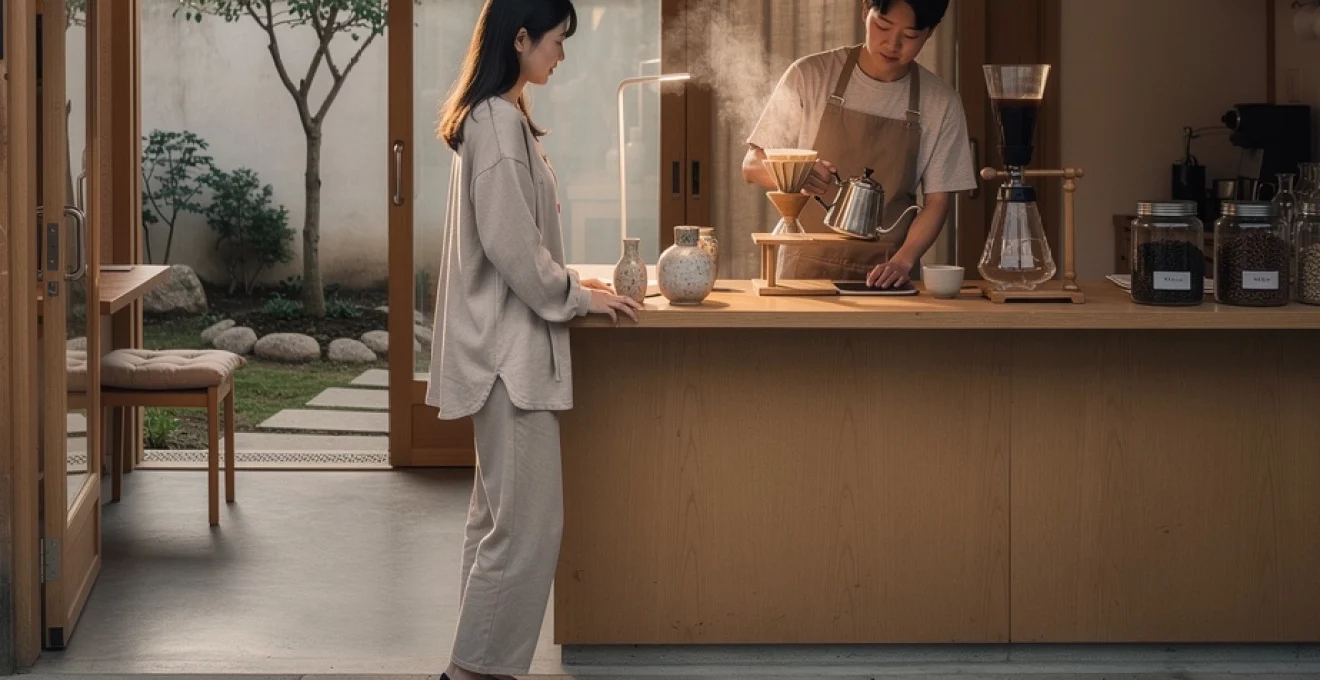
In an age where digital connectivity dominates every aspect of daily life, the quest for authentic, unmediated experiences has become increasingly vital. Seoul, a metropolis that seamlessly blends cutting-edge technology with centuries-old traditions, offers a unique sanctuary for those seeking refuge from the relentless pace of modern existence. Beyond the neon-lit streets of tourist districts lies a network of intimate coffee spaces where time seems to slow, where the simple act of savouring a carefully crafted beverage becomes a form of quiet rebellion against the tyranny of productivity. These hidden establishments represent more than mere refreshment stops; they embody a philosophy of intentional living that challenges conventional urban experiences. The discovery of such spaces transforms routine moments into memorable encounters, reminding us that profound satisfaction often emerges from the most understated circumstances.
Navigating seoul’s alleyway coffee culture: beyond gangnam and hongdae
The mainstream coffee scene in Seoul’s commercial districts presents a paradox: whilst offering convenience and consistency, these establishments often sacrifice the intimate atmosphere that transforms a simple coffee break into a meaningful pause. The true essence of Seoul’s café culture resides in neighbourhoods where residential charm intersects with artisanal dedication. These areas reward the curious explorer with experiences that cannot be replicated by franchised operations, no matter how meticulously designed their interiors might be.
The rise of golmok cafés in seochon and ikseon-dong hanok villages
The Korean term golmok refers to the narrow alleyways that wind through traditional neighbourhoods, and it’s within these intimate passages that some of Seoul’s most enchanting coffee sanctuaries have taken root. Seochon, located west of Gyeongbokgung Palace, has witnessed a remarkable transformation over the past decade. What once served as a residential quarter for scholars during the Joseon Dynasty now hosts a collection of micro-cafés that honour architectural heritage whilst embracing contemporary coffee culture. These establishments typically occupy renovated hanok structures, where exposed wooden beams and traditional ondol heating systems coexist with espresso machines and manual brewing equipment.
Ikseon-dong presents a similarly compelling narrative, with its labyrinthine alleyways creating a sense of discovery that’s become increasingly rare in modern urban environments. The density of the neighbourhood means that cafés here must maximise limited space, resulting in vertically oriented designs where second-floor seating areas overlook the bustling lanes below. This architectural constraint has produced unexpectedly intimate atmospheres where you’ll find yourself sharing space with perhaps only five or six other patrons, fostering a sense of community that larger establishments struggle to replicate.
Discovering speciality roasters in yeonnam-dong’s residential quarter
Yeonnam-dong represents a different approach to hidden café culture, one that emerged organically as creative professionals sought affordable spaces away from Hongdae’s escalating rents. The neighbourhood’s residential character means that coffee shops here operate with a distinct consciousness of their role within a living community rather than a commercial district. Many proprietors reside in the same neighbourhood where they operate their establishments, creating a genuine investment in the quality of daily life for local residents.
The speciality roasters that have established themselves in Yeonnam-dong typically function as dual-purpose spaces: retail outlets for freshly roasted beans and tasting rooms where you can experience the full spectrum of a roaster’s offerings. This model encourages a deeper engagement with coffee as an agricultural product with distinct regional characteristics and processing methods. Visiting these establishments educates your palate whilst simultaneously supporting supply chains that prioritise sustainability and fair compensation for producers. The transparency that many of these roasters maintain regarding their sourcing practices reflects a broader shift within Seoul’s third-wave coffee movement towards ethical consumption patterns.
Hidden Third-Wave coffee sanctuaries in haebangchon hillside streets
Haebangchon’s topography creates a natural filtering mechanism that separates casual visitors from committed explorers. The neighbourhood’s steep inclines demand physical effort, ensuring that those who discover its hidden cafés have demonstrated genuine interest rather than stumbled upon them through algorithmic recommendation. This geographical barrier has preserved an authenticity that’s increasingly difficult to maintain in more accessible areas. The multicultural character of Haeb
Haebangchon’s multicultural character has attracted independent roasters and baristas who draw on global coffee traditions while remaining grounded in the everyday rhythms of local life. Many of the most compelling third-wave cafés here occupy modest, repurposed spaces—former corner shops, old residential units, or even semi-basement rooms—transformed through thoughtful design rather than lavish budgets. Inside, you are more likely to hear quiet jazz or ambient music than the latest chart hits, and conversations tend to unfold in hushed tones, as if everyone has silently agreed to preserve the tranquillity. The emphasis on manual brewing methods, such as pour-over and Aeropress, invites patrons to slow down and observe the careful choreography of coffee preparation. In these hillside sanctuaries, the climb itself becomes part of the experience, making the first sip of a meticulously extracted espresso feel like a reward earned rather than a commodity purchased.
Bukchon’s tranquil tea and coffee houses within traditional hanok architecture
While Haebangchon showcases the raw, experimental side of Seoul’s café culture, Bukchon offers a more contemplative, heritage-focused experience. Nestled between Gyeongbokgung and Changdeokgung palaces, this historic neighbourhood preserves clusters of traditional hanok homes, some of which have been sensitively converted into tea and coffee houses. Here, the focus is less on novelty and more on creating a serene environment where you can appreciate the interplay of wood, paper, and light. The low doorways and gently sloping tiled roofs naturally encourage you to move more slowly, to lower your voice, and to become attuned to your surroundings. Ordering a hand-drip coffee or a traditional Korean tea in Bukchon often feels akin to entering a small temple dedicated to quiet appreciation.
Many Bukchon cafés intentionally blur the line between tea house and gallery, displaying ceramics, calligraphy, or contemporary crafts produced by local artisans. This integration of visual culture and café space offers a subtle reminder that everyday rituals—brewing coffee, arranging teacups, opening and closing sliding doors—can be forms of artistry in themselves. Seating often takes place on floor cushions around low wooden tables, reconnecting visitors with the tactile qualities of hanok interiors. The absence of loud signage and the discreet placement of entryways mean that discovering these venues sometimes requires a degree of persistence. Yet, when you finally step into a courtyard bathed in late-afternoon light, with the distant hum of the city softened by clay walls, the sense of having found a private refuge is unmistakable.
The phenomenology of slow living in urban korean café spaces
The growing appeal of hidden cafés in Seoul reflects more than a simple desire for better coffee; it signals a deeper shift toward slow living in an environment often defined by urgency. Phenomenology, the philosophical study of lived experience, offers a useful lens for understanding why these spaces resonate so strongly with residents and visitors alike. Instead of treating cafés as backdrops for productivity, Seoul’s independent venues invite you to inhabit the present moment, to notice the sound of beans grinding, the aroma of freshly baked pastries, or the way condensation forms on a cold brew glass. In a city where every second can feel scheduled, such details become anchors that ground you in your own sensory reality. Slow living here is not about rejecting urban life but about reclaiming its pace on your own terms.
Urban sociologists have noted that South Koreans report some of the longest working hours among OECD countries, which makes the search for restorative micro-moments particularly urgent. Hidden cafés function as liminal spaces, occupying a threshold between public and private life where social expectations loosen just enough to allow for genuine rest. Rather than escaping the city, you remain within it yet experience it differently, filtered through the stillness of a back alley or the hushed interior of a hanok room. This subtle recalibration of pace can feel similar to stepping into a slow-motion sequence in an otherwise fast-paced film. By deliberately seeking out such environments, we participate in a quiet form of resistance against the narrative that every minute must be optimised for output.
Hygge-inspired interior design elements in seoul’s independent coffee shops
Many of Seoul’s hidden cafés consciously or intuitively adopt design principles aligned with the Scandinavian concept of hygge, which emphasises cosiness, warmth, and a sense of belonging. Rather than relying on grand gestures, these spaces often cultivate comfort through small, considered details: a well-loved armchair by a window, a basket of blankets for winter visits, or shelves lined with dog-eared books free for browsing. Lighting plays a crucial role; instead of glaring overhead fluorescents, you are more likely to encounter warm-toned lamps, pendant lights with fabric shades, and the soft glow of candles on side tables. This layered lighting design encourages lingering, inviting you to order that second cup of coffee or simply sit and watch raindrops trace paths down the glass.
These hygge-inspired settings are particularly powerful in a city where much of daily life unfolds beneath bright LED signage and office lighting. Stepping into a dimmer, warmer café can feel like slipping under a soft blanket after a long day. The use of natural materials—linen cushions, wooden tabletops, woven rattan chairs—helps create a tactile counterpoint to the digital devices that follow us everywhere. Even the choice of background music, often acoustic or jazz rather than high-tempo pop, subtly signals that you are welcome to slow down. For travellers and locals alike, such environments become intentional waypoints for practising slow living in Seoul, especially when paired with mindful rituals like journalling, sketching, or simply nursing a latte without refreshing notifications every few seconds.
Wabi-sabi aesthetics and minimalist korean café philosophy
Alongside hygge, another aesthetic philosophy shaping Seoul’s hidden cafés is the Japanese concept of wabi-sabi, which embraces imperfection, transience, and understated beauty. You can see this influence in concrete floors left intentionally unpolished, cups with irregular glazing, and reclaimed wooden tables that proudly display knots and scratches. Rather than striving for a flawless, showroom-like appearance, many independent café owners opt for spaces that feel lived-in and honest. This approach resonates strongly with younger Koreans who are increasingly sceptical of hyper-curated, Instagram-perfect environments that prioritise appearance over atmosphere. In a wabi-sabi-informed café, a slightly chipped ceramic mug is not a flaw to be hidden but a sign of an object with a story.
Minimalist Korean café philosophy takes this a step further by stripping away non-essential elements to foreground the essentials: good coffee, comfortable seating, and a calm environment. The visual quiet of white walls, uncluttered shelves, and simple branding creates mental spaciousness, making it easier to breathe more deeply and think more clearly. Have you ever noticed how a crowded, visually noisy room can make your thoughts feel just as cluttered? Minimalist cafés counteract that sensation by offering a blank canvas for your mind. This is where the joy of simple moments becomes tangible: the focus shifts from collecting visual proof of your visit to actually savouring the experience of being there, cup in hand, without distraction.
The role of natural light and hanok courtyard integration in contemplative spaces
Light is one of the most powerful, yet often overlooked, elements in creating contemplative café environments. In Seoul’s hidden venues—especially those housed in hanok structures—natural light is treated as a design material in its own right. Sliding doors and wide windows are positioned to frame courtyard views, allowing sunlight to filter through paper screens and cast soft shadows across wooden floors. As the day progresses, the shifting patterns of light and shadow subtly mark the passage of time, turning a quiet afternoon in a café into a living sundial. This awareness of time, paradoxically, can make it feel as though time is expanding rather than slipping away.
Hanok courtyards, or madang, play a particularly important role in this sensory experience. Even a small interior garden—containing a single pine tree, a cluster of bamboo, or a shallow stone basin—can profoundly alter the mood of a space. The presence of greenery and open sky provides a visual escape from the density of surrounding apartment blocks, much like a pause or blank line in a poem gives the reader room to breathe. Some cafés orient their seating so that every guest can catch at least a glimpse of the courtyard, reinforcing a sense of connection to nature even in the heart of the city. For visitors pursuing slow travel in Seoul, seeking out such cafés becomes a practical strategy for integrating quiet reflection into otherwise busy itineraries.
Single-origin pour-over rituals as meditative practice
Few aspects of Seoul’s coffee culture embody slow living as clearly as the single-origin pour-over ritual. Watching a skilled barista prepare a hand-drip coffee can resemble observing a tea ceremony: every action is deliberate, from weighing the beans to timing the bloom and controlling the spiral of the pour. This process typically takes several minutes, during which you are invited—implicitly or explicitly—to pause, observe, and anticipate. In a world where we expect instant results, waiting for a pour-over becomes an exercise in patience, and the resulting cup feels more precious precisely because it required your time as well as the barista’s expertise. The focus on single-origin beans further enhances this sense of mindfulness by encouraging you to notice subtleties of flavour and aroma.
Approaching pour-over coffee as a meditative practice does not require any formal training; it simply asks that you pay attention. You might notice how the aroma shifts from the moment the water first touches the grounds to the final stages of extraction, or how the first sip differs from the last as the coffee cools. This heightened awareness mirrors basic mindfulness techniques, in which we attend closely to breath or bodily sensations. In that sense, a hidden café in Seoul can transform into an informal meditation hall, with the kettle and dripper standing in for more traditional ritual objects. For those seeking to cultivate intentional living in a practical, accessible way, integrating such small acts of attention into everyday routines can be surprisingly transformative.
Sensory authenticity: artisanal coffee preparation methods in hidden seoul venues
The commitment to slow living in Seoul’s alleyway cafés is matched by an equally strong dedication to sensory authenticity in coffee preparation. Rather than relying on automated systems to standardise taste, many baristas take pride in adjusting variables—grind size, water temperature, extraction time—to highlight the unique character of each bean. This approach aligns with global third-wave coffee trends, which treat coffee not as a uniform product but as an agricultural crop shaped by terroir and processing methods. When you order a drink in these venues, you are often invited into a dialogue about origin, roast profile, and preferred flavour notes. The result feels less like a transaction and more like a collaborative experience aimed at crafting your ideal cup.
In recent years, South Korea’s speciality coffee scene has grown rapidly, with national barista champions and roasters gaining recognition at international competitions. Hidden cafés in Seochon, Yeonnam-dong, and Haebangchon frequently collaborate with these micro-roasters, hosting cupping sessions and seasonal menu rotations. For curious visitors, participating in such events can serve as an introduction to the nuances of coffee appreciation—comparable to attending a wine tasting but in a more relaxed, everyday context. As you compare a washed Ethiopian with a natural-processed Colombian, you become more attuned to the diversity that exists within what might once have seemed like a simple, singular beverage.
Hand-drip techniques: hario V60 and kalita wave mastery by korean baristas
Among the manual brewing methods favoured in Seoul’s independent cafés, the Hario V60 and Kalita Wave occupy a central place. At first glance, the difference between these drippers may appear minimal—both involve pouring hot water over ground coffee in a conical or flat-bottomed filter. Yet, for Korean baristas who have dedicated years to refining their craft, each device offers distinct possibilities for extraction. The V60, with its single large opening and spiral ridges, rewards precise pouring techniques, allowing for a clean, nuanced cup when handled with care. The Kalita Wave, by contrast, tends to produce a more forgiving, balanced brew due to its three small drainage holes and flat bed.
Watching a barista in a hidden Seoul café switch between these tools for different beans can feel akin to observing a musician select the right instrument for a particular piece of music. A bright, floral Ethiopian might be prepared on a V60 to accentuate its high notes, while a richer, chocolatey Brazilian is brewed on a Kalita Wave to highlight body and sweetness. As a guest, you are often encouraged to ask questions about these choices, transforming a simple order into an educational encounter. If you enjoy brewing coffee at home, paying attention to how professionals adjust recipes—such as altering the ratio of coffee to water or the pace of their pour—can provide practical insights you can apply in your own kitchen.
Cold brew fermentation and dutch coffee tower traditions
Cold coffee in Seoul extends far beyond the standard iced Americano that dominates chain menus. In many hidden cafés, you will find elaborate Dutch coffee towers—tall glass contraptions that drip cold water through coffee grounds over the course of several hours. This slow extraction, sometimes taking up to 12 hours, yields a concentrated brew with a smooth, low-acidity profile. Some baristas experiment further by incorporating controlled fermentation stages, allowing the coffee to develop complex, wine-like flavours. The process may sound technical, but at its core, it is another expression of the city’s fascination with time: by stretching out the brewing process, cafés transform coffee into a patient, almost contemplative endeavour.
For visitors, sampling a carefully prepared cold brew can be an ideal way to experience Seoul’s coffee culture during its humid summers. The drink’s subtle sweetness and velvety texture offer a refreshing contrast to the intensity of the urban heat. Many venues serve cold brew in small, stemmed glasses or bottles, emphasising its status as a crafted beverage rather than a mere thirst quencher. If you are interested in trying similar methods at home, you might start with a simple immersion cold brew and gradually explore more complex setups as your curiosity grows. Much like fermenting kimchi or brewing kombucha, cold brew experimentation can become a soothing, slow hobby—one more avenue for integrating intentional rituals into everyday life.
Direct trade ethiopian and colombian bean sourcing by seoul micro-roasters
A defining feature of Seoul’s speciality coffee movement is its commitment to traceable, ethical sourcing, particularly from renowned coffee-producing regions like Ethiopia and Colombia. Many micro-roasters have established direct trade relationships with farmers and cooperatives, bypassing traditional intermediaries to ensure higher wages and greater transparency. This approach not only benefits producers but also allows roasters to access distinctive lots—such as Ethiopian heirloom varieties or Colombian micro-lot experiments—that might never reach mainstream markets. When you visit a hidden café that proudly lists farm names and processing methods on its menu, you are seeing the end result of these global partnerships.
For consumers, understanding where beans originate deepens the sense of connection inherent in each cup. It becomes easier to appreciate coffee as a global story rather than a generic commodity: a chain of care stretching from high-altitude farms to small-batch roasters in Seoul and finally to your table in a quiet alleyway café. Some venues even display maps, photographs, or brief producer profiles, offering visual context that complements the tasting experience. If you are seeking to support more sustainable coffee consumption, choosing cafés and roasters that prioritise direct trade is a practical step. In doing so, the joy of simple moments—sitting with a book, catching up with a friend, or pausing between meetings—extends outward, contributing to more equitable relationships across continents.
The psychology of serendipitous discovery in urban exploration
Beyond design and flavour, part of what makes hidden cafés in Seoul so compelling is the experience of stumbling upon them in the first place. Psychologists describe serendipity as the feeling of encountering something valuable or delightful by chance, and urban exploration offers fertile ground for such moments. When you turn down an unfamiliar alley or follow the faint aroma of roasting beans up a side street, you are stepping outside the predictable pathways dictated by maps and algorithms. The quiet satisfaction of finding a tucked-away coffee shop, especially one without prominent signage or social media buzz, can feel disproportionate to the act itself. Yet that is precisely what makes it meaningful: the discovery becomes yours, not something handed to you by a recommendation engine.
In a hyper-connected city, this kind of analog discovery provides a rare sense of agency and adventure. Think of it as the difference between streaming a curated playlist and sifting through vinyl records in a small shop until you find a track that resonates. The former is convenient; the latter is memorable. Hidden cafés function like these unexpected records, adding texture to your experience of Seoul. For residents, developing a mental map of such places—one that cannot be fully captured in a digital list—can deepen their sense of belonging to the city. For travellers, allowing room in an itinerary for aimless wandering may feel inefficient, but it often leads to the stories that linger longest after the trip has ended.
Cultivating mindful moments: the japanese concept of ma in korean café culture
While terms like hygge and wabi-sabi have gained international attention, another concept that quietly shapes the atmosphere of Seoul’s most restorative cafés is the Japanese notion of ma. Often translated as “the space in between,” ma refers to the meaningful gaps—between sounds, objects, or actions—that give form to experience. In a café context, ma might manifest as the silence between songs, the pause before a barista announces your order, or the physical space between tables that allows for privacy without isolation. Rather than filling every corner with decoration or sound, some Korean café owners intentionally leave areas empty, trusting that these voids will invite reflection.
This sensitivity to negative space aligns well with contemporary Korean aesthetics, which increasingly favour clean lines and uncluttered layouts in both homes and public venues. When you sit in a café that has embraced ma, you may find that conversations unfold more slowly, punctuated by comfortable pauses rather than constant chatter. Even the absence of background noise—no television screens, minimal phone notifications—can feel striking at first, especially if you are accustomed to perpetual stimulation. Over time, however, these gaps become the very thing that allows your mind to reset. In this way, Seoul’s hidden cafés offer more than caffeine; they offer space, both literal and metaphorical, in which you can simply exist without performing productivity.
Digital detox environments: seoul’s Phone-Free and Notebook-Encouraged coffee sanctuaries
As awareness grows of the mental fatigue associated with constant digital engagement, some of Seoul’s most thoughtful café owners are experimenting with spaces that gently encourage disconnection. In certain venues, you might notice small signs requesting that laptops be closed during peak hours or that phone calls be taken outside. Others go further, designating specific tables or entire rooms as device-free zones. Rather than feeling restrictive, these guidelines often come as a relief to patrons who secretly yearn for an excuse to put their phones away. In a sense, the café takes on the role of a supportive friend who reminds you that it is acceptable—indeed, beneficial—to be unreachable for a while.
Notebook-encouraged cafés add a positive dimension to this digital detox by providing pens, paper, or even simple prompts for reflection. You might find blank postcards inviting you to write a message to your future self, communal sketchbooks filled with doodles from previous visitors, or shelves stocked with puzzles and analog games. Such low-tech activities serve as bridges between solitude and community, allowing you to engage your mind without defaulting to a screen. Have you ever noticed how different your thoughts feel when written by hand rather than typed? The slower pace of handwriting mirrors the overall ethos of these spaces, which prioritise depth of experience over rapid consumption of content.
For those planning to explore Seoul’s café culture with intentionality, it can be helpful to alternate between more social, laptop-friendly environments and these quieter sanctuaries. On days when your schedule feels particularly crowded, deliberately seeking out a phone-free café can function like pressing a mental reset button. Over time, you may find that the joy of simple moments—a warm mug between your hands, the murmur of distant conversations, the satisfaction of filling a notebook page—becomes less of an exception and more of a guiding principle. In a city famed for its speed and connectivity, these hidden coffee sanctuaries demonstrate that another way of living is possible: one in which presence, attention, and small pleasures are not luxuries, but daily practices.