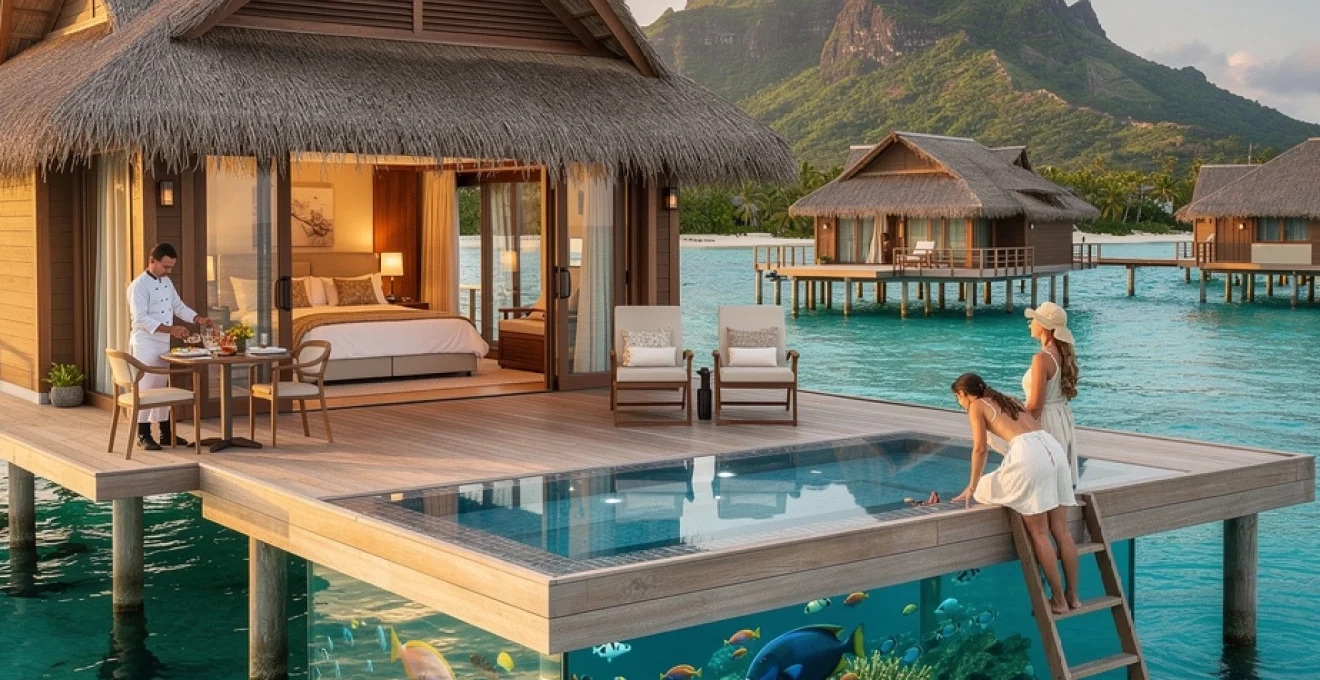
Perched gracefully above the crystal-clear waters of French Polynesia’s most celebrated lagoon, overwater bungalows in Bora Bora represent the pinnacle of tropical luxury accommodation. These architectural marvels seamlessly blend traditional Polynesian craftsmanship with modern amenities, creating an unparalleled retreat where guests can literally step from their bedroom into warm turquoise waters. The unique positioning of these villas offers an intimate connection with the marine environment whilst providing complete privacy and comfort. Whether you’re planning a romantic getaway, celebrating a special milestone, or simply seeking an extraordinary travel experience, staying in an overwater bungalow transforms your holiday from ordinary to absolutely magical. The sensation of falling asleep to gentle waves lapping beneath your floor and waking to panoramic lagoon views creates memories that last a lifetime.
Overwater bungalow architecture and construction features in bora bora
The engineering marvel behind Bora Bora’s overwater bungalows represents decades of refinement in tropical construction techniques. These structures must withstand constant exposure to salt air, fluctuating tides, and occasional tropical storms whilst maintaining the aesthetic appeal that draws visitors from around the globe. The construction process requires specialised knowledge of marine environments and careful consideration of environmental impact on the delicate coral ecosystem.
Traditional polynesian design elements in modern villa construction
Contemporary overwater bungalows honour their Polynesian heritage through carefully integrated design elements that reflect centuries of island architecture. The distinctive peaked rooflines mirror traditional Tahitian dwellings, whilst expansive covered terraces provide essential shade and outdoor living spaces. Natural materials dominate the construction palette, with locally sourced woods creating warm, inviting interiors that complement the tropical setting.
Decorative elements such as carved wooden panels, woven pandanus accents, and traditional Polynesian motifs appear throughout the villa interiors. These design choices create an authentic cultural connection whilst maintaining the luxury standards expected by discerning travellers. The seamless integration of modern amenities within traditional frameworks demonstrates the evolution of Pacific Island architecture.
Stilted foundation systems and lagoon integration methods
The foundation systems supporting overwater bungalows utilise sophisticated engineering principles to ensure structural integrity without disrupting marine ecosystems. Reinforced concrete pylons extend deep into the lagoon floor, creating stable platforms that can accommodate the weight of full villa structures plus occupants and furnishings. These foundations undergo regular inspection and maintenance to ensure continued safety and stability.
Environmental considerations play a crucial role in foundation design, with careful spacing between support columns allowing marine life to navigate freely beneath the structures. The positioning strategy minimises coral damage during construction whilst providing optimal stability for the completed villas. Advanced materials resist corrosion from salt water exposure, extending the operational lifespan of these remarkable structures.
Natural ventilation systems and thatched roofing specifications
Traditional thatched roofing serves both aesthetic and practical purposes in overwater bungalow design. Pandanus leaves, carefully harvested and prepared using time-honoured techniques, create naturally insulating roofs that regulate interior temperatures without relying heavily on air conditioning. These living roofs provide superior thermal performance compared to conventional materials, keeping interiors cool during tropical heat whilst maintaining comfortable warmth during cooler periods.
Strategic placement of windows, doors, and ventilation openings creates natural airflow patterns that enhance comfort levels throughout the villa. Cross-ventilation design principles ensure fresh ocean breezes circulate continuously, reducing humidity and creating the refreshing atmosphere that defines the overwater experience. High ceilings amplify these ventilation benefits, allowing warm air to rise naturally whilst drawing cooler air through living spaces.
Glass floor panels and direct lagoon access infrastructure
Perhaps the most captivating feature of many overwater bungalows, glass floor panels provide an underwater viewing window that transforms your accommodation into a private marine observatory. These reinforced glass sections undergo rigorous testing to ensure they can withstand both structural loads and environmental stresses. The crystal-clear panels offer unobstructed views of marine life swimming directly beneath your feet, creating an immersive experience
both during the day and night. Many guests find themselves mesmerised for long stretches of time, watching schools of tropical fish glide past, observing tiny invertebrates clinging to coral heads, and even spotting rays or small reef sharks cruising through the shallows. This constant, ever-changing display of marine life is one of the defining experiences of staying in an overwater bungalow in Bora Bora.
Direct lagoon access is usually provided via private wooden steps or a small ladder descending from your terrace into the water. These access points are carefully engineered to be secure, non-slip, and gentle on the surrounding coral and seagrass beds. For you, this means you can roll out of bed, walk a few steps, and be swimming in warm, gin-clear water within seconds. For the environment, it means minimal disturbance and no need for heavy boat traffic just to reach snorkelling spots.
Premium resort accommodations: four seasons vs st. regis bora bora
Among the many resorts offering overwater bungalows in Bora Bora, a few names stand out for their exceptional service and villa design. Choosing between premium properties such as the Four Seasons, St. Regis, InterContinental Bora Bora Resort & Thalasso Spa, and Conrad Bora Bora Nui can feel a little like choosing between diamonds: each shines in a different way. Your ideal stay depends on how you prioritise privacy, views of Mount Otemanu, access to amenities, and in-villa luxuries such as private pools and butler service.
When you compare these luxury Bora Bora resorts, think beyond simple star ratings. Consider the layout of the overwater bungalows across the lagoon, the orientation of decks for sunrise or sunset, and the distance from your villa to key facilities like restaurants and spas. At this level, the difference between a good stay and an unforgettable one often comes down to these subtle details. This is where researching specific bungalow categories, not just resort names, becomes crucial.
Four seasons bora bora overwater bungalow suite amenities
The Four Seasons Bora Bora is known for its balance of refined luxury and relaxed Polynesian atmosphere. Overwater bungalow suites here typically range from around 100 to over 150 square metres (including terrace spaces), giving you room to truly spread out and live the overwater lifestyle. Interiors combine pale woods, soft neutral fabrics, and traditional art pieces to create an airy, serene environment that lets the lagoon views take centre stage.
Many Four Seasons overwater bungalows feature separate living rooms and bedrooms, which is particularly useful for families or couples who appreciate extra privacy and space. Spacious bathrooms often come with deep soaking tubs positioned to overlook the lagoon, along with indoor and outdoor showers so you can rinse off after a swim under the open sky. High-end bedding, blackout curtains, and quietly efficient air conditioning ensure restful sleep, even on warmer nights.
From a practical perspective, Four Seasons Bora Bora overwater suites are well equipped with modern conveniences such as Bluetooth speakers, Nespresso machines, and discreetly integrated TVs. Outdoor decks usually include loungers, shaded dining areas, and sometimes overwater hammocks suspended above the lagoon. If you love seamless service, you’ll appreciate features like in-villa dining delivered via private walkways and attentive staff who quickly anticipate your preferences.
St. regis royal overwater villa with pool configurations
The St. Regis Bora Bora is famous for its expansive overwater villas, and the Royal Overwater Villa with Pool stands among the most impressive. These villas can exceed 250 square metres in total area, often including multiple bedrooms and large outdoor decks designed for glamorous lagoon-side living. If you picture hosting friends, travelling as a family group, or simply wanting as much private space as possible, this configuration is particularly appealing.
One of the standout features is the private plunge pool integrated into the villa’s deck, positioned to maximise views of either the lagoon or Mount Otemanu. This allows you to choose between a refreshing dip in the pool or direct access to the sea within a few steps. The pool area often includes overwater loungers and shaded seating zones, creating different “zones” for sunbathing, reading, or alfresco dining.
Inside, St. Regis Bora Bora villas are designed with a slightly more opulent aesthetic than some competitors, featuring rich woods, plush textiles, and generous storage space. Dedicated butler service elevates the experience further, from unpacking your suitcase to arranging floating breakfasts in your pool. For guests who value personalised attention and dramatic overwater villa layouts, the Royal Overwater Villa with Pool feels much more like a private residence than a typical hotel suite.
Intercontinental thalasso spa overwater villa features
InterContinental Bora Bora Resort & Thalasso Spa distinguishes itself through its focus on wellness and its unique overwater villa design. Most villas here are positioned to offer sweeping views of Mount Otemanu, making them particularly sought after by honeymooners and photographers. The interiors follow a contemporary Polynesian style, with clean lines, large windows, and strategic use of glass to draw your eye toward the water.
Villas at InterContinental Thalasso typically include a spacious living area, separate bedroom, and generous bathroom with both indoor and outdoor elements. Many categories feature signature glass coffee tables or floor panels that act as miniature aquariums beneath your feet, allowing you to observe marine life without leaving the comfort of your sofa. The resort’s focus on sustainable technologies, such as deep-sea water air-conditioning systems, also helps maintain comfortable indoor temperatures while reducing environmental impact.
If you’re particularly interested in spa and wellness experiences during your Bora Bora overwater stay, Thalasso is a strong contender. Its celebrated Thalasso spa complex uses deep ocean water therapies, and easy access from your villa encourages you to integrate treatments into your daily routine. Imagine a morning snorkel from your deck, followed by a therapeutic seawater massage and a quiet afternoon watching the colours shift across the lagoon from your terrace.
Conrad bora bora nui presidential villa specifications
The Conrad Bora Bora Nui is set on a private motu with overwater villas oriented toward open ocean and lagoon views rather than Mount Otemanu. Its Presidential Overwater Villa is one of the most spectacular overwater accommodations in French Polynesia. Spanning multiple levels and often exceeding 300 square metres, it feels more like a modern oceanfront home than a typical resort suite.
This villa configuration usually includes two bedrooms, multiple bathrooms, and extensive indoor-outdoor living areas that flow seamlessly together. Large sliding glass doors open onto expansive decks with infinity pools, outdoor baths, and multiple lounging areas. The architecture makes clever use of split levels and cantilevered decks to maintain uninterrupted sightlines over the water, enhancing the sensation that you are floating above the lagoon.
Technical specifications at this level include high-capacity climate control, integrated sound systems, and discreet service entrances so staff can attend to your needs without disturbing your privacy. If you imagine hosting a special celebration, organising a small retreat, or simply indulging in the pinnacle of Bora Bora overwater living, the Conrad Bora Bora Nui Presidential Villa offers an experience where every detail feels carefully considered.
Mount otemanu views and lagoon positioning strategies
One of the key decisions when booking an overwater bungalow in Bora Bora is whether to prioritise a direct view of Mount Otemanu. This extinct volcano, rising dramatically from the centre of the lagoon, acts as the island’s iconic focal point. Some bungalow categories are specifically marketed as “Otemanu View” or “Lagoon View,” and prices can vary significantly between them. Is the premium for a mountain-facing bungalow worth it? For many travellers, the answer is yes, particularly for honeymooners and photographers.
Resorts adopt different lagoon positioning strategies when planning their overwater bungalow layouts. Some arrange villas in long, curving pontoons that fan out from the shore, ensuring that a majority of units capture partial or full mountain views. Others prioritise privacy by staggering bungalows or spacing them further apart, even if it means that only a subset enjoys direct Otemanu vistas. When you look at resort maps, pay attention to which sides of the pontoons face the mountain and which face open ocean or neighbouring motus.
There are advantages to both orientations. Bungalows with Mount Otemanu views offer dramatic, ever-changing scenery as light and clouds move across the jagged peaks, especially at sunrise and sunset. On the other hand, villas facing the open ocean or channel can deliver a stronger sense of seclusion and more intense shades of blue in the water. It’s a little like choosing a seat at a theatre: do you want a front-row view of the main stage, or a quieter corner with a different perspective?
If your budget does not stretch to a top-tier mountain-view category, you can still enjoy Mount Otemanu from shared resort spaces such as the pool, beach, or restaurants. Many guests find that spending part of the day in these areas and retreating to a slightly more secluded overwater bungalow at night offers a great balance. When booking, you can also request specific pontoon sides or positions based on resort maps, increasing your chances of securing a view that matches your priorities.
Overwater dining experiences and private chef services
One of the greatest pleasures of staying in an overwater bungalow in Bora Bora is the ability to transform your deck into a private dining room above the lagoon. Most high-end resorts offer elaborate in-villa dining setups, from simple breakfasts with fresh tropical fruit to multi-course gourmet dinners served under the stars. The sound of water gently lapping beneath you becomes your playlist, and the horizon provides an ever-changing backdrop more memorable than any restaurant wall.
Private chef services are available at many premium properties, especially if you stay in larger villa categories or book special packages. A private chef can design a bespoke menu based on your preferences, dietary needs, and even your planned activities that day. Craving a light, energy-boosting lunch before an afternoon of snorkelling, or a decadent seafood feast to celebrate an anniversary? With enough notice, resort culinary teams can usually accommodate detailed requests.
Signature experiences often include floating breakfasts served in your plunge pool, champagne and canapés at sunset on your deck, or Polynesian-inspired tasting menus that highlight local ingredients such as lagoon fish, vanilla, and tropical fruits. Some resorts also arrange romantic candlelit dinners on your terrace, complete with flower arrangements and personalised menus. For many couples, these evenings become the highlight of their Bora Bora overwater stay, rivaling any excursion on the island.
Practical considerations include service fees, minimum spend requirements for private chef experiences, and advance booking windows, especially during peak season. If overwater dining is a priority, mention it when reserving your bungalow so the resort can suggest the best villa categories with ample terrace space and favourable privacy. Remember that winds and passing showers can influence setup times; flexible timing and open communication with your butler or concierge will help ensure everything runs smoothly.
Marine life encounters through glass floor observatory systems
Glass floor observatories are more than a design flourish; they create a fascinating window into the underwater world that you can enjoy 24 hours a day. In Bora Bora’s clear, shallow lagoon, these panels often look down onto sandy patches dotted with coral bommies that attract a wide variety of fish and invertebrates. With a bit of patience, you can observe daily rhythms of marine life from the comfort of your living room, like watching a nature documentary unfold beneath your feet.
Different times of day bring different species into view. Early mornings can reveal rays gliding gracefully across the sand, while midday sun illuminates the full spectrum of colours on parrotfish and butterflyfish. At night, if your bungalow has underwater lights installed near the deck, you might notice plankton, tiny shrimp, and even juvenile reef sharks drawn to the glow. It’s a unique way to deepen your connection with the lagoon ecosystem without even getting wet.
Blacktip reef shark observation patterns
Blacktip reef sharks are among the most commonly observed shark species around Bora Bora, and spotting them from your overwater bungalow can be both thrilling and reassuring. These sleek, relatively small sharks typically measure between 1.2 and 1.6 metres in length and are easily recognised by the distinct black tips on their dorsal and caudal fins. They are generally shy around humans and are considered non-aggressive in the shallow lagoon environment.
From your glass floor or deck, you may notice blacktip reef sharks cruising along the edges of deeper channels or circling areas where smaller fish congregate. They tend to be more active during early morning and late afternoon, although night-time sightings near underwater lights are also common. Watching them glide silently through the water, you’ll quickly realise that the lagoon is their realm, and you are a respectful guest observing from above.
For those who wish to see blacktip reef sharks more closely, several guided excursions safely introduce you to these animals in their natural habitat. However, even casual observations from your overwater villa remind you that Bora Bora’s lagoon is a fully functioning ecosystem, not just a scenic swimming pool. Understanding their behaviour patterns also helps dispel common myths, making your marine encounters feel more fascinating than frightening.
Napoleon wrasse and parrotfish identification techniques
Two of the most eye-catching fish you may notice from your overwater bungalow are the Napoleon wrasse and various species of parrotfish. The Napoleon wrasse, also known as the humphead wrasse, is one of the largest reef fish in the world, with adults reaching up to 2 metres in length. They are characterised by their prominent forehead hump and thick lips, giving them a somewhat curious, almost prehistoric appearance.
Parrotfish, on the other hand, are often smaller but incredibly vivid, sporting electric blues, greens, and pinks that seem almost unreal. Their beak-like mouths, which they use to scrape algae from coral, make them easy to distinguish once you know what to look for. If you see a fish that appears to be “nibbling” at the reef and leaving fine sand behind, it is likely a parrotfish contributing to the creation of Bora Bora’s white sand beaches.
To enhance your fish identification skills, consider downloading a simple reef fish guide or keeping a small laminated chart in your bungalow. Spotting and naming species becomes a fun, low-key game between swims or meals. Over a few days, you’ll begin to recognise individual behaviours and colours, turning the lagoon beneath your bungalow into a familiar neighbourhood rather than an anonymous blue expanse.
Coral garden ecosystem monitoring from overwater platforms
Many resorts in Bora Bora actively participate in coral conservation programmes, including the creation and maintenance of coral gardens beneath and around their overwater bungalows. From your glass floor panel or deck, you may see coral frames or “nurseries” where fragments are grown before being transplanted to degraded areas of the reef. This gives guests a rare opportunity to observe reef restoration efforts up close.
Watching a coral garden is a bit like watching a slow-motion city being rebuilt. Over weeks and months, coral fragments grow, attract small fish and invertebrates, and eventually form complex structures that shelter a wide range of species. While you may not stay long enough to see dramatic changes, simply understanding that these gardens exist adds another layer of meaning to your time in the lagoon.
Some resorts invite guests to participate in coral planting activities or adopt coral fragments, providing updates on their growth over time. If you are passionate about marine conservation, asking about these programmes when choosing your overwater bungalow can be a deciding factor. Your stay then supports not only local employment and culture but also the long-term health of the reef that makes Bora Bora so extraordinary.
Stingray feeding protocols and safety guidelines
Stingrays are another charismatic species you’re likely to encounter in Bora Bora’s lagoon, either gliding past your bungalow or during guided excursions. Their calm, almost “flying” motion across the sand is a memorable sight from any glass floor panel. Several tour operators and resorts offer controlled stingray feeding experiences in shallow sandbanks, where rays have become accustomed to human presence.
While these interactions can be enchanting, it is vital to follow established safety and ethical guidelines. You should only participate in stingray feeding with reputable providers who maintain respectful distances, avoid overcrowding, and supervise guest behaviour. Standing still, avoiding sudden movements, and listening closely to your guide’s instructions reduces stress on the animals and ensures everyone’s safety.
From your overwater bungalow, you can observe stingrays without impacting their natural behaviour. Watching them from above, you may see how they search for buried crustaceans in the sand using their electroreceptors. Understanding these natural feeding habits makes it easier to appreciate why touch should be gentle and limited, and why chasing or attempting to ride rays is strongly discouraged. Respectful observation ensures that future visitors can enjoy the same encounters you do today.
Weather patterns and seasonal considerations for overwater stays
Bora Bora enjoys a tropical climate with relatively warm temperatures year-round, making overwater bungalow stays possible in every season. However, subtle changes in rainfall, wind, and humidity can significantly influence your experience. The drier, cooler season typically runs from May to October, offering average daytime highs around 27°C (81°F) and lower humidity. This period is often considered the best time for clear lagoon views, comfortable sleeping conditions, and calm seas ideal for snorkelling and kayaking directly from your deck.
The wetter season, usually from November to April, brings higher temperatures, increased humidity, and more frequent short-lived showers or storms. On the plus side, this season can mean fewer crowds, more availability in sought-after overwater bungalow categories, and occasionally more competitive rates. Lagoon temperatures remain inviting, often hovering around 28–29°C (82–84°F), which can make spontaneous swims from your villa particularly enjoyable despite the occasional rain.
Wind patterns also play a role in how your overwater bungalow feels at different times of year. During the drier months, prevailing trade winds can offer natural cooling, enhancing the effectiveness of cross-ventilation and making terraces more comfortable in the middle of the day. In wetter months, calmer periods might make the lagoon appear like glass, perfect for glass floor observations, but can also increase the perception of heat and humidity. Choosing a bungalow orientation that captures breezes, when possible, helps balance these seasonal variations.
When planning your trip, consider not only broad seasonal trends but also your personal preferences. Do you prioritise the absolute clearest skies for photography, or are you willing to accept a higher chance of brief showers in exchange for quieter resorts and potentially lower prices? Are you sensitive to heat and humidity, or do you thrive in warm, tropical conditions? By aligning your expectations with Bora Bora’s weather patterns, you’ll be better prepared to enjoy every aspect of staying in an overwater bungalow, from sunrise swims to star-filled nights above the lagoon.