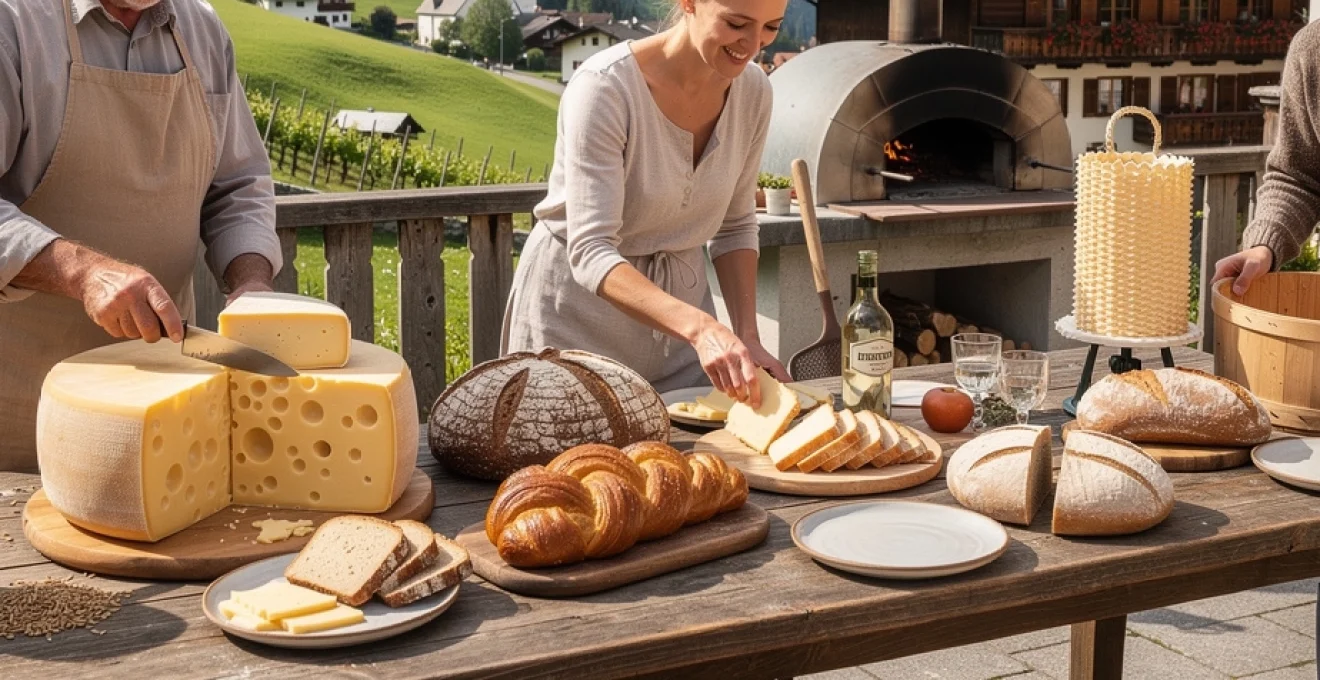
Switzerland’s culinary landscape emerges from centuries-old traditions rooted in Alpine pastures, monastery kitchens, and mountain chalets. The country’s gastronomic identity revolves around three fundamental elements that have shaped Swiss culture for generations: artisanal cheese production, traditional bread making, and the ceremonial art of countryside table settings. These culinary pillars reflect not merely sustenance, but a profound connection to the land, seasonal rhythms, and community bonds that define Swiss rural life. From the rolling hills of Gruyères to the dramatic peaks of Valais, each region contributes distinct flavours, techniques, and customs that collectively form Switzerland’s remarkable food heritage.
Alpine cheese terroir and traditional swiss dairy heritage
Swiss cheese production represents one of Europe’s most sophisticated dairy traditions, with over 450 distinct varieties reflecting the country’s diverse microclimates and cultural influences. The concept of terroir extends far beyond wine production in Switzerland, encompassing the unique environmental factors that influence milk quality and cheese character. Alpine pastures, enriched by mineral-rich soils and diverse flora, produce milk with exceptional complexity that forms the foundation of Switzerland’s renowned cheese heritage.
The Protected Designation of Origin (PDO) system safeguards traditional production methods across Switzerland’s major cheese regions. This regulatory framework ensures that authentic Swiss cheeses maintain their distinctive characteristics while preserving artisanal techniques passed down through generations. The interaction between altitude, climate, and grazing practices creates distinct flavour profiles that cannot be replicated elsewhere, making Swiss cheese production a true expression of geographical identity.
Traditional Swiss cheese making requires not just technical skill, but an intuitive understanding of how seasonal changes affect milk composition and fermentation processes.
Gruyère AOP production methods in fribourg countryside
Gruyère cheese production in the Fribourg region follows strict protocols established over eight centuries of refinement. Master cheesemakers begin each day before dawn, working with milk delivered within hours of milking from local farms within a 20-kilometre radius. The copper vats used for Gruyère production must meet precise specifications, with their thermal properties essential for achieving the correct curd formation and texture development.
The aging process takes place in natural caves carved into limestone cliffs, where temperature and humidity remain constant year-round. Each wheel undergoes regular turning and washing with brine solutions, developing the characteristic golden rind and complex interior paste. Gruyère wheels require minimum aging periods of five months, though premium selections mature for eighteen months or longer, developing intense nutty flavours and crystalline textures that distinguish exceptional examples.
Emmental valley aging caves and maturing techniques
Emmental cheese production utilises traditional propioni bacteria cultures that create the cheese’s signature holes and distinctive flavour profile. The fermentation process occurs in carefully controlled conditions, with temperatures gradually increased during the initial weeks to encourage proper gas formation. Master affineurs monitor each wheel’s development, listening for the subtle sounds that indicate proper hole formation and internal structure.
The aging caves in the Emmental Valley maintain temperatures between 18-22°C with 85% humidity, conditions that promote the slow enzymatic processes essential for flavour development. Wheels undergo rotation schedules that ensure even aging, while surface treatments with natural brine solutions create protective rinds that allow controlled moisture exchange throughout the maturation period.
Appenzeller herbal brine applications in eastern switzerland
Appenzeller cheese production incorporates secret herbal brine recipes that have remained closely guarded family secrets for centuries. The washing process begins during the third week of aging, with craftsmen applying herbal solutions containing white wine, herbs, and spices sourced from Alpine meadows. This unique treatment creates Appenzeller’s distinctive orange-tinted rind and complex aromatic profile.
The herbal brine applications continue throughout the three to six-month aging process, with frequency and concentration adjusted according to seasonal conditions and individual wheel development. The specific herb combinations vary between producers, creating subtle differences that experienced tasters can identify, though the exact formulations remain trade secrets passed between generations of Appenzell cheesemakers.
Tête de moine monastery origins and girolle
Tête de moine monastery origins and girolle shaving traditions
Tête de Moine, literally “monk’s head”, traces its origins to the Bellelay Abbey in the Jura region, where monks developed this cylindrical cheese as both nourishment and currency. Unlike many Alpine cheeses sold by the slice, Tête de Moine was historically traded as whole wheels, each representing a unit of value in monastic ledgers. The dense, elastic paste and washed rind result from a careful balance of humidity and temperature in stone cellars, where wheels are regularly turned and brushed with brine to encourage the growth of a fine, fragrant surface flora.
The modern icon of Tête de Moine service is the girolle, a simple but ingenious device invented in the 1980s that revolutionised how this cheese is enjoyed. Instead of cutting wedges, the cheese is mounted on a central spike and shaved in a circular motion, producing delicate rosettes. This shaving technique increases the cheese’s surface area, amplifying aromas and creating a melt-in-the-mouth texture that feels far lighter than a traditional slice. Today, you will find Tête de Moine and its girolle at countryside tables across Switzerland, where guests are encouraged to shave their own rosettes as part of the shared dining ritual.
Artisanal bread making techniques across swiss rural regions
Just as Swiss cheese expresses Alpine terroir, traditional bread making in Switzerland reveals the character of each valley, village, and farm. Rural bakers have long relied on slow fermentation, natural sourdough cultures, and stone-milled grains to create loaves that could withstand harsh winters and long days in the fields. While modern bakeries now line high-street corners, in the countryside you still find communal ovens, wood-fired kilns, and family recipes written in faded notebooks. Bread is more than a side dish here: it is the everyday companion to cheese, cured meats, and seasonal produce that ground Swiss cuisine in simplicity and quality.
Regional bread traditions grew out of necessity and local ingredients. In cereal-poor Alpine zones, rye dominated; in richer plateaus, wheat and spelt took centre stage. Today’s traveller can taste this diversity by exploring local bakeries and farm shops, where PDO-protected breads sit alongside modern interpretations using heritage grains. When you sit down at a farmhouse table in Switzerland, the texture and aroma of the bread in front of you often tell you as much about the place as the view from the window.
Valais rye bread sourdough fermentation processes
In the high valleys of Valais, where wheat struggled to thrive, rye became the backbone of rural diets. Traditional Valais rye bread (pain de seigle valaisan AOP) relies on a robust sourdough starter that can withstand cooler temperatures and higher altitudes. Bakers maintain their rye starters for years, sometimes decades, feeding them daily with freshly milled rye flour and water. This living culture ferments slowly, often for 18 to 24 hours, producing the characteristic tangy flavour and dense yet tender crumb that makes Valais rye so satisfying with Alpine cheese and cured meats.
The fermentation process is both science and intuition. Hydration levels must be adapted to the dryness of the mountain air, while proofing times vary with seasonal temperatures. In many villages, households once baked only a few times a year in communal ovens, resulting in loaves designed to stay fresh for weeks. Modern artisan bakers have revived these methods, using long, cool fermentation to enhance digestibility and flavour. If you visit Valais, look for bakeries that clearly label pain de seigle as AOP – this guarantees that traditional sourdough fermentation and regional rye are at the heart of the loaf.
Bernese zopf braiding methods and sunday table rituals
While rye anchors the mountains, the Swiss plateau is home to the soft, golden Bernese Zopf, one of the most recognisable breads in the country. Zopf is a rich, slightly buttery loaf made from white flour, milk, and eggs, traditionally reserved for Sundays and festive occasions. The hallmark of Zopf is its braid, which can range from a simple two-strand plait to intricate multi-strand creations. Bakers roll even strands of dough, then cross and twist them with a steady rhythm, ensuring even tension so the loaf rises symmetrically in the oven and reveals its characteristic pattern.
Beyond technique, Zopf carries deep cultural meaning. In many Bernese and central Swiss households, baking Zopf on Saturday evening is a cherished ritual, filling the kitchen with the sweet aroma of fresh dough. On Sunday morning, families gather around the table for a leisurely breakfast or brunch, slicing thick pieces of Zopf to spread with butter, honey, or homemade jam. You will often encounter Zopf on countryside guesthouse buffets, where it shares space with local cheeses and farm eggs – a simple, comforting combination that captures the relaxed rhythm of Swiss rural weekends.
Ticino pane ticinese wood-fired oven construction
In the Italian-speaking canton of Ticino, bread reflects Mediterranean influences while still rooted in Alpine know-how. Pane Ticinese is a soft, slightly chewy white bread shaped into connected rolls that can be torn apart by hand. Many village bakeries still rely on traditional wood-fired ovens, whose construction plays a key role in the bread’s final character. These ovens are typically built from refractory bricks or stone, with thick, arched roofs designed to store heat from a preheating fire and radiate it evenly during baking.
The baking chamber floor, often made from dense stone, acts as a heat reservoir, giving Pane Ticinese its delicate, crisp base without drying the interior. Experienced bakers learn to read the oven by sight and feel, gauging temperature from the colour of the bricks and the speed at which a test piece of dough colours. When you taste Pane Ticinese fresh from a countryside bakery, you’re experiencing not just flour, water, and yeast, but the stored warmth of carefully stacked logs and a structure designed over generations for even, gentle heat. It’s an edible lesson in how architecture shapes gastronomy.
Traditional swiss pain de seigle stone milling techniques
Stone milling lies at the heart of many traditional Swiss breads, particularly those based on rye. Unlike modern roller mills, stone mills grind the entire grain – bran, germ, and endosperm – in a single pass, preserving oils, minerals, and flavour compounds. For pain de seigle and other rustic loaves, this results in flour with a slightly coarser texture and a fuller aroma. The friction of the stones must be carefully controlled; too much heat can damage fragile nutrients and alter fermentation behaviour, while too little pressure leads to uneven particle sizes and inconsistent doughs.
Many rural mills in Switzerland still operate on water power, using channels and wheels to turn the heavy millstones at a steady pace. Visitors can often tour these heritage mills, watch grain being crushed between the stones, and buy flour directly from the source. When you see “stone-milled” on a Swiss bread label, it signals a commitment to traditional processing that supports flavour, nutrition, and local grain growers. In practice, this means bread that pairs especially well with robust Alpine cheeses, whose complex flavours stand up beautifully to the deeper notes of wholegrain rye and wheat.
Countryside table setting protocols and regional dining customs
Swiss countryside tables may appear relaxed and rustic, but behind the apparent simplicity lies a network of customs and unspoken rules. From the placement of bread baskets and cheese boards to the order in which wines are poured, rural hosts follow regional patterns shaped by centuries of farming life and hospitality. These practices ensure that food is shared fairly, that hot dishes remain at the right temperature, and that conversation flows as easily as the local wine. For travellers, paying attention to these details offers a subtle window into how Swiss communities organise social life around the table.
While formality varies from farmhouse to mountain inn, common threads run across the country. Meals are usually served family-style, with large platters and boards placed in the centre for communal sharing. Cheese and bread often remain on the table throughout, bookending the meal rather than being confined to a single course. As guests, we are expected to show patience, wait for a general invitation to begin, and offer to pass dishes rather than reaching across the table. This gentle choreography turns even a simple countryside lunch into a small act of collective care.
Vaud vineyard terrace table arrangements
In the canton of Vaud, especially along the terraced vineyards of Lavaux, countryside tables are often oriented as much to the view as to the meal. Outdoor terraces overlooking Lake Geneva tend to feature long, narrow tables aligned with the slope, allowing guests to enjoy both the panorama and the wine in their glass. Glassware typically takes pride of place: slim white wine glasses for the region’s emblematic Chasselas, sometimes accompanied by sturdier tumblers for water and local spirits. Plates remain relatively small, inviting diners to return frequently to shared platters rather than accumulating food in a single large serving.
Bread baskets and cheese boards are strategically placed within easy reach of several guests, encouraging the passing and sharing that define Vaud’s convivial style. In many vineyard restaurants and farm taverns (pintes), dishes such as papet vaudois or perch fillets are served on large platters from which everyone helps themselves. You may notice that cutlery settings remain modest – often just a knife and fork – while the most elaborate attention is reserved for decanters, carafes, and bottles, reflecting the central role of wine in this lakeside dining culture.
Engadin valley sgraffito-decorated serving presentations
The Engadin Valley in Graubünden is famous not only for its dry, sunny climate, but also for its houses adorned with sgraffito – decorative patterns scratched into plaster. This visual tradition often extends to the countryside table, where ceramics and serving dishes echo the same motifs. Rural inns and Stüvas (wood-panelled dining rooms) frequently use plates and bowls with engraved or painted alpine flowers, geometric designs, or local symbols. Food is presented in sturdy, earthenware dishes designed to retain heat, an important consideration in a region where winter can last half the year.
Engadin dining customs emphasise warmth and continuity. Fondues, barley soups, and hearty meat dishes arrive at the table in heavy pots placed on wooden trivets, often surrounded by carved boards of rye bread and regional cheeses like Sbrinz or local mountain varieties. You may also see decorative wooden spoons and ladles used for serving, some bearing dates or initials from previous generations. The effect is a carefully orchestrated mix of practicality and symbolism: the sgraffito patterns tie the meal to the surrounding architecture, while the solid vessels and shared utensils reinforce the sense of being sheltered and nourished by the valley’s traditions.
Bernese oberland chalet dining room configurations
In the Bernese Oberland, chalet dining rooms are typically arranged to maximise both intimacy and flexibility. Long wooden tables run parallel to windows that frame views of peaks such as the Eiger or Jungfrau, while built-in bench seating (Eckbank) hugs the corners, keeping diners cosy on winter evenings. Table settings in these mountain chalets favour solid, functional materials: thick wooden boards for cheese and cured meats, enamel or stoneware for hearty stews, and heavy cutlery that can withstand daily use by hungry hikers and farmers alike.
Meals often begin with soup or salad, followed by a main course served in large dishes placed in the centre of the table. Cheese and bread remain ever-present – sometimes on a sideboard, sometimes on the main table – allowing guests to continue nibbling between courses. Candles or low-hanging lamps provide soft light, reducing glare from the snow outside and creating a sense of shelter. For visitors, one useful custom to remember is to wait for the host’s “En Guete!” before starting to eat; joining this simple toast is an easy way to show respect for local dining etiquette.
Seasonal farm-to-table ingredient sourcing networks
Behind every countryside table in Switzerland lies a web of relationships connecting farmers, cheesemakers, millers, and restaurateurs. The country’s small size and mountainous terrain naturally favour regional, seasonal sourcing: transporting goods over passes and along valley roads has always been costly, so communities learned to rely on what the season and nearby farms could offer. In recent years, this traditional approach has evolved into a deliberate farm-to-table movement, with more than 7,000 Swiss farms now selling directly to consumers through farm shops, markets, or subscription schemes.
For travellers seeking authentic Swiss food experiences, this network translates into shorter supply chains and fresher ingredients. Mountain restaurants may source their cheese and butter from a single Alp cooperative, while village bakeries work with local mills and grain growers. Many rural inns prominently list their suppliers on menus or chalkboards, highlighting the farms that provide their vegetables, meats, and dairy products. When you see labels such as “Hofprodukt” (farm product) or “direkt ab Hof” (direct from the farm), you are looking at visible markers of this interconnected sourcing culture.
Swiss alpine restaurant establishments and rural dining venues
Swiss Alpine restaurants and countryside inns form a vital bridge between traditional producers and curious diners. In the high pastures, seasonal Alp huts transform into rustic eateries during summer, serving simple dishes based on the cheese and milk produced on-site. You might find yourself eating Älplermagronen, fresh curd cheese, or a plate of Rösti at a wooden table just metres from grazing cows. Further down in the valleys, Landgasthöfe (country inns) and village restaurants offer more elaborate menus while still drawing heavily on local farms and dairies.
These venues often operate on a hybrid model, combining hospitality with agriculture. Some inns keep their own livestock and vegetable gardens, while others participate in regional cooperatives that coordinate deliveries of seasonal produce. For visitors, one practical tip is to look out for daily or weekly “menus of the day”, which frequently reflect what is at its seasonal peak. Whether you arrive on foot after a hike or by train and bus from a nearby town, you can expect a warm welcome, generous portions, and a clear sense of place in every dish.
Traditional food preservation methods in swiss mountain communities
Long before refrigeration, Swiss mountain communities developed sophisticated preservation techniques to ensure food supplies through winter and across isolated seasons. Cheese itself is a form of preservation, concentrating summer milk into wheels that can age for months or even years. Alongside it, farmers cured meats in cool, dry attics, fermented vegetables in wooden barrels, and dried fruits and herbs in the attic spaces of chalets. These methods not only extended shelf life but also created the deep, concentrated flavours now associated with traditional Swiss cuisine.
Today, many of these techniques are seeing a revival as part of a broader interest in sustainable, low-waste food culture. You can taste air-dried beef like Bündnerfleisch, smoked sausages, and pickled vegetables in mountain restaurants, often served with rye bread and regional cheeses as a “mountain platter”. Producers take advantage of the natural conditions of the Alps – cool nights, low humidity, and pure air – to dry and mature products without artificial additives. When you bite into a slice of cured meat or a piece of aged cheese at a Swiss countryside table, you are experiencing centuries of preservation wisdom refined to suit one of Europe’s most demanding environments.