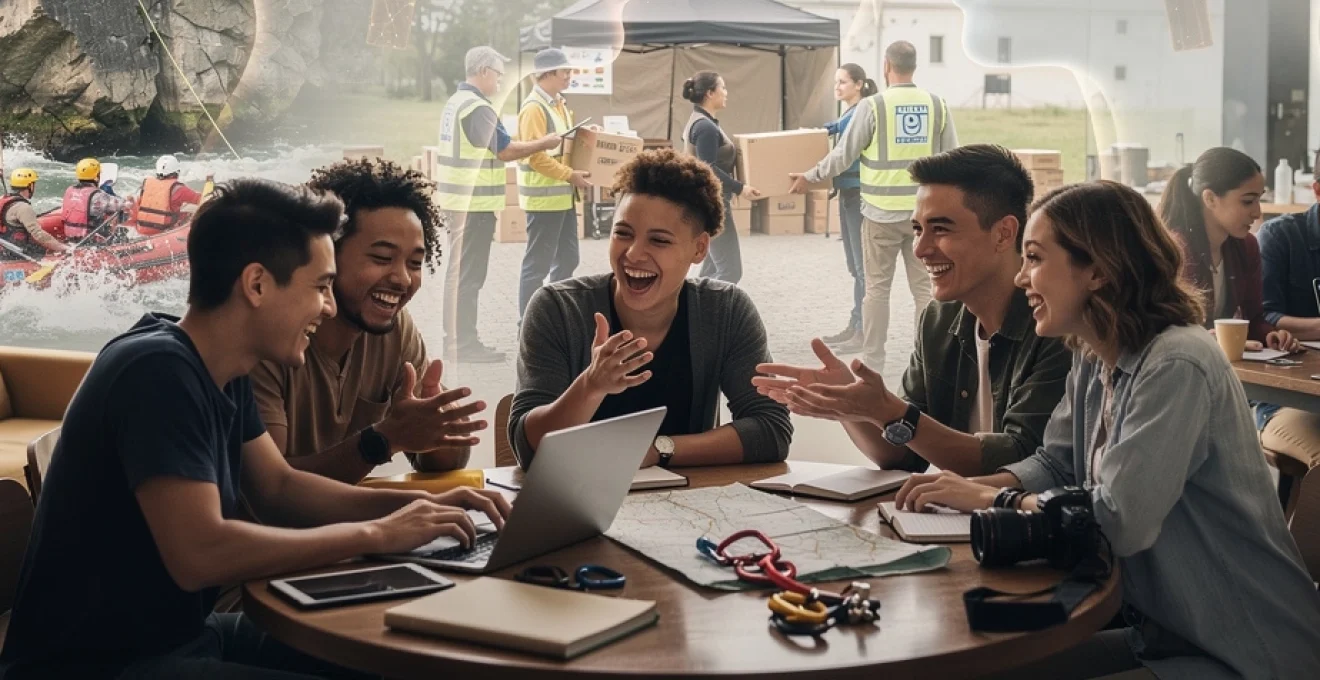
Human connection remains one of life’s most profound mysteries, yet science continues to unravel the intricate mechanisms behind how strangers transform into lifelong friends. The process isn’t merely about proximity or shared interests—it’s deeply rooted in neurochemical responses, psychological phenomena, and the fundamental way our brains are wired for social bonding. Research consistently demonstrates that meaningful shared experiences create stronger interpersonal bonds than superficial interactions, with certain activities proving remarkably effective at accelerating the journey from stranger to trusted companion.
Modern society presents unique challenges for friendship formation, particularly in urban environments where millions of people live in close proximity yet remain socially isolated. The traditional pathways to friendship—workplace relationships, neighbourhood connections, and family introductions—have evolved significantly in recent decades. Understanding the science behind successful relationship formation becomes increasingly valuable as people seek authentic connections in an increasingly digital world.
Neurochemical mechanisms behind social bonding through shared activities
The human brain orchestrates a sophisticated symphony of neurochemical responses during social interactions, particularly when individuals engage in shared activities. These biological processes form the foundation of interpersonal attraction and bond formation, operating below conscious awareness to create the feelings of connection and trust that characterise meaningful relationships.
Oxytocin release during collaborative task performance
Often termed the « bonding hormone, » oxytocin plays a crucial role in transforming strangers into friends through collaborative experiences. When individuals work together towards common goals, their brains release significant quantities of this neuropeptide, creating feelings of trust, empathy, and social connectedness. Research indicates that oxytocin levels can increase by up to 47% during cooperative activities, with the effect being particularly pronounced during physically challenging or emotionally engaging tasks.
Team sports exemplify this phenomenon perfectly. When participants coordinate movements, share tactical decisions, and celebrate collective achievements, their oxytocin production surges. This neurochemical response explains why teammates often develop strong friendships that extend far beyond their sporting activities. The hormone creates a positive feedback loop where increased trust leads to better collaboration, which in turn generates more oxytocin release and deeper bonding.
Dopamine pathways in reciprocal experience sharing
The brain’s reward system, primarily governed by dopamine pathways, responds enthusiastically to novel shared experiences with others. When individuals encounter new situations alongside potential friends, their brains associate the positive feelings generated by dopamine release with their companions. This neurochemical imprinting process helps explain why adventure-based activities and novel experiences prove so effective at fostering friendships.
Dopamine release occurs most strongly during unpredictable or challenging shared experiences. Rock climbing partnerships, for instance, trigger significant dopamine production as participants navigate uncertainty together while supporting each other’s progress. The hormone reinforces positive associations with climbing partners, creating the neurochemical foundation for lasting friendships that often extend far beyond the climbing gym.
Synchronised brain activity during joint attention episodes
Neuroscientific studies reveal fascinating patterns of brain synchronisation when individuals focus their attention on shared objects or activities. During these joint attention episodes, participants’ neural oscillations align across multiple brain regions, creating a state of cognitive harmony that facilitates deeper understanding and connection. This synchronisation occurs naturally during activities requiring coordinated focus, such as creative workshops, problem-solving sessions, or collaborative artistic endeavours.
The phenomenon extends beyond simple attention sharing to include emotional synchronisation. When individuals experience shared emotions during joint activities—whether excitement, challenge, or achievement—their brains demonstrate remarkably similar activation patterns. This neural mirroring creates a sense of being « in tune » with others that forms the foundation of strong interpersonal bonds.
Mirror neuron activation in empathetic response formation
Mirror neurons fire both when individuals perform actions and when they observe others performing similar actions, creating the neurological basis for empathy and understanding. During shared activities, these neurons activate extensively as participants observe, mimic, and respond to each other’s behaviours. The heightened mirror neuron activity during collaborative experiences contributes significantly to the development of empathetic connections between strangers.
Activities requiring physical coordination or emotional expression particularly stimulate mirror neuron networks. Dance classes, group fitness sessions, and collaborative art projects all generate substantial mirror neuron activation, helping participants develop intuitive understanding of their
emotional states and physical cues. Over time, this subtle, continuous « neural mimicry » helps strangers feel as if they intuitively understand one another, even when they have only just met. This is why moving in rhythm during a fitness class or sketching a model alongside others can feel surprisingly intimate: your brain is quietly rehearsing other people’s actions and emotions as if they were your own.
High-stakes shared experiences that accelerate interpersonal connection
While everyday shared experiences can slowly transform strangers into friends, high-stakes situations often compress this timeline dramatically. When we face risk, challenge or uncertainty with others, our stress responses, attention systems and social bonding mechanisms all activate at once. The result is a powerful sense of “being in it together” that can forge intense connections in a matter of hours rather than months.
High-stakes does not always mean life-threatening; it can simply mean emotionally charged, physically demanding or mentally absorbing. What unites these experiences is a heightened sense of consequence: your decisions and actions matter, and so do those of the people around you. From adventure tourism bonds to crisis response scenarios, these moments create fertile ground for meaningful friendships.
Adventure tourism bonds: rock climbing and white-water rafting partnerships
Adventure tourism offers a textbook example of how shared risk can deepen social bonds. Activities like rock climbing, bouldering and white-water rafting require trust, coordination and constant communication. When you belay a climbing partner or paddle in sync through rapids, you are literally placing your safety in someone else’s hands. This mutual dependence accelerates interpersonal connection because your brain rapidly evaluates and updates how much you can rely on each other.
Neuroscientists suggest that during risky shared activities, the brain’s stress and reward systems activate simultaneously. Adrenaline heightens alertness, while dopamine and endorphins reward successful navigation of challenges. When you experience that rush alongside others, your brain links the relief and excitement to the people next to you. That is why climbers often describe their partners as “trust anchors” and why rafting groups can feel almost like families after a single intense trip.
Crisis response scenarios: emergency volunteer work and natural disaster relief
High-intensity volunteering, such as emergency response or natural disaster relief, represents another category of shared experience that strongly promotes bonding. In these environments, strangers collaborate under pressure to meet urgent human needs. The mix of emotional impact, time pressure and practical problem-solving creates ideal conditions for rapid friendship formation. You see others at their most committed and generous, which powerfully shapes your perception of them.
Psychological research on “communitas” – the sense of deep togetherness that emerges in crises – shows that people who help one another during disasters often maintain those connections for years. They share vivid memories, a sense of joint accomplishment and an understanding that each person showed up when it mattered most. If you have ever volunteered at an emergency shelter or coordinated aid during a storm, you know how quickly small talk disappears and authentic conversations take its place.
Competitive team challenges: escape room problem-solving and hackathon collaborations
Not all high-stakes shared experiences involve physical risk; some centre on intellectual and creative challenge. Competitive team activities like escape rooms, hackathons or startup weekends generate a similar bonding effect by compressing time, raising the stakes and forcing intense collaboration. You must rapidly divide roles, negotiate strategies and adapt to new information, all while working toward a shared goal and deadline.
In these environments, status markers from everyday life often fade into the background. What matters is who can listen, think clearly and contribute under pressure. This can be liberating for people who feel overlooked in traditional social settings. When you crack a puzzle or ship a working prototype at 3am with a team of near-strangers, you earn a shared story that becomes the basis for ongoing friendship. The memory of that “we did it” moment is a powerful social glue.
Cultural immersion activities: language exchange programs and homestay experiences
Cultural immersion adds an extra dimension to high-stakes shared experiences: you are not only navigating a new situation, but also a new cultural landscape. Language exchanges, study abroad programs and homestay arrangements immerse participants in unfamiliar customs, norms and communication styles. The resulting mix of excitement and vulnerability encourages people to lean on each other for guidance and emotional support.
When you practice a new language with a partner or share a home with a host family, small daily accomplishments—ordering food, navigating transport, understanding a joke—become shared victories. Misunderstandings and cultural surprises, when handled with curiosity and humour, create rich material for storytelling and reflection. Over time, these cumulative experiences deepen empathy and help strangers move beyond stereotypes to see each other as complex individuals.
Social identity theory applications in group formation dynamics
Social identity theory offers a powerful lens for understanding how shared experiences turn strangers into friends. At its core, the theory suggests that we derive part of our self-concept from the groups we belong to. The moment we perceive someone as part of our “in-group”—our team, community or tribe—we tend to show them more trust, empathy and generosity. Shared activities accelerate this process by making group boundaries clear and emotionally meaningful.
Consider a recreational sports team, a book club or a climbing group at your local gym. Wearing the same jersey, discussing the same novel or working the same bouldering route signals that “we” share something important. This simple mental shift from “you and me” to “us” changes behaviour. People become more willing to offer help, share personal stories and invest time in the relationship. The more often you activate that sense of shared identity, the more natural and automatic these prosocial behaviours become.
Another key insight from social identity theory is that we seek groups that confirm or enhance how we see ourselves. That is why aligning your friendships with your values and interests is so effective. When you join a volunteering group, language exchange or artistic community that reflects who you want to be, every positive interaction reinforces both your self-image and your bond with others. Over time, “I volunteer” becomes “we volunteers,” and that collective identity becomes a powerful source of belonging.
Digital platforms facilitating authentic Stranger-to-Friend transitions
In an era where so much of life happens online, digital platforms have become crucial spaces for turning strangers into friends through shared experiences. While virtual interactions differ from face-to-face contact, they can still trigger many of the same psychological mechanisms: joint attention, shared goals and repeated exposure over time. The key is how platforms structure interaction—whether they encourage shallow scrolling or deeper, more reciprocal engagement.
Well-designed online communities mimic the dynamics of offline hobby groups, providing regular activities, clear norms and opportunities for collaboration. When you participate actively rather than passively consume content, you create the conditions for authentic connection. The platforms below illustrate how different digital architectures support friendship formation in distinct but complementary ways.
Meetup algorithm matching based on shared interest parameters
Meetup and similar event-based platforms use algorithms to connect people through shared interests and local activities. Instead of matching individuals directly, they match you to groups and events—running clubs, language cafés, board game nights—where you are likely to find kindred spirits. This subtle difference matters: you are not under pressure to “hit it off” with one person; you are simply entering a structured environment where many potential friends gather.
From a social bonding perspective, this design leverages the power of triadic interactions: you and another person focusing on the same activity. Joining a photography walk or a co-working session gives you something to talk about immediately, reducing awkwardness. Over time, attending recurring meetups with similar members transforms sporadic contact into a stable social rhythm. If you are deliberate—arriving a bit early, staying a bit late, initiating short conversations—you can convert these casual encounters into enduring friendships.
Discord community building through voice channel interactions
Discord, originally popular among gamers, has evolved into a versatile platform for interest-based communities. Its structure—text channels, voice channels and roles—encourages real-time interaction around shared activities. Whether you are co-operating in an online game, co-working via a study room or joining a live discussion, the synchronous nature of voice communication helps bridge the gap between online and offline friendship.
Voice channels are particularly powerful for building connection because they convey tone, pace and emotion in ways that text alone cannot. Hearing someone’s laugh, hesitation or excitement activates many of the same social brain systems as an in-person conversation. Over time, regular voice interactions—especially when combined with shared projects or rituals—create a strong sense of group identity. Many people report that their closest friends now include individuals they first met in a Discord server.
Reddit subreddit micro-communities and long-term relationship development
Reddit’s vast ecosystem of subreddits demonstrates how even text-based platforms can foster deep social bonds through shared interests. Each subreddit functions as a micro-community around a specific topic—rock climbing, language learning, creative writing, or almost any hobby you can imagine. Regular contributors become familiar usernames, and recurring discussion threads provide ongoing opportunities for interaction.
What begins as casual comment exchanges can gradually evolve into direct messages, group chats or even offline meetups. Research on online communities suggests that three factors predict whether these digital connections deepen into friendships: frequency of interaction, perceived similarity and reciprocity. If you contribute helpful posts, respond to others and show up consistently, you increase the chance that strangers will begin to see you not just as a username, but as a potential friend.
Cross-cultural friendship formation through universal human experiences
One of the most powerful aspects of shared experiences is their ability to bridge cultural, linguistic and generational divides. While customs and norms vary widely, certain human experiences—learning something new, facing a challenge, creating art, laughing together—are remarkably universal. When you focus on these common denominators, it becomes easier to connect across difference and transform cultural strangers into genuine friends.
Cultural psychologists point out that joint activities provide a “third space” where people can interact without relying solely on verbal fluency or shared background. For example, a life drawing class, a bouldering session or a team sport allows participants to communicate through movement, gestures and shared goals. Mispronounced words or imperfect grammar matter less when you are both trying to solve the same problem or complete the same route.
If you want to form cross-cultural friendships, a helpful strategy is to choose activities that naturally invite collaboration rather than competition. Language exchanges where each person teaches and learns, cooking classes where you prepare dishes from different regions, or volunteering with international teams all create fertile ground for mutual respect. By approaching these experiences with curiosity—asking questions, listening carefully, and sharing your own stories—you help build a narrative of “us” that transcends national or cultural labels.
Measuring relationship depth progression using social network analysis metrics
Understanding how strangers turn into friends is not just a philosophical question; it is also a measurable process. Social network analysis (SNA) provides tools to map and quantify how relationships evolve within groups over time. By examining patterns of interaction—who talks to whom, how often, and in what context—researchers can identify when casual contacts start to resemble meaningful friendships.
Several key metrics are especially useful for tracking relationship depth. Degree centrality measures how many direct connections a person has, which often increases as they participate in more shared experiences. Tie strength captures aspects like interaction frequency, emotional intensity and reciprocity; as you move from occasional small talk to regular, supportive conversations, your ties strengthen. Clustering coefficients reveal how interconnected your friends are with each other, indicating whether you are embedded in a cohesive community or juggling many separate social circles.
While most of us will never run formal network analyses on our own lives, you can still apply the principles informally. Ask yourself: Who are the people I see or speak with most often? With whom do I share multiple contexts—work, hobbies, volunteering? Whose friends have become my friends? These questions function like a personal SNA, helping you identify which relationships are deepening and where you might want to invest more time. Over months and years, deliberate participation in shared experiences will gradually redraw your social map, transforming once-distant dots into a richly connected web of friends.